
Military Combat Parachute System
- 17 Oct 2025
In News:
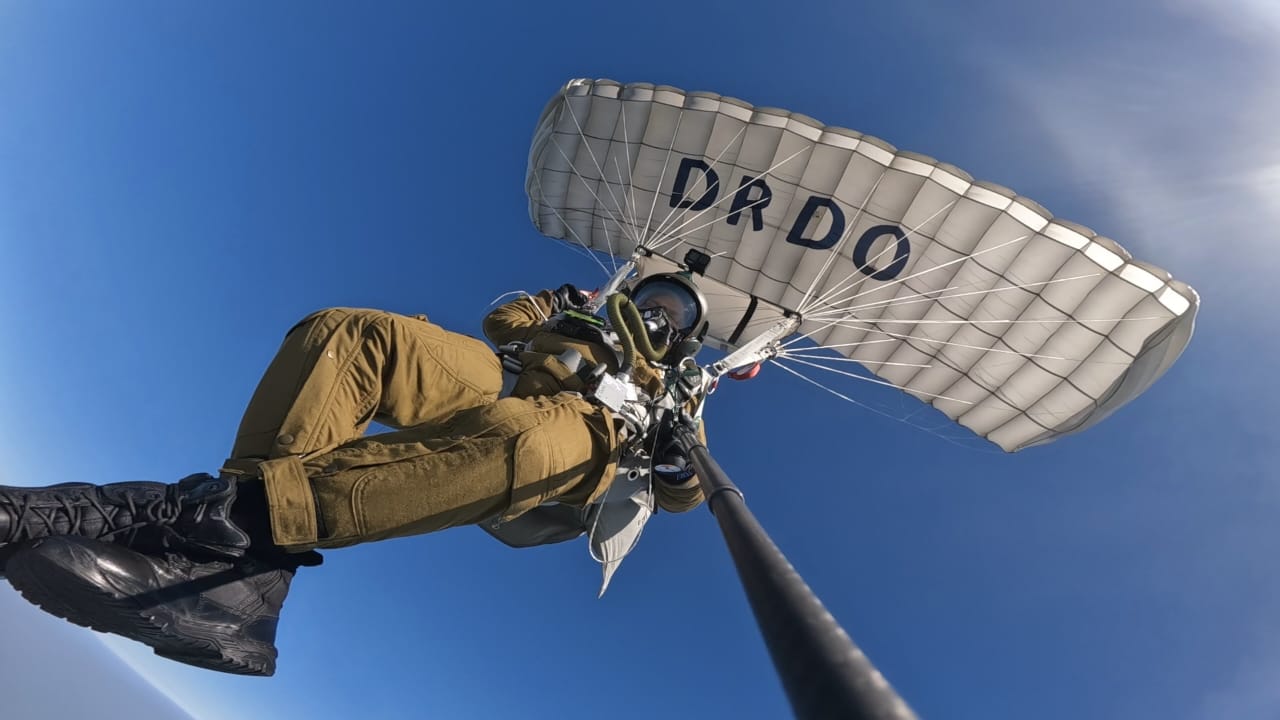
- India has achieved a major milestone in defenceindigenisation with the successful testing of the Military Combat Parachute System (MCPS) by the Defence Research and Development Organisation (DRDO).
- The system demonstrated a combat freefall jump from 32,000 feet, making it a significant advancement in India’s aerial delivery capability.
About the Military Combat Parachute System
The MCPS is an indigenous high-altitude parachute system designed to support special operations and military freefall missions in extreme altitudes and hostile environments.
- Developed by:
- Aerial Delivery Research & Development Establishment (ADRDE), Agra
- Defence Bioengineering & Electromedical Laboratory (DEBEL), Bengaluru
Key Features
- Altitude Capability: Successfully tested from 32,000 feet, and the only parachute system in operational use with the capability to be deployed above 25,000 feet by Indian forces.
- Enhanced Tactical Performance:
- Lower rate of descent
- Superior steering and maneuvering abilities
- Allows accurate navigation and landing at designated drop zones
- Navigation Support: Compatible with NavIC (Indian satellite navigation system), ensuring secure and interference-free guidance.
- Mission Capability: Enables safe aircraft exit, controlled descent, and precise landing in complex terrains—critical for special forces operations.
Strategic Significance
- Self-Reliance in Defence:
- Major step towards Aatmanirbhar Bharat in aerial delivery systems
- Reduces dependence on foreign parachute systems and maintenance support
- Operational Advantage:
- Ensures reliability in high-risk environments
- Immune to external interference/denial of service attempts
- Enhances special operations capability against any adversary
- Logistics & Lifecycle Benefits:
- Faster maintenance turnaround compared to imported systems
- Ensures availability during conflicts or war-time contingencies
SAIME Initiative

- 17 Oct 2025
In News:
A climate-adaptive aquaculture model from West Bengal’s Sundarbans — the Sustainable Aquaculture in Mangrove Ecosystems (SAIME) initiative — has recently received Global Technical Recognition from the Food and Agriculture Organization (FAO) of the United Nations. This recognition highlights a successful nature-based livelihood model that integrates aquaculture with mangrove restoration.
About the SAIME Initiative
The SAIME programme is a unique multi-stakeholder partnership aimed at promoting sustainable, mangrove-linked shrimp aquaculture while restoring fragile coastal ecosystems. By combining aquaculture practices with mangrove conservation, it seeks to build climate-resilient livelihoods in the vulnerable Sundarbans delta region.
- Focus: Climate-adaptive, ecosystem-based livelihood system
- Key Approach: Integrates brackish-water shrimp farming with mangrove plantation
- Objective:
- Protect mangrove forests
- Enhance biodiversity
- Provide sustainable income to coastal communities
- Implementation Partners:
- Nature Environment & Wildlife Society (NEWS)
- Global Nature Fund (GNF)
- Naturland (Germany-based standards organisation)
- Bangladesh Environment & Development Society (BEDS)
This model demonstrates how community-driven conservation can coexist with economic activity, reducing ecological pressure on mangrove ecosystems while supporting rural incomes.
Significance
Environmental Benefits
- Restores mangrove cover in cyclone-prone Sundarbans
- Enhances carbon sequestration, aiding climate mitigation
- Prevents coastal erosion and acts as a buffer against storm surges
- Supports rich biodiversity, including fish and crustacean populations
Socio-Economic Impact
- Offers a stable income source to local fishers and farmers
- Reduces dependency on destructive practices
- Strengthens climate resilience and livelihood security in vulnerable communities
Mangroves: Key Features
- Salt Tolerance:Specialised roots and salt-excreting mechanisms
- Aerial/Pneumatophore Roots: Enable respiration in waterlogged soils
- Prop Roots: Provide support against tides and cyclones
- Viviparous Seeds: Germinate on parent plant for survival in saline water
- Carbon Storage: Among the most carbon-rich ecosystems globally
Mangroves play a crucial role in mitigating climate change, protecting coasts, and supporting marine life — making their protection vital for ecological balance and disaster resilience.
Fare se Fursat Fixed Airfare Scheme
- 17 Oct 2025
In News:
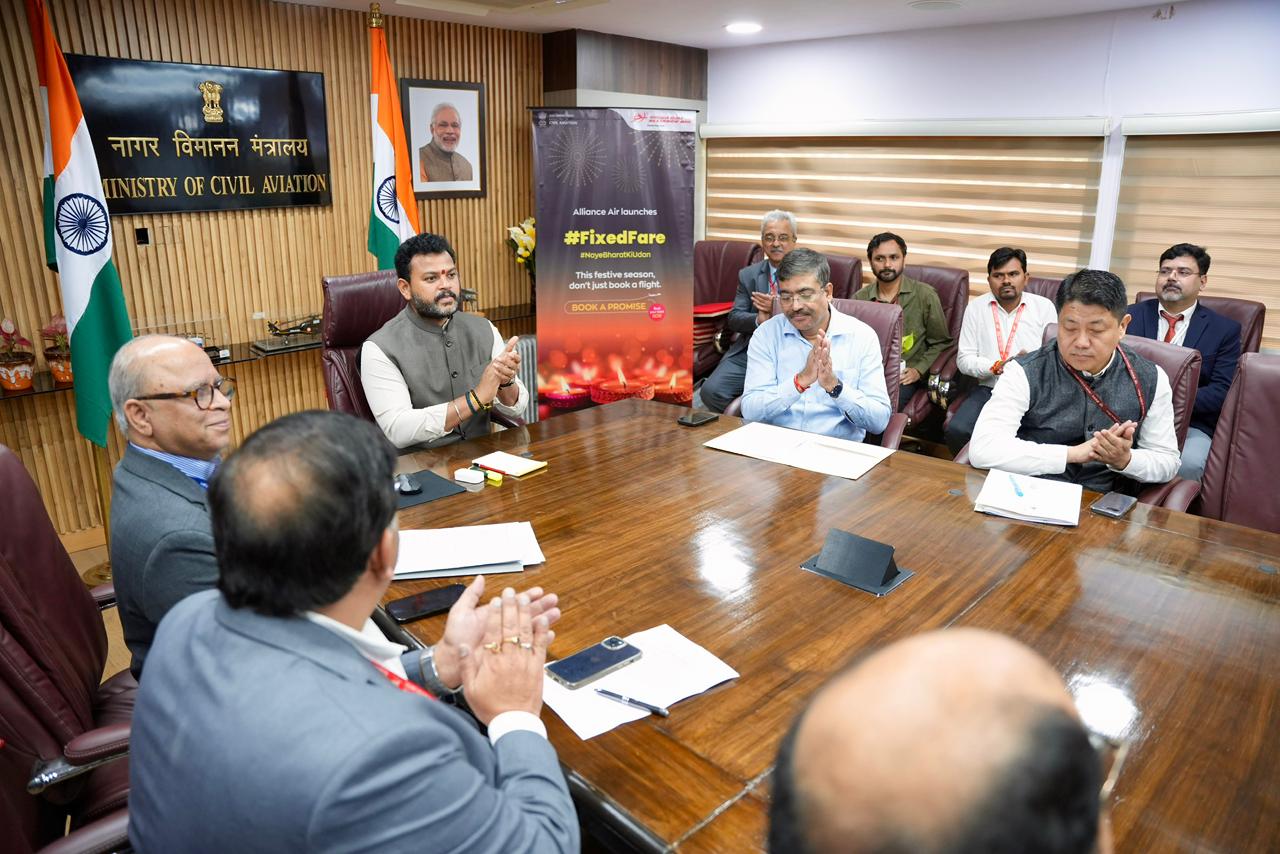
The Government of India has launched the ‘Fare Se Fursat’ Fixed Airfare Scheme, a first-of-its-kind initiative aimed at providing predictable and transparent airfares on select regional routes. Introduced by the Ministry of Civil Aviation, the scheme reflects the government’s continued push to democratize air travel and enhance regional connectivity.
About the Scheme
- Launched by: Ministry of Civil Aviation & Alliance Air
- Purpose: To eliminate uncertainty associated with fluctuating airfares and promote ease of flying.
- Key Feature:Single, fixed ticket price irrespective of booking date — even for same-day travel.
- Pilot Phase:
- 13 October – 31 December 2025
- Operated on select regional routes
- Airline: Alliance Air, India's government-owned regional carrier
Objective & Rationale
- Address dynamic pricing concerns: Indian aviation typically follows dynamic pricing based on demand and seasonality, often causing high last-minute fares.
- Make air travel accessible: Inspired by the UDAN scheme, the initiative targets middle-class, lower-middle-class, and neo-middle-class passengers, especially from Tier-2 and Tier-3 cities.
- Increase first-time flyers: The scheme aims to build confidence among new travelers by offering predictable fares, reducing financial anxiety linked to last-minute price surges.
Significance
- Supports UDAN (UdeDesh ka AamNagrik) vision of affordable regional connectivity.
- Strengthens last-mile aviation by enabling easier travel from smaller towns.
- Reinforces government's push for passenger-centric aviation policies (e.g., affordable airport cafés launched earlier under UDAN Yatri services).
- Promotes air travel as an everyday mode of transportation, not a luxury.
Why It Matters
- Predictability: Removes uncertainty in ticket prices, encouraging travel planning.
- Accessibility & Inclusivity: Bridges regional air travel gaps and widens aviation access to new socio-economic groups.
- Public-service Focus: Prioritizes passenger welfare over profit maximization, aligning with the vision of “Naye Bharat ki Udaan”.
Mission Drishti
- 17 Oct 2025
In News:
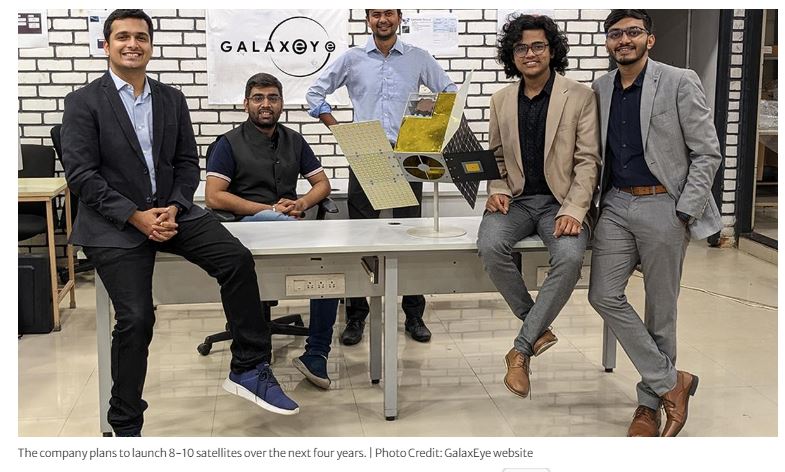
India’s private space sector is set to achieve a major milestone with GalaxEye, a Bengaluru-based space-tech start-up, preparing to launch the world's first multi-sensor Earth observation (EO) satellite, Mission Drishti, in early 2026. The mission marks a significant step toward creating an advanced satellite constellation for real-time, high-precision geospatial intelligence.
About Mission Drishti
- World’s first multi-sensor EO satellite combining Synthetic Aperture Radar (SAR) and high-resolution optical imaging on a single platform.
- Built by GalaxEye — one of India’s leading private space-tech start-ups.
- India’s largest privately-built satellite and the highest-resolution satellite (1.5 m) developed in the country.
- Mass: ~160 kg.
- Underwent successful structural tests at ISRO’s U R Rao Satellite Centre, proving its ability to withstand harsh space conditions.
- Mission Drishti is the first step in deploying a constellation of 8–12 satellites by 2029 (company target: 8–10 in next four years).
Key Features & Technological Significance
- Dual Payload Technology: SAR + optical sensors enable:
- Imaging in all weather conditions
- Day and night coverage
- High-precision, multi-layered data
- High-resolution EO imagery optimized across spatial, spectral, and temporal dimensions.
- Enables actionable multisource imaging intelligence—a capability currently unexplored globally.
According to the company, Mission Drishti opens a new era in satellite imaging by fusing multiple sensing technologies to provide real-time situational awareness.
Applications
Mission Drishti aims to strengthen high-end geospatial capabilities across national and commercial sectors:
|
Sector |
Use-case |
|
Defence& Security |
Border surveillance, tactical intelligence |
|
Disaster Management |
Floods, landslides, cyclone & emergency monitoring |
|
Infrastructure & Utilities |
Structural health monitoring, urban planning |
|
Agriculture |
Crop monitoring, precision farming support |
|
Finance & Insurance |
Risk assessment, disaster claim validation |
The mission aligns with rising global demand for accurate Earth observation data, especially amid geopolitical tensions and climate-driven emergencies.
Significance for India’s Space Ecosystem
- Enhances India’s capabilities in commercial EO intelligence, traditionally dominated by the US & Europe.
- Strengthens private-sector participation under India’s space reforms and IN-SPACe framework.
- Potential to integrate AI and advanced imaging analytics, improving decision-making in governance and industry.
- Boosts India’s aspiration to become a global space-technology provider.
India’s Quantum Breakthrough in Cybersecurity

- 17 Oct 2025
In News:
India has achieved a major milestone in quantum technology and cybersecurity. Researchers at the Raman Research Institute (RRI), Bengaluru, have demonstrated and certified the generation of true random numbers using a general-purpose quantum computer.This breakthrough positions India at the forefront of quantum-secure digital infrastructure, marking a key outcome under the National Quantum Mission.
Why Randomness Matters in Digital Security
- Modern encryption — including banking, digital communication, defence networks and authentication systems — relies on random numbers.These numbers form the basis of encryption keys and secure passwords. The more unpredictable the number, the stronger the security.
Current challenge
- Most systems use pseudorandom numbers, produced through algorithms. While highly complex and secure against classical brute-force attacks, they are not fundamentally random. With the advent of quantum computers, which can process data exponentially faster, many of today’s encryption systems may become vulnerable.
The Need for True Quantum Randomness
- Quantum mechanics provides intrinsic unpredictability. In the microscopic world, particles such as photons do not have definite states until measured — creating true randomness, unlike algorithm-based outputs.
- Quantum Random Number Generators (QRNGs) tap this behaviour.However, a persistent problem has been certifying whether the randomness is genuine or manipulated by device flaws or external interference.
- Cybersecurity demands systems that are not just hard to break, but theoretically impossible to break under known physical laws — making device-independent, quantum-certified randomness essential.
India’s Scientific Breakthrough
The RRI team achieved device-independent quantum random number generation and certification, a frontier area globally.
Key Scientific Contributions
- Utilisation of quantum entanglement and temporal correlations to certify randomness
- Demonstration of violation of Leggett-Garg inequality, confirming true quantum randomness
- Execution on a commercial, general-purpose quantum computer — proving real-world applicability beyond controlled lab environments
Earlier global attempts relied on large-scale entanglement experiments requiring hundreds of metres of physical separation.India’s approach achieves equivalent validation using time-separated measurements on a single particle, making it compact and practical.
Significance of the Breakthrough
Technological Impact
- Enables hack-proof encryption and post-quantum security systems
- First globally-relevant breakthrough under India’s National Quantum Mission
- Demonstrates practical, scalable and noise-tolerant quantum technology
Strategic Implications
- Boosts India’s readiness for quantum cyber warfare and digital sovereignty
- Critical for secure defence networks, financial systems, and government communication
- Promotes indigenous capability in a domain dominated by the US, EU and China