
Supreme Court on Retrospective Application of the Surrogacy (Regulation) Act 2021
- 12 Oct 2025
In News:
In a landmark ruling, the Supreme Court of India held that the age restrictions prescribed under the Surrogacy (Regulation) Act, 2021 cannot be applied retrospectively to couples who had already initiated the surrogacy process or had frozen embryos prior to the law’s enforcement. The judgment marks a critical reaffirmation of reproductive autonomy, fairness, and the right to privacy under the Constitution.
Background
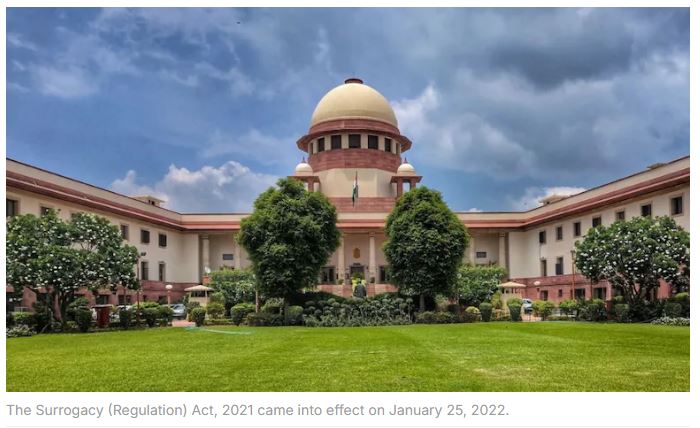
Several couples who had preserved embryos before the Surrogacy (Regulation) Act, 2021 came into force approached the Supreme Court after being denied permission to proceed with surrogacy due to the Act’s upper age limit clause.The Act, effective January 25, 2022, mandates that:
- The woman must be between 23 and 50 years, and
- The man must be between 26 and 55 years.
These couples contended that applying such limits retroactively violated their vested reproductive rights and their right to parenthood under Article 21 of the Constitution.
Supreme Court’s Judgment
A Bench comprising Justice B.V. Nagarathna and Justice K.V. Viswanathan ruled in favour of the petitioners, stating that the rights of intending parents crystallised at the time they froze embryos, when no statutory age bar existed. Therefore, the new restrictions cannot invalidate actions undertaken under the previous legal regime.
Key Observations
- Doctrine of Fairness:The Court held that retrospective laws that impair vested rights or impose new burdens violate the principle of fairness and legal certainty, forming part of India’s constitutional jurisprudence.
- Right to Privacy and Bodily Autonomy:Drawing from K.S. Puttaswamy v. Union of India (2017), the bench affirmed that reproductive decisions — including the choice to conceive through surrogacy — are protected under Article 21, which guarantees the right to life and personal liberty.
- Gender and Equality Lens:The Court noted that a restrictive interpretation disproportionately impacts women, who already face biological and societal limitations in reproduction, and cannot be penalised for delays beyond their control.
- Right to Parenthood:Justice Nagarathna emphasised that parenthood is a matter of personal autonomy and that the State cannot judge the parenting capabilities of couples merely based on age.
She observed:
“Before 2021, there were no binding laws on age restrictions for intending couples. Hence, their right to proceed with surrogacy remains valid.”
- Rebuttal to Government’s Argument:The Centre had argued that age limits were meant to protect the welfare of children born through surrogacy, assuming older parents might not meet long-term responsibilities.
The Court rejected this view, pointing out that no such limits exist for couples conceiving naturally, making the argument inconsistent.
About the Surrogacy (Regulation) Act, 2021
Objective: To regulate surrogacy procedures in India by allowing only altruistic surrogacy and prohibiting commercial surrogacy, with an emphasis on protecting surrogate mothers and children from exploitation.
Key Provisions
|
Category |
Provisions |
|
Intending Couple Eligibility |
Indian citizens, married for at least 5 years; Woman aged 23–50, Man aged 26–55; must prove medical infertility. |
|
Surrogate Mother Eligibility |
A married woman aged 25–35 years, with at least one biological child. |
|
Institutional Mechanism |
National and State Surrogacy Boards and Appropriate Authorities to regulate licensing, ethics, and compliance. |
|
Penalties |
Commercial surrogacy, or sale of gametes/embryos, punishable by up to 10 years imprisonment and fines up to ?10 lakh. |
Significance of the Judgment
- Upholds Constitutional Morality:Reaffirms that legislative intent must align with constitutional values of fairness, equality, and liberty.
- Protects Reproductive Autonomy:Strengthens the legal recognition of reproductive choices as an intrinsic part of individual dignity and privacy.
- Ensures Legal Certainty:Prevents retrospective penalisation of couples who acted in good faith under the pre-existing legal framework.
- Gender Justice and Inclusivity:Acknowledges women’s agency and safeguards them from arbitrary restrictions that could hinder their reproductive timelines.
- Balances Regulation and Rights:While the State’s intent to regulate surrogacy is legitimate, the ruling ensures such regulation does not override fundamental rights or vested personal decisions.
Foreign Currency Settlement System
- 12 Oct 2025
In News:
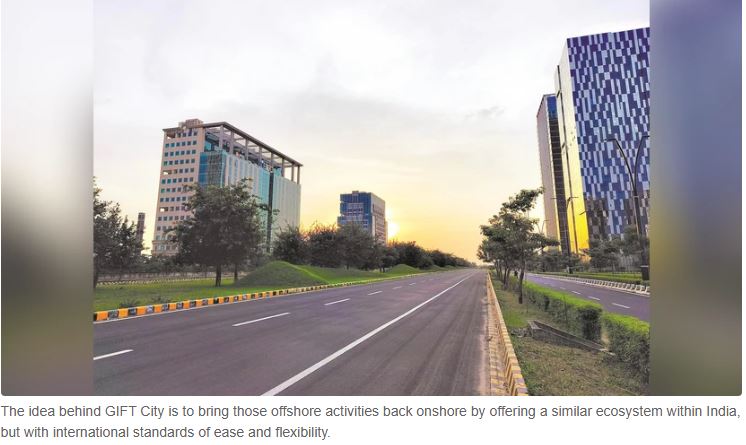
In October 2025, Union Finance Minister Nirmala Sitharaman launched the Foreign Currency Settlement System (FCSS) at the International Financial Services Centre (IFSC) in GIFT City, Gujarat. This marks a transformative step in India’s financial ecosystem, placing GIFT City among leading global financial hubs such as Hong Kong, Tokyo, and Singapore.
What is the Foreign Currency Settlement System (FCSS)?
The FCSS is a real-time payment and settlement mechanism that enables entities operating within GIFT IFSC to conduct and settle foreign currency transactions (initially in USD) locally — eliminating the dependence on foreign correspondent banks.
Key Highlights
- Real-Time Settlements: Transactions that earlier took 36–48 hours through correspondent banking now settle in 4–5 seconds.
- Regulatory Framework: Operates under the Payment and Settlement Systems (PSS) Act, 2007, authorised by the International Financial Services Centres Authority (IFSCA).
- System Operator:CCIL IFSC Ltd, a subsidiary of the Clearing Corporation of India Ltd (CCIL).
- Technology Partner:Indian Financial Technology & Allied Services (IFTAS), a wholly-owned subsidiary of the Reserve Bank of India (RBI).
- Settlement Bank:Standard Chartered Bank serves as the initial settlement partner.
How Does It Work?
Under the FCSS framework:
- Each participating bank’s IFSC Banking Unit (IBU) maintains an account with a designated local settlement bank.
- Inter-bank foreign currency transactions are cleared and settled within GIFT City, avoiding the complex multi-leg Nostro account chains used abroad.
- The system ensures secure, transparent, and regulated processing of global transactions under the IFSCA’s oversight.
Why It Matters – Strategic Significance
- Reduces Dependence on Overseas Systems: Earlier, entities in GIFT IFSC relied on foreign banks for USD, euro, or yen settlements, leading to delays, higher costs, and exposure to external risks. FCSS eliminates this dependence by localising global settlements within India.
- Enhances Liquidity and Efficiency: The system allows near-instant settlement, improving liquidity management for banks and financial institutions. It reduces counterparty and settlement risks while enabling smoother cross-border trade and investment.
- Boosts India’s Global Financial Standing: By offering a robust settlement mechanism, GIFT City now joins an elite league of financial centres with domestic forex settlement capabilities, strengthening India’s position as an emerging global financial hub.
- Promotes Financial Inclusion for Indian Entities: With lower transaction costs, faster settlement times, and reduced reliance on foreign intermediaries, Indian corporates and banks can manage international transactions more efficiently within domestic jurisdiction.
- Supports Multi-Currency Expansion: While the system currently supports the US Dollar, it is designed to incorporate other major currencies such as the Euro, Pound Sterling, and Japanese Yen, ensuring scalability and global integration.
About GIFT City: India’s Global Financial Gateway
- Full Form: Gujarat International Finance Tec-City (GIFT City).
- Location: Between Ahmedabad and Gandhinagar, Gujarat.
- Regulator: International Financial Services Centres Authority (IFSCA) — established in 2020 as a unified regulator for all financial services within the IFSC.
- Nature: A Special Economic Zone (SEZ) that operates as a liberalised financial jurisdiction under Indian sovereignty, with tax incentives, global regulations, and ease-of-doing-business provisions.
Achievements So Far
- Hosts over 1,000 registered entities, including global banks, insurance firms, fintechs, and asset managers.
- Houses India INX and NSE IX, offering 22-hour trading in global securities.
- Developed India’s first aircraft and ship leasing ecosystem, attracting global lessors and fund managers.
- Emerging hub for offshore derivative instruments, green bonds, and ESG investments.
Economic Rationale Behind GIFT City
- Before GIFT City, many Indian companies preferred offshore hubs such as Singapore or Mauritius for fund-raising and financial operations due to friendlier regulatory environments. This resulted in capital outflow and revenue loss for India.
- GIFT City’s creation aimed to repatriate offshore financial activities, foster global competitiveness, and position India as a financial intermediary for international capital flows.
India’s National Red List Roadmap

- 12 Oct 2025
In News:
At the IUCN World Conservation Congress 2025 in Abu Dhabi, India launched its National Red List Roadmap and Vision 2025–2030, marking a significant milestone in national biodiversity documentation and conservation policy. The initiativerepresents India’s commitment to establishing a comprehensive, science-based framework for assessing species and shaping long-term conservation priorities.
The National Red List Roadmap: Overview and Objectives
The National Red List Roadmap is India’s first integrated national initiative to identify, classify, and conserve threatened species across ecosystems — terrestrial, freshwater, and marine — in alignment with IUCN global standards.
It seeks to:
- Develop a nationally coordinated and inclusive red-listing system for flora and fauna.
- Generate baseline data and threat assessments to guide evidence-based policymaking.
- Strengthen India’s obligations under the Convention on Biological Diversity (CBD) and the Kunming–Montreal Global Biodiversity Framework (KMGBF).
- Foster collaboration among scientists, conservationists, and local communities to ensure equitable biodiversity protection.
The programme will culminate in the publication of India’s National Red Data Books for flora and fauna by 2030, creating an authoritative reference for conservation planning.
Institutional Collaboration
The roadmap is jointly prepared by:
- Zoological Survey of India (ZSI)
- Botanical Survey of India (BSI)
- IUCN-India, and
- Centre for Species Survival (CSS), India
This inter-agency collaboration ensures a unified system that combines scientific taxonomy, digital technology, and local knowledge systems to monitor and protect India’s biological diversity.
Vision 2025–2030: India’s Strategic Conservation Blueprint
The Vision 2025–2030 document provides a forward-looking framework to guide biodiversity governance over the next decade. It focuses on data-driven conservation, institutional synergy, and community participation, aligning with the UN Sustainable Development Goals (SDGs) and KMGBF targets.
Key Objectives:
- Establish a centralised biodiversity database for national-level coordination.
- Enhance species identification and taxonomy through expert collaboration.
- Integrate digital tools, GIS mapping, and field surveys for real-time species monitoring.
- Build a network connecting scientific institutions, local communities, and policymakers.
- Promote inclusive and equitable participation of indigenous and local communities in conservation processes.
By 2030, India aims to complete comprehensive species assessments, update threat categories, and integrate the results into national wildlife action plans and climate strategies.
India’s Biodiversity Profile
India is recognised as one of the 17 megadiverse countries in the world and hosts four of the 36 global biodiversity hotspots — the Himalayas, Western Ghats, Indo-Burma, and Sundaland.
Key Statistics:
- Covers 2.4% of global land area but supports nearly 8% of global flora and 7.5% of global fauna.
- Houses over 104,000 faunal species, 18,000 species of flowering plants, and around 20,000 marine species.
- Approximately 28% of plant species and 30% of animal species are endemic to India.
These figures underscore India’s ecological richness and the urgency for systematic monitoring and protection.
Legal and Policy Backing
- The initiative aligns with India’s robust legal framework for biodiversity conservation, anchored in the Wild Life (Protection) Act, 1972, which was amended in 2022 to extend protection to species listed under the CITES Appendices.
- The National Red List Roadmap will complement existing programmes like the National Biodiversity Mission, National Wildlife Action Plan, and Integrated Development of Wildlife Habitats, ensuring that conservation decisions are guided by scientific evidence and threat analysis.
Significance for Conservation Policy
- Evidence-Based Decision-Making: The roadmap institutionalises data-backed conservation planning.
- National Accountability: Regular species assessments will help monitor progress under national and global biodiversity targets.
- Scientific Collaboration: Encourages coordination among researchers, policymakers, and conservation agencies.
- Public Engagement: Integrates traditional ecological knowledge and community-driven documentation.
- Global Alignment: Reinforces India’s commitment to the Kunming–Montreal Global Biodiversity Framework and CBD Aichi Targets.
India–Afghanistan Relations Amid Taliban Diplomacy
- 12 Oct 2025
In News:
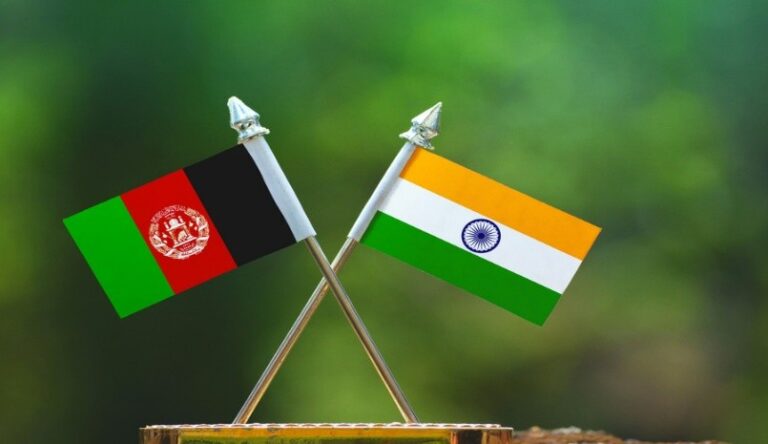
Afghanistan’s Foreign Minister Amir Khan Muttaqi’s six-day visit to India marks the first high-level interaction between New Delhi and the Taliban government since 2021. The visit reflects India’s cautious yet pragmatic attempt to re-engage diplomatically with Kabul amid evolving regional dynamics.
Historical Foundations of India–Afghanistan Relations
The relationship between India and Afghanistan is rooted in civilisational, cultural, and strategic linkages that predate modern statehood.
- Civilisational Bonds: The ancient Kabul–Gandhara–Taxila corridor served as a conduit for trade and Buddhist exchanges, shaping a shared heritage.
- Political Affinity: After 1947, Afghanistan stood apart by opposing Pakistan’s admission to the UN, signalling early alignment with India.
- Developmental Partnership: Since 2001, India has invested over $3 billion in Afghanistan’s reconstruction, building major projects like the Salma Dam, Afghan Parliament, and the Zaranj–Delaram Highway, solidifying India’s goodwill.
- Humanitarian Outreach: Even after the Taliban takeover in 2021, India sustained “people-centric engagement” by supplying 50,000 tonnes of wheat, medicines, vaccines, and scholarships — reflecting its long-term commitment to the Afghan people.
India’s Strategic Calculus Behind Engagement
India’s current approach combines realism and restraint, shaped by five key strategic considerations:
a. Regional Stability and Connectivity
- Afghanistan remains crucial to India’s access to Central Asian energy markets.
- Projects like Chabahar Port and the International North–South Transport Corridor (INSTC) rely on Afghan stability for viability.
b. Countering Pakistan and China
- Taliban-led Afghanistan has seen strained ties with Pakistan while engaging with China’s BRI framework.
- India’s outreach seeks to dilute Pakistan’s strategic depth and limit China’s westward expansion through CPEC.
c. Counterterrorism and Security Cooperation
- Groups such as Lashkar-e-Taiba (LeT), Jaish-e-Mohammed (JeM), and Islamic State–Khorasan Province (ISKP) operate from Afghan soil.
- Diplomatic engagement allows for intelligence sharing, counterterror coordination, and crisis management.
d. Preventing Radicalisation Spillover
- Instability in Afghanistan could intensify cross-border militancy, narcotics trade, and extremist radicalisation, impacting India’s internal security.
e. Humanitarian and Soft-Power Diplomacy
- India’s assistance in education, health, and food security continues to build moral legitimacy and strengthen its image as a responsible regional power.
Policy Dilemmas and Diplomatic Constraints
Despite its engagement, India faces significant diplomatic challenges:
- Non-Recognition vs. Realpolitik: India has not formally recognised the Taliban regime but follows a de facto engagement policy to protect its strategic interests.
- Symbolic Diplomacy: Meetings in Dubai (2024) and New Delhi (2025) have carefully excluded Taliban flags and formal protocol to maintain a balance between engagement and legitimacy.
- Connectivity Challenges: The withdrawal of the Chabahar sanctions waiver constrains India’s access to Afghanistan and Central Asia.
- External Pressures: The US–Pakistan rapprochement, Russia–China engagement with Kabul, and Iran’s growing influence complicate India’s regional calculus.
- Human Rights Concerns: India must balance pragmatic engagement with its principled support for inclusive governance, women’s rights, and democratic values in Afghanistan.
Regional Implications of the Muttaqi Visit
|
Dimension |
Implications for India |
|
Strategic |
Strengthens dialogue on counterterrorism and connectivity; reduces Pakistan’s leverage. |
|
Economic |
Opens prospects for trade corridors via Chabahar and access to Afghanistan’s $1–3 trillion mineral reserves. |
|
Diplomatic |
Reinforces India’s position as a regional stabiliser engaging multiple stakeholders — Russia, Iran, and Central Asia. |
|
Security |
Enables real-time intelligence cooperation against extremist networks. |
|
Symbolic |
Projects India’s Strategic Autonomy Doctrine — engagement without endorsement. |
Way Forward
- Adopt a Dual-Track Policy: Continue humanitarian and developmental assistance while maintaining calibrated diplomatic engagement with the Taliban.
- Enhance Regional Coordination: Work through Moscow Format, SCO, and Heart of Asia platforms alongside Russia, Iran, and Central Asian partners.
- Revive Chabahar Connectivity: Explore limited sanctions relief through multilateral mechanisms to ensure sustained India–Afghanistan trade access.
- Institutionalise Counterterror Cooperation: Establish an India–Afghanistan Security Contact Group to share intelligence and monitor cross-border threats.
- Invest in Human Capital: Expand scholarships, online education, and women-focused programmes to strengthen long-term societal goodwill.
Conclusion
Amir Khan Muttaqi’s visit marks a diplomatic turning point — signalling India’s shift from cautious observation to strategic pragmatism in its Afghan policy. Balancing values with realism, New Delhi aims to secure its geopolitical and economic interests while upholding humanitarian principles.
India’s nuanced engagement — without formal recognition — positions it as a potential stabilising anchor in South–Central Asia, where constructive diplomacy rather than confrontation remains the key to regional peace and security.
Port of Pasni
- 12 Oct 2025
In News:
Pakistan’s recent diplomatic engagements indicate a marked shift in its foreign policy priorities. The country, traditionally aligned with China under the China–Pakistan Economic Corridor (CPEC) framework, is now attempting to re-engage with the United States. Central to this emerging realignment is Islamabad’s reported proposal to allow the US to develop a new port at Pasni in Balochistan — a move that carries significant geopolitical and strategic ramifications.
The Pasni Port Proposal: Redefining Strategic Partnerships
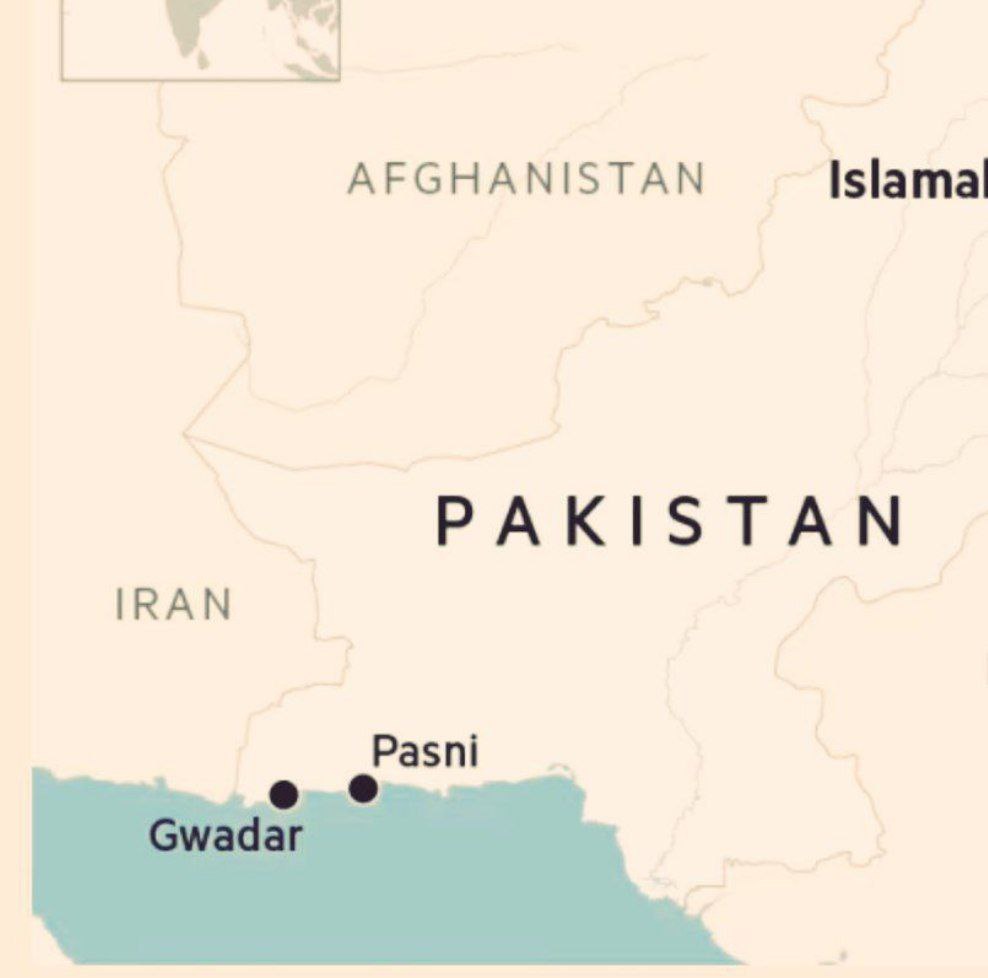
Pakistan has reportedly offered the United States the opportunity to build and operate a port at Pasni, a deep-water harbour located on the Arabian Sea in Balochistan’s Gwadar district.
- The proposed port is around 70 miles east of China-operated Gwadar Port and approximately 100 miles from Iran’s border.
- The initiative aims to reduce Pakistan’s dependence on China’s Belt and Road Initiative (BRI), attract American investment, and open access to critical mineral exports from Balochistan.
- Plans for a railway linkage between Pasni and the hinterland have also been discussed to enhance trade connectivity.
If realised, this project would grant Washington a strategic maritime foothold in the region — an area of growing competition among global powers.
The Emerging Maritime Triangle: Pasni–Gwadar–Chabahar
Pasni’s location gives rise to a new maritime triangle involving:
- Gwadar Port – a China–Pakistan venture central to the CPEC framework;
- Chabahar Port – a joint India–Iran initiative providing access to Afghanistan and Central Asia; and
- Pasni Port – potentially linked to US–Pakistan cooperation.
This triad places China, the US, and India in close operational proximity, turning the northern Arabian Sea into a strategic hotspot where economic corridors overlap with geopolitical rivalries.
Economic Drivers: The Mineral Dimension
Balochistan is rich in rare earth elements and critical minerals, crucial for high-tech manufacturing and green technologies.
- During recent engagements in Washington, Pakistan’s leadership reportedly showcased samples of these minerals to US officials in an attempt to secure American investment.
- The proposal reflects a shift in Pakistan’s economic diplomacy — reoffering projects once promised to China now to the United States.
This “resource diplomacy” underlines Islamabad’s efforts to diversify partnerships amid economic distress and debt dependence on China.
Domestic Political Motivations
The overtures toward Washington also have domestic political undertones.
- The civil–military establishment, led by Prime Minister Shehbaz Sharif and Army Chief General Asim Munir, faces questions of legitimacy and stability at home.
- Closer ties with the US are seen as a way to gain international backing and financial relief.
- However, the leadership’s willingness to reconsider Pakistan’s stance on issues like recognition of Israel under the Abraham Accords has invited domestic criticism for allegedly compromising national principles and Palestinian solidarity without parliamentary approval.
Regional Reactions and Strategic Fallout
China’s Concerns
- Beijing views the Pasni initiative as undermining CPEC and encroaching upon its sphere of influence.
- A potential US presence near Gwadar and close to Xinjiang’s western frontier could be perceived as a strategic encirclement.
Iran’s Apprehensions
- Pasni’s proximity to the Iranian border raises concerns in Tehran, which already faces tensions with the US.
- The project could alter the regional balance and complicate Iran’s trade interests via Chabahar.
India’s Calculations
- India’s Chabahar Port project could lose strategic relevance if the Pasni initiative attracts significant US investment and attention.
- The US’s ambiguous stance on the Chabahar sanctions waiver further limits India’s operational space in the region.
Afghanistan’s Position
- The Taliban government may cautiously welcome US economic engagement but will resist any renewed American military presence, such as at Bagram Airbase.
Security Implications: Risk of Regional Instability
Balochistan already faces persistent challenges, including:
- Baloch insurgency,
- Militant violence in Khyber Pakhtunkhwa, and
- Ethnic and sectarian tensions.
Introducing American infrastructure and personnel into this volatile setting could exacerbate local grievances and trigger a new phase of proxy competition between the US and China.
Such dynamics risk turning Balochistan into a geostrategic flashpoint and further destabilising Pakistan’s internal security landscape