
Inhalable Microplastics
- 21 Dec 2025
In News:
A first-of-its-kind comprehensive study has detected inhalable microplastics in the ambient air of major Indian cities, uncovering a largely ignored dimension of urban air pollution. The research monitored air samples from densely populated market areas across Delhi, Mumbai, Kolkata, and Chennai, highlighting a regulatory blind spot in current air quality assessment systems.
What are Inhalable Microplastics?
- Definition: Tiny airborne plastic particles smaller than 10 micrometres (µm) that can remain suspended in air and be inhaled deep into the lungs.
- Unlike larger microplastics that settle quickly, these particles persist in the atmosphere due to low gravitational settling velocity.
- They are now emerging as airborne contaminants, alongside conventional pollutants such as PM?.? and PM??, sulphur dioxide (SO?), nitrogen dioxide (NO?), carbon monoxide (CO), ozone (O?), lead (Pb), and ammonia (NH?).
Sources of Inhalable Microplastics
- Tyre and brake wear from road transport
- Synthetic clothing fibres (polyester, nylon)
- Plastic packaging and urban waste mismanagement
- Paints, cosmetics, and open waste burning
Key Findings of the Study
- New Air Pollutant Identified: Inhalable microplastics are not adequately captured by existing Air Quality Index (AQI) frameworks.
- City-wise Variation: Levels were significantly higher in Delhi and Kolkata compared to Mumbai and Chennai, attributed to:
- Coastal dispersion of pollutants in Mumbai and Chennai
- Higher population density and poorer waste management in Delhi and Kolkata
- High Human Exposure: Urban residents inhale approximately 132 micrograms (µg) of microplastics daily, indicating chronic exposure at breathing height.
- Carrier of Toxins: These particles act as “Trojan horses,” transporting:
- Heavy metals (lead, cadmium)
- Endocrine-disrupting chemicals (phthalates)
- Health Risks:
- Deep lung penetration leading to respiratory disorders
- Increased risk of hormonal imbalance, cancer, and long-term lung damage
- Ability to carry microbes such as Aspergillus fumigatus, including antibiotic-resistance genes, raising concerns over drug-resistant respiratory infections
Microplastics: Background
- Definition: Plastic particles <5 mm in size; particles <100 nanometres are termed nanoplastics.
- Formation: Fragmentation of larger plastics due to UV radiation, heat, wind, waves, and mechanical abrasion.
- Types:
- Primary microplastics: Intentionally manufactured (microbeads in cosmetics, plastic pellets, synthetic fibres).
- Secondary microplastics: Formed from degradation of larger plastic items (bags, bottles, packaging, fishing nets).
Major Sources
- Synthetic textiles
- Road transport (tyre wear)
- Single-use plastics
- Personal care products
- Ineffective plastic waste management
Regulatory Measures in India
- Ban on single-use plastics
- India Plastics Pact
- Plastic Waste Management (Amendment) Rules, 2024
“One RRB, One Logo” Initiative

- 21 Dec 2025
In News:
The Government of India, in collaboration with the National Bank for Agriculture and Rural Development (NABARD), has unveiled a common logo for all Regional Rural Banks (RRBs) under the “One RRB, One Logo” initiative. This reform follows the recent consolidation of RRBs and aims to present them as a single, modern, and easily recognisable national rural banking system.
What is the “One RRB, One Logo” Initiative?
- A reform measure to introduce a uniform visual identity for all 28 RRBs operating across India after consolidation.
- Implemented jointly by the Department of Financial Services (DFS), Ministry of Finance, and NABARD.
- Applicable across all customer interfaces: branches, digital platforms, passbooks, ATMs, stationery, and official communications.
Objectives
- Unified Identity: Position RRBs as part of a cohesive national banking network rather than fragmented regional entities.
- Customer Trust: Improve recognition, credibility, and public confidence.
- Operational Integration: Support amalgamation under the “One State, One RRB” policy.
- Digital Readiness: Align branding with modern banking and digital financial services.
New Logo: Key Features & Symbolism
- Upward Arrow (Progress): Growth, development, and advancement of rural economies.
- Hands (Nurturing): Care, support, and assistance to rural communities.
- Flame (Enlightenment): Knowledge, empowerment, and financial awareness.
- Colours:
- Dark Blue: Trust, stability, and finance
- Green: Life, agriculture, and growth
- Reflects core values of financial inclusion, rural development, and empowerment.
Regional Rural Banks (RRBs):
- Purpose: Provide credit and banking services in rural and semi-urban areas; support small and marginal farmers, agricultural labourers, artisans, SHGs, MSMEs, and rural entrepreneurs.
- Model: Hybrid—local familiarity of cooperatives with professional expertise of commercial banks.
- Establishment: 1975 (Ordinance); enacted as the Regional Rural Banks Act, 1976.
- Ownership Pattern:
- Government of India – 50%
- Concerned State Government – 15%
- Sponsor Bank – 35%
- Regulation & Supervision: Regulated by the Reserve Bank of India; supervised by NABARD.
Evolution & Consolidation
- Initially 5 RRBs (1975); expanded to 196, then progressively amalgamated.
- Under “One State, One RRB”, 26 RRBs were merged across 11 States/UTs effective 01.05.2025.
- Presently 28 RRBs operate through 22,000 branches across 700 districts.
ICGS Sarthak at Chabahar Port
- 21 Dec 2025
In News:
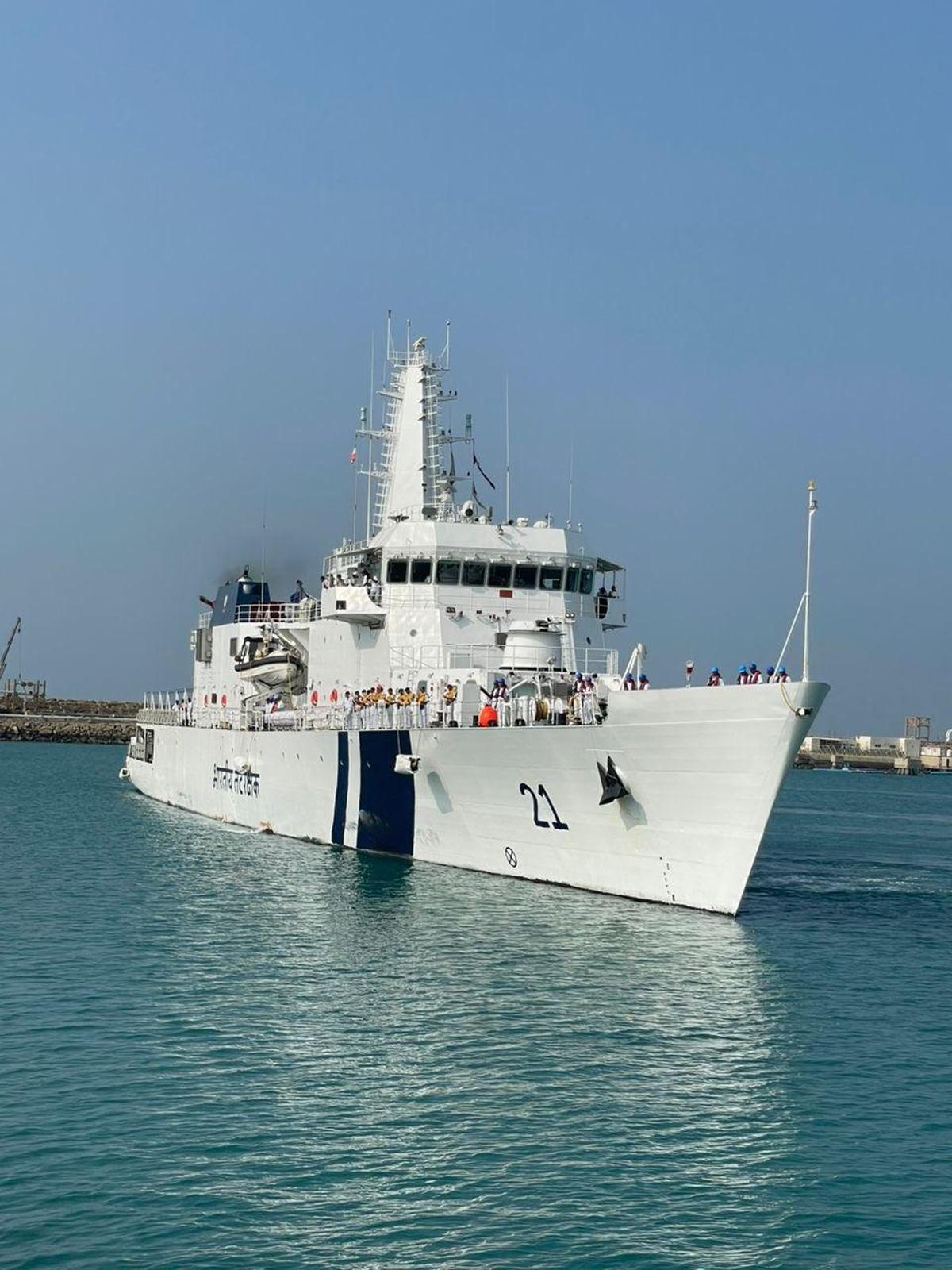
The offshore patrol vessel ICGS Sarthak of the Indian Coast Guard has made its first-ever port call at Chabahar Port, Iran. A port call refers to the period during which a naval or coast guard vessel arrives at, stays in, and departs from a port. This visit marks a notable step in strengthening maritime security cooperation, regional engagement, and strategic outreach in the Indian Ocean Region (IOR).
Strategic Importance of the Visit
- Gateway Role: Chabahar serves as India’s direct maritime gateway to Iran, Afghanistan, and Central Asia, bypassing the Strait of Hormuz.
- Connectivity & Supply Lines: The port call reinforces secure supply chains and India’s access to continental markets.
- Policy Alignment: The engagement aligns with India’s maritime visions of SAGAR (Security and Growth for All in the Region) and MAHASAGAR, underscoring cooperative security and prosperity in the IOR.
Environmental Outreach
Alongside operational engagements, the visit included environmental activities such as a beach walkathon and sports fixtures, supporting Puneet Sagar Abhiyan. Launched in 2021 by the National Cadet Corps, the campaign focuses on cleaning seashores, beaches, rivers, lakes, and other water bodies of plastic and waste—integrating maritime operations with environmental stewardship.
Chabahar Port
- Location:Sistan-Baluchistan province, Iran; on the Gulf of Oman, outside the Strait of Hormuz.
- Uniqueness: Iran’s only deep-sea port with direct ocean access.
- Agreement: Developed under the 2016 Chabahar Agreement between India, Iran, and Afghanistan.
- Connectivity Corridor: Part of the International North-South Transport Corridor (INSTC).
- Terminals:Shahid Beheshti and Shahid Kalantari.
- Indian Role: India developed and actively operates the Shahid Beheshti terminal.
- Management: Since December 2018, operations are managed by India Ports Global Limited (IPGL) through its subsidiary India Ports Global Chabahar Free Zone (IPGCFZ).
Kavach System
- 21 Dec 2025
In News:
The indigenously developed Kavach system, India’s flagship Automatic Train Protection (ATP) technology, has been fully commissioned on over 2,000 km of the Indian Rail network, with its rollout progressing rapidly. This information was provided by the Union Railway Minister in a written reply during the Winter Session of Parliament, highlighting a major milestone in railway safety reforms.
What is Kavach?
Kavach is a home-grown digital safety system designed to prevent train accidents by automatically intervening when unsafe train movements are detected. It has been developed by the Research Design and Standards Organisation (RDSO) under Indian Railways, in collaboration with Indian industry partnersp-Medha Servo Drives Pvt Ltd, HBL Power Systems Ltd, and Kernex Microsystems.
Key Technical Features
- Kavach is a complex integrated safety ecosystem comprising five major components.
- It relies on:
- Continuous Optical Fibre Cable (OFC) laid along tracks
- Telecom towers for uninterrupted data and voice communication
- RFID tags and electronic equipment installed on locomotives, tracks, and signalling systems
- Communication occurs using ultra-high radio frequencies.
- Based on pre-programmed safety logic, the system can:
- Warn loco pilots
- Automatically apply brakes
- Prevent collisions, signal passing at danger (SPAD), and over-speeding
Testing and Deployment
- Field trials began in 2016 on passenger trains before large-scale rollout.
- As of December 2025, Indian Railways has achieved:
- 7,129 km of OFC laid
- 860 telecom towers installed
- 767 railway stations connected to data centres
- Trackside equipment deployed along 3,413 km
- 4,154 locomotives equipped with Kavach
- Around 40,000 railway personnel have been trained to operate and maintain the system.
Impact on Railway Safety
The introduction of Kavach has contributed to a nearly 90% reduction in consequential railway accidents, which declined from 135 incidents in 2014 to about 11 currently. This demonstrates its effectiveness as a preventive safety technology.
Exercise Desert Cyclone II
- 21 Dec 2025
In News:
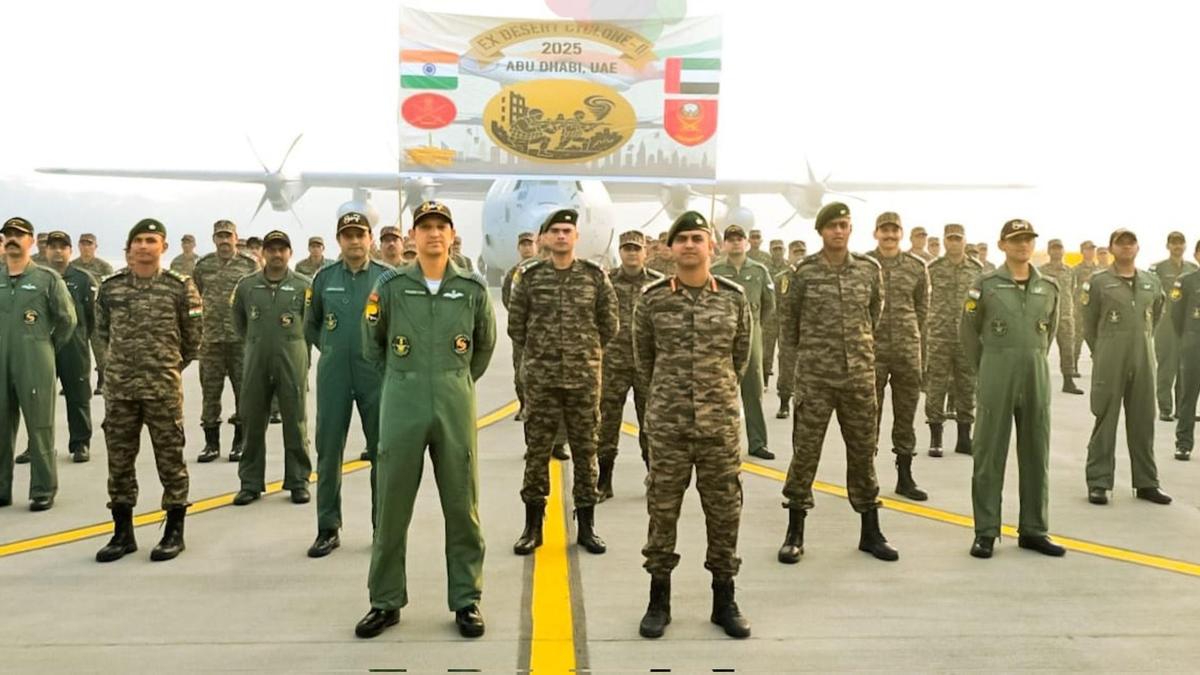
The Indian Army has deployed a contingent to the United Arab Emirates (U.A.E.) to participate in the second edition of the bilateral joint military exercise Desert Cyclone II, scheduled to be held at Abu Dhabi. The exercise follows the inaugural edition conducted in 2024, underscoring the growing momentum in India–U.A.E. defence cooperation.
Key Features of Exercise Desert Cyclone II
- Nature of Exercise: Second edition of the India–U.A.E. Joint Military Exercise.
- Indian Contingent: 45 personnel, primarily from a Mechanised Infantry Regiment battalion of the Indian Army.
- U.A.E. Representation: A contingent of similar strength from the 53 Mechanised Infantry Battalion of the U.A.E. Land Forces.
- Core Objective: Enhance interoperability, mutual understanding, and operational synergy between the two armies.
- Operational Focus:
- Sub-conventional operations in urban environments
- Conduct of operations under a United Nations mandate
- Preparation for peacekeeping, counter-terrorism, and stability operations
- Training Components:
- Fighting in built-up areas (FIBUA)
- Heliborne operations
- Detailed joint mission planning
- Technology Dimension: Integration of Unmanned Aerial Systems (UAS) and counter-UAS techniques, reflecting the evolving nature of modern urban warfare.
The conduct of Desert Cyclone II highlights deepening military diplomacy, shared strategic concerns, and expanding operational cooperation between India and the U.A.E.
India–U.A.E. Defence Relations:
- Diplomatic relations established:1972
- U.A.E. Embassy in New Delhi (1972)
- Indian Embassy in Abu Dhabi (1973)
- First India–U.A.E. Joint Air Forces Exercise:2008, held at Al Dhafra Air Base, Abu Dhabi.
- India is a regular participant in the International Defence Exhibition (IDEX) held in Abu Dhabi.
- Naval Cooperation: In 2025, Indian Navy ships INS Visakhapatnam and INS Trikand participated in the bilateral naval exercise Zayed Talwar, aimed at enhancing maritime interoperability.