
Skills Outcomes Fund
- 10 Apr 2026
In News:
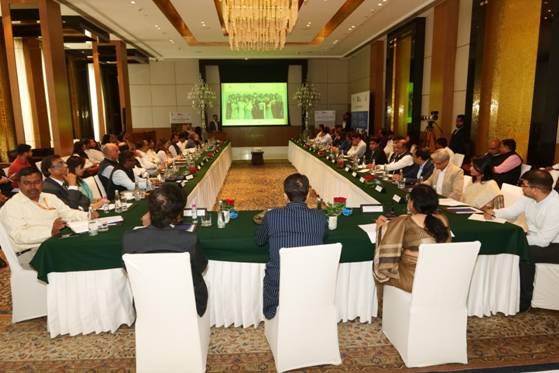
In a decisive step toward realizing the "Viksit Bharat 2047" vision, the Minister of State (Independent Charge) for Skill Development and Entrepreneurship, Shri Jayant Chaudhary, launched a national campaign to establish the Skills Outcomes Fund. This first-of-its-kind initiative marks a paradigm shift in India's human capital strategymoving away from measuring "inputs" (enrollment and certification) toward "outcomes" (verified employment and job retention).
Understanding the Skills Outcomes Fund
The Skills Outcomes Fund is designed to unlock aspirational livelihoods for youth from low-income backgrounds by institutionalizing Outcomes-Based Financing (OBF).
- Mechanism: It mobilizes both public and private capital, linking financial investments directly to verified employment results.
- Institutional Framework: The fund is anchored by the National Skill Development Corporation (NSDC) under the aegis of the Ministry of Skill Development and Entrepreneurship (MSDE).
- Partnerships: It operates through a collaborative model involving the government, not-for-profit organizations, and philanthropic stakeholders (such as the British Asian Trust, Michael & Susan Dell Foundation, and various corporate foundations).
- Blended Finance Model: Government funding from MSDE is supplemented by private sector capital, creating a diversified and sustainable financial pool.
Evolution: From Skill Impact Bond to Outcomes Fund
The fund builds upon the proven success of the Skill Impact Bond (SIB), India’s first OBF initiative launched in 2021.
Success Metrics of the Skill Impact Bond:
- Outlay: Approximately ?130 crore.
- Reach: 34,000 youth across 21 states; 74% are women.
- Performance: * 92% Certification rate.
- 76% Job placement rate.
- 62% Job retention rate (significantly higher than traditional benchmarks).
The Skills Outcomes Fund represents the "Scale and Institutionalization" phase of this pilot, aiming to become the largest OBF initiative for skilling globally.
Key Features and Strategic Focus
1. Employer-Led & Demand-Driven
Unlike traditional models where training is supply-heavy, this fund uses an employer-led model. This ensures that the skills provided are exactly what the industry requires, reducing the "employability gap."
2. High-Growth Aspirational Sectors
The fund targets sectors that are critical to India’s future economic growth:
- Emerging Tech: IT and IT-enabled services (IT-ITeS), Electronics, and Semiconductors.
- Service Excellence: Banking, Financial Services, and Insurance (BFSI), Healthcare, and Logistics.
- Sustainability:Green Jobs and sustainability-oriented roles.
- Core Industry: Automotive and advanced manufacturing.
3. Rigorous Verification
The model relies on Independent Verification to ensure that funds are only released when specific milestones—such as placement, wage levels, and job retention—are met.
Emperor Penguin and Antarctic Fur Seal
- 10 Apr 2026
In News:
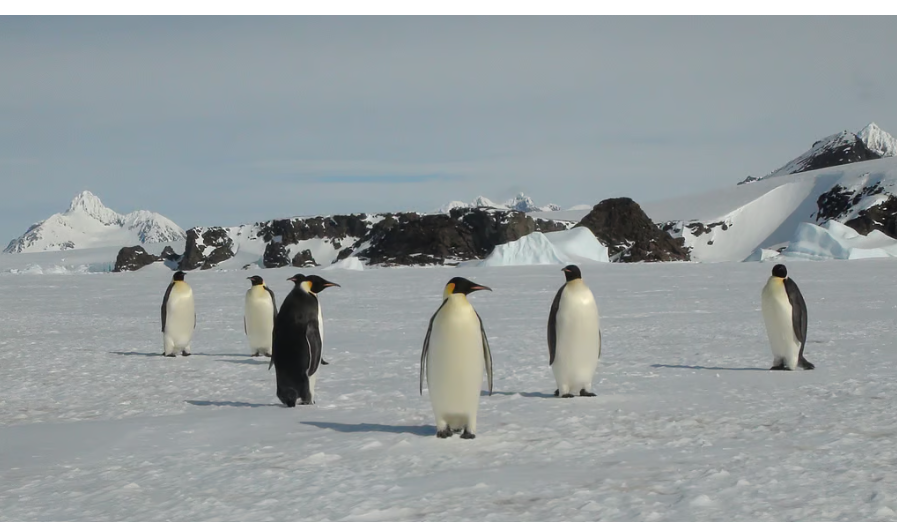
In a significant move reflecting the accelerating degradation of polar ecosystems, the International Union for Conservation of Nature (IUCN) has officially uplisted two iconic Antarctic species, the Emperor penguin and the Antarctic fur seal—to the Endangered category in its latest Red List update (April 2026). This reclassification highlights a critical shift from "Near Threatened" and "Least Concern," respectively, driven primarily by human-induced climate change.
1. The Emperor Penguin (Aptenodytes forsteri)
The Emperor penguin, the largest of all penguin species, is considered a sentinel species—an indicator of the overall health of the Antarctic ecosystem.
- Habitat and the "Fast Ice" Crisis: These birds rely on fast ice (sea ice fastened to the coastline or ocean floor) for breeding, raising chicks, and the annual moulting season.
- The Climate Threat: Rising global temperatures cause early spring ice break-ups. Because penguin chicks are not waterproof until they grow adult feathers, early ice collapse leads to the catastrophic loss of entire breeding colonies.
- Population Data: Satellite imagery confirms a 10% population loss (over 20,000 adults) between 2009 and 2018. Projections suggest that without rapid decarbonization, populations could be halved by the 2080s.
2. The Antarctic Fur Seal (Arctocephalus gazella)
Previously listed as "Least Concern," the Antarctic fur seal has seen one of the most drastic status jumps due to a collapse in the marine food web.
- The Krill Dependency: Fur seals rely almost exclusively on Antarctic Krill. As oceans warm, krill move deeper into colder waters or further south, moving out of reach for foraging seals.
- Population Collapse: The population has plummeted by over 50%, dropping from 2.18 million in 1999 to just 944,000 in 2025.
- Demographic Crisis: Extreme pup mortality in their first year due to starvation has resulted in an ageing breeding population, making it difficult for the species to replenish its numbers.
- Compounding Factors: They face increased competition from recovering baleen whale populations and heightened predation from killer whales and leopard seals.
3. Emerging Threats: The Southern Elephant Seal and Bird Flu
The IUCN has also moved the Southern elephant seal from "Least Concern" to Vulnerable. This is largely attributed to a biological threat exacerbated by warming: Highly Pathogenic Avian Influenza (HPAI) - H5N1.
- Mortality: In some colonies, the virus has killed over 90% of newborn pups.
- Vulnerability: Animals living in dense colonies are particularly susceptible to rapid disease transmission, a risk that increases as warming temperatures allow pathogens to survive in previously cold-protected polar regions.
8th Poshan Pakhwada
- 10 Apr 2026
In News:
The Ministry of Women and Child Development (MWCD) has launched the 8th edition of Poshan Pakhwada, observed from 9th April to 23rd April 2026. This fortnightly campaign is a strategic component of the larger POSHAN Abhiyaan (launched in 2018), aiming to transform nutrition and child development into a massive people’s movement (Jan Andolan) through widespread community participation (Jan Bhagidari).
Core Theme: Maximizing Brain Development (0–6 Years)
The 2026 edition shifts focus toward the cognitive dimension of nutrition with the theme “Maximizing Brain Development in the First Six Years of Life.” This priority is rooted in scientific evidence that:
- 85% of Brain Development occurs before a child turns six.
- The First 1,000 Days (conception to age two) are the "window of opportunity" for physical growth, mental well-being, and cognitive mapping.
Strategic Framework: Mission Poshan 2.0
Poshan Pakhwada 2026 operates under the umbrella of Mission Poshan 2.0, an integrated nutrition support program that seeks to converge efforts across Union Ministries and States.
Key Pillars of the Campaign:
- Maternal and Child Nutrition: Intensified advocacy for exclusive breastfeeding for the first six months and timely introduction of complementary feeding.
- Early Stimulation (0–3 Years): Promoting "responsive caregiving"—the practice where caregivers react to a child’s signals to build neural connections and emotional security.
- Play-Based Education (3–6 Years): Utilizing the "Aadharshila" curriculum to ensure school readiness through holistic, activity-based learning rather than formal rote teaching.
- Lifestyle & Digital Wellness: Encouraging families to minimize screen time for young children to prevent developmental delays and promote physical play.
- Strengthening Anganwadis: Mobilizing community support and CSR initiatives to transform regular Anganwadi Centres (AWCs) into "Saksham Anganwadis"—modernized hubs equipped with smart learning tools and nutri-gardens.
Institutional Scale and Reach
The campaign leverages India's massive grassroots network to take the vision of a Viksit Bharat (Developed India) to every household:
- The Frontline Force: Mobilization of Anganwadi Workers (AWWs), ASHAs, Auxiliary Nurse-Midwives (ANMs), and Self-Help Groups (SHGs).
- Beneficiary Coverage: Currently, 14 lakh Anganwadi Centres serve nearly 8.9 crore beneficiaries, including children, pregnant women, and lactating mothers.
- Technological Monitoring: The "Poshan Tracker" app provides real-time data on growth monitoring and service delivery, ensuring transparency and accountability.
Focus on Aspirational Districts
A significant priority of the 8th Poshan Pakhwada is bridging the developmental gap in Aspirational Districts. These regions receive targeted interventions and are encouraged to adopt "best practices" to improve their health and nutrition indicators, ensuring that geographical location does not dictate a child’s developmental potential.
Pradhan Mantri MUDRA Yojana (PMMY)
- 10 Apr 2026
In News:
Launched on April 8, 2015, the Pradhan Mantri MUDRA Yojana (PMMY) has completed 11 years as a cornerstone of India’s financial inclusion strategy. By focusing on the philosophy of "Funding the Unfunded," the scheme has successfully integrated millions of non-corporate, non-farm micro and small enterprises (MSEs) into the formal financial ecosystem.
Core Philosophy: The Three Pillars of Financial Inclusion
The PMMY is built upon three strategic objectives designed to serve the underserved:
- Banking the Unbanked: Bringing the informal sector into the fold of institutional finance.
- Securing the Unsecured: Providing credit without the requirement of traditional collateral.
- Funding the Unfunded: Ensuring capital reaches those traditionally overlooked by banks.
Key Features and Loan Structure
PMMY provides collateral-free institutional credit up to ?20 lakh. The loans are categorized based on the stage of growth and funding requirements of the micro-unit:
|
Category |
Loan Range |
Focus Area |
Share (No. of Loans) |
|
Shishu |
Up to ?50,000 |
Initial seed capital for micro-startups. |
74% |
|
Kishor |
?50,000 to ?5 Lakh |
Mid-stage expansion and equipment purchase. |
24% |
|
Tarun |
?5 Lakh to ?10 Lakh |
Scaling established small businesses. |
2% |
|
Tarun Plus |
?10 Lakh to ?20 Lakh |
For successful entrepreneurs graduating from Tarun. |
0.004% |
MUDRA (Micro Units Development & Refinance Agency Ltd.), a subsidiary of SIDBI, provides refinance support to Member Lending Institutions (MLIs) such as Scheduled Commercial Banks, RRBs, NBFCs, and MFIs.
11-Year Performance Analysis (As of March 2026)
The scheme has witnessed exponential growth, transitioning from a sanction of ?1.37 lakh crore in its first year to over ?5.65 lakh crore in FY 2025-26.
- Total Disbursement: Over ?40.07 lakh crore across 57.79 crore loan accounts.
- Democratization of Credit:
- Women's Empowerment: Approximately 67% (two-thirds) of all loans have been sanctioned to women entrepreneurs.
- Social Equity: Over 51% of beneficiaries belong to SC/ST/OBC categories.
- New Entrepreneurs: Over 12.15 crore loans (amounting to ?12 lakh crore) were extended to first-time entrepreneurs.
Challenges and Structural Hurdles
Despite its massive reach, PMMY faces several critical challenges that impact its long-term economic utility:
- The "Missing Middle": 74% of loans remain in the 'Shishu' category, indicating a struggle to graduate micro-units into larger, sustainable medium enterprises.
- Sectoral Skewness: Loans are heavily concentrated in trading and services, with limited penetration in manufacturing, which limits the employment multiplier effect.
- Asset Quality: The collateral-free nature, combined with inadequate credit checks in some cases, has led to concerns regarding Non-Performing Assets (NPAs) in public sector banks.
- Credit-Absorption Deficit: A lack of financial literacy and market access means many borrowers struggle to deploy funds productively, leading to high mortality rates for micro-enterprises.
Way Forward: Moving Toward a 'Credit-Plus' Approach
To align with the vision of Viksit Bharat 2047, PMMY must evolve beyond mere credit dispensation:
- Cash-Flow Based Lending: Transitioning from collateral-based models to using Digital Public Infrastructure (DPI) like the Account Aggregator framework and GSTN for real-time credit assessment.
- Enterprise Development: Integrating PMMY with platforms like ONDC and the Skill India Mission to provide market linkages and technical handholding.
- Incentivizing Micro-Manufacturing: Offering interest subventions specifically for manufacturing units to boost Gross Fixed Capital Formation (GFCF).
- AI-Driven Monitoring: Using data analytics to track the end-use of funds, preventing the diversion of business loans toward personal consumption.
The Pradhan Mantri MUDRA Yojana has effectively dismantled the entry barriers to formal credit for India's grassroots entrepreneurs. By addressing current structural asymmetries and adopting a holistic "Credit-Plus" model, the scheme will continue to be a vital engine for inclusive growth and self-reliance (Atmanirbhar Bharat).
Direct-to-Device (D2D) Technology
- 10 Apr 2026
In News:
The Department of Telecommunications (DoT), via the Telecommunication Engineering Centre (TEC), recently convened a high-level technical workshop titled “The D2D Frontier: Technology, Global Precedence and Indian Context.” This initiative aligns with the Government of India’s vision of “Connectivity for All,” focusing on Direct-to-Device (D2D) technology as a cornerstone for inclusive digital access.
What is Direct-to-Device (D2D) Technology?
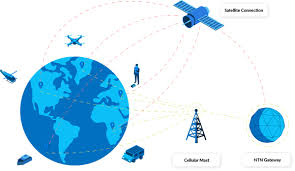
Direct-to-Device (D2D) is an emerging satellite communication (SatCom) innovation that allows standard, off-the-shelf smartphones to connect directly to satellites. Unlike traditional satellite communication, it requires no specialized hardware, satellite phones, or intermediate ground equipment (like VSAT terminals).
How D2D Works:
- Space-Based Cell Towers: A network of Low Earth Orbit (LEO) satellites acts as "cell towers in space," equipped with powerful antennas to pick up signals from standard mobile devices.
- Spectrum Integration: These satellites utilize existing terrestrial LTE or 5G frequency bands, ensuring compatibility with current mobile networks.
- Non-Terrestrial Network (NTN): The satellite serves as a relay, transmitting signals to a ground gateway, which then links to the service provider's core network.
- Seamless Handover: When a user exits the range of a terrestrial tower, the device automatically switches to a passing satellite without user intervention.
Key Technical Features and Standards
- Standard Device Compatibility: Works with existing 4G and 5G smartphones, avoiding the need for bulky, expensive satellite handsets.
- Low Latency: By utilizing LEO satellites (altitudes of 500–2,000 km), D2D significantly reduces the signal delay common in traditional geostationary satellites.
- Global Standardization: Integration into 3GPP Release 17 and 18 ensures that D2D becomes a globally recognized and interoperable telecom standard.
- Evolving Capabilities: Initial deployments focus on low-bandwidth services (Emergency SOS and messaging), with a roadmap toward full voice and high-speed data.