
Nyoma Air Base Operationalised in Eastern Ladakh
- 15 Nov 2025
In News:
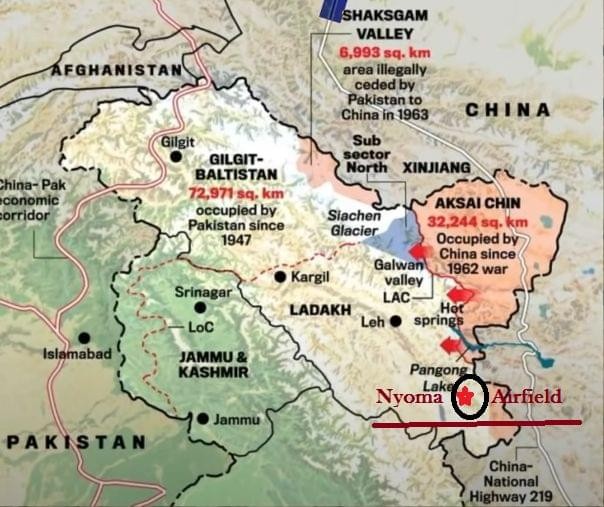
The Indian Air Force (IAF) has formally operationalised the Nyoma Air Base in Eastern Ladakh after Air Chief Marshal A.P. Singh successfully landed a C-130J aircraft on its newly completed runway. The airbase is now one of the world’s highest fully operational military airfields, marking a major milestone in India’s border infrastructure modernisation along the Line of Actual Control (LAC) with China.
Location and Geography
- Situated at: Mudh-Nyoma, Leh district, Ladakh
- Altitude: ~13,700 feet
- Distance from LAC: About 23-30 km
- Located near:
- Southern bank of Pangong Tso
- Northern bank of the Indus River
- Strategic valleys of Hanle, Chumar, and Demchok
- Terrain:
- High-altitude cold desert
- Harsh temperatures reaching –30°C
- Construction possible only for limited months each year
Historical Background
- Initially built as a mud airstrip in 1962, remained unused for decades.
- Reactivated in 2009 with the landing of an AN-32 aircraft.
- After the 2020 India-China standoff, Nyoma ALG supported:
- C-130J
- AN-32
- Apache
- Chinook
helicopter and aircraft operations.
- In 2023, the BRO began converting the airstrip into a full airbase under Project Himank.
- Completed in 2024 at a cost of ?218 crore, led significantly by women officers of the BRO.
- Fully operationalised in November 2025, after installation of hangars, ATC, hardstanding, and allied facilities.
Infrastructure and Capability
Nyoma Air Base now includes:
- 2.7-km paved runway, capable of handling:
- Fighter aircraft
- Heavy-lift transport aircraft
- Helicopter operations
- Supporting infrastructure:
- Hangars
- Air Traffic Control (ATC)
- Hard surfaces for aircraft parking
- Logistics and troop accommodation
- Its flatter valley location makes operations easier and quicker compared to Leh.
Strategic Importance
- Enhanced Operational Reach
- Enables rapid deployment of troops and equipment near the LAC.
- Allows quicker launch of interdiction strikes if required.
- Strengthens high-altitude air mobility in the Indus–Pangong–Hanle corridor.
- Bolsters Border Infrastructure
- Complements existing airfields at:Leh, Kargil, Thoise, Daulet Beg Oldie, and Fukche
- Part of India’s larger infrastructure push post-2020, including new roads, bridges, tunnels, helipads, and logistics hubs.
- Strategic Deterrence Against China
- Improves surveillance and presence along a sensitive frontier.
- Counters China’s rapid infrastructure development along its side of the LAC, including new airbases, missile sites, bunkers, and underground storage facilities.
- Supports Ground Operations
- Facilitates sustained patrols in areas such as Demchok and Depsang, where the Army resumed patrolling in 2024 after a long pause.
- Helps maintain operational readiness in a “stable but sensitive” LAC environment.
- Strengthens India’s long-term defensive posture and contributes to overall border stability.
Rationalisation of Royalty Rates for Critical Minerals

- 15 Nov 2025
In News:
The Union Cabinet has approved revised royalty rates for four critical minerals-Graphite, Caesium, Rubidium, and Zirconiumto promote domestic mining, reduce imports, and strengthen India’s position in the global clean-tech and strategic minerals sector.
What are Royalty Rates?
- A government levy charged on mineral producers for extracting natural resources.
- Calculated either as:
- A percentage of the Average Sale Price (ASP), or
- A fixed per-tonne rate.
- Legal Basis:
- Governed under the Mines and Minerals (Development and Regulation) Act, 1957 (MMDR Act).
- Empowered through the Mineral Concession Rules, 1960 to fix and revise rates.
Aim of Rationalisation
- Ensure fair value capture for the state.
- Encourage exploration and auction of new mineral blocks.
- Support availability of critical minerals essential for:
- Electric vehicles (EVs)
- Renewable and nuclear energy systems
- Electronics and defence applications
- Align India’s royalty structure with global benchmarks (typically 2–4%).
New Royalty Structure for Critical Minerals
- Graphite
- ≥80% fixed carbon:2% royalty on ASP (ad valorem)
- <80% fixed carbon:4% royalty on ASP
- Earlier: Flat per-tonne rate; now linked to quality and market price.
- Caesium: 2%of ASP based on the metal contained in ore.
- Rubidium: 2%of ASP on the metal value.
- Zirconium: 1%royalty on the metal value.
Additional Feature: Revised rates will improveauction viabilityof mineral blocks and facilitate discovery of associated strategic minerals such as lithium and rare earth elements.
Significance of the Cabinet Decision
- Reduces Import Dependency
- India imports nearly 60% of its graphite needs.
- Revised rates incentivise domestic exploration, mining, and value addition.
- Boosts Clean-Energy Transition
- These minerals are crucial for:
- EV battery anodes (graphite)
- Nuclear reactor components (zirconium)
- Atomic clocks and energy storage (caesium, rubidium)
- High-tech electronics and fiber optics
- Enhances ‘Atmanirbhar Bharat’
- Strengthens resource security and supply chain stability.
- Opens opportunities for investment and job creation in the mining sector.
- Encourages Global Competitiveness
- Royalty rates aligned with international norms improve investor confidence.
- Facilitates geological exploration to identify deeper reserves and critical co-located minerals.
Silver Jubilee & Plant Genome Saviour Awards
- 15 Nov 2025
In News:
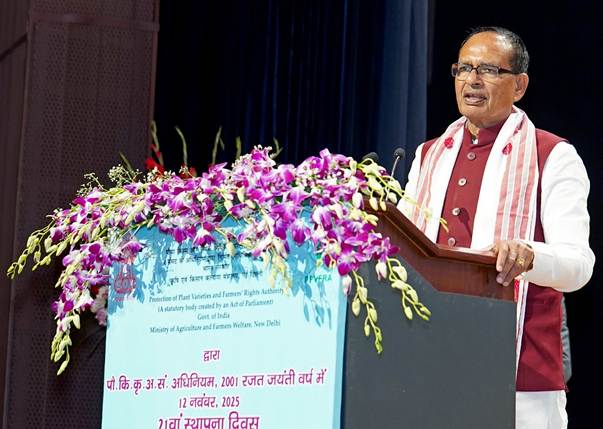
The Union Agriculture Ministerpresented the Plant Genome Saviour Awards during the celebration of the Silver Jubilee of the Protection of Plant Varieties and Farmers’ Rights (PPV&FRA) Act, 2001 and the 21st Foundation Day of the PPV&FRA Authority in New Delhi. The event recognised farmer groups and individuals for their contribution to conserving traditional seeds and agricultural biodiversity.
About the PPV&FRA Act, 2001
- Type: India’s first sui generis legislation for protecting plant varieties, breeders’ innovation, and farmers’ rights.
- Year Enacted: 2001
- Authority Operational Since: 2005
- Administered by: Ministry of Agriculture & Farmers’ Welfare
- Headquarters: New Delhi
Objectives
- Grant intellectual property rights to plant breeders for new varieties.
- Recognise and reward farmers/communities conserving traditional genetic resources.
- Protect farmers’ rights to save, use, sow, resow, exchange, share, and sell farm-saved seeds of registered varieties.
- Maintain the National Register of Plant Varieties (NRPV).
- Promote conservation of germplasm and support innovation in plant breeding.
- Ensure equitable benefit-sharing and safeguard traditional knowledge.
Key Features of the PPV&FRA Act
- Farmers’ Rights (Section 39)
- Farmers may save, exchange, and reuse seeds of registered varieties.
- Eligible for compensation if a registered variety fails to perform as claimed.
- Recognised as custodians of biodiversity.
- Breeders’ Rights
- Exclusive rights to produce, sell, market, and license new varieties.
- Legal protection incentivises innovation and commercialisation.
- Registration Criteria - DUS
- Varieties must fulfil Distinctness, Uniformity, and Stability (DUS) standards.
- 57 crop species have been notified for registration.
- National Gene Fund
- Supports benefit-sharing, conservation, and farmer awards.
- Utilises contributions from breeders and benefit-sharing fees.
- Researchers’ Exemption: Registered varieties can be used for research, breeding, and trial purposes, ensuring scientific freedom.
- Protection Against Biopiracy: Safeguards indigenous varieties and community knowledge through NRPV documentation and dispute resolution mechanisms.
Plant Genome Saviour Awards
A national award scheme instituted by PPV&FRA under Section 39(1)(iii) to honour farmers and communities conserving traditional and endangered plant varieties.
Purpose
- Recognise grassroots conservation efforts.
- Promote protection of indigenous landraces and wild relatives.
- Encourage community seed banking and biodiversity preservation.
2025 Awardee Highlights
Some of the farmer groups and individuals honoured include:
- Community Seed Bank (Telangana)
- Shiksha Niketan, West Bengal
- Mithilanchal Makhana Producers’ Association, Bihar
- CRS-Na Dihing Tenga Unyan Committee, Assam
- Individual farmers from Uttarakhand, Kerala, Bihar, and Karnataka
Awards carry financial incentives of up to ?15 lakh to support conservation efforts.
Operation Bullion Blaze
- 15 Nov 2025
In News:
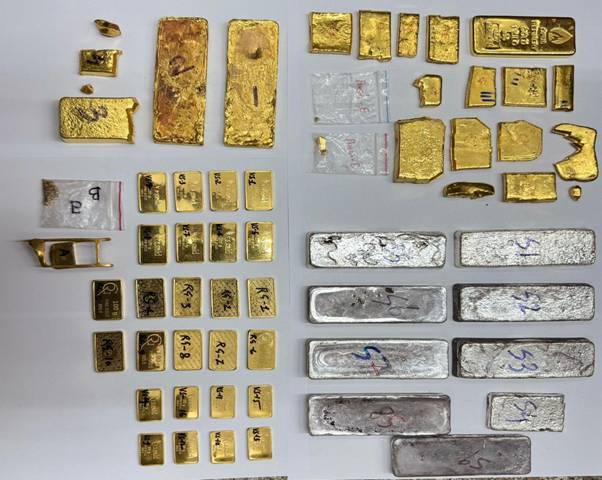
The Directorate of Revenue Intelligence (DRI) has unearthed a major gold-smuggling and illegal melting network in Mumbai under Operation Bullion Blaze, seizing 11.88 kg of gold valued at ?15.05 crore and arresting 11 persons.
About Operation Bullion Blaze
- A focused enforcement operation targeting organised gold-smuggling syndicates and illegal bullion-melting units operating in and around Mumbai.
- Implementing Agency: Directorate of Revenue Intelligence (DRI), under the Ministry of Finance
- Objectives
- Disrupt illicit inflow of smuggled gold
- Identify and shut down unregistered gold-melting facilities
- Crack down on black-market bullion trade and associated financial crimes
Significance of the Operation
- Prevents revenue leakage caused by gold smuggling
- Helps curb illegal imports that feed the parallel economy
- Strengthens compliance and transparency in bullion markets
- Reinforces DRI’s role as India’s lead agency for customs intelligence and anti-smuggling enforcement
Global Cooling Watch 2025 Report
- 15 Nov 2025
In News:
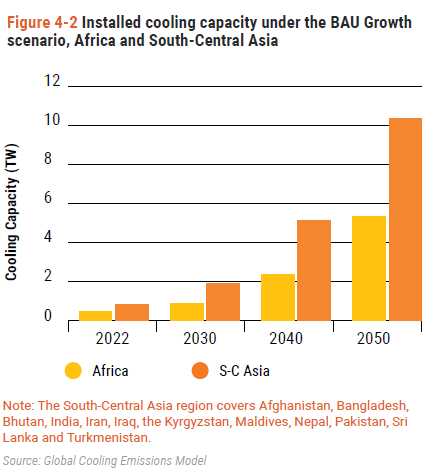
United Nations Environment Programme (UNEP) released the Global Cooling Watch 2025 report at COP30 in Belém, Brazil, projecting that global cooling demand may triple by 2050 under current trends, resulting in a major rise in emissions and power system stress.
About Global Cooling Watch 2025 Report
- Nature: UNEP’s second global assessment on cooling and its environmental, economic, and equity dimensions.
- Purpose:
- Assess global cooling trends and future projections
- Present a Sustainable Cooling Pathway for near-zero emissions
- Support the Global Cooling Pledge framework
Key Findings and Trends
1. Rising Cooling Demand
- Cooling capacity expected to increase 2.6 times (from 22 TW to 58 TW) by 2050.
- Driven by urban expansion, rising incomes, and worsening heatwaves.
2. Emission Expansion
- Cooling-related emissions may reach 10.5 billion tonnes CO?e by 2050.
- Nearly double 2022 levels without stringent policy measures.
3. Developing Country Surge
- Cooling demand in Article 5 (developing) countries projected to grow fourfold, deepening infrastructure disparities.
4. Escalating Power Consumption
- Global cooling electricity use may rise from 5,000 TWh (2022) to 18,000 TWh (2050).
- Significant implications for peak load management, especially in tropical regions.
5. Heat Inequality
- Over 2 billion people lack access to affordable, efficient cooling systems.
- Heightened vulnerability to extreme heat stress.
6. Passive Cooling Potential
- Passive measures (reflective roofs, ventilation design, urban greening) can reduce indoor temperatures by up to 8°C.
- Potential to cut energy consumption by 15-55%.
7. Refrigerant Transition
- Switching from HFCs to low-GWP refrigerants may avert up to 0.4°C of warming this century.
8. Global Cooling Pledge Progress
- 72 countries + 80 organizations have joined.
- Target: 68% reduction in cooling-sector emissions by 2050.
Successes Highlighted
- Strengthened international cooperation via the Global Cooling Pledge.
- Wider adoption of passive cooling in building policies.
- Technological improvements boosting efficiency by around 50%.
- Enhanced private sector involvement in sustainable cooling solutions.
- Tiered access initiatives improving cooling equity.
Limitations and Challenges
- Persistent inequality in access to cooling in tropical developing nations.
- Global funding currently covers less than 20% of adaptation and resilience needs.
- Fragmented policy coordination across sectors.
- Delays in HFC phase-down and inadequate refrigerant disposal.
- Continued dependence on fossil-fuel-based electricity.
UNEP Recommendations
- Implement a Sustainable Cooling Pathway combining:
- Passive cooling design
- High-efficiency cooling appliances
- Rapid integration of renewable energy
- Strengthen Kigali Amendment implementation and ensure full refrigerant lifecycle recovery.
- Increase green finance through concessional loans, PPP models, and climate bonds.
- Make passive cooling standards mandatory in building codes and urban planning.
- Provide targeted subsidies and access programs for heat-vulnerable populations.