
Biopharma SHAKTI Scheme
- 27 Mar 2026
In News:
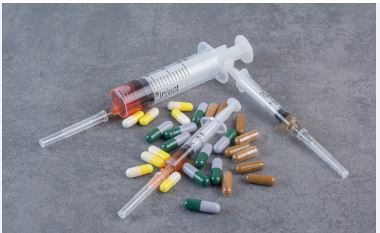
The Union Budget 2026–27 introduced the Biopharma SHAKTI scheme, aimed at transforming India’s pharmaceutical sector by promoting advanced biologics and reducing reliance on animal testing through Non-Animal Methodologies (NAMs). This marks a shift towards innovation-driven, human-relevant drug development.
Background: India’s Pharmaceutical Strength and Emerging Needs
India has established itself as a global leader in pharmaceuticals, ranking among the top producers of generic medicines and supplying a significant share of vaccines worldwide. The sector has achieved substantial scale, with a turnover of ?4.72 lakh crore (FY25) and strong export growth.
However, the next phase of growth requires a transition from generics to high-value biologics and biosimilars, especially in response to the rising burden of non-communicable diseases (NCDs) such as cancer, diabetes, and cardiovascular disorders.
Biopharma SHAKTI Scheme: Key Features
- Biopharma SHAKTI (Strategy for Healthcare Advancement through Knowledge, Technology, and Innovation) is designed to create an end-to-end ecosystem for advanced biopharmaceuticals.
- With a financial outlay of ?10,000 crore over five years, the scheme focuses on strengthening research, manufacturing, and regulatory capacity. It aligns with earlier initiatives such as the National Biopharma Mission.
- The programme promotes the development of affordable biologics, enhances infrastructure through expansion of institutions like NIPERs, and builds a nationwide clinical trial network to accelerate drug development. It also aims to streamline regulatory processes by strengthening institutions such as CDSCO.
Understanding Biologics and Biosimilars
Unlike conventional small-molecule drugs, biologics are produced using living systems and have complex molecular structures. They include products such as insulin, monoclonal antibodies, and vaccines, which are crucial for treating chronic and life-threatening diseases.
Biosimilars are cost-effective alternatives to these biologics, offering similar therapeutic benefits at significantly lower costs. Their development is critical for improving accessibility and affordability of advanced treatments.
Non-Animal Methodologies (NAMs): A Paradigm Shift
A central feature of the scheme is the promotion of Non-Animal Methodologies (NAMs), which aim to replace or reduce traditional animal testing.
NAMs rely on human-relevant models and advanced technologies such as organoids, organ-on-a-chip systems, 3D bioprinting, and AI-based simulations. These approaches replicate human physiology more accurately, enabling better prediction of drug safety and efficacy.
They also align with global ethical standards and the principle of the 3Rs—Replace, Reduce, Refine in animal testing.
Advantages of NAMs
NAMs offer several advantages over conventional methods. They improve predictive accuracy, reducing the risk of adverse outcomes in clinical trials. They also enhance efficiency by lowering development costs and shortening timelines.
Furthermore, they enable precision medicine, as patient-derived models can be used to design personalised therapies. Regulatory recognition of NAMs in India has further strengthened their adoption.
Punjab-Rajasthan Water Dispute
- 27 Mar 2026
In News:
Punjab Chief Minister Bhagwant Mann demanded Rs 1.44 lakh crore as water royalty from Rajasthan, citing a 1920 colonial-era tripartite agreement under which Rajasthan paid a fee for water until 1960, but after the Indus Waters Treaty, stopped paying despite continuously drawing 18,000 cusecs of water. Punjab has raised the issue with both the Union Government and Rajasthan, seeking a formal review of the 1920 agreement.
Historical Timeline
|
Year |
Development |
|
1920 |
Tripartite agreement — British Govt, Bikaner State, Bahawalpur State — for water supply via Gang Canal on per-acre payment basis |
|
1960 |
Indus Waters Treaty signed; Rajasthan stops payments but continues drawing 18,000 cusecs |
|
1981 |
Tripartite agreement between Punjab, Haryana, Rajasthan allocates 8.6 MAF (out of 17.17 MAF) to Rajasthan — the largest share — despite it being a non-riparian state |
|
2004 |
Punjab enacts Termination of Agreements Act to scrap water-sharing deals |
|
2016 |
Supreme Court declares the 2004 Act unconstitutional — states cannot unilaterally terminate inter-state agreements |
Constitutional & Legal Framework
Constitutional Provisions:
- Entry 17, State List — Water primarily a State subject
- Entry 56, Union List — Centre regulates inter-state rivers in public interest
- Article 262 — Empowers Parliament to adjudicate inter-state river disputes; can exclude Supreme Court jurisdiction
Statutory Framework — ISWD Act, 1956: Provides for Tribunal formation upon state request. Tribunal's Award, once gazetted, holds the force of a Supreme Court decree.
Key SC Judgements:
- Karnataka v. Tamil Nadu (2018) — Cauvery declared a "National Asset"; drinking water needs given primacy
- Punjab Termination Act Case (2016) — Unilateral cancellation of inter-state agreements unconstitutional
- Narmada Bachao Andolan v. UoI (2000) — Water is part of the Right to Life (Article 21); Tribunal Awards are final and binding
Root Causes of Inter-State Water Disputes
- Water Scarcity: Per capita availability has fallen from 5,200 cubic metres (1950) to 1,400–1,500 cubic metres (2024), approaching the scarcity threshold of 1,000 cubic metres by 2050
- Agricultural Intensification: Punjab's groundwater extraction rate stands at 156.36% — nearly three times the national average of 60.63%
- Conflictual Federalism: Water straddles the State List and Union List, creating jurisdictional friction when states prioritise narrow interests
- Hydro-Politics: Electoral compulsions harden state positions, delaying negotiated settlements
- Tribunal Delays: The Cauvery dispute lasted over 30 years — rendering awards difficult to implement
Way Forward
- Benefit-Sharing over Water-Sharing — States cooperate on crop specialisation suited to agro-climatic zones rather than fighting over volumetric allocation
- Digital Twins of River Basins — AI-powered 3D basin models using satellite data (RISAT) for objective "What-If" simulations replacing political bargaining
- Permanent Tribunal — Replace ad hoc bodies with a Single Permanent ISWD Tribunal with specialised benches, as proposed in the ISWD (Amendment) Bill, 2019
- Mediation-First — Mandate neutral expert Dispute Resolution Committees before legal adjudication
- Water Budgets — States must demonstrate efficient irrigation use (drip irrigation, mulching) before claiming larger shares
- Blue Grants — Additional Central funding as cooperative federalism incentive for states entering joint water management agreements
India's Orange Economy Push
- 27 Mar 2026
In News:
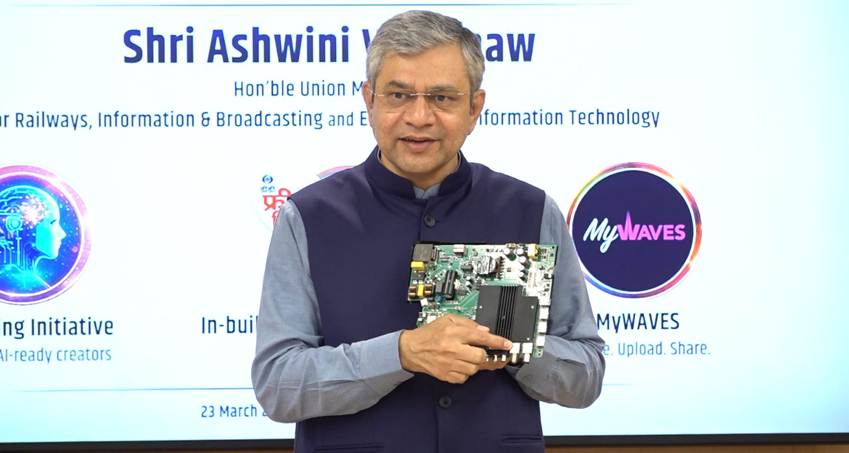
Union Minister for Information & Broadcasting Shri Ashwini Vaishnaw launched three major initiatives aimed at strengthening India's media, broadcasting, and digital sector and promoting the creative economy - namely, the National AI Skilling Initiative in partnership with Google and YouTube through the Indian Institute of Creative Technologies (IICT); MyWAVES, a citizen creator platform on WAVES OTT; and the rollout of Advanced Electronic Programme Guide (EPG) and in-built satellite tuners in television sets for enhancing access to DD Free Dish services.
What is the Orange Economy?
The Orange Economy, also referred to as the Creative Economy, is a production model where value is derived primarily from intellectual property, creativity, and cultural capital rather than physical manufacturing or natural resources.
Key Sectors: AVGC-XR (Animation, Visual Effects, Gaming, Comics, and Extended Reality), film, music, fashion, design, advertising, performing arts, and cultural tourism.
Economic Significance:
· Accounts for approximately 3% of global GDP and supports 30 million jobs worldwide
· India's entertainment and media revenue is projected to grow from USD 35.3 billion in 2025 to USD 47.2 billion by 2029
· Budget 2026-27 announced the establishment of AVGC Content Creator Labs in 15,000 schools and 500 colleges, targeting a skilled workforce of 2 million professionals by 2030
The Three Transformative Initiatives
1. National AI Skilling Initiative
The Ministry of Information and Broadcasting, in partnership with Google and YouTube, has announced a national AI skilling initiative to train 15,000 participants from the creative and media sectors. This initiative is being implemented through the Indian Institute of Creative Technologies (IICT), and is aimed at strengthening AI capabilities in areas such as animation, visual effects, gaming, and comics (AVGC) and media technology.
The programme is structured in two phases:
· Phase I (March–June 2026): Focuses on foundational AI learning at scale through Google Career Certificates and Google Cloud Generative AI learning paths. Participants will undergo courses such as AI Essentials, Prompting Essentials, Introduction to Generative AI, and Generative AI Leader Path. Successful completion of this phase will be mandatory for progression to the next stage.
· Phase II (July–December 2026): Focuses on advanced, hands-on and project-based specialization for the creative industry. The curriculum will include modules on the art of storytelling, YouTube best practices, and advanced training using AI tools such as Gemini 3, Nano Banana, Veo, and Vertex AI. The training will be conducted in major cities across the country.
Importantly, around 15,000 youths will be trained without any fee.
2. MyWAVES — Citizen Creator Platform
MyWAVES is a new feature within the WAVES OTT platform that will enable citizens to create, upload, and share content. MyWaves is designed as a structured platform for user-generated content (UGC) that will also support participation in national initiatives such as the Create in India Challenge.
The platform marks a shift from content viewing to active content participation, making WAVES OTT a platform not only for viewing but also for creation. MyWaves will support multiple formats including short videos, vertical videos, and episodic content, and will offer a multilingual interface across Indian languages.
The Create in India Challenge (CIC) with which MyWAVES aligns hosts competitions across diverse themes including the Anime Challenge, AI Film Making, Comics Creator Championship, Truth Tell Hackathon (to combat misinformation), and XR Creator Hackathon, collectively empowering India's grassroots creator economy.
3. Advanced EPG with In-Built Satellite Tuners
The Ministry of Information & Broadcasting has introduced television sets with built-in satellite tuners along with a new, user-friendly programme guide (EPG). With this initiative, viewers will be able to watch DD Free Dish channels directly on their television sets without the need for a separate set-top box, thereby reducing additional costs, wiring, and the hassle of multiple remotes.
The new advanced programme guide will allow users to easily browse channels and programme schedules in one place through a simple and intuitive interface, making the overall viewing experience more convenient for households across the country. This initiative holds particular significance for remote and rural areas where last-mile connectivity and hardware affordability remain persistent barriers.
Foreign Contribution (Regulation) Amendment Bill, 2026
- 27 Mar 2026
In News:
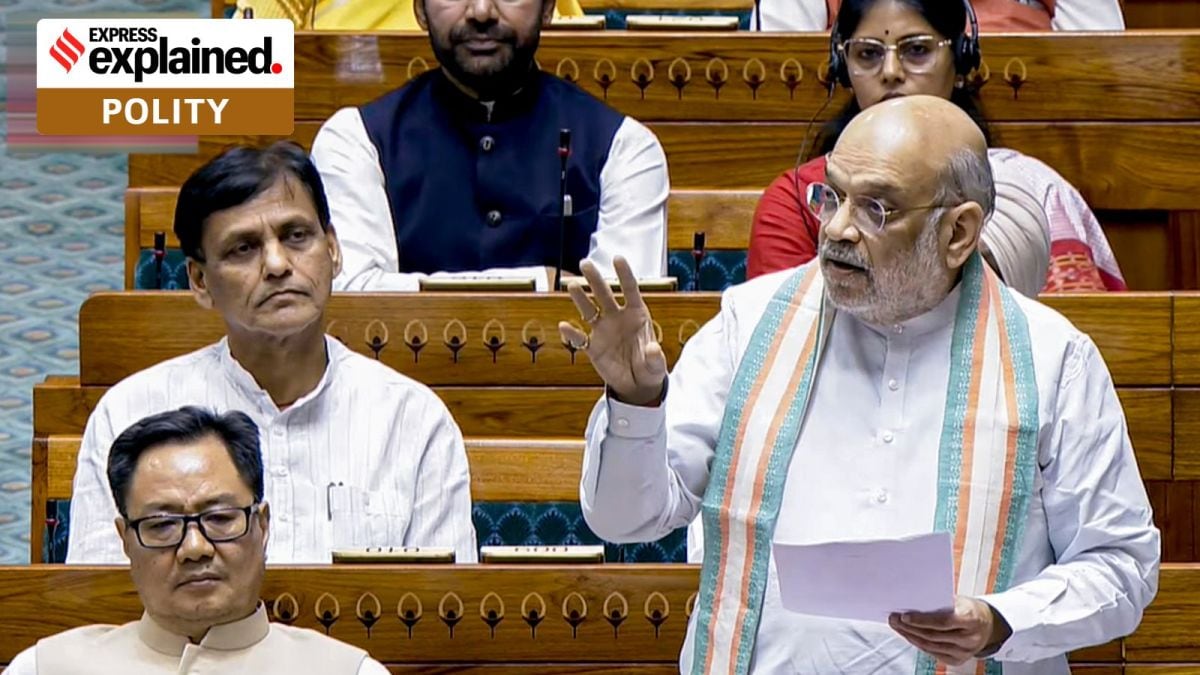
The Foreign Contribution (Regulation) Amendment Bill, 2026 was introduced in the Lok Sabha on March 25, 2026 by the Minister of State for Home Affairs, proposing significant changes to the Foreign Contribution (Regulation) Act, 2010. The Bill has since triggered considerable political debate, with its Lok Sabha discussion deferred amid opposition protests and political sensitivities ahead of the Kerala Assembly elections.
What is the Foreign Contribution (Regulation) Act, 2010?
The FCRA, 2010 is a central legislation administered by the Ministry of Home Affairs (MHA) that regulates the acceptance, utilisation, and accounting of foreign contributions received by individuals, associations, and NGOs in India.
Key Facts:
· Originally enacted in 1976; comprehensively revised in 2010; further amended in 2016, 2018, and 2020
· Around 16,000 organisations are currently registered under FCRA
· These organisations collectively receive approximately ?22,000 crore annually
· All foreign contributions must be received through a single designated account at the State Bank of India, New Delhi (main branch)
· Registration is valid for five years and must be renewed at least six months before expiry
· Foreign funds cannot be sub-granted to unregistered entities
· Foreign funding is prohibited for politicians, journalists, judges, and government servants
Permitted Uses of Foreign Funds: Cultural, economic, educational, social, and religious activities only.
What is the Legal Gap the Bill Seeks to Address?
Under Section 15 of the existing Act, assets created from foreign contributions vest in a prescribed authority upon cancellation or surrender of FCRA registration. However, no clear procedural mechanism exists for the subsequent management, supervision, or disposal of such assets — leading to administrative uncertainty and potential misuse. The 2026 Bill addresses this by inserting a new Chapter IIIA into the Act.
Key Provisions of the Amendment Bill, 2026
1. Designated Authority
A government-appointed Designated Authority is empowered to:
- Provisionally take over, supervise, manage, and dispose of foreign contributions and assets of NGOs whose registration is cancelled, surrendered, or lapsed
- Return unutilised funds and assets if registration is subsequently renewed or restored
- Permanently vest assets if the organisation fails to secure fresh registration within a prescribed period
- Preserve the religious character of any place of worship taken over under the Act
Proceeds from asset disposal are credited to the Consolidated Fund of India.
2. Expanded Definition of "Key Functionary"
Personal liability is extended to directors, trustees, partners, karta of Hindu Undivided Families (HUFs), and office-bearers of societies and trade unions — unless they prove lack of knowledge or due diligence.
3. Prior Approval for Investigations
Any law enforcement agency or State government must obtain prior Central Government approval before initiating FCRA-related investigations, significantly centralising oversight.
4. Rationalised Penalties
Maximum imprisonment for FCRA offences reduced from five years to one year, with rationalised penalties to decriminalise inadvertent procedural lapses.
5. Other Provisions
- Fixed timelines for receipt and utilisation of foreign funds
- Automatic cessation of registration upon non-renewal
- Appeals against Designated Authority orders to be filed before the District Judge within 90 days
Agri-Photovoltaics
- 27 Mar 2026
In News:
Union Budget 2026–27 nearly doubled the PM-KUSUM allocation to Rs. 5,000 crore, and the government is considering a National AgriPV Mission (10 GW target) under PM-KUSUM 2.0.
About Agri-Photovoltaics (AgriPV)
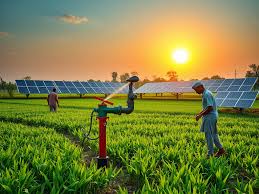
Agri-Photovoltaics (AgriPV), or Agrivoltaics, is the simultaneous dual use of agricultural land for both solar power generation and crop cultivation. Instead of clearing farmland for solar parks, panels are elevated above or spaced between crops — creating a symbiotic system where plants and panels mutually enhance each other's performance.
How It Works
Solar panels installed above crops provide partial shade, reducing heat stress and water evaporation. In return, plant transpiration cools the panels from below, improving their photovoltaic efficiency by 2–5%. The result: one plot of land produces both food and clean electricity.
· Elevated Systems: Panels mounted ~3m high. Crops grow below; machinery can operate freely. Best for large-scale mechanised farms.
· Row-Based Systems: Panels in rows with wide gaps. Sun-loving crops in gaps; shade-tolerant crops directly below. Most common in India.
· Vertical (Bifacial): Panels installed upright like fences, capturing sunlight from both faces. Minimises land coverage.
· Greenhouse-Integrated: Panels built into greenhouse roofs. Combines controlled-environment agriculture with power generation.
Why India Needs AgriPV
India faces a structural contradiction: its 300 GW solar target by 2030 requires 4–5 acres per MW, but over 55% of India's land is agricultural (156 million hectares), sustaining 60% of the workforce. Mass diversion of farmland for solar is neither viable nor acceptable.
AgriPV resolves this by transforming the food-energy relationship from competition to complementarity — achieving solar targets without displacing a single farmer or clearing a single forest. With over 300 days of sunshine annually across India's agricultural heartland, the natural conditions for AgriPV are exceptional.
Key Benefits
For Farmers
· Income diversification — sell surplus electricity to DISCOMs or earn lease/revenue from developers
· Lower input costs — solar replaces expensive diesel pumps for irrigation
· Example: A Maharashtra farmer earns fixed developer rent while harvesting chillies or brinjal beneath the panels
For Agriculture
· Water conservation — panel shade reduces evapotranspiration; fewer irrigation cycles needed in arid Rajasthan and Gujarat
· Climate resilience — panels shield crops from heatwaves, hailstorms, and erratic rainfall
· Stronger value chains — decentralised power runs cold storage, chaff cutters, and food processing locally
For the Environment
· Cuts diesel-based agricultural emissions
· Reduces transmission losses through distributed generation
· Avoids large-scale land clearance compared to conventional solar parks
Suitable Crops by Region
|
State/Region |
Suitable Crops under AgriPV |
|
Madhya Pradesh |
Tomato, onion, turmeric, tulsi |
|
Karnataka & Maharashtra |
Ragi, jowar, grapes, banana, brinjal |
|
Rajasthan & Gujarat (arid) |
Garlic, onion — benefit from reduced watering under shade |
Policy & Current Status
PM-KUSUM Scheme (2019, MNRE)
· Component A: Solar plants (up to 2 MW) on barren/fallow/cultivable land
· Component B: Standalone solar-powered irrigation pumps
· Component C: Solarisation of grid-connected agricultural pumps
· Budget 2026–27: Allocation nearly doubled to Rs. 5,000 crore
· Proposed PM-KUSUM 2.0: AgriPV as a dedicated 10 GW component
State Initiatives
|
State |
Scheme |
Key Feature |
|
Maharashtra |
MSKVY |
13.65 GW target; tariff Rs. 3.10/kWh for farmers |
|
Gujarat |
Suryashakti Kisan Yojana |
60% financial support; Rs. 7/kWh tariff for 7 years |
|
Odisha |
— |
Rs. 20,000 per acre/year for participating farmers |
|
Delhi |
MKAB Solar Yojana |
Lease income from Rs. 8,333/acre/month |
Current Status (2026): ~50 pilot AgriPV installations are active across India (including ICAR-CAZRI, Jodhpur). The India Agrivoltaics Alliance (IAA), anchored by NSEFI, is a 40 member platform working with MNRE, Agriculture, and Rural Development ministries. Large-scale commercial replication has not yet begun. The global AgriPV market is projected to grow at 8.3% CAGR, reaching USD 7.61 billion by 2031.