
Digital Twin Initiative at V.O. Chidambaranar Port
- 15 Mar 2026
In News:
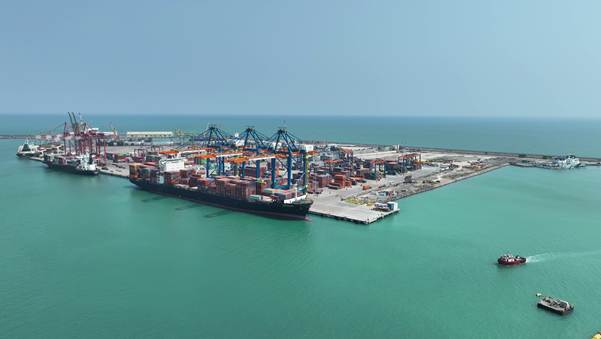
The V.O. Chidambaranar Port has become the first port in India to launch a Digital Twin initiative for port management. The project aligns with national maritime strategies such as the Maritime India Vision 2030 and the Amrit Kaal Vision 2047, aiming to modernise port operations through advanced digital technologies.
What is a Digital Twin?
A Digital Twin is a real-time virtual replica of a physical system that continuously receives data from sensors and monitoring systems to simulate and optimise operations.
At the port, the platform integrates technologies such as:
- Internet of Things (IoT) sensors
- GPS tracking
- LiDAR mapping
- Drone-based imaging
- CCTV monitoring systems
These technologies collectively create a dynamic digital model of the port’s infrastructure, assets, and maritime ecosystem.
Key Technological Features
The Digital Twin platform enables advanced operational management through:
1. Real-Time Monitoring
- Tracks berth occupancy
- Monitors vessel movements
- Analyses crane utilisation
- Tracks yard capacity and cargo flow
2. Predictive Maintenance
- Uses AI-based analytics to monitor equipment health.
- Predicts failures in cargo handling machinery, reducing downtime and improving reliability.
3. Data-Driven Decision Making
- Provides integrated insights into port operations.
- Enables better planning of logistics and maritime traffic.
Expected Outcomes and Benefits
- Reduced vessel turnaround time: Expected reduction of up to 25%.
- Improved equipment availability: Predictive maintenance enhances operational reliability.
- Enhanced safety: Real-time alerts help prevent operational hazards.
- Energy optimisation: Efficient operations reduce energy consumption and carbon emissions.
- Operational efficiency: Streamlined cargo handling and port logistics.
About V.O. Chidambaranar Port
- Overview: The V.O. Chidambaranar Port (formerly Tuticorin Port) is one of India’s 13 major ports and functions as an artificial all-weather deep-sea port on the Coromandel Coast.
Historical Background
- Declared a major port in July 1974.
- Renamed in 2011 in honour of V. O. Chidambaram Pillai, who founded the Swadeshi Steam Navigation Company to challenge British maritime dominance.
Strategic Location
The port is located at Thoothukudi on the Gulf of Mannar, close to major East–West international shipping routes, providing a strategic advantage for global maritime trade.
Operational Significance
- Second-largest port in Tamil Nadu after Chennai Port.
- Third-largest container terminal in India.
- Serves as a major gateway for trade with Europe, the Mediterranean, and the United States.
Major Cargo Handled
- Containers
- Coal
- Salt
- Fertilisers
- Other bulk and general cargo
Significance for India’s Maritime Sector
- Promotes smart port infrastructure and digitalisation.
- Enhances efficiency and competitiveness of Indian ports.
- Supports green and sustainable port operations.
- Contributes to India’s ambition of becoming a global maritime logistics hub.
SC Clarifies OBC Creamy Layer Criteria
- 15 Mar 2026
In News:
The Supreme Court of India has ruled that parental income alone cannot determine the “creamy layer” status of candidates belonging to the Other Backward Classes (OBCs) in civil services examinations. The judgment clarifies long-standing confusion in the implementation of reservation rules and emphasises that the creamy layer principle is primarily status-based rather than purely income-based.
Background of the Issue
The controversy arose due to conflicting government guidelines issued by the Department of Personnel and Training (DoPT).
- 1993 DoPT Office Memorandum (OM): Stated that income from salaries and agricultural land should not be included in the income/wealth test used to determine creamy layer status.
- 2004 DoPT Clarificatory Letter: Directed that salary income of employees working in Public Sector Undertakings (PSUs) and the private sector should be counted while determining the creamy layer.
This created a situation where:
- Children of government employees could retain OBC reservation based on the status of their parent’s post, even if salaries were high.
- Children of PSU or private sector employees could lose reservation benefits solely because their parental income crossed the prescribed threshold.
Key Observations of the Supreme Court
1. Creamy Layer Determination Must Be Status-Based
The Court held that creamy layer identification should focus on social and occupational status, not merely income.
Therefore, factors such as:
- Parent’s employment category (Group A, B, C, or D)
- Position and authority in the occupational hierarchy
should be considered along with income.
2. Quashing the 2004 Clarification
The Court set aside the 2004 DoPT clarification, stating that it created inconsistencies in applying reservation rules and contradicted the earlier 1993 guidelines.
3. Violation of Equality Principles
The Court held that the government’s earlier approach resulted in “hostile discrimination.”
- Children of lower-level government employees could still benefit from OBC reservation due to the status-based test.
- However, children of PSU or private sector employees with similar socio-economic positions were excluded solely due to salary levels.
This unequal treatment violated Articles 14, 15, and 16 of the Constitution, which guarantee equality before law and equal opportunity in public employment.
4. Relief for Affected Candidates
The judgment may expand eligibility for OBC reservation, particularly benefiting children of PSU employees, public sector bank employees, and private sector workers who were previously excluded due to income-based calculations.
The Court also directed the government to create supernumerary posts if required to accommodate candidates who were wrongly denied reservation benefits earlier.
Concept of the Creamy Layer
- The idea of excluding the more advanced sections among OBCs from reservation benefits was established in the landmark Indra Sawhney vs Union of India case.
- Objective: To ensure that reservation benefits reach socially and educationally backward sections, rather than the relatively advanced members within OBC communities.
Existing Criteria for Creamy Layer
- Government Employees
- Children of Group A officers are automatically considered part of the creamy layer.
- Children of officers promoted to Group A before the age of 40 are also excluded.
- Children of two Group B officers fall under the creamy layer.
- Non-Government Occupations: For those employed in the private sector or other professions, the income threshold for creamy layer is ?8 lakh per annum (since 2017).
Significance of the Judgment
- Clarifies reservation policy: Removes ambiguity in determining creamy layer status.
- Ensures equality: Prevents discriminatory treatment between government employees and those in PSUs or the private sector.
- Strengthens constitutional principles: Reinforces the guarantees of Articles 14, 15, and 16.
- Promotes fair access to reservations: Ensures benefits reach genuinely disadvantaged groups.
Supreme Court on No-Fault Compensation for Covid-19 Vaccine Adverse Effects
- 15 Mar 2026
In News:
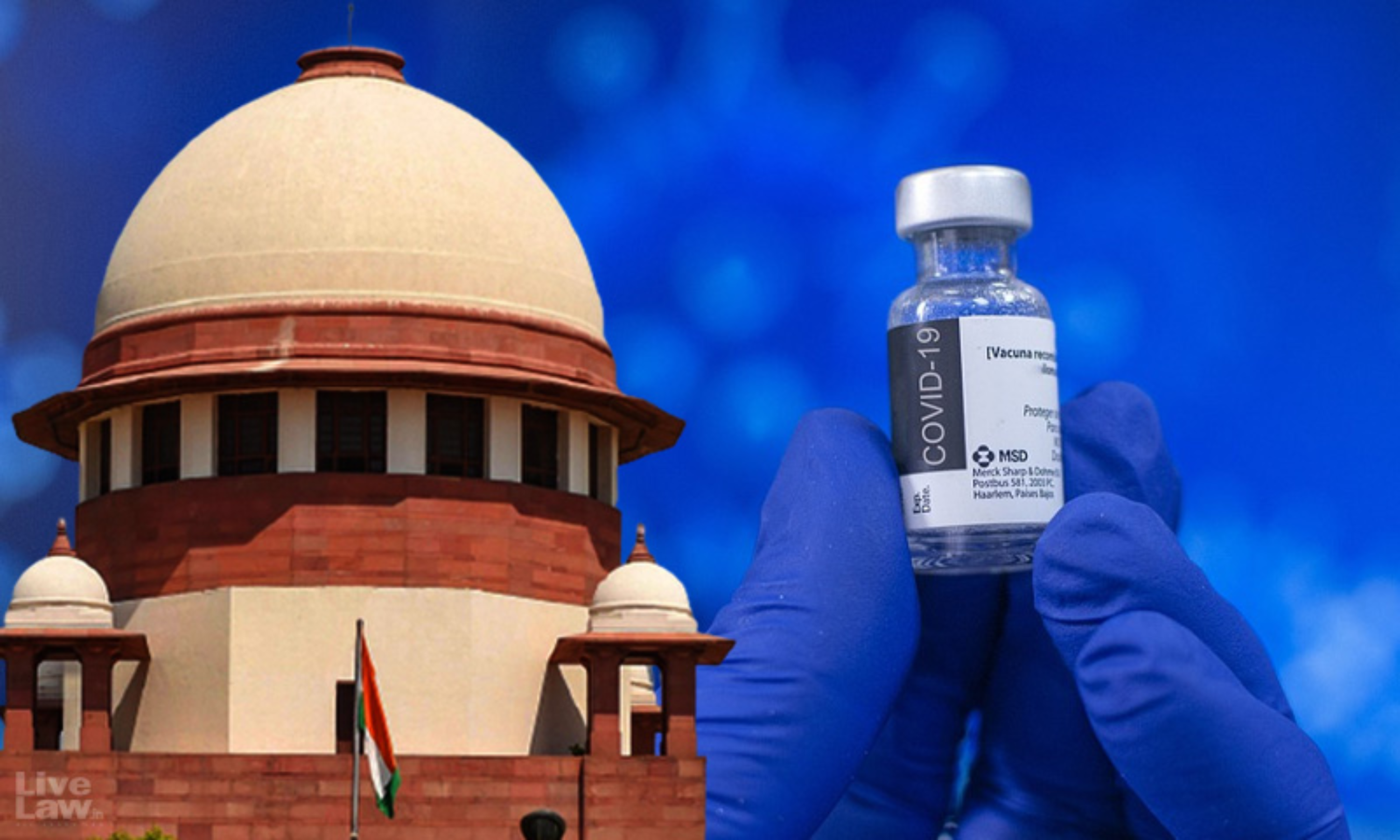
The Supreme Court of India has directed the Union Government to formulate a “no-fault liability compensation policy” for individuals who suffered serious adverse effects or deaths following Covid-19 vaccination during India’s nationwide immunisation programme. The Court held that victims or their families should receive compensation without having to prove negligence by the State or vaccine manufacturers.
Key Observations of the Supreme Court
1. Principle of No-Fault Liability
The Court invoked the no-fault liability principle, which allows compensation to victims without establishing fault or wrongdoing.
- The principle already exists in Indian law in areas such as motor vehicle accident compensation.
- Similar vaccine injury compensation schemes operate in countries such as Australia, the United Kingdom, and Japan.
This framework ensures speedy and equitable relief for victims of rare but serious vaccine side effects.
2. Rejection of Individual Litigation
The Union Government had argued that affected families could approach civil courts or consumer courts for damages against manufacturers or the State.
However, the Court rejected this argument, stating that:
- Individual litigation would lead to multiple legal battles.
- It could produce inconsistent outcomes and unequal access to justice.
- Such a situation may violate the Right to Equality under Article 14 of the Constitution.
3. State’s Positive Obligation
- Invoking Article 21 (Right to Life and Health), the Court emphasised that the State must act as an active guardian of citizens’ welfare and dignity.
- Since the vaccination drive was a State-led public health intervention, the government has a positive obligation to support those who suffer serious outcomes, even if such events are extremely rare.
- For instance, certain blood-clotting disorders associated with vaccines were reported at an estimated rate of about 0.001 per one lakh doses in India.
4. Compensation Beyond Surveillance
The Court observed that monitoring adverse events alone is insufficient. India already has a mechanism for investigating vaccine side effects through Adverse Events Following Immunisation (AEFI) committees.
The Court ruled that:
- These committees are adequate for medical assessment.
- However, the State’s responsibility cannot end with surveillance and investigation; it must extend to fair financial compensation.
5. Clarification on Liability
The Court clarified that creating a compensation policy does not amount to an admission of legal liability by the Union Government or vaccine manufacturers. Rather, it is a welfare-oriented public health measure.
Background: Earlier Judicial Interventions
1. Gaurav Kumar Bansal vs Union of India (2021)
The Supreme Court directed the National Disaster Management Authority (NDMA) to recommend guidelines for ex-gratia assistance for Covid-19 deaths.
Following this:
- NDMA fixed ?50,000 compensation per Covid-19 death.
- Payment was to be made by states through the State Disaster Response Fund (SDRF).
- A simplified procedure recognised deaths occurring within 30 days of a positive test as Covid-19 deaths.
- District-level grievance redressal committees were established to resolve disputes related to death certificates.
2. Jacob Puliyel vs Union of India (2022)
In this case, the Supreme Court:
- Upheld the validity of the Covid-19 vaccine approval process and the government’s AEFI monitoring system.
- Recognised bodily autonomy under Article 21, stating that no individual can be forcibly vaccinated.
Significance of the Judgment
- Strengthens public health governance: Encourages trust in vaccination programmes by ensuring protection for rare adverse outcomes.
- Ensures equitable relief: Avoids lengthy and costly litigation for affected families.
- Balances public interest and individual rights: Recognises both the importance of mass vaccination and the rights of individuals who suffer harm.
- Aligns India with global practices: Many countries already operate vaccine injury compensation programmes.
Discovery of New Lichen Moth Species in the Eastern Himalayas
- 15 Mar 2026
In News:
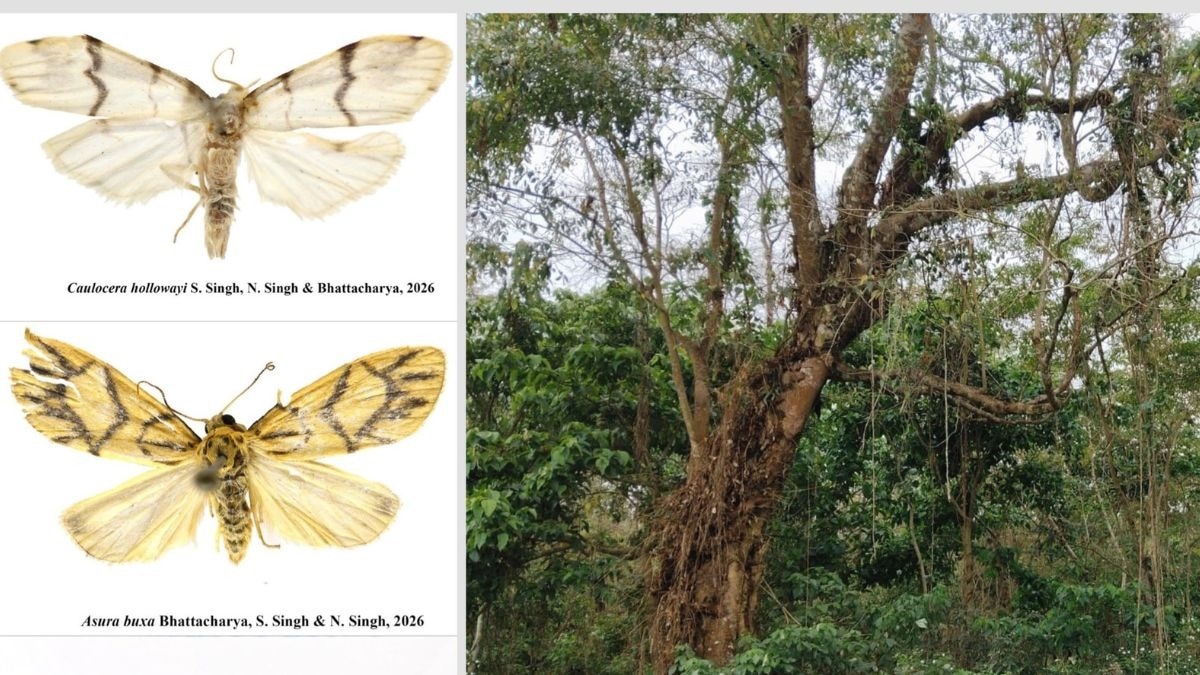
Scientists from the Zoological Survey of India (ZSI) have discovered two new species of lichen moths—Caulocera hollowayi and Asura buxa—in the Eastern Himalayan biodiversity hotspot. The discovery highlights the region’s rich but still underexplored biodiversity and the importance of taxonomic research in conservation.
About the Discovery
Researchers from ZSI identified two previously unknown moth species belonging to the order Lepidoptera, which includes butterflies and moths.
The species were identified through detailed morphological examination, including:
- Wing pattern and coloration analysis
- Chaetotaxy (arrangement of body scales and bristles)
- Microscopic study of reproductive structures, a crucial feature in insect taxonomy
Such techniques help scientists differentiate closely related species and confirm whether a specimen represents a new species.
Newly Discovered Species
1. Caulocera hollowayi
- Genus: Caulocera (lichen moth group)
- Location of discovery: Golitar region, Sikkim
- Key Characteristics:
- Distinctive wing colour patterns and band structures
- Unique reproductive structures visible under microscopic analysis
- Identified using detailed morphological traits and chaetotaxy
2. Asura buxa
- Genus: Asura (lichen moth group)
- Location of discovery: Panijhora region, West Bengal in the Eastern Himalayas
- Key Characteristics:
- Unique wing markings and coloration
- Distinct genital morphology, an important taxonomic feature in Lepidoptera
- Specific body scale arrangements confirming its status as a new species
About Lichen Moths
Lichen moths belong to a group of moths known for their association with lichens and mosses found in forest ecosystems.
Ecological Role:
- Act as bioindicators of ecosystem health
- Participate in nutrient cycling in forest habitats
- Help scientists understand species interactions in fragile mountain ecosystems
Importance of the Discovery
- Biodiversity documentation: Expands the scientific record of India’s insect diversity.
- Himalayan ecosystem research: Provides new insights into species adaptation in mountain environments.
- Conservation significance: Highlights the ecological importance of the Eastern Himalayas, one of the world’s major biodiversity hotspots.
- Taxonomic advancement: Reinforces the role of systematic biological surveys in identifying and classifying previously unknown species.
About Zoological Survey of India (ZSI)
- Established: 1916
- Headquarters: Kolkata
- Ministry: Ministry of Environment, Forest and Climate Change (MoEFCC)
- Mandate:
- Survey and documentation of India’s faunal diversity
- Taxonomic research and species identification
- Support biodiversity conservation and policy formulation
C-DOT and AI-Driven Fraud Detection

- 15 Mar 2026
In News:
India’s Centre for Development of Telematics (C-DOT) received international recognition at the Mobile World Congress (MWC) 2026 in Barcelona for its indigenous AI-driven telecom fraud detection platform “FraudPro.” The solution was shortlisted among the top finalists at the prestigious Global Mobile (GLOMO) Awards, highlighting India’s growing capabilities in telecom innovation and cybersecurity.
About Mobile World Congress (MWC)
- The Mobile World Congress (MWC) is the world’s largest global event for the mobile communications industry, organised annually by the GSMA in Barcelona, Spain.
- It brings together telecom operators, technology companies, and policymakers to showcase innovations in mobile technologies and digital connectivity.
- Recognition at this platform indicates global validation of technological innovation and industry impact.
FraudPro: AI-Driven Fraud Detection Solution
FraudPro is an indigenous telecom fraud detection platform developed by C-DOT using advanced Artificial Intelligence (AI) and data analytics.
Key Features
- AI-powered analytics: Uses machine learning algorithms to analyse telecom data and identify suspicious patterns.
- Real-time fraud detection: Detects fraudulent activities such as fake SIM registrations and telecom identity misuse.
- Facial deduplication technology: Identifies multiple connections obtained using the same identity or biometric information.
- Enhanced telecom security: Helps telecom operators prevent fraud, identity theft, and SIM-based scams.
Significance
- Strengthens digital trust and cybersecurity in telecom networks.
- Supports government efforts to curb telecom-related financial fraud and cybercrime.
- Demonstrates India’s ability to build indigenous telecom security technologies.
Centre for Development of Telematics (C-DOT)
Establishment and Institutional Structure
- Established: August 1984
- Nature: Autonomous telecom R&D organisation under the Department of Telecommunications (DoT), Government of India.
- Legal status: Registered as a society under the Societies Registration Act, 1860 and recognised as a Public Funded Research Institution (PFRI) by the Department of Scientific and Industrial Research (DSIR).
Objectives
- Develop indigenous telecom technologies suited to India’s diverse communication needs.
- Promote self-reliance in telecom infrastructure.
- Strengthen domestic capability in digital networks, cybersecurity, and emerging telecom technologies.
Major Areas of Work
1. Telecom Technology Research
C-DOT develops technologies in:
- Optical communication systems
- Switching and routing technologies
- Wireless networks and broadband systems
- Cybersecurity solutions
2. Rural Connectivity: Developed Rural Automatic Exchanges (RAX) and other technologies that expanded telecommunication services in rural India during the early telecom revolution.
3. Technology Transfer: Transfers developed technologies to domestic manufacturers, helping build India’s telecom manufacturing ecosystem.
4. Emerging Technologies
Current research areas include:
- 5G and future 6G technologies
- Artificial Intelligence-based network management
- Internet of Things (IoT) and Machine-to-Machine (M2M) communication
- Quantum-secure communication and cybersecurity solutions
5. Support to National Digital Initiatives
C-DOT technologies support key programmes such as:
- Digital India
- BharatNet
- Smart Cities Mission
- Make in India