
National Pest Surveillance System (NPSS)
- 12 Nov 2025
In News:
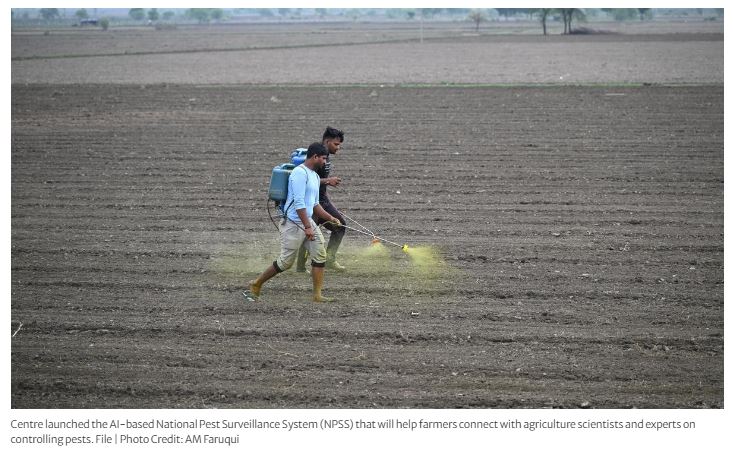
The National Pest Surveillance System (NPSS) is a digital, AI-driven initiative launched by the Ministry of Agriculture and Farmers Welfare to modernise pest management practices and strengthen decision-making at the farm level. Introduced in August 2024, NPSS aims to provide timely, scientific, and location-specific pest advisories to farmers across India.
What is NPSS?
- NPSS is a technology-based pest monitoring and advisory platform that leverages Artificial Intelligence (AI) and Machine Learning (ML).
- It comprises a user-friendly mobile application and a web portal, ensuring accessibility even for small and marginal farmers.
- The platform enables direct interaction between farmers and agricultural scientists/experts, including advisory support over phone.
Objectives
- Reduce farmers’ dependence on pesticide retailers, who often promote excessive or inappropriate chemical use.
- Promote a scientific and evidence-based approach to pest and disease management.
- Minimise crop losses due to pest attacks and improve overall agricultural productivity.
- Encourage judicious pesticide use, supporting sustainable and environmentally responsible farming.
Key Features
- AI/ML-based pest identification using real-time field data.
- Continuous pest surveillance and monitoring across agro-climatic zones.
- Automated and customised advisories based on crop type, pest incidence, and local conditions.
- Real-time analytics and dashboards to track pest trends and outbreaks.
- Seamless connectivity between farmers, scientists, and extension services.
How the System Works
- Farmers upload field information (such as crop stage and pest symptoms) via the app or portal.
- AI and ML algorithms analyse data to detect patterns and predict pest outbreaks.
- Expert-validated advisories are generated and communicated promptly, enabling early and preventive action.
Benefits to Farmers
- Quick response to pest and disease outbreaks, reducing yield losses.
- Actionable insights for timely spraying, biological control, or cultural practices.
- Improved cost efficiency by avoiding unnecessary pesticide use.
- Enhanced confidence and autonomy in farm-level decision-making.
Significance
- Aligns with India’s goals of Digital Agriculture and technology-led extension services.
- Strengthens food security by mitigating pest-induced crop losses.
- Supports sustainable agriculture by promoting precise and need-based pest control.
- Enhances last-mile delivery of scientific knowledge to farmers.
Primary Amoebic Meningoencephalitis (PAM)

- 12 Nov 2025
In News:
Primary Amoebic Meningoencephalitis (PAM) is a rare but usually fatal infection of the central nervous system (CNS), affecting the brain and spinal cord. Recent advisories issued during the monsoon season, including warnings by the Kerala government, have brought renewed attention to this disease due to favourable environmental conditions for the causative organism.
Causative Organism
- PAM is caused by Naegleria fowleri, a free-living amoeba.
- Amoebae are single-celled eukaryotic organisms belonging to the kingdom Protista, characterised by their ability to change shape and move using pseudopodia.
Habitat and Transmission
- Naegleria fowleri thrives in warm freshwater environments, especially:
- Lakes, rivers, ponds
- Hot springs
- Stagnant or slow-moving water
- Poorly maintained swimming pools, water parks, hot tubs, and spas
- Mode of entry:
- The amoeba enters the human body through the nose, not by drinking water.
- Activities such as swimming, diving, or nasal irrigation with untreated water can force contaminated water into the nasal passages.
- From the nose, the amoeba migrates along the olfactory nerves to the brain.
Pathogenesis
- Once inside the brain, Naegleria fowleri:
- Rapidly multiplies
- Invades brain tissue and meninges
- Feeds on nerve and glial cells
- This leads to severe inflammation, necrosis (cell death), haemorrhage, and swelling of brain tissue.
- The disease progresses very rapidly.
Symptoms
- Incubation period: Usually 1–9 days after exposure.
- Early symptoms (often resemble bacterial meningitis):Fever, Severe headache, Nausea and vomiting, and Sensitivity to light
- Advanced symptoms:Stiff neck, Confusion and hallucinations, Seizures, and Loss of consciousness and coma
- Fatality:PAM is frequently fatal within days to weeks of symptom onset.Very few survivors have been reported worldwide.
Treatment Status
- There is no standard or definitive treatment for PAM.
- Current management relies on combination therapy, including anti-parasitic and supportive drugs, with limited success.
- Early diagnosis remains a major challenge due to rapid disease progression.
Prevention and Public Health Measures
- Avoid swimming or diving in warm, stagnant freshwater bodies, especially during summer or monsoon.
- Use nose clips or keep the nose closed while swimming.
- Ensure proper chlorination and maintenance of swimming pools and water parks.
- Use only treated or sterile water for nasal cleansing or irrigation.
- Health authorities advise prompt medical consultation if symptoms like prolonged fever, headache, neurological signs, or altered consciousness appear after freshwater exposure.
Differentiation from Other Amoebic Infections
- PAM should not be confused with granulomatous amoebic encephalitis (GAE), another rare CNS infection caused by Acanthamoeba or Balamuthia mandrillaris, which has a slower disease course.
World Bank Group Guarantee Platform

- 12 Nov 2025
In News:
The World Bank Group (WBG) has operationalised a unified Guarantee Platform to scale up the use of guarantees for mobilising private capital in developing countries. Initiated in 2024, the platform is housed at the Multilateral Investment Guarantee Agency (MIGA) and integrates guarantee products and expertise from the World Bank, the International Finance Corporation (IFC), and MIGA into a single, streamlined system.
Objectives
- Scale guarantee issuance to USD 20 billion annually by 2030.
- Serve as a one-stop shop for all WBG guarantee business.
- De-risk investments to catalyse private capital flows into emerging markets and developing economies.
- Improve simplicity, speed, and efficiency through a market-friendly menu of options.
What the Platform Offers
Clients can choose from a simplified menu of three guarantee/insurance coverages:
- Credit Guarantees- for loans to public or private sector entities.
- Trade Finance Guarantees- for trade finance projects involving public entities.
- Political Risk Insurance- against non-commercial risks (e.g., expropriation, transfer restrictions) for private sector projects or PPPs.
Why Guarantees Matter
- Guarantees mitigate risk, lowering the cost of capital and crowding in private investment.
- They complement country-level reforms and project preparation, enhancing bankability.
- The approach aligns with global calls (including G20 expert recommendations) to expand guarantee use to unlock private finance.
Operational Significance
- Consolidation at MIGA removes duplication across WBG institutions and standardises processes.
- A scalable modelprioritises high-impact projects and optimises resource allocation.
- The platform supports diverse sectors such as energy access, climate action, and pandemic preparedness, working alongside IFC’s advisory and financial instruments.
Recent Performance (FY 2024)
- USD 10.3 billion in new guarantees issued across WBG products now aligned under the platform:
- MIGA: USD 8.2 billion
- IFC: USD 1.4 billion
- World Bank: ~USD 0.7 billion
Project-76

- 12 Nov 2025
In News:
Project-76 is a flagship indigenous defence initiative under which India aims to design and develop its first fully indigenous conventional diesel-electric attack submarine. The project reflects India’s growing emphasis on self-reliance in defence manufacturing and strengthening undersea warfare capabilities.
What is Project-76?
- Project-76 is being conceptualised by the Warship Design Bureau of the Indian Navy.
- It envisages the construction of 12 conventional submarines in the long term.
- These submarines will be diesel-electric attack submarines equipped with Air Independent Propulsion (AIP) systems.
- Expected submerged displacement: around 3,000 tonnes, placing them in a higher capability class than earlier foreign-designed submarines.
Key Technological Features
- Air Independent Propulsion (AIP): Enhances underwater endurance and stealth by reducing the need to surface frequently.
- Indigenous Weapon Control System: Reduces dependence on foreign Original Equipment Manufacturers (OEMs).
- Lithium-ion batteries: Improve energy density, endurance, and operational efficiency compared to traditional lead-acid batteries.
- Incorporation of design learnings from:
- Project-75 (French Scorpène-class submarines)
- Project-751 (India) (German–Spanish design lineage)
Strategic Significance
- Project-76 is intended to replace and succeed the Sindhughosh (Kilo) class submarines, which form a major part of India’s current conventional submarine fleet.
- It will help the Indian Navy maintain a robust 3,000-ton-class submarine force, critical for:
- Sea denial operations
- Protection of Sea Lines of Communication (SLOCs)
- Deterrence in the Indo-Pacific region
- The project marks a shift from licensed production to indigenous design ownership.
Role of DRDO
- The Defence Research and Development Organisation (DRDO) has received approval from the Ministry of Defence to undertake a preliminary design study for Project-76.
- This study will define:
- Technical contours
- Feasibility and timelines
- Cost and capability parameters
- The study is expected to take about one year, after which a proposal will be submitted to the Cabinet Committee on Security (CCS) for formal project sanction.
- Project-76 builds upon experience gained from the Advanced Technology Vessel (ATV) programme, under which the Arihant-class nuclear ballistic missile submarines (SSBNs) were developed, and ongoing work on nuclear-powered attack submarines (SSNs).
Methylocucumisoryzae
- 12 Nov 2025
In News:
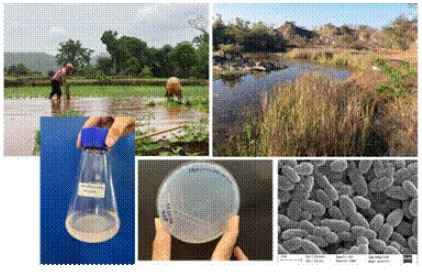
India has identified a home-grown biological solution to methane mitigation, a major contributor to climate change, through the discovery of indigenous methanotrophic bacteria from rice fields and wetlands, particularly in western India. This discovery strengthens India’s climate response by leveraging natural microbial processes rather than energy-intensive technological interventions.
Methane and Climate Change
- Methane (CH?) is a colourless, odourless, flammable gas, also called marsh gas.
- It is the second most important greenhouse gas after carbon dioxide.
- Methane has ~26 times higher global warming potential than CO? over a 100-year period.
- Major sources include wetlands, rice paddies, ruminant livestock, and landfills, where methane is produced by methanogens under anaerobic conditions.
Methanotrophs: Natural Methane Mitigators
- Methanotrophs are methane-oxidising bacteria that consume methane as their energy source.
- They oxidise methane into CO? and water, while building their own biomass.
- Habitat: Wetlands, rice fields, ponds, quarry waters, and other oxygen–methane interface zones.
- Their ecological role is critical in preventing a sharp rise in atmospheric methane concentrations.
Discovery of Methylocucumisoryzae
Scientists at MACS Agharkar Research Institute, an autonomous institute under the Department of Science and Technology (DST), have isolated and characterisedIndia’s first indigenous methanotroph cultures.
- A novel genus and species named Methylocucumisoryzae was described.
- The bacterium has an oval, elongated, cucumber-like shape, earning it the nickname “methane-eating cucumber”.
- It remains phylogenetically unique and endemic, with no reports from outside India even after a decade of study.
Key Features of Methylocucumisoryzae
- Habitat: Rice fields, wetlands, and water-filled stone quarries (e.g., VetalTekdi–ARAI hill, Pune).
- Size: Unusually large for bacteria (3–6 µm), comparable to small yeast cells.
- Thermal behaviour: Strictly mesophilic; cannot grow above 37°C, unlike many methanotrophs.
- Colony colour: Light pale pink, linked to a carotenoid biosynthesis pathway.
- Ecological role: Indicates an active methane cycle in natural and semi-natural ecosystems.
Agricultural and Biotechnological Significance
- Experimental studies show that Methylocucumisoryzae can promote rice plant growth, inducing:
- Early flowering
- Increased grain yield
- Trials were conducted on the Indrayani rice variety, widely cultivated in Maharashtra.
- This highlights a dual benefit: climate mitigation and agricultural productivity.
Constraints and Way Forward
- A major limitation is the slow growth rate, restricting large-scale cultivation for direct application.
- However, its natural abundance in rice fields and wetlands suggests it already plays a silent but significant role in methane mitigation.
- Improving culture techniques could enable future use in climate-smart agriculture and biotechnological applications.