
Adam Chini Rice
- 20 Nov 2025
In News:
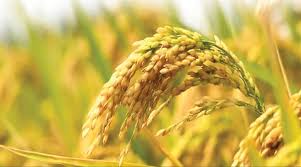
Agricultural scientists at Banaras Hindu University (BHU) have achieved a major breakthrough in improving the resilience and productivity of the traditional Adam Chini (Adamchini) rice using mutagenesis, making the variety suitable for large-scale cultivation while preserving its unique aroma and grain quality.
About Adam Chini Rice
- Type: Aromatic black rice variety
- Region: Eastern Uttar Pradesh – mainly Chandauli, Varanasi and Vindhya region
- GI Status: Received Geographical Indication (GI) tag in 2023
- Local Branding: Recognised by the state government as “Vindhya Black Rice”
Key Characteristics (Traditional Variety)
- Grain Type: Short-bold, sugar-crystal-like grains
- Aroma & Quality: Renowned for excellent flavour and pleasant fragrance
- Plant Height: Up to 165 cm (tall, prone to lodging)
- Maturity Period: ~ 155 days
- Yield: Low – 20–23 quintals/ha
- Cooking Quality:
- Intermediate amylose content → rice remains fluffy and soft on cooling
- Intermediate alkali digestion value
- Stress Tolerance: Drought tolerance and disease resistance
Scientific Intervention
- Technique Used:Mutagenesis (induced genetic variation without altering core varietal identity)
- Research Duration: Over 14 years by BHU’s Department of Genetics & Plant Breeding
- Output: Development of 23 novel mutant lines retaining aroma and grain type
Improved Mutant Traits
- Reduced Height: ~ 105 cm (e.g., Mutant-14) → less lodging
- Early Maturity: ~ 120 days (e.g., Mutant-19)
- Higher Yield:30–35 quintals/ha (Mutants 14, 15, 19, 20)
- Net Impact: Higher productivity + climate resilience without loss of fragrance, reportedly superior to Basmati in aroma
Integrated Forum on Climate Change and Trade
- 20 Nov 2025
In News:
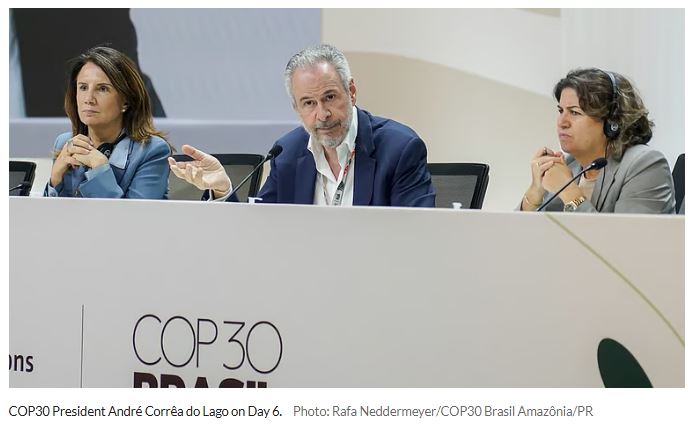
The 30th Conference of the Parties (COP30) to the United Nations Framework Convention on Climate Change formally launched the Integrated Forum on Climate Change and Trade (IFCCT) at Belém. The initiative responds to growing global concerns that climate policies and trade measures are increasingly intersectingand clashingwithout adequate coordination.
About the Integrated Forum on Climate Change and Trade
- Nature: A politically supported, non-negotiating forum
- Purpose: To provide a permanent space for countries to discuss the interface between climate action, trade policy, and development priorities
- Co-Chairing: Brazil and a developed-country partner
- Participation: Open to all Parties to the UNFCCC
- Institutional Status:
- Independent of both the WTO and the UNFCCC
- Does not negotiate binding outcomes, interpret agreements, adjudicate disputes, or assess specific national measures
Rationale
- Climate-related trade measures (e.g., tariffs, border carbon adjustments, industrial subsidies) are proliferating rapidly.
- Countries increasingly recognise that trade policy will shape their ability to meet climate goals.
- Uncoordinated actions risk fragmentation, trade disputes, and reduced trust, especially affecting developing countries.
Key Features
- Consultative Process:
- An open-ended consultation phase extending into 2026 to define discussion themes and the forum’s jurisdiction.
- First consultation round scheduled in Geneva, symbolically placing climate–trade dialogue close to the multilateral trading system.
- Interoperability Focus:Aims to promote coherence between climate and trade regimes, avoiding fragmented rule-making.
- Multi-Stakeholder Engagement:Involves civil society organisations, business associations, and international initiatives.
- Development-Oriented Approach:Seeks to amplify the voice of developing countries in shaping emerging trade rules linked to climate action.
Global Perspectives Highlighted at Launch
- Developing Countries: Emphasised concerns over unilateral trade measures and stressed principles like Common But Differentiated Responsibilities (CBDR).
- Developed Economies: Highlighted the need for open, rules-based trade to support clean technology transitions and emissions reduction.
- Institutional Concerns:The World Trade Organization warned that a patchwork of climate-related trade measures could undermine predictability unless better coordinated.
Significance
- Recognises that climate and trade can no longer be treated as separate policy domains.
- Attempts to prevent trade from becoming a fault line in global climate cooperation.
- Represents a strategic effort by the COP30 Presidency to align climate ambition with global economic governance.
Sakurajima Volcano
- 20 Nov 2025
In News:
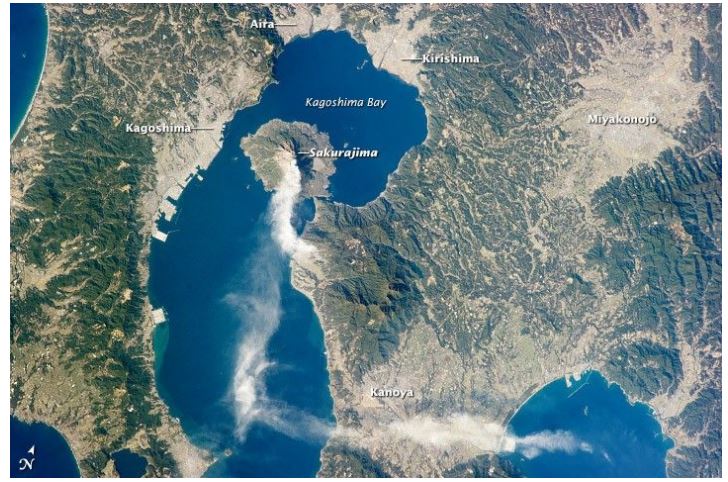
Sakurajima, one of the most active volcanoes of Japan, erupted multiple times recently, sending ash and smoke plumes up to 4.4 km into the atmosphere. The eruption led to ashfall-related disruptions, including cancellation of flights at Kagoshima Airport. This was the first eruption in nearly 13 months to send ash above 4 km.
Location & Geological Setting
- Located on the southern tip of Kyushu, near Kagoshima
- Lies at the southern edge of the Aira Caldera
- Situated on a convergent plate margin, associated with subduction-related volcanism
Type & Structure
- Stratovolcano: Built from alternating layers of lava and ash
- Andesitic volcano:
- Magma is highly viscous
- High gas content, making eruptions potentially explosive
- Composed mainly of two central cones:
- Kitadake (north peak)
- Minamidake (south peak)
Eruptive History
- Among the most active volcanoes in Japan, with frequent eruptions of varying intensity
- 1914 eruption:
- One of Japan’s most powerful eruptions
- Lava flows filled the strait, connecting Sakurajima island to the mainland peninsula
- 2019 eruption: Ash plume rose up to 5.5 km
- Recent eruptions monitored by the Japan Meteorological Agency, which also warned of ashfall in Kagoshima and nearby Miyazaki region
Associated Impacts
- Ashfall affecting aviation, transport and daily life
- Recurrent eruptions make Sakurajima a key site for volcanic hazard monitoring and disaster preparedness
What is a Volcano?
- A volcano is an opening in the Earth’s crust through which magma, gases and ash escape
- Eruptions may be:
- Explosive (ash columns, pyroclasts)
- Effusive (lava flows)
- Duration can range from days to years
e-Jagriti Platform

- 20 Nov 2025
In News:
The e-Jagriti Platform, launched on 1 January 2025, has emerged as a nationwide digital backbone for consumer dispute redressal. By November 2025, it had registered over 2.75 lakh users, including 1,388 Non-Resident Indians (NRIs), and facilitated large-scale paperless, contactless and technology-driven consumer justice.
About e-Jagriti
- e-Jagriti is a flagship digital initiative of the Department of Consumer Affairs under the Ministry of Consumer Affairs, Food & Public Distribution.
- Objective: Strengthen and modernise the consumer dispute redressal system by integrating filing, hearing, tracking and disposal of cases on a single unified digital platform.
Key Features
- Global Accessibility:Consumers and NRIs can file and manage complaints from anywhere in the world; removes geographical barriers.
- Integrated Digital Ecosystem:Brings together legacy systems such as OCMS, e-Daakhil, CONFONET and NCDRC CMS into a single seamless interface, reducing fragmentation.
- AI-Enabled Services:
- Smart search of archived complaints, cases and judgments using AI-based metadata and keyword creation
- Voice-to-text conversion of judgments and case history using AI/ML
- End-to-End Digital Process:Online filing, OTP-based registration, digital or offline fee payment, document exchange, virtual hearings and real-time case tracking.
- Inclusive & Accessible Design:Multilingual interface, chatbot assistance, voice-to-text tools for elderly and differently-abled users.
- Secure Transactions:Fee payments integrated with Bharat Kosh and PayGov gateways; secure encryption and role-based access.
Performance & Impact (2025)
- Cases Filed: ~ 1,30,550
- Cases Disposed: ~ 1,27,058 (high disposal efficiency)
- Disposal Rate: Exceeded 100% in several states and at the National Consumer Disputes Redressal Commission level.
- Digital Outreach:
- Over 2 lakh SMS alerts and 12 lakh email notifications for case events and security updates.
- High Adoption States: Gujarat, Uttar Pradesh, Maharashtra.
NRI Participation
- 466 complaints filed by NRIs in 2025.
- Major countries: USA, UK, UAE, Canada, Australia, Germany.
- Enables settlement of disputes (insurance claims, product defects, services) without travel to India.
Asiatic Caracal
- 20 Nov 2025
In News:
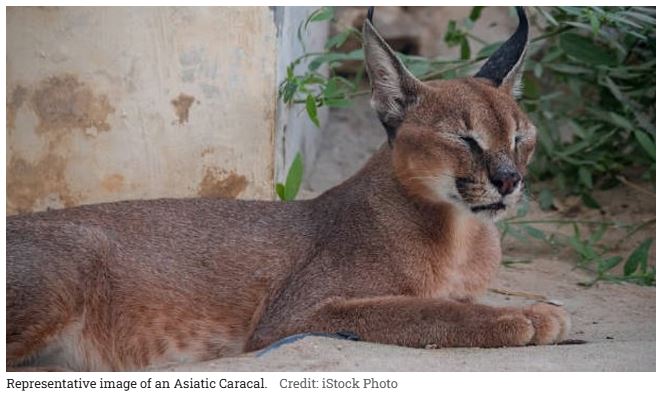
The elusive Asiatic Caracal was recently sighted at Ramgarh in Jaisalmer, marking a significant wildlife record for Rajasthan. Once widespread across India’s grasslands and semi-arid regions, the species had nearly disappeared from public consciousness due to its extremely low numbers and elusive behaviour.
About the Caracal
- Scientific Name:Caracal caracal
- Common Names: Desert lynx (misnomer); Siya gosh in India (Persian for “black ear”)
- Taxonomy: More closely related to the African golden cat and serval than to lynxes
- Type: Medium-sized wild cat, shy and predominantly nocturnal
Distribution
- Global: Africa, Central Asia, the Middle East, arid regions of Pakistan, and north-western India
- India: Extremely rare; estimated population of ~50 individuals, mainly confined to Rajasthan and Gujarat
Habitat
- Occupies semi-deserts, savannahs, shrublands, steppes, dry forests, and woodlands
- Strong preference for dry areas with low rainfall
Key Physical & Behavioural Features
- Solid build, long legs, short face, and distinctive black ear tufts
- Coat colour ranges from red-tan to sandy, with occasional black individuals
- Dark facial markings near eyes and nose; short, dense fur
- Back legs longer than front, aiding agility
- Exceptional leaper: can jump up to 3 metres (10 feet) to catch birds mid-air
- Speed: up to 80 km/h (50 mph) in short bursts
- Largely nocturnal and elusive, making sightings rare
Conservation Status
- IUCN Red List:Least Concern (globally)
- Indian Context: Despite global status, the species is locally threatened due to habitat loss, fragmentation, and very small population size