
Dumpsite Remediation Accelerator Programme (DRAP)

- 16 Mar 2026
In News:
The Government of India has launched the Dumpsite Remediation Accelerator Programme (DRAP) to expedite the remediation of legacy waste dumpsites across urban areas. The initiative aims to eliminate large garbage dumps and reclaim urban land, thereby improving environmental quality and public health.
About Dumpsite Remediation Accelerator Programme (DRAP)
The Dumpsite Remediation Accelerator Programme (DRAP) is a time-bound national initiative designed to fast-track the clearance of legacy waste accumulated in dumpsites across Indian cities.
- Launch: November 2025
- Nodal Ministry: Ministry of Housing and Urban Affairs (MoHUA)
- Implementation Framework: Part of Swachh Bharat Mission – Urban 2.0
The programme adopts a structured and accelerated approach to remove garbage mountains, process old waste, and convert reclaimed land into productive spaces such as parks, infrastructure facilities, and community spaces.
Objectives
The programme aims to:
- Achieve 100% remediation of legacy dumpsites within one year of adoption.
- Accelerate the processing and scientific disposal of legacy waste.
- Prevent the creation of new dumpsites in urban areas.
- Reclaim valuable urban land for public and developmental uses.
- Improve environmental sustainability and public health outcomes.
Key Features of DRAP
1. Lakshya Zero Dumpsites Target: DRAP supports the “Lakshya Zero Dumpsites” goal under Swachh Bharat Mission – Urban 2.0, which seeks to eliminate all dumpsites by September 2026.
2. Focus on High-Impact Dumpsites: The programme prioritises 214 major dumpsites across 202 Urban Local Bodies (ULBs), where nearly 80% of India’s legacy waste is concentrated.
3. Central Financial Assistance: The Union Government provides Central Financial Assistance (CFA) of ?550 per tonne to support the processing and remediation of legacy waste.
4. 5P Implementation Framework: DRAP follows a 5P model to ensure coordinated implementation:
- Political leadership
- Public financing
- Partnerships
- People’s participation
- Project management
5. Partnership-Based Implementation: The programme encourages collaboration with:
- Public Sector Undertakings (PSUs)
- Non-Governmental Organisations (NGOs)
- Technical and infrastructure partners
These stakeholders help in waste processing, recycling, and resource recovery.
6. Technology-Driven Monitoring: To ensure transparency and real-time progress monitoring, the programme uses:
- Digital dashboards
- GPS and RFID-based tracking
- Daily reporting mechanisms
Transgender Persons (Protection of Rights) Amendment Bill, 2026

- 16 Mar 2026
In News:
- The Union Government has introduced the Transgender Persons (Protection of Rights) Amendment Bill, 2026 in the Lok Sabha to modify provisions of the Transgender Persons (Protection of Rights) Act, 2019.
- The proposed amendments seek to redefine the term “transgender person” and alter the existing framework of gender recognition, including changes to the right to self-perceived gender identity.
Background: Transgender Persons (Protection of Rights) Act, 2019
The Transgender Persons (Protection of Rights) Act, 2019 was enacted to prohibit discrimination against transgender persons and ensure their welfare, inclusion, and equal access to opportunities in education, employment, healthcare, and public services.
The law was enacted in response to the landmark Supreme Court judgment in NALSA v. Union of India (2014), which:
- Recognised transgender persons as the “third gender”, and
- Affirmed the right to self-determination of gender identity as part of Article 21 (Right to Life and Personal Liberty).
The 2019 Act also introduced provisions for identity certification, welfare schemes, and protection against discrimination.
Key Provisions of the Amendment Bill, 2026
1. Removal of the Right to Self-Perceived Gender Identity: The Bill proposes the deletion of Section 4(2) of the 2019 Act, which currently guarantees the right of transgender persons to self-identify their gender without medical intervention. This change shifts the framework from self-identification to institutional verification.
2. Redefinition of “Transgender Person”
The amendment proposes a narrower definition that includes:
- Socio-cultural identities: Hijra, Kinner, Aravani, Jogta, Eunuch
- Persons with intersex variations
- Individuals with congenital biological variations in sexual characteristics
However, the revised definition excludes persons identifying solely on the basis of self-perceived gender identity or gender fluidity.
The definition also includes individuals forced to adopt transgender identity through coercive practices, such as mutilation, castration, or forced hormonal procedures.
3. Creation of a Medical Authority
- The Bill introduces a Medical Authority (Medical Board) headed by a Chief Medical Officer (CMO) to examine cases related to gender identity certification.
- This authority will provide recommendations before certification is granted.
4. Changes in Certification Procedure
Under the proposed framework:
- The District Magistrate (DM) will issue a transgender certificate only after reviewing the recommendation of the medical authority.
- The earlier system allowed relatively simpler issuance based on declaration.
5. Revision of Gender Certificate After Surgery: Individuals undergoing Sex Reassignment Surgery (SRS) must apply for a revised gender certificate reflecting the updated gender identity. Earlier, such revisions were optional.
6. Reporting Requirement for Hospitals: Hospitals performing SRS procedures will be required to report such operations to the District Magistrate for documentation and regulatory purposes.
7. Change of Name in Official Records: The amendment provides transgender persons the right to change their first name in official documents, subject to the revised certification criteria.
8. Expanded Offences and Punishments: The Bill strengthens penal provisions with graded punishments including imprisonment and fines up to ?5 lakh for offences such as:
- Denial of access to public places
- Forced labour
- Expulsion from homes
- Other forms of discrimination and abuse
Silverpit Crater

- 16 Mar 2026
In News:
Recent scientific research has confirmed that the Silverpit Crater, located beneath the North Sea, was formed by a massive asteroid impact millions of years ago. The finding resolves a long-standing debate regarding the origin of the structure since its discovery in 2002.
About Silverpit Crater
The Silverpit Crater is a buried impact structure located beneath the seabed of the North Sea, approximately 80 miles (about 130 km) off the coast of Yorkshire in the United Kingdom.
Key Facts
- Depth: Around 700 metres beneath the seabed
- Discovery: Identified in 2002 through seismic surveys during hydrocarbon exploration
- Age of Formation: Estimated to have formed 43–46 million years ago
- Cause: Impact of a high-velocity asteroid or space rock striking the seabed
The crater remained hidden for millions of years due to thick layers of marine sediments covering the impact structure.
Scientific Evidence for Asteroid Impact
- Recent geological analysis has provided strong evidence supporting the asteroid impact hypothesis.
- Researchers identified shocked quartz and feldspar crystals in rock samples obtained from a nearby oil exploration well. These minerals form only under extreme pressure conditions generated by hypervelocity impacts, such as meteorite or asteroid collisions with Earth.
- The presence of these shock-deformed minerals is considered a key diagnostic indicator of impact events, confirming the extraterrestrial origin of the crater.
Geological Features of Silverpit Crater
The Silverpit structure displays characteristics typical of large hypervelocity impact craters.
- Crater Diameter: Approximately 3 kilometres wide
- Concentric Fault Rings: A system of circular faults extending up to 20 kilometres in diameter
- Structure: Multiple concentric rings surrounding a central crater, a feature commonly seen in large impact structures
- Shape: Nearly circular with a central peak, resembling classic meteorite impact craters
These structural features make Silverpit one of the most well-preserved buried impact craters discovered beneath the ocean floor.
Myiophanes kempi
- 16 Mar 2026
In News:
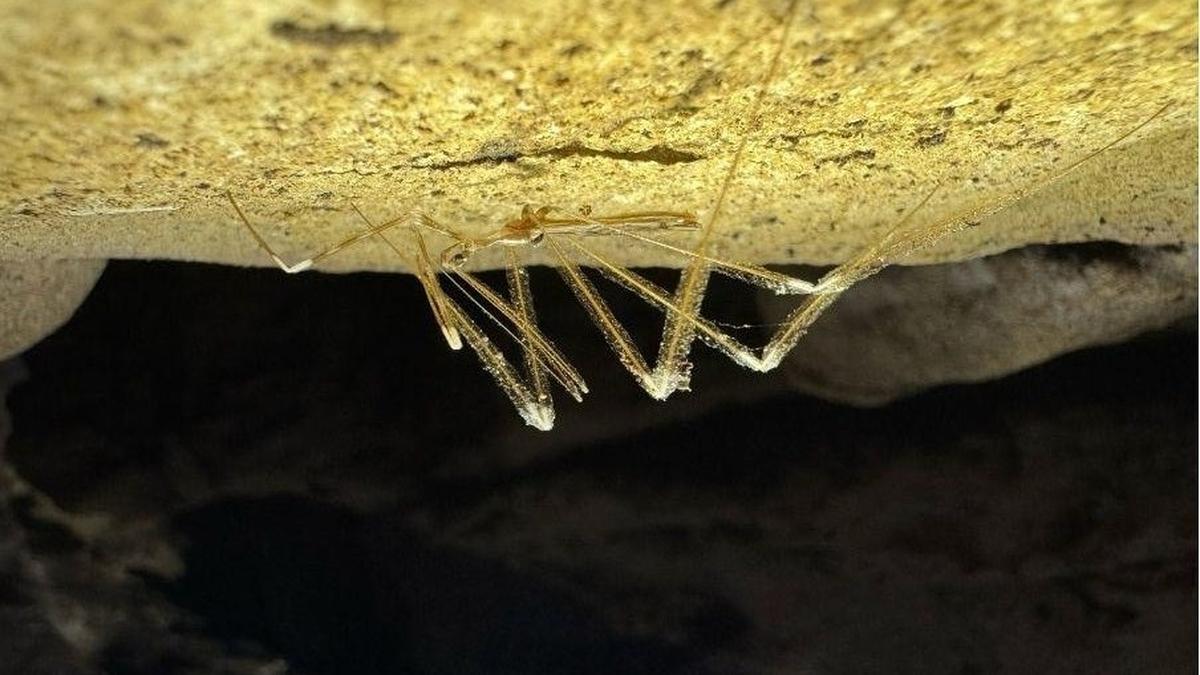
Researchers have recently rediscovered the rare thread-legged assassin bug Myiophanes kempi in limestone caves of the Andaman Islands, nearly 100 years after it was last documented. The rediscovery highlights the rich but poorly explored biodiversity of subterranean cave ecosystems in India.
About Myiophanes kempi
Myiophanes kempi is a rare insect species belonging to the assassin bug family Reduviidae. Assassin bugs are known for their predatory behaviour and specialised hunting adaptations.
Key Features
- Taxonomic Group: Assassin bug (Family Reduviidae)
- Body Structure: Slender-bodied with elongated legs, characteristic of thread-legged bugs
- First Described: 1924 by British entomologist William Edward China
- Earlier Record: Originally reported from Siju Cave in Meghalaya
- Recent Rediscovery: Limestone caves in the Andaman Islands
Biological Characteristics
Myiophanes kempi is specially adapted to subterranean cave ecosystems, where environmental conditions are unique.
- Habitat: Lives exclusively in dark cave environments
- Lifestyle: Completes its entire life cycle in darkness
- Feeding Behaviour:
- A specialised predator within cave ecosystems
- Uses long raptorial forelegs to capture prey
- Feeds mainly on small arthropods found inside caves
These adaptations enable the species to survive in low-light, nutrient-limited environments typical of underground habitats.
Ecological Significance
The rediscovery of Myiophanes kempi is important for several reasons:
- Biodiversity Documentation: It highlights the rich but underexplored biodiversity of cave ecosystems, particularly in island and karst landscapes.
- Indicator of Subterranean Ecosystem Health: Predatory insects like assassin bugs play an important role in maintaining ecological balance in cave food webs.
- Conservation Importance: Rediscovering species thought to be rare or missing helps guide future conservation and ecological research.
Key Facts About Siju Cave
Although the species was recently rediscovered in the Andaman Islands, it was originally described from Siju Cave in Meghalaya.
- Location: Garo Hills, Meghalaya
- Other Names: Dobakkol or Bat Cave
- Type: Limestone cave system
- Length: Extends for about 4.7 km, making it one of India’s longest limestone caves
- Nearby River: Located near the Simsang River
- Features: Known for stalactites, stalagmites, underground streams, and rich cave biodiversity
Osbeckia zubeengargiana

- 16 Mar 2026
In News:
Researchers from Gauhati University have discovered a new flowering plant species named Osbeckia zubeengargiana in the grasslands of Manas National Park in Assam. The species has been named in honour of celebrated Assamese singer Zubeen Garg, recognising his contribution to regional culture and advocacy for nature conservation.
About Osbeckia zubeengargiana
Osbeckia zubeengargiana is a newly identified plant species belonging to the Melastomataceae family, a diverse group of flowering shrubs widely distributed in tropical and subtropical regions.
Key Characteristics
- Plant Type: Perennial erect shrub
- Height: Can grow up to 3.5 metres tall
- Flowers: Characterised by pink to purple tetramerous (four-petalled) flowers
- Habitat: Thrives in moist grassland ecosystems
- Flowering and Fruiting Period: Mid-September to January
The plant was discovered in the grasslands of Manas National Park in Baksa district, Assam, where researchers observed a substantial population of the species.
Discovery and Scientific Identification
The species was identified during floristic explorations conducted between 2021 and 2025 as part of doctoral research on the Melastomataceae family in Assam. The research was carried out by scientists Barnali Das, Prashob Pulpra, and Namita Nath of Gauhati University.
Botanical analysis revealed that the plant is closely related to Osbeckia rostrata but differs in several morphological features such as:
- leaf structure,
- arrangement of flowers,
- shape of the hypanthium (floral structure), and
- seed size.
These distinguishing characteristics confirmed it as a new species within the genus Osbeckia.
Ecological Significance
The species grows in association with several grassland plants such as:
- Chrysopogon zizanioides,
- Maesa indica,
- Bombax ceiba, and
- Dillenia pentagyna.
Its presence contributes to the floral diversity of the grassland ecosystems of Manas National Park, which is already recognised as a biodiversity hotspot in the Eastern Himalayan region.