
Gentoo Penguin

- 21 Feb 2026
In News:
Gentoo penguins have been confirmed infected with H5 avian influenza (H5N1, clade 2.3.4.4b) on Heard Island, marking the first recorded bird infection in an Australian external territory. Earlier (November 2025), the virus had been detected in southern elephant seals. The strain has caused widespread mortality among seabirds and poultry globally.
About Gentoo Penguin
Taxonomy
- Scientific Name: Pygoscelis papua
- Genus: Pygoscelis
- Closely related to: Adélie penguin, and Chinstrap penguin
- Distribution: Antarctic Peninsula, Sub-Antarctic islands, Falkland Islands (South Atlantic Ocean), and Exclusively found in the Southern Hemisphere (45°–65° South latitude)
- Habitat: Prefer shoreline habitats, enabling quick access to marine food while nesting nearby.
- Characteristics
- Fastest underwater swimmers among penguins.
- Diurnal and highly social.
- Breed in colonies; remain in groups year-round.
- Diet: Carnivorous (mainly fish, krill, squid).
- Conservation Status: IUCN Red List: Least Concern
H5N1 Avian Influenza – Key Facts
- Highly pathogenic strain: H5N1 (clade 2.3.4.4b)
- Highly contagious and deadly among: Seabirds, Wild birds, Poultry, and Marine mammals (e.g., southern elephant seals, Antarctic fur seals)
Detection & Testing
- Preliminary tests conducted at the Commonwealth Scientific and Industrial Research Organisation (CSIRO)’s Australian Centre for Disease Preparedness.
- Samples collected during a scientific voyage (February 2026).
Observations
- No signs of large-scale mass mortality in surveyed areas.
- Australia’s national H5 bird flu–free status remains unchanged.
- Government has committed over A$100 million toward preparedness and biosecurity measures.
About Heard Island
- Australian external territory.
- Located:
- ~4,000 km south-west of Perth
- ~1,700 km north of Antarctica
- Situated in the Southern Ocean.
- Remote and ecologically sensitive sub-Antarctic ecosystem.
M.A.N.A.V. Vision for Artificial Intelligence Governance

- 21 Feb 2026
In News:
- At the India AI Impact Summit 2026, held at Bharat Mandapam, New Delhi, the Prime Minister Narendra Modi presented the M.A.N.A.V. vision (PM Narendra Modi’s Human-Centric AI Odyssey)-India’s guiding framework for Artificial Intelligence (AI) governance.
- India, home to one-sixth of the global population and one of the largest youth and technology talent pools, positioned itself as both a major AI adopter and a norm-shaper in global AI discourse.
What is M.A.N.A.V.?
M.A.N.A.V. is a human-centric AI governance framework that ensures technological advancement aligns with:
- Human dignity
- Ethical safeguards
- Inclusivity
- Legal accountability
- National interest
It seeks to balance innovation with constitutional values and democratic principles.
Five Pillars of M.A.N.A.V.
1. Moral and Ethical Systems
- AI must be rooted in fairness, transparency, and human oversight.
- Ethical AI principles integrated through National Education Policy 2020.
- Emphasis on AI literacy and computational thinking across educational levels.
- Public awareness initiatives promoted responsible AI usage, including a large-scale AI responsibility pledge campaign.
2. Accountable Governance
- Establishment of transparent regulatory architecture.
- Anchored by the IndiaAI Mission with an outlay exceeding ?10,300 crore.
- Focus areas: compute infrastructure, datasets, skilling, innovation ecosystem.
- AI Governance Guidelines emphasize: Trust, Equity, Accountability, and Explainability
- Ensures AI systems remain lawful and aligned with constitutional values.
3. National Sovereignty
- Extends sovereignty to: Data, Algorithms, and Digital infrastructure
- Promotion of indigenous AI models and domestic compute capacity.
- Supported by:
- India Semiconductor Mission
- Trusted digital public infrastructure
- Objective: Technological self-reliance without digital isolation.
4. Accessible and Inclusive AI
- Democratization of AI access across: Governance, Healthcare, Education, and Agriculture
- Key platforms:
- IndiaAI Compute Portal (shared GPU/TPU access)
- MeghRaj GI Cloud
- IndiaAI Kosh (datasets and AI models)
- Linked with the National Supercomputing Mission and AI Data Labs Network.
- Reduces entry barriers for startups, researchers, and institutions.
5. Valid, Safe and Legitimate Systems
- AI systems must be verifiable, lawful, and transparent.
- Addresses risks from deepfakes and synthetic media.
- Supported by Information Technology (Intermediary Guidelines and Digital Media Ethics Code) Amendment Rules, 2026.
- IndiaAI Mission’s Safe & Trusted AI pillar promotes:
- Bias mitigation
- Privacy-preserving design
- Algorithmic auditing
- Risk assessment frameworks
Ottawa Convention
- 21 Feb 2026
In News:
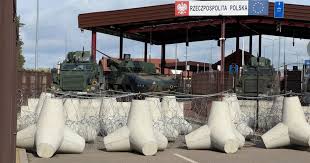
Poland has formally withdrawn from the Ottawa Convention, reversing its earlier commitment to ban anti-personnel landmines. The move follows heightened regional security concerns after Russia’s invasion of Ukraine.
Background
- Poland ratified the Ottawa Convention in 2012.
- It completed destruction of its anti-personnel mine stockpiles by 2016.
- However, citing new geopolitical threats, Poland has now exited the treaty framework.
Geopolitical Rationale
- The decision is linked to strengthening the Eastern Shield, a fortified defence system along Poland’s borders with:
- Kaliningrad (Russia)
- Belarus
- Triggered by Russia’s full-scale invasion of Ukraine.
- Mines will reportedly remain in stockpiles and deployed only under a “realistic threat of aggression” to reduce civilian harm.
Ottawa Convention (1997)
- Formally known as the Mine Ban Treaty.
- Emerged from the Canadian-led “Ottawa Process” after the First Review Conference of the Convention on Certain Conventional Weapons failed to impose strict limits.
- Prohibits:
- Use
- Production
- Stockpiling
- Transfer of anti-personnel landmines
Rationale
Anti-personnel mines pose long-term risks to civilians, often remaining active decades after conflicts end.
Types of Landmines
|
Type |
Status under International Law |
|
Anti-Personnel Mines |
Banned under Ottawa Convention |
|
Anti-Tank (Anti-Vehicle) Mines |
Not banned; regulated under CCW (Amended Protocol II, 1996) |
- Anti-tank mines remain legally permissible under the CCW framework.
Domestic Production Plans
- Poland aims to restore self-sufficiency in defence manufacturing.
- Plans to renew production of:
- Anti-personnel mines
- Anti-tank mines
- Collaboration with domestic defence manufacturers.
Regional Trend
- Since the Russia–Ukraine conflict, several Eastern European states have reconsidered their treaty obligations.
- Countries announcing withdrawal include: Finland, Estonia, Latvia, Lithuania, Ukraine, and Poland.
Global Context
- Nearly three dozen countries never acceded to the Ottawa Convention.
- Notable non-signatories: India, Russia, United States
India has maintained that anti-personnel mines are necessary for national security considerations, especially along sensitive borders.
Statehood Day of Mizoram and Arunachal Pradesh

- 21 Feb 2026
In News:
On 20 February every year, India commemorates the grant of statehood to Arunachal Pradesh and Mizoram, both of which became full-fledged States of the Indian Union in 1987. The Prime Minister extended greetings to the people of both States on the occasion, highlighting their cultural richness and contribution to national unity.
Constitutional Basis of Statehood
- 53rd Constitutional Amendment Act, 1986 - Granted statehood to Mizoram.
- 55th Constitutional Amendment Act, 1986 - Granted statehood to Arunachal Pradesh.
- Both States formally came into existence on 20 February 1987.
- Mizoram became the 23rd State, while Arunachal Pradesh became the 24th State of India.
Mizoram
Historical Background
- Originally known as the Lushai Hills district of Assam.
- Renamed Mizo Hills in 1954.
- Became a Union Territory in 1972.
- Achieved statehood following the Mizoram Peace Accord signed in 1986 between the Government of India and the Mizo National Front (MNF).
The Accord ended years of insurgency and paved the way for political stability and democratic integration.
Constitutional Protection
- Recognized as a “Tribal Area” under the Sixth Schedule (Article 244(2)) of the Constitution.
- Provides for Autonomous District Councils (ADCs) to safeguard tribal customs, land rights, and local governance.
Arunachal Pradesh
Historical Evolution
- Earlier known as the North-East Frontier Agency (NEFA).
- Came under British control after the Treaty of Yandaboo (1826), following the First Anglo-Burmese War (1824–26).
- The 1914 Shimla Convention demarcated the boundary between Tibet and NEFA, resulting in the McMahon Line.
- Until 1962, it was constitutionally under Assam.
- Became a Union Territory in 1972.
- Granted full statehood in 1987 through the 55th Constitutional Amendment.
Strategic Significance
- Shares an international boundary with China (Tibet Autonomous Region).
- Holds immense strategic and geopolitical importance in India’s North-East security framework.
Vibrant Villages Programme–II (VVP–II)

- 21 Feb 2026
In News:
The Union Home Minister Amit Shah launched the Vibrant Villages Programme–II (VVP–II) at Nathanpur village in Cachar district of Assam, marking an expansion of the government’s border area development strategy in line with the vision of Viksit Bharat @2047.
About Vibrant Villages Programme–II
- Type of Scheme: Central Sector Scheme (100% funded by the Union Government)
- Total Outlay: ?6,839 crore
- Implementation Period: Up to FY 2028–29
- Approach: Saturation-based and convergence-driven
- Coverage: 15 States and 2 Union Territories
- Exclusion: Northern border villages already covered under VVP–I
Objectives
- Comprehensive Development: Improve living standards in border villages through infrastructure and service delivery.
- Livelihood Generation: Create sustainable and diversified livelihood opportunities.
- Border Security Strengthening: Enable residents to act as the “eyes and ears” of the nation.
- Prevention of Trans-border Crimes: Strengthen vigilance and community participation.
- National Integration: Assimilate border populations into the mainstream national framework.
Key Features
1. Infrastructure Development
- Education infrastructure including SMART classrooms
- Development of tourism circuits
- Village-level infrastructure in clusters
- Improved access to essential services
2. Livelihood & Value Chain Development
- Promotion of Self-Help Groups (SHGs)
- Strengthening cooperatives
- Focus on value chain development in agriculture and allied sectors
- Diversification of income sources in border areas
3. Social & Cultural Vibrancy
- Organisation of fairs and festivals
- Celebration of National Days
- Awareness campaigns
- Community mobilisation initiatives
These efforts aim to enhance the “vibrancy” of villages, reduce migration, and foster a sense of belonging.
Strategic Significance
- Internal Security: Strengthened community participation improves intelligence gathering and vigilance.
- Border Management: Acts as a socio-economic complement to physical border infrastructure.
- Balanced Regional Development: Reduces regional disparities.
- Vision 2047 Alignment: Supports the broader goal of building a developed and secure India by 2047.
Saturation-Based & Convergence Approach
- Saturation-based: Ensures all eligible beneficiaries and villages receive full scheme benefits.
- Convergence-driven: Integrates multiple Central and State schemes for optimal resource utilization.