
BvS10 Sindhu
- 21 Nov 2025
In News:
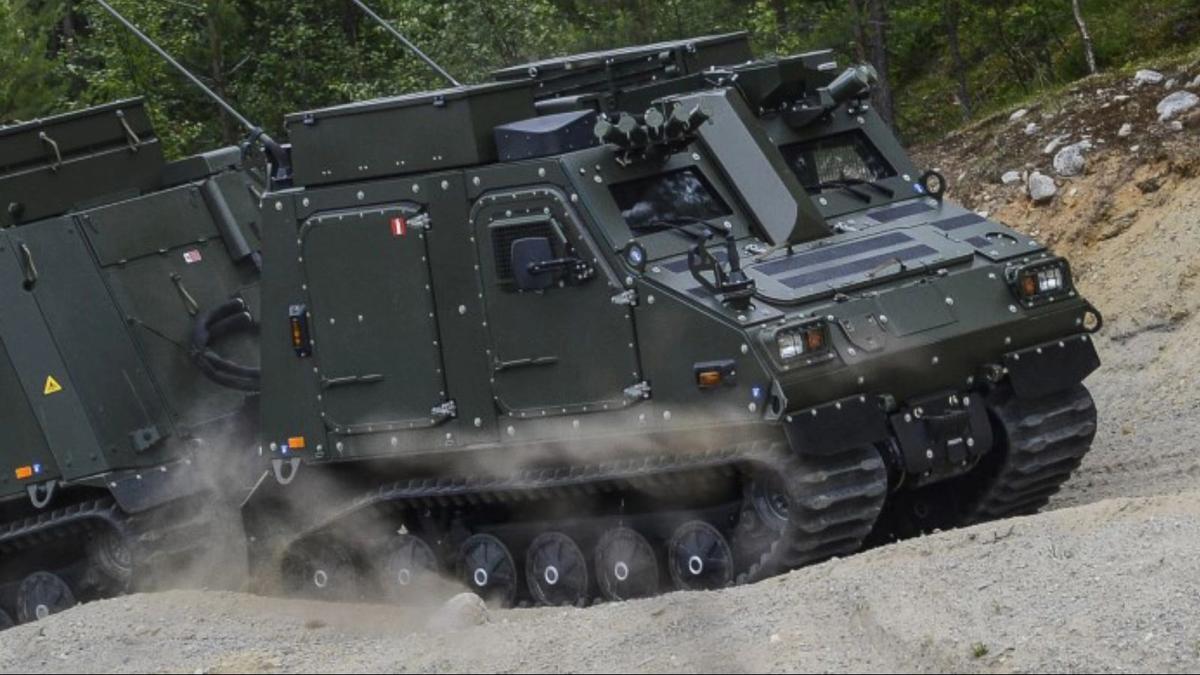
Infrastructure major Larsen & Toubro (L&T), in partnership with BAE Systems, has secured a contract from the Indian Army to supply BvS10 Sindhu, a specialised all-terrain armoured vehicle. The platform will be manufactured in India, strengthening indigenous defence production.
About BvS10 Sindhu
- Base Platform: BvS10 (Bandvagn S10), a proven articulated all-terrain vehicle used by several European militaries.
- Sindhu Variant: An upgraded, India-specific version adapted for the country’s terrain and climatic extremes.
- Manufacturing: To be produced by L&T at its Armoured Systems Complex, Hazira (Gujarat), with design and technical support from BAE Systems Hägglunds (Sweden), the original BvS10 manufacturer.
Design & Capabilities
- Articulated Configuration: Two connected vehicle sections improve mobility over terrain where conventional wheeled or tracked vehicles struggle.
- All-Terrain Performance: Optimised for high-altitude areas, deserts, marshlands, snow, and flood-prone regions.
- Amphibious Capability: Can operate in waterlogged and flooded environments, enhancing operational reach.
- Protection & Mobility: Armoured design balances crew protection with high mobility in adverse conditions.
Operational Flexibility
The BvS10 Sindhu can be reconfigured for multiple roles, including:
- Troop transport
- Command post
- Ambulance/medical evacuation
- Recovery and logistics support
- Weapon-armed variants
This modularity suits the diverse mission profiles of the Indian Army across varied theatres.
Global Usage (Base BvS10)
- In Service: Austria, France, Netherlands, Sweden, Ukraine, United Kingdom
- On Order / Selected: Germany; selected for the U.S. Army’s Cold Weather All-Terrain Vehicle (CATV) programme
This underscores the platform’s global acceptance and proven performance.
Industrial & Strategic Significance
- Make in India / Atmanirbhar Bharat: Indigenous manufacturing with global OEM support enhances self-reliance.
- Lifecycle Support: The contract includes integrated logistics support for deployment, maintenance, and sustainment.
- Capability Boost: Addresses mobility gaps in extreme and amphibious terrains, critical for border and disaster-response operations.
Kodaikanal Solar Observatory (KoSO)
- 21 Nov 2025
In News:
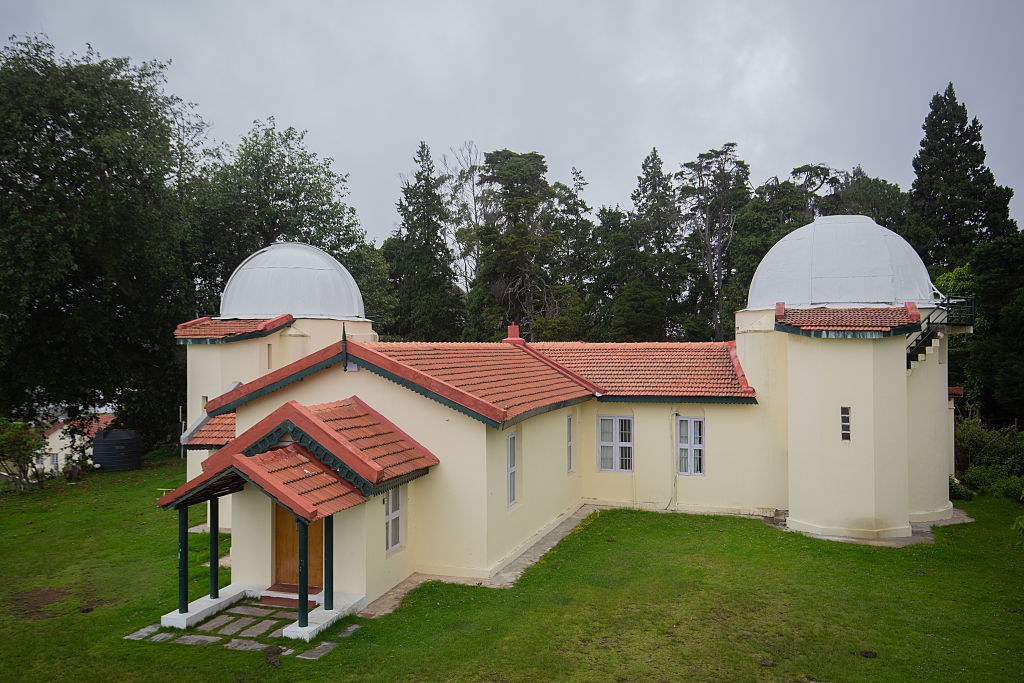
Scientists led by Aryabhatta Research Institute of Observational Sciences (ARIES), along with Indian Institute of Astrophysics (IIA) and international collaborators, have reconstructed over 100 years (1904–2022) of the Sun’s polar magnetic history using archival observations from the Kodaikanal Solar Observatory (KoSO).
About Kodaikanal Solar Observatory (KoSO)
- What it is: One of the world’s oldest continuously operating solar observatories.
- Location: Palani Hills, Tamil Nadu; functions as a field station of IIA, Bengaluru.
- Established:1899.
- Unique Data Legacy:Systematic Ca II K solar imaging since 1904, creating among the longest uninterrupted solar datasets globally.
- Observations: Multi-wavelength views of the chromosphere, capturing plages, sunspot groups and magnetic networks.
- Access: Large portions of the digitised archive are publicly available for global research.
What is the Sun’s Magnetic Future?
- Refers to the behaviour of the Sun’s polar magnetic fields, which drive the 11-year solar cycle, sunspots, flares and geomagnetic storms affecting Earth.
- Challenge: Direct polar magnetic field measurements began only in 1976, leaving earlier decades undocumented.
Scientific Breakthrough
- Method: Researchers analysed KoSO’s Ca II K images and combined them with Rome-PSPT data using AI-based feature recognition.
- Key Proxy: Identification of faint bright structures near the poles—polar network—quantified through the Polar Network Index (PNI).
- Outcome:First reliable, century-long reconstruction of the Sun’s polar magnetic fields (1904–2022).
Why Ca II K Matters
- The Ca II K wavelength reveals chromospheric features tightly linked to magnetic activity.
- Plages and magnetic networks recorded in Ca II K act as historical fingerprints of solar magnetism, enabling reconstructions before direct measurements.
Significance
- Solar Cycle Prediction: Improves estimates of the strength of Solar Cycle 25 and future cycles.
- Space Weather Forecasting: Enhances prediction of solar storms that can disrupt GPS, communications, satellites, aviation and power grids.
- Open Science: Reconstructed datasets and PNI values are openly released (e.g., GitHub, Zenodo), accelerating global research.
BIRSA 101 Gene Therapy
- 21 Nov 2025
In News:
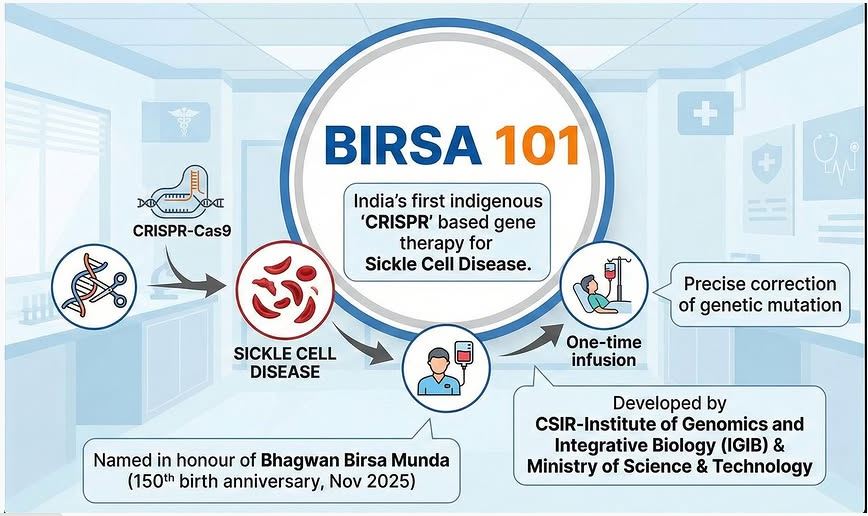
India has launched its first indigenously developed CRISPR-based gene therapy for Sickle Cell Disease (SCD), named BIRSA 101. The therapy marks a major milestone in affordable genomic medicine and aligns with the national goal of a Sickle Cell–Free India by 2047.
What is BIRSA 101?
- BIRSA 101 is a CRISPR gene-editing therapy designed to correct the genetic mutation responsible for Sickle Cell Disease.
- Developed by: CSIR–Institute of Genomics & Integrative Biology (CSIR-IGIB)
- Industry Partner:Serum Institute of India (for technology transfer, scale-up and affordable deployment)
- Named after:Birsa Munda, commemorating his 150th birth anniversary
- Target Group: Populations with high SCD prevalence, especially tribal communities such as Gond, Munda, Bhil and Santal.
How Does It Work?
- Uses CRISPR technology as a form of “precise genetic surgery”.
- The therapy edits the defective gene in a patient’s hematopoietic stem cells, correcting the mutation that causes sickle-shaped red blood cells.
- The corrected stem cells are infused back into the patient, enabling normal haemoglobin production.
- Designed as a potential one-time, lifelong cure, unlike lifelong symptomatic management.
Key Features
- Fully Indigenous CRISPR Platform: Uses enFnCas9, engineered by CSIR-IGIB.
- Affordable Innovation: Intended to replace global gene therapies costing ?20–25 crore with a low-cost Indian alternative.
- Atmanirbhar Bharat: Strengthens India’s self-reliance in frontline biomedical technologies.
- Public–Private Partnership (PPP): Ensures scalability, regulatory readiness and global-standard manufacturing.
- Research Ecosystem: Supported by a new advanced translational research facility at CSIR-IGIB.
Why is it Significant?
- Public Health Impact: SCD is a severe hereditary blood disorder with a disproportionate burden among tribal populations in central and eastern India.
- Global Positioning: Places India among global leaders in advanced gene-editing therapies.
- Cost Disruption: Demonstrates India’s ability to deliver world-class therapies at a fraction of international prices.
- Future Potential: Opens pathways for CRISPR-based cures for other inherited genetic disorders.
Meerut Bugle
- 21 Nov 2025
In News:
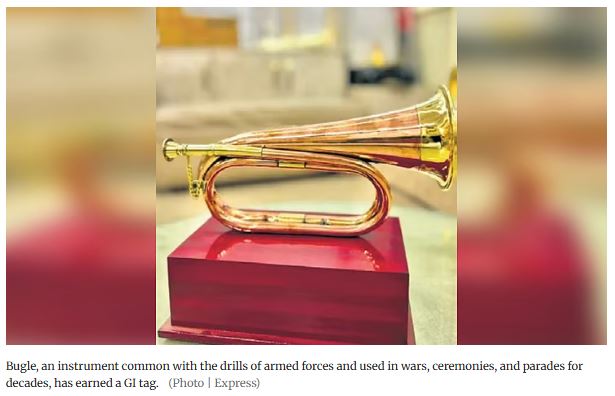
The Meerut bugle, a brass wind instrument integral to India’s military drills, parades and ceremonies, has received a Geographical Indication (GI) tag, providing legal protection and renewed recognition to a century-old craft rooted in Meerut.
About the Meerut Bugle
- What it is: A handcrafted brass wind instrument used as a command and ceremonial tool in the Army, paramilitary and police forces.
- Cultural Significance: Known for its commanding, clear tone, it occupies a place of honour in regimental bands and national ceremonies.
- Origin & Evolution:
- Bugle-making in Meerut dates back to the late 19th century (British era), when it was central to battlefield communication.
- Over time, it evolved into a specialised local industry, aligning with the growth of India’s military traditions.
- Current Use: Meerut-made bugles continue to be supplied to defence units, paramilitary forces, police organisations and training academies across India.
Key Craft Features
- Material: High-quality brass, ensuring durability and tonal accuracy.
- Process:Handcrafted workmanship, reflecting traditional skills passed down generations.
- Heritage Value: Represents a living military heritage, linking colonial-era communication tools to modern ceremonial functions.
Why the GI Tag Matters
- Authenticity & Protection: Prevents counterfeits and cheap imitations from being sold as “Meerut bugles”.
- Market Value: Enhances brand recognition, encouraging government institutions and buyers to prefer certified instruments.
- Livelihood Support: Offers a pathway to revive traditional workshops affected by rising brass prices, declining orders and imported substitutes.
- Global Exposure: Enables participation in international exhibitions, cultural fairs and heritage showcases.
About the GI Tag
- Definition: A GI tag certifies that a product originates from a specific region and possesses qualities or reputation attributable to that place.
- Legal Framework:Geographical Indications of Goods (Registration and Protection) Act, 1999 (implemented from September 2003).
- Authority:Geographical Indications Registry, under the Office of the Controller General of Patents, Designs & Trade Marks, Ministry of Commerce & Industry.
- Benefits:
- Exclusive rights to authorised producers
- Legal action against misuse
- Boosts rural/artisan livelihoods and preserves traditional knowledge
- India’s GI Landscape:600+ GI-tagged products across agriculture, handicrafts, food and manufactured goods.
Dugong
- 21 Nov 2025
In News:
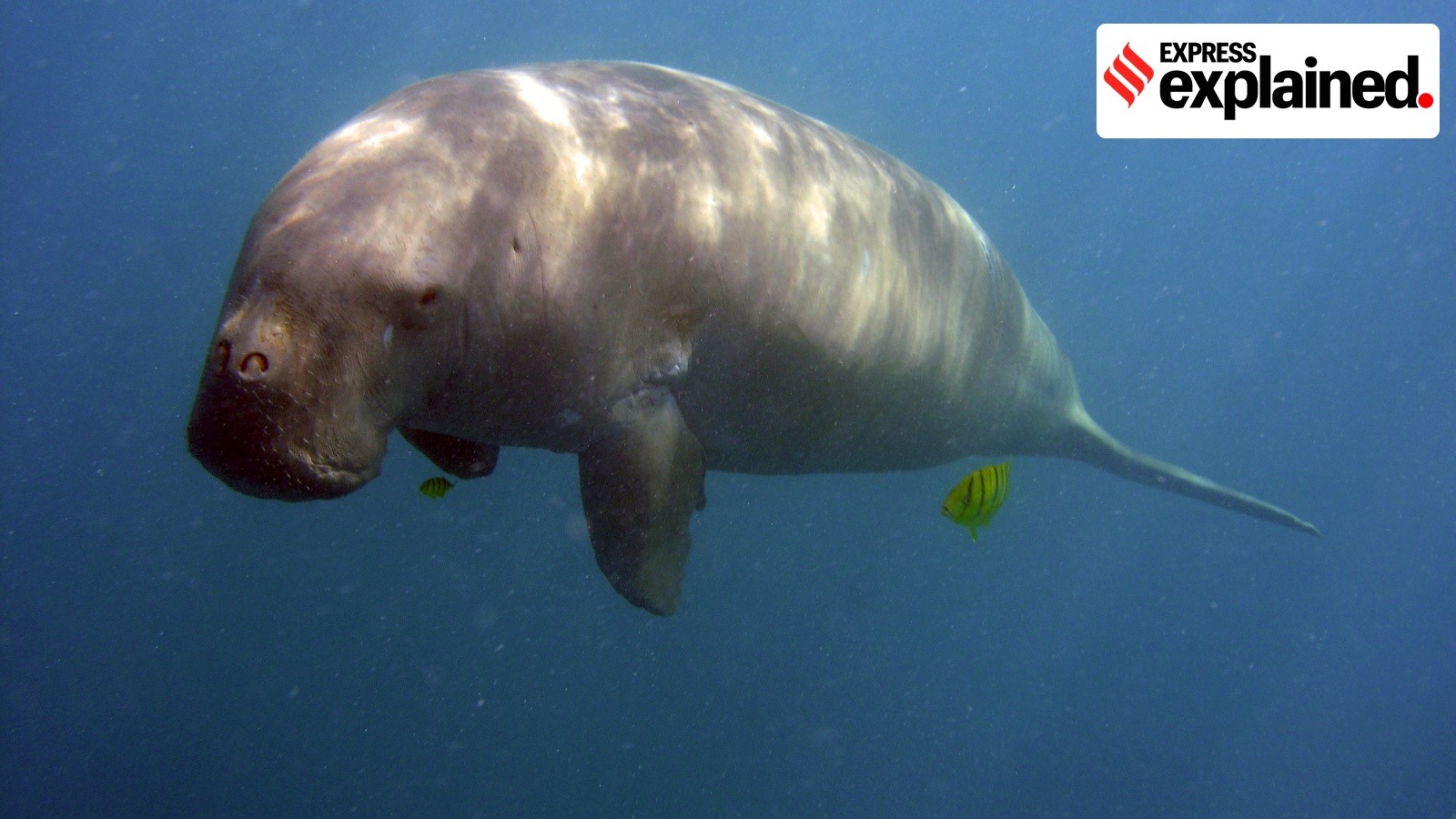
A new global report released at the International Union for Conservation of Nature (IUCN) Conservation Congress in Abu Dhabi has warned that India’s dugong populations in the Gulf of Kutch, Gulf of Mannar–Palk Bay, and Andaman & Nicobar Islands face serious long-term survival risks due to habitat degradation and human pressures.
About Dugong
- Scientific Name:Dugong dugon
- Type: Large herbivorous marine mammal
- Evolutionary Links: Closely related to manatees; distantly related to elephants
- Common Name: Sea cow (inspired ancient “mermaid” myths due to gentle behaviour)
Distribution & Habitat
- Global: Warm, shallow coastal waters of the Indian and Pacific Oceans; largest stable population near north-western Australia
- India (Major Habitats):
- Gulf of Mannar–Palk Bay
- Andaman and Nicobar Islands
- Gulf of Kutch
- Prefer calm, shallow (<10 m) coastal waters with abundant seagrass meadows
Key Biological Features
- Size: Up to 3 m long; 300–420 kg
- Morphology: Whale-like tail fluke; paddle-shaped flippers
- Diet:Exclusively herbivorous—feeds on seagrass
- Consumption: ~ 30–40 kg of seagrass/day
- Ecological Role:
- Act as “ecosystem engineers”—natural grazing maintains healthy seagrass
- Seagrass meadows function as blue carbon sinks, aiding climate regulation
- Life History: Long-lived (up to 70 years) but very low reproductive rate (calving once every 3–7 years)
Conservation Status
- IUCN Red List:Vulnerable (declining trend since 1982)
- India:Schedule I, Wild Life (Protection) Act, 1972 (highest legal protection)
Population Status in India (Indicative)
- Gulf of Mannar–Palk Bay: ~ 150–200 individuals (largest remaining group)
- Andaman & Nicobar Islands:<50 individuals
- Gulf of Kutch:<20 individuals(Exact estimates are difficult due to turbid waters and elusive behaviour.)
Major Threats
- Habitat Loss & Seagrass Degradation: Coastal pollution, sedimentation, dredging, port development
- Fisheries Bycatch: Accidental entanglement in fishing nets—primary cause of mortality
- Marine Pollution & Heavy Metals: Detection of arsenic, cadmium, chromium, mercury and lead in dugong tissues (linked to industrial discharge, agricultural runoff, untreated wastewater)
- Slow Reproduction: Limits population recovery
Conservation Measures in India
- MoEFCC Task Force (2010) on dugong conservation
- National Dugong Recovery Programme with Tamil Nadu, Gujarat, A&N
- Dugong Conservation Reserve, Palk Bay (2022)—448 sq km to protect seagrass and dugongs
- Ongoing need for stronger enforcement, bycatch reduction, and incentive-based fisheries management