
Sarhul Festival

- 22 Mar 2026
In News:
Recently, the President of India Droupadi Murmu extended greetings on the occasion of the Sarhul festival, highlighting its cultural and ecological significance. The festival reflects the deep-rooted traditions of India’s tribal communities and their harmonious relationship with nature.
About Sarhul Festival
- Sarhul, meaning “worship of the Sal tree”, is one of the most important festivals of Adivasi communities in eastern India.
- It is primarily celebrated in Jharkhand and also in parts of Odisha, West Bengal, and Chhattisgarh.
- The festival is observed by several tribes, including the Oraon, Munda, Santal, Khadia, and Ho, each of whom may follow distinct customs while sharing a common spiritual essence.
Cultural and Spiritual Significance
- Sarhul is fundamentally a festival of nature worship, symbolising the union of the Sun and the Earth, which is essential for sustaining life. The Sal tree holds central importance and is revered as the abode of Sama Maa, the village deity believed to protect the community.
- The rituals emphasise ecological balance, fertility, and renewal of life. Through symbolic representation, the pahan (village priest) embodies the Sun, while his wife, the pahen, represents the Earth, highlighting the interdependence of natural forces.
Rituals and Celebrations
Sarhul is celebrated over three days, reflecting a structured blend of ritual purity, community participation, and cultural expression.
- The first day is marked by preparation, including cleaning of homes and sacred groves (Sarna Sthals), collection of Sal flowers, and observance of fasting by the priest.
- The second day forms the core of the festival, when rituals are performed in sacred groves. Offerings and prayers are made for prosperity, good harvest, and community well-being, accompanied by traditional music and dance.
- The final day concludes with communal feasting, including traditional foods and rice beer (Handia), reinforcing social cohesion and shared identity.
RELIEF (Resilience & Logistics Intervention for Export Facilitation)

- 22 Mar 2026
In News:
Amid escalating geopolitical tensions in West Asia, particularly affecting key maritime routes such as the Gulf region, India has introduced a targeted intervention, RELIEF (Resilience & Logistics Intervention for Export Facilitation) to support exporters facing rising logistics costs and operational uncertainties.
Background: Need for the Initiative
- Recent disruptions in critical maritime corridors have led to vessel diversions, longer transit times, congestion at ports, and increased freight and insurance costs. These developments have adversely impacted Indian exporters, especially MSMEs, by raising transaction costs and threatening export continuity.
- Given India’s growing integration with global trade, such disruptions highlight the need for policy instruments that enhance supply chain resilience and protect export competitiveness.
About RELIEF Initiative
- RELIEF is a time-bound financial and risk mitigation measure launched in March 2026 under the Export Promotion Mission by the Ministry of Commerce and Industry.
- It is implemented by the Export Credit Guarantee Corporation of India (ECGC), which is responsible for verification, risk coverage, claim settlement, and monitoring.
- The initiative aims to ensure continuity of exports, reduce financial stress on exporters, and safeguard employment in export-linked sectors.
Key Features and Mechanism
- The RELIEF framework provides support across the entire export cycle, covering both past and future consignments affected by disruptions.
- For exporters already insured under ECGC, the scheme offers enhanced risk coverage of up to 100% for shipments during the disruption period, ensuring protection against unforeseen losses. For upcoming consignments, up to 95% coverage is provided with government backing, encouraging exporters to continue operations despite uncertainty.
- Recognising the vulnerability of MSMEs, the initiative also includes a partial reimbursement mechanism, covering up to 50% of increased freight and insurance costs (subject to a ceiling), thereby reducing the burden of sudden cost escalations.
- Additionally, a digital dashboard-based monitoring system has been introduced to track claims, fund utilisation, and logistics conditions in real time, ensuring transparency and efficiency.
Institutional and Policy Support
The implementation of RELIEF is supported by a whole-of-government approach, including the establishment of an Inter-Ministerial Group (IMG) on Supply Chain Resilience. This group facilitates coordination among ministries, logistics stakeholders, and exporters, enabling real-time policy responses such as procedural relaxations, port-level facilitation, and improved logistics coordination.
Project Insight (PI) initiative

- 22 Mar 2026
In News:
India is increasingly leveraging Artificial Intelligence (AI) and big data analytics to strengthen tax administration. The Project Insight (PI) initiative of the Income Tax Department represents a major step towards algorithmic tax governance, aimed at improving compliance and enhancing revenue mobilisation.
Background: Need for AI in Tax Governance
- India has historically faced challenges of low tax compliance and high evasion, reflected in a relatively modest tax-to-GDP ratio among emerging economies. A significant portion of potential tax revenue is lost annually due to evasion and under-reporting.
- In this context, the adoption of AI-driven systems has emerged as a strategic tool to improve efficiency, transparency, and enforcement capacity in tax administration.
About Project Insight
- Project Insight is an AI-enabled tax administration system implemented by the Income Tax Department under the Ministry of Finance.
- Launched in 2017 and operationalised subsequently, it aims to create a data-driven and non-intrusive compliance ecosystem.
- The core objective of the initiative is to promote voluntary compliance while strengthening enforcement through intelligent risk detection mechanisms.
Key Features and Working Mechanism
- At the heart of Project Insight is the Income Tax Transaction Analysis Centre (INTRAC), which uses advanced analytics to build a comprehensive financial profile of taxpayers by integrating data from multiple sources.
- The system employs a “nudge” strategy, where taxpayers receive reminders via SMS or email to rectify discrepancies in their filings, thereby encouraging self-correction rather than coercive enforcement.
- Additionally, automated risk assessment tools help authorities identify and prioritise high-risk cases, enabling targeted action against large-scale evasion while reducing unnecessary scrutiny for compliant taxpayers.
Impact and Significance
The use of AI in tax governance has led to measurable improvements. A large number of taxpayers have revised their returns, contributing to additional tax revenues and improved compliance behaviour.
The system enhances administrative efficiency by automating routine processes and enabling data-driven decision-making. It also improves taxpayer services through digital interfaces and fraud detection mechanisms.
More broadly, Project Insight represents a shift towards a modern, technology-driven tax administration system, aligning India with global best practices.
India BioEconomy Report (IBER) 2026
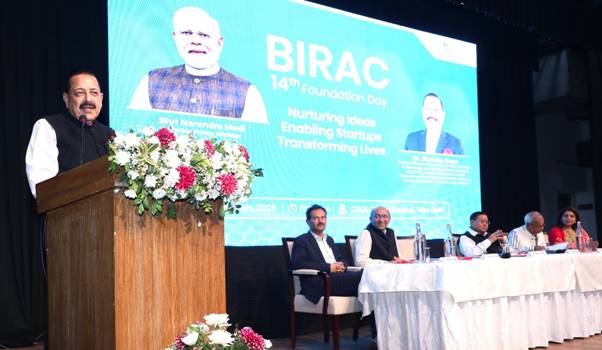
- 22 Mar 2026
In News:
- India’s bioeconomy has witnessed remarkable expansion, growing from around USD 10 billion in 2014 to over USD 195 billion in 2025, with an annual growth rate of nearly 17–18%.
- The India Bioeconomy Report (IBER) 2026, released during the 14th Foundation Day of the Biotechnology Industry Research Assistance Council (BIRAC), highlights that the sector now contributes approximately 4.8–5% of India’s GDP.
Growth Trajectory and Current Status
- India’s bioeconomy has transitioned from a niche segment to a major pillar of economic growth and innovation. The sector recorded one of its highest growth rates in recent years, expanding significantly in scale and diversification.
- The bioeconomy comprises multiple segments, with BioIndustrial activities emerging as the largest contributor, followed by BioPharma, BioServices, and BioAgri.
- The BioPharma sector, in particular, is poised for further growth due to opportunities in biosimilars and peptide manufacturing, driven by the expiry of global drug patents.
- India has also developed a strong ecosystem of over 11,800 biotech startups, supported by research institutions, incubation platforms, and public policy initiatives. The country hosts a growing number of Global Capability Centres (GCCs) in healthcare and life sciences, contributing to employment and global integration.
Key Drivers of Growth
- The rapid expansion of India’s bioeconomy is underpinned by a combination of policy support, institutional mechanisms, and technological advancements.
- Institutions like BIRAC have played a crucial role in bridging the gap between research and industry, enabling the translation of scientific innovations into commercially viable products. Government initiatives such as the BioE3 Policy (Biotechnology for Economy, Environment and Employment) aim to promote sustainable biomanufacturing, including areas like precision biotherapeutics, smart proteins, and climate-resilient agriculture.
- Further, financial mechanisms like the Research, Development and Innovation (RDI) Fund with an outlay of ?1 lakh crore are designed to support scaling up of deep-tech innovations. The emphasis on bio-foundries, Bio-AI hubs, and advanced manufacturing platforms reflects India’s push towards next-generation biotechnology capabilities.
Economic and Strategic Significance
The bioeconomy is increasingly central to India’s development strategy, contributing to healthcare innovation, agricultural productivity, environmental sustainability, and industrial growth. It also enhances India’s position in global value chains by enabling high-value exports and advanced research capabilities.
With a target of reaching a USD 300 billion bioeconomy by 2030, the sector is expected to generate employment, promote entrepreneurship, and strengthen India’s status as a global biotechnology hub.
National Productivity Council

- 22 Mar 2026
In News:
- The National Productivity Council (NPC) has recently been designated as the Environment Audit Designated Agency (EADA) through an agreement with the Ministry of Environment, Forest and Climate Change under the Environment Audit Rules, 2025.
- This development marks an important step towards institutionalising environmental auditing and strengthening regulatory compliance mechanisms in India.
About National Productivity Council (NPC)
- Established in 1958, the NPC is an autonomous, non-profit and tripartite organisation functioning under the Department for Promotion of Industry and Internal Trade, Ministry of Commerce and Industry.
- It has representation from government, industry, labour organisations, and technical institutions, reflecting a multi-stakeholder approach to productivity enhancement.
- Headquartered in New Delhi, NPC is also a member of the Asian Productivity Organisation, highlighting its international engagement. Over the years, it has evolved into a think tank and capacity-building institution, offering consultancy, training, research, and project monitoring services across sectors.
Environment Audit Framework: Key Features
- Under the new mandate, NPC will function as the central agency responsible for designing, implementing, and overseeing the environmental audit ecosystem in India.
- The framework aims to standardise environmental auditing practices and ensure better compliance with environmental laws.
- The audit system is linked with major legislations such as the Environment (Protection) Act, 1986, Water (Prevention and Control of Pollution) Act, 1974, Air (Prevention and Control of Pollution) Act, 1981, Wild Life (Protection) Act, 1972 and forest conservation laws.
- It also supports regulatory processes such as Environmental Clearance (EC), Consent to Establish (CTE), and Consent to Operate (CTO).
Role of NPC as EADA
- NPC has been entrusted with comprehensive responsibilities covering the entire audit lifecycle. It will develop eligibility criteria and conduct certification processes for environmental auditors, including Certified Environmental Auditors (CEA) and Registered Environmental Auditors (REA).
- Further, it will manage the registration, monitoring, and disciplinary oversight of auditors, ensuring accountability and professional standards. NPC will also establish digital platforms for audit processes, maintain a publicly accessible registry of auditors, and promote capacity building through training programmes and awareness initiatives.
- Through these functions, NPC is expected to create a robust, transparent, and standardised environmental audit system across the country.
Significance of the Initiative
The designation of NPC as EADA has multiple policy implications. It strengthens environmental governance by improving monitoring, reporting accuracy, and compliance with environmental regulations.
At the same time, it promotes sustainable industrial development, as industries will be required to adhere to standardised environmental audit norms. The initiative also reflects a shift towards institutional and data-driven regulation, enhancing transparency and accountability.
Moreover, by integrating capacity building with regulatory oversight, it addresses the gap between policy design and on-ground implementation.