
Caller Name Presentation (CNAP)

- 06 Dec 2025
In News:
The Department of Telecommunications (DoT) is set to mandate telecom operators to introduce Caller Name Presentation (CNAP), a system that will display the KYC-registered name of incoming callers on mobile phones. The move aims to curb the rising menace of spam and fraudulent calls by improving caller identification.
What is CNAP?
Caller Name Presentation (CNAP) is a telecom-based feature that allows users to see the name of the caller when receiving a call. Unlike third-party apps such as Truecaller, CNAP will rely on official telecom records.
- The caller’s name will be drawn from the Customer Application Form (CAF) submitted during SIM registration.
- The feature is designed to function as a network-level service, not an app-based solution.
How CNAP Works
- Each telecom operator will maintain a database linking mobile numbers with subscriber names.
- When a call is initiated, the operator’s system will retrieve and transmit the registered name to the recipient’s device.
- Initially, the system may work within the same telecom network (e.g., Airtel-to-Airtel).
- Cross-network name display (e.g., Jio-to-Vi) will require regulatory approvals and technical arrangements for inter-operator data sharing.
Regulatory Background
In February 2024, the Telecom Regulatory Authority of India (TRAI) recommended the implementation of CNAP across telecom networks, especially for smartphones. TRAI emphasised that the feature should be based on verified subscriber data rather than crowd-sourced information.
The DoT is now moving towards making CNAP mandatory for telecom service providers in phases.
Objectives of CNAP
- Reduce spam and fraudulent calls
- Enhance consumer protection
- Increase trust in telecom communication
- Deter misuse of SIM cards obtained through false identity
Key Distinction from Caller ID Apps
|
Feature |
CNAP |
Third-Party Apps |
|
Data Source |
Telecom KYC records |
User-generated/crowdsourced data |
|
Authority |
Regulated by DoT/TRAI |
Private companies |
|
Accuracy |
Based on verified subscriber details |
May contain unverified entries |
|
Integration |
Network-level |
App-based |
Challenges
- Privacy concerns regarding display of registered names
- Data-sharing protocols needed for cross-network calls
- Technical compatibility across diverse handset types
- Handling cases where SIMs are registered under different individuals (e.g., family use)
FAO’s State of the World’s Land and Water Resources for Food and Agriculture (SOLAW) 2025
- 06 Dec 2025
In News:
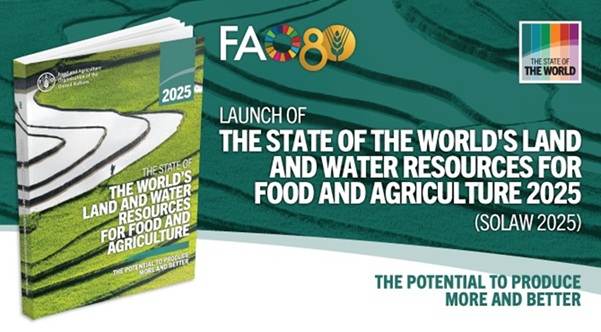
The Food and Agriculture Organization (FAO) of the United Nations has released the latest edition of its flagship biennial report, The State of the World’s Land and Water Resources for Food and Agriculture (SOLAW) 2025. First published in 2011, SOLAW assesses global trends in land, soil, and water management to guide sustainable agricultural policies and ensure food security.
Purpose of SOLAW
The report evaluates how natural resources are being used for agriculture and identifies pathways to enhance sustainable food production, ecosystem resilience, and rural livelihoods. It bridges scientific research with policymaking at national and global levels.
Key Global Findings
- By 2050, agriculture must produce 50% more food, feed and fibre compared to 2012 levels to meet rising demand.
- However, expanding agricultural land is no longer viable, as most productive land is already in use.
- Agriculture currently covers one-third of Earth’s land surface (about 4.8 billion hectares).
- It accounts for around 72% of global freshwater withdrawals, contributing significantly to water scarcity and groundwater depletion.
- Since 1964, global agricultural output has tripled, mainly through intensification (high-yield crops, irrigation, and technology), while farmland expanded by only 8%.
- More than 1.6 billion hectares of land (over 10% of the world’s land area) are degraded, with over 60% of degradation occurring on agricultural lands.
This cycle of soil degradation, declining water availability, and ecosystem destruction is weakening the resilience of global food systems.
Major Concerns
- Overuse of chemicals and intensive farming is causing soil erosion, pollution, and biodiversity loss.
- Groundwater over-extraction and seawater intrusion threaten freshwater supplies.
- Agricultural expansion remains a driver of deforestation and degradation of carbon-rich ecosystems such as peatlands.
Pathways for Sustainable Production
The report highlights that future food gains must come from “producing more and better”, rather than expanding farmland.
Key Strategies
1. Closing Yield Gaps
- Improve productivity on existing farmland through better crop management and locally suited, resilient varieties.
2. Strengthening Rainfed Agriculture
- Promote soil moisture conservation, crop diversification, and drought-resilient practices.
- Conservation agriculture can enhance productivity without increasing water stress.
3. Integrated Farming Systems
- Adoption of agroforestry, rotational grazing, forage improvement, and rice–fish farming to enhance ecosystem services and diversify incomes.
4. Capacity Building
- Farmer training through extension models like FAO’s Farmer Field Schools (FFS).
- Such approaches support knowledge sharing and sustainable practices at the community level.
Future Outlook
The report indicates that with sustainable intensification, the world has the potential to feed up to 10.3 billion people by 2085 while safeguarding land and water resources.
8th Economic Census (EC) in 2027
- 06 Dec 2025
In News:
India will conduct its 8th Economic Census (EC) in 2027, following the completion of the Population Census (2026–27). The announcement was made by the Ministry of Statistics and Programme Implementation (MoSPI). Data from the upcoming Economic Census will be used to establish a Statistical Business Register (SBR), a comprehensive database of enterprises across the country.
Economic Census (EC)
The Economic Census is a complete count of all establishments engaged in the production and/or distribution of goods and services (excluding those for sole household consumption) within India’s geographical boundaries.
Key Facts
- First conducted: 1977
- Conducting authority: Ministry of Statistics &Programme Implementation (MoSPI) through the National Statistics Office (NSO)
- Implemented in collaboration with Directorates of Economics and Statistics (DES) of States and UTs
- Covers both organised and unorganised sector establishments
Purpose
The EC provides disaggregated data on the number, type, location, ownership, and operational characteristics of establishments. This data supports:
- Evidence-based economic planning
- Employment and enterprise mapping
- Sectoral and regional policy formulation
Statistical Business Register (SBR)
The 8th EC data will be used to build India’s Statistical Business Register, which will:
- Create a unified list of all enterprises in the country
- Track whether enterprises are active, dormant, or closed
- Improve the quality and consistency of national economic statistics
- Enable better sampling frames for future surveys
The government is also working on harmonisation and standardisation of data across ministries and states to improve statistical reliability.
Population Census (2026–27)
The Population Census will precede the Economic Census and will be conducted in two phases:
- House-listing and housing census: April–September 2026
- Population enumeration: February 2027
Key Facts
- Conducted under the Census Act, 1948 and Census Rules, 1990
- Led by the Registrar General and Census Commissioner of India
- The upcoming exercise will be India’s 16th decennial Census (first synchronous census in 1872)
Importance
The Census is the largest source of primary data at village, town, and ward levels. It provides information on:
- Population size and distribution
- Housing and amenities
- Literacy and education
- Work and economic activity
- Migration, fertility, and demographic trends
- Social composition (SC/ST), religion, and language
Significance of Sequencing EC After Census
Conducting the Economic Census after the Population Census allows for:
- Updated administrative and geographical frames
- Improved sampling accuracy
- Better alignment of demographic and economic data
Samagra Shiksha Scheme
- 06 Dec 2025
In News:
The Union Government has reiterated that States must comply with all conditions of the Samagra Shiksha scheme to receive Central funds. Fund release depends on submission of utilisation certificates, audit reports, physical and financial progress reports, State share contributions, and adherence to scheme norms, including alignment with NEP 2020.
About the Scheme
Samagra Shiksha is an Integrated Centrally Sponsored Scheme for School Education implemented by the Department of School Education and Literacy (DoSEL), Ministry of Education since 2018–19. It provides a holistic framework for education from pre-school to Class 12.
It subsumes three earlier schemes:
- Sarva Shiksha Abhiyan (SSA) – Elementary education
- Rashtriya Madhyamik Shiksha Abhiyan (RMSA) – Secondary education
- Teacher Education (TE)
Funding Pattern
- 90:10 – Northeastern & Himalayan States
- 60:40 – Other States
- 100% Central funding – Union Territories without legislatures
Objectives
- Ensure universal access to schooling
- Improve quality of education and learning outcomes
- Reduce social and gender gaps
- Promote equity and inclusion, including for children with disabilities
- Support implementation of the Right to Education (RTE) Act, 2009
- Encourage vocational education and holistic school development
Key Interventions
The scheme supports States/UTs through:
- Composite school grants
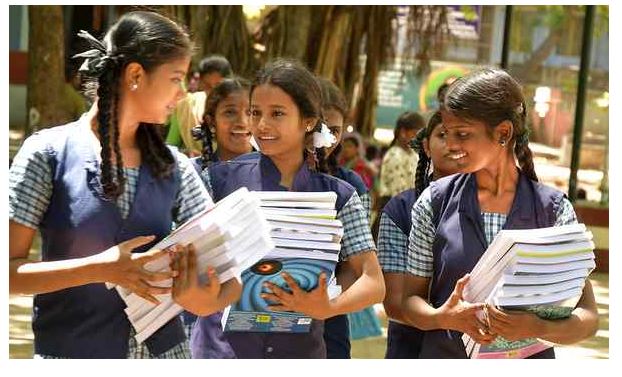
- Free uniforms and textbooks
- Library and sports grants
- ICT and digital learning initiatives
- Remedial teaching and teacher training
- Leadership development for school heads
Special focus areas include:
- Kasturba Gandhi Balika Vidyalayas (KGBVs) for girls from disadvantaged groups
- Residential schools and hostels in underserved regions
- Support for Children with Special Needs (CwSN) including assistive devices, Braille kits, stipends, and transport allowances
Alignment with NEP 2020
Samagra Shiksha is aligned with the National Education Policy (NEP) 2020, incorporating:
- New curricular and pedagogical structure (5+3+3+4)
- Early Childhood Care and Education (ECCE)
- Foundational Literacy and Numeracy (FLN)
- Competency-based learning and holistic assessment reforms
Global Linkages
The scheme supports India’s commitments under:
- SDG 4.1 – Free, equitable and quality primary and secondary education
- SDG 4.5 – Elimination of gender disparities and inclusion of vulnerable groups
Indian Maritime Doctrine 2025
- 06 Dec 2025
In News:
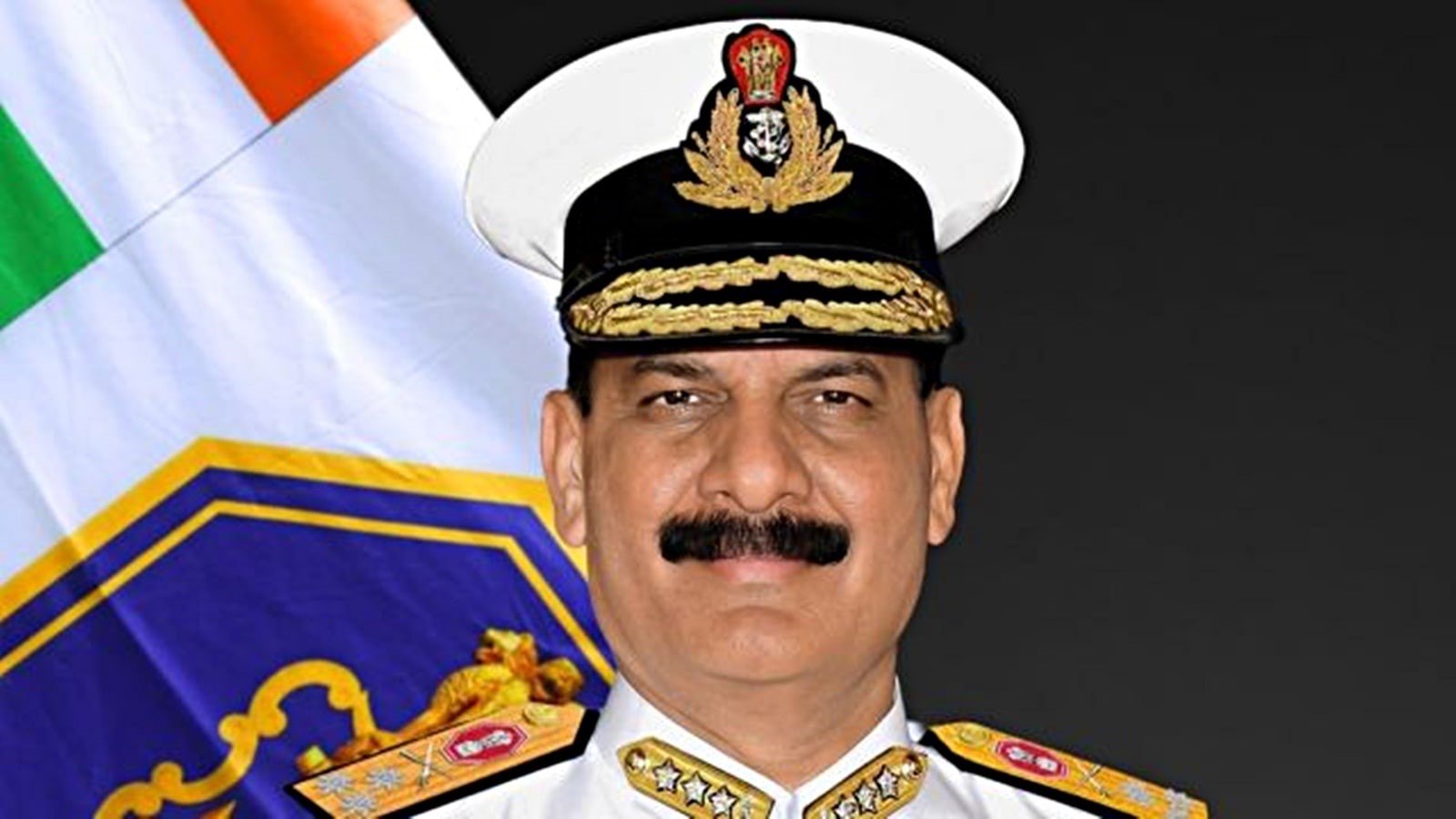
The Indian Maritime Doctrine (IMD) 2025, released by the Chief of the Naval Staff on Indian Navy Day (4 December), is the apex doctrinal publication guiding India’s naval strategy. Navy Day commemorates Operation Trident (1971), when the Indian Navy launched a successful missile attack on Karachi harbour using INS Nipat, Nirghat and Veer, supported by INS Kiltan, Katchall and fleet tanker INS Poshak, crippling Pakistan’s maritime capability.
What is the Indian Maritime Doctrine 2025?
The IMD 2025 defines how India prepares and operates across the full spectrum of maritime conflict, from peacetime presence to warfighting. First issued in 2004 and updated in 2009 and 2015, the 2025 edition reflects India’s evolving maritime environment and Indo-Pacific priorities.
Key Features
1. “No-War, No-Peace” Category:The doctrine formally recognises a grey-zone space between peace and open conflict, where coercion, intimidation, and competition occur without declared war.
2. Multi-Domain and Hybrid Threats:It integrates challenges from cyber, space, electronic and cognitive warfare, along with irregular and hybrid threats.
3. Jointness and Theatre Commands:The document stresses tri-service interoperability and supports India’s move toward theatre command structures.
4. Technology and Modernisation:Emphasis is placed on uncrewed systems, autonomous platforms, AI-enabled surveillance, and network-centric warfare.
5. Maritime Security and Blue Economy:It links naval power to protection of Sea Lanes of Communication (SLOCs), maritime trade, offshore resources, and India’s blue economy ambitions.
Strategic Significance
- The doctrine aligns with national initiatives such as Sagarmala, PM Gati Shakti, Maritime India Vision 2030, Maritime Amrit Kaal Vision 2047, and MAHASAGAR. It positions maritime power as central to achieving Viksit Bharat 2047 and strengthens India’s role as a net security provider in the Indo-Pacific.
Indian Navy: Historical Background
- India’s maritime legacy dates back over 4,000 years, with Harappan ports like Lothal engaged in overseas trade. Ancient Indian navigators influenced Southeast Asia culturally and commercially.
- During the medieval period, powers such as the Cholas, Zamorins, and Marathas developed naval strength. The Maratha Navy under KanhojiAngre resisted European fleets along India’s west coast.
- European dominance began after Vasco da Gama (1498), leading to colonial maritime supremacy. The modern navy evolved from the Royal Indian Navy (RIN), which became the Indian Navy after independence.
Structure and Role Today
The President of India is the Supreme Commander of the Navy. Its motto is “Sam No Varunah” (May Varuna be auspicious to us).
India today maintains a blue-water navy capable of sustained operations across the Indian Ocean Region (IOR) and beyond. Its roles include:
- Maritime security and SLOC protection
- Power projection and deterrence
- Humanitarian assistance and disaster relief (HADR)
- Counter-piracy and anti-terror operations
The Navy’s elite force, MARCOS (Marine Commandos), specialises in amphibious warfare, counter-terrorism, and special operations.
Major Operations
Post-independence milestones include the Liberation of Goa (1961), Operations Trident and Python (1971 war), and ongoing maritime security missions in the IOR.