
Exercise Garuda 2025
- 18 Nov 2025
In News:
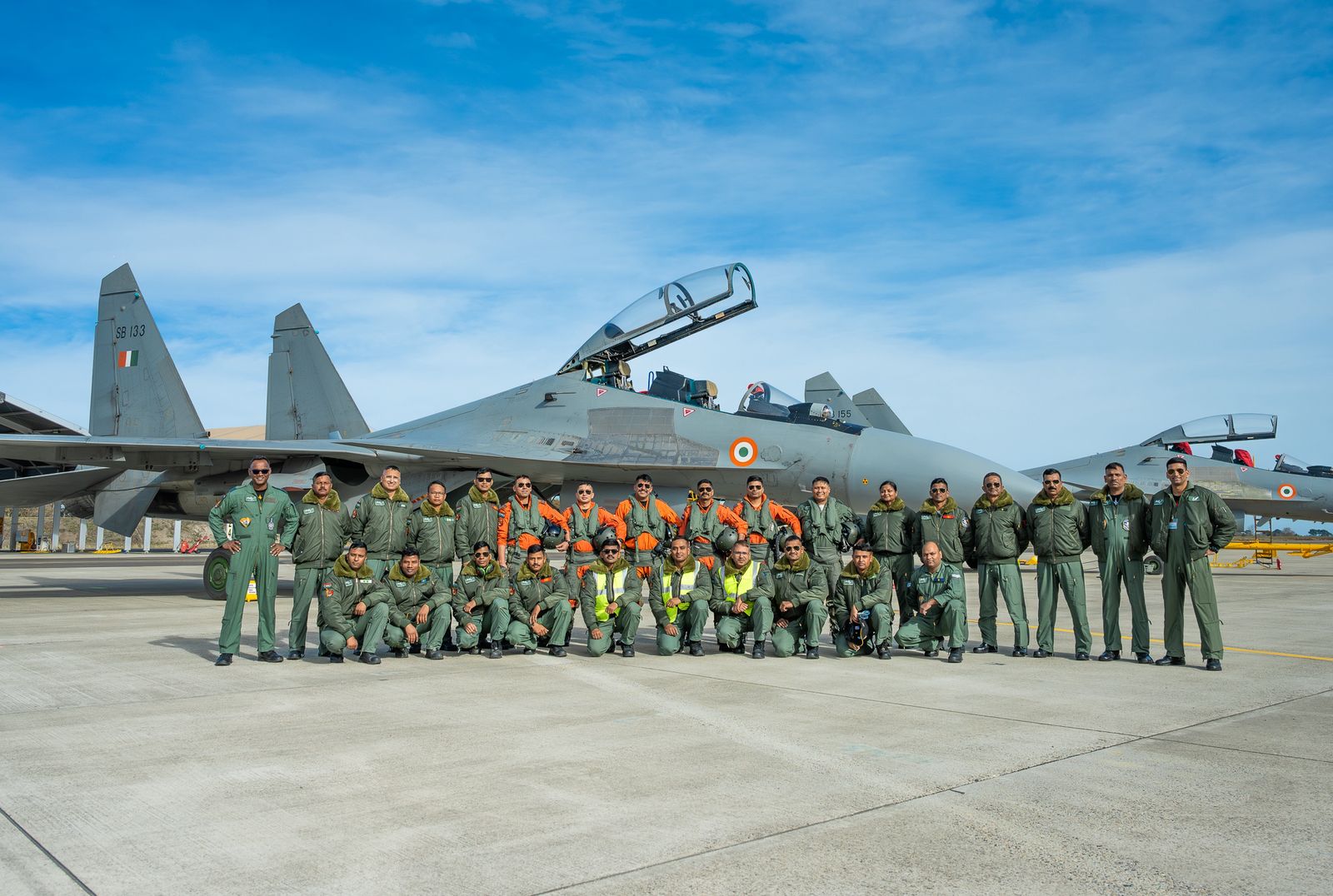
The Indian Air Force (IAF) is participating in the 8th edition of Exercise Garuda, a bilateral air exercise with the French Air and Space Force (FASF), held at Mont-de-Marsan Air Base, France. The engagement reinforces operational cooperation and strategic partnership between India and France in the domain of air power.
About Exercise Garuda
- Type: Bilateral Indo–French Air Exercise
- Started: Early 2000s
- Edition: 8th (2025)
- Location: Mont-de-Marsan, France
Aim
Exercise Garuda aims to:
- Enhance interoperability between the IAF and FASF
- Refine air combat tactics and operational coordination
- Simulate realistic multi-threat scenarios
- Improve understanding of each other’s air operations and procedures
Indian Participation
The IAF has deployed:
- Su-30MKI multirole fighter aircraft
- C-17 Globemaster III for airlift support
- IL-78 mid-air refuelling aircraft for extended-range operations
Exercise Focus Areas
IAF’s Su-30MKI will operate alongside advanced French fighters in:
- Air-to-air combat missions
- Air defence operations
- Joint strike missions
- Large-force engagement scenarios
The training includes complex simulations to assess fighter manoeuvrability, situational awareness, networked operations, and air combat decision-making under realistic combat conditions.
Significance of Exercise Garuda
- Strengthens strategic defence cooperation between India and France
- Enhances interoperability and joint operational capability
- Facilitates exchange of:
- Flight safety and operational practices
- Combat training methodologies
- Best practices for mission planning and execution
Participation reflects the IAF’s ongoing engagement with friendly foreign air forces and highlights India’s commitment to collective security and international military cooperation.
Other Major India–France Military Exercises
|
Service |
Exercise |
Domain |
|
Navy |
Varuna |
Naval warfare |
|
Air Force |
Desert Knight-21 |
Air operations |
|
Army |
Shakti |
Counter-terror and joint ground operations |
Air-Sol Moyenne Portée-Renove (ASMPA-R)
- 18 Nov 2025
In News:
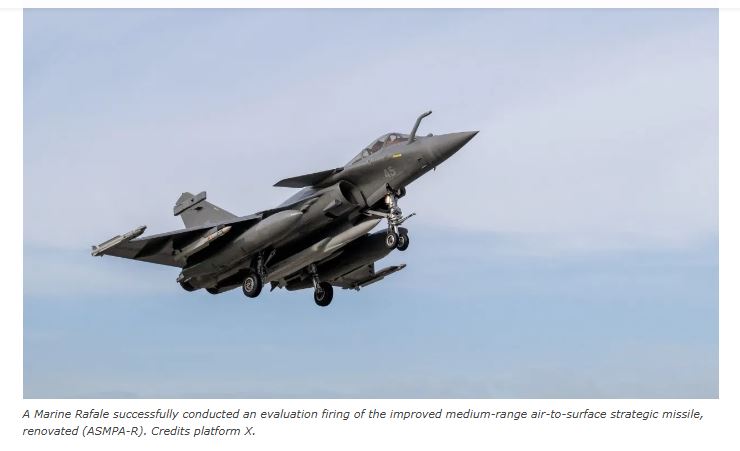
France recently released the first clear official images of its latest-generation ASMPA-R (Air-Sol Moyenne Portée–Renové) missile, following a successful test launch from a Rafale-M carrier-based fighter jet. The test marks the missile’s operational entry into France’s Naval Nuclear Aviation Force (FANu), strengthening the air-based leg of the country’s nuclear deterrent.
What is ASMPA-R?
- The ASMPA-R is a medium-range, supersonic, nuclear-capable air-to-surface cruise missile.
- It is the upgraded version of the ASMPA-A and belongs to the ASMP family developed by France since the 1980s.
- Integral to the Force de Frappe, France’s independent nuclear deterrence structure.
- Used by both France’s Strategic Air Forces (FAS) and Naval Nuclear Aviation Force (FANu).
Key Features of ASMPA-R
1. Propulsion & Speed
- Ramjet-powered missile with dual air intakes.
- Capable of sustained supersonic flight up to Mach 3.
- Uses a solid-fuel booster at launch before ramjet ignition.
2. Range
- Approx. 600 km (extended from 500 km in ASMPA-A).
- Enables stand-off launches beyond enemy air-defense zones.
3. Warhead
- Carries the TNA (Tête NucléaireAéroportée) nuclear warhead.
- A dial-a-yield system, with adjustable yields from:
- 100 kilotons (minimum)
- 300 kilotons (maximum)
4. Design Updates
- Improved aerodynamics and updated tail fin configuration compared to ASMPA-A:
- Larger fins at the rear
- Smaller fins at the front
Evolution of the ASMP Family
|
Variant |
Service Entry |
Range |
Notes |
|
ASMP |
1986 |
300 km |
Replaced older gravity nuclear bombs |
|
ASMPA-A |
2009 |
500 km |
Modernized, improved accuracy |
|
ASMPA-R |
2023–25 |
600 km |
Latest version, improved reliability and range |
The ASMP system was originally developed by MBDA, selected over rival turbojet concepts for superior survivability and penetration capability.
Launch Platforms
- Rafale (Air Force)
- Rafale-M (Carrier-based variant used on Charles de Gaulle aircraft carrier)
Its integration with the Rafale-M enhances France’s ability to deliver nuclear strikes from both land and sea, reinforcing the nuclear dyad.
Geopolitical Significance
- The ASMPA-R strengthens France’s strategic independence within Europe.
- Permits deep-strike capability from aircraft carriers, extending deterrence beyond national borders.
- Aligns with French ambitions to:
- Modernize nuclear capabilities under the Military Programming Law 2024–2030
- Provide a potential “nuclear umbrella” for Europe
- Counter evolving missile and nuclear tests by rival powers (Russia, China, Pakistan)
Ambaji Marble
- 18 Nov 2025
In News:
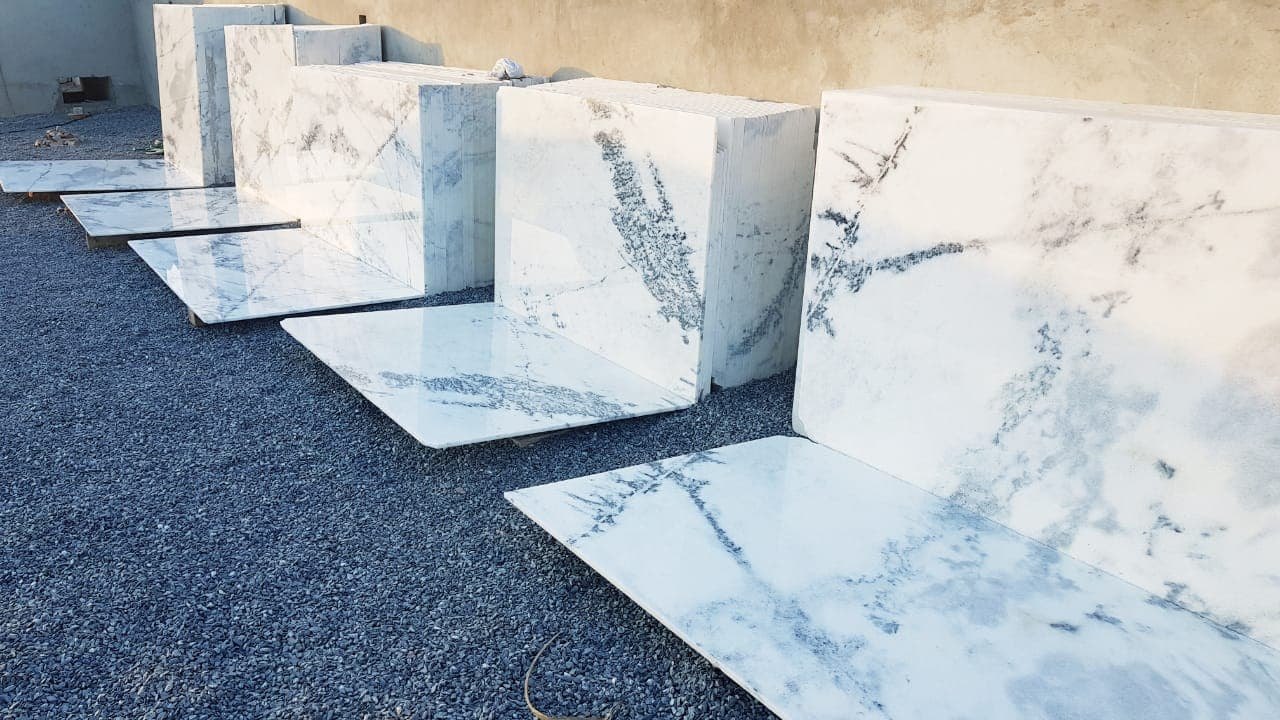
Ambaji Marble, a high-quality white marble quarried in Gujarat, has recently been awarded the Geographical Indication (GI) tag, recognising its uniqueness, regional authenticity, and commercial value. The GI status provides legal protection to producers in the Ambaji region and helps preserve the heritage and branding associated with this premium stone.
Origin and Location
- Named after Ambaji, a town in Banaskantha district, Gujarat.
- Quarried predominantly in the Arasur Hills of the Aravalli range.
- Known historically for its use in religious and monumental architecture.
Characteristics of Ambaji Marble
Appearance
- Milky white colour, often considered among the purest shades of natural marble.
- Displays subtle grey or beige veining, formed by natural mineral impurities during crystallisation.
- Smooth texture and uniform structure make it desirable for fine architectural work.
Durability
- Noted for its long-lasting shine and high resistance to weathering.
- Its dense crystalline structure enhances its strength and longevity.
Applications
Ambaji Marble is widely used in:
- Temples and religious structures- prominently in the Ambaji Temple itself
- Memorials and monuments
- High-end flooring and interior décor
- Architectural sculptures and carvings
Its aesthetic appeal and durability make it a preferred material for cultural and heritage buildings.
Geological Background – Understanding Marble
Marble is a metamorphic rock formed from limestone under conditions of high heat and pressure.
Composition
- Primarily composed of calcite (CaCO?)
- May contain:Clay minerals, Quartz, Micas, Pyrite, Iron oxides, Graphite
These impurities contribute to veining patterns and variations in colour.
Formation Process
- During regional metamorphism at convergent plate boundaries, limestone recrystallises into a mass of interlocking calcite crystals, producing marble.
- Dolomitic marble forms when dolostone undergoes similar metamorphic conditions.
- Marble can also form via contact metamorphism, where heat from an intrusive magma body alters adjacent limestone deposits.
Significance of the GI Tag
The GI recognition of Ambaji Marble is important because it:
- Protects the unique identity of the stone
- Ensures economic benefits for local quarrying communities
- Helps prevent market dilution by inferior substitutes
- Promotes tourism and heritage conservation in the Ambaji region
Uturuncu Volcano
- 18 Nov 2025
In News:
A recent scientific study has provided deeper insights into the unusual activity of the Uturuncu Volcano in southwestern Bolivia. Although its surface shows persistent uplift and subsidence, new seismic imaging confirms that these motions are driven by hot fluids and gases moving beneath the crater rather than rising magma, indicating a low likelihood of imminent eruption. This has earned Uturuncu the nickname of a “zombie volcano”appearing restless but not actually preparing to erupt.
Location and Geological Profile
- Country: Bolivia
- Region: Southwestern Andes Mountains
- Type:Stratovolcano, dominated by dacitic lava domes and flows
- Elevation: Approx. 6,008 m (19,711 ft) tallest mountain in southern Bolivia
- Eruption History: Last erupted ~250,000 years ago
- Current Activity: Hundreds of small earthquakes annually and persistent ground deformation
Underlying Magma and Fluid System
- Uturuncu sits above the Altiplano-Puna Magma Body (APMB), a massive crustal reservoir located 10–20 km below the surface.
- APMB spans nearly 200 km, making it the largest known active magma body in Earth’s crust.
- Seismic imaging indicates ~25% partial melt in places, acting as a deep heat and fluid source for Uturuncu.
The “Sombrero” Uplift Pattern
The volcano displays a unique deformation pattern where:
- The center uplifts, while
- The surrounding region subsides,creating a “sombrero-like” shape over a 70–93 km area.
This deformation is gradual-about 0.4 inches per year-and has persisted for at least five decades, monitored through GPS, satellite radar, and leveling surveys.
Key Findings from the Recent Study
The latest imagingusing data from over 1,700 small earthquakesreveals:
1. Fluid Movement, Not Magma Rise
- Hot supercritical fluids (with both liquid and gas characteristics) rise through a narrow conduit.
- They accumulate beneath the crater, while brines seep outward through fractured rock.
- This fluid distribution explains why the summit uplifts and the edges sink.
2. Seismic Tomography Techniques Used
Researchers used:
- Vp/Vs ratios (compressional vs. shear wave speeds) — high sensitivity to fluids
- Azimuthal anisotropy — identifying crack alignments and fluid pathways
- Low resistivity zones — tracing conductive, hot, salty fluids
These tools revealed a vertical fluid conduit feeding a shallow reservoir under the summit.
3. Eruption Risk Assessment
- No evidence of a shallow, melt-rich magma chamber
- Low gas saturation in the shallow system
- Deformation driven mostly by fluids, not magma
Thus, probability of eruption is currently low despite ongoing seismicity.
Why Uturuncu Matters
Understanding Uturuncu helps refine risk assessments for “restless” volcanoes worldwide that show signs of deformation but lack eruptible magma. This is crucial for communities near:
- Remote Andean mining regions
- Settlements along the Altiplano Plateau
- Other global volcanoes with similar gas-driven unrest
The study aids hazard planning without unnecessary alarm, preventing misinterpretation of harmless gas plumes or small quakes as eruption warnings.
Sickle Cell Disease
- 18 Nov 2025
In News:
Recent medical findings from a decade-long study conducted at Fortis Memorial Research Institute (FMRI), Gurugram, have demonstrated significant success in curing Sickle Cell Disease (SCD) in children through bone marrow (stem cell) transplantation. The study, published in the journal Haemoglobin,analysed100 paediatric cases treated between 2015–2024, reporting an overall survival rate of 87%, with 96% success in matched sibling donor transplants and 78% success in half-matched (haploidentical) family donor transplants. These outcomes place India among the leading countries in advanced paediatric transplant care, particularly notable because SCD disproportionately affects India and sub-Saharan Africa, which together account for nearly half of global cases.
About Sickle Cell Disease
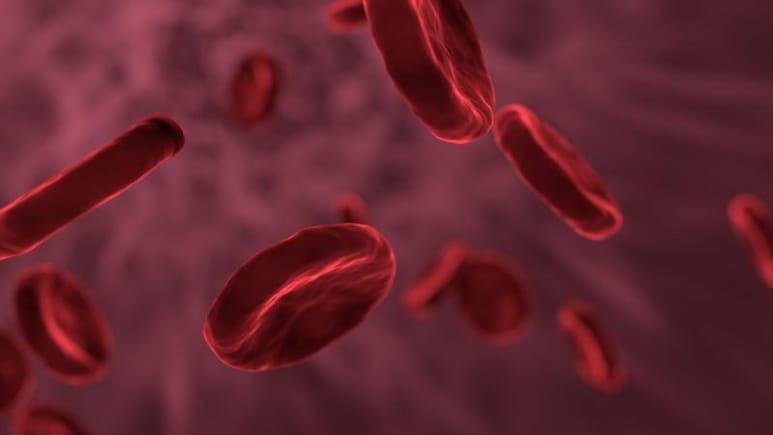
Sickle Cell Disease is a genetic blood disorder caused by the inheritance of two defective genes encoding hemoglobin S—one from each parent. It affects hemoglobin’s structure and function. Normally, red blood cells (RBCs) are round, flexible, and able to move smoothly through blood vessels. In SCD, RBCs distort into a sickle or crescent shape, become rigid and sticky, and obstruct blood flow. This blockage reduces oxygen delivery to tissues and leads to severe pain episodes, organ damage, stroke risk, and a shortened lifespan. The most severe form is Sickle Cell Anemia.
Symptoms
- Early childhood: Persistent tiredness, anemia, painful swelling of hands and feet, jaundice
- Later stages: Recurrent pain crises, infections, stroke, liver and kidney damage, chronic anemia
Causes
- Inherited autosomal recessive disorder
- A child must inherit two copies of the defective sickle cell gene
- Carriers (with one defective gene) do not have the disease but may pass it on
Treatment Approaches
1. Bone Marrow (Stem Cell) Transplant
- Currently the only curative treatment for SCD
- Involves replacing defective bone marrow with healthy stem cells
- FMRI study shows high success rates, comparable to global standards
- Early diagnosis and timely transplant significantly improve survival
2. Supportive Medical Care
- Pain management
- Blood transfusions
- Infection control
- Prevention of complications
3. Gene Therapy (Emerging)
- UK became the first country to approve a gene therapy cure
- Targets and corrects the defective gene producing hemoglobin S
Significance of India’s Transplant Success
The FMRI study demonstrates that developing countries can achieve outcomes similar to the most advanced clinical centres worldwide when equipped with appropriate medical infrastructure and protocols. The success is attributed to:
- Use of reduced-toxicity conditioning regimens
- Adoption of post-transplant cyclophosphamide (PTCy) to reduce graft-versus-host disease (GVHD)
- Expansion of haploidentical (half-matched) donor options when full sibling matches are unavailable
- Strengthened donor registries, early diagnosis, and improved infection control
The findings indicate that cost-effective and safe transplant strategies can be scaled in India and Africa, improving access for children in low-resource settings.
Public Health Relevance
Sickle Cell Disease is a major public health challenge in India, especially among tribal populations in central and western India. Improving outcomes requires:
- Early screening
- Increased awareness
- Strengthening transplant facilities
- Improved donor availability
- Supportive state and national programs
The success of bone marrow transplantation offers a model for scalable, curative intervention for millions living with SCD, demonstrating India’s growing capability in advanced paediatric care.