
UNCLOS and Maritime Security
- 07 Mar 2026
In News:
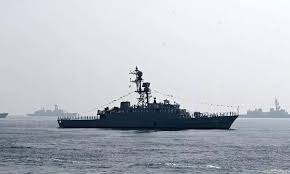
Recent reports of the sinking of the Iranian frigate IRIS Dena off the south-western coast of Sri Lanka, allegedly following a torpedo strike by a United States Navy submarine amid escalating tensions in the Middle East, have renewed attention on the legal regime governing maritime spaces. Such incidents highlight the importance of international maritime law, particularly the United Nations Convention on the Law of the Sea (UNCLOS), which regulates state rights and responsibilities in the world’s oceans.
United Nations Convention on the Law of the Sea (UNCLOS)
UNCLOS is a comprehensive international treaty that establishes the legal framework for the governance and use of oceans and seas. Adopted in 1982 at Montego Bay, Jamaica, the convention entered into force in 1994. Due to its wide scope and significance, it is often described as the “Constitution of the Oceans.”
The convention defines maritime boundaries of coastal states, regulates navigation rights, governs exploitation of marine resources, and establishes obligations for environmental protection and dispute settlement. It thus provides a structured legal order for activities such as shipping, fishing, seabed mining, and naval operations.
Currently, 168 parties, including the European Union, are members of the convention. Countries such as India, Japan, and China are parties to UNCLOS. The United States has signed the convention but has not ratified it, although many of its provisions are followed as customary international law.
Maritime Zones under UNCLOS
UNCLOS divides the oceans into several legal zones, each conferring different rights and responsibilities to coastal and other states.
- Territorial Sea (up to 12 nautical miles): A coastal state exercises full sovereignty over this zone, similar to its land territory. However, foreign ships are allowed the right of innocent passage, meaning they may pass through the waters as long as they do not threaten the security or laws of the coastal state.
- Contiguous Zone (12–24 nautical miles): In this zone, the coastal state does not enjoy complete sovereignty but can enforce laws relating to customs, immigration, fiscal regulations, sanitation, and security to prevent violations within its territory or territorial sea.
- Exclusive Economic Zone (EEZ) (up to 200 nautical miles): Within the EEZ, the coastal state has sovereign rights for exploring, exploiting, conserving, and managing natural resources, including fisheries, oil, and gas. However, other states retain freedoms of navigation and overflight, as well as the laying of submarine cables and pipelines.
- High Seas (International Waters): Areas beyond national jurisdiction are classified as the high seas. No state can claim sovereignty over these waters, and they are governed by international law and the principles of UNCLOS, ensuring freedoms such as navigation, fishing, and scientific research.
Relevance to the Recent Incident
The alleged strike on the Iranian warship near Sri Lanka highlights the strategic significance of international waters and the legal complexities surrounding naval operations. While states retain freedom of navigation and military presence in international waters, such actions can raise questions regarding maritime security, use of force, and adherence to international law.