
Raisina Dialogue 2026
- 08 Mar 2026
In News:
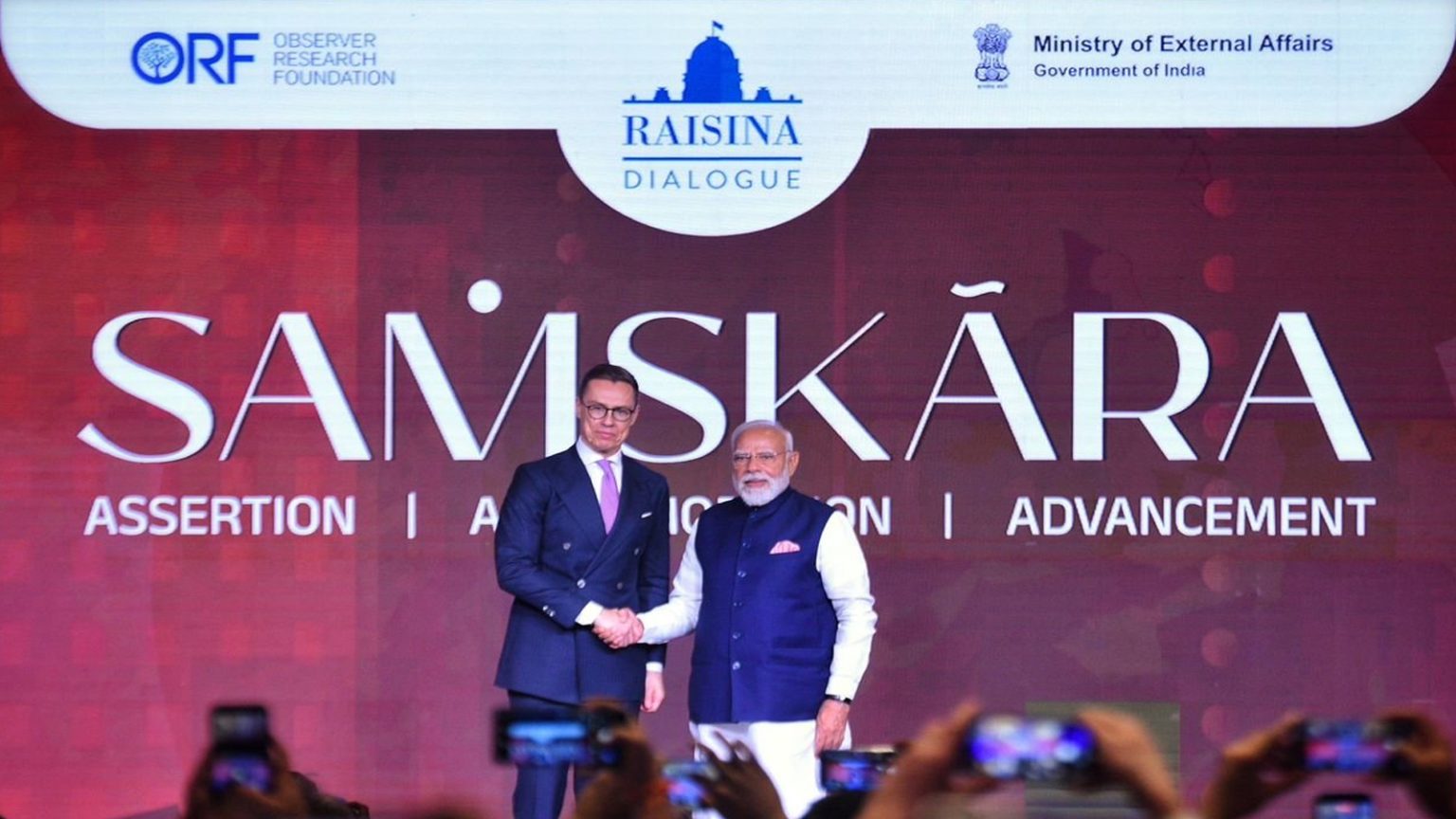
The 11th edition of the Raisina Dialogue 2026 was held in New Delhi. The annual dialogue has emerged as India’s foremost platform for discussions on geopolitics, geo-economics, and global governance, bringing together global leaders, policymakers, diplomats, scholars, and strategic experts to deliberate on pressing international issues.
About the Raisina Dialogue
- The Raisina Dialogue was launched in 2016 by the Ministry of External Affairs in collaboration with the Observer Research Foundation.
- Named after Raisina Hills in New Delhi, the conference has evolved into a major global forum for strategic discussions. It is often compared to leading international strategic conferences such as the Munich Security Conference and the Shangri-La Dialogue.
- The forum convenes representatives from governments, academia, industry, and civil society to address complex global challenges ranging from security to economic governance.
Theme of Raisina Dialogue 2026
The theme for the 2026 edition was “Samskara: Assertion, Accommodation, Advancement.”
The theme reflects three key ideas:
- Assertion – Civilisations and nations asserting their identity and strategic interests.
- Accommodation – Managing diversity and cooperation in an interconnected world.
- Advancement – Progress through innovation, technology, and collaborative global governance.
Major Takeaways from Raisina Dialogue 2026
1. Launch of Raisina Science Diplomacy Initiative: One of the landmark announcements was the Raisina Science Diplomacy Initiative (SDI), aimed at integrating science, technology, and innovation into foreign policy frameworks.
Key focus areas include:
- Artificial Intelligence governance
- Semiconductor supply chains
- India’s Digital Public Infrastructure (DPI) for developing countries
The initiative seeks to strengthen the role of technology in shaping international cooperation and diplomacy.
2. Emergence of a Multipolar Global Order: Participants widely acknowledged the ongoing transition toward a multipolar world, where power is increasingly distributed among multiple regional and global actors.
Key observations included:
- Growing influence of the Global South in shaping global governance.
- Rising importance of South–South cooperation and flexible plurilateral groupings.
India’s strategic engagements through groupings such as BRICS, the India-Middle East-Europe Economic Corridor, and the India-France-UAE Trilateral illustrate its role as a key bridge between developed and developing worlds.
3. Call for Reformed Multilateralism: Another major theme was the need to reform global governance institutions to reflect contemporary geopolitical realities.
In particular:
- Participants emphasised reforms of the United Nations Security Council.
- There was growing international support for India’s permanent membership in a reformed UNSC.
4. Maritime Security and Supply Chain Protection: The dialogue also highlighted the importance of safeguarding global maritime trade routes and infrastructure, particularly in light of rising geopolitical tensions.
Key concerns included:
- Protection of undersea communication cables
- Security of global supply chains
- Stability of strategic maritime zones such as the Indian Ocean, Red Sea, and Indo-Pacific region