
Shaurya Squadrons

- 30 Mar 2026
In News:
In early 2026, the Indian Army achieved a significant milestone in "network-centric warfare" by operationalizing Shaurya Squadrons. These are specialized drone sub-units integrated directly into armoured (tank) regiments. This move follows the successful implementation of Ashni Platoons in infantry battalions, marking a fundamental shift in how the Army conducts ground operations.
What are Shaurya Squadrons?
Shaurya Squadrons are dedicated drone units embedded within the Army’s armoured corps to provide organic aerial capabilities to tank commanders.
- Composition: Each squadron consists of 20 to 30 personnel specialized in drone piloting, data analysis, and counter-drone measures.
- Asset Mix: They operate a diverse fleet including:
- Surveillance Drones: For real-time reconnaissance beyond the tank crew's line of sight.
- Swarm Drones: For overwhelming enemy defenses through coordinated mass attacks.
- First-Person View (FPV) Drones: Highly agile "kamikaze" drones used for precision strikes on enemy hatches, engine decks, or logistics nodes.
- Loitering Munitions: "Suicide drones" that can hover over a battlefield for extended periods before engaging a target.
The "Sensor-to-Shooter" Revolution
The primary objective of these squadrons is to compress the Sensor-to-Shooter Cycle—the time elapsed between detecting a target (sensor) and neutralizing it (shooter).
- Traditional Model: Identifying a target often required relaying information up the chain of command to artillery or air support, a process taking minutes.
- Shaurya Model: By embedding drones at the unit level, the tank commander can detect and strike a target directly. The Army aims to reduce this cycle from minutes to mere seconds.
- Tactical Advantage: This allows for "Deep Precision Strikes" and protects heavy armour (like the T-90 Bhishma and Arjun Mk1A) from hidden threats like Anti-Tank Guided Missiles (ATGMs).
Comparison: Shaurya Squadrons vs. Ashni Platoons
The Shaurya initiative scales up the "drone-first" philosophy pioneered by Ashni Platoons.
|
Feature |
Ashni Platoons |
Shaurya Squadrons |
|
Integrated In |
Infantry Battalions |
Armoured (Tank) Regiments |
|
Primary Goal |
ISR (Intelligence, Surveillance, Reconnaissance) & Urban/Mountain combat |
Multi-domain hunting; protecting heavy armour |
|
Personnel |
20–25 soldiers |
20–30 soldiers |
|
Status |
Integrated across all infantry units |
Currently in 5 Commands; scaling to all 67 regiments |
Mud Volcanoes
- 13 Feb 2026
In News:
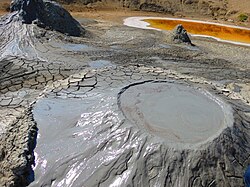
Mud volcanoes are non-igneous “sedimentary volcanoes” formed in young oil-field regions, where methane and hydrocarbons under compactional stress force mud and gases to the surface.
A recent eruption of a mud volcano in Diglipur, Andaman Islands, has drawn attention to this rare geological phenomenon. Mud volcanoes differ fundamentally from magmatic volcanoes as they do not involve molten lava but are driven by sedimentary and hydrocarbon processes.
What is a Mud Volcano?
Mud volcanoes, also called sedimentary volcanoes or gas-oil volcanoes are surface expressions of subsurface pressure systems associated with hydrocarbon-rich sedimentary basins.
Key Characteristics
- Non-igneous in origin (no magma involved).
- Occur mainly in young oil-field regions with soft, unconsolidated sediments.
- Erupt mud, water, methane and other gases instead of lava.
- Often form cone-shaped structures.
- Can release flames if methane ignites.
- May emit hot mud and steam due to deep compactional heat.
Though different in origin, their eruptive behaviour can resemble magmatic volcanoes in intensity.
Formation Mechanism
Mud volcanoes develop due to:
- Compactional Stress
- Deep sediment layers experience pressure over time.
- Methane and hydrocarbons accumulate in porous formations.
- Gas Build-up and Upward Migration
- Trapped gases mix with mud and water.
- The pressurized mixture forces its way upward through fractures.
- Surface Eruption
- Mud and gases erupt, forming a cone.
- Repeated eruptions may enlarge the structure.
Due to the depth of origin, expelled mud is sometimes warm and accompanied by steam clouds.
Global Distribution
- Around 1,000 mud volcanoes have been identified globally on land and in shallow waters.
- Prominent concentrations occur in:
- Azerbaijan (Caspian region)
- Indonesia
- Mediterranean region
- Many also occur on the ocean floor, forming islands, banks, and altering coastal geomorphology.
Mud Volcanoes in India
In India, mud volcanoes are confined to the Andaman and Nicobar Islands.
Major Locations
- Baratang Island – Known site of India’s mud volcano.
- Diglipur – Recent eruption reported after several years of dormancy.
These eruptions are linked to the tectonically active Andaman subduction zone, where sediment compression and hydrocarbon accumulation occur.
Geological Significance
- Indicator of hydrocarbon-rich sedimentary basins.
- Provide insights into subsurface gas migration and petroleum systems.
- Important for understanding:
- Methane emissions (climate relevance)
- Coastal geomorphology changes
- Seismic and tectonic processes in subduction zones
Differences: Mud Volcano vs Magmatic Volcano
|
Feature |
Mud Volcano |
Magmatic Volcano |
|
Origin |
Sedimentary |
Igneous |
|
Material Ejected |
Mud, water, gases |
Lava, ash, pyroclasts |
|
Energy Source |
Gas pressure |
Magma pressure |
|
Temperature |
Relatively lower |
Extremely high |
Rare Early-Universe Supernova Observed by JWST
- 16 Dec 2025
In News:
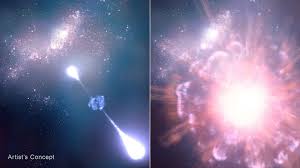
Astronomers using the James Webb Space Telescope (JWST) have detected a rare supernova in the early universe. The discovery was linked to a distant gamma-ray burst (GRB) that helped scientists trace the explosive death of a massive star dating back to just a few hundred million years after the Big Bang.
What is a Supernova?
A supernova is a powerful and catastrophic explosion marking the end of a star’s life cycle. It is among the most energetic events in the universe.
During a supernova, a star releases an enormous amount of energy in a short time — sometimes emitting more energy in a few seconds than the Sun will produce in its entire lifetime. These explosions can briefly outshine entire galaxies and are visible across vast cosmic distances.
Types of Supernovae
- Type I Supernova: This occurs in a binary star system where a white dwarf star pulls matter from a companion star. When the accumulated mass crosses a critical limit, a runaway nuclear reaction triggers a thermonuclear explosion.
- Type II Supernova: This occurs when a massive star exhausts its nuclear fuel. Without the outward pressure from fusion, gravity causes the core to collapse, leading to a violent explosion known as a core-collapse supernova.
Role of Supernovae in the Universe
Supernovae play a crucial role in cosmic evolution. They are the primary sources of heavy elements such as iron, gold, and uranium, which are later incorporated into new stars, planets, and even living organisms. Thus, they are fundamental to the chemical enrichment of the universe.
How Common are Supernovae?
In a galaxy like the Milky Way, astronomers estimate that about two to three supernovae occur per century. However, since the universe contains billions of galaxies, astronomers observe hundreds of supernovae every year beyond our galaxy.
Significance of the JWST Discovery
The recent observation is particularly important because it captures a supernova from the early universe, only a few hundred million years after the Big Bang. Studying such ancient stellar explosions helps scientists understand:
- The formation of the first generations of stars
- Early chemical enrichment of the universe
- The evolution of galaxies in the cosmic dawn era
The high sensitivity and infrared capabilities of the James Webb Space Telescope make it uniquely suited to observe such distant and ancient cosmic events.
Sliteye Shark
- 25 Aug 2025
In News:
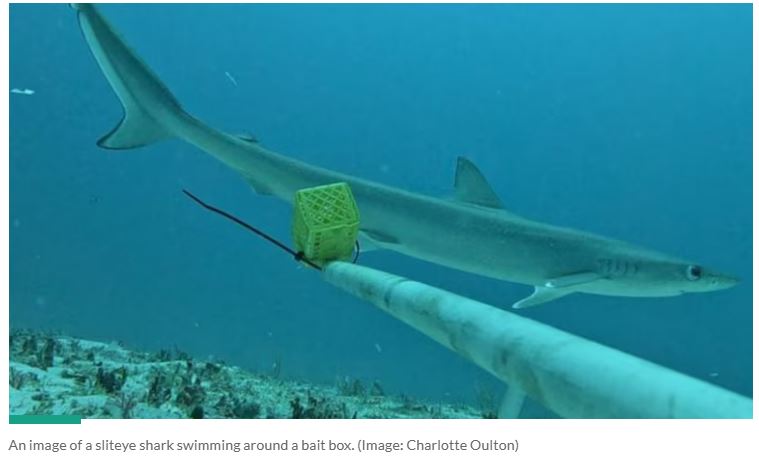
For the first time, scientists have recorded the sliteye shark (Loxodonmacrorhinus) in the Great Chagos Bank, the world’s largest coral atoll in the Indian Ocean. The discovery underscores the hidden biodiversity of the Chagos Archipelago and its Marine Protected Area (MPA), highlighting the ecological importance of deepwater habitats.
About the Sliteye Shark
The sliteye shark is a small-bodied requiem shark in the family Carcharhinidae and is the only species in the genus Loxodon. Named for its distinctive slit-like eyes, the species is adapted to low-light, deepwater environments, though it can also inhabit clear, shallow seas.
- Scientific Name:Loxodonmacrorhinus
- Size: Up to 95 cm in length
- Features: Slender body, long narrow face, large eyes, short furrows at mouth corners, small teeth with protruding tips, absent or rudimentary ridge between dorsal fins, gray coloration with white belly, dark-edged caudal and first dorsal fins
- Distribution: Tropical waters of the Indian and western Pacific Oceans, including countries such as India, Indonesia, Sri Lanka, Japan, Australia, China, Kenya, South Africa, and others between 34°N and 30°S
Discovery in Chagos
- Researchers observed two sliteye sharks at depths of 23–29 metres, just 11 km apart, using Baited Remote Underwater Video systems in deep seagrass habitats on the southern rim of the Great Chagos Bank. These meadows, first mapped in 2016 using satellite tracking of green turtles, support more than 110 fish species and are now confirmed as important for sliteye sharks as well.
Conservation Concerns
- The sliteye shark is classified as Near Threatened by the IUCN Red List, with populations projected to decline by approximately 30% over the next 15 years due to heavy fishing pressure.
- The Chagos discovery raises critical questions regarding the species’ abundance, habitat use, and conservation needs.
- The study forms part of a project led by Swansea University in collaboration with international partners, funded by the Bertarelli Foundation, with full findings expected in 2026. The results strengthen the case for protecting deepwater seagrass habitats in the Indian Ocean.
India's BRAP 2024 Alignment with World Bank's B-READY Index

- 05 Oct 2024
In News:
- The Indian government plans to align indicators of the BRAP 2024 index with the World Bank’s B-READY index to enhance business readiness rankings.
- State Involvement: States have been instructed to address gaps identified in the B-READY evaluations to improve their global rankings.
- Indicators Included: The upcoming 2024 BRAP rankings, prepared by the Department for Promotion of Industry and Internal Trade, will incorporate specific indicators from the B-READY index.
- Enterprise Survey Launch: An enterprise survey for the B-READY index in India is set to start in October, with support from the Ministry of Statistics and Programme Implementation.
- Participation Timeline: Although B-READY rankings will commence in 2024, India’s participation will begin in 2026. The initial rankings will cover 54 countries, expanding to 120 in 2025 and 180 in 2026.
- Successor to Previous Rankings: The B-READY index replaces the Ease of Doing Business rankings, which were discontinued in 2021 due to irregularities. It considers a broader range of factors in its assessments.
- Benchmark for Global Institutions: The B-READY framework will serve as a benchmark for global financial institutions and multinational companies to evaluate a country’s regulatory and policy environment.
- Historical Improvement: India improved its Ease of Doing Business ranking from 142 in 2014 to 63 in 2020.
- Technical Understanding: A team of government officials is tasked with understanding the technical aspects of the B-READY index to formulate strategies for improving India’s score.
- Lifecycle Parameters: The new index tracks ten parameters throughout a firm's lifecycle, including business entry, utility services, and labor, focusing on real-world applications rather than just legal changes.
- Recent BRAP Rankings: The BRAP 2022 rankings were recently announced, with Andhra Pradesh and Kerala achieving the top positions.
India’s First ‘City Of Literature’ (Money Control)

- 01 Nov 2023
Why in the News?
Kozhikode, in Kerala, was named the ‘City of Literature’ by the Unesco Creative Cities Network (UCCN), making it the first such city in India.
About India’s First ‘City Of Literature’:
- Kozhikode (Kerala), has achieved global recognition by joining the UNESCO Creative Cities Network.
- It is now known as the 'City of Literature,' making it the first Indian city to receive this prestigious title.
- This recognition was awarded on World Cities Day, (31 October) along with Gwalior, Madhya Pradesh, which was designated a 'City of Music.'
- Prague was the first city to receive the 'City of Literature' title in 2014.
About UNESCO Creative Cities Network:
- The UNESCO Creative Cities Network is a global initiative established by the United Nations Educational, Scientific, and Cultural Organization (UNESCO) to recognize and promote cities that have made significant contributions to the development of creative industries and culture.
- The UNESCO Creative Cities Network now comprises 350 creative cities from over 100 countries.
- These cities represent seven creative fields, including Crafts and Folk Art, Design, Film, Gastronomy, Literature, Media Arts, and Music.
- Participation in the UNESCO Creative Cities Network provides cities with opportunities for international collaboration, knowledge sharing, and the exchange of best practices in creative and cultural endeavours.
- These cities serve as hubs for artistic expression, cultural preservation, and economic growth, making them vital players in the global creative economy.
- Through this network, cities work together to harness the power of culture and creativity to address common challenges and promote sustainable development, ultimately enhancing their status on the global stage.