
LanjiaSaora
- 16 Apr 2026
In News:
The LanjiaSaora, a distinct subgroup of the ancient Saora (or Savara) tribe, has recently gained attention for the resilient yet evolving nature of its cultural identity. Primarily recognized as a Particularly Vulnerable Tribal Group (PVTG) in Odisha, the community is navigating a delicate balance between preserving centuries-old rituals and adapting to modern socio-economic shifts.
I. Geographical and Demographic Profile
- Primary Habitat: The tribe predominantly inhabits the rugged, forested hills of the Rayagada (Gunupur division) and Gajapati (Parlakhemundi) districts of southern Odisha.
- Broader Distribution:Saoras are also found across Andhra Pradesh, Jharkhand, Madhya Pradesh, and Assam, making them one of India’s most widely distributed ancient communities.
- Tribal Subdivisions:
- LanjiaSaora: Hill-dwelling, traditionally isolated, and practitioners of shifting cultivation.
- Sudha Saora: Residents of the plains who have integrated more closely with settled agriculture and mainstream wage labor.
II. Cultural Identity and Art: The Idital Heritage
The spiritual and social life of the LanjiaSaora is deeply intertwined with their unique visual and performing arts.
- Idital (Saora Paintings):
- These are sacred wall murals painted on the red-ochre exterior or interior walls of mud houses using rice paste.
- Significance: Known as Italons or Ikons, these 62 varieties of paintings depict tribal folklore, the "Tree of Life," and daily activities to appease deities and ancestors.
- GI Tag: In early 2024, LanjiaSaora paintings received the Geographical Indication (GI) tag, providing a global platform for their conservation and commercial viability.
- Language: They speak Saora, a Mundari language from the Austroasiatic family. It notably possesses its own unique , 'Sorang Sompeng', developed in 1966.
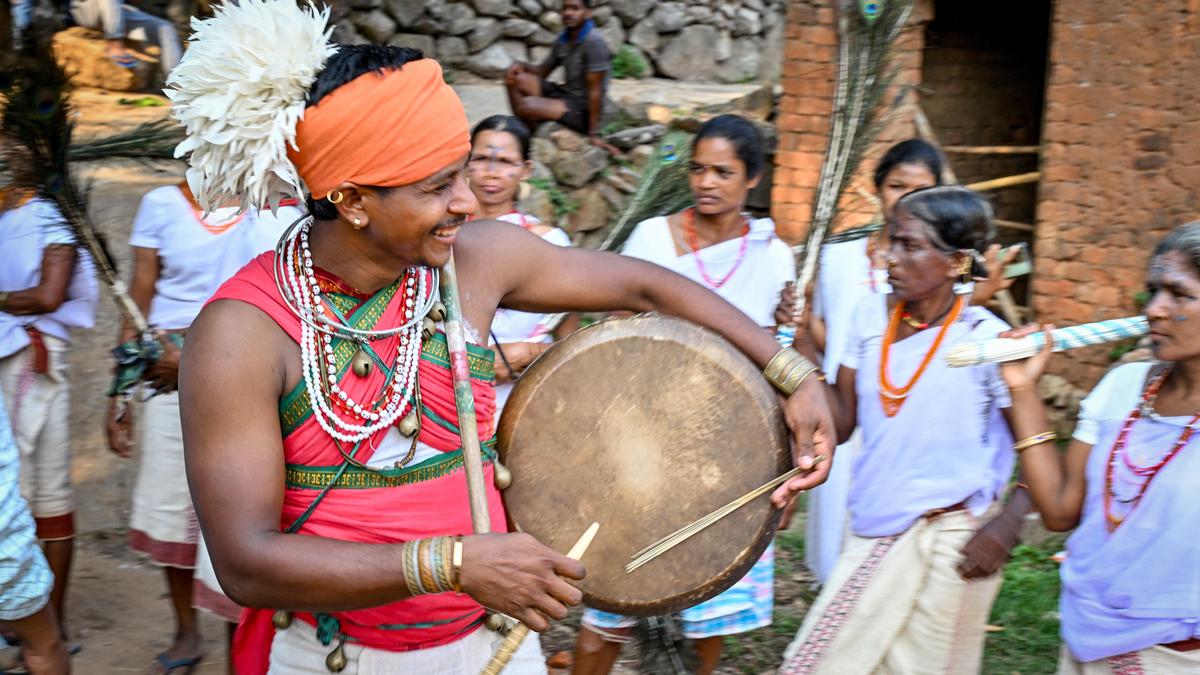
- Dance and Music: Their "scintillating" dances are spontaneous and communal. Performers wear turbans decorated with white crane feathers, peacock plumes, and carry traditional umbrellas and swords. Instruments include brass pipes, cymbals, and gongs.
III. Traditions in Transition: Modernity vs. Rituals
Recent observations highlight a shift in how the younger generation perceives traditional markers of identity:
- Physical Adornments: Older members are known for permanent tattoos with geometric motifs and large metal earrings that permanently stretch the earlobes. Younger Saoras are increasingly opting for temporary tattoos and detachable, hooked ornaments to navigate modern professional and social environments without abandoning their roots.
- Ritualistic Shifts: Traditional practices like the Guar ceremony (a grand funeral ritual involving animal sacrifice) remain central, but increasing contact with Christianity and Hinduism is subtly altering the community's magico-religious landscape.
IV. Economy and Livelihood
- Agriculture: They are renowned for their indigenous engineering skills in terraced cultivation and water management. They also practice shifting cultivation (PoduChasa or BagadoChaas).
- Social Structure: They follow an egalitarian system with the Birinda (lineage) as the primary social unit.
- Trade: While moving toward cash crops, the barter system remains prevalent in local weekly markets (haats).