
Rongali Bihu
- 06 Apr 2026
In News:
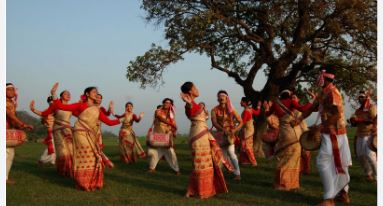
In April 2026, the state of Assam is once again enveloped in the vibrant spirit of Rongali Bihu, also known as Bohag Bihu. As the premier festival of the Assamese people, it marks the beginning of the Assamese New Year and the arrival of the spring season. This festival is a quintessential representation of Assam's syncretic culture, transcending barriers of caste, creed, and religion.
The Three Dimensions of Bihu
To understand Rongali Bihu, one must place it within the annual cycle of the three Bihu festivals that dictate the rhythm of life in the Brahmaputra Valley:
|
Festival Name |
Alternative Name |
Month (Approx.) |
Significance |
|
Rongali Bihu |
Bohag Bihu |
April |
Celebrates the New Year, Spring, and the sowing season. |
|
Kati Bihu |
Kongali Bihu |
October |
A solemn occasion marking the growing season; prayers for crop protection. |
|
Magh Bihu |
Bhogali Bihu |
January |
The harvest festival; characterized by community feasting and bonfires. |
Significance of Rongali (Bohag) Bihu
The term ‘Rongali’ is derived from the Assamese word 'Rong', meaning joy or celebration. Unlike the thriftiness of Kati Bihu or the feast-centric Magh Bihu, Rongali Bihu is a week-long celebration of life, fertility, and nature’s renewal.
- Agricultural Link: It signals the commencement of the seeding time. Farmers seek blessings for a bountiful harvest.
- Cultural Identity: It serves as a platform for the display of traditional folk music and the world-renowned Bihu Dance, which was recently featured in the Guinness World Records for the largest performance.
- Social Cohesion: It is a secular festival where indigenous communities and various ethnic groups (Tibeto-Burman and Tai origins) unite to celebrate a shared Assamese identity.
Rituals and Traditions: The Seven Days of Bihu
While celebrations can last for a month, the first few days carry specific ritualistic weight:
- Goru Bihu (First Day): Dedicated to the welfare of livestock. Cattle are taken to rivers, bathed with turmeric and pulse paste (Maah-Halodhi), and stroked with sprigs of Makhiyati and Dighaloti to ward off insects.
- Manuh Bihu (Second Day): The "Bihu of the People." This is the official New Year's Day. People wear new clothes, seek blessings from elders, and exchange gifts.
- Huçori: Groups of elders and youth visit households to perform traditional carols and dances, offering blessings in exchange for small tokens of appreciation.
Material Culture and Attire
The festival is a showcase of Assam's rich textile heritage:
- The Attire: Women wear the Mekhela Chador, a two-piece traditional dress made from Pat (mulberry silk), Muga (golden silk), or cotton. Men typically wear Dhoti-Gamosa.
- The Gamocha (Bihuwaan): A hand-woven rectangular cotton cloth with red borders and floral motifs. During Bihu, it is gifted as a 'Bihuwaan'—a symbol of respect, love, and hospitality. The Gamocha has also been granted a Geographical Indication (GI) Tag.
- Traditional Delicacies: The celebration is incomplete without Larous (sweet balls) and Pithas (rice cakes) made of glutinous rice, coconut, and jaggery.
Musical Heritage
The atmosphere of Assam during Rongali Bihu is defined by the rhythmic beats of traditional instruments:
- Dhol: A barrel-shaped drum.
- Pepa: A hornpipe made from a buffalo horn.
- Gogona: A bamboo mouth organ.
- Toka: A bamboo clapper.
- Xutuli: A clay or bamboo whistle.