
Punatsangchhu-I Hydroelectric Project
- 13 Apr 2026
In News:
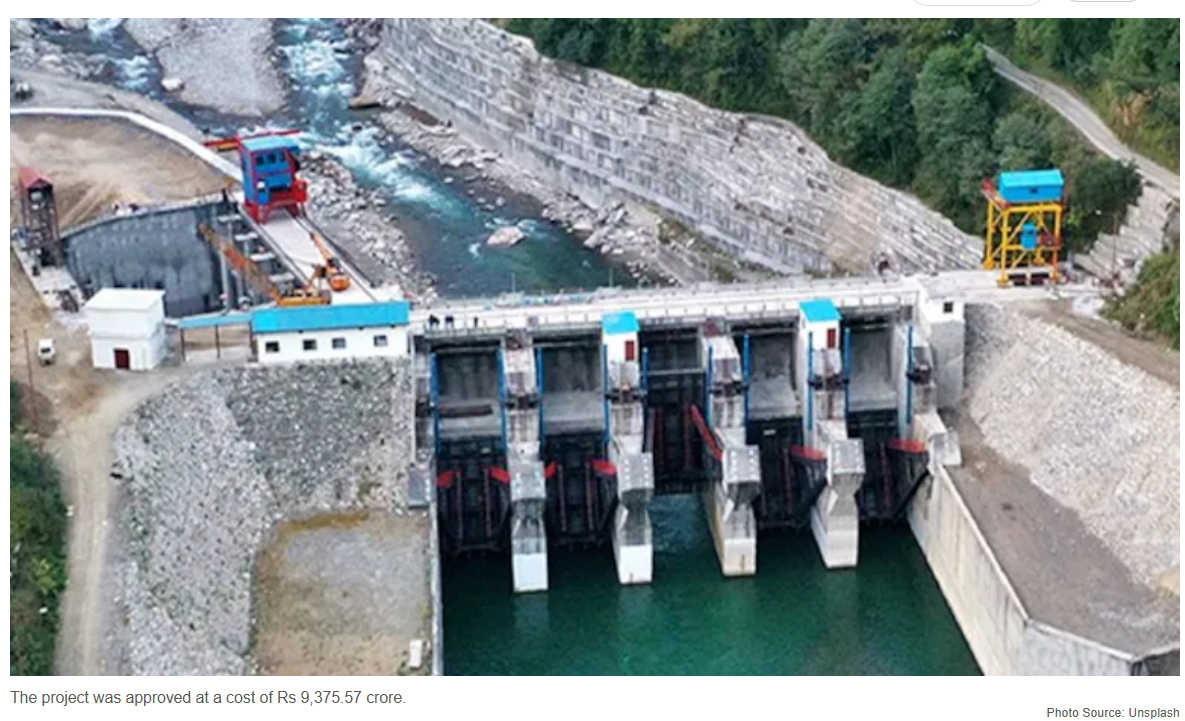
Recently, a significant milestone in India-Bhutan bilateral relations was achieved with the resumption of dam construction at the 1,200 MW Punatsangchhu-I Hydroelectric Project. After a seven-year hiatus caused by complex geological setbacks, India’s Union Power Minister attended the concrete pouring ceremony, signaling a renewed commitment to complete Bhutan's largest ongoing hydropower venture.
Key Project Specifications
- Capacity: 1,200 MW (comprising six 200 MW turbines).
- Type: Run-of-the-river (RoR) scheme.
- Location: Left bank of the Punatsangchhu River, Wangdue Phodrang district, Southern Himalayas (approx. 80 km from Thimphu).
- Infrastructure:
- Concrete Dam: 130m height x 239m length.
- Powerhouse: Underground facility for electricity generation.
- Implementing Agency:Punatsangchhu-I Hydroelectric Project Authority (PHPA), a joint autonomous body of the Royal Government of Bhutan and the Government of India.
Financing Model: The 60:40 Framework
The project is a hallmark of India’s development assistance to Bhutan, following a unique financial arrangement:
- 40% Grant: Non-repayable aid from the Government of India.
- 60% Loan: Provided at a 10% annual interest rate.
- Repayment: 12 equated annual installments beginning one year after the project’s commercial operation date.
- Revenue Model: Bhutan will export all surplus power to India, providing a steady stream of revenue for its national exchequer.
Why was the project suspended?
The project, which began in 2008, was originally slated for completion in 2015. However, it encountered severe "Geological Surprises":
- Right-Bank Instability: In 2013, a massive landslide destabilized the right bank slope at the dam site.
- Geological Fragility: The Himalayan terrain posed unforeseen challenges in both surface and underground excavations, leading to multiple design changes.
- Suspension (2019–2026): Main dam works were halted in 2019 to conduct comprehensive technical studies and ensure the structural safety of the project.
Strategic Significance of PHEP-I
- Economic Backbone for Bhutan: Upon completion, it will boost Bhutan's total hydropower capacity by nearly 30%. Hydropower currently contributes ~14% to Bhutan's GDP and over 25% of government revenue.
- India’s Green Energy Goals: The surplus power (approx. 5,670 million units annually) will help India meet its Nationally Determined Contributions (NDCs) under the Paris Agreement by increasing the share of renewable energy in its grid.
- Grid Stability: Hydropower provides "peaking power," which is essential for balancing India’s national grid, especially with the increasing integration of intermittent solar and wind energy.
- Strategic Interdependence: These projects create deep economic linkages that act as a buffer against external geopolitical shifts in the Himalayan region.
Current Status & Future Outlook
- Physical Progress: As of early 2026, the project has achieved approximately 88% physical completion and 93.7% financial progress.
- Estimated Completion: The revised timeline aims for commissioning within the next five years (by 2031), subject to the success of new stabilization measures.
- Bilateral Momentum: The restart of PHEP-I follows the successful operationalization of Punatsangchhu-II (1,020 MW) in late 2025, reinforcing the long-term goal of developing 10,000 MW of hydropower in Bhutan.