
New Archaeological Discoveries at Elephanta Island
- 09 Apr 2026
In News:
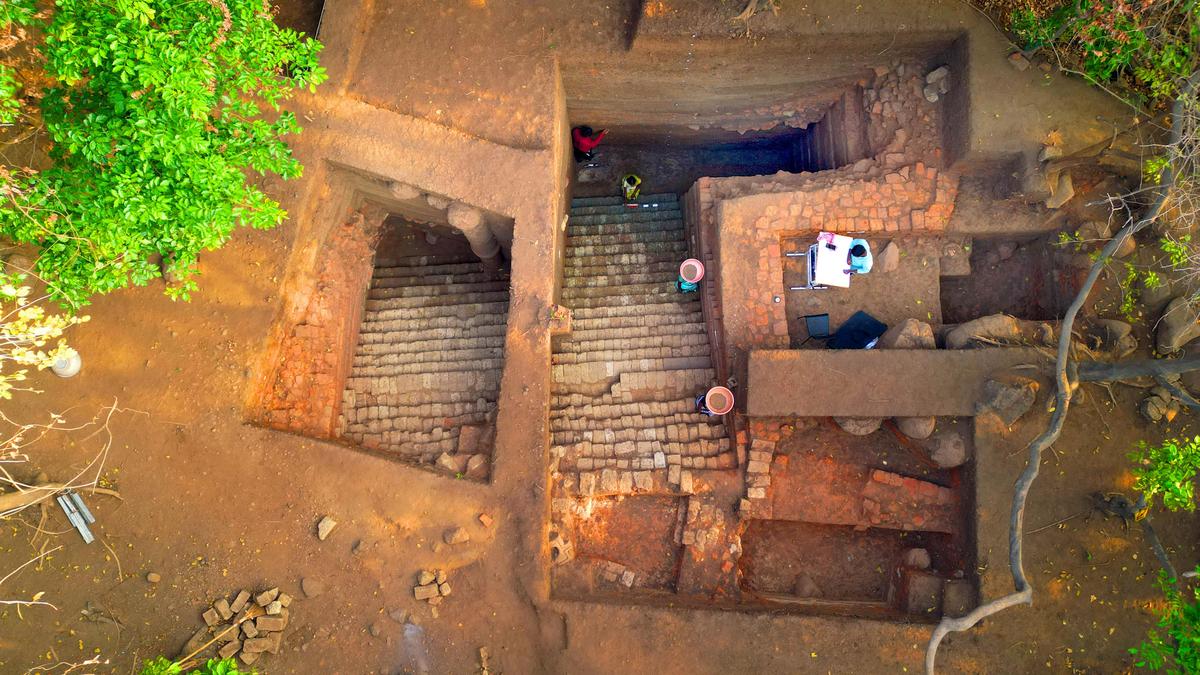
Recent excavations by the Archaeological Survey of India (ASI) have unearthed a sophisticated 1,500-year-old stepped reservoir on Elephanta Island (historically known as Gharapuri).
Advanced Water Management: The Stepped Reservoir
The centerpiece of the discovery is a massive T-shaped stepped reservoir dating back approximately 1,500 years.
- Engineering Excellence: The structure features 20 precisely aligned stone steps. Remarkably, the basalt blocks used for construction were not native to the island; they were transported from the mainland, indicating a highly organized labor and logistics system.
- Functional Design: The reservoir was engineered to capture and store monsoon runoff on the island’s naturally rocky and sloped terrain, ensuring a year-round water supply for a growing settlement or a busy port.
Numismatic Evidence and Chronology
The excavation yielded approximately 60 coins made of copper, lead, and silver, providing a clear chronological framework for the site.
- The Kalachuri Connection: Several copper coins belong to King Krishnaraja of the Kalachuri dynasty (6th century CE).
- Iconography: These coins feature a distinctive seated bull motif (Nandi) on the obverse and a temple symbol with the legend "Sri Krishnaraja" on the reverse. This confirms the political influence of the Kalachuris over the Konkan coast during this period.
A Global Maritime Hub
The findings firmly establish Elephanta Island as a crucial node in the Ancient Indian Ocean Trade.
- Mediterranean Links: Archaeologists discovered nearly 3,000 amphorae sherds (pottery used for transporting wine or oil) of Mediterranean origin, indicating direct or indirect trade links with the Roman Empire.
- West Asian Ties: The presence of torpedo jars from West Asia (Mesopotamia/Persia) suggests the island functioned as a transshipment point for goods moving between the Gulf and the Indian hinterland as early as the 2nd century CE.
- The Port Triad: Historically, the island operated through three distinct port localities: Morabandar, Rajbandar, and Shethbandar, each likely serving different mercantile functions.
Industrial and Cultural Landscape
Beyond trade, the island was a center of production and sophisticated lifestyle:
- Textile Industry: The discovery of a brick structure, identified as a possible dyeing vat, suggests that the island was involved in textile processing—a major export commodity for ancient India.
- Material Culture: Recoveries of carnelian and quartz beads, glass and stone bangles, and terracotta figurines reflect a vibrant local craft tradition and an affluent resident population.