
Red-crowned Roofed
- 31 Mar 2026
In News:
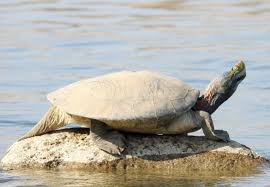
The Red-Crowned Roofed Turtle (Batagurkachuga), once a widespread inhabitant of the Ganga and Brahmaputra river systems, is now facing an existential crisis. As a "jewel of the Ganga," its dwindling numbers reflect the deteriorating health of South Asia’s freshwater ecosystems.
Species Profile and Distinctive Features
The Red-Crowned Roofed Turtle is one of the three large freshwater species in the genus Batagur found in India. It is characterized by significant sexual dimorphism and vibrant coloration.
- Physical Appearance:
- Males: Notably smaller than females, reaching only about half their length. They exhibit a striking reddish-orange head with a distinct black crown.
- Shell: The carapace (upper shell) is greenish-brown with yellowish patterns, while the plastron (lower shell) is yellow with black markings.
- Diet: As an omnivorous species, it maintains a balanced diet consisting of various aquatic plants and small animals.
- Ecological Role:
- Bio-indicator: Its presence or absence serves as a critical measure of river health.
- Nutrient Cycling: It plays a vital role in the aquatic food web by facilitating the cycling of nutrients, which is essential for maintaining the productivity of the river ecosystem.
Geographical Distribution: A Shrinking Sanctuary
Historically, the species was a common sight across the Indo-Gangetic plain.
- Native Range: India, Bangladesh, and Nepal.
- Current Strongholds: While once widespread in the Ganga and Brahmaputra basins, its distribution is now severely restricted. Today, the National Chambal Sanctuary (straddling Rajasthan, Madhya Pradesh, and Uttar Pradesh) remains the only significant protected area with a viable breeding population.
Conservation Status and Legal Protection
Due to its rapid population decline, the Red-Crowned Roofed Turtle is afforded the highest levels of legal protection.
|
Organization/Law |
Status |
|
IUCN Red List |
Critically Endangered |
|
Wildlife (Protection) Act, 1972 |
Schedule I (Highest protection in India) |
|
CITES |
Appendix II |
Major Threats to Survival
The decline of Batagurkachuga is a direct consequence of anthropogenic pressure on riverine habitats:
- Habitat Fragmentation: Construction of dams and barrages has altered river flow and destroyed sandbanks essential for nesting.
- Illegal Trade: Despite legal bans, they are targeted for the pet trade and international meat markets.
- Sand Mining: Extensive illegal sand mining on riverbanks destroys the nesting sites required for egg-laying.
- Pollution and Bycatch: Agricultural runoff, industrial waste, and accidental drowning in fishing nets (bycatch) continue to deplete adult populations.
Zojila Pass
- 31 Mar 2026
In News:
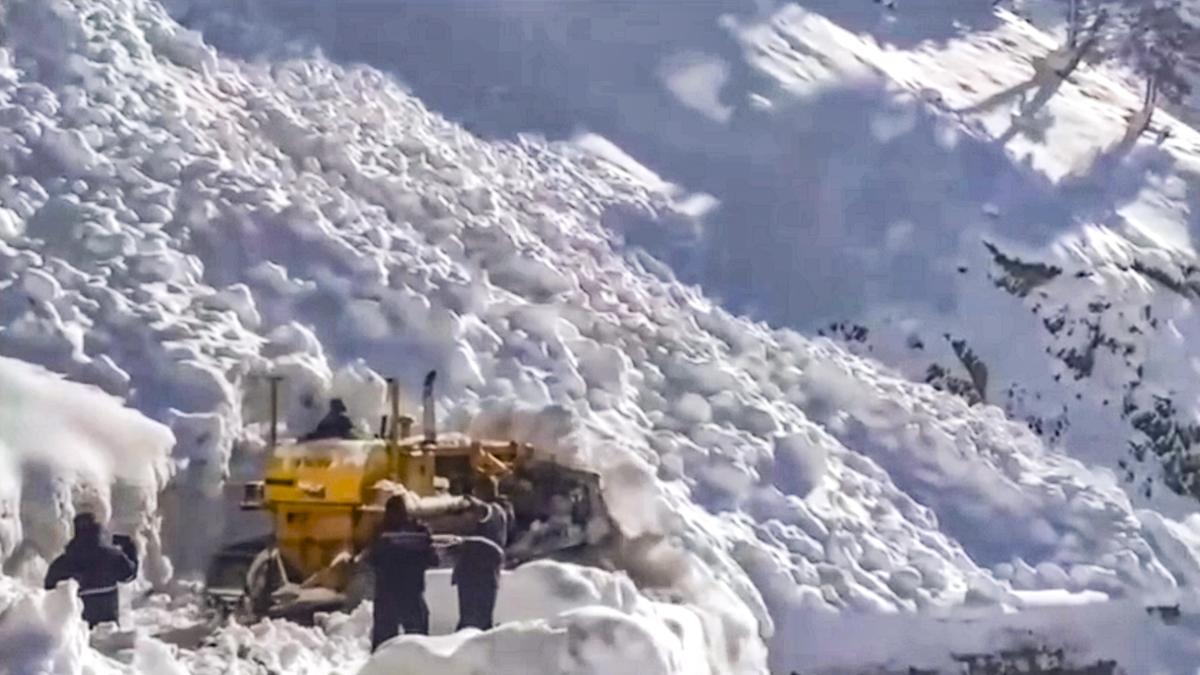
Recently, a massive snow avalanche struck the Zojila Pass in Ladakh, resulting in the tragic death of seven individuals and injuries to several others. The incident occurred between Zero Point and Minimarg, once again highlighting the extreme vulnerability of this high-altitude transit corridor and the urgent need for all-weather infrastructure.
Geographical Profile: "The Mountain Pass of Blizzards"
Zojila Pass is one of the most treacherous yet vital mountain passes in the Indian Himalayas.
- Location: Situated in the Kargil district of Ladakh, it serves as the natural gateway between the Kashmir Valley and the Ladakh region.
- Altitude: Approximately 11,650 feet (3,528 meters) above sea level.
- Mountain Range: It lies within the Greater Himalayan Range (specifically the Zanskar range).
- Connectivity: It is a critical link on National Highway 1 (NH-1), connecting Srinagar, Kargil, and Leh.
- Seasonal Closure: Due to heavy snowfall and sub-zero temperatures (dropping below -400C), the pass traditionally remains closed for nearly six months a year, isolating Ladakh from the rest of the country.
Historical and Strategic Significance
The pass is not merely a transport route; it is a pillar of India’s national security.
- Operation Bison (1948): During the Indo-Pakistan War of 1947–48, Pakistani-backed militias seized the pass to capture Ladakh. On November 1, 1948, the Indian Army executed Operation Bison, a daring assault that utilized M5 Stuart light tanks. This remains a historic military feat as the highest altitude at which armor had ever operated in combat at that time.
- Military Logistics: It is the primary artery for the movement of troops and heavy equipment to the Line of Actual Control (LAC) with China and the Siachen Glacier region.
- Economic Lifeline: It ensures the supply of essential commodities (fuel, food, and medicine) to the civilian population of Ladakh.
Understanding the Hazard: Avalanches
- Definition: An avalanche is a rapid flow of snow down a slope, triggered when the weight of the snowpack exceeds the friction holding it in place.
- Contributing Factors:
- Steep Slopes: Slopes without trees or large rocks lack the "anchors" needed to hold snow.
- Weak Layers: Fresh snowfall over an icy or unstable "crust" creates a sliding plane.
- Weather Fluctuations: Rapid temperature changes or heavy blizzards add weight and reduce cohesion.
- Impact: Avalanches can travel at speeds of 80–300 km/h, burying vehicles and infrastructure instantly.
Conservation of Olive Ridley Turtles
- 31 Mar 2026
In News:
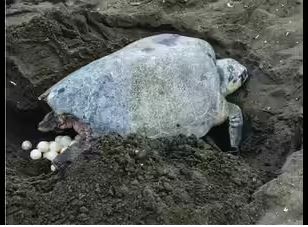
The Wildlife Management Authority, in collaboration with the Coringa Wildlife Sanctuary, has successfully conserved nearly 20,000 Olive Ridley turtle eggs on Hope Island in Kakinada Bay, Andhra Pradesh. This highlights the growing importance of the East Coast, beyond Odisha, as a critical habitat for marine conservation.
Hope Island: A Sanctuary in Kakinada Bay
Hope Island serves as a vital nesting ground in Andhra Pradesh. Conservationists utilize the in-situ conservation method, where eggs are protected in their natural nesting environment to ensure higher hatching success and maintain the ecological balance of the bay.
Species Profile: Olive Ridley Turtles (Lepidochelys olivacea)
- Physical Characteristics: They are the world’s smallest and most abundant sea turtles. They are recognized by their unique heart-shaped, olive or grayish-green carapace.
- Habitat: Primarily found in the tropical waters of the Pacific, Indian, and Atlantic Oceans, inhabiting both the open sea and coastal regions.
- Diet: Being omnivorous, they feed on a variety of marine life including jellyfish, snails, crabs, and shrimp/algae.
- Behavioral Phenomemon (Arribada): They are famous for "Arribada"—a Spanish term for "arrival"—which refers to the synchronized mass nesting where thousands of females come ashore simultaneously to lay eggs (approx. 100–140 eggs per female).
Distribution and Key Indian Nesting Sites
The turtles undertake massive migrations from the Pacific toward the Indian coast, typically arriving between November and December and staying until April–May.
- Odisha: Home to the world's largest nesting sites, including Gahirmatha Marine Sanctuary, Rushikulya, and the Devi River mouth.
- Andhra Pradesh: Increasingly significant sites in Kakinada (Hope Island) and Visakhapatnam.
- Others: Andaman and Nicobar Islands and parts of the Tamil Nadu coast.
Conservation Status and Legal Framework
To mitigate the decline in population, Olive Ridleys are afforded the highest level of protection:
- IUCN Red List: Vulnerable.
- Wildlife Protection Act (WPA), 1972: Schedule I (highest protection in India).
- CITES: Appendix I (prohibits international trade).
- CMS (Convention on Migratory Species): Protected under this global intergovernmental treaty.
Threats and Protection Measures
Despite legal safeguards, the species faces multifaceted challenges:
- Major Threats:
- Bycatch: Accidental entanglement in trawl and gill nets is the leading cause of mortality.
- Poaching: Illegal trade of eggs and meat.
- Habitat Loss: Coastal erosion and light pollution (which disorients hatchlings).
- Key Conservation Initiatives:
- Operation Olivia: An annual mission by the Indian Coast Guard to enforce seasonal fishing bans and protect nesting sites.
- Turtle Excluder Devices (TEDs): Mandated for use in trawl nets to allow turtles to escape while retaining the fish catch.
- Tagging Programs: Using metal tags to track migration patterns and nesting frequency.
PM-KUSUM 2.0
- 31 Mar 2026
In News:
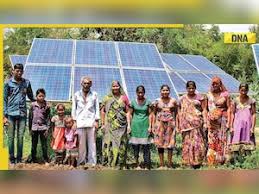
The Union Government is set to revamp the Pradhan Mantri Kisan Urja Suraksha evamUtthaanMahabhiyan (PM-KUSUM) scheme. With the current phase expiring in March 2026, the upcoming PM-KUSUM 2.0 aims to address structural gaps, specifically by incorporating Battery Energy Storage Systems (BESS) to harmonize solar generation with agricultural power demand.
Understanding PM-KUSUM: Evolution and Structure
Launched in 2019 by the Ministry of New and Renewable Energy (MNRE), PM-KUSUM is a "triple-win" initiative designed to provide energy security to farmers, improve DISCOM finances, and contribute to India’s climate goals (COP30).
Core Components of the Scheme:
- Component A: Installation of decentralized ground-mounted, grid-connected solar power plants (up to 2 MW) on barren or fallow land.
- Component B: Deployment of standalone solar-powered agriculture pumps to replace diesel-based irrigation in off-grid areas.
- Component C: Solarization of existing grid-connected agriculture pumps through two sub-models:
- Individual Pump Solarization (IPS)
- Feeder Level Solarization (FLS): Solarizing the entire electricity feeder to improve efficiency at scale.
Funding Model (Shared Responsibility):
- Central Government: 30% subsidy.
- State Government: 30% subsidy.
- Farmer Contribution: 40% (often supported by bank loans).
(Note: For North Eastern, Hilly, and Island regions, the Central subsidy can go up to 50%).
The Shift to PM-KUSUM 2.0: Why Battery Storage?
The primary limitation of the current scheme is the temporal mismatch between solar energy generation and agricultural demand—a phenomenon often referred to as the "Duck Curve" challenge.
- The Mismatch: Solar power peaks around midday. However, agricultural irrigation demand often starts early in the morning and continues well after sunset.
- The Solution (BESS): Integrating batteries allows the storage of surplus solar energy generated during peak hours. This stored power can then be discharged during non-solar hours (evening/early morning), ensuring a reliable and round-the-clock (RTC) power supply for farmers.
- Policy Debate: The Ministry of Power has proposed a 4-hour storage capacity, whereas the MNRE suggests a 2-hour capacity. Discussions with the Ministry of Finance are ongoing to finalize the subsidy structure for these batteries.
Progress and Challenges (As of 2026)
While the program has made significant strides, it currently trails its ambitious target of 34.8 GW.
|
Parameter |
Performance Highlight (Status Feb 2026) |
|
Total Target |
34.8 GW |
|
Achieved Capacity |
~12.16 GW |
|
Component B |
Over 10 Lakh standalone pumps installed. |
|
Component C |
~6,637 MW achieved (primarily through Feeder Level Solarization). |
Artemis II

- 31 Mar 2026
In News:
NASA is going to launch the Artemis II mission.
Mission Overview: Artemis II
Artemis II is a 10-day lunar flyby mission designed to test the integrated capabilities of NASA’s deep-space exploration systems. Unlike the later landing missions, Artemis II will follow a "free-return trajectory."
- Spacecraft: Orion Spacecraft.
- Launch Vehicle:Space Launch System (SLS), the most powerful rocket ever built, producing 8.8 million pounds of thrust (15% more than the Apollo-era Saturn V).
- Trajectory: The crew will travel approximately 7,400 km beyond the far side of the Moon. They will utilize a "gravity assist" (slingshot) maneuver, using lunar gravity to return to Earth without requiring a main engine burn to reverse course.
A Crew of "Firsts"
The four-person crew represents a significant departure from previous lunar missions, emphasizing diversity and international cooperation:
- Reid Wiseman (Commander): NASA veteran.
- Victor Glover (Pilot): First person of color to travel beyond Low-Earth Orbit (LEO).
- Christina Koch (Mission Specialist): First woman to reach the Moon’s vicinity.
- Jeremy Hansen (Mission Specialist): Representing the Canadian Space Agency (CSA), he is the first non-American to leave Earth's orbit.
Technological and Scientific Frontiers
Artemis II serves as a high-stakes laboratory for several cutting-edge technologies:
- Laser Communications (O2O): Testing infrared lasers to transmit data at 260 Mbps, enabling 4K video streaming from deep space.
- AVATAR Experiment: Using "organ-on-a-chip" technology to study the real-time effects of radiation and microgravity on human cells.
- Global CubeSats: Deployment of small satellites from Germany, Argentina, South Korea, and Saudi Arabia to study space weather and lunar shielding.
Evolution of Lunar Missions: Apollo vs. Artemis
While the Apollo missions were a Cold War-era demonstration of technological supremacy, the Artemis program is built for endurance and deep-space logistics.
|
Feature |
Apollo Programme (1969–1972) |
Artemis Programme (2024–Present) |
|
Primary Goal |
Short-duration visits; "Boots on the Moon." |
Long-term human presence; "Moon to Mars." |
|
Crew Capacity |
2 astronauts on the surface at a time. |
4 astronauts; emphasis on diversity/internationalism. |
|
Sustainability |
Disposable architecture; short stays. |
Reusable infrastructure; Gateway station; Base camp. |
|
Target Area |
Lunar Equator. |
Lunar South Pole (due to water-ice potential). |
The Global Lunar Landscape: Past to Future
The Moon has become a focal point for global geopolitics and "New Space" commercial ventures.
A. Historical Context (The Cold War Era)
- Luna 9 (USSR, 1966): First soft landing.
- Apollo 11 (USA, 1969): First humans on the Moon.
- Luna 24 (USSR, 1976): Last mission of the 20th century to return soil samples.
B. The Modern Era (The "New Race")
- Chang’e 4 (China, 2019): First landing on the Far Side of the Moon.
- Chandrayaan-3 (India, 2023): First nation to land near the Lunar South Pole, confirming the presence of sulfur.
- SLIM (Japan, 2024): Demonstrated "pinpoint" landing technology (within 100 meters).
- IM-1 Odysseus (USA/Private, 2024): First successful commercial landing.
C. Future Roadmap (2026–2028)
The focus is shifting toward In-Situ Resource Utilization (ISRU)—mining lunar ice for fuel and oxygen.
- Griffin-1/VIPER (2026): US mission to scout for water ice at the South Pole.
- Chang’e 7 (2026): China’s search for water in shadowed craters using a "flying" detector.
- Artemis IV (2028): Expected first crewed landing of the Artemis program to establish a permanent base.
Extracellular RNA (exRNA)

- 30 Mar 2026
In News:
In March 2026, a landmark study published in the journal Clean Water revealed that extracellular RNA (exRNA) from bacteria can persist in drinking water even after standard disinfection processes. This discovery challenges the long-held scientific belief that RNA is too unstable to survive outside a living cell, opening new frontiers in both environmental monitoring and medical diagnostics.
Understanding Extracellular RNA (exRNA)
Traditionally, Ribonucleic Acid (RNA) was viewed as an intracellular molecule responsible for translating genetic instructions into proteins. However, scientists now recognize exRNA as a critical component of a "long-distance communication system" between cells.
- Definition: RNA molecules found outside cells, circulating in fluids such as blood, saliva, urine, cerebrospinal fluid, and environmental water.
- Mechanism of Survival: To prevent enzymatic degradation by RNase (enzymes that break down RNA), exRNA is packaged in "molecular containers" known as Extracellular Vesicles (EVs), such as exosomes and microvesicles, or bound to protective proteins.
- Function: Acts as a signaling medium, transferring genetic instructions to distant cells to coordinate immune responses, tissue repair, and development.
The 2026 Discovery: Persistence in Drinking Water
The recent study demonstrated that bacterial exRNA remains detectable in water long after the bacteria themselves have been neutralized by disinfectants (like chlorine or UV).
- "Molecular Snapshots": Unlike DNA, which identifies who the bacteria are, exRNA reveals their functional state—essentially providing a "snapshot" of the survival strategies and stress responses the bacteria employed just before death.
- Implications for Water Treatment: By analyzing these RNA patterns, scientists can identify which bacterial pathways (e.g., heat-shock proteins or efflux pumps) are resistant to specific treatments.
- Next-Gen Disinfection: This allows for the design of "precision disinfection" strategies that target these specific survival mechanisms rather than relying on generic chemical exposure.
Medical Applications: The Rise of Liquid Biopsy
The stability and accessibility of exRNA have revolutionized non-invasive diagnostics.
- Liquid Biopsy: Instead of traditional, painful tissue biopsies, doctors can identify specific exRNA patterns in a patient’s blood or serum.
- Early Detection: * Cancer: Tumor cells release unique exRNA signatures (oncosomes) that can be detected long before physical symptoms appear.
- Heart Disease: Damaged cardiac muscles release specific RNA molecules into the bloodstream, serving as an early warning for cardiovascular events.
- Personalized Medicine: Real-time monitoring of exRNA allows clinicians to track how a disease is progressing or how a patient is responding to a specific treatment.
Shaurya Squadrons

- 30 Mar 2026
In News:
In early 2026, the Indian Army achieved a significant milestone in "network-centric warfare" by operationalizing Shaurya Squadrons. These are specialized drone sub-units integrated directly into armoured (tank) regiments. This move follows the successful implementation of Ashni Platoons in infantry battalions, marking a fundamental shift in how the Army conducts ground operations.
What are Shaurya Squadrons?
Shaurya Squadrons are dedicated drone units embedded within the Army’s armoured corps to provide organic aerial capabilities to tank commanders.
- Composition: Each squadron consists of 20 to 30 personnel specialized in drone piloting, data analysis, and counter-drone measures.
- Asset Mix: They operate a diverse fleet including:
- Surveillance Drones: For real-time reconnaissance beyond the tank crew's line of sight.
- Swarm Drones: For overwhelming enemy defenses through coordinated mass attacks.
- First-Person View (FPV) Drones: Highly agile "kamikaze" drones used for precision strikes on enemy hatches, engine decks, or logistics nodes.
- Loitering Munitions: "Suicide drones" that can hover over a battlefield for extended periods before engaging a target.
The "Sensor-to-Shooter" Revolution
The primary objective of these squadrons is to compress the Sensor-to-Shooter Cycle—the time elapsed between detecting a target (sensor) and neutralizing it (shooter).
- Traditional Model: Identifying a target often required relaying information up the chain of command to artillery or air support, a process taking minutes.
- Shaurya Model: By embedding drones at the unit level, the tank commander can detect and strike a target directly. The Army aims to reduce this cycle from minutes to mere seconds.
- Tactical Advantage: This allows for "Deep Precision Strikes" and protects heavy armour (like the T-90 Bhishma and Arjun Mk1A) from hidden threats like Anti-Tank Guided Missiles (ATGMs).
Comparison: Shaurya Squadrons vs. Ashni Platoons
The Shaurya initiative scales up the "drone-first" philosophy pioneered by Ashni Platoons.
|
Feature |
Ashni Platoons |
Shaurya Squadrons |
|
Integrated In |
Infantry Battalions |
Armoured (Tank) Regiments |
|
Primary Goal |
ISR (Intelligence, Surveillance, Reconnaissance) & Urban/Mountain combat |
Multi-domain hunting; protecting heavy armour |
|
Personnel |
20–25 soldiers |
20–30 soldiers |
|
Status |
Integrated across all infantry units |
Currently in 5 Commands; scaling to all 67 regiments |
Preah Vihear Temple
- 30 Mar 2026
In News:
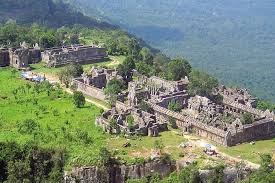
In late 2025 and early 2026, the Preah Vihear Temple, a 1,000-year-old UNESCO World Heritage site, suffered severe structural damage due to a resurgence of military hostilities between Cambodia and Thailand. Reports indicate that all five of the temple's notable Gopuras (gateway pavilions) have been damaged, some beyond recognition, marking a tragic chapter for this ancient Hindu-Buddhist monument.
Architectural Significance and Symbolism
Built during the height of the Khmer Empire, Preah Vihear is considered an "outstanding masterpiece" of Khmer architecture, notable for its integration with the natural landscape.
- Location: Perched atop a 525-meter cliff in the Dangrek Mountains, bordering Cambodia and Thailand.
- Religious Evolution: Originally dedicated to the Hindu God Shiva, it later transitioned into a Buddhist site, mirroring the spiritual shifts within the Khmer Empire.
- Historical Timeline: While foundations date to the 9th century, the most significant expansion occurred under Suryavarman I and Suryavarman II (the builder of Angkor Wat).
- Unique Layout: * Axis: Unlike typical Khmer temples that face East, Preah Vihear is aligned on an 800-meter north-south axis.
- Cosmology: The series of sanctuaries linked by pavements and staircases rising toward the cliff represents Mount Meru, the sacred center of the universe in Hindu, Jain, and Buddhist cosmologies.
The Century-Old Territorial Dispute
The conflict over the temple is a legacy of colonial-era cartography and national identity.
- The 1904 Treaty: A boundary treaty between France (the then-colonial power in Cambodia) and Siam (Thailand) originally placed the temple in Thai territory using the natural watershed of the Dangrek Mountains as the border.
- The 1907 Map: French officers later produced a map that deviated from the watershed line, placing the temple inside Cambodia. Thailand did not officially protest this map for decades, which became a critical point in later legal battles.
- UNESCO Recognition: In 2008, UNESCO designated it a World Heritage Site under Cambodian administration. This move reignited Thai nationalist sentiment, leading to sporadic armed clashes in 2008 and 2011.
International Law and ICJ Rulings
The dispute is a classic case study in International Law regarding border treaties and sovereign acquiescence.
- 1962 Ruling: The International Court of Justice (ICJ) ruled that the temple belonged to Cambodia, primarily because Thailand had accepted the 1907 French map through "long-term acquiescence."
- 2013 Reaffirmation: Following further clashes, the ICJ clarified its 1962 ruling, stating that the entire promontory (the cliff and its immediate vicinity) belongs to Cambodia and ordered Thai forces to withdraw.
Gruha Sugam Portal

- 30 Mar 2026
In News:
Recently, the National Housing Bank (NHB) launched the Gruha Sugam Portal, a pathbreaking digital marketplace designed to simplify and accelerate the home loan process for India’s frontline personnel and government employees.
Understanding the Gruha Sugam Portal
The Gruha Sugam Portal serves as a Unified Digital Marketplace that bridges the gap between government employees and formal lending institutions.
- Target Beneficiaries: Specifically tailored for Defence Personnel, Paramilitary Forces, and Government Employees (both Central and State).
- Core Objective: To enable a "location-independent" loan application process, allowing personnel posted in remote or border areas to secure housing finance without visiting physical bank branches.
- Operational Mechanism: Administrative units of respective departments can register on the portal. Employees then submit minimal data, which is relayed to multiple registered lenders who provide customized loan offers for comparison.
Salient Features of the Portal
- Digital Lending Adoption: Facilitates an end-to-end digital workflow, reducing bureaucratic friction and paper-heavy traditional processes.
- Market Transparency: Enables "discovery of the best offer" by allowing users to compare interest rates and terms from various Banks and Housing Finance Companies (HFCs).
- Enhanced Efficiency: Standardized workflows and digital verification significantly reduce the "turnaround time" (TAT) for loan sanctions.
- Consumer Protection: Includes a dedicated Grievance Redressal Mechanism and an Online Chat Facility for real-time query resolution and accountability.
Institutional Framework: National Housing Bank (NHB)
The NHB serves as the architect and regulator of this digital ecosystem.
- Status: Established on July 9, 1988, under the National Housing Bank Act, 1987. It is an All-India Financial Institution (AIFI).
- Ownership: Since April 24, 2019, the NHB is wholly owned by the Government of India (transferred from the Reserve Bank of India).
- Dual Role: * Supervision: NHB supervises Housing Finance Companies (HFCs).
- Regulation: Note that the regulatory powers over HFCs (including registration) were transferred to the Reserve Bank of India (RBI) in 2019.
- Core Functions:
- Financing: Providing financial support to housing finance institutions.
- Promotion: Developing a viable and cost-effective housing finance system in India.
- Supervision: Ensuring the financial health and consumer protection standards of HFCs.
CALM-Brain
- 30 Mar 2026
In News:
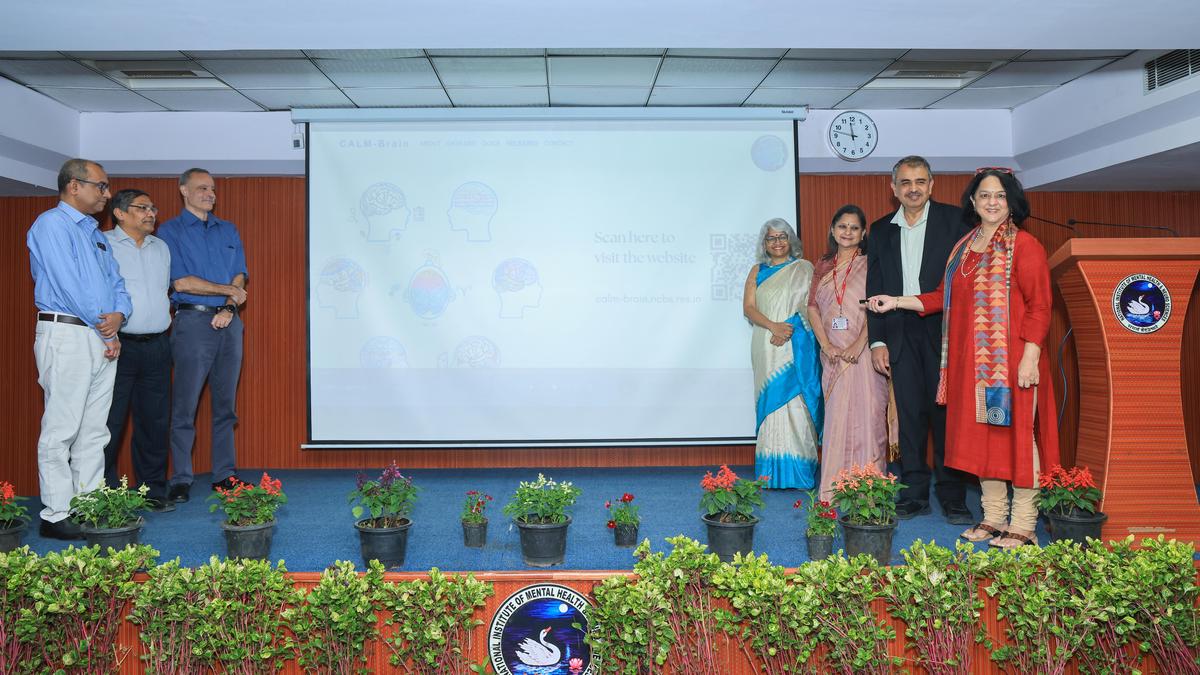
Recently, the Rohini Nilekani Centre for Brain and Mind (CBM), a collaboration between the National Institute of Mental Health and Neuro Sciences (NIMHANS) and the National Centre for Biological Sciences (NCBS-TIFR)launched CALM-Brain in Bengaluru. It marks a milestone in India's neuroscientific research by creating the country’s first open-source digital repository for major psychiatric disorders.
What is CALM-Brain?
CALM-Brain (Comprehensive Assessment of Longitudinal Modal-Brain) is a first-of-its-kind digital storehouse of multidimensional data focused on the structure and function of the human brain.
- Objective: To provide a systematic, data-driven framework to understand the onset, progression, and biological markers of severe mental illnesses.
- Target Population: It currently hosts data from over 2,000 participants across 900 families, including both affected and unaffected members (a "family-based" approach).
- Open Source: The repository will be made available to clinicians and researchers globally to foster collaborative breakthroughs.
Core Features and Scope
The repository integrates data across five major neuropsychiatric disorders:
- Addiction
- Bipolar Disorder
- Dementia
- Obsessive-Compulsive Disorder (OCD)
- Schizophrenia
Multi-modal Data Types:
The platform does not rely on a single parameter but collects a "longitudinal" (time-series) dataset including:
- Neuro-imaging: High-resolution scans (fMRI, MRI).
- Clinical &Behavioural: Detailed patient histories and cognitive assessments.
- Genetic & Biological: Genetic analysis from blood samples and eye-tracking data.
- Biorepository Linkage: Crucially, the data is linked to a biorepository of stem cells, allowing scientists to grow "mini-brains" (organoids) in labs to study disease mechanisms at a cellular level.
Institutional Framework and Funding
- Origin: The initiative was conceived in 2016 under the Accelerator program for Discovery in Brain disorders using Stem cells (ADBS project).
- Funding: Jointly supported by the Department of Biotechnology (DBT), Government of India, and the Pratiksha Trust.
- Philanthropic Support: Launched and supported by Rohini Nilekani Philanthropies (RNP).
Significance for India
- Addressing Data Under-representation: Most global psychiatric studies are centric to Europe and North America. CALM-Brain provides a South Asian/Indian-specific dataset, which is vital because genetic and environmental factors affecting mental health vary across ethnicities.
- Precision Psychiatry: By identifying neurocognitive biomarkers, clinicians can move away from "one-size-fits-all" treatments toward personalized medicine (tailoring treatments based on a patient’s unique genetic and biological profile).
- Bridging the Treatment Gap: According to the National Mental Health Survey (2015-16), nearly 10.6% of Indian adults suffer from mental illnesses. CALM-Brain helps in early diagnosis, potentially reducing the massive economic loss (estimated by WHO at $1.03 trillion for India between 2012–2030).
- Shift to Biological Markers: Traditionally, psychiatry relies on observing symptoms. CALM-Brain aims to identify biological markers that cut across traditional diagnostic categories, leading to more accurate clinical interventions.
The launch of CALM-Brain aligns with the government's focus on mental health, as seen in the Union Budget 2026-27 proposal for NIMHANS-2 and the upgrading of regional institutes like the Central Institute of Psychiatry, Ranchi. The integration of such repositories with the National Digital Health Mission (NDHM) could further streamline mental healthcare delivery in India.
SWOT Satellite and Ocean Mapping
- 29 Mar 2026
In News:
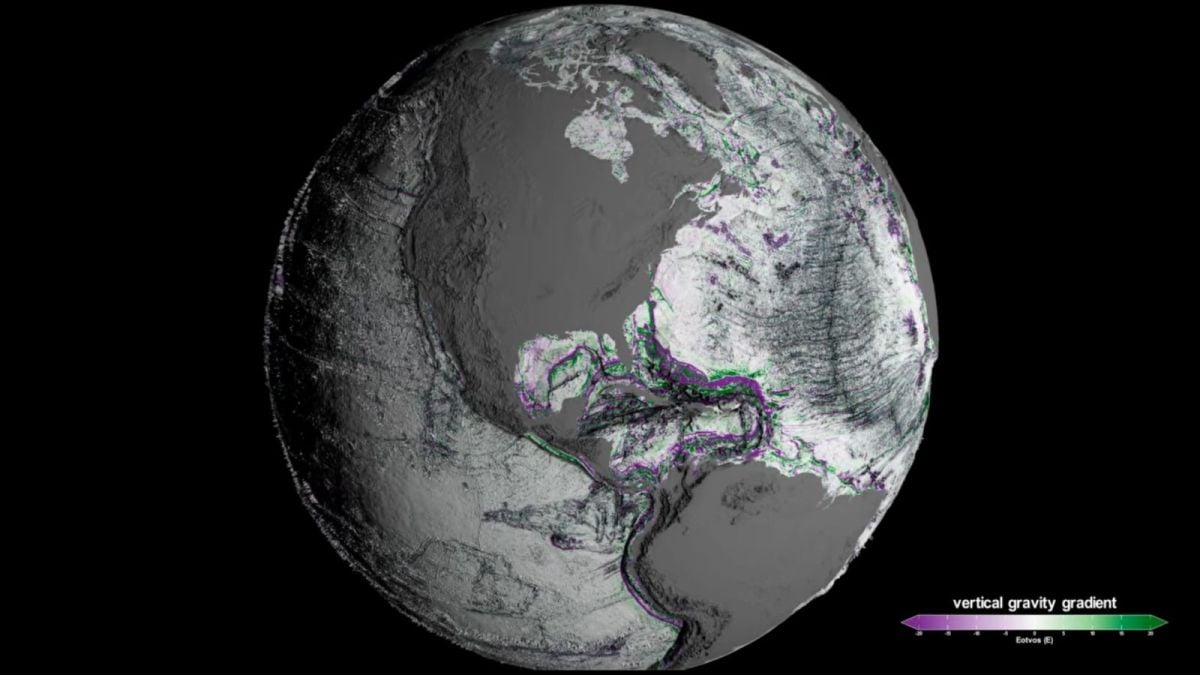
Recently, NASA used data from the Surface Water and Ocean Topography Satellite to develop a new high-resolution map of the ocean floor, improving understanding of underwater features and ocean dynamics.
About SWOT Satellite
· The Surface Water and Ocean Topography (SWOT) satellite, launched in 2022, is a joint mission of NASA and CNES.
· Its primary objective is to measure and monitor changes in Earth’s water bodies, including oceans, rivers, lakes, and reservoirs.
· Unlike traditional satellites, SWOT provides high-resolution, two-dimensional measurements of water surfaces, enabling scientists to track even subtle changes in water levels and flow patterns over time.
Key Features and Technology
At the core of SWOT’s capability is the Ka-band Radar Interferometer (KaRIn), which uses microwave signals to measure the height, width, and surface elevation of water bodies with high precision.
· It scans nearly 90% of the Earth every 21 days, ensuring regular global coverage
· Can observe:
o Rivers wider than 330 feet
o Over 1 million lakes and reservoirs larger than 5 acres
· Captures over 55% of global flood events during their lifecycle
· Detects small-scale ocean features such as currents and eddies, crucial for climate processes
Ocean Floor Mapping Significance
SWOT does not directly “see” the ocean floor but maps it indirectly by measuring variations in sea surface height, which reflect gravitational differences caused by underwater features like mountains and trenches.
This has enabled:
· Creation of more accurate seabed maps
· Better understanding of plate tectonics and ocean circulation
· Insights into how oceans absorb heat and carbon, especially through small eddies
Importance
The SWOT mission represents a major advancement in hydrology and oceanography:
· Enhances flood monitoring and disaster management
· Improves water resource planning
· Supports climate change studies, especially ocean heat uptake
· Strengthens global efforts in sustainable water management
Periodic Labour Force Survey (PLFS) Annual Report, 2025
- 29 Mar 2026
In News:
The Ministry of Statistics and Programme Implementation released the PLFS Annual Report 2025, prepared by the National Statistical Office. This is the first report based on the calendar year (Jan–Dec 2025) with a revised methodology.
About PLFS
Launched in 2017, the Periodic Labour Force Survey provides comprehensive data on employment and unemployment in India. It uses two key approaches—Usual Status (ps ss) (365-day reference) and Current Weekly Status (CWS) (7-day reference)—to capture labour market dynamics.
Key indicators include:
- LFPR: Share of population working or seeking work
- WPR: Share of employed population
- UR: Share of unemployed in labour force
Key Trends in PLFS 2025
India’s labour market in 2025 shows stability with gradual improvement in employment conditions. The Labour Force Participation Rate (LFPR) remained stable at 59.3%, while the Worker Population Ratio (WPR) stood at 57.4%, indicating sustained employment levels. The Unemployment Rate (UR) declined to 3.1%, reflecting better labour absorption.
- Youth unemployment (15–29 years) fell to 9.9%
- Rural unemployment remained low (~2.4%), while urban unemployment stood at ~4.8%
Structural Changes in Employment
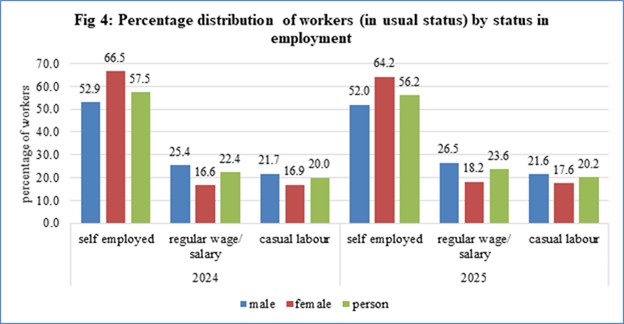
There is a slow shift towards better-quality jobs. The share of regular wage/salaried employment increased to 23.6%, while self-employment declined to 56.2%, indicating gradual formalisation.
Sectorally:
- Agriculture continues to dominate but declined to 43.0%
- Manufacturing increased to 12.1%
- Services also expanded
Gender and Social Dimensions
Despite improvements, gender disparities remain significant. Female LFPR is still low at 40.0%, and social factors continue to influence participation.
- Many men stay out of labour force for education (69.8%)
- Women cite childcare and domestic responsibilities (44.4%)
However, a positive trend is visible in rising female wages:
- Self-employed: 8.8%
- Salaried: 7.2%
A notable work-hour gap persists, with men working significantly longer hours than women.
Education, Skills and Challenges
The average years of schooling reached 10 years, and a majority of the population has at least secondary education. However, skill development remains weak, with only 4.2% of individuals receiving formal vocational training.
A major concern is the NEET category, with about 25% of youth (15–29 years) not in employment, education, or training—posing a risk to India’s demographic dividend.
Methodological Changes
From 2025 onwards:
· Survey cycle shifted to calendar year
· Sample size significantly increased
· Higher-frequency estimates introduced
Due to these changes, comparisons with earlier PLFS reports should be made cautiously.
Euthalia Zubeengargi

- 29 Mar 2026
In News:
A new butterfly species, Euthalia zubeengargi, has been recorded from Arunachal Pradesh, adding to India’s rich biodiversity, particularly in the Northeast.
About Euthalia zubeengargi
Euthalia zubeengargi is a butterfly species belonging to the genus Euthalia, which is widely distributed across South and Southeast Asia. The discovery highlights the ecological richness of Arunachal Pradesh, a known biodiversity hotspot.
- Habitat: Found in semi-evergreen forests at elevations of about 600–750 metres, particularly in cool and shaded interiors.
- Distribution: Part of a genus with 80 species recorded in Northeast India, indicating high regional diversity.
Physical and Behavioural Features
Members of the Euthalia genus, including this species, are typically associated with forest ecosystems and exhibit:
- Appearance:
- Earthy brown wings with pale spots
- Camouflaged coloration suited for forest habitats
- Behaviour:
- Prefer low vegetation and shaded areas
- Feed on:
- Tree sap
- Minerals from damp surfaces near streams
- Show activity mainly during late morning to early afternoon
- Characterised by short, slow flights between nearby plants
Ecological Significance
- Butterflies like Euthalia zubeengargi serve as important bioindicators:
- Their presence, diversity, and population reflect the health of ecosystems
- Sensitive to environmental changes such as:
o Habitat loss
o Climate change
o Pollution
Thus, their discovery aids in monitoring biodiversity and conservation status of forest ecosystems.
Waste Foundry Sand
- 29 Mar 2026
In News:
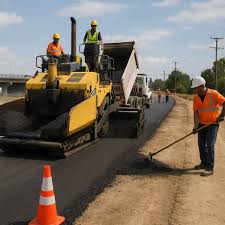
The Institute of Indian Foundrymen (IIF) and CSIR-Central Road Research Institute have collaborated to develop solutions for the use of Waste Foundry Sand (WFS) in road construction, highlighting a push towards sustainable infrastructure.
What is Waste Foundry Sand?
Waste Foundry Sand (WFS) is a byproduct generated during metal casting processes in both ferrous and non-ferrous industries. It primarily consists of high-quality silica sand, which is repeatedly used in molds and cores before being discarded. Its physical and chemical properties vary depending on the casting process and type of metal industry, but it generally retains good strength and uniformity.
Types of Foundry Sand
Foundry sand is classified based on the binder system used:
- Clay-bonded (Green Sand):
- Contains about 85–95% silica sand and 4–10% bentonite clay
- Made from natural materials and widely used in conventional casting
- Chemically Bonded Sand:
- Uses synthetic binders
- Preferred for core making and high-strength molds that must withstand molten metal
Environmental Concerns and Need for Reuse
Large-scale generation of WFS creates disposal and environmental challenges, including landfill pressure and potential contamination risks. Since it is produced in bulk, its scientific reuse becomes crucial.
Use in Road Construction
WFS can be effectively utilised in road subgrades, embankments, and pavement layers as a partial substitute for natural sand. This not only reduces construction costs but also decreases dependence on natural resources.
Significance
The reuse of WFS aligns with:
- Circular economy principles
- Resource efficiency and waste minimisation
- Sustainable and eco-friendly infrastructure development
It represents an important step in integrating industrial waste into mainstream construction practices.
QS World University Rankings
- 29 Mar 2026
In News:
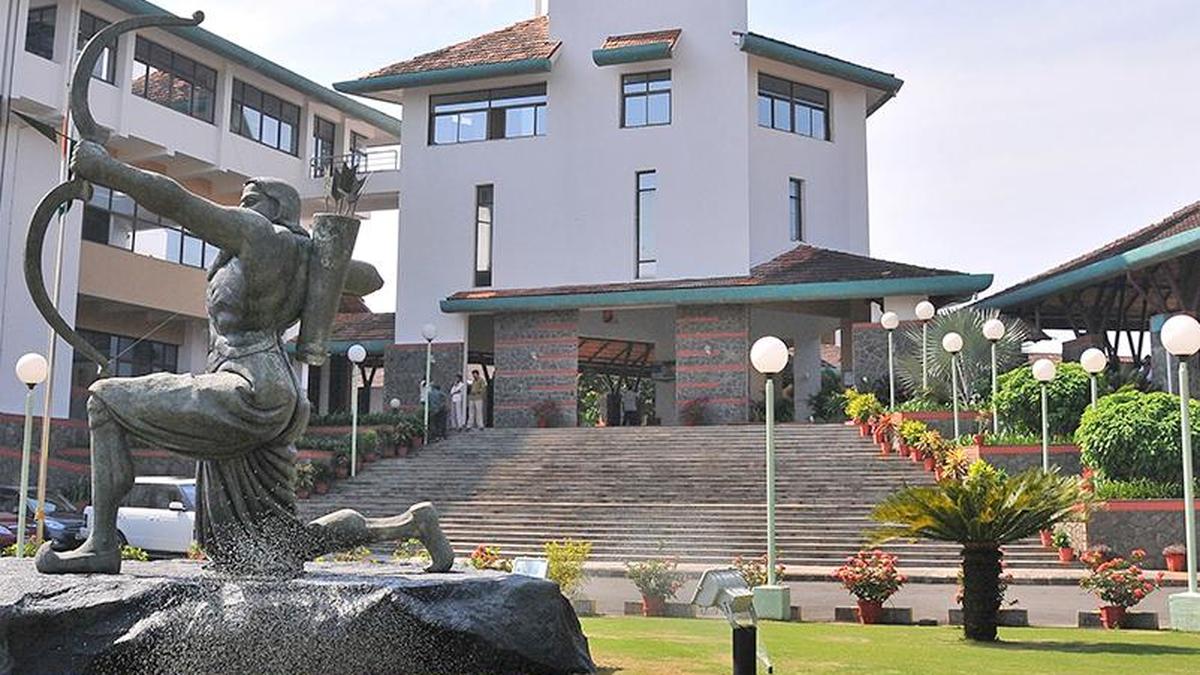
The Indian Institute of Management–Kozhikode (IIM-K) has entered the global Top 100 in the QS World University Rankings by Subject 2026, marking a significant milestone for Indian higher education.
About QS World University Rankings
- Published annually by Quacquarelli Symonds (QS).
- Provides global comparative assessment of universities across subjects and overall performance.
Evaluation Framework
QS uses a multi-layered methodology:
1. Lenses (Thematic Categories):
- Research & Discovery
- Employability & Outcomes
- Global Engagement
- Learning Experience
- Sustainability
2. Indicators (Performance Areas):
- Academic Reputation
- Employer Reputation
- Citations per Faculty
- Employment Outcomes
3. Metrics:
- Quantitative tools used to calculate scores within each indicator.
Key Highlights – QS Rankings 2026
India’s Performance
- 120 new Indian institutions entered the rankings.
- India ranks 4th globally in new entries:
- USA: 287
- China: 181
- UK: 159
- India now has the 4th largest institutional representation, after:
- USA
- China
- UK
Notable Achievements by Indian Institutions
- Indian Institute of Management Kozhikode : Entered Top 100 globally (by subject) for the first time.
- Indian Institute of Technology (ISM) Dhanbad
- Secured global rank 21 (India’s highest).
- Maintains dominance in Mineral & Mining Engineering.
- Indian Institute of Management Ahmedabad
- Achieved Top 25 globally in:
- Business & Management Studies
- Marketing
- Achieved Top 25 globally in:
- Computer Science Domain:
- 6 Indian institutions in global Top 100.
- All improved their rankings compared to the previous year.
Regional Connectivity Scheme – Modified UDAN
- 28 Mar 2026
In News:
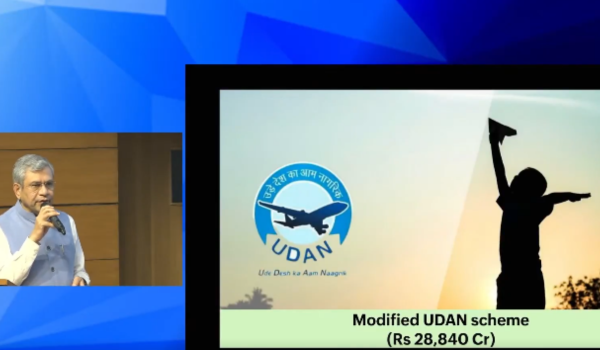
The Union Cabinet has approved the Regional Connectivity Scheme – Modified UDAN with a financial outlay of ?28,840 crore for the period 2026–2036, aiming to expand regional air connectivity and strengthen India’s aviation ecosystem.
About UDAN Scheme
- UDAN (Ude Desh ka Aam Nagrik) is India’s flagship regional connectivity programme launched in 2016 to make air travel affordable and accessible.
- The Modified UDAN represents its next phase, focusing on sustainability, infrastructure expansion, and deeper regional integration.
Objectives
- Enhance connectivity to underserved and unserved regions
- Make air travel affordable for the common citizen
- Promote balanced regional development
- Support the vision of Viksit Bharat @2047
- Develop a globally competitive aviation sector
Key Features
1. Infrastructure Expansion (CAPEX)
- Development of 100 new airports from existing airstrips
- Investment of around ?12,159 crore
2. Helipad Network Development
- Construction of 200 modern helipads
- Each costing approximately ?15 crore
- Focus on hilly, remote, and island regions
3. Viability Gap Funding (VGF)
- Allocation of ?10,043 crore
- Financial support to airlines to ensure route viability
- Helps maintain affordable fares
4. Operation & Maintenance (O&M) Support
- Support for around 441 aerodromes
- Provided for 3 years (up to ?3.06 crore per airport annually)
5. Promotion of Indigenous Aviation
- Procurement of aircraft from Hindustan Aeronautics Limited
- HAL Dhruv helicopters
- HAL Dornier aircraft
- Deployment by state-run carriers like Alliance Air and Pawan Hans
PRISM-SG
- 28 Mar 2026
In News:
The Minister for Road Transport and Highways recently launched the PRISM-SG (Portal for Rail-Road Inspection & Stages Management – Steel Girders) in New Delhi to streamline approvals and inspections related to critical transport infrastructure.
About PRISM-SG Portal
- The PRISM-SG Portal is a technology-driven digital platform designed to enhance efficiency, transparency, and coordination in the construction of Road Over Bridges (ROBs) and railway-related bridge infrastructure.
- It integrates multiple stakeholders and processes into a single-window system, enabling seamless project execution.
Objectives
- Digitise approval and inspection processes for bridge construction
- Improve inter-agency coordination between road and rail authorities
- Ensure quality assurance and compliance in infrastructure projects
- Reduce delays and enhance project execution efficiency
Key Features
1. End-to-End Digital Workflow
- Online submission of documents
- Automated scrutiny and query resolution
- Digital approvals and inspection scheduling
2. Quality Assurance Integration
- Incorporates:
- Quality Assurance Plan (QAP)
- Welding Procedure Specification Sheet (WPSS)
- Fabrication stage inspections of steel girders
3. Real-Time Monitoring & Audit
- Uploading of inspection reports, test results, and photographs
- Complete digital audit trail
- Real-time tracking of project progress
4. Multi-Stakeholder Integration
- Brings together:
- Road Owning Departments
- Indian Railways
- Contractors and fabricators
- Inspection agencies
Immigration, Visa, Foreigners Registration & Tracking (lVFRT) Scheme

- 28 Mar 2026
In News:
The Union Cabinet has approved the continuation of the Immigration, Visa, Foreigners Registration & Tracking (IVFRT) Scheme for the period 2026–2031, in line with evolving immigration needs and the recently enacted Immigration and Foreigners Act, 2025.
About IVFRT Scheme
The IVFRT Scheme is a technology-driven platform aimed at integrating and streamlining:
- Immigration processes
- Visa issuance
- Registration and tracking of foreigners in India
It was initially approved in 2010 and has undergone multiple phases of expansion to enhance efficiency and security.
Current Phase
- Duration: 1 April 2026 – 31 March 2031
- Budget Outlay: ?1800 crore
Objectives
- Create a secure, integrated immigration ecosystem
- Facilitate legitimate international travel
- Strengthen national security and foreigner tracking mechanisms
- Improve ease of doing business and tourism flows
Key Features
1. Emerging Technology Integration
- Adoption of mobile-based immigration services
- Deployment of self-service kiosks and e-gates
- Use of advanced digital platforms for seamless passenger movement
2. Transformation of Core Infrastructure
- Upgradation of:
- Immigration Check Posts (ICPs)
- Foreigners Regional Registration Offices (FRROs)
- Data centres and backend systems
- Development of a resilient and scalable nationwide system
3. Technology & Service Optimization
- Introduction of unified digital platforms
- Revamping of core application architecture
- Strengthening of network systems for faster and efficient service delivery
Achievements of IVFRT System
- 100% faceless and contactless visa processing system
- Around 91% of e-Visas processed within 72 hours
- Reduction in immigration clearance time:
o From5–6 minutes to 2.5–3 minutes
- Introduction of Fast Track Immigration–Trusted TravellerProgramme (FTI-TTP):
o Clearance time reduced to ~30 seconds at e-gates
- Coverage:
o 117 Immigration Posts
o 15 FRROs
o 850 Foreigners Registration Offices (FROs)
India’s Nationally Determined Contribution (2031-2035)
- 28 Mar 2026
In News:
The Union Cabinet has approved India’s updated Nationally Determined Contribution (NDC) for the period 2031–2035, to be submitted under the United Nations Framework Convention on Climate Change in line with the Paris Agreement.
About Nationally Determined Contributions (NDCs)
NDCs are national climate action plans through which countries outline:
- Targets for reducing greenhouse gas emissions (mitigation)
- Measures for adapting to climate change impacts
The 2031–2035 NDC builds upon India’s earlier commitments for 2030 and reflects enhanced ambition aligned with development goals.
Objectives of India’s NDC (2031–2035)
- Align economic growth with environmental sustainability
- Support the vision of Viksit Bharat @2047
- Progress towards net-zero emissions by 2070
- Ensure climate justice and equity under CBDR-RC principles
Key Targets
1. Emissions Intensity Reduction: Reduce emissions intensity of GDP by 47% from 2005 levels by 2035
2. Non-Fossil Fuel Capacity: Achieve 60% of installed electric power capacity from non-fossil sources
3. Carbon Sink Creation: Create an additional 3.5–4.0 billion tonnes of CO? equivalent through forest and tree cover
India’s Climate Performance: A Strong Track Record
- Achieved 33–35% emissions intensity reduction target well before 2030
- Reached over 52% non-fossil fuel capacity (2026), ahead of schedule
- Created 2.29 billion tonnes of CO? equivalent carbon sink by 2021
This early achievement enhances India’s global credibility in climate governance.
Key Features of the Updated NDC
1. Whole-of-Government Approach
- Developed through 10 working groups under NITI Aayog
- Involves ministries, industry, experts, and civil society
2. Clean Energy and Green Growth
- Expansion of renewable energy and green infrastructure
- Key initiatives:
- Green Hydrogen Mission
- PM Surya Ghar: Muft Bijli Yojana
- PM-KUSUM Scheme
- Carbon Capture, Utilization and Storage (CCUS)
3. Focus on Climate Adaptation
- Coastal protection via mangrove restoration (MISHTI)
- Glacier monitoring and Himalayan ecosystem protection
- Heat Action Plans and disaster-resilient infrastructure
4. Institutional Framework
- Implemented through:
- National Action Plan on Climate Change (NAPCC)
- State Action Plans (SAPCCs)
5. People-Centric Approach
- Promotion of Lifestyle for Environment (LiFE)
- Campaigns like Ek Ped Maa Ke Naam to encourage mass participation
6. Global Climate Leadership
- Active role in:
- International Solar Alliance
- Global Biofuel Alliance
- Coalition for Disaster Resilient Infrastructure (CDRI)
Operation Urja Suraksha
- 28 Mar 2026
In News:
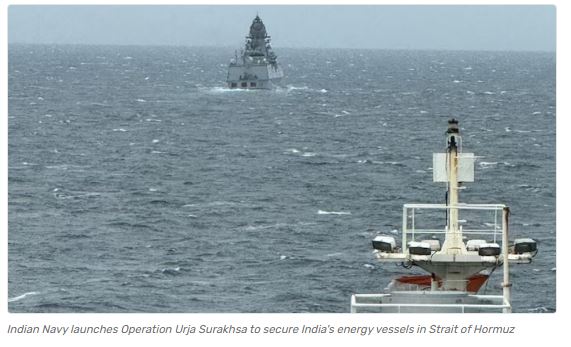
Amid escalating geopolitical tensions in West Asia, particularly around the Strait of Hormuz, India has launched Operation Urja Suraksha to safeguard its critical energy supply routes.
About Operation Urja Suraksha
Operation Urja Suraksha is a strategic maritime security mission initiated by the Indian Navy to ensure the safe transit of India-bound energy cargo vessels from the Persian Gulf region.
Key Objectives
- Ensure uninterrupted supply of crude oil, LNG, and LPG to India
- Provide secure navigation and escort services in conflict-prone waters
- Prevent disruptions from threats such as piracy, sea mines, and regional hostilities
Key Features of the Operation
1. Naval Escort Mechanism
- Deployment of Indian naval warships to escort merchant vessels
- Escort begins after ships exit the Strait of Hormuz and continues into the Arabian Sea
2. Layered Maritime Security
- Use of destroyers and stealth frigates equipped with advanced surveillance and communication systems
- Real-time coordination between naval assets for threat detection and response
3. Safe Route Navigation
- Identification of secure maritime corridors
- Avoidance of high-risk zones prone to mines, drone threats, or electronic warfare
Strategic Significance
1. Energy Security
- India imports nearly 80–85% of its crude oil, a significant portion of which passes through the Strait of Hormuz
- The operation reduces vulnerability to supply shocks and price volatility
2. Geopolitical Relevance
- Demonstrates India’s proactive role in securing Sea Lines of Communication (SLOCs)
- Enhances India’s credibility as a net security provider in the Indian Ocean Region (IOR)
3. Maritime Capability Enhancement
- Showcases India’s blue-water naval capabilities
- Strengthens deterrence and rapid-response capacity in crisis situations
Biopharma SHAKTI Scheme

- 27 Mar 2026
In News:
The Union Budget 2026–27 introduced the Biopharma SHAKTI scheme, aimed at transforming India’s pharmaceutical sector by promoting advanced biologics and reducing reliance on animal testing through Non-Animal Methodologies (NAMs). This marks a shift towards innovation-driven, human-relevant drug development.
Background: India’s Pharmaceutical Strength and Emerging Needs
India has established itself as a global leader in pharmaceuticals, ranking among the top producers of generic medicines and supplying a significant share of vaccines worldwide. The sector has achieved substantial scale, with a turnover of ?4.72 lakh crore (FY25) and strong export growth.
However, the next phase of growth requires a transition from generics to high-value biologics and biosimilars, especially in response to the rising burden of non-communicable diseases (NCDs) such as cancer, diabetes, and cardiovascular disorders.
Biopharma SHAKTI Scheme: Key Features
- Biopharma SHAKTI (Strategy for Healthcare Advancement through Knowledge, Technology, and Innovation) is designed to create an end-to-end ecosystem for advanced biopharmaceuticals.
- With a financial outlay of ?10,000 crore over five years, the scheme focuses on strengthening research, manufacturing, and regulatory capacity. It aligns with earlier initiatives such as the National Biopharma Mission.
- The programme promotes the development of affordable biologics, enhances infrastructure through expansion of institutions like NIPERs, and builds a nationwide clinical trial network to accelerate drug development. It also aims to streamline regulatory processes by strengthening institutions such as CDSCO.
Understanding Biologics and Biosimilars
Unlike conventional small-molecule drugs, biologics are produced using living systems and have complex molecular structures. They include products such as insulin, monoclonal antibodies, and vaccines, which are crucial for treating chronic and life-threatening diseases.
Biosimilars are cost-effective alternatives to these biologics, offering similar therapeutic benefits at significantly lower costs. Their development is critical for improving accessibility and affordability of advanced treatments.
Non-Animal Methodologies (NAMs): A Paradigm Shift
A central feature of the scheme is the promotion of Non-Animal Methodologies (NAMs), which aim to replace or reduce traditional animal testing.
NAMs rely on human-relevant models and advanced technologies such as organoids, organ-on-a-chip systems, 3D bioprinting, and AI-based simulations. These approaches replicate human physiology more accurately, enabling better prediction of drug safety and efficacy.
They also align with global ethical standards and the principle of the 3Rs—Replace, Reduce, Refine in animal testing.
Advantages of NAMs
NAMs offer several advantages over conventional methods. They improve predictive accuracy, reducing the risk of adverse outcomes in clinical trials. They also enhance efficiency by lowering development costs and shortening timelines.
Furthermore, they enable precision medicine, as patient-derived models can be used to design personalised therapies. Regulatory recognition of NAMs in India has further strengthened their adoption.
Punjab-Rajasthan Water Dispute
- 27 Mar 2026
In News:
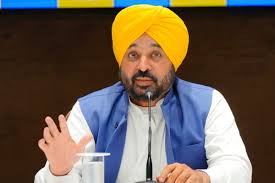
Punjab Chief Minister Bhagwant Mann demanded Rs 1.44 lakh crore as water royalty from Rajasthan, citing a 1920 colonial-era tripartite agreement under which Rajasthan paid a fee for water until 1960, but after the Indus Waters Treaty, stopped paying despite continuously drawing 18,000 cusecs of water. Punjab has raised the issue with both the Union Government and Rajasthan, seeking a formal review of the 1920 agreement.
Historical Timeline
|
Year |
Development |
|
1920 |
Tripartite agreement — British Govt, Bikaner State, Bahawalpur State — for water supply via Gang Canal on per-acre payment basis |
|
1960 |
Indus Waters Treaty signed; Rajasthan stops payments but continues drawing 18,000 cusecs |
|
1981 |
Tripartite agreement between Punjab, Haryana, Rajasthan allocates 8.6 MAF (out of 17.17 MAF) to Rajasthan — the largest share — despite it being a non-riparian state |
|
2004 |
Punjab enacts Termination of Agreements Act to scrap water-sharing deals |
|
2016 |
Supreme Court declares the 2004 Act unconstitutional — states cannot unilaterally terminate inter-state agreements |
Constitutional & Legal Framework
Constitutional Provisions:
- Entry 17, State List — Water primarily a State subject
- Entry 56, Union List — Centre regulates inter-state rivers in public interest
- Article 262 — Empowers Parliament to adjudicate inter-state river disputes; can exclude Supreme Court jurisdiction
Statutory Framework — ISWD Act, 1956: Provides for Tribunal formation upon state request. Tribunal's Award, once gazetted, holds the force of a Supreme Court decree.
Key SC Judgements:
- Karnataka v. Tamil Nadu (2018) — Cauvery declared a "National Asset"; drinking water needs given primacy
- Punjab Termination Act Case (2016) — Unilateral cancellation of inter-state agreements unconstitutional
- Narmada Bachao Andolan v. UoI (2000) — Water is part of the Right to Life (Article 21); Tribunal Awards are final and binding
Root Causes of Inter-State Water Disputes
- Water Scarcity: Per capita availability has fallen from 5,200 cubic metres (1950) to 1,400–1,500 cubic metres (2024), approaching the scarcity threshold of 1,000 cubic metres by 2050
- Agricultural Intensification: Punjab's groundwater extraction rate stands at 156.36% — nearly three times the national average of 60.63%
- Conflictual Federalism: Water straddles the State List and Union List, creating jurisdictional friction when states prioritise narrow interests
- Hydro-Politics: Electoral compulsions harden state positions, delaying negotiated settlements
- Tribunal Delays: The Cauvery dispute lasted over 30 years — rendering awards difficult to implement
Way Forward
- Benefit-Sharing over Water-Sharing — States cooperate on crop specialisation suited to agro-climatic zones rather than fighting over volumetric allocation
- Digital Twins of River Basins — AI-powered 3D basin models using satellite data (RISAT) for objective "What-If" simulations replacing political bargaining
- Permanent Tribunal — Replace ad hoc bodies with a Single Permanent ISWD Tribunal with specialised benches, as proposed in the ISWD (Amendment) Bill, 2019
- Mediation-First — Mandate neutral expert Dispute Resolution Committees before legal adjudication
- Water Budgets — States must demonstrate efficient irrigation use (drip irrigation, mulching) before claiming larger shares
- Blue Grants — Additional Central funding as cooperative federalism incentive for states entering joint water management agreements
India's Orange Economy Push
- 27 Mar 2026
In News:
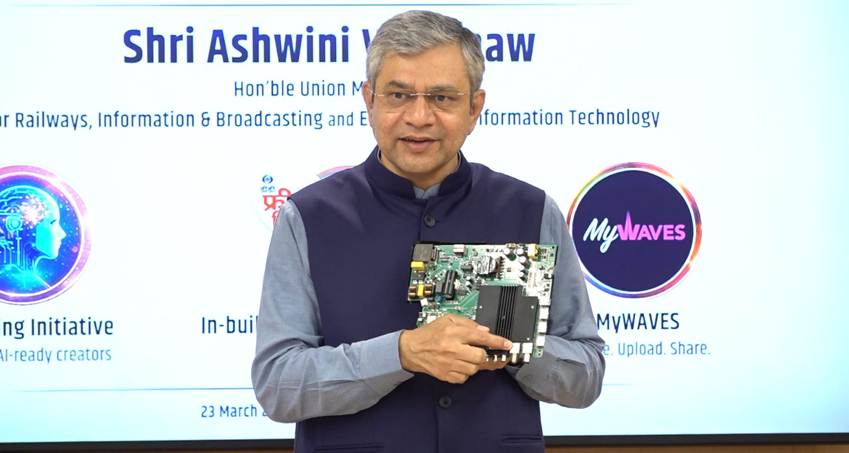
Union Minister for Information & Broadcasting Shri Ashwini Vaishnaw launched three major initiatives aimed at strengthening India's media, broadcasting, and digital sector and promoting the creative economy - namely, the National AI Skilling Initiative in partnership with Google and YouTube through the Indian Institute of Creative Technologies (IICT); MyWAVES, a citizen creator platform on WAVES OTT; and the rollout of Advanced Electronic Programme Guide (EPG) and in-built satellite tuners in television sets for enhancing access to DD Free Dish services.
What is the Orange Economy?
The Orange Economy, also referred to as the Creative Economy, is a production model where value is derived primarily from intellectual property, creativity, and cultural capital rather than physical manufacturing or natural resources.
Key Sectors: AVGC-XR (Animation, Visual Effects, Gaming, Comics, and Extended Reality), film, music, fashion, design, advertising, performing arts, and cultural tourism.
Economic Significance:
· Accounts for approximately 3% of global GDP and supports 30 million jobs worldwide
· India's entertainment and media revenue is projected to grow from USD 35.3 billion in 2025 to USD 47.2 billion by 2029
· Budget 2026-27 announced the establishment of AVGC Content Creator Labs in 15,000 schools and 500 colleges, targeting a skilled workforce of 2 million professionals by 2030
The Three Transformative Initiatives
1. National AI Skilling Initiative
The Ministry of Information and Broadcasting, in partnership with Google and YouTube, has announced a national AI skilling initiative to train 15,000 participants from the creative and media sectors. This initiative is being implemented through the Indian Institute of Creative Technologies (IICT), and is aimed at strengthening AI capabilities in areas such as animation, visual effects, gaming, and comics (AVGC) and media technology.
The programme is structured in two phases:
· Phase I (March–June 2026): Focuses on foundational AI learning at scale through Google Career Certificates and Google Cloud Generative AI learning paths. Participants will undergo courses such as AI Essentials, Prompting Essentials, Introduction to Generative AI, and Generative AI Leader Path. Successful completion of this phase will be mandatory for progression to the next stage.
· Phase II (July–December 2026): Focuses on advanced, hands-on and project-based specialization for the creative industry. The curriculum will include modules on the art of storytelling, YouTube best practices, and advanced training using AI tools such as Gemini 3, Nano Banana, Veo, and Vertex AI. The training will be conducted in major cities across the country.
Importantly, around 15,000 youths will be trained without any fee.
2. MyWAVES — Citizen Creator Platform
MyWAVES is a new feature within the WAVES OTT platform that will enable citizens to create, upload, and share content. MyWaves is designed as a structured platform for user-generated content (UGC) that will also support participation in national initiatives such as the Create in India Challenge.
The platform marks a shift from content viewing to active content participation, making WAVES OTT a platform not only for viewing but also for creation. MyWaves will support multiple formats including short videos, vertical videos, and episodic content, and will offer a multilingual interface across Indian languages.
The Create in India Challenge (CIC) with which MyWAVES aligns hosts competitions across diverse themes including the Anime Challenge, AI Film Making, Comics Creator Championship, Truth Tell Hackathon (to combat misinformation), and XR Creator Hackathon, collectively empowering India's grassroots creator economy.
3. Advanced EPG with In-Built Satellite Tuners
The Ministry of Information & Broadcasting has introduced television sets with built-in satellite tuners along with a new, user-friendly programme guide (EPG). With this initiative, viewers will be able to watch DD Free Dish channels directly on their television sets without the need for a separate set-top box, thereby reducing additional costs, wiring, and the hassle of multiple remotes.
The new advanced programme guide will allow users to easily browse channels and programme schedules in one place through a simple and intuitive interface, making the overall viewing experience more convenient for households across the country. This initiative holds particular significance for remote and rural areas where last-mile connectivity and hardware affordability remain persistent barriers.
Foreign Contribution (Regulation) Amendment Bill, 2026
- 27 Mar 2026
In News:
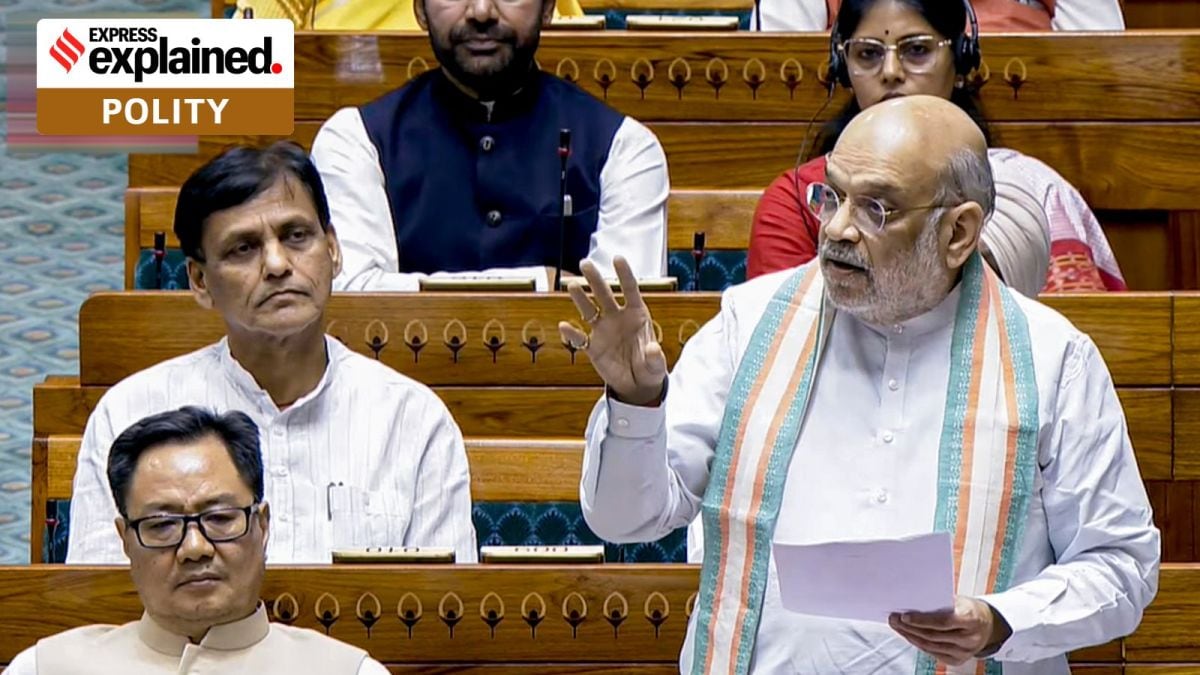
The Foreign Contribution (Regulation) Amendment Bill, 2026 was introduced in the Lok Sabha on March 25, 2026 by the Minister of State for Home Affairs, proposing significant changes to the Foreign Contribution (Regulation) Act, 2010. The Bill has since triggered considerable political debate, with its Lok Sabha discussion deferred amid opposition protests and political sensitivities ahead of the Kerala Assembly elections.
What is the Foreign Contribution (Regulation) Act, 2010?
The FCRA, 2010 is a central legislation administered by the Ministry of Home Affairs (MHA) that regulates the acceptance, utilisation, and accounting of foreign contributions received by individuals, associations, and NGOs in India.
Key Facts:
· Originally enacted in 1976; comprehensively revised in 2010; further amended in 2016, 2018, and 2020
· Around 16,000 organisations are currently registered under FCRA
· These organisations collectively receive approximately ?22,000 crore annually
· All foreign contributions must be received through a single designated account at the State Bank of India, New Delhi (main branch)
· Registration is valid for five years and must be renewed at least six months before expiry
· Foreign funds cannot be sub-granted to unregistered entities
· Foreign funding is prohibited for politicians, journalists, judges, and government servants
Permitted Uses of Foreign Funds: Cultural, economic, educational, social, and religious activities only.
What is the Legal Gap the Bill Seeks to Address?
Under Section 15 of the existing Act, assets created from foreign contributions vest in a prescribed authority upon cancellation or surrender of FCRA registration. However, no clear procedural mechanism exists for the subsequent management, supervision, or disposal of such assets — leading to administrative uncertainty and potential misuse. The 2026 Bill addresses this by inserting a new Chapter IIIA into the Act.
Key Provisions of the Amendment Bill, 2026
1. Designated Authority
A government-appointed Designated Authority is empowered to:
- Provisionally take over, supervise, manage, and dispose of foreign contributions and assets of NGOs whose registration is cancelled, surrendered, or lapsed
- Return unutilised funds and assets if registration is subsequently renewed or restored
- Permanently vest assets if the organisation fails to secure fresh registration within a prescribed period
- Preserve the religious character of any place of worship taken over under the Act
Proceeds from asset disposal are credited to the Consolidated Fund of India.
2. Expanded Definition of "Key Functionary"
Personal liability is extended to directors, trustees, partners, karta of Hindu Undivided Families (HUFs), and office-bearers of societies and trade unions — unless they prove lack of knowledge or due diligence.
3. Prior Approval for Investigations
Any law enforcement agency or State government must obtain prior Central Government approval before initiating FCRA-related investigations, significantly centralising oversight.
4. Rationalised Penalties
Maximum imprisonment for FCRA offences reduced from five years to one year, with rationalised penalties to decriminalise inadvertent procedural lapses.
5. Other Provisions
- Fixed timelines for receipt and utilisation of foreign funds
- Automatic cessation of registration upon non-renewal
- Appeals against Designated Authority orders to be filed before the District Judge within 90 days
Agri-Photovoltaics
- 27 Mar 2026
In News:
Union Budget 2026–27 nearly doubled the PM-KUSUM allocation to Rs. 5,000 crore, and the government is considering a National AgriPV Mission (10 GW target) under PM-KUSUM 2.0.
About Agri-Photovoltaics (AgriPV)
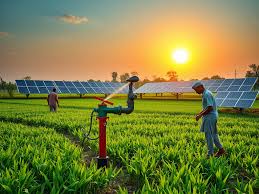
Agri-Photovoltaics (AgriPV), or Agrivoltaics, is the simultaneous dual use of agricultural land for both solar power generation and crop cultivation. Instead of clearing farmland for solar parks, panels are elevated above or spaced between crops — creating a symbiotic system where plants and panels mutually enhance each other's performance.
How It Works
Solar panels installed above crops provide partial shade, reducing heat stress and water evaporation. In return, plant transpiration cools the panels from below, improving their photovoltaic efficiency by 2–5%. The result: one plot of land produces both food and clean electricity.
· Elevated Systems: Panels mounted ~3m high. Crops grow below; machinery can operate freely. Best for large-scale mechanised farms.
· Row-Based Systems: Panels in rows with wide gaps. Sun-loving crops in gaps; shade-tolerant crops directly below. Most common in India.
· Vertical (Bifacial): Panels installed upright like fences, capturing sunlight from both faces. Minimises land coverage.
· Greenhouse-Integrated: Panels built into greenhouse roofs. Combines controlled-environment agriculture with power generation.
Why India Needs AgriPV
India faces a structural contradiction: its 300 GW solar target by 2030 requires 4–5 acres per MW, but over 55% of India's land is agricultural (156 million hectares), sustaining 60% of the workforce. Mass diversion of farmland for solar is neither viable nor acceptable.
AgriPV resolves this by transforming the food-energy relationship from competition to complementarity — achieving solar targets without displacing a single farmer or clearing a single forest. With over 300 days of sunshine annually across India's agricultural heartland, the natural conditions for AgriPV are exceptional.
Key Benefits
For Farmers
· Income diversification — sell surplus electricity to DISCOMs or earn lease/revenue from developers
· Lower input costs — solar replaces expensive diesel pumps for irrigation
· Example: A Maharashtra farmer earns fixed developer rent while harvesting chillies or brinjal beneath the panels
For Agriculture
· Water conservation — panel shade reduces evapotranspiration; fewer irrigation cycles needed in arid Rajasthan and Gujarat
· Climate resilience — panels shield crops from heatwaves, hailstorms, and erratic rainfall
· Stronger value chains — decentralised power runs cold storage, chaff cutters, and food processing locally
For the Environment
· Cuts diesel-based agricultural emissions
· Reduces transmission losses through distributed generation
· Avoids large-scale land clearance compared to conventional solar parks
Suitable Crops by Region
|
State/Region |
Suitable Crops under AgriPV |
|
Madhya Pradesh |
Tomato, onion, turmeric, tulsi |
|
Karnataka & Maharashtra |
Ragi, jowar, grapes, banana, brinjal |
|
Rajasthan & Gujarat (arid) |
Garlic, onion — benefit from reduced watering under shade |
Policy & Current Status
PM-KUSUM Scheme (2019, MNRE)
· Component A: Solar plants (up to 2 MW) on barren/fallow/cultivable land
· Component B: Standalone solar-powered irrigation pumps
· Component C: Solarisation of grid-connected agricultural pumps
· Budget 2026–27: Allocation nearly doubled to Rs. 5,000 crore
· Proposed PM-KUSUM 2.0: AgriPV as a dedicated 10 GW component
State Initiatives
|
State |
Scheme |
Key Feature |
|
Maharashtra |
MSKVY |
13.65 GW target; tariff Rs. 3.10/kWh for farmers |
|
Gujarat |
Suryashakti Kisan Yojana |
60% financial support; Rs. 7/kWh tariff for 7 years |
|
Odisha |
— |
Rs. 20,000 per acre/year for participating farmers |
|
Delhi |
MKAB Solar Yojana |
Lease income from Rs. 8,333/acre/month |
Current Status (2026): ~50 pilot AgriPV installations are active across India (including ICAR-CAZRI, Jodhpur). The India Agrivoltaics Alliance (IAA), anchored by NSEFI, is a 40 member platform working with MNRE, Agriculture, and Rural Development ministries. Large-scale commercial replication has not yet begun. The global AgriPV market is projected to grow at 8.3% CAGR, reaching USD 7.61 billion by 2031.
Vayu Baan Project

- 26 Mar 2026
In News:
In a major stride toward self-reliance in defense technology, the Indian Air Force (IAF) has unveiled Project Vayu Baan (Air Arrow). This initiative marks the development of India’s first Helicopter-Launched Drone System, officially categorized as an Air-Launched Effect (ALE). Developed by the IAF’s Directorate of Aerospace Design (DAD), the project aims to integrate unmanned systems with manned rotary-wing platforms to enhance lethality and survivability in contested airspaces.
Technical Overview: How Vayu Baan Operates
The Vayu Baan is a compact, autonomous drone engineered for mid-air deployment from moving helicopters.
- Deployment: The drone is dropped from a mother ship (such as the Prachand LCH or ALH Dhruv).
- Activation: Post-release, the system unfolds its wings and activates its propulsion system to transition into controlled flight.
- Mission Profile: It functions as a "Loyal Wingman" for helicopters, capable of switching between high-definition ISR (Intelligence, Surveillance, and Reconnaissance) and acting as a Precision-Guided Munition (Kamikaze drone).
Key Features and Specifications
The Vayu Baan system is tailored for the specific challenges of the modern battlefield, particularly along India's mountainous borders:
- Stand-off Range: The drone can travel over 50 km after release, allowing the host helicopter to remain outside the range of enemy MANPADS (Man-Portable Air-Defense Systems).
- Endurance: It offers a loitering time of approximately 30 minutes, providing a window to scout targets or wait for optimal strike conditions.
- GNSS-Denied Navigation: A critical feature is its ability to operate in electronic warfare (EW) environments. It uses advanced flight control systems to navigate even when GPS/GNSS signals are jammed.
- Advanced Sensors: Equipped with EO/IR (Electro-Optical/Infrared) sensors, ensuring operational efficiency during both day and night missions.
- Swarm Potential: A single helicopter can deploy multiple units, creating a localized "mini-swarm" to overwhelm enemy defenses through saturation.
Reform Express Initiative

- 26 Mar 2026
In News:
In a major push to align Indian Railways with the National Logistics Policy, the Union Ministry of Railways has unveiled five pivotal structural reforms under the "Reform Express" initiative. This brings the total number of policy interventions in 2026 to nine. The initiative targets three critical pillars: Cargo Logistics, Infrastructure Integrity, and Passenger Digital Empowerment, aiming to reduce logistics costs and enhance the ease of travel.
I. Revolutionizing Cargo & Freight Logistics
The reforms specifically target the transport of essential and high-value commodities to increase the railways' modal share in freight.
- Specialized Salt Logistics: India is a top global producer of salt, yet rail transport has historically faced challenges due to the corrosive nature of the commodity.
- Innovation: Introduction of top-loading, stainless steel containers with hydraulic side-discharge mechanisms.
- Impact: Prevents wagon corrosion, eliminates water seepage (common in traditional open wagons), and allows for seamless multimodal "site-to-warehouse" transport.
- Flexible Automobile Transport: Currently, rail accounts for approximately 24% of passenger vehicle movement.
- Innovation: Introduction of route-specific, flexible wagon designs. This allows manufacturers to customize wagons to bypass physical constraints like low-clearance bridges and narrow tunnels.
- Impact: Enhances capacity utilization and accelerates the delivery of automobiles across diverse terrains.
II. Infrastructure Governance and Project Execution
To address delays and "predatory bidding," the Ministry has overhauled the contracting framework for railway projects.
- Stricter Contractor Eligibility: The single-project experience requirement has been raised from 35% to 50% of the total project value. Additionally, at least 20% of prior experience must be in railway-specific works.
- Financial Safeguards: * Bid Security: Fixed at a flat 2% of the project value to deter frivolous bidders.
- Anti-Predatory Measures: If a bid is more than 5% below the estimated cost, the bidder must provide an additional 5% performance guarantee to ensure project quality is not compromised.
- Accountability: Subcontracting limits have been reduced from 70% to 40%, forcing primary contractors to execute at least 60% of the work directly.
III. Enhancing Passenger Experience and Ticketing Integrity
Digital reforms have been implemented to protect genuine travelers from touts and speculative bookings.
- Ticketing Clean-up: Through advanced data analytics and Aadhaar-based OTP verification, the Railways removed nearly 3 crore (30 million) fake accounts from the IRCTC database.
- Revised Cancellation Windows: To curb last-minute speculation, the cancellation slabs have been revised to 72, 24, and 8 hours before departure.
- Note: No refunds are permitted for cancellations made less than 8 hours before departure.
- Dynamic Flexibility:
- Boarding Point Change: Passengers can now digitally change their boarding station up to 30 minutes before the train's departure from its origin.
- Class Upgrades: Digital class upgrades are now permitted up to 30 minutes before departure (previously restricted to before chart preparation).
- Refund Automation: The requirement for filing a Ticket Deposit Receipt (TDR) for e-tickets has been abolished; refunds are now processed automatically upon cancellation.
Space Reactor 1 (SR-1) Freedom Spacecraft

- 26 Mar 2026
In News:
In a significant policy pivot in early 2026, NASA announced a major restructuring of the Artemis mission architecture. The primary objective has transitioned from maintaining a constant orbital presence to establishing a permanent surface foothold.
- De-prioritization of Lunar Gateway: Plans for the Lunar Gateway, a proposed small space station in lunar orbithave been "paused" or scrapped. Resources and hardware are being redirected toward the Artemis Base Camp at the Lunar South Pole.
- Direct-to-Surface Model: Future crewed missions will now bypass an orbital waystation, with astronauts transferring directly from the Orion spacecraft to commercial Human Landing Systems (HLS) like SpaceX’s Starship or Blue Origin’s Blue Moon.
- Mission Timeline:
- Artemis II (2026): Crewed lunar flyby.
- Artemis IV (2028): Target for the first human lunar landing since 1972.
- Artemis V (Late 2028): Commencement of lunar base construction.
Space Reactor 1 (SR-1) Freedom: A Technological Paradigm
NASA has officially announced SR-1 Freedom, a pathfinder spacecraft designed to be the first interplanetary vessel powered by a Nuclear Fission Reactor. Scheduled for a December 2028 launch, it marks the shift from chemical and solar energy to Nuclear Electric Propulsion (NEP).
Technical Specifications and Operation
- Propulsion System: It utilizes NEP, where an onboard fission reactor splits uranium atoms to generate electricity. This power then fuels highly efficient ion thrusters.
- Power Output: The reactor is designed for a 20-kilowatt output, utilizing High-Assay Low-Enriched Uranium (HALEU) fuel.
- Hardware Repurposing: In a cost-saving measure, the SR-1 utilizes the Power and Propulsion Element (PPE) originally built for the Lunar Gateway.
- Thermal Management: To handle the immense heat of fission, the craft employs advanced "heat pipes" and composite titanium heat sinks.
The "Skyfall" Payload: Scouting the Red Planet
The primary mission of SR-1 Freedom is to deliver the Skyfall payload to Mars. This payload consists of a fleet of 3 to 6 Ingenuity-class robotic helicopters.
- Objectives:
- Water-Ice Detection: Using ground-penetrating radar to locate subsurface water deposits essential for life support and propellant production (In-Situ Resource Utilization - ISRU).
- Terrain Mapping: Identifying safe, flat landing zones for future human-scale Mars landers.
- Atmospheric Study: Monitoring Martian dust storms and weather patterns that often render solar-powered rovers inoperable
Minor Planet Centre

- 26 Mar 2026
In News:
In March 2026, the Minor Planet Centre (MPC) announced the discovery of 15 new natural satellites: four orbiting Jupiter and 11 orbiting Saturn. This discovery has pushed Saturn’s total moon count to 285 and Jupiter’s to 101, further intensifying the "moon race" between the two gas giants.
About the Minor Planet Centre (MPC)
The MPC is the single worldwide location for the receipt and distribution of positional measurements for "minor planets" (asteroids), comets, and outer irregular natural satellites.
- Location & Affiliation: Based in Cambridge, Massachusetts, it operates at the Smithsonian Astrophysical Observatory (SAO).
- Governance: It functions under the auspices of Division F of the International Astronomical Union (IAU).
- Funding: It is primarily supported by a grant from NASA’s Near-Earth Object Observations (NEOO) program.
Core Functions and Operational Process
The MPC serves as the international clearinghouse for all data related to small solar system bodies.
- Data Verification: When astronomers detect a moving object, they submit coordinates to the MPC. Experts use these to verify observations and calculate the object’s orbit.
- Designation & Cataloging: If an object is confirmed as new, the MPC assigns it an official designation (e.g., S/2024 J 1). Once an orbit is precisely determined, it receives a permanent Roman numeral designation.
- Near-Earth Object (NEO) Monitoring: One of its most critical roles is tracking space rocks that could potentially threaten Earth. By maintaining a massive database, it allows scientists to predict "close approaches."
- Global Coordination: The MPC publishes Minor Planet Electronic Circulars (MPECs). These alert the global scientific community to new discoveries, allowing observatories worldwide to coordinate follow-up observations.
Case Study: The 2026 Jovian and Saturnian Discoveries
The recent discoveries highlight the increasing capability of terrestrial telescopes (located in Chile and Hawaii) to detect "irregular" moons.
- Physical Characteristics: These moons are typically small (1–3 km in diameter) and extremely faint, with magnitudes between 25 and 27 (roughly 100 million times fainter than what the naked eye can see).
- Orbital Mechanics: Many of these new satellites exhibit retrograde orbits (moving in the opposite direction of the planet’s rotation) and are highly elliptical, suggesting they may be captured asteroids rather than bodies formed alongside the planet.
- Naming Conventions: Under IAU rules, these small irregular satellites are only given proper names (drawn from Gallic, Inuit, or Norse mythology) if they are of significant scientific interest; otherwise, they remain known by their alphanumeric designations.
Variable Rate Repo (VRR) Auctions
- 26 Mar 2026
In News:
Liquidity management remains a cornerstone of the Reserve Bank of India's (RBI) monetary policy operations. Recently, the RBI injected substantial liquidityincluding a specific instance of ?55,837 crore via a 3-day auctionto counter tightening cash conditions in the banking system. By utilizing tools like the Variable Rate Repo (VRR), the central bank ensures that the credit flow to the economy remains uninterrupted and short-term interest rates stay aligned with the policy repo rate.
What is a Variable Rate Repo (VRR)?
The Variable Rate Repo is a flexible monetary tool under the Liquidity Adjustment Facility (LAF) used by the RBI to inject "transient" (temporary) liquidity into the banking system. Unlike the standard Fixed Rate Repo, where the interest rate is pre-determined by the RBI, the VRR allows the market to determine the cost of funds through a competitive bidding process.
Operational Mechanism
- Notification: The RBI announces an auction with a "notified amount" and a specific tenor (ranging from overnight to 14 days).
- Competitive Bidding: Commercial banks submit bids specifying the amount they require and the interest rate they are willing to pay.
- Cut-off Rate: The RBI accepts bids starting from the highest interest rate offered down to a "cut-off rate." This ensures that funds are allocated to those with the highest demand/valuation.
- Collateralization: As with all repo transactions, banks must provide Government Securities (G-Secs) as collateral, which they agree to repurchase at the end of the term.
Triggers for Liquidity Deficits
The banking system often transitions from a surplus to a deficit mode due to several seasonal and structural factors:
- Advance Tax Outflows: Significant quarterly payments by corporates to the government lead to a temporary migration of funds from the banking system to the government's account with the RBI.
- GST Payments: Monthly Goods and Services Tax collections typically drain liquidity toward the end of the month.
- Festival Demand: Increased physical currency circulation during festive seasons reduces the "currency with the public," thereby lowering bank deposits.
- Year-End Requirements: In March, banks often face heightened demand for funds to meet regulatory requirements and balance sheet closures.
VRR vs. Open Market Operations (OMO)
It is essential to distinguish between tools used for temporary versus durable liquidity:
|
Feature |
Variable Rate Repo (VRR) |
Open Market Operations (OMO) |
|
Nature of Liquidity |
Transient/Temporary (Short-term) |
Durable (Long-term) |
|
Instrument |
Lending against collateral |
Outright purchase/sale of G-Secs |
|
Primary Goal |
Fine-tuning daily liquidity |
Managing long-term money supply |
|
Recent Example |
?55,837 Cr 3-day injection |
?3.50 lakh Cr G-Sec purchase (Jan 2026) |
Macroeconomic Implications for India
- Interest Rate Stability: By preventing the Weighted Average Call Rate (WACR) from spiking above the policy repo rate, the RBI ensures "stability in the corridor." This is crucial for the effective transmission of monetary policy.
- Support for Credit Growth: Adequate liquidity ensures that commercial banks do not tighten lending norms for MSMEs and retail consumers due to temporary cash crunches.
- Market Signaling: High demand in VRR auctions serves as a vital signal to the RBI regarding the underlying stress in the money markets, prompting further intervention if necessary.
- Fiscal Coordination: The RBI’s auctions often coincide with government borrowing schedules (e.g., the H1 FY 2026-27 borrowing target of ?8.20 lakh crore) to ensure that government bond yields remain stable.
National AI Skilling Initiative
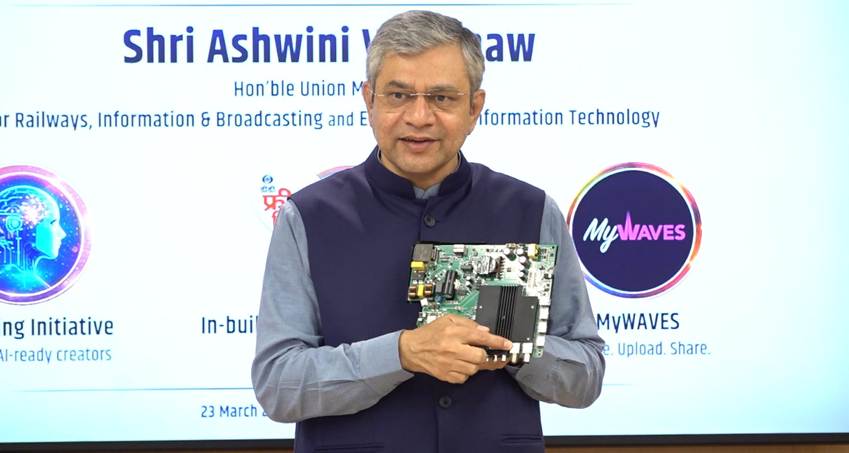
- 25 Mar 2026
In News:
- In a strategic move to future-proof India’s creative workforce, the Ministry of Information and Broadcasting (MIB) recently launched the National AI Skilling Initiative.
- Developed in partnership with Google and YouTube, this initiative aims to integrate Artificial Intelligence (AI) into the AVGC-XR (Animation, Visual Effects, Gaming, Comics, and Extended Reality) and media technology sectors.
- The program is designed to train 15,000 participants, including creators, media professionals, students, and developers, ensuring that India’s "soft power" is backed by cutting-edge technological proficiency.
Implementation Framework
The initiative is being executed through the Indian Institute of Creative Technologies (IICT) and follows a structured, two-phase pedagogical approach:
Phase I: Foundational AI Literacy
- Objective: To provide large-scale, baseline AI education.
- Curriculum: Participants utilize Google Career Certificates and Google Cloud Generative AI learning paths.
- Core Modules: * AI Essentials and Prompting Essentials.
- Introduction to Generative AI.
- Generative AI Leader Path.
- Criterion: Successful completion of Phase I is a mandatory prerequisite for advancing to specialized training.
Phase II: Advanced Specialization
- Objective: To offer hands-on, project-based learning tailored specifically for the creative industry.
- Focus: Practical application of AI in high-end animation, real-time rendering, and automated media workflows.
- Reach: Training sessions are slated to be conducted across major Indian cities to ensure geographic inclusivity.
Strategic Significance for India
- Strengthening the AVGC-XR Sector: India’s AVGC sector is a high-growth engine. By infusing AI, the initiative reduces production timelines and enhances the global competitiveness of Indian content.
- Bridging the Digital Skill Gap: As Generative AI transforms content creation, this initiative prevents "technological unemployment" by upskilling existing professionals and preparing students for an AI-augmented job market.
- Public-Private Partnership (PPP) Model: The collaboration with Google and YouTube leverages global expertise and industry-standard tools, ensuring the curriculum remains relevant to market demands.
- Democratizing Technology: By making advanced AI tools accessible to 15,000 creators, the government is fostering an ecosystem where small-scale creators can compete with large studios using AI-driven efficiencies.
Hudsonian Godwit
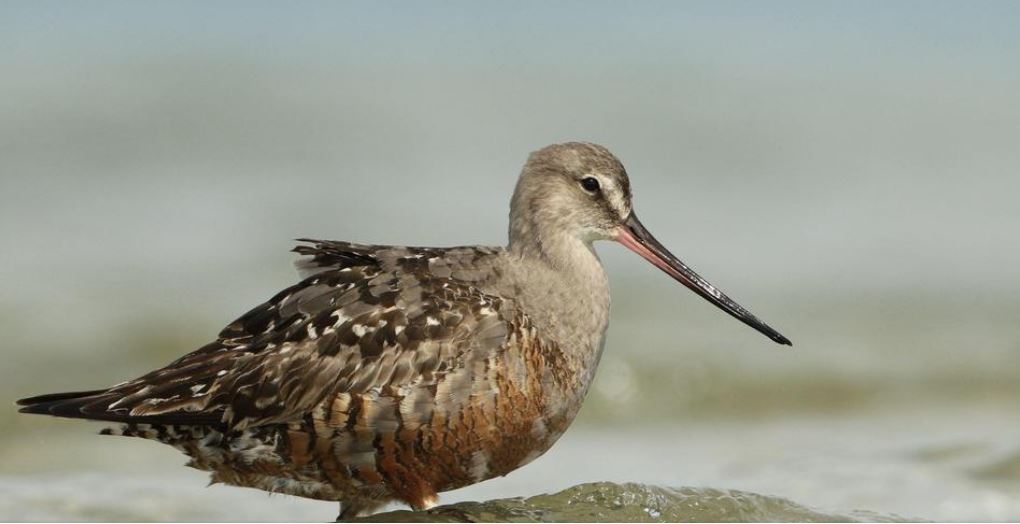
- 25 Mar 2026
In News:
In March 2026, scientific reports revealed a catastrophic 95% decline in the population of the Hudsonian Godwit (Limosa haemastica) over the last four decades. This drastic plunge has positioned the shorebird as a primary focus at the UN Convention on the Conservation of Migratory Species of Wild Animals (CMS COP15) held in Campo Grande, Brazil. The species is now among 42 migratory animals proposed for enhanced international protection under the Bonn Convention.
About the Hudsonian Godwit
The Hudsonian Godwit is a large shorebird belonging to the sandpiper family (Scolopacidae), celebrated for its extraordinary physiological endurance and migratory precision.
- Physical Characteristics: Distinguishable by a long, slightly upturned bill and long legs. During the breeding season, it displays a vibrant plumage of gold, brown, and brick-red, which transitions to a subtle gray-brown during the non-breeding period.
- Ecological Niche: It breeds in sub-Arctic and Boreal wetlands (muskeg and sedge meadows) and winters in the southern reaches of South America, primarily Patagonia and Chiloé Island.
- Feeding Behavior: As a probing feeder, it consumes insects, crustaceans, and small invertebrates in shallow water and intertidal zones.
The "Marathon" Migration: A Feat of Endurance
The Hudsonian Godwit is a "hemispheric traveler," undertaking an annual round-trip of nearly 30,000 km.
- Non-stop Capability: It can fly up to 11,000 km in a single stretch without eating, drinking, or sleeping, relying entirely on stored fat reserves.
- Migratory Connectivity: Its survival depends on a series of highly predictable wetland "stopover sites" across North and Central America to refuel.
Drivers of Decline: A Multi-Continental Crisis
The 95% population collapse is attributed to a "polycrisis" where environmental stressors across three continents intersect simultaneously.
- Arctic Ecological Mismatch (Climate Change): Shifting spring timelines in the Arctic have disrupted the synchrony between hatching and food availability. Chicks now hatch after the peak emergence of insects, leading to high starvation rates.
- Infrastructure Boom in South America: In southern Chile, the expansion of salmon and oyster farming has led to heavy industrialization of intertidal zones. This has degraded the primary feeding grounds the birds rely on during the southern summer.
- Wetland Loss in North America: In the United States, changes in agricultural land use and drainage practices have made shallow-water wetlands increasingly rare. This forces the birds to spend more time searching for stopover sites, depleting the energy reserves needed for their trans-oceanic flights.
- Disrupted Migration Cues: Research indicates that the birds are now migrating roughly six days later than a decade ago, suggesting a breakdown in the "geological clock" or environmental cues they use to time their journeys.
Conservation Status and Policy Implications
|
Category |
Status/Details |
|
IUCN Red List |
Vulnerable |
|
Legal Framework |
Proposed for CMS Appendix I (Strict protection for endangered migratory species). |
|
Global Trend |
49% of all migratory species are currently in decline. |
Bura Chapori Wildlife Sanctuary
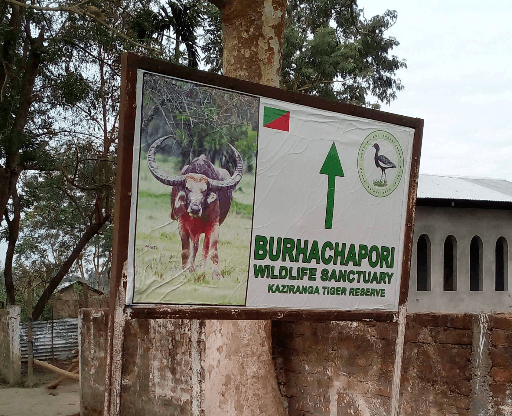
- 25 Mar 2026
In News:
In a significant move to bolster the conservation landscape of Central Assam, the State Government has proposed the creation of a new Reserved Forest, tentatively named Burhachapori No. 5, in the Sonitpur district.
Spanning approximately 224.32 hectares, this initiative is primarily driven by Compensatory Afforestation (CA) requirements under the Van Sanrakshan Evam Samvardhan Rules, 2023. The land, situated in the Dhania Range, will compensate for forest diversions necessitated by critical infrastructure projects, including National Highway expansion (NHAI/NHIDCL), oil exploration (ONGC/OIL), and power transmission (AEGCL).
The Laokhowa-Burhachapori Eco-system
The Burhachapori Wildlife Sanctuary (WLS) is not an isolated entity but a vital cog in the Laokhowa-Burhachapori ecosystem.
- Geographic Setting: Located on the south bank of the Brahmaputra River, it acts as a crucial "stepping stone" for wildlife movement between Kaziranga National Park (East) and Orang National Park (West/North bank).
- Buffer Status: It is a notified buffer zone of the Kaziranga Tiger Reserve, providing additional habitat for dispersing populations of tigers and rhinos.
- Topography: The sanctuary is characterized by chaporis (riverine islands), wetlands, and alluvial floodplains that undergo seasonal transformations due to the Brahmaputra’s flood cycle.
Ecological Profile: Flora and Fauna
The region represents a classic Brahmaputra Valley semi-evergreen forest mosaic, essential for megaherbivores and endangered avifauna.
1. Vegetation and Flora
The sanctuary comprises a mix of wet alluvial grasslands, riparian forests, and semi-evergreen patches.
- Key Tree Species: Hollong (Assam's State Tree), Mekai, Dhuna, Udiyam, Nahar, and Samkothal.
- Grasslands: These are rich in medicinal herbs and provide the primary fodder for the Greater One-horned Rhinoceros.
2. Faunal Diversity
- Mammals: Home to the Greater One-horned Rhinoceros, Royal Bengal Tiger, Leopard, Asiatic Wild Buffalo, Hog Deer, and Asian Elephant.
- Avifauna: It is a critical habitat for the Bengal Florican (Critically Endangered). Other significant species include the Black-necked Stork, Open-billed Stork, Mallard, Teal, and Whistling Duck.
Significance of the New Reserved Forest
The proposal to notify adjacent land as a Reserved Forest serves multiple strategic objectives:
- Corridor Connectivity: By expanding the protected area, the government aims to reduce habitat fragmentation, allowing safer passage for animals moving between Kaziranga and Orang.
- Legal Protection: Upgrading land status to "Reserved Forest" under the Assam Forest Regulation, 1891, provides higher legal safeguards against encroachment and unauthorized land use.
- Restoration & Reintroduction: The area has historically been a site for rhino reintroduction. Strengthening the buffer helps in stabilizing these populations and reducing human-wildlife conflict in the Sonitpur-Nagaon belt.
- Environmental Compliance: It fulfills the "land for land" and "tree for tree" principle of the Union Ministry of Environment, Forest & Climate Change (MoEFCC) for developmental projects.
Bharat Electricity Summit 2026
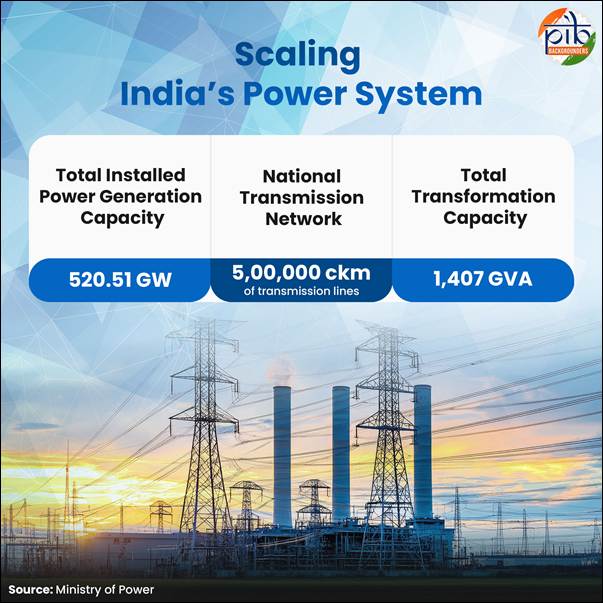
- 25 Mar 2026
In News:
The Bharat Electricity Summit 2026, recently held in New Delhi under the theme “Electrifying Growth. Empowering Sustainability. Connecting Globally,” served as a testament to India’s journey from a power-deficit nation to a renewable-led energy surplus economy. With a projected investment potential of ?50 lakh crore by 2032, the summit positioned India as a global hub for international energy cooperation and technological innovation.
Current Landscape of India's Power Sector (2025-26)
India has witnessed a paradigm shift in its energy mix, moving toward low-carbon pathways while ensuring energy security.
- Capacity Expansion: As of January 2026, the total installed power capacity reached 520 GW. Notably, in FY 2025–26, India added a record 52,537 MW, with Renewable Energy (RE) accounting for 75% of this addition.
- Renewable Energy Dominance: Solar energy has seen exponential growth, rising from 3 GW in 2014 to 140 GW by early 2026. According to IRENA (2025), India now ranks 4th globally in total installed RE capacity.
- A Landmark Achievement: On July 29, 2025, renewable sources met 51.5% of the country's total electricity demand for the first time, driven by a synergistic mix of Solar (44.5 GW), Wind (29.89 GW), and Hydro (30.29 GW).
- Deficit Eradication: The national power shortage has been decimated from 4.2% in FY 2013–14 to a marginal 0.03% in late 2025, successfully meeting a peak demand of 242 GW.
Structural and Financial Reforms: The Turnaround
The transition has been supported by aggressive fiscal discipline and infrastructural modernization.
1. Financial Viability of DISCOMs
For decades, the Distribution Companies (DISCOMs) were the "leaking bucket" of the power sector.
- From Loss to Profit: Distribution utilities recorded a profit of ?2,701 crore in FY 2024–25, a historic recovery from the ?67,962 crore loss in FY 2013-14.
- LPS Rules & Debt Reduction: The Late Payment Surcharge (LPS) Rules, 2022, and the Revamped Distribution Sector Scheme (RDSS) helped slash outstanding dues from ?1.4 lakh crore (2022) to just ?4,109 crore by February 2026.
- Smart Metering: The installation of 5.62 crore smart meters has enhanced billing efficiency and transparency.
2. National Grid and Universal Access
- World’s Largest Synchronous Grid: India’s national grid now exceeds 5 lakh circuit kilometers (ckm). Under the National Electricity Plan (2023–2032), this is set to expand to 6.48 lakh ckm with an investment of ?9.15 lakh crore.
- Rural Empowerment: Through schemes like Saubhagya and DDUGJY, 18,374 villages were electrified. Average daily power supply in rural areas rose significantly from 12.5 hours (2014) to 22.6 hours (2025).
Key Policy Initiatives and Future Outlook
|
Scheme/Policy |
Objective & Impact |
|
PM Surya Ghar Yojana |
A ?75,021 crore initiative aiming for 1 crore residential rooftop solar installations by FY 2026–27. |
|
Electricity (Amendment) Bill, 2026 |
Aims to rationalize cross-subsidies, promote cost-reflective tariffs, and enable direct power procurement for industries to boost "Make in India." |
|
RDSS (?3.03 Lakh Cr) |
Focuses on reducing AT&C (Aggregate Technical & Commercial) losses and improving operational efficiencies. |
|
POWERGRID Empowerment |
Increased investment delegation (equity limit per subsidiary raised to ?7,500 crore) to accelerate transmission infrastructure. |
Challenges and Way Forward
While the transition is robust, the roadmap to 458 GW peak demand by 2032 requires addressing:
- Grid Stability: Managing the intermittency of high-penetration renewables through advanced Battery Energy Storage Systems (BESS).
- Supply Chain Resilience: Reducing dependency on imports for solar cells and critical minerals.
- Technological Integration: Leveraging the startup ecosystem (100 startups featured at the Summit) for R&D in smart grids and Green Hydrogen.
Shaheed Diwas
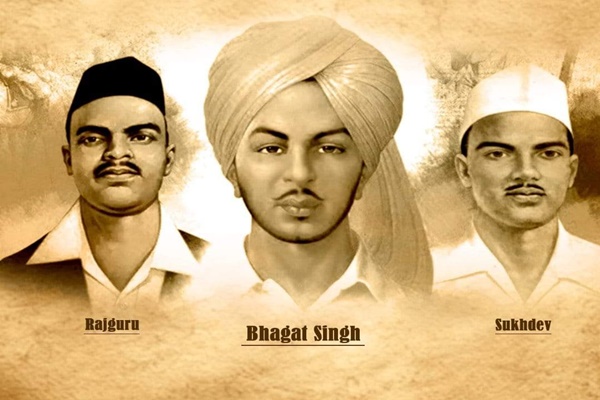
- 25 Mar 2026
In News:
Every year, March 23rd is observed as Shaheed Diwas (Martyrs' Day) to commemorate the supreme sacrifice of three iconic revolutionaries: Bhagat Singh, Shivaram Rajguru, and Sukhdev Thapar. In 1931, these young leaders were executed by the British colonial government in the Lahore Central Jail. Their martyrdom remains a symbol of uncompromising patriotism and continues to inspire the socio-political consciousness of modern India.
Note: India also observes Martyrs' Day on January 30th to mark the assassination of Mahatma Gandhi.
Historical Genesis: The Lahore Conspiracy Case
The martyrdom of the trio was rooted in the radicalization of the Indian national movement during the late 1920s.
- Protest against Simon Commission (1928): The British government appointed the all-white Simon Commission to recommend constitutional reforms, sparking nationwide protests. During a demonstration in Lahore, veteran leader Lala Lajpat Rai was brutally injured in a police lathi charge and subsequently succumbed to his injuries.
- The HSRA’s Retaliation: To avenge Rai’s death, the Hindustan Socialist Republican Association (HSRA) planned to assassinate James A. Scott, the Superintendent of Police responsible for the lathi charge.
- Mistaken Identity: In a case of mistaken identity, Bhagat Singh, Rajguru, and Sukhdev killed Assistant Superintendent of Police J.P. Saunders on December 17, 1928. This incident was labeled the Lahore Conspiracy Case.
- Assembly Bombing (1929): On April 8, 1929, Bhagat Singh and Batukeshwar Dutt threw low-intensity smoke bombs into the Central Legislative Assembly. Their objective was not to kill, but to protest against the repressive Public Safety Bill and Trade Dispute Bill. As Bhagat Singh famously stated, the intent was "to make the deaf hear."
Profile of the Revolutionaries
1. Bhagat Singh (1907–1931)
- Early Life: Born in Banga, Punjab, into a family of freedom fighters (Kishan Singh and Ajit Singh). The Jallianwala Bagh massacre (1919) deeply impacted his psyche.
- Intellectual Contribution: He was a prolific writer and thinker. Under pseudonyms like Balwant, Ranjit, and Vidhrohi, he contributed to journals such as Kirti. His essay "Why I Am an Atheist" highlights his transition toward rationalism and Marxism.
- Organizational Role: He transformed the HRA into the HSRA in 1928, shifting the focus from mere independence to a socialist reconstruction of society. He also founded the Naujawan Bharat Sabha (1926) to mobilize youth.
- Legacy: Known as "Shaheed-e-Azam," he popularized the slogan "Inquilab Zindabad" (Long Live the Revolution).
2. Sukhdev Thapar (1907–1931)
- Role: A core strategist of the HSRA, Sukhdev was the mastermind behind the organizational structure of the revolutionary cells in North India, particularly Punjab.
- Contribution: He was instrumental in educating youth about India's revolutionary history and played a decisive role in the planning of the Lahore Conspiracy.
3. Shivaram Rajguru (1908–1931)
- Background: Hailing from Khed, Maharashtra, Rajguru was a staunch advocate of armed resistance.
- Specialization: He was highly regarded as a skilled marksman within the HSRA. His participation in the Saunders' execution was pivotal to the group’s tactical operations.
Execution and Commemoration
The trial for the Lahore Conspiracy Case concluded with the death sentence for the trio. Despite widespread national appeals and diplomatic pressure, they were hanged on March 23, 1931. Their bodies were secretly cremated by the authorities at Hussainiwala (Punjab) on the banks of the Sutlej River. Today, the Hussainiwala National Martyrs Memorial stands as a testament to their bravery.
Significance in the Freedom Struggle
The martyrdom of Bhagat Singh and his comrades marked a shift in the nationalist movement:
- Shift to Socialism: It moved the revolutionary goal beyond "expelling the British" to "ending the exploitation of man by man."
- Mass Mobilization: Their sacrifice bridged the gap between the radical youth and the mainstream national movement led by the Congress, forcing the latter to adopt a more militant stance on Purna Swaraj (Complete Independence).
- Ideological Depth: They introduced the concepts of social justice, egalitarianism, and secularism into the revolutionary discourse.
Smog-Eating Photocatalytic Coating
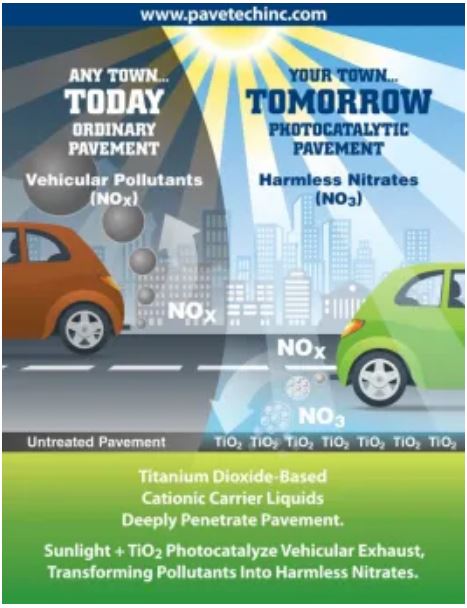
- 24 Mar 2026
In News:
In a strategic move to address the perennial air quality crisis in the National Capital Region, the Delhi Government has partnered with the Indian Institute of Technology (IIT) Madras to pilot and study "smog-eating" photocatalytic coatings. This experimental technology, applied directly to road surfaces, aims to neutralize tailpipe emissions at the source, transforming gray infrastructure into active air purification systems.
Understanding the Technology: Photocatalytic Depollution
Photocatalytic coatings represent a frontier in "green" civil engineering. They utilize light energy to accelerate natural chemical reactions that decompose pollutants.
- Primary Compound: The technology predominantly employs Titanium Dioxide (TiO?).
- Why TiO?? It is favored for its chemical stability, cost-effectiveness, and seamless compatibility with traditional construction materials like bitumen and concrete.
- The Mechanism: * Activation: When UV rays from sunlight hit the TiO?-coated surface, it creates highly reactive oxidizing agents.
- Neutralization: These agents break down harmful gases—specifically Nitrogen Dioxide (NO?) and Volatile Organic Compounds (VOCs)—into harmless substances like water-soluble nitrates or CO?, which are then washed away by rain.
Contextualizing the Crisis: The Nature of Smog
The term "smog" (a portmanteau of smoke and fog) refers to a complex mixture of primary and secondary air pollutants. To understand the efficacy of these coatings, it is essential to distinguish between the two primary types of smog:
|
Type of Smog |
Primary Cause |
Key Characteristics |
|
Sulfurous (London) Smog |
Combustion of sulfur-bearing fossil fuels (e.g., Coal). |
High concentration of sulfur oxides; common in damp, cold climates. |
|
Photochemical (Los Angeles) Smog |
Interaction of sunlight with Nitrogen Oxides (NOx) and VOCs. |
Prevalent in sunny, urban areas with high automobile density; contains ground-level ozone. |
The IIT Madras study specifically targets Photochemical Smog, as road coatings are most effective where vehicular density and sunlight exposure are highest.
Strategic Significance for Urban Governance
The adoption of "smog-eating" roads aligns with India's National Clean Air Programme (NCAP) and offers several strategic advantages:
- Source-Point Treatment: By coating roads, the technology tackles emissions exactly where they are most concentrated—at the tire-to-pavement interface.
- Multi-Functional Infrastructure: It converts existing passive assets (roads) into environmental cleaning tools without requiring additional land or energy-intensive machinery.
- Passive Operation: Unlike "Smog Towers" which require massive fans and electricity, photocatalytic coatings work autonomously using solar energy.
Sahiwal Cattle
- 24 Mar 2026
In News:
In a significant boost to India’s Rashtriya Gokul Mission, the ICAR-Indian Veterinary Research Institute (IVRI), Izatnagar, has successfully produced indigenous Sahiwal cattle calves using a sophisticated suite of reproductive biotechnologies. The process integrated Ultrasound-Guided Ovum Pick-Up (OPU), In Vitro Fertilization (IVF), and Embryo Transfer (ET), marking a leap in the rapid multiplication of high-yielding indigenous germplasm.
Profile of the Sahiwal Breed: The "Golden" Milch Cow
The Sahiwal is globally recognized as one of the premier dairy (milch) breeds of the Indian subcontinent.
- Origin and Nomenclature: The breed originates from the Sahiwal area in the Montgomery district (now in Punjab, Pakistan). It is known by various local names, including Lola (due to its loose skin), Montgomery, Multani, and Teli.
- Physical Characteristics: * Typically brownish-red in color, ranging from mahogany to greyish-red.
- Bulls often exhibit darker extremities compared to cows.
- Performance Metrics:
- Lactation Yield: Average yield is approximately 2,325 kg, with a high-performance range of 1,600 kg to 2,750 kg.
- Resilience Traits: The Sahiwal is prized for its heat tolerance, tick resistance, and high immunity against both internal and external parasites. These traits have led to its successful export to Africa, the Caribbean, and other Asian nations to improve local hardy stocks.
Deciphering the Technology: OPU–IVF–ET
The success at IVRI relies on a multi-stage biotechnological intervention designed to bypass the limitations of natural breeding.
|
Technology Stage |
Process Deion |
|
Ovum Pick-Up (OPU) |
Ovarian follicles in a live donor cow are visualized via ultrasonography and punctured using a needle attached to a vacuum pump to collect oocytes (eggs). |
|
In Vitro Processing |
The collected oocytes undergo In Vitro Maturation (IVM) and In Vitro Fertilization (IVF) with high-quality semen in a laboratory environment. |
|
In Vitro Culture (IVC) |
Fertilized eggs are cultured until they reach the embryo stage. |
|
Embryo Transfer (ET) |
The viable embryos are transferred into synchronized recipient cows (surrogates) to carry the pregnancy to term. |
Key Advantages of OPU-IVF:
- Reduced Generation Interval: Allows for faster multiplication of elite animals.
- Pedigree Preservation: Enables offspring production from known, high-yielding lineages.
- Flexibility: The procedure can even be performed on pregnant animals (up to 100 days of gestation).
Strategic Significance for India
- Aatmanirbharta in Agriculture: Reducing dependence on imported exotic breeds (like Holstein Friesian) by enhancing the productivity of climate-resilient indigenous breeds.
- Climate Change Adaptation: As global temperatures rise, the heat-tolerant genes of Sahiwal cattle provide a sustainable solution for food security in the tropics.
- Socio-Economic Impact: High-yielding indigenous cattle improve the income of small and marginal farmers while producing milk with potentially higher A2 beta-casein content, which has a growing niche market.
World Tuberculosis Day 2026
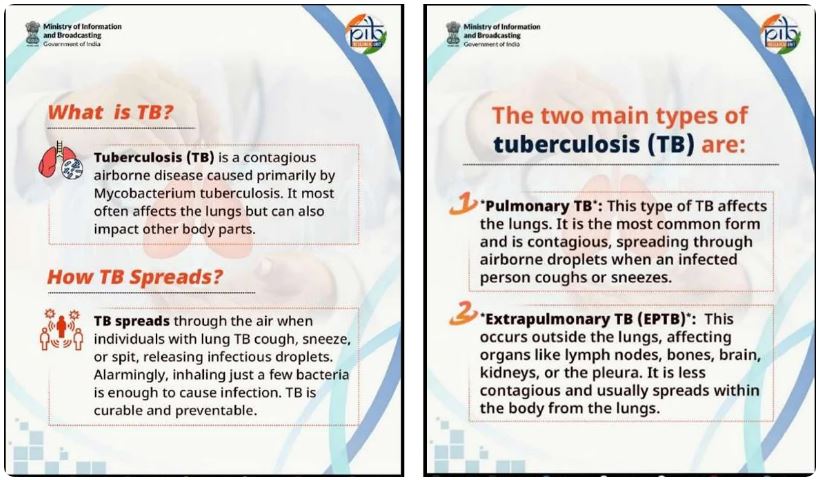
- 24 Mar 2026
In News:
Every year, March 24 is observed as World Tuberculosis (TB) Day to commemorate Dr. Robert Koch’s 1882 discovery of Mycobacterium tuberculosis.
For 2026, the World Health Organization (WHO) has retained the theme “Yes! We can End TB!”, signaling a shift from global ambition to localized, high-impact action.
In India, the day serves as a critical checkpoint for the National TB Elimination Programme (NTEP). While India missed its audacious 2025 elimination deadline, the focus has now pivoted toward aggressive "mission-mode" strategies to bridge the remaining gaps.
The Current Status of TB in India
India’s TB landscape is a study in contrasts—significant statistical improvements set against a backdrop of a staggering absolute burden.
- Global Burden: India accounts for approximately 25% of global TB cases and 28% of global TB deaths.
- Key Progress Indicators (2015–2024):
- Incidence: Declined by 21%.
- Mortality: Reduced from 28 per lakh (2015) to 21 per lakh (2024).
- Treatment Coverage: Increased dramatically from 53% to 92%.
- Success Rate: Under the Pradhan Mantri TB Mukt Bharat Abhiyan, the success rate reached 90%, surpassing the global average of 88%.
- The "Missing Cases" Challenge: Despite these gains, nearly one lakh cases remain undiagnosed annually, contributing to 8.8% of the global detection gap.
Evolution of India's Strategy: From Control to Elimination
India transitioned from the Revised National TB Control Programme (RNTCP) to the National TB Elimination Programme (NTEP) in 2020. The programme is anchored by the National Strategic Plan (2017–2025) and the Detect–Treat–Prevent–Build (DTPB) framework.
Major Technological and Medical Advancements:
- Molecular Diagnostics: India operates the world’s largest TB lab network; 92% of patients now receive upfront Rifampicin drug-resistance testing, ensuring they aren't started on ineffective first-line drugs.
- BPaLM Regimen: The introduction of the BPaLM (Bedaquiline, Pretomanid, Linezolid, and Moxifloxacin) regimen has revolutionized Multi-Drug Resistant (MDR) TB care, reducing treatment duration from 18–24 months to just 6 months.
- Digital Ecosystem: The Ni-kshay portal and the newly launched TB Mukt Bharat App facilitate real-time patient tracking and treatment adherence.
Social and Nutritional Support: The Ni-kshay Ecosystem
Recognizing that TB is as much a social disease as a biological one, India has integrated nutrition and community support into the clinical cycle:
- Ni-kshay Poshan Yojana (NPY): Financial support has been increased to ?1,000/month, providing a total of ?3,000 to ?6,000 over the treatment course.
- Ni-kshay Mitras: A unique "crowdsourced" healthcare model where citizens and corporates "adopt" TB patients to provide monthly food baskets and vocational support.
Critical Gaps and Strengthening Measures
To achieve the definition of elimination (less than one notified case per million population per year), India must address the following:
- Active Case Finding (ACF) for Subclinical TB: Nearly half of India's TB cases are subclinical (asymptomatic). Mass rollout of AI-enabled portable Chest X-rays and non-invasive tongue swabs is essential to find "silent" transmitters.
- Tribal-Centric Interventions: TB prevalence among Scheduled Tribes is 50% higher than the national average. Innovative financing, such as utilizing District Mineral Foundation (DMF) funds, can bridge the infrastructure gap in mining-affected tribal belts.
- TB Preventive Treatment (TPT): Shifting focus to household contacts of active patients to treat the infection in its latent stage before it progresses to active disease.
- Urban Micro-strategies: High-transmission urban wards require "micro-level" interventions through initiatives like the TB Mukt Urban Ward.
Actinidia Indica
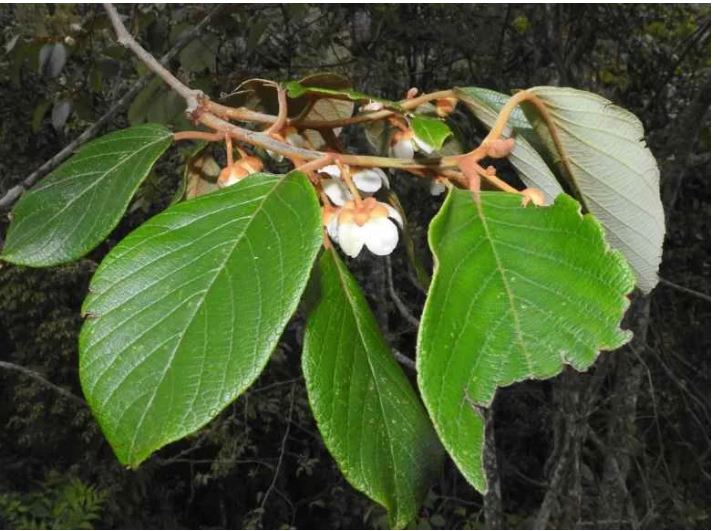
- 24 Mar 2026
In News:
In a significant addition to India’s botanical diversity, scientists from the Botanical Survey of India (BSI) have discovered a new species of wild kiwi, named Actinidia indica. The discovery was made in the biodiversity-rich landscapes of Arunachal Pradesh, further cementing the state’s reputation as a "cradle of speciation" in the Eastern Himalayas.
Geographic Distribution and Habitat
- Location: The species has been recorded within a restricted, narrow stretch near the Ziro Valley in the Lower Subansiri district of Arunachal Pradesh.
- Elevation: It is found at an altitude of approximately 1,725 metres above sea level.
- Ecological Niche: Actinidia indica thrives in a unique transition zone between temperate and subtropical forests. This biologically sensitive habitat provides the specific micro-climatic conditions required for the species to survive.
Morphological Characteristics
The new species belongs to the family Actinidiaceae. It possesses several distinct physical traits that differentiate it from other known kiwi species:
- Growth Habit: It is a perennial climbing shrub, capable of reaching heights of 2 to 4 metres.
- Botanical Features: * Branches: Young branches are characterized by a dense covering of hairs.
- Folliage: It bears large, ovate (egg-shaped) leaves.
- Flowers: The plant produces white to creamy-colored flowers, typically measuring between 4 cm and 6 cm in diameter.
- Fruit Identity: The species produces olive-green, globose (spherical) fruits (2.5–4 cm). A defining taxonomic feature is its distinctive reticulate lenticel pattern (a net-like arrangement of pores on the fruit's skin), which helped researchers identify it as a new species.
Taxonomic and Global Significance
- Global Count: This discovery increases the global count of the Actinidia genus to 56 species.
- Indian Context: While the genus Actinidia is widely known for the commercial kiwi fruit (largely native to China), only a very small number of these species occur naturally in India. The identification of Actinidia indica highlights the high level of endemism in the Northeast.
INS Taragiri
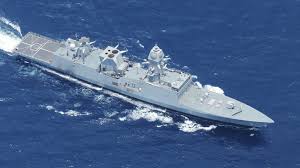
- 24 Mar 2026
In News:
The Indian Navy is set to commission INS Taragiri (F41), a state-of-the-art stealth guided-missile frigate, on April 3, 2026. As the fourth ship of the ambitious Project 17A (Nilgiri-class), its induction marks a critical milestone in India’s quest for maritime "Aatmanirbharta" (self-reliance).
Project 17A: A Strategic Overview
Project 17A is an advanced follow-on to the Shivalik-class (Project 17) frigates. The initiative involves the construction of seven stealth frigates, with four being built at Mazagon Dock Shipbuilders Ltd (MDL) in Mumbai and three at Garden Reach Shipbuilders and Engineers (GRSE) in Kolkata.
- Naming Convention: The ships are named after prominent Indian mountain ranges: INS Nilgiri, Himgiri, Udaygiri, Taragiri, Dunagiri, Vindhyagiri, and Mahendragiri.
- Design Philosophy: Designed by the Navy’s in-house Warship Design Bureau (WDB), these vessels utilize "Integrated Construction" methodology, which involves pre-outfitting hull blocks to compress the construction timeline.
Key Features and Technical Specifications of INS Taragiri
INS Taragiri represents the pinnacle of indigenous shipbuilding, boasting approximately 75% indigenous content.
- Stealth and Survivability: * Reduced Radar Cross-Section (RCS): The ship features a sleeker hull form and enclosed mooring decks to minimize radar and infrared signatures.
- Hull Material: Constructed using indigenous DMR 249A low-carbon micro-alloy grade steel.
- Propulsion and Performance:
- CODOG System: Utilizes a Combined Diesel or Gas configuration, pairing two gas turbines (for high speed) with two main diesel engines (for fuel-efficient cruising).
- Capabilities: Displacing approximately 6,670 tonnes, the frigate can achieve speeds exceeding 28-32 knots with high operational endurance.
- Weaponry and Combat Suite:
- Surface-to-Surface: Armed with the supersonic BrahMos cruise missile system.
- Surface-to-Air: Equipped with Barak-8 (MRSAM) missiles for long-range air defense, guided by the EL/M-2248 MF-STAR AESA radar.
- Anti-Submarine Warfare (ASW): Features indigenous triple-tube torpedo launchers and RBU-6000 rocket launchers.
- Naval Gunery: Includes a 76mm Super Rapid Gun Mount (SRGM) and AK-630 Close-In Weapon Systems (CIWS).
Strategic Significance for India
- Regional Deterrence: The induction is timely given the growing Chinese naval presence and increasing militarization in the Indian Ocean Region (IOR).
- Operational Readiness: INS Taragiri will bolster the Eastern Naval Command, particularly in multi-dimensional missions ranging from high-intensity combat to Operation Sankalp (maritime security) and HADR (Humanitarian Assistance and Disaster Relief).
- Economic Impact: The project supports the domestic industrial ecosystem, involving over 200 MSMEs and generating direct employment for thousands, directly aligning with the "Make in India" and "Viksit Bharat" frameworks.
Global Terrorism Index 2026
- 23 Mar 2026
In News:
The Global Terrorism Index (GTI) 2026, released by the Institute for Economics and Peace, provides a comprehensive assessment of the impact of terrorism across 163 countries, covering nearly the entire global population. The report highlights evolving trends in terrorism and shifting regional dynamics.
About the Global Terrorism Index
- The GTI is an annual report that measures the impact of terrorism using a composite scoring system ranging from 0 (no impact) to 10 (highest impact).
- The index evaluates countries based on indicators such as number of incidents, fatalities, injuries, and property damage, thereby enabling comparative analysis of terrorism trends globally.
Key Findings of GTI 2026
- The 2026 report indicates a decline in global terrorism intensity, with deaths decreasing by around 28% and incidents falling by 22% compared to previous levels.
- However, the geographical concentration of terrorism has shifted significantly. Sub-Saharan Africa has emerged as the epicentre of global terrorism, with six of the ten most affected countries located in the region.
- For the first time, Pakistan ranks as the most impacted country, reflecting rising instability and militant activity. India is placed at 13th position, indicating a moderate but persistent threat environment.
- The report also identifies the most lethal terrorist organisations, including Islamic State (IS), Jamaat Nusrat Al-Islam wal Muslimeen (JNIM), Tehrik-e-Taliban Pakistan (TTP), and Al-Shabaab, which continue to drive global terrorism.
Emerging Trends
The findings reveal a decline in traditional conflict-driven terrorism in some regions, but a simultaneous rise in fragile and conflict-affected states, particularly in Africa.
Terrorism is increasingly linked with political instability, weak governance, and socio-economic vulnerabilities, rather than being confined to specific ideological or geographic zones.
The diffusion of extremist networks and the use of asymmetric tactics continue to pose challenges for global security systems.
Implications for India and Global Security
For India, the ranking underscores the need for continued vigilance against cross-border terrorism and radicalisation threats, while also recognising improvements in internal security mechanisms.
Globally, the shift of terrorism hotspots to new regions calls for reoriented counter-terrorism strategies, greater international cooperation, and capacity building in vulnerable states.
The persistence of major terrorist organisations highlights the need for intelligence sharing, financial tracking, and coordinated global action.
Variable Rate Repo for Liquidity Management
- 23 Mar 2026
In News:
- The Reserve Bank of India (RBI) recently infused over ?25,000 crore into the banking system through a 3-day Variable Rate Repo (VRR) auction, following earlier liquidity injections of around ?3.5 lakh crore via Open Market Operations (OMOs) since January 2026.
- These measures highlight the RBI’s proactive approach to managing short-term liquidity conditions and maintaining monetary stability.
Need for Liquidity Management
Liquidity in the banking system fluctuates due to factors such as tax outflows, government cash balances, and seasonal demand for cash.
A deficit in liquidity can push up short-term interest rates, while surplus liquidity may weaken monetary transmission. Therefore, the RBI actively uses a mix of instruments to ensure that market rates remain aligned with its policy stance.
Variable Rate Repo (VRR): A Market-Based Tool
- The Variable Rate Repo (VRR) is a short-term liquidity injection mechanism under the RBI’s monetary framework. Unlike the fixed repo rate, where the interest rate is predetermined, VRR operates through an auction-based system, allowing the market to determine the borrowing rate.
- Banks bid for funds by offering interest rates, and the RBI allocates liquidity starting from the highest bids until the notified amount is exhausted. Typically, VRR operations are conducted for short durations (1–14 days) against the collateral of government securities.
- This mechanism enables efficient liquidity distribution and real-time price discovery, reflecting actual demand conditions in the market.
Liquidity Adjustment Facility (LAF): Core Framework
- VRR operates within the broader framework of the Liquidity Adjustment Facility (LAF), which is the RBI’s primary tool for managing day-to-day liquidity.
- Introduced in 2000 based on the Narasimham Committee recommendations, LAF allows banks to either borrow from or lend to the RBI.
- The system is structured around a corridor mechanism. At the centre lies the policy repo rate, which signals the monetary policy stance. The upper bound is defined by the Marginal Standing Facility (MSF), while the lower bound is set by the Standing Deposit Facility (SDF), which has replaced the reverse repo as the primary absorption tool.
- The objective is to keep the Weighted Average Call Rate (WACR)—the operating target—closely aligned with the repo rate.
Open Market Operations (OMOs): Quantitative Tool
- In addition to LAF tools, the RBI uses Open Market Operations (OMOs) as a quantitative instrument to manage liquidity.
- OMOs involve the purchase or sale of government securities. When the RBI purchases securities, it injects liquidity into the system; when it sells them, liquidity is absorbed. These operations are conducted through auctions or direct transactions using the RBI’s electronic platform.
- The large-scale OMO purchases in 2026 reflect a systemic liquidity infusion aimed at supporting credit flow and economic activity.
Significance of VRR and Related Instruments
The combined use of VRR, LAF, and OMOs enables the RBI to maintain short-term interest rate stability and effective monetary transmission.
VRR, in particular, provides flexibility by allowing market-driven rate discovery, reducing the need for the central bank to pre-determine liquidity conditions. It also ensures that liquidity mismatches are addressed efficiently without distorting market signals.
Overall, these instruments help in controlling inflation, supporting growth, and maintaining financial stability.
BRICS STI Cooperation

- 23 Mar 2026
In News:
With India assuming the BRICS Presidency in 2026 under the theme of resilience, innovation, cooperation, and sustainability, science, technology, and innovation (STI) have emerged as key pillars of cooperation within the grouping.
The expansion of BRICS into BRICS and recent declarations signal a shift towards deep-tech collaboration and techno-multipolarity, especially among Global South countries.
Evolution of Scientific Cooperation in BRICS
- Scientific collaboration within BRICS has evolved gradually from basic cooperation to structured institutional engagement. Early recognition of science and technology cooperation began with the Sanya Declaration (2011), which integrated STI into the BRICS agenda.
- Subsequently, the 2015 MoU on STI cooperation formalised collaboration, leading to initiatives such as the BRICS Young Scientist Forum and joint research programmes. Over time, cooperation expanded through action plans focused on innovation, entrepreneurship, and technology transfer, including the establishment of the BRICS Technology Transfer Centre.
- Recent initiatives, such as the BRICS Remote Sensing Satellite Constellation, reflect a move towards strategic technological autonomy, reducing dependence on Western systems.
Emergence of BRICS as a Techno-Strategic Platform
BRICS is increasingly positioning itself as a platform for technology-driven cooperation among emerging economies. The expansion into BRICS has enhanced its global significance, with the grouping now representing a substantial share of global population, trade, and economic output.
The focus has shifted towards frontier technologies, including Artificial Intelligence, digital infrastructure, and climate technologies. The grouping aims to provide alternative models of development and governance, particularly for the Global South.
Opportunities for Cooperation
BRICS offers significant potential for collaboration in areas such as digital public infrastructure, healthcare innovation, climate technologies, and advanced research.
India, in particular, can leverage its strengths in digital platforms, pharmaceuticals, and space technologies to drive collective initiatives. Collaborative frameworks such as shared digital systems, joint research projects, and cross-border innovation networks can enhance technological capabilities across member countries.
The platform also enables knowledge sharing and capacity building, especially for newer members, thereby promoting inclusive technological development.
Challenges in BRICS Scientific Collaboration
Despite its potential, BRICS faces several structural and operational challenges. There are significant disparities in research and development capacities among member countries, which can hinder balanced collaboration.
Geopolitical tensions and differing national priorities may affect the continuity of joint initiatives. Additionally, the absence of a strong institutional framework and dedicated funding mechanisms limits the effectiveness of cooperation.
Issues related to technology transfer, intellectual property rights, and regulatory harmonisation further complicate collaboration efforts.
India’s Role and Way Forward
India can play a pivotal role in strengthening BRICS cooperation by promoting digital public infrastructure models, such as Aadhaar and UPI, as scalable solutions for other member countries.
It can also advocate for joint mega-science projects, climate technology partnerships, and digital health initiatives, leveraging its experience in global collaborations.
Establishing common standards for emerging technologies like AI and enhancing institutional coordination will be essential. Strengthening funding mechanisms and fostering industry-academia linkages can further deepen collaboration.
Randomization of EVM-VVPATs
- 23 Mar 2026
In News:
The Election Commission of India (ECI) has completed the first stage of randomisation of EVM-VVPATs for the upcoming Assembly elections in Assam, Kerala and Puducherry, along with by-elections in several states. This process is a crucial administrative step to ensure free, fair, and transparent elections.
What is EVM–VVPAT Randomisation?
- EVM–VVPAT randomisation is a software-driven allocation process through which voting machines are assigned to constituencies and polling stations in a completely unpredictable manner.
- The process is conducted using the EVM Management System (EMS), ensuring minimal human intervention and eliminating any scope for bias or manipulation.
Process of Randomisation
The allocation of machines follows a two-stage randomisation mechanism, designed to enhance transparency and security.
- In the first stage, machines that have successfully undergone First Level Checking (FLC) are randomly distributed from district warehouses to Assembly Constituencies. This stage has already been completed for the current elections.
- In the second stage, after the finalisation of contesting candidates, machines are further randomised and allocated to individual polling stations within each constituency. This ensures that the exact deployment of machines remains unknown until the final stage.
Key Features of the System
- The process is characterised by strong institutional safeguards. It is conducted by District Election Officers in the presence of representatives of recognised political parties, ensuring multi-stakeholder oversight.
- The details of allocated machines, including serial numbers, are shared transparently with political parties and candidates at each stage. Following the first randomisation, machines are stored in secure strong rooms under continuous surveillance, maintaining their integrity until deployment.
- The use of EMS ensures that the allocation is mathematical, automated, and free from discretionary interference.
Significance
The randomisation process plays a critical role in strengthening the credibility of India’s electoral system. By ensuring that no stakeholder knows in advance which machine will be used at a particular polling station, it effectively prevents any possibility of targeted manipulation.
The presence of political party representatives and the sharing of detailed lists enhance transparency and trust among stakeholders.
Overall, the process contributes to institutional integrity, electoral neutrality, and public confidence, which are essential for a robust democratic framework.
Iran-Pakistan-India (IPI) Pipeline
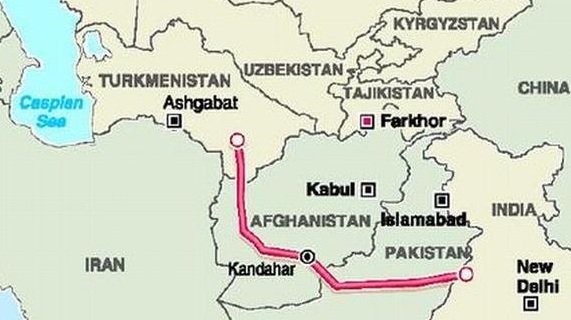
- 23 Mar 2026
In News:
The ongoing geopolitical tensions in West Asia have disrupted global energy supply chains, exposing India’s high dependence on imported hydrocarbons, particularly natural gas. This has revived discussions around stalled transnational pipeline projects such as the Iran–Pakistan–India (IPI) and Turkmenistan–Afghanistan–Pakistan–India (TAPI) pipelines as alternatives to ensure long-term energy security.
Background: India’s Energy Vulnerability
India is heavily reliant on imports to meet its energy needs, especially for natural gas. Disruptions in maritime routes and geopolitical instability in West Asia increase price volatility and supply risks, highlighting the need for diversified and secure energy sources.
Pipeline-based supply was envisioned as a cost-effective and stable alternative to Liquefied Natural Gas (LNG), reducing dependence on sea routes and global spot markets.
Iran–Pakistan–India (IPI) Pipeline
- The IPI pipeline, often referred to as the “Peace Pipeline,” was conceptualised in the 1990s to transport natural gas from Iran’s South Pars field to South Asia.
- The project envisaged a 2,775 km pipeline supplying around 60 mmscmd of gas each to India and Pakistan, offering a relatively cheaper alternative to LNG imports. It also carried the promise of regional cooperation through economic interdependence.
- However, the project lost momentum and India withdrew in 2007 due to multiple concerns. These included U.S.-led sanctions on Iran, pricing disagreements, and security risks, particularly regarding the pipeline’s passage through Pakistan’s Balochistan region. As a result, the project remains effectively dormant.
Turkmenistan–Afghanistan–Pakistan–India (TAPI) Pipeline
- Following the stagnation of IPI, India shifted its focus to the TAPI pipeline, which aimed to bring natural gas from the Galkynysh gas field in Turkmenistan, one of the world’s largest reserves.
- Spanning about 1,814 km, the pipeline is designed to transport 33 billion cubic meters (bcm) of gas annually. It received support from the Asian Development Bank and was seen as part of broader efforts to integrate Central and South Asia economically.
- While progress has been made in parts of the project—particularly the Turkmenistan-Afghanistan section—the extension into Pakistan and India remains stalled due to security challenges in Afghanistan, financing constraints, and geopolitical uncertainties.
Comparative Analysis
The IPI and TAPI pipelines reflect two different strategic approaches to energy security. While IPI relied on West Asian resources with shorter routes, it faced geopolitical constraints. TAPI, on the other hand, sought to diversify supply through Central Asia, but has struggled due to instability along its transit route.
Both projects highlight the complexity of cross-border energy infrastructure, where geopolitics, security, and economic viability intersect.
Sarhul Festival

- 22 Mar 2026
In News:
Recently, the President of India Droupadi Murmu extended greetings on the occasion of the Sarhul festival, highlighting its cultural and ecological significance. The festival reflects the deep-rooted traditions of India’s tribal communities and their harmonious relationship with nature.
About Sarhul Festival
- Sarhul, meaning “worship of the Sal tree”, is one of the most important festivals of Adivasi communities in eastern India.
- It is primarily celebrated in Jharkhand and also in parts of Odisha, West Bengal, and Chhattisgarh.
- The festival is observed by several tribes, including the Oraon, Munda, Santal, Khadia, and Ho, each of whom may follow distinct customs while sharing a common spiritual essence.
Cultural and Spiritual Significance
- Sarhul is fundamentally a festival of nature worship, symbolising the union of the Sun and the Earth, which is essential for sustaining life. The Sal tree holds central importance and is revered as the abode of Sama Maa, the village deity believed to protect the community.
- The rituals emphasise ecological balance, fertility, and renewal of life. Through symbolic representation, the pahan (village priest) embodies the Sun, while his wife, the pahen, represents the Earth, highlighting the interdependence of natural forces.
Rituals and Celebrations
Sarhul is celebrated over three days, reflecting a structured blend of ritual purity, community participation, and cultural expression.
- The first day is marked by preparation, including cleaning of homes and sacred groves (Sarna Sthals), collection of Sal flowers, and observance of fasting by the priest.
- The second day forms the core of the festival, when rituals are performed in sacred groves. Offerings and prayers are made for prosperity, good harvest, and community well-being, accompanied by traditional music and dance.
- The final day concludes with communal feasting, including traditional foods and rice beer (Handia), reinforcing social cohesion and shared identity.
RELIEF (Resilience & Logistics Intervention for Export Facilitation)
- 22 Mar 2026
In News:
Amid escalating geopolitical tensions in West Asia, particularly affecting key maritime routes such as the Gulf region, India has introduced a targeted intervention, RELIEF (Resilience & Logistics Intervention for Export Facilitation) to support exporters facing rising logistics costs and operational uncertainties.
Background: Need for the Initiative
- Recent disruptions in critical maritime corridors have led to vessel diversions, longer transit times, congestion at ports, and increased freight and insurance costs. These developments have adversely impacted Indian exporters, especially MSMEs, by raising transaction costs and threatening export continuity.
- Given India’s growing integration with global trade, such disruptions highlight the need for policy instruments that enhance supply chain resilience and protect export competitiveness.
About RELIEF Initiative
- RELIEF is a time-bound financial and risk mitigation measure launched in March 2026 under the Export Promotion Mission by the Ministry of Commerce and Industry.
- It is implemented by the Export Credit Guarantee Corporation of India (ECGC), which is responsible for verification, risk coverage, claim settlement, and monitoring.
- The initiative aims to ensure continuity of exports, reduce financial stress on exporters, and safeguard employment in export-linked sectors.
Key Features and Mechanism
- The RELIEF framework provides support across the entire export cycle, covering both past and future consignments affected by disruptions.
- For exporters already insured under ECGC, the scheme offers enhanced risk coverage of up to 100% for shipments during the disruption period, ensuring protection against unforeseen losses. For upcoming consignments, up to 95% coverage is provided with government backing, encouraging exporters to continue operations despite uncertainty.
- Recognising the vulnerability of MSMEs, the initiative also includes a partial reimbursement mechanism, covering up to 50% of increased freight and insurance costs (subject to a ceiling), thereby reducing the burden of sudden cost escalations.
- Additionally, a digital dashboard-based monitoring system has been introduced to track claims, fund utilisation, and logistics conditions in real time, ensuring transparency and efficiency.
Institutional and Policy Support
The implementation of RELIEF is supported by a whole-of-government approach, including the establishment of an Inter-Ministerial Group (IMG) on Supply Chain Resilience. This group facilitates coordination among ministries, logistics stakeholders, and exporters, enabling real-time policy responses such as procedural relaxations, port-level facilitation, and improved logistics coordination.
Project Insight (PI) initiative

- 22 Mar 2026
In News:
India is increasingly leveraging Artificial Intelligence (AI) and big data analytics to strengthen tax administration. The Project Insight (PI) initiative of the Income Tax Department represents a major step towards algorithmic tax governance, aimed at improving compliance and enhancing revenue mobilisation.
Background: Need for AI in Tax Governance
- India has historically faced challenges of low tax compliance and high evasion, reflected in a relatively modest tax-to-GDP ratio among emerging economies. A significant portion of potential tax revenue is lost annually due to evasion and under-reporting.
- In this context, the adoption of AI-driven systems has emerged as a strategic tool to improve efficiency, transparency, and enforcement capacity in tax administration.
About Project Insight
- Project Insight is an AI-enabled tax administration system implemented by the Income Tax Department under the Ministry of Finance.
- Launched in 2017 and operationalised subsequently, it aims to create a data-driven and non-intrusive compliance ecosystem.
- The core objective of the initiative is to promote voluntary compliance while strengthening enforcement through intelligent risk detection mechanisms.
Key Features and Working Mechanism
- At the heart of Project Insight is the Income Tax Transaction Analysis Centre (INTRAC), which uses advanced analytics to build a comprehensive financial profile of taxpayers by integrating data from multiple sources.
- The system employs a “nudge” strategy, where taxpayers receive reminders via SMS or email to rectify discrepancies in their filings, thereby encouraging self-correction rather than coercive enforcement.
- Additionally, automated risk assessment tools help authorities identify and prioritise high-risk cases, enabling targeted action against large-scale evasion while reducing unnecessary scrutiny for compliant taxpayers.
Impact and Significance
The use of AI in tax governance has led to measurable improvements. A large number of taxpayers have revised their returns, contributing to additional tax revenues and improved compliance behaviour.
The system enhances administrative efficiency by automating routine processes and enabling data-driven decision-making. It also improves taxpayer services through digital interfaces and fraud detection mechanisms.
More broadly, Project Insight represents a shift towards a modern, technology-driven tax administration system, aligning India with global best practices.
India BioEconomy Report (IBER) 2026
- 22 Mar 2026
In News:
- India’s bioeconomy has witnessed remarkable expansion, growing from around USD 10 billion in 2014 to over USD 195 billion in 2025, with an annual growth rate of nearly 17–18%.
- The India Bioeconomy Report (IBER) 2026, released during the 14th Foundation Day of the Biotechnology Industry Research Assistance Council (BIRAC), highlights that the sector now contributes approximately 4.8–5% of India’s GDP.
Growth Trajectory and Current Status
- India’s bioeconomy has transitioned from a niche segment to a major pillar of economic growth and innovation. The sector recorded one of its highest growth rates in recent years, expanding significantly in scale and diversification.
- The bioeconomy comprises multiple segments, with BioIndustrial activities emerging as the largest contributor, followed by BioPharma, BioServices, and BioAgri.
- The BioPharma sector, in particular, is poised for further growth due to opportunities in biosimilars and peptide manufacturing, driven by the expiry of global drug patents.
- India has also developed a strong ecosystem of over 11,800 biotech startups, supported by research institutions, incubation platforms, and public policy initiatives. The country hosts a growing number of Global Capability Centres (GCCs) in healthcare and life sciences, contributing to employment and global integration.
Key Drivers of Growth
- The rapid expansion of India’s bioeconomy is underpinned by a combination of policy support, institutional mechanisms, and technological advancements.
- Institutions like BIRAC have played a crucial role in bridging the gap between research and industry, enabling the translation of scientific innovations into commercially viable products. Government initiatives such as the BioE3 Policy (Biotechnology for Economy, Environment and Employment) aim to promote sustainable biomanufacturing, including areas like precision biotherapeutics, smart proteins, and climate-resilient agriculture.
- Further, financial mechanisms like the Research, Development and Innovation (RDI) Fund with an outlay of ?1 lakh crore are designed to support scaling up of deep-tech innovations. The emphasis on bio-foundries, Bio-AI hubs, and advanced manufacturing platforms reflects India’s push towards next-generation biotechnology capabilities.
Economic and Strategic Significance
The bioeconomy is increasingly central to India’s development strategy, contributing to healthcare innovation, agricultural productivity, environmental sustainability, and industrial growth. It also enhances India’s position in global value chains by enabling high-value exports and advanced research capabilities.
With a target of reaching a USD 300 billion bioeconomy by 2030, the sector is expected to generate employment, promote entrepreneurship, and strengthen India’s status as a global biotechnology hub.
National Productivity Council
- 22 Mar 2026
In News:
- The National Productivity Council (NPC) has recently been designated as the Environment Audit Designated Agency (EADA) through an agreement with the Ministry of Environment, Forest and Climate Change under the Environment Audit Rules, 2025.
- This development marks an important step towards institutionalising environmental auditing and strengthening regulatory compliance mechanisms in India.
About National Productivity Council (NPC)
- Established in 1958, the NPC is an autonomous, non-profit and tripartite organisation functioning under the Department for Promotion of Industry and Internal Trade, Ministry of Commerce and Industry.
- It has representation from government, industry, labour organisations, and technical institutions, reflecting a multi-stakeholder approach to productivity enhancement.
- Headquartered in New Delhi, NPC is also a member of the Asian Productivity Organisation, highlighting its international engagement. Over the years, it has evolved into a think tank and capacity-building institution, offering consultancy, training, research, and project monitoring services across sectors.
Environment Audit Framework: Key Features
- Under the new mandate, NPC will function as the central agency responsible for designing, implementing, and overseeing the environmental audit ecosystem in India.
- The framework aims to standardise environmental auditing practices and ensure better compliance with environmental laws.
- The audit system is linked with major legislations such as the Environment (Protection) Act, 1986, Water (Prevention and Control of Pollution) Act, 1974, Air (Prevention and Control of Pollution) Act, 1981, Wild Life (Protection) Act, 1972 and forest conservation laws.
- It also supports regulatory processes such as Environmental Clearance (EC), Consent to Establish (CTE), and Consent to Operate (CTO).
Role of NPC as EADA
- NPC has been entrusted with comprehensive responsibilities covering the entire audit lifecycle. It will develop eligibility criteria and conduct certification processes for environmental auditors, including Certified Environmental Auditors (CEA) and Registered Environmental Auditors (REA).
- Further, it will manage the registration, monitoring, and disciplinary oversight of auditors, ensuring accountability and professional standards. NPC will also establish digital platforms for audit processes, maintain a publicly accessible registry of auditors, and promote capacity building through training programmes and awareness initiatives.
- Through these functions, NPC is expected to create a robust, transparent, and standardised environmental audit system across the country.
Significance of the Initiative
The designation of NPC as EADA has multiple policy implications. It strengthens environmental governance by improving monitoring, reporting accuracy, and compliance with environmental regulations.
At the same time, it promotes sustainable industrial development, as industries will be required to adhere to standardised environmental audit norms. The initiative also reflects a shift towards institutional and data-driven regulation, enhancing transparency and accountability.
Moreover, by integrating capacity building with regulatory oversight, it addresses the gap between policy design and on-ground implementation.
ASI Excavations in Tamil Nadu
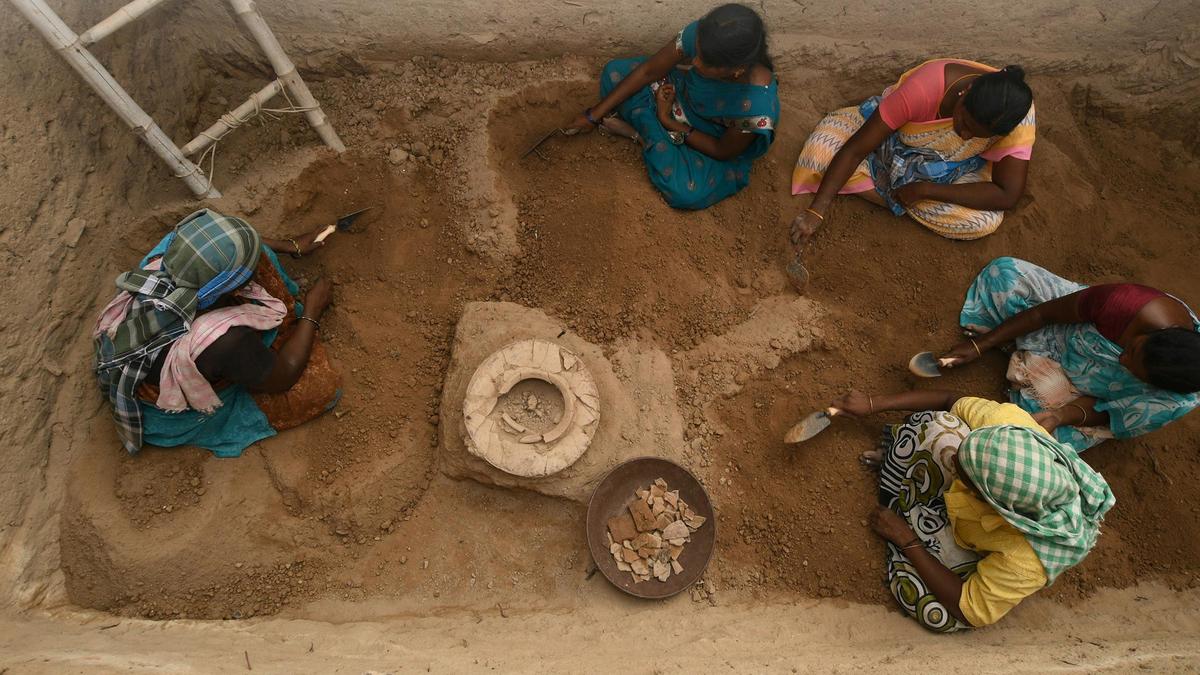
- 21 Mar 2026
In News:
- The Archaeological Survey of India (ASI), under the provisions of the Ancient Monuments and Archaeological Sites and Remains Rules, 1959, has approved excavations at eight significant archaeological sites in Tamil Nadu.
- These excavations are expected to provide a continuous cultural sequence from the Iron Age to early historic urbanisation, offering crucial insights into South India’s socio-economic evolution and its linkages with global trade networks.
Significance of the Excavation Initiative
The identified sites collectively represent:
- Transition from Iron Age societies to urban settlements
- Emergence of early Tamil civilisation and literacy (Tamil-Brahmi )
- Integration of South India into Indian Ocean and trans-regional trade networks
This initiative may help bridge historical gaps between indigenous urbanisation processes and external commercial interactions, including links with the Mediterranean and Southeast Asia.
Key Archaeological Sites and Their Importance
Urban and Cultural Centres
- Keeladi: Located in the Vaigai basin, it reveals an advanced urban settlement, with evidence of Tamil-Brahmi , planned habitation, and drainage systems, indicating a literate and organised society.
Burial and Iron Age Sites
- Adichanallur and Karivalamvanthanallur: Prominent burial sites that shed light on mortuary practices, social stratification, and Iron Age material culture.
- Thelunganur: Suggests early iron technology, pointing to technological advancement and early metallurgical knowledge.
Trade and Economic Centres
- Vellalore: Indicates trade links with the Roman Empire, supported by findings such as coins and ornaments.
- Nagapattinam and Pattinamarudur: Associated with Chola-period maritime activity, Buddhist influence, and participation in Indian Ocean trade networks.
- Manikollai: A centre for glass bead production, connected to long-distance trade with Southeast Asia.
Scientific Methods in Archaeology
The excavation process incorporates advanced scientific techniques:
DNA Analysis (Ancient DNA Studies)
- Helps trace genetic lineage, migration patterns, and ancestry
- Enables reconstruction of population history and biological relationships
Optically Stimulated Luminescence (OSL) Dating
- Determines the last exposure of mineral grains to sunlight
- Useful for dating soil layers and artefacts where organic material is absent
Role of the State Government
The Government of Tamil Nadu has demonstrated proactive commitment by allocating ?7 crore in the 2025–26 budget for archaeological research.
The emphasis is on integrating modern scientific tools with traditional excavation methods to ensure more accurate historical reconstruction.
Pradhan Mantri Jan Arogya Yojana
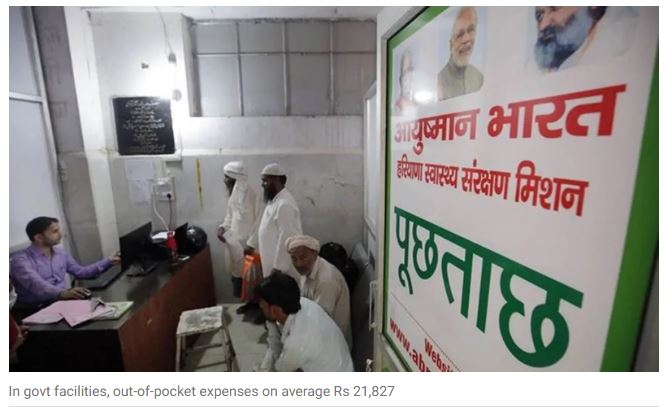
- 21 Mar 2026
In News:
An evaluation study commissioned by NITI Aayog and submitted to its Development Monitoring and Evaluation Office (DMEO) has highlighted that beneficiaries of Pradhan Mantri Jan Arogya Yojana continue to incur significant out-of-pocket expenditure (OOPE), especially in private hospitals. This raises concerns regarding the scheme’s effectiveness in delivering financial protection.
About PM-JAY
- Launched in 2018 under the Ayushman Bharat initiative, PM-JAY is the world’s largest government-funded health assurance programme, aimed at advancing Universal Health Coverage (UHC) and reducing catastrophic health expenditure.
- It is implemented by the National Health Authority in coordination with State Health Agencies.
Salient Features
- Provides ?5 lakh per family per year for secondary and tertiary care hospitalization
- Covers pre- and post-hospitalisation expenses (3 days prior, 15 days after)
- Includes all pre-existing diseases from Day 1
- Based on SECC 2011 criteria, with no cap on family size, age, or gender
- Ensures cashless, paperless treatment and national portability across empanelled hospitals
- Expanded in 2024 to include all citizens aged 70 (Ayushman Vay Vandana Card) and frontline workers
The scheme follows a cost-sharing model between Centre and States (60:40; 90:10 for special category states).
Key Findings of the Evaluation Study
The study reveals structural gaps in financial protection:
Persistent Out-of-Pocket Expenditure
- Average OOPE in private hospitals: ~?53,965 per hospitalization
- Average OOPE in public hospitals: ~?21,827
- Private care costs are more than twice that of public facilities
Limited Cashless Access
- Only 35% beneficiaries experienced fully cashless treatment
- Around 65% incurred direct expenditure, contradicting the scheme’s core promise
Marginal Financial Relief
- Average OOPE under PM-JAY: ~?34,790
- Uninsured patients: ~?38,084
- Indicates limited reduction in financial burden
Major Cost Drivers
- Medicines and diagnostics
- Transportation (explicitly not covered under the scheme)
Achievements of PM-JAY
Despite challenges, PM-JAY has significantly expanded healthcare access:
- 42 crore Ayushman Cards issued
- ~11 crore hospital admissions recorded by 2025
- Improved healthcare access for vulnerable populations
- Promoted gender inclusion, with women accounting for nearly half of beneficiaries
- Strengthened digital health ecosystem through platforms like Ayushman App
Infrastructure Financing in India
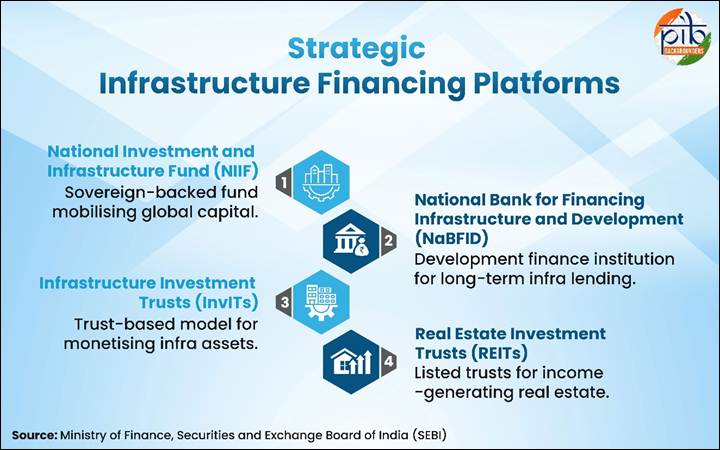
- 21 Mar 2026
In News:
India’s approach to infrastructure financing has evolved from a state-dominated model to a diversified and market-linked system. This transition is critical for sustaining high economic growth and achieving the ambition of becoming a USD 7 trillion economy by 2030.
Changing Nature of Infrastructure Financing
In the past, infrastructure development in India depended largely on government budgetary allocations, which limited expansion due to fiscal constraints. Over time, the financing architecture has broadened to include public-private partnerships, institutional funding mechanisms, and innovative financial instruments.
Despite this diversification, the government continues to act as a key driver, evident from the substantial rise in capital expenditure—from about ?2 lakh crore in 2014–15 to ?12.2 lakh crore in 2026–27 (BE)—thereby stimulating investment and economic activity.
Drivers of the Transformation
A major factor behind this shift has been the creation of dedicated financial institutions. Bodies such as the National Investment and Infrastructure Fund and the National Bank for Financing Infrastructure and Development have facilitated long-term funding and attracted global investors, while the Indian Railway Finance Corporation has strengthened sector-specific financing.
Parallelly, mechanisms like Infrastructure Investment Trusts (InvITs) and Real Estate Investment Trusts (REITs) have enabled monetisation of existing assets, freeing up capital for new investments. The development of green bonds and credit enhancement tools has further deepened financial markets and aligned infrastructure growth with sustainability goals.
Additionally, initiatives such as City Economic Regions (CERs) reflect a shift towards region-based development, especially in emerging urban centres.
Current Status of Infrastructure Development
The impact of these reforms is visible across multiple sectors. India has significantly expanded its road network, alongside improvements in construction speed and connectivity. The railway system has progressed towards complete electrification and introduced modern services like the Vande Bharat Express, with plans for high-speed corridors.
The aviation sector has witnessed rapid growth in airport infrastructure under schemes such as the UDAN Scheme, enhancing regional access. Similarly, port capacity and inland waterways have been strengthened to support trade.
Emerging sectors like data centres and energy storage systems are also gaining prominence, supported by policy incentives and recognition as infrastructure.
Key Challenges
Notwithstanding the progress, several structural issues remain. Infrastructure financing continues to rely heavily on public expenditure, while private investment is constrained by concerns over risk and returns. Land acquisition remains a significant hurdle, often leading to project delays and increased costs.
The banking sector faces a mismatch between short-term liabilities and long-term infrastructure financing needs, limiting its ability to support large projects. Investors also show a preference for operational assets rather than new projects, reducing capital inflow into greenfield development.
Urban financing is another weak area, as municipal bodies often lack the financial strength and credibility to raise resources independently. In addition, inadequate project preparation affects the viability and attractiveness of infrastructure investments.
Way Forward
To sustain momentum, India needs to deepen asset monetisation strategies so that resources from existing projects can be reinvested into new ones. Strengthening risk-sharing mechanisms and improving credit enhancement frameworks will be essential to attract private and institutional investors.
There is also a need to scale up green and sustainable financing instruments, ensuring that infrastructure growth aligns with environmental objectives. Strengthening urban financial systems and promoting reforms in municipal governance can help cities emerge as engines of growth.
Further, improving project planning, transparency, and regulatory certainty will enhance investor confidence. Leveraging platforms such as GIFT City can also facilitate greater integration with global capital markets.
Liberties Clause or Deviation Clause
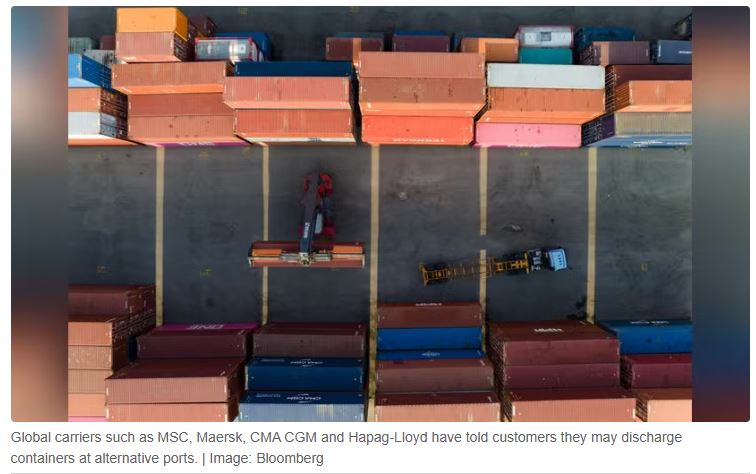
- 21 Mar 2026
In News:
Amid the ongoing tensions in West Asia involving the United States, Israel, and Iran, global shipping companies have increasingly invoked the Liberties Clause in maritime contracts.
This has resulted in cargo rerouting, discharge at alternate ports, increased logistics costs, and disruption of global supply chains, particularly in sensitive maritime zones such as the Strait of Hormuz.
What is the Liberties Clause (Deviation Clause)?
- The Liberties Clause, also known as the Deviation Clause, is a standard contractual provision included in a Bill of Lading—the legal agreement between a shipper and a carrier.
- Core Idea: It grants the shipmaster the legal authority to alter the planned voyage under exceptional circumstances without being held liable for breach of contract.
Historical Evolution
- Originates from 19th-century maritime law
- Developed in an era marked by:
- Piracy threats
- Weather-related risks to wooden ships
- Frequent regional conflicts
- Purpose: To provide operational flexibility and legal protection to shipmasters navigating uncertain conditions
Objectives
- Protect carriers from legal liability when voyages are altered due to external risks
- Ensure continuity of trade under adverse conditions
- Balance commercial obligations with safety imperatives
Key Features
1. Route Alteration
- Permits deviation from the agreed or customary route
- Used to avoid:
- War zones
- Piracy-prone regions
- Environmental hazards
2. Alternative Port Discharge
- Cargo can be offloaded at the nearest safe and operational port
- Contract is deemed fulfilled even if delivery is not at the original destination
3. Cost Transfer Mechanism
- Once discharged:
- Cargo owners bear additional costs including:
- Inland transportation
- Storage and warehousing
- Customs clearance
- Cargo owners bear additional costs including:
4. Risk Reallocation
- Transfers transit risk from carrier to cargo owner
- Carrier liability is limited post-deviation declaration
Why is it Being Invoked Now?
Geopolitical Drivers
- Escalation of conflict in West Asia, particularly involving Iran
- Increased military activity and threats to commercial vessels
Strategic Maritime Vulnerability
- The Strait of Hormuz, through which a significant portion of global oil trade passes, has witnessed:
- Airstrikes
- Heightened naval tensions
Insurance and Risk Constraints
- Marine insurers have:
- Raised premiums
- Imposed stricter war-risk clauses
- Shipping firms invoke the clause to limit financial and operational exposure
Impacts on Global Trade
1. Increased Logistics Costs
- Cargo owners face additional costs running into thousands of dollars per container
- Unexpected financial burden disrupts trade planning
2. Supply Chain Disruptions
- Nearly 90% of global trade is seaborne
- Rerouting causes:
- Delays in delivery
- Inventory mismatches
- Production slowdowns
3. Inflationary Pressures
- Increased shipping and handling costs contribute to:
- Higher commodity prices
- Global inflationary trends
4. Contractual and Legal Implications
- Highlights the importance of:
- Risk-sharing clauses in international trade contracts
- Legal awareness among exporters/importers
Suraksha Sankalp Karyashala
- 21 Mar 2026
In News:
The Ministry of Health & Family Welfare, through the National AIDS Control Organisation (NACO), organised the Suraksha Sankalp Karyashala to enhance the effectiveness of district-level responses to HIV/AIDS, particularly in regions like Delhi and Haryana.
About Suraksha Sankalp Karyashala
Nature of the Initiative
- Suraksha Sankalp Karyashala is a national-level workshop initiative designed to strengthen HIV/AIDS control through decentralised, district-focused planning, supported by data-driven strategies and stakeholder coordination.
Objectives
1. Strengthening the HIV Care Continuum
- Improve early diagnosis and testing coverage
- Ensure timely linkage to treatment (ART)
- Achieve sustained viral suppression
2. Accelerating Epidemic Control
- Align with global 95:95:95 (India aims 95:95:99) targets:
- 95% diagnosed
- 95% on treatment
- 99% achieving viral suppression
- Contribute to the goal of ending HIV/AIDS as a public health threat by 2027–2030
Key Features
1. District-Centric Approach
- Focus on 219 priority districts
- Use of granular, real-time data to identify gaps and tailor interventions
2. Whole-of-System Coordination
- Convergence of national, state, and district-level stakeholders
- Inclusion of:
- Health officials
- Programme managers
- Community-based organisations
3. Evidence-Based Planning
- Emphasis on:
- Data analytics
- Monitoring and evaluation
- Outcome-oriented strategies
4. Capacity Building and Knowledge Sharing
- Workshops act as platforms for:
- Sharing best practices
- Addressing implementation challenges
- Enhancing administrative and technical capacity
Approved List of Models and Manufacturers (ALMM) Framework
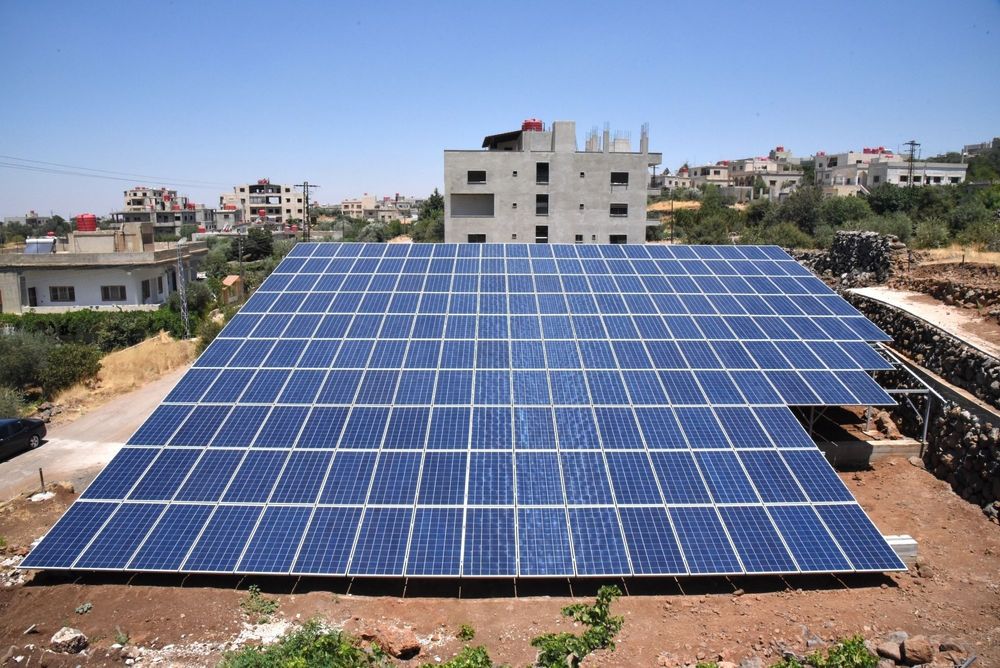
- 20 Mar 2026
In News:
In a significant move to strengthen India’s solar manufacturing ecosystem, the Ministry of New and Renewable Energy (MNRE) has expanded the Approved List of Models and Manufacturers (ALMM) framework to include solar ingots and wafers, effective from June 1, 2028. This marks a shift towards end-to-end domestic value chain integration in the solar sector.
About ALMM Framework
The ALMM framework, introduced in 2019, is a regulatory mechanism aimed at ensuring quality assurance and reliability of solar photovoltaic (PV) components used in India.
- Launched by: MNRE under the ALMM Order, 2019
- Objective:
- Promote Atmanirbhar Bharat in solar manufacturing
- Ensure high-quality solar components
- Reduce dependence on imports, especially from China
Key Features of ALMM
1. Mandatory Certification
- Only ALMM-listed manufacturers and models are eligible for:
- Government-supported solar projects
- Projects under net metering and open access
- Projects awarded through Section 63 of the Electricity Act
2. Tiered Structure
The framework is organised into multiple categories:
- List-I: Solar PV Modules
- List-II: Solar PV Cells
- List-III (New): Solar Ingots and Wafers
The inclusion of upstream components (ingots and wafers) is a major policy shift.
3. Quality Assurance Mechanism
- Mandatory physical inspection of manufacturing facilities
- Conducted by the National Institute of Solar Energy (NISE)
- Verifies production capacity and technological standards
4. Domestic Content Reinforcement
- Functions as a non-tariff barrier supporting Domestic Content Requirement (DCR) policies
- Encourages indigenous manufacturing across the value chain
5. Grandfathering Provisions
- Protects projects already in the pipeline
- Ensures policy stability and minimal disruption for developers
Stockholm Water Prize

- 20 Mar 2026
In News:
The Stockholm Water Prize 2026, widely regarded as the most prestigious global recognition in the field of water, has been awarded to Kaveh Madani. His work highlights the growing importance of sustainable water management in the face of climate change, ecological degradation, and governance challenges.
About the Stockholm Water Prize
The Stockholm Water Prize is an internationally acclaimed award that recognises outstanding contributions to water conservation and management.
- Established: 1991
- Awarding Body: Stockholm Water Foundation in collaboration with the Royal Swedish Academy of Sciences
- Patron: King Carl XVI Gustaf
- Presentation: During World Water Week (August)
Eligibility and Nomination
- Open to individuals or organisations contributing significantly to:
- Water resource conservation
- Environmental sustainability
- Human well-being
- Nomination Process:
- Open nominations (global participation)
- Self-nominations are not permitted
- Close professional or family nominations are disallowed
Profile of the 2026 Laureate: Kaveh Madani
1. Background
- Iranian environmental scientist and policy expert
- Known for his work on water governance, sustainability, and environmental diplomacy
- Has worked across academia, international organisations, and policymaking institutions
2. Key Contributions
- Highlighted the water crisis in Iran and West Asia
- Advocated for integrated water resource management
- Bridged the gap between science, policy, and public communication
- Promoted awareness of unsustainable water practices and ecological mismanagement
3. “Eco-warrior in Exile”
- Faced political challenges and criticism in his home country
- Continued global advocacy on water sustainability despite constraints
- His journey reflects the intersection of environment, governance, and politics
Bharat Audyogik Vikas Yojna (BHAVYA)
- 20 Mar 2026
In News:
In a major push towards manufacturing-led growth, the Union Cabinet has approved the Bharat Audyogik Vikas Yojna (BHAVYA) with an outlay of ?33,660 crore. The scheme aims to develop 100 world-class plug-and-play industrial parks across India, strengthening industrial infrastructure and accelerating the vision of Viksit Bharat and Atmanirbhar Bharat.
About BHAVYA Scheme
BHAVYA is a centrally sponsored industrial infrastructure programme designed to create ready-to-use industrial ecosystems that enable industries to begin operations with minimal delays.
- Nodal Ministry: Department for Promotion of Industry and Internal Trade (DPIIT), Ministry of Commerce & Industry
- Implementing Agency: National Industrial Corridor Development Corporation (NICDC)
- Coverage: All States and Union Territories
- Industrial Park Size: 100–1000 acres
Objectives
- Promote manufacturing-led economic growth
- Enhance ease of doing business through pre-approved infrastructure
- Foster cluster-based industrial development
- Strengthen domestic supply chains
- Generate large-scale employment and attract investments
Key Features of BHAVYA
1. Plug-and-Play Industrial Ecosystem
- Pre-approved land, utilities, and regulatory clearances
- Reduces time from investment intent to production
- Minimises procedural delays and entry barriers
2. Comprehensive Infrastructure Development
- Financial Support:
- Up to ?1 crore per acre for infrastructure
- Up to 25% support for external connectivity
- Integrated Infrastructure Components:
- Core: Roads, drainage, underground utilities, ICT systems
- Value-added: Factory sheds, testing labs, warehousing
- Social: Worker housing and support amenities
3. Ease of Doing Business Reforms
- Single-window clearance systems
- State-led investor-friendly reforms
- Streamlined approvals and reduced regulatory burden
4. Challenge-Based Project Selection
- Competitive selection process
- Focus on reform-oriented and investment-ready proposals
- Ensures quality and efficiency in project implementation
5. Alignment with National Initiatives
- Linked with PM GatiShakti for multimodal connectivity
- Builds on the success of industrial smart cities under NICDC
- Supports Atmanirbhar Bharat and export competitiveness
6. Sustainable and Future-Ready Design
- Integration of green energy solutions
- Underground utility corridors (no-dig model)
- Efficient resource use and reduced operational disruptions
Indian Ocean Ship (IOS) SAGAR Initiative

- 20 Mar 2026
In News:
India has reinforced its maritime diplomacy and regional security engagement with the commencement of the second edition of the Indian Ocean Ship (IOS) SAGAR initiative on 16 March 2026. The initiative reflects India’s evolving role as a net security provider in the Indian Ocean Region (IOR).
About IOS SAGAR Initiative
The Indian Ocean Ship (IOS) SAGAR is a maritime security cooperation programme aimed at enhancing collaboration among Indian Ocean nations.
- It enables naval personnel from friendly foreign countries to train and sail together onboard an Indian Naval Ship.
- It is conducted under the broader vision of Security and Growth for All in the Region (SAGAR).
- It also aligns with the expanded framework of MAHASAGAR (Mutual and Holistic Advancement for Security Across the Regions).
Institutional Context
- The initiative is linked to the Indian Ocean Naval Symposium (IONS), a key multilateral naval cooperation platform.
- India assumed the chairmanship of IONS in February 2026, enhancing its leadership role in regional maritime governance.
- The current edition includes participation from 16 IONS member nations.
Key Features of IOS SAGAR
1. Unique Operational Engagement
- Combines training, joint sailing, and operational exposure
- Promotes interoperability and coordination among partner navies
2. Capacity Building and Training
- Initial phase includes professional training at Indian Naval establishments in Kochi
- Covers:
- Seamanship practices
- Maritime security concepts
- Naval operations
3. Sea Deployment and Joint Operations
- Participants embark on an Indian Naval Ship
- Engage in:
- Joint maritime operations
- Real-time naval exercises
- Shipboard activities
4. Maritime Engagement and Diplomacy
- Includes port visits and interactions with regional navies and agencies
- Facilitates:
- Exchange of best practices
- Strengthening of professional networks
- Greater understanding of shared maritime challenges
Small Hydro Power (SHP) Development Scheme (2026–31)
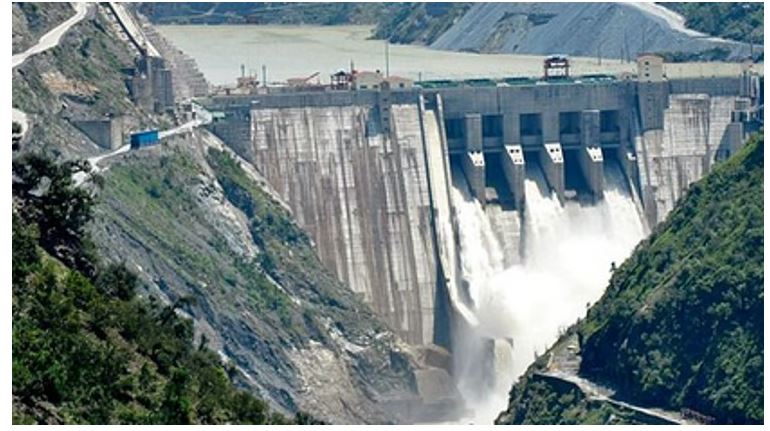
- 20 Mar 2026
In News:
In a significant step towards strengthening India’s renewable energy portfolio, the Union Cabinet has approved the Small Hydro Power (SHP) Development Scheme for FY 2026–27 to FY 2030–31. The scheme aims to harness untapped hydro potential, particularly in remote and hilly regions, while promoting sustainable and decentralized energy generation.
About the SHP Development Scheme
The scheme focuses on the development of small hydro projects with capacities ranging from 1 MW to 25 MW, targeting an aggregate capacity of 1,500 MW across the country.
- Time Period: FY 2026–27 to FY 2030–31
- Total Outlay: ?2,584.60 crore
- Target Investment Mobilisation: ~?15,000 crore
- Focus Areas: Hilly regions, North-Eastern states, and border districts
Key Features of the Scheme
1. Differential Central Financial Assistance (CFA)
- North-Eastern & Border Areas:
- ?3.6 crore per MW or 30% of project cost
- Maximum ?30 crore per project
- Other States:
- ?2.4 crore per MW or 20% of project cost
- Maximum ?20 crore per project
This differentiated support reflects regional disparities and aims to unlock hydro potential in geographically challenging areas.
2. Dedicated Funding Allocation
- ?2,532 crore earmarked for project development
- ?30 crore allocated for preparation of Detailed Project Reports (DPRs) for ~200 future projects
This ensures both immediate implementation and a pipeline for long-term sectoral growth.
3. Promotion of Indigenous Manufacturing
- Mandates 100% domestic sourcing of plant and machinery
- Supports the Atmanirbhar Bharat initiative
- Encourages growth of local manufacturing ecosystems in the renewable sector
4. Employment Generation
- Estimated 51 lakh person-days of employment during construction
- Additional long-term employment in operation and maintenance
- Focus on rural and remote job creation
5. Decentralised and Efficient Energy Generation
- SHPs are decentralised, reducing dependence on long transmission lines
- Leads to lower transmission losses and improved grid efficiency
Technological Approach: Run-of-the-River Projects
The scheme emphasises run-of-the-river technology, which:
- Generates power using natural river flow
- Avoids large dams and reservoirs
- Minimises ecological disruption
India’s Vaccination Ecosystem
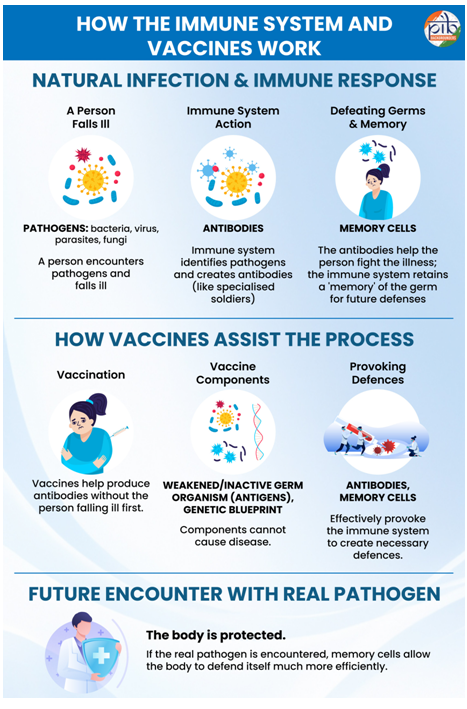
- 19 Mar 2026
In News:
India recently celebrated National Vaccination Day (16 March), highlighting major milestones under the Universal Immunisation Programme (UIP), including achieving 98.4% full immunisation coverage (January 2026) and the rollout of HPV vaccination and an indigenous Td vaccine.
National Vaccination Day and Historical Context
National Vaccination Day is observed annually on 16 March to commemorate the administration of the first dose of the Oral Polio Vaccine (OPV) in 1995 under the Pulse Polio Programme. This initiative played a crucial role in India achieving polio elimination, with the last reported case in 2011 in Howrah, West Bengal, marking a major public health success.
Universal Immunisation Programme (UIP): Overview and Objectives
The Universal Immunisation Programme (UIP), a flagship initiative of the Ministry of Health and Family Welfare, was originally launched as the Expanded Programme on Immunization (EPI) in 1978 and later expanded into UIP in 1985. It aims to provide free vaccination to children, pregnant women, and adolescents against vaccine-preventable diseases. The programme focuses on increasing immunisation coverage, improving service quality, ensuring a robust cold-chain system, and achieving self-reliance in vaccine production.
Scale and Coverage of UIP
UIP is one of the largest immunisation programmes in the world, covering approximately 2.9 crore pregnant women and 2.54 crore newborns annually. It provides protection against 12 vaccine-preventable diseases, with certain vaccines like Japanese Encephalitis being administered only in endemic regions. Over time, the programme has significantly expanded its reach and effectiveness across the country.
Expansion of Vaccination Portfolio
India has continuously strengthened UIP by introducing new vaccines. These include the Inactivated Polio Vaccine (2015) under the global polio endgame strategy, the Rotavirus Vaccine (2016) to reduce diarrhoeal mortality, the Measles-Rubella vaccine (2017) through a nationwide campaign, and the Pneumococcal Conjugate Vaccine (2017) to combat pneumonia. Additionally, the Td vaccine replaced the TT vaccine to address waning immunity against diphtheria among adolescents and adults.
Mission Indradhanush and Coverage Expansion
To further enhance coverage, the government launched Mission Indradhanush in 2014, aiming to achieve over 90% full immunisation by targeting unvaccinated and partially vaccinated populations. This was followed by Intensified Mission Indradhanush (IMI) in 2017, focusing on children below two years and pregnant women in urban slums and low-coverage districts. As a result, full immunisation coverage has increased significantly from 62% in 2015 to 98.4% in 2026.
Institutional and Infrastructure Support
The success of UIP is supported by an extensive healthcare delivery network that includes Primary Health Centres (PHCs), Community Health Centres (CHCs), government hospitals, sub-centres, and Anganwadi centres. Frontline workers such as ASHA workers, Anganwadi workers, and link workers play a vital role in mobilising beneficiaries. Additionally, India has developed one of the largest vaccine cold-chain infrastructures in the world, with over 1.06 lakh ice-lined refrigerators and freezers, supporting more than 1.3 crore immunisation sessions annually.
Digital Transformation in Vaccination
India has integrated digital technologies to improve vaccine delivery and monitoring. The Electronic Vaccine Intelligence Network (eVIN) enables real-time tracking of vaccine stocks and storage conditions. The CoWIN platform (2021) facilitated the administration of over 220 crore COVID-19 vaccine doses, while the U-WIN platform (2024) helps citizens access vaccination services, book appointments, and maintain digital records.
Major Achievements in Immunisation
India has achieved significant milestones in public health, including the eradication of smallpox, elimination of polio (2011), and control of diseases such as yaws and maternal and neonatal tetanus. The proportion of zero-dose children has also declined sharply from 0.11% in 2023 to 0.06% in 2024, indicating improved outreach. These achievements have been recognised globally, including by the UN Inter-Agency Group for Child Mortality Estimation (2024).
India’s Global Leadership in Vaccines and Pharmaceuticals
India has emerged as a global leader in vaccine production, manufacturing nearly 60% of the world’s vaccines. It is the third-largest pharmaceutical producer by volume and supplies medicines to around 200 countries, accounting for approximately 20% of global generic medicine supply. Through the Vaccine Maitri initiative, India supplied over 298 million COVID-19 vaccine doses to nearly 100 countries, strengthening its role in global health diplomacy.
Policy Support and Self-Reliance
To boost domestic manufacturing and reduce import dependence, the government has introduced Production Linked Incentive (PLI) schemes for bulk drugs (2020), medical devices (2020), and pharmaceuticals (2021). These initiatives aim to enhance India’s competitiveness and ensure long-term self-reliance in the healthcare sector.
MXene-Based Catalyst

- 19 Mar 2026
In News:
Researchers at IIT Guwahati have developed a MXene-based catalyst capable of simultaneously enabling efficient hydrogen production from water and functioning as a photocatalyst for desalination. This innovation holds promise for addressing both clean energy and water scarcity challenges.
About MXenes
MXenes are a class of two-dimensional (2D) advanced materials, first discovered in 2011, known for their exceptional physicochemical properties.
Composition and Structure
- Derived from a precursor material known as MAX phase.
- General formula: Mn 1XnTx
- M: Early transition metal
- X: Carbon and/or nitrogen
- T: Surface functional groups (O, OH, F)
- The most widely studied MXene is Titanium Carbide (Ti?C?Tx).
Key Properties of MXenes
- High electrical conductivity
- Excellent mechanical strength
- Good chemical stability
- Hydrophilicity (water-attracting nature)
- Tunable surface chemistry
These properties make MXenes highly versatile for multiple advanced technological applications.
MXene-Based Catalyst: Key Features
- Enables efficient hydrogen generation through water splitting.
- Functions as a photocatalyst for desalination, using light energy to purify water.
- Integrates energy production and water treatment in a single material system.
Applications of MXenes
1. Clean Energy
- Used in hydrogen production, supporting the transition to green hydrogen economy.
- Applicable in energy storage systems such as:
- Lithium-ion batteries
- Supercapacitors
2. Water Treatment and Desalination
- Effective in removing salts and impurities from seawater.
- Useful in wastewater treatment due to high adsorption capacity.
3. Separation and Filtration
- Suitable for industrial filtration processes owing to:
- High surface area
- Flexibility
- Conductivity
Significance
1. Addressing Dual Challenges: Simultaneously tackles energy demand (hydrogen fuel) and water scarcity.
2. Sustainable Technology: Promotes eco-friendly solutions by using light-driven processes and reducing reliance on fossil fuels.
3. Advancement in Material Science: Demonstrates the potential of 2D materials in next-generation technologies.
4. India’s Scientific Progress: Highlights the role of Indian institutions like IIT Guwahati in cutting-edge research and innovation.
Ladakh Magmatic Arc
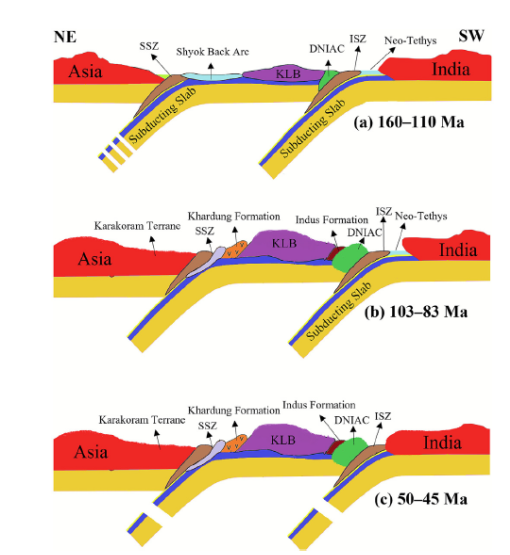
- 19 Mar 2026
In News:
Recent scientific studies have traced the evolution of the Ladakh Magmatic Arc (LMA) in the north-western Himalaya, providing new insights into the geological history of the Indian subcontinent and plate tectonic processes.
About Ladakh Magmatic Arc (LMA)
- The Ladakh Magmatic Arc is a belt of igneous rocks located in the Trans-Himalayan region. It represents a long-extinct volcanic arc system formed due to tectonic activity associated with the closure of the Neo-Tethys Ocean.
- Time Period: Formed between the Jurassic and Eocene periods (~201 million years ago to ~34 million years ago)
Geological Formation Process
Role of Plate Tectonics
- The region was once part of the Neo-Tethys Ocean.
- The Indian Plate moved northwards and subducted beneath the Eurasian Plate.
- This subduction led to melting in the mantle, generating magma.
- The rising magma formed a chain of volcanic features, giving rise to the magmatic arc.
Phases of Evolution of LMA
1. Early Island Arc Formation (160–110 Ma)
- Ladakh initially resembled a chain of volcanic islands.
- Represented by the Dras–Nidar Island Arc Complex (DNIAC).
- Magma was primarily derived from the mantle, with minimal sediment contribution.
2. Crustal Enrichment & Batholith Formation (103–45 Ma)
- Occurred during intensified convergence between the Indian and Eurasian plates.
- Formation of large granitic bodies known as the Ladakh Batholith.
- Increased contribution from:
- Continental crust
- Subducted sediments
- Indicates magma mixing and deep crustal processes.
- This phase coincided with the approaching continental collision.
3. Post-Collisional Magmatism (<45 Ma)
- Continued tectonic activity even after the closure of the Neo-Tethys Ocean.
- Formation of mafic dykes (vertical intrusions of magma).
- Magma sourced from an enriched mantle.
- Suggests lingering magmatic activity post-collision.
Key Geological Features
- Ladakh Batholith: Large granitic intrusions indicating crustal melting.
- Mafic Dykes: Evidence of late-stage magmatic activity.
- DNIAC: Represents early volcanic island arc phase.
Floating LiDAR Buoy System
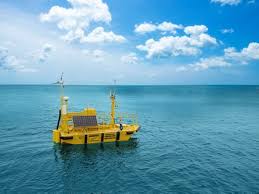
- 19 Mar 2026
In News:
The National Institute of Ocean Technology (NIOT) has successfully tested an indigenously developed Floating LiDAR Buoy System off the coast of Muttom, Tamil Nadu. The development marks a significant step in enhancing India’s ocean-based meteorological and renewable energy assessment capabilities.
About Floating LiDAR Buoy System
The Floating LiDAR Buoy System is a state-of-the-art oceanographic instrument designed to measure wind and atmospheric conditions over the sea.
Key Features
- Combines a floating buoy platform with LiDAR (Light Detection and Ranging) technology.
- Uses laser pulses to capture highly accurate atmospheric data.
- Capable of measuring wind speed, direction, and vertical wind profiles.
- Can collect data up to 300 metres above sea level, surpassing many conventional instruments.
Working Mechanism
- The buoy is deployed on the ocean surface and remains stable under marine conditions.
- It emits laser pulses into the atmosphere.
- These pulses reflect off airborne particles such as aerosols.
- The returned signals are analysed to determine:
- Wind speed
- Wind direction
- Variations at different altitudes
This enables real-time, high-resolution data collection, even in remote offshore regions where traditional meteorological tools face limitations.
Significance
1. Improved Weather Forecasting
- Enhances accuracy of marine weather predictions.
- Supports better storm and cyclone tracking, crucial for coastal safety.
2. Boost to Offshore Wind Energy
- Provides precise wind data necessary for site assessment of offshore wind farms.
- Reduces uncertainty in renewable energy planning and investments.
3. Climate Change Studies
- Helps monitor long-term atmospheric and oceanic interactions.
- Contributes to understanding the impact of climate change on marine systems.
4. Indigenous Technological Advancement
- Reflects India’s progress in developing advanced ocean observation systems.
- Reduces reliance on imported technologies.
About National Institute of Ocean Technology (NIOT)
- It operates under the Ministry of Earth Sciences.
- It focuses on ocean engineering, resource exploration, and marine technology development.
- Plays a key role in initiatives like deep-sea exploration and offshore energy.
Exercise Sea Dragon

- 19 Mar 2026
In News:
The Indian Navy, along with partner nations, is participating in Exercise Sea Dragon 2026.
About Exercise Sea Dragon
Exercise Sea Dragon is an annual multinational anti-submarine warfare (ASW) drill initiated and led by the United States Navy since 2019. It is held at Andersen Air Force Base, Guam, in the Western Pacific.
Key Features
- Focuses on anti-submarine warfare operations, a critical aspect of modern naval strategy.
- Participation involves long-range maritime patrol aircraft, notably the P-8 Poseidon.
- Provides a platform for operational coordination and interoperability among partner nations.
- Enhances real-time information sharing, communication protocols, and tactical alignment.
Participating Countries in 2026
Exercise Sea Dragon 2026 includes participation from:
- United States Navy
- Indian Navy
- Royal Australian Air Force
- Japan Maritime Self-Defence Force
- Royal New Zealand Air Force
This reflects a growing strategic convergence among Indo-Pacific democracies.
Operational Objectives
The exercise aims to:
1. Enhance ASW Capabilities
- Participants progress from simulated tracking to live submarine detection and tracking.
- Improves the ability to counter underwater threats in real-world scenarios.
2. Promote Interoperability
- Enables seamless coordination between forces operating similar platforms like P-8 aircraft.
- Standardises data-sharing systems, communication networks, and tactical procedures.
3. Build Aircrew Proficiency
- Crews are evaluated on speed, accuracy, and mission coordination.
- Structured scenarios test operational readiness under competitive conditions.
Competitive Element: Dragon Belt Award
- Each mission during the exercise is graded.
- The country achieving the highest cumulative score is awarded the prestigious “Dragon Belt”.
- Encourages excellence and operational efficiency among participants.
Strategic Significance
1. Indo-Pacific Security
- Reinforces collective efforts to maintain freedom of navigation and maritime stability.
- Addresses emerging threats, including submarine proliferation in the region.
2. India’s Maritime Role
- Demonstrates India’s growing role as a net security provider in the Indo-Pacific.
- Aligns with India’s SAGAR (Security and Growth for All in the Region) vision.
3. Strengthening Partnerships
- Deepens defence ties among Quad-like partners and other regional actors.
- Enhances multilateral defence cooperation beyond bilateral engagements.
Appropriation Bill 2026

- 18 Mar 2026
In News:
The Indian Parliament has passed the Appropriation Bill 2026, completing a crucial stage in the Union Budget process. The Bill, returned by the Rajya Sabha after discussion, enables the government to legally withdraw funds for its expenditure. This highlights the central role of Parliament in ensuring financial accountability and legislative control over public finances.
What is the Appropriation Bill?
- The Appropriation Bill is a legislative instrument that authorizes the government to withdraw money from the Consolidated Fund of India (CFI) to meet its expenditure for a given financial year.
- Even after the presentation of the Budget, no money can be spent without the passage of this Bill, making it an essential component of fiscal governance.
Constitutional Provisions
The Appropriation Bill derives its authority from the Constitution:
- Article 114: No withdrawal from the Consolidated Fund of India is permitted without parliamentary approval through an Appropriation Act
- Article 115: Provides for Supplementary, Additional, or Excess Grants, requiring further appropriation
- Article 116: Deals with Vote on Account, Vote of Credit, and Exceptional Grants, ensuring continuity of government expenditure
Budgetary Process and Passage of the Bill
The passage of the Appropriation Bill follows a structured legislative process:
- Presentation of Budget (Annual Financial Statement) by the Finance Minister
- General Discussion in both Houses of Parliament
- Voting on Demands for Grants in the Lok Sabha (only House with voting powers on expenditure)
- Introduction of Appropriation Bill to authorize expenditure
- Passage in Lok Sabha
- Transmission to Rajya Sabha, which can only recommend changes and must return it within 14 days
- Presidential Assent, after which it becomes law
Key Features of the Appropriation Bill
1. Covers All Expenditure
- Includes both:
- Voted Expenditure (approved by Lok Sabha)
- Charged Expenditure (non-votable, e.g., salaries of constitutional authorities like the President and judges)
2. No Scope for Amendments
- Parliament cannot propose amendments that:
- Alter the amount of grants
- Change their purpose
3. Classified as a Money Bill
- Under Article 110, it is treated as a Money Bill, limiting the powers of the Rajya Sabha to making recommendations only.
Significance of the Appropriation Bill
1. Ensures Legislative Control over Finances: It upholds the principle that public money can only be spent with parliamentary approval, reinforcing democratic accountability.
2. Legal Basis for Government Expenditure: It provides the legal authority for the executive to implement policies, schemes, and programmes.
3. Promotes Transparency and Fiscal Discipline: The process ensures that government spending is scrutinized, debated, and authorized, enhancing transparency.
4. Strengthens Parliamentary Supremacy: It reinforces the role of the Lok Sabha as the custodian of public finances, reflecting the principle of “no taxation or expenditure without representation.”
Prambanan Temple Restoration
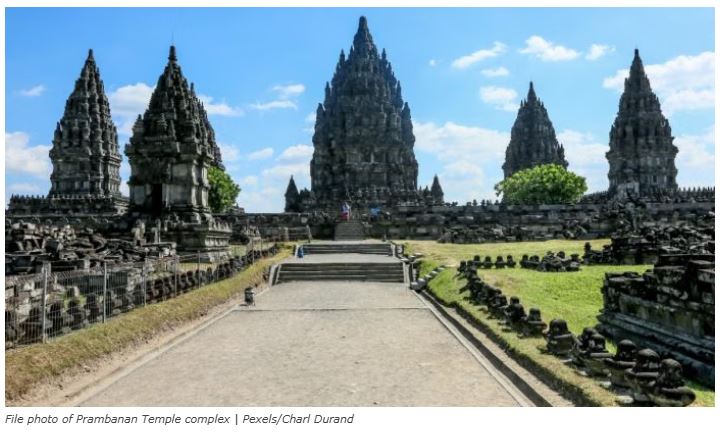
- 18 Mar 2026
In News:
India and Indonesia have recently partnered for the restoration of the Prambanan Temple complex in the Special Region of Yogyakarta, Java. This initiative reflects deep-rooted civilizational ties, cultural diplomacy, and shared heritage between the two nations, while also highlighting India’s growing role in global heritage conservation.
About Prambanan Temple
- The Prambanan Temple is the largest Hindu temple complex in Indonesia, located in Sleman, Yogyakarta (Central Java).
- Built in the 9th century by the Sanjaya dynasty, it represents the flourishing of Hindu culture in Southeast Asia.
- Locally known as Roro Jonggrang (Temple of the Slender Virgin), the complex is dedicated to the Hindu Trimurti—Shiva, Vishnu, and Brahma.
- After being buried and neglected for centuries, it was rediscovered and restored during the 19th century, and later recognised as a UNESCO World Heritage Site in 1991.
Architectural Features
Prambanan reflects a remarkable fusion of indigenous Javanese and South Indian (Pallava) architectural styles, showcasing cultural exchange across regions.
- The complex comprises 240 temples, arranged in concentric layouts
- The central compound includes eight main and eight minor temples built on an elevated platform
- The Shiva Temple, standing at 47 metres, is the tallest and most prominent structure
- Other major temples are dedicated to Brahma and Vishnu
- The walls are adorned with intricate carvings depicting the Ramayana and other Hindu epics, reflecting advanced craftsmanship
Interestingly, while primarily a Hindu complex, the surrounding area also contains Buddhist shrines, indicating religious coexistence and syncretism in ancient Java.
India China Trade Deficit
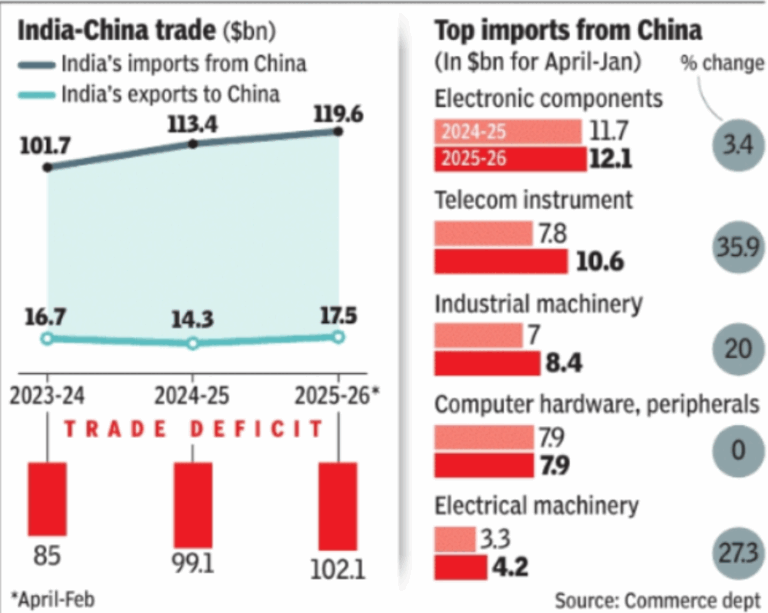
- 18 Mar 2026
In News:
India’s trade deficit with China has crossed a historic threshold, reaching approximately $102 billion during April–February FY2025–26. This marks the first time the deficit has exceeded $100 billion, underscoring deep structural imbalances in bilateral trade and raising concerns about economic resilience and strategic dependence.
Understanding Trade Deficit
- A trade deficit occurs when the value of a country’s imports exceeds its exports over a given period.
- In the India–China context, the imbalance is driven by high-value imports from China vis-à-vis relatively low-value Indian exports.
- India imports critical goods such as electronic components, telecom equipment, machinery, and pharmaceutical APIs, while exporting petroleum products, copper, and limited electronic goods, resulting in a widening gap.
Key Features of India–China Trade Imbalance
1. Persistent Import Dependence: India heavily relies on China for intermediate and capital goods that feed into domestic industries. Sectors like electronics, pharmaceuticals (APIs), renewable energy equipment, and heavy machinery depend significantly on Chinese imports.
2. Sectoral Imbalance: Imports from China are concentrated in high-value, technology-intensive goods, whereas India’s exports are largely low-value or resource-based products. This structural asymmetry limits India’s ability to narrow the deficit.
3. Market Access Asymmetry: Indian exporters face non-tariff barriers, stringent quality standards, and regulatory hurdles in China. This restricts access for Indian goods, particularly in sectors like agriculture, pharmaceuticals, and IT-enabled services.
Implications of the Rising Deficit
1. Pressure on Current Account: A large and persistent trade deficit contributes to the Current Account Deficit (CAD), impacting foreign exchange reserves and macroeconomic stability.
2. Strategic and Economic Vulnerability: Dependence on Chinese imports in critical sectors creates supply chain risks, especially during geopolitical tensions or disruptions such as pandemics.
3. Impact on Domestic Manufacturing: Cheap imports can undermine domestic industries, particularly MSMEs, affecting employment and industrial competitiveness.
Underlying Causes
- Cost competitiveness of Chinese manufacturing due to economies of scale
- Inadequate domestic manufacturing capacity in high-tech sectors
- Limited diversification of export basket
- Global value chain integration favouring China
Government Measures and Policy Response
- Production Linked Incentive (PLI) Schemes to boost domestic manufacturing in electronics, pharmaceuticals, and solar equipment
- Atmanirbhar Bharat initiative to reduce import dependence
- Import diversification strategies targeting alternative partners like Vietnam, South Korea, and the EU
- Quality control orders and standards to regulate imports
NMDC Limited and India’s Iron Ore Sector
- 18 Mar 2026
In News:
India’s mining sector achieved a significant milestone as NMDC Limited became the first company in the country to produce 50 million tonnes (MT) of iron ore in a single financial year. This achievement reflects the growing efficiency, mechanisation, and strategic importance of India’s mineral sector in supporting industrial growth and infrastructure development.
About NMDC Limited
- NMDC Limited (formerly National Mineral Development Corporation) is a Central Public Sector Enterprise (CPSE) established in 1958 under the Ministry of Steel.
- Headquartered in Hyderabad, it has evolved into India’s largest producer and exporter of iron ore.
- The company operates major mechanised iron ore mines in Chhattisgarh and Karnataka, contributing over 45 MT annually. Beyond iron ore, NMDC is engaged in the exploration of a diverse range of minerals including copper, limestone, dolomite, gypsum, bentonite, magnesite, diamond, tin, tungsten, graphite, and beach sands.
- It also operates India’s only mechanised diamond mine at Panna (Madhya Pradesh). Recognising its strategic and financial importance, NMDC was granted Navratna status in 2008, providing greater operational and financial autonomy.
Significance of the 50 MT Milestone
1. Boost to Industrial Growth: Iron ore is a critical raw material for the steel industry, which is the backbone of infrastructure, construction, and manufacturing. NMDC’s record production strengthens domestic supply, reducing dependence on imports and supporting initiatives like Make in India.
2. Enhanced Mining Efficiency: The achievement reflects improved mechanisation, technological adoption, and operational efficiency in India’s mining sector. It signals a transition towards large-scale, modernised mining practices.
3. Contribution to Economic Development: Higher production translates into:
- Increased government revenue through royalties and taxes
- Greater foreign exchange earnings via exports
- Employment generation in mining regions
4. Strategic Resource Security: With rising global demand for steel, ensuring a stable supply of iron ore is essential for economic resilience and industrial competitiveness.
Role of NMDC in India’s Mining Sector
NMDC plays a pivotal role as:
- The largest iron ore producer in India
- A key contributor to raw material security for steel plants
- A driver of regional development, particularly in mineral-rich but underdeveloped areas
Its diversified mineral portfolio also positions it as an important player in strategic and critical mineral exploration, which is vital for future technologies and energy transitions.
Safe Disposal of Unused Medicines
- 18 Mar 2026
In News:
The United Nations Environment Programme (UNEP) in its 2026 report “Safe Disposal of Unused Medicines” highlights the growing environmental and public health crisis posed by pharmaceutical waste. With rising drug consumption globally, improper disposal practices are contributing to ecological degradation and antimicrobial resistance (AMR), necessitating a comprehensive, multisectoral response.
Key Features of the UNEP Report
- The report adopts a One Health approach, recognizing the interconnectedness of human, animal, and environmental health. It proposes an integrated framework that combines waste prevention, safe disposal mechanisms, legal regulations, and public awareness across sectors such as healthcare, agriculture, and households.
- A major emphasis is placed on waste prevention as the most effective strategy, alongside the development of medicine take-back systems and strengthening governance structures.
Major Findings
1. Environmental and Health Risks
Improper disposal of medicines—through flushing, dumping, or burning—introduces pharmaceutical residues into ecosystems. This leads to:
- Antimicrobial Resistance (AMR): Identified as a major driver, with AMR directly causing 1.27 million deaths globally (2019)
- Endocrine disruption and toxicity affecting aquatic life and biodiversity
- Persistent contamination due to the inability of conventional wastewater treatment plants to remove pharmaceutical compounds completely
2. Scale of the Problem
- Up to 50% of household medicines become waste globally
- Unused medicines constitute about 3% of hazardous healthcare waste
- The unused medicine management market is projected to reach US$2.54 billion by 2032, reflecting rising healthcare consumption
3. Inefficiencies and Opportunities
- Prevention potential: Countries like the Netherlands show that 40% of medicine waste can be avoided
- Redistribution scope: Nearly 19% of unused medicines could be safely reused under strict quality conditions
- Over-preion, bulk packaging, and lack of awareness contribute significantly to wastage
Methods of Safe Disposal
The report outlines scientifically approved disposal methods:
- High-temperature incineration (800–1200°C): Most effective for hazardous pharmaceutical waste
- Waste immobilization: Encapsulation or inertization to prevent chemical leakage
- Engineered landfills: Secure containment systems for residual waste
- Co-processing: Use of cement kilns or industrial furnaces to destroy pharmaceutical compounds
Key Challenges
1. Lack of Awareness: A significant proportion of people are unaware of proper disposal methods. For instance, studies show over 50% of respondents in some countries lack knowledge of associated risks.
2. Infrastructure Gaps
- Rural and remote areas lack incineration and waste treatment facilities
- Limited access to organized collection systems hinders safe disposal
3. Weak Regulatory Frameworks
- Many countries lack mandatory take-back policies
- Fragmented governance leads to inconsistent implementation (e.g., reliance on voluntary systems in some developed countries)
4. Financial Constraints: Advanced treatment technologies such as advanced oxidation processes are effective but expensive, especially for developing nations.
5. Emergency and Humanitarian Risks: During crises, excess or mismatched drug donations lead to accumulation of expired medicines, increasing disposal burdens.
UNEP Recommendations
1. Prioritising Waste Prevention
- Improve WASH (Water, Sanitation, and Hygiene), vaccination, and disease prevention
- Promote rational drug use and better diagnostics
2. Establishing Take-Back Systems
- Implement national-level collection programmes for households, pharmacies, and farms
- Ensure safe channels for returning unused medicines
3. Strengthening Legal Frameworks
- Introduce Extended Producer Responsibility (EPR) to make pharmaceutical companies responsible for post-consumer waste
- Develop binding regulations for safe disposal
4. Promoting Rational Use of Medicines
- Encourage unit-dose packaging
- Reduce over-preion and patient stockpiling
5. Enhancing Monitoring and Awareness
- Use digital tracking systems to monitor medicine usage and disposal
- Conduct public awareness campaigns to change consumer behavior
Megamalai Wildlife Sanctuary
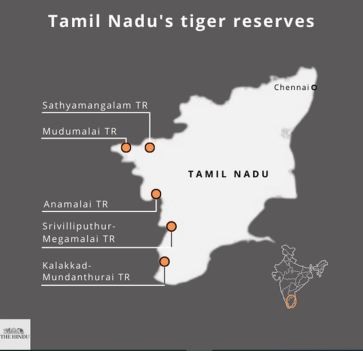
- 17 Mar 2026
In News:
The Zoological Survey of India (ZSI) has documented nine new species, including jumping spiders, damselflies, and mayflies, in the Megamalai Wildlife Sanctuary in Tamil Nadu, highlighting the rich biodiversity of the Western Ghats.
About Megamalai Wildlife Sanctuary
- Also known as the “High Wavy Mountains”
- Located in Tamil Nadu, forming part of the Western Ghats biodiversity hotspot
- Since 2021, it is a core component of the Srivilliputhur–Megamalai Tiger Reserve (SMTR), India’s 51st Tiger Reserve
- Eco-Sensitive Zone (ESZ) notified earlier in 2018
Habitat Diversity
The sanctuary features a mosaic of ecosystems, including:
- Montane Shola forests and grasslands
- Tropical wet evergreen forests
- Plantation landscapes (tea and cardamom) interspersed with natural vegetation
Hydrological Importance
- Acts as a critical watershed for southern Tamil Nadu
- Major rivers:
- Vaigai River (lifeline of the region)
- Suruliyaru and Shanmuganathi (tributaries)
- Several ephemeral streams (Arjuna Nadhi, Mudangiar, Gundar) support local agriculture and water supply
Key Ecological Features
1. Wildlife Corridor
- Forms a continuous ecological corridor connecting:
- Periyar Tiger Reserve (Kerala)
- Grizzled Giant Squirrel Sanctuary (Tamil Nadu)
- Supports movement of elephants and tigers
2. Bio-indicators
- Presence of mayflies and amphibians indicates:
- High water quality
- Stable ecosystems
3. Eco-Sensitive Zone: Buffer zone ranging from 0 to 1.7 km to reduce human-wildlife conflict
New Species Discovered
The ZSI survey recorded 977 species, including nine species new to science:
Key Discoveries
- Jumping Spider: Stenaelurillus megamalai
- Mayfly: Edmundsula meghamalaiensis
- Damselflies:
- Thraulus vellimalaiensis
- Protosticta sholai (endemic)
- Bark Lice & Cockroaches:
- Allacta vellimalai
- Lachesilla vellimalai
Other Notable Fauna
- Megamalai rock gecko (Hemidactylus vanam)
- Historical presence of the Critically Endangered Malabar Civet
Lower Kopili Hydroelectric Project
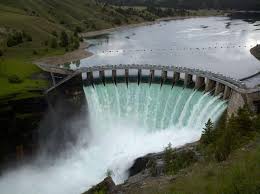
- 17 Mar 2026
In News:
The Prime Minister recently virtually inaugurated the 120 MW Lower Kopili Hydroelectric Project in Assam, marking a significant step in strengthening renewable energy infrastructure in the Northeast.
About the Lower Kopili Hydroelectric Project
- Type: Run-of-the-river hydropower project
- Capacity: 120 MW
- Location:
- West Karbi Anglong and Dima Hasao (North Cachar Hills) Autonomous District Council areas
- Situated in Central Assam
- River Basin: Kopili River
- Implementing Agency: Assam Power Generation Corporation Limited (APGCL)
- Funding: Supported by the Asian Development Bank (ADB) under the Assam Power Sector Investment Program
Key Features
- Environmentally more sustainable than large storage dams due to minimal reservoir requirement
- Designed to harness the natural flow of the river for power generation
About the Kopili River
- Type: Interstate river in Northeast India
- States Covered: Meghalaya and Assam
- Origin: Meghalaya Plateau
- Course:
- Flows through Karbi Anglong and Nagaon districts
- Joins the Brahmaputra River as its largest south-bank tributary in Assam
- Length:
- Total: 256 km
- Shared between Meghalaya–Assam: 78 km
- Within Assam: 178 km
Force Majeure

- 17 Mar 2026
In News:
Amid the escalating Iran–US–Israel conflict (2026), major Gulf energy producers such as Qatar, Kuwait, and Bahrain have invoked the force majeure clause on oil and gas exports due to shipping disruptions and infrastructure attacks.
What is Force Majeure?
Force majeure is a contractual legal provision that allows a party to suspend or terminate obligations without liability when extraordinary events prevent performance.
- Derived from French, meaning “superior force”
- Widely used in international trade, energy contracts, and maritime law
- Applies to both Acts of God (natural disasters) and Acts of Man (war, conflict, pandemics)
Objective
- To protect contracting parties from penalties or legal action
- To ensure fair risk distribution when circumstances are beyond control
- To provide legal clarity during crises
Key Features of Force Majeure
- : The triggering event must be unexpected at the time of contract formation.
- Externality: The cause must arise from external factors, not internal negligence.
- Irresistibility (Impossibility): The event must make performance impossible, not merely difficult or costly.
- Notification Requirement: The affected party must formally inform counterparts immediately (e.g., oil companies like Kuwait Petroleum).
- Duty to Mitigate: Even after invocation, parties must show reasonable efforts to minimize disruption.
Application in the Current Crisis
- Ongoing conflict has led to:
- Disruption of shipping routes (including critical maritime chokepoints)
- Attacks on energy infrastructure
- Gulf exporters have invoked force majeure to:
- Suspend oil and LNG deliveries
- Avoid contractual penalties and liabilities
Drawida vazhania
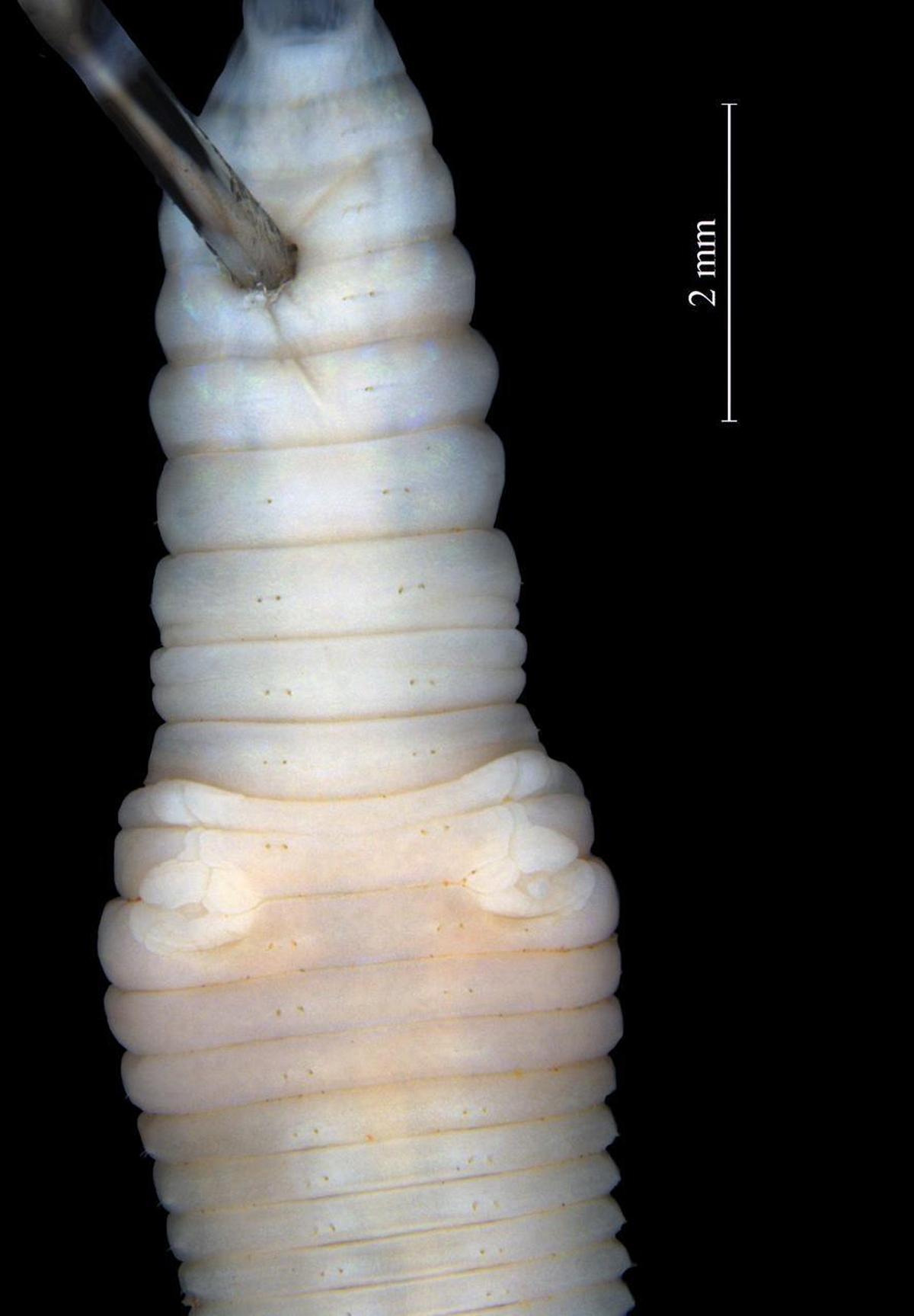
- 17 Mar 2026
In News:
Researchers have discovered a new species of earthworm, Drawida vazhania, from the Vazhani Dam region of the Peechi–Vazhani Wildlife Sanctuary in Kerala’s Thrissur district, highlighting the rich and still unexplored biodiversity of the Western Ghats.
About Drawida vazhania
- It belongs to:
- Genus: Drawida
- Family: Moniligastridae
- Distribution of the Genus: The genus Drawida is naturally distributed across South, Southeast, and East Asia, indicating its biogeographical significance.
Key Morphological Features
- Small body size, classified under the Barwelli species group.
- Distinct characteristics that differentiate it from related species include:
- Grooved male genital field
- Kidney/bean-shaped prostate gland
- Narrow, tubular C-shaped prostatic capsule
- Small sessile atrium on the body wall
These unique anatomical features played a crucial role in identifying it as a new species.
Biodiversity Significance
- With this discovery:
- Total Drawida species in India: 83
- Total Drawida species in the Western Ghats: 55
Importance
- Highlights the Western Ghats as a global biodiversity hotspot.
- Demonstrates that even less conspicuous organisms like earthworms remain underexplored.
- Reinforces the role of soil biodiversity in maintaining ecosystem health.
Ecological Importance of Earthworms
- Known as “ecosystem engineers” due to their role in:
- Soil aeration and nutrient cycling
- Decomposition of organic matter
- Enhancing soil fertility and agricultural productivity
Their diversity reflects the health of terrestrial ecosystems.
Jnanpith Award
- 17 Mar 2026
In News:
Renowned Tamil lyricist and author R. Vairamuthu has been selected for the Jnanpith Award 2025, becoming the third Tamil writer to receive this prestigious honour.
About the Jnanpith Award
The Jnanpith Award is regarded as the highest literary honour in India, recognizing exceptional contributions to Indian literature.
- Institution: Established in 1961 by the Bharatiya Jnanpith, a cultural and literary organization.
- First Awarded: 1965
- First Recipient: Malayalam poet G. Sankara Kurup for Odakkuzhal.
- Objective: To honour writers for their outstanding contribution to literature across Indian languages.
Components of the Award
- Cash prize of ?11 lakh
- Bronze statuette of Vagdevi (Saraswati)
- Citation
Eligibility and Selection Criteria
- Awarded annually to Indian citizens for creative writing.
- Eligible languages include those listed in the Eighth Schedule of the Constitution and English.
- Only living authors are considered.
- A recipient can receive the award only once.
- The same language is not eligible for consideration for the next two years after receiving the award.
- The Selection Board may withhold the award if no candidate meets the required standard.
R. Vairamuthu and Significance of the Award
- R. Vairamuthu is a prominent Tamil poet, lyricist, and novelist known for his contributions to modern Tamil literature and cinema.
- His selection marks:
- Continued recognition of regional language literature
- Strengthening of Tamil literary prominence at the national level
- Reinforcement of India’s linguistic and cultural diversity
Dumpsite Remediation Accelerator Programme (DRAP)

- 16 Mar 2026
In News:
The Government of India has launched the Dumpsite Remediation Accelerator Programme (DRAP) to expedite the remediation of legacy waste dumpsites across urban areas. The initiative aims to eliminate large garbage dumps and reclaim urban land, thereby improving environmental quality and public health.
About Dumpsite Remediation Accelerator Programme (DRAP)
The Dumpsite Remediation Accelerator Programme (DRAP) is a time-bound national initiative designed to fast-track the clearance of legacy waste accumulated in dumpsites across Indian cities.
- Launch: November 2025
- Nodal Ministry: Ministry of Housing and Urban Affairs (MoHUA)
- Implementation Framework: Part of Swachh Bharat Mission – Urban 2.0
The programme adopts a structured and accelerated approach to remove garbage mountains, process old waste, and convert reclaimed land into productive spaces such as parks, infrastructure facilities, and community spaces.
Objectives
The programme aims to:
- Achieve 100% remediation of legacy dumpsites within one year of adoption.
- Accelerate the processing and scientific disposal of legacy waste.
- Prevent the creation of new dumpsites in urban areas.
- Reclaim valuable urban land for public and developmental uses.
- Improve environmental sustainability and public health outcomes.
Key Features of DRAP
1. Lakshya Zero Dumpsites Target: DRAP supports the “Lakshya Zero Dumpsites” goal under Swachh Bharat Mission – Urban 2.0, which seeks to eliminate all dumpsites by September 2026.
2. Focus on High-Impact Dumpsites: The programme prioritises 214 major dumpsites across 202 Urban Local Bodies (ULBs), where nearly 80% of India’s legacy waste is concentrated.
3. Central Financial Assistance: The Union Government provides Central Financial Assistance (CFA) of ?550 per tonne to support the processing and remediation of legacy waste.
4. 5P Implementation Framework: DRAP follows a 5P model to ensure coordinated implementation:
- Political leadership
- Public financing
- Partnerships
- People’s participation
- Project management
5. Partnership-Based Implementation: The programme encourages collaboration with:
- Public Sector Undertakings (PSUs)
- Non-Governmental Organisations (NGOs)
- Technical and infrastructure partners
These stakeholders help in waste processing, recycling, and resource recovery.
6. Technology-Driven Monitoring: To ensure transparency and real-time progress monitoring, the programme uses:
- Digital dashboards
- GPS and RFID-based tracking
- Daily reporting mechanisms
Transgender Persons (Protection of Rights) Amendment Bill, 2026

- 16 Mar 2026
In News:
- The Union Government has introduced the Transgender Persons (Protection of Rights) Amendment Bill, 2026 in the Lok Sabha to modify provisions of the Transgender Persons (Protection of Rights) Act, 2019.
- The proposed amendments seek to redefine the term “transgender person” and alter the existing framework of gender recognition, including changes to the right to self-perceived gender identity.
Background: Transgender Persons (Protection of Rights) Act, 2019
The Transgender Persons (Protection of Rights) Act, 2019 was enacted to prohibit discrimination against transgender persons and ensure their welfare, inclusion, and equal access to opportunities in education, employment, healthcare, and public services.
The law was enacted in response to the landmark Supreme Court judgment in NALSA v. Union of India (2014), which:
- Recognised transgender persons as the “third gender”, and
- Affirmed the right to self-determination of gender identity as part of Article 21 (Right to Life and Personal Liberty).
The 2019 Act also introduced provisions for identity certification, welfare schemes, and protection against discrimination.
Key Provisions of the Amendment Bill, 2026
1. Removal of the Right to Self-Perceived Gender Identity: The Bill proposes the deletion of Section 4(2) of the 2019 Act, which currently guarantees the right of transgender persons to self-identify their gender without medical intervention. This change shifts the framework from self-identification to institutional verification.
2. Redefinition of “Transgender Person”
The amendment proposes a narrower definition that includes:
- Socio-cultural identities: Hijra, Kinner, Aravani, Jogta, Eunuch
- Persons with intersex variations
- Individuals with congenital biological variations in sexual characteristics
However, the revised definition excludes persons identifying solely on the basis of self-perceived gender identity or gender fluidity.
The definition also includes individuals forced to adopt transgender identity through coercive practices, such as mutilation, castration, or forced hormonal procedures.
3. Creation of a Medical Authority
- The Bill introduces a Medical Authority (Medical Board) headed by a Chief Medical Officer (CMO) to examine cases related to gender identity certification.
- This authority will provide recommendations before certification is granted.
4. Changes in Certification Procedure
Under the proposed framework:
- The District Magistrate (DM) will issue a transgender certificate only after reviewing the recommendation of the medical authority.
- The earlier system allowed relatively simpler issuance based on declaration.
5. Revision of Gender Certificate After Surgery: Individuals undergoing Sex Reassignment Surgery (SRS) must apply for a revised gender certificate reflecting the updated gender identity. Earlier, such revisions were optional.
6. Reporting Requirement for Hospitals: Hospitals performing SRS procedures will be required to report such operations to the District Magistrate for documentation and regulatory purposes.
7. Change of Name in Official Records: The amendment provides transgender persons the right to change their first name in official documents, subject to the revised certification criteria.
8. Expanded Offences and Punishments: The Bill strengthens penal provisions with graded punishments including imprisonment and fines up to ?5 lakh for offences such as:
- Denial of access to public places
- Forced labour
- Expulsion from homes
- Other forms of discrimination and abuse
Silverpit Crater

- 16 Mar 2026
In News:
Recent scientific research has confirmed that the Silverpit Crater, located beneath the North Sea, was formed by a massive asteroid impact millions of years ago. The finding resolves a long-standing debate regarding the origin of the structure since its discovery in 2002.
About Silverpit Crater
The Silverpit Crater is a buried impact structure located beneath the seabed of the North Sea, approximately 80 miles (about 130 km) off the coast of Yorkshire in the United Kingdom.
Key Facts
- Depth: Around 700 metres beneath the seabed
- Discovery: Identified in 2002 through seismic surveys during hydrocarbon exploration
- Age of Formation: Estimated to have formed 43–46 million years ago
- Cause: Impact of a high-velocity asteroid or space rock striking the seabed
The crater remained hidden for millions of years due to thick layers of marine sediments covering the impact structure.
Scientific Evidence for Asteroid Impact
- Recent geological analysis has provided strong evidence supporting the asteroid impact hypothesis.
- Researchers identified shocked quartz and feldspar crystals in rock samples obtained from a nearby oil exploration well. These minerals form only under extreme pressure conditions generated by hypervelocity impacts, such as meteorite or asteroid collisions with Earth.
- The presence of these shock-deformed minerals is considered a key diagnostic indicator of impact events, confirming the extraterrestrial origin of the crater.
Geological Features of Silverpit Crater
The Silverpit structure displays characteristics typical of large hypervelocity impact craters.
- Crater Diameter: Approximately 3 kilometres wide
- Concentric Fault Rings: A system of circular faults extending up to 20 kilometres in diameter
- Structure: Multiple concentric rings surrounding a central crater, a feature commonly seen in large impact structures
- Shape: Nearly circular with a central peak, resembling classic meteorite impact craters
These structural features make Silverpit one of the most well-preserved buried impact craters discovered beneath the ocean floor.
Myiophanes kempi
- 16 Mar 2026
In News:
Researchers have recently rediscovered the rare thread-legged assassin bug Myiophanes kempi in limestone caves of the Andaman Islands, nearly 100 years after it was last documented. The rediscovery highlights the rich but poorly explored biodiversity of subterranean cave ecosystems in India.
About Myiophanes kempi
Myiophanes kempi is a rare insect species belonging to the assassin bug family Reduviidae. Assassin bugs are known for their predatory behaviour and specialised hunting adaptations.
Key Features
- Taxonomic Group: Assassin bug (Family Reduviidae)
- Body Structure: Slender-bodied with elongated legs, characteristic of thread-legged bugs
- First Described: 1924 by British entomologist William Edward China
- Earlier Record: Originally reported from Siju Cave in Meghalaya
- Recent Rediscovery: Limestone caves in the Andaman Islands
Biological Characteristics
Myiophanes kempi is specially adapted to subterranean cave ecosystems, where environmental conditions are unique.
- Habitat: Lives exclusively in dark cave environments
- Lifestyle: Completes its entire life cycle in darkness
- Feeding Behaviour:
- A specialised predator within cave ecosystems
- Uses long raptorial forelegs to capture prey
- Feeds mainly on small arthropods found inside caves
These adaptations enable the species to survive in low-light, nutrient-limited environments typical of underground habitats.
Ecological Significance
The rediscovery of Myiophanes kempi is important for several reasons:
- Biodiversity Documentation: It highlights the rich but underexplored biodiversity of cave ecosystems, particularly in island and karst landscapes.
- Indicator of Subterranean Ecosystem Health: Predatory insects like assassin bugs play an important role in maintaining ecological balance in cave food webs.
- Conservation Importance: Rediscovering species thought to be rare or missing helps guide future conservation and ecological research.
Key Facts About Siju Cave
Although the species was recently rediscovered in the Andaman Islands, it was originally described from Siju Cave in Meghalaya.
- Location: Garo Hills, Meghalaya
- Other Names: Dobakkol or Bat Cave
- Type: Limestone cave system
- Length: Extends for about 4.7 km, making it one of India’s longest limestone caves
- Nearby River: Located near the Simsang River
- Features: Known for stalactites, stalagmites, underground streams, and rich cave biodiversity
Osbeckia zubeengargiana

- 16 Mar 2026
In News:
Researchers from Gauhati University have discovered a new flowering plant species named Osbeckia zubeengargiana in the grasslands of Manas National Park in Assam. The species has been named in honour of celebrated Assamese singer Zubeen Garg, recognising his contribution to regional culture and advocacy for nature conservation.
About Osbeckia zubeengargiana
Osbeckia zubeengargiana is a newly identified plant species belonging to the Melastomataceae family, a diverse group of flowering shrubs widely distributed in tropical and subtropical regions.
Key Characteristics
- Plant Type: Perennial erect shrub
- Height: Can grow up to 3.5 metres tall
- Flowers: Characterised by pink to purple tetramerous (four-petalled) flowers
- Habitat: Thrives in moist grassland ecosystems
- Flowering and Fruiting Period: Mid-September to January
The plant was discovered in the grasslands of Manas National Park in Baksa district, Assam, where researchers observed a substantial population of the species.
Discovery and Scientific Identification
The species was identified during floristic explorations conducted between 2021 and 2025 as part of doctoral research on the Melastomataceae family in Assam. The research was carried out by scientists Barnali Das, Prashob Pulpra, and Namita Nath of Gauhati University.
Botanical analysis revealed that the plant is closely related to Osbeckia rostrata but differs in several morphological features such as:
- leaf structure,
- arrangement of flowers,
- shape of the hypanthium (floral structure), and
- seed size.
These distinguishing characteristics confirmed it as a new species within the genus Osbeckia.
Ecological Significance
The species grows in association with several grassland plants such as:
- Chrysopogon zizanioides,
- Maesa indica,
- Bombax ceiba, and
- Dillenia pentagyna.
Its presence contributes to the floral diversity of the grassland ecosystems of Manas National Park, which is already recognised as a biodiversity hotspot in the Eastern Himalayan region.
Digital Twin Initiative at V.O. Chidambaranar Port
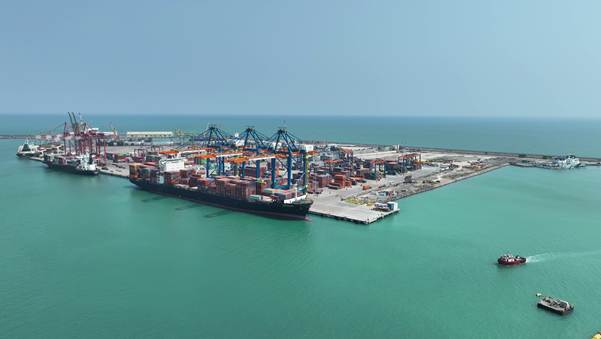
- 15 Mar 2026
In News:
The V.O. Chidambaranar Port has become the first port in India to launch a Digital Twin initiative for port management. The project aligns with national maritime strategies such as the Maritime India Vision 2030 and the Amrit Kaal Vision 2047, aiming to modernise port operations through advanced digital technologies.
What is a Digital Twin?
A Digital Twin is a real-time virtual replica of a physical system that continuously receives data from sensors and monitoring systems to simulate and optimise operations.
At the port, the platform integrates technologies such as:
- Internet of Things (IoT) sensors
- GPS tracking
- LiDAR mapping
- Drone-based imaging
- CCTV monitoring systems
These technologies collectively create a dynamic digital model of the port’s infrastructure, assets, and maritime ecosystem.
Key Technological Features
The Digital Twin platform enables advanced operational management through:
1. Real-Time Monitoring
- Tracks berth occupancy
- Monitors vessel movements
- Analyses crane utilisation
- Tracks yard capacity and cargo flow
2. Predictive Maintenance
- Uses AI-based analytics to monitor equipment health.
- Predicts failures in cargo handling machinery, reducing downtime and improving reliability.
3. Data-Driven Decision Making
- Provides integrated insights into port operations.
- Enables better planning of logistics and maritime traffic.
Expected Outcomes and Benefits
- Reduced vessel turnaround time: Expected reduction of up to 25%.
- Improved equipment availability: Predictive maintenance enhances operational reliability.
- Enhanced safety: Real-time alerts help prevent operational hazards.
- Energy optimisation: Efficient operations reduce energy consumption and carbon emissions.
- Operational efficiency: Streamlined cargo handling and port logistics.
About V.O. Chidambaranar Port
- Overview: The V.O. Chidambaranar Port (formerly Tuticorin Port) is one of India’s 13 major ports and functions as an artificial all-weather deep-sea port on the Coromandel Coast.
Historical Background
- Declared a major port in July 1974.
- Renamed in 2011 in honour of V. O. Chidambaram Pillai, who founded the Swadeshi Steam Navigation Company to challenge British maritime dominance.
Strategic Location
The port is located at Thoothukudi on the Gulf of Mannar, close to major East–West international shipping routes, providing a strategic advantage for global maritime trade.
Operational Significance
- Second-largest port in Tamil Nadu after Chennai Port.
- Third-largest container terminal in India.
- Serves as a major gateway for trade with Europe, the Mediterranean, and the United States.
Major Cargo Handled
- Containers
- Coal
- Salt
- Fertilisers
- Other bulk and general cargo
Significance for India’s Maritime Sector
- Promotes smart port infrastructure and digitalisation.
- Enhances efficiency and competitiveness of Indian ports.
- Supports green and sustainable port operations.
- Contributes to India’s ambition of becoming a global maritime logistics hub.
SC Clarifies OBC Creamy Layer Criteria
- 15 Mar 2026
In News:
The Supreme Court of India has ruled that parental income alone cannot determine the “creamy layer” status of candidates belonging to the Other Backward Classes (OBCs) in civil services examinations. The judgment clarifies long-standing confusion in the implementation of reservation rules and emphasises that the creamy layer principle is primarily status-based rather than purely income-based.
Background of the Issue
The controversy arose due to conflicting government guidelines issued by the Department of Personnel and Training (DoPT).
- 1993 DoPT Office Memorandum (OM): Stated that income from salaries and agricultural land should not be included in the income/wealth test used to determine creamy layer status.
- 2004 DoPT Clarificatory Letter: Directed that salary income of employees working in Public Sector Undertakings (PSUs) and the private sector should be counted while determining the creamy layer.
This created a situation where:
- Children of government employees could retain OBC reservation based on the status of their parent’s post, even if salaries were high.
- Children of PSU or private sector employees could lose reservation benefits solely because their parental income crossed the prescribed threshold.
Key Observations of the Supreme Court
1. Creamy Layer Determination Must Be Status-Based
The Court held that creamy layer identification should focus on social and occupational status, not merely income.
Therefore, factors such as:
- Parent’s employment category (Group A, B, C, or D)
- Position and authority in the occupational hierarchy
should be considered along with income.
2. Quashing the 2004 Clarification
The Court set aside the 2004 DoPT clarification, stating that it created inconsistencies in applying reservation rules and contradicted the earlier 1993 guidelines.
3. Violation of Equality Principles
The Court held that the government’s earlier approach resulted in “hostile discrimination.”
- Children of lower-level government employees could still benefit from OBC reservation due to the status-based test.
- However, children of PSU or private sector employees with similar socio-economic positions were excluded solely due to salary levels.
This unequal treatment violated Articles 14, 15, and 16 of the Constitution, which guarantee equality before law and equal opportunity in public employment.
4. Relief for Affected Candidates
The judgment may expand eligibility for OBC reservation, particularly benefiting children of PSU employees, public sector bank employees, and private sector workers who were previously excluded due to income-based calculations.
The Court also directed the government to create supernumerary posts if required to accommodate candidates who were wrongly denied reservation benefits earlier.
Concept of the Creamy Layer
- The idea of excluding the more advanced sections among OBCs from reservation benefits was established in the landmark Indra Sawhney vs Union of India case.
- Objective: To ensure that reservation benefits reach socially and educationally backward sections, rather than the relatively advanced members within OBC communities.
Existing Criteria for Creamy Layer
- Government Employees
- Children of Group A officers are automatically considered part of the creamy layer.
- Children of officers promoted to Group A before the age of 40 are also excluded.
- Children of two Group B officers fall under the creamy layer.
- Non-Government Occupations: For those employed in the private sector or other professions, the income threshold for creamy layer is ?8 lakh per annum (since 2017).
Significance of the Judgment
- Clarifies reservation policy: Removes ambiguity in determining creamy layer status.
- Ensures equality: Prevents discriminatory treatment between government employees and those in PSUs or the private sector.
- Strengthens constitutional principles: Reinforces the guarantees of Articles 14, 15, and 16.
- Promotes fair access to reservations: Ensures benefits reach genuinely disadvantaged groups.
Supreme Court on No-Fault Compensation for Covid-19 Vaccine Adverse Effects

- 15 Mar 2026
In News:
The Supreme Court of India has directed the Union Government to formulate a “no-fault liability compensation policy” for individuals who suffered serious adverse effects or deaths following Covid-19 vaccination during India’s nationwide immunisation programme. The Court held that victims or their families should receive compensation without having to prove negligence by the State or vaccine manufacturers.
Key Observations of the Supreme Court
1. Principle of No-Fault Liability
The Court invoked the no-fault liability principle, which allows compensation to victims without establishing fault or wrongdoing.
- The principle already exists in Indian law in areas such as motor vehicle accident compensation.
- Similar vaccine injury compensation schemes operate in countries such as Australia, the United Kingdom, and Japan.
This framework ensures speedy and equitable relief for victims of rare but serious vaccine side effects.
2. Rejection of Individual Litigation
The Union Government had argued that affected families could approach civil courts or consumer courts for damages against manufacturers or the State.
However, the Court rejected this argument, stating that:
- Individual litigation would lead to multiple legal battles.
- It could produce inconsistent outcomes and unequal access to justice.
- Such a situation may violate the Right to Equality under Article 14 of the Constitution.
3. State’s Positive Obligation
- Invoking Article 21 (Right to Life and Health), the Court emphasised that the State must act as an active guardian of citizens’ welfare and dignity.
- Since the vaccination drive was a State-led public health intervention, the government has a positive obligation to support those who suffer serious outcomes, even if such events are extremely rare.
- For instance, certain blood-clotting disorders associated with vaccines were reported at an estimated rate of about 0.001 per one lakh doses in India.
4. Compensation Beyond Surveillance
The Court observed that monitoring adverse events alone is insufficient. India already has a mechanism for investigating vaccine side effects through Adverse Events Following Immunisation (AEFI) committees.
The Court ruled that:
- These committees are adequate for medical assessment.
- However, the State’s responsibility cannot end with surveillance and investigation; it must extend to fair financial compensation.
5. Clarification on Liability
The Court clarified that creating a compensation policy does not amount to an admission of legal liability by the Union Government or vaccine manufacturers. Rather, it is a welfare-oriented public health measure.
Background: Earlier Judicial Interventions
1. Gaurav Kumar Bansal vs Union of India (2021)
The Supreme Court directed the National Disaster Management Authority (NDMA) to recommend guidelines for ex-gratia assistance for Covid-19 deaths.
Following this:
- NDMA fixed ?50,000 compensation per Covid-19 death.
- Payment was to be made by states through the State Disaster Response Fund (SDRF).
- A simplified procedure recognised deaths occurring within 30 days of a positive test as Covid-19 deaths.
- District-level grievance redressal committees were established to resolve disputes related to death certificates.
2. Jacob Puliyel vs Union of India (2022)
In this case, the Supreme Court:
- Upheld the validity of the Covid-19 vaccine approval process and the government’s AEFI monitoring system.
- Recognised bodily autonomy under Article 21, stating that no individual can be forcibly vaccinated.
Significance of the Judgment
- Strengthens public health governance: Encourages trust in vaccination programmes by ensuring protection for rare adverse outcomes.
- Ensures equitable relief: Avoids lengthy and costly litigation for affected families.
- Balances public interest and individual rights: Recognises both the importance of mass vaccination and the rights of individuals who suffer harm.
- Aligns India with global practices: Many countries already operate vaccine injury compensation programmes.
Discovery of New Lichen Moth Species in the Eastern Himalayas

- 15 Mar 2026
In News:
Scientists from the Zoological Survey of India (ZSI) have discovered two new species of lichen moths—Caulocera hollowayi and Asura buxa—in the Eastern Himalayan biodiversity hotspot. The discovery highlights the region’s rich but still underexplored biodiversity and the importance of taxonomic research in conservation.
About the Discovery
Researchers from ZSI identified two previously unknown moth species belonging to the order Lepidoptera, which includes butterflies and moths.
The species were identified through detailed morphological examination, including:
- Wing pattern and coloration analysis
- Chaetotaxy (arrangement of body scales and bristles)
- Microscopic study of reproductive structures, a crucial feature in insect taxonomy
Such techniques help scientists differentiate closely related species and confirm whether a specimen represents a new species.
Newly Discovered Species
1. Caulocera hollowayi
- Genus: Caulocera (lichen moth group)
- Location of discovery: Golitar region, Sikkim
- Key Characteristics:
- Distinctive wing colour patterns and band structures
- Unique reproductive structures visible under microscopic analysis
- Identified using detailed morphological traits and chaetotaxy
2. Asura buxa
- Genus: Asura (lichen moth group)
- Location of discovery: Panijhora region, West Bengal in the Eastern Himalayas
- Key Characteristics:
- Unique wing markings and coloration
- Distinct genital morphology, an important taxonomic feature in Lepidoptera
- Specific body scale arrangements confirming its status as a new species
About Lichen Moths
Lichen moths belong to a group of moths known for their association with lichens and mosses found in forest ecosystems.
Ecological Role:
- Act as bioindicators of ecosystem health
- Participate in nutrient cycling in forest habitats
- Help scientists understand species interactions in fragile mountain ecosystems
Importance of the Discovery
- Biodiversity documentation: Expands the scientific record of India’s insect diversity.
- Himalayan ecosystem research: Provides new insights into species adaptation in mountain environments.
- Conservation significance: Highlights the ecological importance of the Eastern Himalayas, one of the world’s major biodiversity hotspots.
- Taxonomic advancement: Reinforces the role of systematic biological surveys in identifying and classifying previously unknown species.
About Zoological Survey of India (ZSI)
- Established: 1916
- Headquarters: Kolkata
- Ministry: Ministry of Environment, Forest and Climate Change (MoEFCC)
- Mandate:
- Survey and documentation of India’s faunal diversity
- Taxonomic research and species identification
- Support biodiversity conservation and policy formulation
C-DOT and AI-Driven Fraud Detection

- 15 Mar 2026
In News:
India’s Centre for Development of Telematics (C-DOT) received international recognition at the Mobile World Congress (MWC) 2026 in Barcelona for its indigenous AI-driven telecom fraud detection platform “FraudPro.” The solution was shortlisted among the top finalists at the prestigious Global Mobile (GLOMO) Awards, highlighting India’s growing capabilities in telecom innovation and cybersecurity.
About Mobile World Congress (MWC)
- The Mobile World Congress (MWC) is the world’s largest global event for the mobile communications industry, organised annually by the GSMA in Barcelona, Spain.
- It brings together telecom operators, technology companies, and policymakers to showcase innovations in mobile technologies and digital connectivity.
- Recognition at this platform indicates global validation of technological innovation and industry impact.
FraudPro: AI-Driven Fraud Detection Solution
FraudPro is an indigenous telecom fraud detection platform developed by C-DOT using advanced Artificial Intelligence (AI) and data analytics.
Key Features
- AI-powered analytics: Uses machine learning algorithms to analyse telecom data and identify suspicious patterns.
- Real-time fraud detection: Detects fraudulent activities such as fake SIM registrations and telecom identity misuse.
- Facial deduplication technology: Identifies multiple connections obtained using the same identity or biometric information.
- Enhanced telecom security: Helps telecom operators prevent fraud, identity theft, and SIM-based scams.
Significance
- Strengthens digital trust and cybersecurity in telecom networks.
- Supports government efforts to curb telecom-related financial fraud and cybercrime.
- Demonstrates India’s ability to build indigenous telecom security technologies.
Centre for Development of Telematics (C-DOT)
Establishment and Institutional Structure
- Established: August 1984
- Nature: Autonomous telecom R&D organisation under the Department of Telecommunications (DoT), Government of India.
- Legal status: Registered as a society under the Societies Registration Act, 1860 and recognised as a Public Funded Research Institution (PFRI) by the Department of Scientific and Industrial Research (DSIR).
Objectives
- Develop indigenous telecom technologies suited to India’s diverse communication needs.
- Promote self-reliance in telecom infrastructure.
- Strengthen domestic capability in digital networks, cybersecurity, and emerging telecom technologies.
Major Areas of Work
1. Telecom Technology Research
C-DOT develops technologies in:
- Optical communication systems
- Switching and routing technologies
- Wireless networks and broadband systems
- Cybersecurity solutions
2. Rural Connectivity: Developed Rural Automatic Exchanges (RAX) and other technologies that expanded telecommunication services in rural India during the early telecom revolution.
3. Technology Transfer: Transfers developed technologies to domestic manufacturers, helping build India’s telecom manufacturing ecosystem.
4. Emerging Technologies
Current research areas include:
- 5G and future 6G technologies
- Artificial Intelligence-based network management
- Internet of Things (IoT) and Machine-to-Machine (M2M) communication
- Quantum-secure communication and cybersecurity solutions
5. Support to National Digital Initiatives
C-DOT technologies support key programmes such as:
- Digital India
- BharatNet
- Smart Cities Mission
- Make in India
Export of Assam’s GI-Tagged Joha Rice
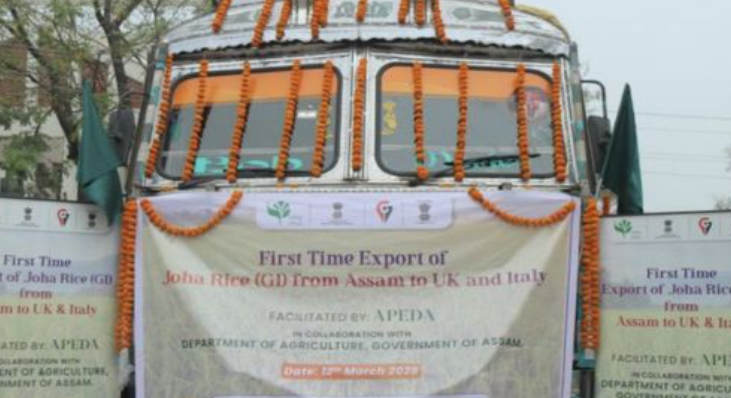
- 14 Mar 2026
In News:
- India recently facilitated the export of 25 metric tonnes of GI-tagged Joha rice from Assam to the United Kingdom and Italy.
- The initiative was supported by the Agricultural and Processed Food Products Export Development Authority (APEDA) to expand global access to India’s niche agricultural products and strengthen export opportunities for farmers in the North-Eastern region.
- This export marks an important step in promoting geographical indication (GI) products in international markets while enhancing income opportunities for local producers.
About Joha Rice
- Joha Rice is a short-grain aromatic rice variety traditionally cultivated in Assam. Known for its distinctive fragrance and soft texture, it is an integral part of Assamese cuisine and cultural traditions.
- The rice received Geographical Indication (GI) status in 2017, recognising its unique origin, traditional cultivation methods, and region-specific characteristics.
Region of Cultivation
Joha rice is primarily cultivated in Upper and Central Assam, where agro-climatic conditions support its growth. Major producing districts include:
- Sivasagar
- Jorhat
- Golaghat
- Dibrugarh
- Lakhimpur
The crop is usually grown during the Sali (winter) rice season, which is the primary paddy cultivation cycle in Assam.
Key Characteristics
Joha rice possesses several unique features that distinguish it from other rice varieties:
- Aromatic Quality: The rice emits a distinct natural fragrance, similar to premium aromatic varieties, making it suitable for specialty dishes.
- Short-Grain Variety: It is a short-grain winter paddy, known for its soft texture when cooked.
- Nutraceutical Properties: Studies indicate that Joha rice contains several bioactive compounds, including:
- Omega-3 and omega-6 fatty acids
- Antioxidants
- Flavonoids and phenolic compounds
- Potential Health Benefits: Bioactive compounds such as oryzanol, ferulic acid, and tocotrienols are associated with anti-diabetic and cardio-protective properties, increasing its appeal in health-conscious markets.
Significance of the Export
- Promoting GI-Tagged Products: The export highlights the growing international demand for India’s geographically unique agricultural products, reinforcing the value of the GI certification system.
- Enhancing Farmer Income: GI-tagged agricultural commodities often command premium prices in international markets, benefiting local farmers and producers.
- Boosting Agricultural Exports: The initiative supports India’s strategy to diversify agricultural exports by promoting specialty and high-value crops.
- Supporting North-East Agricultural Development: Export promotion of Joha rice contributes to economic development in the North-Eastern region, integrating local farmers into global supply chains.
Fiscal Health Index 2026
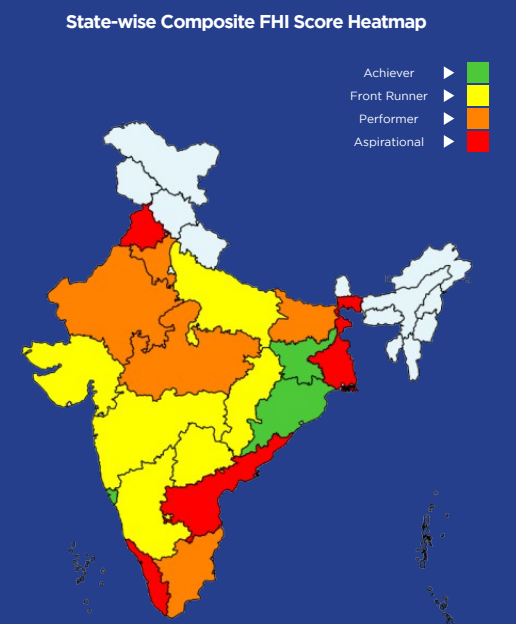
- 14 Mar 2026
In News:
- The NITI Aayog has released the second edition of the Fiscal Health Index (FHI) 2026, which evaluates the fiscal performance and sustainability of Indian states for the financial year 2023–24.
- The index provides a comprehensive framework to assess the fiscal strength, vulnerabilities, and sustainability of state finances, moving beyond traditional indicators such as fiscal deficit to a broader evaluation of fiscal management.
- Given that state governments account for around one-third of India’s general government debt, their fiscal health plays a critical role in ensuring macroeconomic stability and sustainable economic growth.
What is the Fiscal Health Index?
- The Fiscal Health Index (FHI) is a comparative analytical framework developed by NITI Aayog to evaluate the financial performance of states using multiple fiscal indicators. It aims to promote transparent fiscal governance, data-driven policymaking, and peer benchmarking among states.
Key Pillars of the Index
The FHI evaluates states based on five core pillars:
- Quality of Expenditure: This indicator examines the composition of government spending, focusing on the proportion allocated to developmental and capital expenditure rather than committed or routine spending.
- Revenue Mobilisation: It measures the ability of states to generate own tax and non-tax revenues, reflecting fiscal self-reliance.
- Fiscal Prudence: This pillar evaluates how effectively states manage their fiscal deficits and adhere to the norms under the Fiscal Responsibility and Budget Management Act (FRBM).
- Debt Index: It assesses the size and burden of outstanding liabilities, indicating the level of indebtedness.
- Debt Sustainability: This dimension examines the long-term ability of states to service their debt obligations without creating fiscal stress.
State Rankings (FY 2023–24)
Top Performing States
- Odisha – Rank 1 (Score: 73.1)
- Goa – Rank 2 (Score: 54.7)
- Jharkhand – Rank 3 (Score: 50.5)
- Gujarat – Rank 4
- Maharashtra – Rank 5
Bottom Performing States
- Punjab – Rank 18
- Andhra Pradesh – Rank 17
- West Bengal – Rank 16
- Kerala – Rank 15
Among the North-Eastern and Himalayan states, Arunachal Pradesh emerged as the top performer, largely due to high-quality expenditure and relatively stable fiscal management.
Key Findings of the Report
- Expanded Coverage: The 2026 edition expanded its scope to include 10 North-Eastern and Himalayan states, recognising their unique geographic and structural fiscal constraints.
- Improved Capital Expenditure: Several states have increasingly prioritised capital expenditure and social sector spending, reflecting a shift toward growth-oriented investments.
- Persistent Fiscal Stress in Some States: Certain states continue to face structural fiscal challenges, including rising debt levels, weak revenue growth, and high fiscal deficits.
- Importance for National Macroeconomic Stability: With state finances forming a significant portion of public debt, improving fiscal management at the state level is essential for India’s overall fiscal stability.
Major Challenges Highlighted
- High Committed Expenditure: Large portions of state budgets are locked into salaries, pensions, and interest payments, leaving limited resources for development. For example, committed expenditure in Punjab accounted for about 80% of revenue receipts in 2023–24.
- Weak Own-Revenue Mobilisation: Several states depend heavily on central transfers rather than internal revenue generation. In Bihar, own revenue contributes less than one-third of total receipts, increasing fiscal vulnerability.
- Fiscal Deficit Pressures: Some states have breached the fiscal deficit limits prescribed under the FRBM framework. For instance, Andhra Pradesh’s fiscal deficit reached 4.35% of GSDP in 2023–24, exceeding the recommended threshold.
- Rising Interest Burden: High levels of debt lead to large interest payments. West Bengal spends over 20% of its revenue receipts on debt servicing, reducing fiscal flexibility.
- Geographic Constraints: States with challenging terrain face higher infrastructure and service delivery costs. For example, Himachal Pradesh experiences fiscal stress due to the high cost of maintaining infrastructure in mountainous regions along with rising pension liabilities.
Way Forward
To strengthen fiscal sustainability, the report suggests several reforms:
- Broadening the tax base and improving GST compliance to enhance state revenue capacity
- Rationalising subsidies and committed expenditure to create fiscal space for development
- Increasing the quality of capital expenditure to generate long-term economic growth
- Adopting medium-term fiscal frameworks to manage deficits and debt trajectories
- Enhancing transparency and data-driven governance, using tools such as the Fiscal Health Index for benchmarking
Devon Island
- 14 Mar 2026
In News:
Scientists from the National Aeronautics and Space Administration (NASA) continue to use Devon Island in the Canadian Arctic as a major Mars analogue research site. The island’s barren terrain, extreme cold, and polar desert conditions closely resemble the Martian environment, making it an ideal location to test next-generation rovers, autonomous drones, and life-support systems intended for future Mars missions.
Location and Geographic Setting
- Devon Island is located in the Canadian Arctic Archipelago within the territory of Nunavut, Canada, and lies well within the Arctic Circle.
- It is recognized as the largest uninhabited island on Earth, characterized by extremely harsh climatic conditions and limited biological activity.
Neighbouring Regions
- North: Separated from Ellesmere Island by Jones Sound
- South: Separated from Somerset Island and Baffin Island by Lancaster Sound
- West: Cornwallis Island, home to the settlement of Resolute
- East: Baffin Bay
Climate and Environmental Conditions
Devon Island is classified as a polar desert, characterized by extremely low precipitation and harsh climatic conditions.
Key climatic features include:
- Short growing season: Approximately 40–55 days per year
- Summer temperatures: Around 2°C to 8°C
- Winter temperatures: Can fall to −50°C
- Low solar energy input and minimal rainfall
These conditions severely limit vegetation growth, resulting in a barren, rocky landscape covered by snow and ice for much of the year.
Major Geographic Features
Haughton Impact Crater
- A prominent feature of the island is the **Haughton Impact Crater, approximately 20 kilometres (14 miles) wide, formed about 39 million years ago when a meteorite struck the region.
- The crater’s rocky, fragmented terrain and absence of vegetation make it one of the closest terrestrial analogues to the cratered surface of Mars.
Martian-Like Terrain
Devon Island contains several geological features that resemble Martian landscapes:
- Permafrost and underground ice deposits
- Dried lakebeds and sedimentary plains
- Deep canyons and rugged rocky valleys
These conditions simulate the extreme dryness, cold, and geological features found on Mars.
Endolithic Microbial Habitats
- Scientists have discovered microorganisms living inside rocks within the Haughton Crater. This phenomenon, known as endolithic colonisation, allows microbes to survive extreme conditions such as intense ultraviolet radiation and limited nutrients.
- Such findings help scientists understand how life might survive in harsh extraterrestrial environments.
Scientific and Space Exploration Significance
Testing Space Technology
Devon Island serves as a testing ground for space exploration equipment, including:
- Advanced planetary rovers
- Autonomous aerial drones
- Deep-drilling systems
- Pressurized exploration vehicles
Testing technologies in such remote conditions helps engineers evaluate equipment that cannot be repaired once deployed on Mars.
Searching for Signs of Life
- Research on microbial life in Devon Island’s frozen soils provides insights into potential biosignatures and survival strategies of life on Mars, guiding future astrobiology missions.
Astronaut Training
- The island’s extreme isolation, harsh climate, and barren terrain also provide a realistic environment for astronauts preparing for long-duration space missions, helping them adapt to the psychological and operational challenges of extraterrestrial exploration.
Black Rain
- 14 Mar 2026
In News:
Following airstrikes on oil storage facilities in Tehran and Alborz Province in early March, residents reported the occurrence of “black rain”, a rare environmental phenomenon in which rainfall becomes contaminated with pollutants such as soot, hydrocarbons, and toxic chemicals. The event highlighted the severe environmental and health risks associated with large-scale industrial fires and atmospheric pollution.
What is Black Rain?
Black rain refers to precipitation that becomes heavily contaminated with soot, hydrocarbons, and chemical pollutants present in the atmosphere. Unlike normal rainwater, black rain appears dark, oily, and chemically polluted, often leaving a layer of toxic residue on surfaces.
This phenomenon generally occurs when dense smoke and particulate matter from fires mix with rain clouds, causing the falling rain droplets to absorb pollutants from the surrounding air.
Formation Process
The formation of black rain typically involves several atmospheric processes:
- and Smoke Generation: Large fires, especially from oil refineries or fuel storage facilities, release thick plumes of smoke containing soot and chemical vapours into the atmosphere.
- Atmospheric Loading: The smoke carries high concentrations of particulate matter and toxic gases, which accumulate in the lower atmosphere.
- Coalescence with Rain Clouds: When rainfall occurs, the raindrops pass through polluted air layers, absorbing suspended particles and chemicals before reaching the ground.
- Topographical Influence: In cities surrounded by mountains, such as Tehran, topographic barriers can trap smoke and pollutants, preventing dispersion and increasing the likelihood of contaminated rainfall.
Chemical Components
Black rain can contain a mixture of hazardous substances, including:
- Toxic hydrocarbons, such as benzene, which is a known carcinogen
- Sulphur oxides (SOx) and nitrogen oxides (NOx), which can react with water vapour to produce acid rain
- Particulate matter (soot) composed of carbon particles
- Per- and polyfluoroalkyl substances (PFAS) or “forever chemicals,” often released from industrial fire-suppression systems
These pollutants combine with rainwater to form a chemically contaminated precipitation.
Key Characteristics
Black rain exhibits distinct physical properties compared to normal rainfall:
- Appearance: Dark or jet-black droplets that may stain surfaces permanently
- Odour: Strong smell of burning petroleum and chemicals
- Texture: Greasy or viscous due to hydrocarbon contamination
- Spread: Polluted rainfall can fall many kilometres away from the original fire site depending on wind direction and atmospheric circulation
Environmental and Health Implications
Health Risks
Exposure to contaminated rainfall may cause:
- Skin irritation and burns
- Eye irritation
- Respiratory disorders due to inhalation of toxic particles
- Long-term risks such as lung damage or cancer from carcinogenic chemicals
Environmental Contamination
Pollutants deposited by black rain can contaminate soil and groundwater, potentially entering the food chain through crops and livestock.
Acid Rain Effects
The presence of sulphur and nitrogen oxides may lead to acidic precipitation, which can damage:
- Vegetation and crops
- Buildings and monuments
- Urban infrastructure
Persistent Pollution
Certain chemicals such as PFAS are highly persistent in the environment and may remain in soil and water for decades, posing long-term ecological challenges.
PM-SETU Scheme
- 14 Mar 2026
In News:
- The Government of India has constituted a National Steering Committee (NSC) to guide the implementation of the Pradhan Mantri Skilling and Employability through Upgraded ITIs (PM?SETU) scheme.
- The committee will function as the apex body to oversee reforms aimed at modernising Industrial Training Institutes (ITIs) and improving employability outcomes across the country.
- Approved by the Union Cabinet in 2025 with an estimated outlay of ?60,000 crore, PM-SETU represents a major initiative to align India’s vocational training ecosystem with emerging industry demands and technological changes.
Objectives of PM-SETU
The scheme seeks to transform the country’s skill development framework by:
- Upgrading Industrial Training Institutes (ITIs) with modern infrastructure and technology.
- Improving employability of youth through industry-relevant training.
- Promoting industry participation in vocational education.
- Aligning skill development programmes with future sectors such as advanced manufacturing, electronics, mobility, and logistics.
A key objective is to shift the model of skill training from government-led programmes to an industry-driven ecosystem, where companies actively participate in curriculum design, training delivery, and infrastructure development.
Hub-and-Spoke Model for ITI Upgradation
A major structural reform under PM-SETU is the introduction of the hub-and-spoke model.
- Around 200 ITIs will be upgraded as “Hub” institutions with advanced infrastructure and modern training facilities.
- Each hub will mentor approximately four nearby “Spoke” ITIs, sharing resources such as specialised equipment, digital learning platforms, and technical expertise.
This model aims to create regional clusters of high-quality skill training centres, ensuring wider access to modern vocational education.
Strengthening National Skill Training Institutes
The scheme also focuses on upgrading National Skill Training Institutes (NSTIs) into global Centres of Excellence. Key NSTIs targeted under the initiative are located in:
- Bhubaneswar
- Chennai
- Hyderabad
- Kanpur
- Ludhiana
These institutions will provide advanced training, support instructor development, and promote innovation in skill training methodologies.
Governance through Special Purpose Vehicles (SPVs)
Each upgraded ITI will be managed through a Special Purpose Vehicle (SPV) formed under an industry-government partnership model.
Key features include:
- Industry partners hold 51% ownership, while the government holds 49%.
- Industry participants can receive up to 83% government funding for infrastructure and training upgrades.
- The SPV structure ensures professional management, accountability, and industry alignment.
This governance model is designed to bring corporate expertise and efficiency into vocational education management.
Industry Participation
To enhance collaboration with the private sector, the **Ministry of Skill Development and Entrepreneurship has invited Anchor Industry Partners (AIPs) through an Expression of Interest (EOI) process.
These industry partners will play a key role in:
- Designing industry-relevant curricula
- Upgrading training infrastructure
- Providing hands-on exposure and apprenticeships
- Improving placement opportunities for trainees
Modern Training Ecosystem
The Directorate General of Training has introduced 31 new-age courses under the Craftsmen Training Scheme (CTS) to address emerging industry requirements.
Training programmes will focus on high-growth sectors such as:
- Advanced manufacturing
- Electronics and semiconductor-related technologies
- Mobility and electric vehicles
- Logistics and supply chain management
These reforms aim to build a future-ready workforce equipped with modern technical skills.
Nutrient Transporter Protein
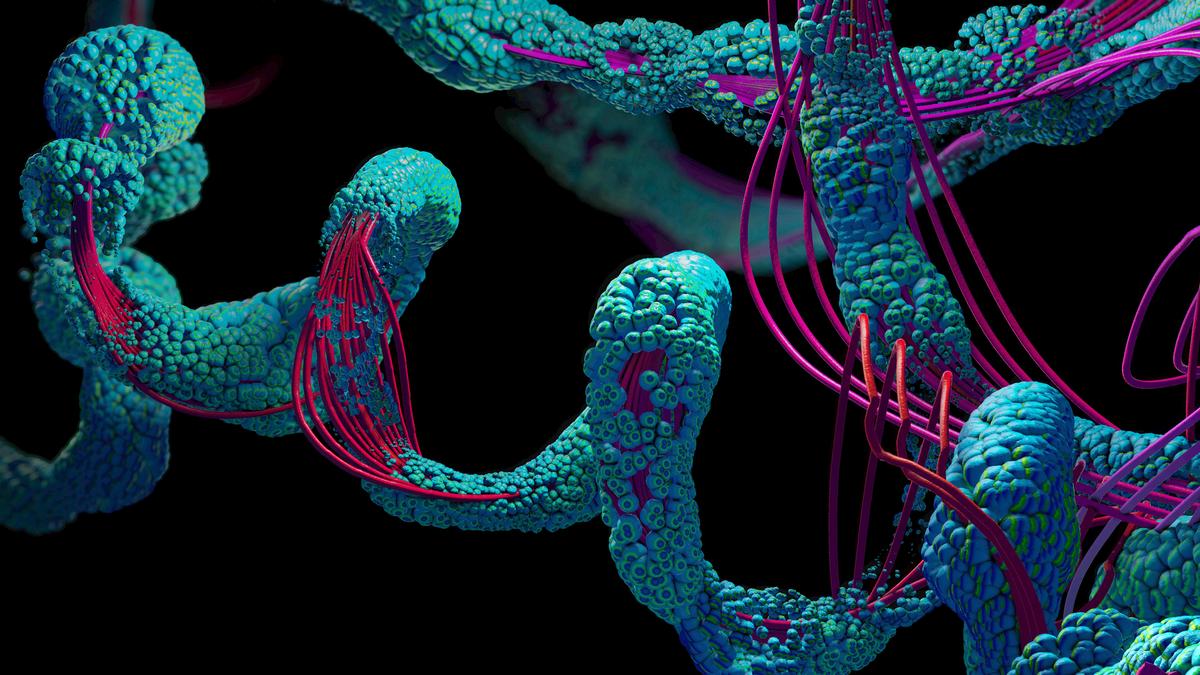
- 13 Mar 2026
In News:
- Scientists from ETH Zurich and the Technical University of Munich have developed a novel method to engineer bacteria to produce customised “designer proteins” using artificial amino acids.
- The breakthrough enables microorganisms to synthesize proteins with new biological and chemical properties, opening possibilities for advanced drug delivery systems and next-generation biotechnology applications.
- The research focuses on modifying nutrient transport mechanisms in bacteria such as Escherichia coli (E. coli) so that cells can efficiently import artificial amino acids required to build synthetic proteins.
Nutrient Transporter Proteins
- A nutrient transporter protein is a membrane-bound protein that facilitates the movement of essential molecules such as amino acids, peptides, and other nutrients—across the cell membrane.
- In the recent research, scientists engineered a specialized ABC (ATP-Binding Cassette) transporter in bacteria. Normally, this transporter imports small peptide molecules used as nutrients. By modifying it, researchers enabled bacterial cells to import peptides carrying artificial amino acids, which can then be used to assemble customised proteins.
Objective of the Research
- The main goal of the study was to enable cells to incorporate artificial amino acids into proteins efficiently. Natural proteins are typically built from 20 standard amino acids, but introducing synthetic amino acids allows scientists to design proteins with new functional properties.
- However, artificial amino acids generally cannot easily cross the cell membrane. By engineering a transporter protein capable of importing these molecules, researchers overcame a major barrier in synthetic biology and protein engineering.
Mechanism of the System
The engineered system works through a multi-step biological process:
- Engineering of ABC Transporter – Scientists modified the transporter protein to improve its ability to import peptides containing artificial amino acids.
- Trojan Horse Strategy – Artificial amino acids are concealed inside short peptide chains such as tripeptides or tetrapeptides composed of natural amino acids.
- Transport into the Cell – The transporter imports these peptide chains across the cell membrane.
- Release of Artificial Amino Acids – Once inside the cell, enzymes break the peptides into individual amino acids.
- Protein Synthesis – The ribosome, the cellular machinery responsible for protein production, incorporates the artificial amino acids into newly synthesized proteins.
Through this approach, bacterial cells can generate custom-designed proteins on demand.
Key Innovations
- Trojan Horse Delivery Strategy: Artificial amino acids are hidden within natural peptide structures, allowing them to bypass cellular membrane barriers and enter the cell.
- Engineered ABC Transporter: The modified transporter is capable of importing up to ten times more artificial amino acids compared to natural transport systems.
- Directed Evolution: Researchers used directed evolution, a technique that mimics natural selection in the laboratory, to improve the efficiency of the transporter protein under nutrient-rich conditions.
- Multifunctional Protein Design: The system allows two different artificial amino acids to be incorporated into a single protein, enabling complex and multifunctional molecular designs.
- Compatibility with Standard Laboratory Conditions: The engineered bacteria can function effectively in standard laboratory growth media, making the system practical for widespread scientific use.
Jal Jeevan Mission Extended to 2028
- 13 Mar 2026
In News:
The Union Cabinet has approved the extension of the Jal Jeevan Mission (JJM) until December 2028, marking a transition from merely building water infrastructure to ensuring sustained and reliable service delivery in rural areas. The decision aims to consolidate earlier achievements and strengthen long-term drinking water supply systems across villages in India.
About Jal Jeevan Mission
The Jal Jeevan Mission is a flagship programme of the Government of India that seeks to provide safe and adequate drinking water to all rural households through Functional Household Tap Connections (FHTC).
- Launch Date: 15 August 2019
- Nodal Ministry: Ministry of Jal Shakti
- Core Objective: Achieve “Har Ghar Jal” by ensuring 55 litres of potable water per person per day to every rural household through tap connections.
The mission addresses long-standing challenges related to water scarcity, unsafe drinking water, and the burden of water collection, particularly faced by women and children in rural India.
Shift in Focus: Jal Jeevan Mission 2.0
With the extension until 2028, the mission is entering a new phase often described as JJM 2.0, where the emphasis moves beyond infrastructure creation to sustainable water service delivery.
Key aspects include:
- Utility-Based Service Delivery: The programme will focus on continuous and reliable water supply systems, supported by structural reforms and Memoranda of Understanding (MoUs) with State governments to improve management and accountability.
- Digital Monitoring – Sujalam Bharat Framework: Under the Sujalam Bharat Digital Framework, each village will receive a unique “Sujal Gaon ID”. This system digitally maps the entire water supply chain—from source to household tap— enabling improved monitoring, transparency, and data-driven decision-making.
- Water Quality Monitoring: The mission prioritises regular water quality testing through:
- Field Test Kits at the village level
- Accredited water testing laboratories
This helps detect contaminants and ensures that drinking water meets safety standards.
- Greywater Management: To ensure sustainability, the programme incorporates greywater management, involving:
- Construction of soak pits
- Use of wastewater in kitchen gardens and local irrigation
This reduces water wastage and promotes sustainable water use.
Convergence with Other Schemes
The mission promotes integration with several government initiatives, including:
- Mahatma Gandhi National Rural Employment Guarantee Scheme (MGNREGS)
- Swachh Bharat Mission (Gramin)
- Grants recommended by the 15th Finance Commission
Such convergence helps strengthen water conservation, recharge structures, and source sustainability.
Kavach 4.0
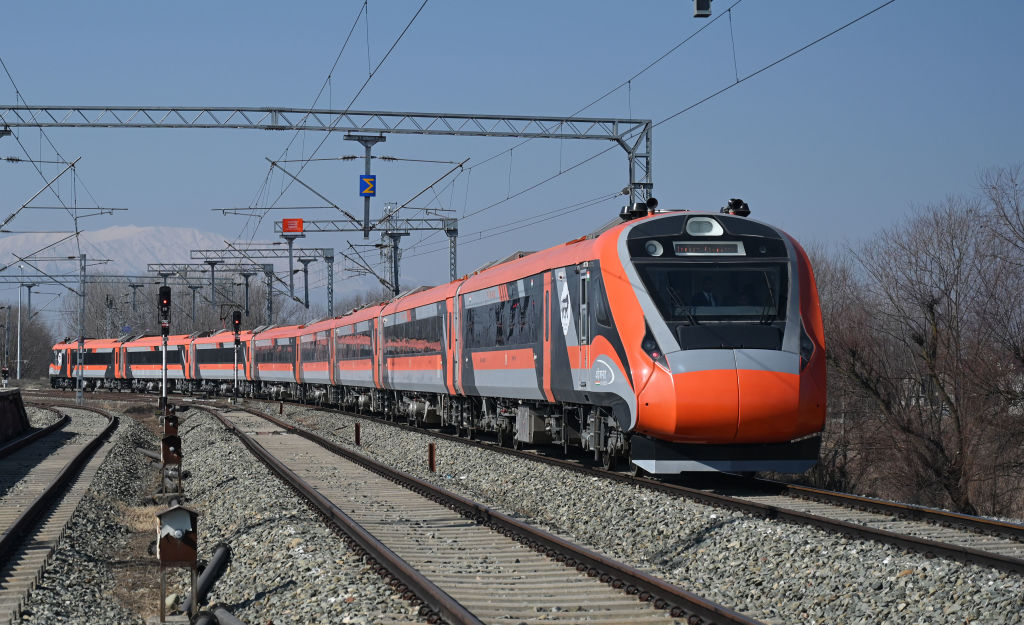
- 13 Mar 2026
In News:
The Government of India has informed the Lok Sabha that Kavach 4.0, India’s indigenous Automatic Train Protection (ATP) system, has been successfully commissioned across 1,452 route kilometres on the high-density Delhi–Mumbai Railway Corridor and Delhi–Howrah Railway Corridor.
The system represents a major technological advancement aimed at improving railway safety and reducing accidents caused by human error. Kavach forms a crucial part of the modernization and safety enhancement efforts of Indian Railways.
What is Kavach?
- Kavach is an indigenously developed Automatic Train Protection (ATP) system designed to prevent train collisions and ensure safer railway operations. It is a sophisticated electronic safety mechanism that automatically monitors train movement and intervenes when necessary.
- The system has been developed by the Research Design and Standards Organisation (RDSO) in collaboration with domestic industry partners, reflecting India’s push toward self-reliance in railway technology.
Objectives of Kavach
The primary objective of Kavach is to achieve “Zero Accidents” in railway operations by addressing key safety risks.
Major goals include:
- Signal Passing at Danger (SPAD), where a train crosses a stop signal.
- Controlling overspeeding of trains.
- Ensuring safe operations during adverse weather conditions, especially dense fog.
- Reducing accidents caused by human error.
Working Mechanism
Kavach operates through an integrated communication and monitoring network that continuously tracks train movement and signal conditions.
The system functions through the following components:
- RFID tags installed along railway tracks
- On-board equipment installed in locomotives
- Radio communication towers at railway stations
These components exchange real-time data regarding the train’s speed, location, and signal status. If the system detects a possible collision, signal violation, or overspeeding, it automatically activates the braking system, even if the loco pilot fails to respond.
Key Features of Kavach 4.0
The Kavach 4.0 version introduces several technological improvements for better reliability and precision.
- Enhanced Precision: The system offers improved location accuracy and better processing of signal information, particularly in complex railway yards and high-density corridors.
- Integration with Electronic Interlocking: Kavach integrates directly with Electronic Interlocking systems, enabling real-time access to track occupancy data and signal status, thereby enhancing operational safety.
- Advanced Communication Network: It uses Optical Fibre Networks (OFN) and Ultra High Frequency (UHF) radio communication to enable continuous station-to-station communication and uninterrupted connectivity.
- Automatic Braking: If a train crosses a red signal or exceeds the permitted speed, the system automatically applies brakes, preventing potential accidents.
- SOSR (Save Our Souls) Feature: The SOSR emergency broadcast system allows a train or station to transmit emergency alerts to all trains within a defined radius, helping prevent large-scale accidents during critical situations.
Significance for Railway Safety
The deployment of Kavach is a major step toward improving the safety standards of Indian Railways.
Key benefits include:
- Reduction in accidents: Consequential train accidents have reportedly declined by nearly 90% since 2014 due to enhanced safety investments.
- Minimization of human error: Automated monitoring and braking reduce dependence on manual response.
- Improved efficiency: Trains can operate at higher speeds safely even during low-visibility conditions such as winter fog.
- Technological self-reliance: The system strengthens India’s indigenous railway technology ecosystem.
Blue-and-White Flycatcher

- 13 Mar 2026
In News:
A male Blue-and-White Flycatcher, a rare migratory bird in India, was recently recorded on the Pavagadh Hills in Gujarat. The sighting is significant because the species is seldom observed in the Indian subcontinent, highlighting the ecological importance of hill and forest habitats that occasionally serve as stopover sites for migratory birds.
About the Blue-and-White Flycatcher
The Blue-and-White Flycatcher is a migratory songbird belonging to the Old World flycatcher family (Muscicapidae).
- Scientific Name: Cyanoptila cyanomelana
- Common Name: Japanese Flycatcher
- Type: Small insectivorous migratory bird
Flycatchers are known for their agile aerial movements and their ability to catch insects mid-flight, which makes them important for natural pest control and ecological balance.
Geographic Distribution and Migration
The Blue-and-White Flycatcher is mainly distributed in East and Southeast Asia.
Breeding Range
- Japan
- South Korea
- Northeastern China
- The Russian Far East
Wintering Range
- Vietnam
- Cambodia
- Thailand
- Islands such as Sumatra and Borneo
During migration, individual birds may occasionally appear outside their normal range, which explains rare sightings in India such as the one in Gujarat.
Habitat
The species typically inhabits forested landscapes and prefers:
- Wooded lowlands
- Submontane forests
- Taiga-like environments
- Wooded slopes and gullies
It is usually found at elevations up to about 1,200 metres. The bird may also adapt to scrublands, bushes, and plantation areas, especially during migration.
Physical Characteristics
The Blue-and-White Flycatcher exhibits sexual dimorphism, meaning males and females have distinct appearances.
Male
- Upper body covered in bright cobalt-blue plumage
- Blue coloration on wings, tail, and upperparts
- Black chin, throat, breast, and flanks
- White belly and vent
- Black bill and dark brown eyes
Female
- Grey-brown upperparts, including head and face
- Blackish wings with rufous-brown edges on tertial feathers
- Grey to grey-brown chin and throat
- Cream-coloured throat patches
These differences help birdwatchers distinguish between sexes in the field.
Conservation Status
According to the International Union for Conservation of Nature (IUCN) Red List, the Blue-and-White Flycatcher is classified as Least Concern.
Despite its stable global population, the species still depends on healthy forest ecosystems and migratory corridors for survival.
Visakhapatnam selected for High-Energy Proton Accelerator
- 13 Mar 2026
In News:
- India has selected Visakhapatnam, Andhra Pradesh, as the site for establishing a high-energy proton accelerator system to support its long-term nuclear energy strategy.
- The project will play a crucial role in advancing the Accelerator-Driven System (ADS) technology, which is central to India’s effort to utilise its vast thorium reserves and enhance nuclear safety.
- The initiative is being developed by the Raja Ramanna Centre for Advanced Technology (RRCAT) located in Indore, Madhya Pradesh.
- Visakhapatnam was chosen because of its strong technological ecosystem, availability of research infrastructure, and proximity to the sea, which ensures sufficient cooling water for operating high-energy accelerator systems.
High-Energy Proton Accelerator System
A high-energy proton accelerator is a scientific device that uses electromagnetic fields to accelerate protons (positively charged particles from ionised hydrogen) to extremely high speeds. The accelerated protons form a powerful proton beam that is directed toward a heavy metal target such as lead or bismuth.
When the high-speed protons collide with the heavy metal nucleus, a process known as spallation occurs. In this reaction:
- The heavy nucleus breaks apart due to the impact.
- A large number of high-energy neutrons are released.
- These neutrons can then be used to initiate nuclear fission reactions in a reactor system.
Thus, the proton accelerator becomes an external source of neutrons required for controlled nuclear reactions.
Accelerator-Driven System (ADS)
The Accelerator-Driven System is a nuclear reactor concept in which the neutron supply required for fission is provided externally by a proton accelerator.
Key features of ADS include:
- The reactor core remains sub-critical, meaning it cannot sustain a chain reaction independently.
- The spallation neutrons generated by the proton accelerator are injected into the reactor core to maintain fission.
- If the accelerator stops functioning due to a power outage or malfunction, the neutron supply ceases immediately.
This design provides high inherent safety, as the nuclear reaction automatically stops without external intervention, significantly reducing the risk of reactor meltdown.
Role of ADS in India’s Three-Stage Nuclear Programme
- India’s nuclear energy strategy follows a three-stage programme aimed at maximising the utilisation of its limited uranium resources and abundant thorium deposits.
- ADS technology supports the third stage of this programme, which focuses on thorium-based nuclear energy.
Harnessing Thorium Resources
India possesses around 25% of the world’s thorium reserves, primarily in monazite sands along its coastal regions. However, naturally occurring Thorium-232 is fertile rather than fissile, meaning it cannot directly sustain a nuclear chain reaction.
For thorium to become a usable nuclear fuel:
- Thorium-232 must absorb a neutron.
- It undergoes nuclear transformation (transmutation).
- It converts into Uranium-233, which is a highly fissile material capable of sustaining nuclear reactions.
The high-energy neutrons generated by the ADS system are particularly effective in facilitating this conversion, enabling thorium to become a viable fuel for large-scale electricity generation.
Nuclear Waste Management
Another major advantage of ADS technology lies in nuclear waste transmutation.
Conventional nuclear reactors generate long-lived radioactive waste, including minor actinides, which remain hazardous for thousands of years. ADS systems can use high-energy neutrons to:
- Break down long-lived radioactive isotopes
- Convert them into shorter-lived or stable elements
This process significantly reduces the toxicity and storage duration of nuclear waste, thereby addressing one of the major environmental concerns associated with nuclear power.
National Highways Green Cover Index (NH-GCI)

- 12 Mar 2026
In News:
- Recently, the National Highways Authority of India (NHAI) released the first National Highways Green Cover Index (NH-GCI), a scientific framework to assess and monitor vegetation cover along India’s national highways.
- The index has been developed in collaboration with the National Remote Sensing Centre (NRSC), a centre of the Indian Space Research Organisation (ISRO).
- The initiative represents a significant step toward environmentally sustainable highway development, enabling data-driven monitoring of plantations and greenery along highway corridors.
About the NH-GCI
- The National Highways Green Cover Index is a satellite-based assessment tool that measures the extent of vegetation along the Right of Way (RoW) of national highways.
- Objective: To provide a scientific and quantitative evaluation of green cover along the national highway network using advanced space-based technologies.
- Coverage:
- The first assessment covers around 30,000 km of National Highways across 24 states for the period July–December 2024.
- The index evaluates vegetation present along the left and right sides of highways as well as the median, wherever plantation is feasible.
- Methodology: The NH-GCI uses advanced remote-sensing techniques to estimate vegetation density and distribution.
- Satellite Data: High-resolution satellite sensors are used to detect chlorophyll content in vegetation.
- NDVI Analysis: The assessment relies on the Normalized Difference Vegetation Index (NDVI) derived from satellite imagery. NDVI measures vegetation health and density based on the reflection of light from plant chlorophyll.
- Segment-wise Assessment: Analysis is carried out for every 1-km segment of national highways, allowing precise monitoring of green cover across the network.
Through this methodology, the index provides consistent and objective measurements of vegetation along highway corridors.
Anavaran Portal
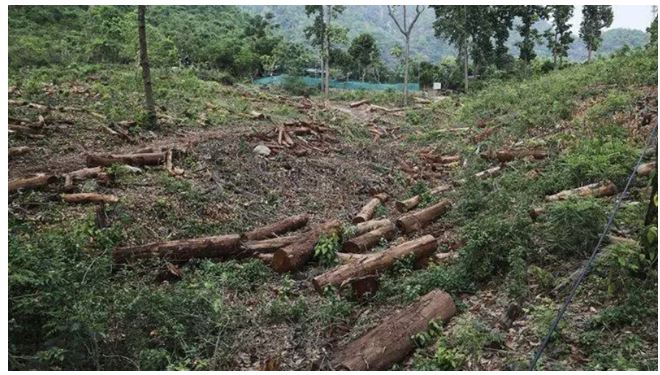
- 12 Mar 2026
In News:
- Recently, the Forest Survey of India (FSI) discontinued the AI-based Anavaran Deforestation Alert System, which had been issuing fortnightly alerts to states on forest cover loss.
- The portal has not been updated since November 2025, and state forest departments reportedly stopped receiving alerts thereafter. The system had been functioning as a pilot project, and its continuation is currently under review.
- The halt of the alert system has raised concerns among forest officials and environmental experts as it was considered an important near-real-time monitoring tool for detecting deforestation and guiding field inspections.
About the Anavaran Portal
- The Anavaran Deforestation Alert System was launched in January 2024 to strengthen forest monitoring in India through advanced geospatial technology and artificial intelligence. It aimed to provide location-specific alerts on forest cover loss every 15 days, enabling state forest departments to conduct targeted ground verification and enforcement actions.
- During its operational period from January 2024 to October 2025, the system generated 12,351 deforestation alerts, averaging about 561 alerts per month, which increased to over 1,000 alerts per month during the peak deforestation season between November and March.
- The alerts helped authorities detect potential activities such as illegal logging, encroachment, and land-use change in forest areas, enabling quicker administrative responses.
Technology Used in the System
The Anavaran system relied on advanced remote sensing and data-processing tools to monitor forest cover changes.
- Google Earth Engine (GEE): The portal was developed on the cloud-based geospatial platform Google Earth Engine, which enables large-scale processing of satellite imagery.
- Sentinel-2 Satellite Data: High-resolution optical images from the Sentinel-2 satellites were used to detect vegetation loss and land-cover changes.
- Sentinel-1 Synthetic Aperture Radar (SAR): Radar data from Sentinel-1 satellites was integrated to monitor forests even during cloudy and monsoon conditions, when optical satellite imagery becomes less effective.
Through machine-learning algorithms, the system analysed these datasets to identify potential forest cover changes and automatically generate alerts for authorities.
Forest Survey of India (FSI)
The Forest Survey of India is the premier national organization responsible for monitoring forest resources in the country. It functions under the Ministry of Environment, Forest and Climate Change.
- Established: 1 June 1981
- Predecessor: Pre-investment Survey of Forest Resources (PISFR), a project initiated in 1965 with support from the FAO and UNDP.
- Mandate: Assessment and monitoring of forest resources, research, training, and technical support to states.
- Key Publication: The India State of Forest Report (ISFR), published biennially since 1987, which assesses forest and tree resources using remote sensing data and the National Forest Inventory (NFI).
According to the latest ISFR assessment, India’s forest and tree cover stands at about 8,27,357 sq km (25.17% of the geographical area).
Proba-3 Mission
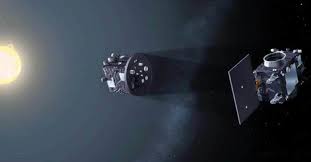
- 12 Mar 2026
In News:
The European Space Agency (ESA) recently lost communication with the Coronagraph spacecraft, one of the two satellites of the Proba?3 Mission, following an anomaly that triggered a power failure and pushed the spacecraft into a protective “survival mode.” The incident occurred after the spacecraft experienced an unexpected drop in solar power, temporarily halting operations and causing the loss of telemetry signals. Engineers are attempting to re-establish contact and recover the satellite.
About the Proba-3 Mission
- Proba-3 is an advanced solar-observation mission launched in December 2024 by ESA aboard PSLV?C59 developed by the Indian Space Research Organisation.
- It is considered the world’s first precision formation-flying mission, designed to study the Sun’s outer atmosphere, known as the corona, with unprecedented clarity.
Objective
The primary objective of the mission is to create an artificial solar eclipse in space. By blocking the Sun’s bright disk, scientists can directly observe the faint corona for extended durations—something that is otherwise possible only for a few minutes during natural total solar eclipses.
Key Features of the Mission
1. Twin-Spacecraft Configuration: The mission consists of two independent satellites working in coordination:
- Occulter spacecraft – carries a disk that blocks sunlight.
- Coronagraph spacecraft – carries the telescope and camera to observe the corona.
2. Precision Formation Flying: The two satellites maintain a distance of about 150 metres with millimetre-level accuracy, effectively functioning as a single large virtual instrument in space.
3. Artificial Eclipse Mechanism: The Occulter blocks the Sun’s bright disk and casts a precise shadow onto the Coronagraph’s optical instrument, replicating the conditions of a total solar eclipse in space.
4. Autonomous Coordination: The satellites rely on laser sensors, cameras, and cold-gas thrusters to autonomously adjust their relative positions without continuous ground control intervention.
5. Continuous Solar Observations: Before the anomaly occurred, the mission had successfully completed over 60 orbital cycles, producing hours of uninterrupted solar observations—far longer than ground-based eclipse observations.
Exercise LAMITIYE-2026
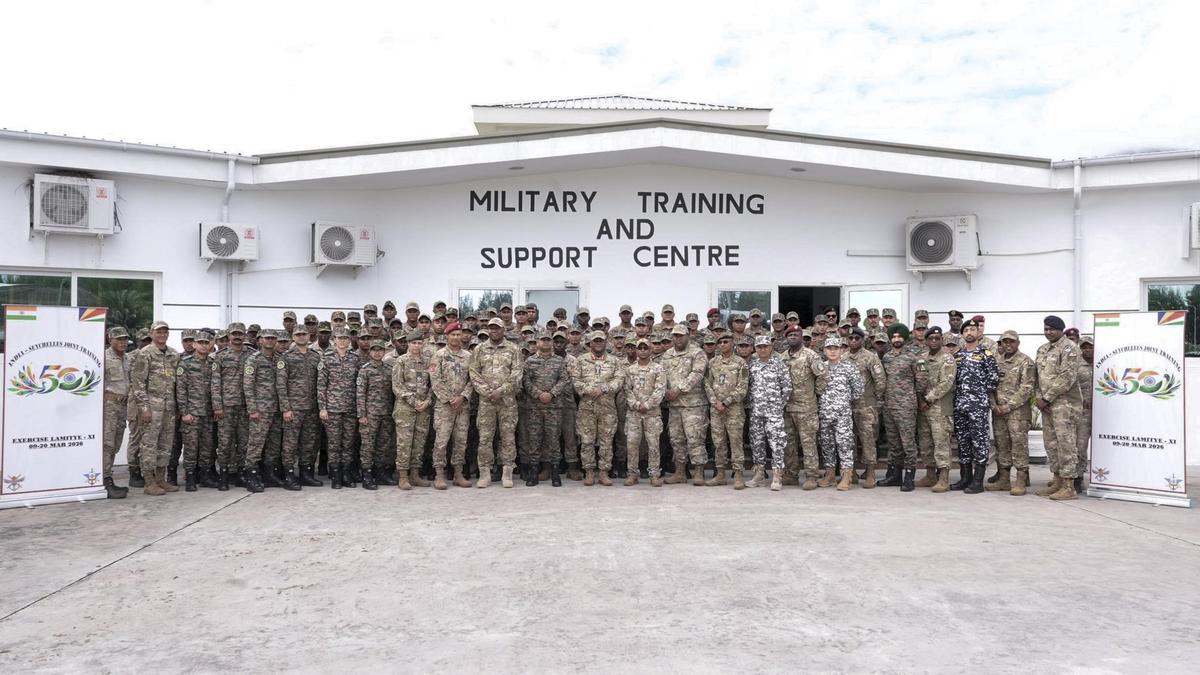
- 12 Mar 2026
In News:
An Indian Armed Forces contingent has arrived in Seychelles to participate in the 11th edition of the Joint Military Exercise Lamitiye-2026. The exercise reflects the growing strategic and defence cooperation between India and Seychelles, particularly in the context of maritime security and stability in the Indian Ocean Region (IOR).
About Seychelles
- Seychelles is an archipelago of about 115 islands located in the western Indian Ocean. Due to its strategic location along major sea lanes, the country plays an important role in regional maritime security, anti-piracy operations, and surveillance in the Indian Ocean.
About Exercise Lamitiye
Exercise Lamitiye is a biennial joint military training exercise conducted between India and Seychelles since 2001.
- The term “Lamitiye” means “Friendship” in the Creole language, symbolising the close bilateral relationship between the two nations.
- Host Country: Seychelles
- Participants: Armed Forces of India and Seychelles
The exercise focuses on strengthening operational coordination, tactical capabilities, and defence collaboration.
Objectives of the Exercise
The primary aims of Exercise Lamitiye include:
- Enhancing interoperability and coordination between Indian and Seychellois forces.
- Improving joint operational capabilities during peacekeeping missions.
- Strengthening preparedness to handle sub-conventional threats in semi-urban environments.
- Promoting defence cooperation and mutual understanding between the two countries.
Key Features
- Tri-Service Participation: Involves personnel from the Indian Army, Navy, and Air Force, highlighting integrated joint operations.
- Tactical Training Activities: Includes field exercises, combat discussions, demonstrations, and case studies.
- Focus on Semi-Urban Warfare: Troops train to respond to sub-conventional threats in semi-urban and coastal environments.
- Technology Demonstration: Provides opportunities to showcase modern military equipment and emerging defence technologies.
- Validation Phase: The exercise concludes with a two-day validation drill to test the operational readiness of participating forces.
- Capacity Building: Facilitates exchange of best practices, tactical skills, and operational experiences.
Terminal High Altitude Area Defence (THAAD)
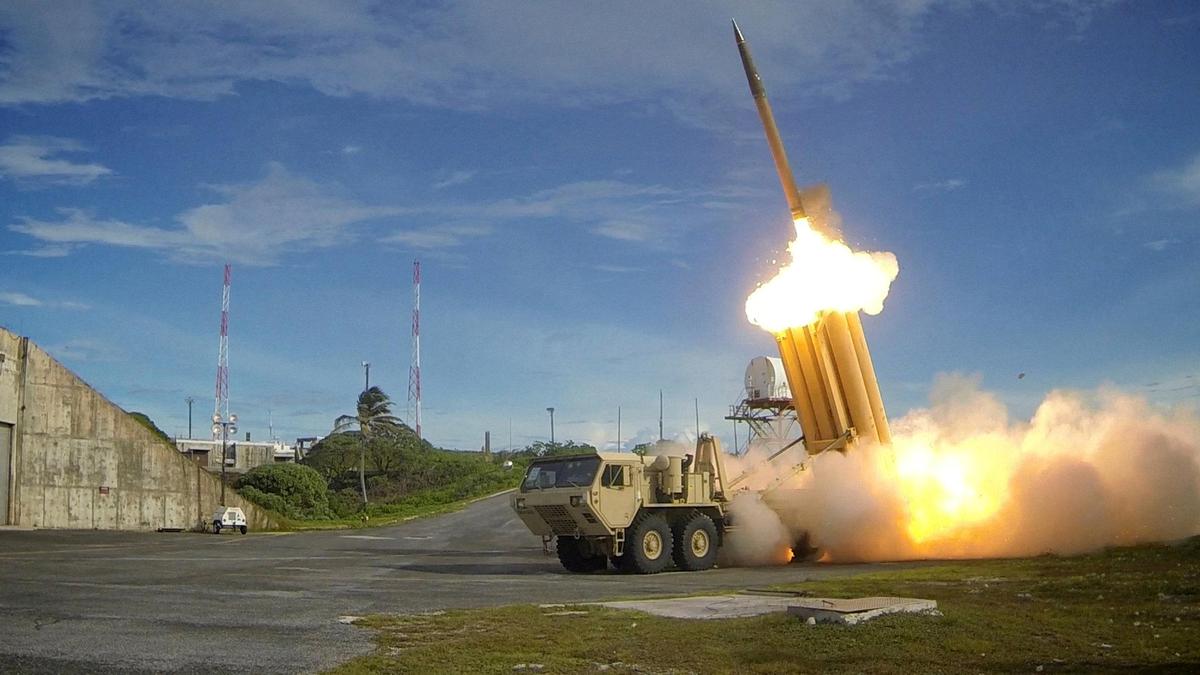
- 12 Mar 2026
In News:
Recent reports indicate that Iran struck a radar associated with the Terminal High Altitude Area Defense (THAAD) system used by the United States and Israel in West Asia. The incident highlights the strategic importance of advanced missile defence systems in regions experiencing heightened geopolitical tensions.
About the THAAD System
THAAD is an advanced ballistic missile defence system developed by the United States to intercept and destroy short-, medium-, and limited intermediate-range ballistic missiles. It forms a critical component of the U.S. layered missile defence architecture.
The system is designed to neutralise incoming ballistic missiles during the terminal phase of their trajectory, which is the final stage of a missile’s flight before it reaches its target.
Key Features
- High-Altitude Interception
- THAAD can intercept ballistic missiles at ranges of around 150–200 km.
- It is capable of destroying targets both inside and outside the Earth’s atmosphere, providing a high-altitude defensive shield.
- Terminal Phase Defence: The system targets missiles during their terminal descent, when the warhead approaches the target area.
- Hit-to-Kill Technology
- THAAD interceptor missiles rely on kinetic energy to destroy targets through direct impact, rather than using explosive warheads.
- This improves accuracy and reduces the risk of collateral damage.
- Integrated Radar and Command System: The system uses powerful radar and command-and-control networks to detect, track, and engage incoming missile threats.
Global Deployment
Several countries have adopted THAAD as part of their missile defence strategies.
- The United Arab Emirates became the first foreign buyer in 2011.
- Saudi Arabia later procured the system to strengthen its air and missile defence capabilities.
These deployments reflect increasing concerns in the region regarding ballistic missile threats.
India’s Missile Defence Choice
While evaluating missile defence options, India chose the S-400 Triumf from Russia instead of acquiring the THAAD system from the United States.
The S-400 provides multi-layered air defence capabilities, including interception of aircraft, drones, cruise missiles, and ballistic missiles at longer ranges.
White Phosphorus and International Humanitarian Law
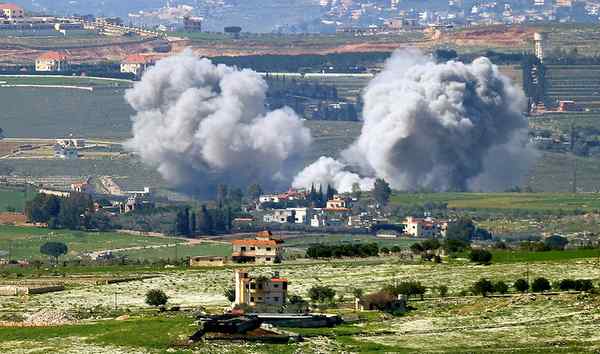
- 11 Mar 2026
In News:
A recent report by Human Rights Watch has accused Israel of using white phosphorus munitions in residential areas of Lebanon, raising concerns about possible violations of international humanitarian law. The allegations come amid escalating hostilities along the Israel–Lebanon border, with Lebanese authorities reporting significant civilian casualties from recent strikes.
What is White Phosphorus?
White phosphorus (WP) is a highly reactive chemical substance commonly used in military operations. It appears as a translucent yellowish-white waxy solid that glows faintly when exposed to oxygen due to slow oxidation.
Key characteristics include:
- Highly flammable: Burns at temperatures exceeding 800°C, hot enough to melt metal.
- Persistent combustion: Continues burning until the chemical is completely consumed or deprived of oxygen.
- Storage conditions: Usually stored under water or inert environments to prevent accidental ignition.
- Odour: Often described as having a garlic-like smell.
Military Uses of White Phosphorus
White phosphorus is mainly used for military tactical purposes, including:
- Smoke Screens: Produces dense smoke that can obscure troop movements or equipment.
- Illumination: Used in flares to light up battlefields at night.
- Incendiary Effects: Can ignite objects and structures due to intense heat.
Because of these functions, it is often categorized as an incendiary munition, which refers to weapons designed to set fire to objects or cause burn injuries through heat, flames, or chemical reactions.
Health and Environmental Hazards
The use of white phosphorus poses severe risks to human health, particularly in populated areas.
Major health impacts include:
- Deep chemical burns that may penetrate to the bone.
- Release of toxic chemicals damaging organs such as the liver, kidneys, and heart.
- Metabolic disorders, including abnormal potassium levels that may lead to cardiac failure.
- Increased risk of building fires and infrastructure destruction when used in civilian areas.
These effects make its deployment in urban environments especially dangerous for civilians.
Legal Status under International Law
White phosphorus is not explicitly banned under the Chemical Weapons Convention when used for non-chemical warfare purposes such as smoke generation. However, its use is regulated by international humanitarian law.
The Convention on Certain Conventional Weapons (CCW) restricts weapons that cause excessive injury or indiscriminate harm.
- Protocol III of the CCW specifically restricts the use of incendiary weapons against civilians or in civilian-populated areas.
- However, white phosphorus is often classified as a multi-purpose munition used for smoke or illumination, enabling some militaries to argue that it does not fall strictly under incendiary weapon restrictions.
- Israel is not a signatory to Protocol III, complicating enforcement and accountability.
Notably, India is a party to all five protocols of the CCW, reflecting its commitment to regulating conventional weapons that cause indiscriminate harm.
Open Market Operations (OMO) and RBI’s Liquidity Injection
- 11 Mar 2026
In News:
The Reserve Bank of India (RBI) recently conducted Open Market Operation (OMO) purchase auctions of Government Securities (G-Secs) worth ?50,000 crore to inject liquidity into the banking system. The move was undertaken amid pressure on the Indian rupee and tight liquidity conditions in the financial system. OMOs are an important monetary policy tool used by the RBI to regulate liquidity and maintain stability in financial markets.
What are Open Market Operations (OMO)?
Open Market Operations refer to the purchase and sale of government securities by the RBI in the open market to manage liquidity in the banking system.
Types of OMOs:
- OMO Purchase
- RBI buys government securities from banks or financial institutions.
- This injects liquidity into the banking system as banks receive funds in exchange for securities.
- OMO Sale
- RBI sells government securities to banks or market participants.
- This absorbs excess liquidity from the system, helping control inflationary pressures.
Through these operations, the RBI influences money supply, interest rates, and overall financial stability.
Government Securities (G-Secs)
Government Securities (G-Secs) are tradable financial instruments issued by the government to borrow money from the market.
Types of Government Securities:
- Treasury Bills (T-Bills)
- Short-term instruments with maturity less than one year.
- Issued only by the Central Government.
- Government Bonds or Dated Securities
- Long-term instruments with maturity one year or more.
- Issued by the Central Government.
- State Development Loans (SDLs)
- Bonds issued by State Governments to finance their expenditure.
Because these securities are backed by the sovereign, they carry virtually no default risk and are therefore called risk-free or gilt-edged instruments.
Reasons for the Recent OMO Purchase
The RBI’s decision to purchase ?50,000 crore worth of G-Secs was aimed at:
- Injecting liquidity into the banking system.
- Stabilising financial markets during periods of tight liquidity.
- Easing pressure on the rupee by improving domestic liquidity conditions.
- Supporting smooth functioning of the government securities market.
India’s Chairmanship of the Kimberley Process

- 11 Mar 2026
In News:
India’s assumption of the chairmanship of the Kimberley Process Certification Scheme (KPCS) provides an important opportunity to strengthen global mechanisms aimed at preventing the trade in conflict diamonds. As one of the largest players in the global diamond value chain, India’s leadership in the Kimberley Process can enhance transparency, improve traceability, and reinforce responsible diamond trade.
Conflict Diamonds: Meaning and Background
- Conflict diamonds, also known as blood diamonds, refer to rough diamonds mined in war zones and sold by rebel groups or their allies to finance armed conflicts against legitimate governments.
- The term gained global attention in the 1990s, when diamonds were found to be funding violent conflicts in several African countries such as Angola, Sierra Leone, Rwanda, and Liberia.
- These diamonds often entered global markets through informal and illegal trade networks, making their origin difficult to trace and raising concerns about ethical sourcing in the international diamond trade.
Kimberley Process Certification Scheme (KPCS)
The Kimberley Process, established in 2003, is a multilateral and voluntary certification mechanism designed to prevent conflict diamonds from entering the legitimate global diamond market.
Key features include:
- Certification System – Every shipment of rough diamonds traded between participating countries must carry a Kimberley Process Certificate, confirming that the diamonds are conflict-free.
- Trade Restrictions – Participating countries are allowed to trade rough diamonds only with other members of the Kimberley Process.
- Global Coverage – The Kimberley Process accounts for over 99% of global rough diamond trade, making it a crucial framework for responsible diamond governance.
- Monitoring and Compliance – Members commit to implementing internal controls and reporting mechanisms to ensure transparency in diamond trade.
India’s Diamond Industry
India plays a central role in the global diamond value chain:
- Largest cutting and polishing hub in the world, especially in cities such as Surat.
- Major importer of rough diamonds for processing.
- Leading exporter of cut and polished diamonds, with exports valued at about $13.3 billion in 2024–25.
- Second-largest diamond consumer market after the United States.
The Gem and Jewellery Export Promotion Council (GJEPC) acts as the nodal agency for implementing Kimberley Process certification in India. It operates under the Department of Commerce, Ministry of Commerce and Industry and is responsible for issuing certificates for diamond exports and imports.
LaBL 2.0 (Lighting a Billion Lives 2.0)
- 11 Mar 2026
In News:
India’s transition to clean energy increasingly emphasizes decentralised renewable energy (DRE) solutions to address energy poverty and support sustainable development in rural areas. In this context, The Energy and Resources Institute (TERI) launched LaBL 2.0 (Lighting a Billion Lives 2.0) in New Delhi. The initiative seeks to scale up clean energy access while promoting rural livelihoods, women’s entrepreneurship, and climate action. It represents the next phase of the earlier Lighting a Billion Lives programme launched in 2008, which provided solar lighting solutions to off-grid communities across India.
About LaBL 2.0
LaBL 2.0 is a next-generation decentralised renewable energy programme aimed at expanding clean energy access while enabling productive economic activities in rural and underserved regions. Unlike the earlier initiative that mainly focused on household lighting, LaBL 2.0 emphasizes energy for livelihoods, climate finance integration, and sustainable development.
Objectives
The programme aims to:
- Expand clean and decentralised renewable energy access in remote and underserved areas.
- Promote green livelihoods and rural enterprises powered by renewable energy.
- Encourage women-led entrepreneurship in the clean energy sector.
- Integrate climate finance mechanisms and carbon markets with grassroots energy initiatives.
- Contribute to broader sustainable development and climate mitigation goals.
Key Features
- Expansion of Decentralised Renewable Energy (DRE)
- Promotes solar and other renewable technologies in off-grid and energy-deficit rural areas.
- Encourages distributed energy solutions such as solar micro-grids and clean energy appliances.
- Productive Use of Energy for Livelihoods: Focuses on using renewable energy for income-generating activities, including rural enterprises, small industries, and agricultural processing.
- Women-led Clean Energy Entrepreneurship: Encourages women entrepreneurs to manage renewable energy enterprises, enhancing both economic empowerment and energy access.
- Climate Impact Measurement: Introduces Monitoring, Reporting and Verification (MRV) frameworks to track carbon reduction and climate benefits.
- Integration with Climate Finance: Develops finance-ready project models linking decentralised energy initiatives with carbon markets and climate finance mechanisms to attract investments.
- Flagship Demonstration Projects
- Includes initiatives such as:
- Hastinapur Model City
- HUDCO Model Solar Village
- GCC DRE Carbon Credit Programme
- Solar technology partnerships for rural energy solutions.
- Includes initiatives such as:
SHINE App

- 11 Mar 2026
In News:
Ensuring a safe and dignified workplace is a key component of gender equality and inclusive growth. In this context, Indian Railways launched the SHINE (Sexual Harassment Incident Notification for Empowerment) App on 8 March 2026 (International Women’s Day) to provide a secure and confidential mechanism for reporting workplace sexual harassment. The initiative represents a step towards strengthening institutional mechanisms for women’s safety and promoting a gender-sensitive work environment in one of the world’s largest public sector employers.
About the SHINE App
The SHINE App is a digital complaint platform developed for women employees of Indian Railways to report incidents of sexual harassment at the workplace. It functions as a module integrated into the Human Resources Management System (HRMS) used by railway staff.
Through the Employee Self Service (ESS) portal, women employees can lodge complaints online without having to approach administrative offices physically. Once registered, the complaint is automatically forwarded to the designated authority responsible for handling such cases, ensuring faster and more transparent redressal.
Key Features of the SHINE Platform
- Confidential Complaint Mechanism
- Enables women employees to file complaints securely.
- Protects the identity of complainants and ensures privacy in the complaint process.
- Integration with HRMS: The module is embedded in the Human Resources Management System, enabling seamless digital reporting and monitoring of complaints.
- Direct Access to Internal Complaints Committees (ICC): Complaints are directly received by the designated Internal Complaints Committee, which is responsible for investigating cases of workplace harassment.
- Expanded Coverage: Complaints can also be filed on behalf of contractual workers, students, trainees, and visitors present on railway premises, thereby extending protection beyond permanent employees.
- Faster and Transparent Resolution: Digital processing enables quicker communication between complainants and authorities and allows monitoring of the complaint status.
Legal and Institutional Framework
The SHINE initiative operates within India’s broader legal framework addressing workplace harassment:
- Vishaka Guidelines (1997): Issued by the Supreme Court in Vishaka v. State of Rajasthan, which laid down procedures for preventing and addressing workplace sexual harassment.
- Sexual Harassment of Women at Workplace (Prevention, Prohibition and Redressal) Act, 2013: Provides statutory protection and mandates the creation of Internal Complaints Committees in organizations with more than 10 employees.
The SHINE app complements these provisions by digitizing the complaint mechanism and improving accessibility.
Sukhoi Su-30MKI
- 10 Mar 2026
In News:
An Indian Air Force Sukhoi Su-30MKI crashed during a routine training mission at Inglong Ekopi Hill on March 5, 2026. The incident has drawn attention to the operational significance of the Su-30MKI, which remains one of the most advanced and widely deployed fighter aircraft in India’s defence arsenal.
Overview of the Sukhoi Su-30MKI
The Sukhoi Su-30MKI (NATO reporting name: Flanker-H) is a heavy, all-weather, long-range, two-seat multirole air superiority fighter designed to perform a variety of missions, including:
- Air superiority operations
- Ground attack missions
- Maritime strike operations
- Strategic deterrence roles
Originally designed by Sukhoi, the aircraft is manufactured in India under license by Hindustan Aeronautics Limited at its Nashik facility. The Su-30MKI represents a unique collaboration that combines Russian airframe technology, Indian avionics, and advanced subsystems from France and Israel, making it one of the most customised fighter aircraft in the world.
Purpose and Operational Role
- The primary objective of deploying the Su-30MKI is to ensure air dominance over the Indian subcontinent. Its long range, heavy payload capacity, and advanced avionics allow the aircraft to carry out complex missions across large operational theatres.
- The fighter serves as a core platform for both offensive and defensive air operations, enabling India to maintain strategic deterrence and respond effectively to emerging security challenges.
Key Features and Capabilities
1. Super-maneuverability: The Su-30MKI is equipped with thrust-vectoring nozzles and canards, allowing it to perform extreme aerial maneuvers such as the Pugachev’s Cobra. These capabilities enhance dogfighting performance and survivability in close-combat situations.
2. Advanced Avionics: The aircraft integrates sophisticated avionics and electronic warfare systems. It is equipped with a Passive Electronically Scanned Array (PESA) radar, which is planned to be upgraded to India’s Uttam Active Electronically Scanned Array (AESA) radar, significantly enhancing detection and targeting capabilities.
3. Weapons and Payload Capacity: The Su-30MKI can carry a combat payload of up to 8,000 kg, including a variety of missiles and precision-guided weapons. These include:
- BrahMos-A
- Astra Missile
- R-77
- Kh-59
Notably, the Su-30MKI is currently the only fighter aircraft capable of carrying the BrahMos-A supersonic cruise missile, significantly enhancing India’s strike capability.
4. Twin-Engine Power: The aircraft is powered by two AL-31FP turbofan engines, which provide high thrust, enabling long-range missions and sustained high-speed operations.
5. Increasing Indigenisation: As of 2026, the aircraft incorporates over 62.6% indigenous components, including:
- Indian flight-control systems
- Radar warning receivers
- Various avionics subsystems
This growing indigenisation aligns with India’s self-reliance in defence manufacturing (Atmanirbhar Bharat) initiative.
Essential Commodities Act, 1955 (ECA)
- 10 Mar 2026
In News:
Recently, the Government of India invoked the Essential Commodities Act, 1955 in response to an energy crisis triggered by geopolitical tensions in West Asia, including strikes involving Iran. The move highlights the continuing relevance of the Act as a policy instrument to manage shortages, regulate prices, and ensure the availability of essential commodities during emergencies.
About the Essential Commodities Act, 1955
The Essential Commodities Act (ECA), 1955 is a central legislation enacted to regulate the production, supply, and distribution of essential commodities to ensure their availability to the public at fair prices. The Act empowers the government to prevent hoarding, black marketing, and artificial scarcity of vital goods.
The primary objectives of the Act include:
- Ensuring the steady availability of essential goods.
- Preventing price manipulation and hoarding.
- Regulating the supply of commodities necessary for national security and defence operations.
Through regulatory mechanisms, the Act enables the government to intervene in markets when disruptions threaten consumer welfare.
Key Features of the Act
1. Declaration of Essential Commodities: The Act defines essential commodities as items listed in its Schedule. These may include food items and other goods considered crucial for daily consumption or national interest.
2. Power to Amend the Schedule: The Central Government, in consultation with state governments, can add or remove commodities from the Schedule depending on economic conditions and public needs.
3. Stock Limits: The Act empowers the government to impose stock limits on traders, wholesalers, and retailers. This prevents excessive hoarding that could create artificial shortages and price inflation.
4. Price Regulation: Authorities can regulate the sale price of essential commodities, particularly items such as food grains, edible oils, and sugar, to protect consumers from unreasonable price increases.
5. Penal Provisions: Violations of government orders issued under Section 3 of the Act may result in:
- Imprisonment ranging from three months to seven years, and
- Monetary fines.
6. Confiscation of Goods: Authorities may seize and confiscate commodities being illegally stored or transported, along with vehicles or animals used in their transport.
Situations When the Act is Invoked
The Essential Commodities Act is typically invoked during extraordinary circumstances when supply disruptions or price volatility threaten public welfare.
Common situations include:
1. War or Geopolitical Crises: The Act can be used to regulate supplies of fuel or food during international conflicts or energy disruptions.
2. Natural Disasters and Health Emergencies: For example, during the COVID-19 pandemic, the government invoked the Act to ensure the availability of essential medical items such as masks and sanitizers.
3. Sudden Price Rise: Government intervention is allowed when retail prices rise significantly—typically 50% for non-perishable agricultural goods and 100% for horticultural produce.
4. Market Stabilization During High-Demand Periods: The Act has historically been used to stabilize prices of commodities such as wheat or sugar during festive seasons or election periods.
Significance of the Act
The Essential Commodities Act remains an important policy tool in India’s regulatory framework.
1. Consumer Protection: The Act protects consumers, particularly economically vulnerable sections, by preventing sudden spikes in the prices of essential goods.
2. Prevention of Hoarding and Black Marketing: By limiting stock holdings and regulating distribution, the Act discourages speculative practices that create artificial shortages.
3. Crisis Management: During emergencies such as war, pandemics, or supply disruptions, the Act allows the government to quickly stabilize markets and ensure equitable distribution of essential commodities.
Precision Strike Missile (PrSM)
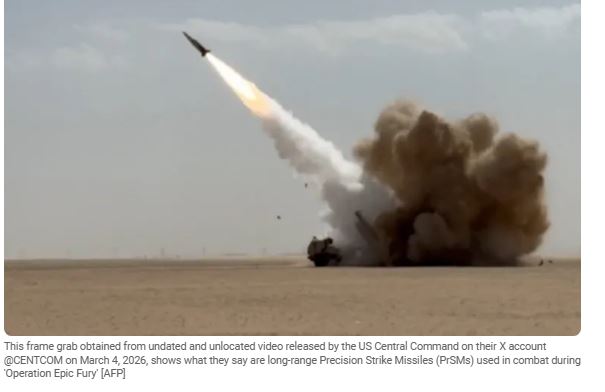
- 10 Mar 2026
In News:
The Precision Strike Missile recently drew global attention after being reportedly used by the United States Central Command during military operations involving Iran. The deployment marked the first operational use of the missile, highlighting advancements in long-range precision strike capabilities and modern battlefield technologies.
Overview of Precision Strike Missile (PrSM)
- The Precision Strike Missile (PrSM) is a surface-to-surface guided ballistic missile designed to strike targets at long distances with high accuracy. It is primarily developed and manufactured by Lockheed Martin for the United States Army.
- The missile entered operational service in late 2023 as part of efforts to modernize the US Army’s long-range artillery systems and enhance its ability to engage high-value targets from extended distances.
Key Features of the PrSM
1. Long-Range Precision Strike Capability: The missile is capable of striking targets at ranges exceeding 500 kilometres, enabling forces to engage strategic targets such as command centres, radar systems, air defence installations, and logistics hubs far beyond the battlefield.
2. Advanced Guidance Systems: The PrSM uses a combination of:
- Global Positioning System (GPS) navigation
- Inertial guidance systems
These technologies allow the missile to maintain high targeting accuracy even in adverse weather or electronic warfare environments.
3. Compatibility with Existing Launch Platforms
One of the key design advantages of the PrSM is its compatibility with existing artillery platforms, including:
- M142 High Mobility Artillery Rocket System
- M270A2 Multiple Launch Rocket System
This interoperability allows rapid deployment without requiring entirely new launch infrastructure.
Technological Architecture
The missile incorporates an open systems architecture and modular design, enabling future upgrades and integration of new technologies.
Key technological features include:
- Solid rocket propellant for propulsion
- Hypersonic-class ballistic trajectory enabling high-speed travel
- Integration with satellite, drone, and radar networks for enhanced targeting and battlefield coordination
These features allow the PrSM to function as part of a broader network-centric warfare system.
Safety and Payload Design
- The missile carries an Insensitive Munitions (IM) energetic payload, which reduces the risk of accidental detonation during handling, transport, or storage. This improves operational safety for military personnel and logistical operations.
Strategic Significance
The development and deployment of the Precision Strike Missile reflects broader trends in modern warfare, including:
- Increasing emphasis on long-range precision strike capabilities
- Integration of weapons systems into networked battlefield environments
- Replacement of older missile systems with more accurate and flexible platforms
The PrSM also strengthens the US Army’s ability to conduct deep-strike operations against critical enemy infrastructure while minimizing collateral damage through improved targeting precision.
Discovery of a Megalithic Rock-Cut Chamber in Kerala
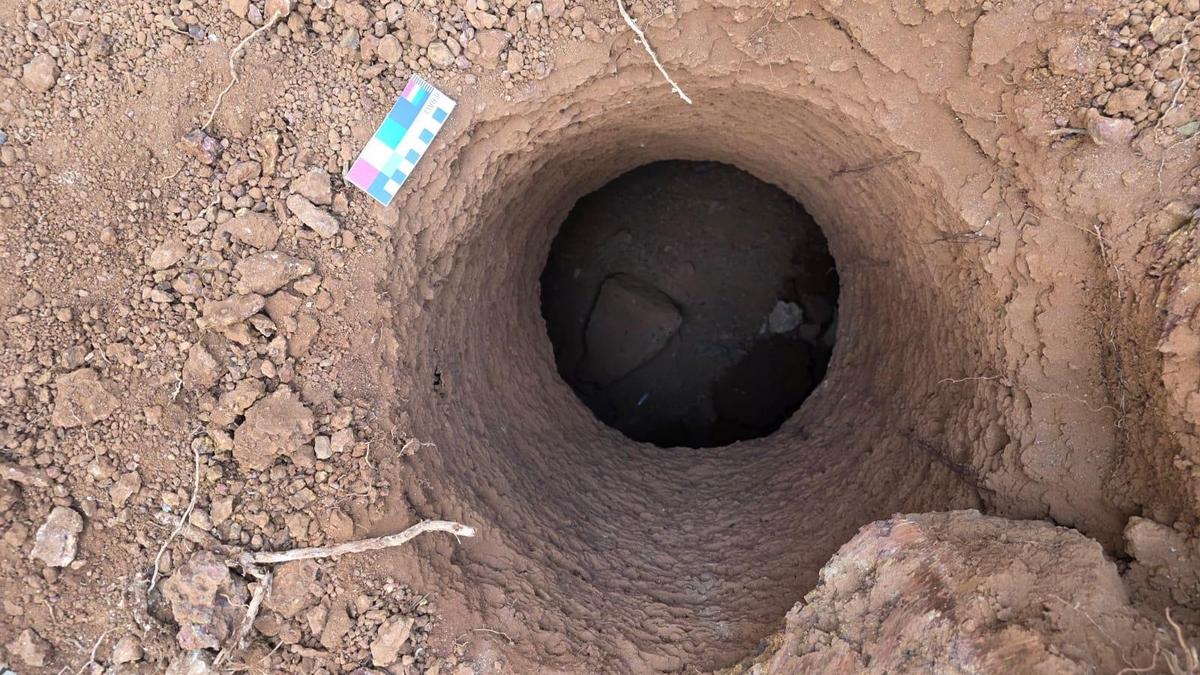
- 10 Mar 2026
In News:
A significant archaeological discovery has been made in Kasaragod district, where a Megalithic laterite rock-cut chamber was unearthed at Panayal. The finding provides valuable insights into the burial practices, technological development, and cultural traditions of prehistoric societies in South India. The chamber forms part of a larger megalithic burial complex, where pottery of various shapes and sizes was interred as part of ritual practices associated with funerary traditions.
Megalithic Culture: An Overview
- The Megalithic Culture refers to a prehistoric tradition marked by the construction of large stone structures known as megaliths. These monuments were typically used for burial and commemorative purposes and were often located away from habitation sites.
- Archaeological evidence indicates that the South Indian Megalithic culture flourished roughly between 1000 BCE and 100 CE, with its peak phase occurring between 600 BCE and 100 CE. The period represents a fully developed Iron Age culture, evidenced by the widespread use of iron tools and weapons.
Iron Age Characteristics
The Megalithic period in South India is closely associated with the Iron Age, during which iron technology was widely adopted. Archaeological excavations across the region have yielded:
- Iron weapons and tools
- Agricultural implements
- Pottery and burial goods
These findings indicate technological advancement and suggest that communities had well-developed systems of agriculture, craftsmanship, and warfare.
Geographical Distribution of Megalithic Sites
The main concentration of megalithic sites in India is found in the Deccan region, particularly south of the Godavari River. Several important archaeological sites have been identified across the country.
Prominent sites include:
- Brahmagiri and Chandravalli in Karnataka
- Junapani, Khapa, and Muhurjhari in Maharashtra
- Adichanallur in Tamil Nadu
Evidence of megalithic culture has also been found in regions beyond South India, including:
- The Punjab plains
- The Indo-Gangetic basin
- Rajasthan and Gujarat
- Burzahom
This wide distribution indicates that megalithic traditions were practiced across diverse ecological zones in the Indian subcontinent.
Burial Practices and Material Culture
The recently discovered rock-cut chamber in Kasaragod is part of a burial complex, suggesting elaborate funerary traditions among megalithic communities. These burial sites often contained:
- Pottery vessels
- Iron tools and weapons
- Ornaments and ritual objects
The placement of pottery within burial chambers indicates ritualistic beliefs about life after death and ancestor worship.
Subsistence and Lifestyle
- Archaeological evidence suggests that megalithic communities practiced a mixed subsistence economy, including: agriculture, hunting, fishing, and animal husbandry
- Rock paintings discovered at some sites depict scenes of hunting, cattle raids, and group dancing, offering glimpses into the social and cultural life of these early communities.
Significance of the Discovery
The Kasaragod rock-cut chamber contributes to a deeper understanding of:
- The spread of megalithic culture in South India
- Funerary architecture and burial rituals
- The development of Iron Age societies in the Deccan region
Such discoveries help archaeologists reconstruct the technological, social, and religious practices of prehistoric populations.
Denmark’s Elimination of Mother-to-Child Transmission of HIV and Syphilis

- 10 Mar 2026
In News:
Recently, Denmark was certified by the World Health Organization as the first country in the European Union to eliminate mother-to-child transmission (MTCT) of both HIV and Syphilis. This achievement represents a major public health success and demonstrates the effectiveness of strong maternal healthcare systems, universal testing, and timely treatment interventions.
What is Mother-to-Child Transmission (MTCT)?
Mother-to-Child Transmission (MTCT), also known as vertical transmission, refers to the spread of certain infections from a pregnant woman to her baby during pregnancy, childbirth and breastfeeding.
Without timely intervention, infections such as HIV and syphilis can lead to serious consequences including:
- Infant HIV infection
- Congenital syphilis
- Stillbirths and neonatal deaths
- Severe lifelong health complications
Therefore, preventing MTCT is a major priority in global maternal and child health programmes.
WHO Criteria for Elimination of MTCT
The WHO defines elimination of mother-to-child transmission through strict epidemiological and health system indicators. A country must achieve:
- Transmission rates below 50 cases per 100,000 live births, and
- More than 95% coverage of testing and treatment among pregnant women
These benchmarks ensure that both detection and treatment systems are robust enough to prevent transmission to newborns.
Global Context of EMTCT
Denmark joins a growing group of countries validated by the WHO for eliminating MTCT or making significant progress toward this goal. More than 20 countries and territories worldwide have achieved or are nearing this milestone.
Examples include:
- Caribbean nations such as Anguilla and Antigua and Barbuda
- South American countries such as Brazil
- African countries such as Botswana
- Asian nations including Malaysia and Maldives
These achievements demonstrate that elimination is possible across different health systems when strong policies and universal maternal healthcare are implemented.
WHO’s Triple Elimination Strategy
To address maternal transmission of infectious diseases, WHO promotes a Triple Elimination Strategy targeting: HIV, Syphilis, and Hepatitis B
The strategy is built on four key pillars:
- Universal access to antenatal care
- Integrated testing for maternal infections
- Effective treatment and prevention protocols
- Strong health systems supported by community engagement and human-rights protections
This integrated approach helps ensure that maternal health services detect infections early and prevent transmission to infants.
Understanding the Diseases
HIV (Human Immunodeficiency Virus)
- HIV attacks the body’s immune system, particularly CD4 cells, weakening the body’s ability to fight infections.
- If untreated, HIV can progress to Acquired Immunodeficiency Syndrome (AIDS), making individuals vulnerable to life-threatening infections and cancers.
Syphilis
- Syphilis is a sexually transmitted bacterial infection caused by Treponema pallidum. The disease progresses through stages that may include painless sores, skin rashes, and severe complications affecting the heart, brain, and nervous system if left untreated. Congenital syphilis can cause severe health problems in newborns.
Significance of Denmark’s Achievement
Denmark’s certification highlights several important aspects of effective public health policy:
- Strong maternal healthcare and antenatal screening systems
- Universal testing and treatment for pregnant women
- Integration of infectious disease control with maternal health services
- Sustained public health surveillance and policy commitment
This milestone also reinforces the feasibility of eliminating vertical transmission of infectious diseases through coordinated healthcare strategies.
India’s 7th National Report to the Convention on Biological Diversity (CBD)
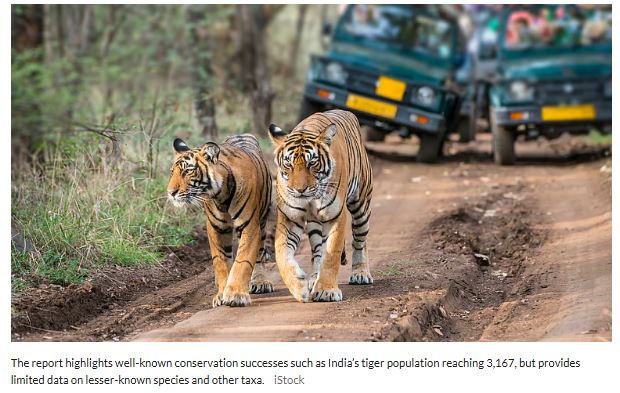
- 08 Mar 2026
In News:
India has submitted its 7th National Report to the Convention on Biological Diversity, assessing the country’s progress toward biodiversity conservation and sustainable use targets by 2030. The report evaluates India’s performance against 23 National Biodiversity Targets (NBTs) that are aligned with the Kunming-Montreal Global Biodiversity Framework.
The assessment indicates that only two of the 23 targets are currently on track, although improvements have been observed in policy frameworks, forest cover, and ecosystem restoration initiatives.
Key Findings of the 7th National Report
The report highlights both achievements and gaps in India’s biodiversity governance.
Progress Areas
- Strengthening of policy and institutional frameworks for biodiversity conservation.
- Improvements in forest cover and ecosystem restoration programmes.
- Greater integration of biodiversity concerns into national development policies.
Areas of Concern
- Only two National Biodiversity Targets are clearly on track.
- Several targets related to species conservation, ecosystem protection, and sustainable use of resources require accelerated action.
- Implementation gaps remain due to limited resources, data gaps, and increasing anthropogenic pressures.
The findings underline the need for stronger implementation measures to achieve biodiversity goals by 2030.
Convention on Biological Diversity (CBD)
The Convention on Biological Diversity is one of the most important international agreements addressing biodiversity conservation.
Origin and Evolution
- Opened for signature at the Rio Earth Summit.
- Entered into force on 29 December 1993.
- The first Conference of the Parties (COP) was held in 1994 in the Bahamas.
Membership and Secretariat
- Ratified by 196 countries, making it one of the most widely adopted international treaties.
- The United States remains the only UN member state that has not ratified the convention.
- Secretariat located in Montreal.
Three Core Objectives
- Conservation of biological diversity
- Sustainable use of biodiversity components
- Fair and equitable sharing of benefits arising from genetic resources
The governing body of the CBD is the Conference of the Parties (COP), which meets every two years.
Related Protocols under the CBD
Two important supplementary agreements strengthen the implementation of the convention:
- Cartagena Protocol on Biosafety – focuses on biosafety in biotechnology.
- Nagoya Protocol – governs equitable sharing of benefits from genetic resources.
Kunming–Montreal Global Biodiversity Framework (KMGBF)
The Kunming-Montreal Global Biodiversity Framework was adopted during COP15 of the CBD in 2022 in Montreal. It is considered a landmark global agreement to address the biodiversity crisis.
Key Features
- 23 global targets to be achieved by 2030.
- Four long-term goals for 2050 aimed at safeguarding biodiversity for present and future generations.
- Focus areas include ecosystem restoration, protection of biodiversity-rich areas, reduction of pollution, and sustainable use of biological resources.
- The framework is not legally binding, but it guides national biodiversity strategies and reporting.
Gravity Bombs
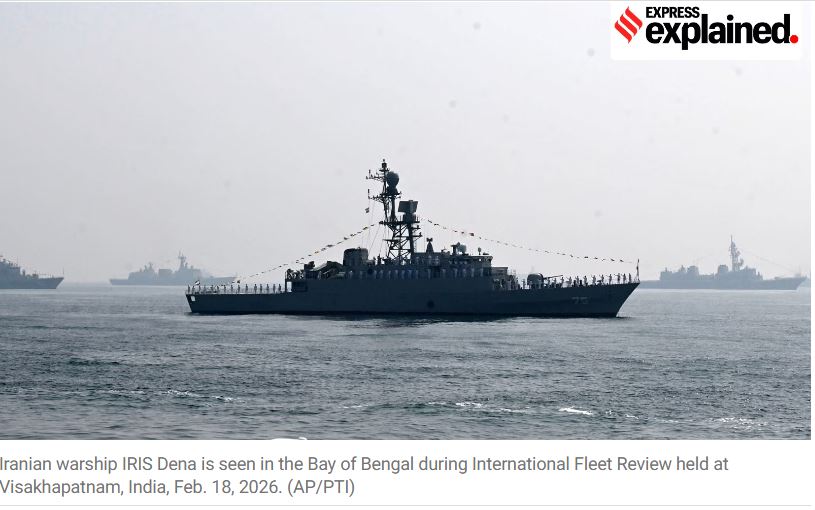
- 08 Mar 2026
In News:
Recent developments in the ongoing tensions involving United States and Iran have highlighted the continued relevance of traditional aerial munitions and the legal complexities of warfare at sea. The Pete Hegseth announced that the United States would shift toward the use of gravity bombs in its military operations against Iran, signalling a significant tactical adjustment in modern conflict.
What is a Gravity Bomb?
- A gravity bomb, also known as a free-fall bomb, is an unpowered aerial munition dropped from an aircraft. After release, it travels toward its target purely under the influence of gravity, with its trajectory determined by the aircraft’s speed, altitude, and release point.
- Unlike powered missiles such as the Tomahawk cruise missile, gravity bombs do not contain propulsion systems. Despite their origins in World War-era warfare, they remain widely used by the United States Air Force in conflicts including those in Iraq, Afghanistan, and Syria.
Modernisation of Gravity Bombs
Modern gravity bombs have undergone significant technological upgrades. Many are equipped with Joint Direct Attack Munition (JDAM) kits that convert conventional bombs into precision-guided munitions.
Key features of JDAM kits include:
- GPS guidance systems
- Steerable tail fins
- Improved targeting accuracy in adverse weather conditions
This modernization allows gravity bombs to combine the low cost of traditional munitions with the precision of modern guided weapons.
Major Types of Gravity Bombs Used by the US
The United States primarily deploys bombs from the Mark 80 series, which vary by size and operational purpose:
- Mk-82 (500 lb) – Used against relatively soft targets such as vehicles, troop concentrations, or radar installations.
- Mk-83 (1,000 lb) – Designed to damage reinforced structures and command centres.
- Mk-84 (2,000 lb) – A heavy bomb capable of penetrating hardened structures and bunker-type facilities.
With JDAM upgrades, these bombs can achieve high precision at relatively low cost—approximately $25,000–$30,000 per unit, making them far cheaper than advanced cruise missiles.
Operational Advantages and Limitations
Advantages
- Cost-effective compared to precision missiles
- High payload capacity
- Compatibility with precision-guidance kits
Limitations
- Aircraft must fly relatively close to the target to deploy them.
- Effective deployment generally requires air superiority and minimal air-defence threats.
Thus, gravity bombs are typically used in environments where a military has already established control of the airspace.
Legal Framework Governing Maritime Conflict
The use of military force at sea—such as attacks on ships during conflict—is regulated by international law. Key legal principles arise from the United Nations Convention on the Law of the Sea and customary international humanitarian law (IHL).
Important legal principles include:
- Distinction: Combatants must distinguish between military targets and civilian vessels.
- Proportionality: Attacks should avoid excessive civilian damage relative to the anticipated military advantage.
- Military Necessity: Actions must be justified by a legitimate military objective.
- Protection of Neutral Shipping: Ships belonging to neutral states generally enjoy protection unless directly involved in hostilities.
The San Remo Manual on International Law Applicable to Armed Conflicts at Sea (1994) also provides widely accepted guidelines on naval warfare and maritime targeting.
Raisina Dialogue 2026
- 08 Mar 2026
In News:
The 11th edition of the Raisina Dialogue 2026 was held in New Delhi. The annual dialogue has emerged as India’s foremost platform for discussions on geopolitics, geo-economics, and global governance, bringing together global leaders, policymakers, diplomats, scholars, and strategic experts to deliberate on pressing international issues.
About the Raisina Dialogue
- The Raisina Dialogue was launched in 2016 by the Ministry of External Affairs in collaboration with the Observer Research Foundation.
- Named after Raisina Hills in New Delhi, the conference has evolved into a major global forum for strategic discussions. It is often compared to leading international strategic conferences such as the Munich Security Conference and the Shangri-La Dialogue.
- The forum convenes representatives from governments, academia, industry, and civil society to address complex global challenges ranging from security to economic governance.
Theme of Raisina Dialogue 2026
The theme for the 2026 edition was “Samskara: Assertion, Accommodation, Advancement.”
The theme reflects three key ideas:
- Assertion – Civilisations and nations asserting their identity and strategic interests.
- Accommodation – Managing diversity and cooperation in an interconnected world.
- Advancement – Progress through innovation, technology, and collaborative global governance.
Major Takeaways from Raisina Dialogue 2026
1. Launch of Raisina Science Diplomacy Initiative: One of the landmark announcements was the Raisina Science Diplomacy Initiative (SDI), aimed at integrating science, technology, and innovation into foreign policy frameworks.
Key focus areas include:
- Artificial Intelligence governance
- Semiconductor supply chains
- India’s Digital Public Infrastructure (DPI) for developing countries
The initiative seeks to strengthen the role of technology in shaping international cooperation and diplomacy.
2. Emergence of a Multipolar Global Order: Participants widely acknowledged the ongoing transition toward a multipolar world, where power is increasingly distributed among multiple regional and global actors.
Key observations included:
- Growing influence of the Global South in shaping global governance.
- Rising importance of South–South cooperation and flexible plurilateral groupings.
India’s strategic engagements through groupings such as BRICS, the India-Middle East-Europe Economic Corridor, and the India-France-UAE Trilateral illustrate its role as a key bridge between developed and developing worlds.
3. Call for Reformed Multilateralism: Another major theme was the need to reform global governance institutions to reflect contemporary geopolitical realities.
In particular:
- Participants emphasised reforms of the United Nations Security Council.
- There was growing international support for India’s permanent membership in a reformed UNSC.
4. Maritime Security and Supply Chain Protection: The dialogue also highlighted the importance of safeguarding global maritime trade routes and infrastructure, particularly in light of rising geopolitical tensions.
Key concerns included:
- Protection of undersea communication cables
- Security of global supply chains
- Stability of strategic maritime zones such as the Indian Ocean, Red Sea, and Indo-Pacific region
Takydromus ultapanensis

- 08 Mar 2026
In News:
Recent research has led to the discovery of a new species of Asian grass lizard, Takydromus ultapanensis, from the Manas Biosphere landscape in Assam. The finding highlights the rich biodiversity of Northeast India and underscores the importance of conserving fragile forest ecosystems that harbour previously undocumented species.
About the Newly Discovered Species
Takydromus ultapanensis is a newly identified member of the Asian grass lizard genus (Takydromus), a group known for slender bodies and long tails adapted to life in grassland and forest vegetation. The species was discovered in the Ultapani Reserve Forest located in Kokrajhar district of Assam, within the larger Manas landscape.
Unlike many of its related species that typically inhabit montane or subtropical environments, T. ultapanensis occupies lowland semi-evergreen forests interspersed with waterlogged grasslands and patches of ferns. This ecological preference distinguishes it from several of its congeners and indicates adaptation to a unique microhabitat within the Manas ecosystem.
Habitat and Behaviour
Researchers observed individuals of this species basking on fern bushes in open patches of forest. These areas are often intersected by seasonal water channels, creating a moist and complex habitat structure suitable for small reptiles. The lizards appear to rely on vegetation cover and sunlit clearings for thermoregulation and feeding.
Such habitats are characteristic of the Manas Biosphere landscape, a biodiversity-rich region located along the Indo-Bhutan border and known for its mixture of grasslands, forests, and wetlands.
Distinct Morphological Characteristics
The newly identified species exhibits several morphological differences that distinguish it from closely related lizards found in Northeast India. In particular, T. ultapanensis differs from species such as Takydromus khasiensis and Takydromus sikkimensis in:
- Scale patterns
- Body proportions
- Diagnostic head features
These differences were crucial in confirming it as a distinct species rather than a variation of existing grass lizards.
Conservation Concerns
At present, Takydromus ultapanensis has been recorded only from a single forest range in the Ultapani Reserve Forest. Such a limited distribution raises concerns about its vulnerability to habitat disturbance.
The Manas landscape, although ecologically significant, faces pressures from habitat fragmentation, land-use change, and human activities. Species restricted to narrow habitats are particularly vulnerable to environmental change, highlighting the need for continued ecological monitoring and habitat protection.
Italy recognises Femicide as a Crime

- 08 Mar 2026
In News:
The Italian Parliament recently enacted a landmark law that recognises femicide as a distinct criminal offence and prescribes life imprisonment for the gender-motivated killing of women. The legislation, passed with bipartisan support, marks a significant step in addressing gender-based violence and aligns Italy with a small but growing group of countries that legally recognise femicide as a specific crime.
What is Femicide?
Femicide refers to the intentional killing of women or girls because of their gender. It is widely recognised by international organisations as the most extreme form of violence against women and girls (VAWG).
According to the United Nations, femicide often occurs in contexts such as:
- Intimate partner violence (current or former partners)
- Family-related killings, including so-called honour killings
- Gender-motivated murders by other perpetrators
Globally, many cases of femicide occur within domestic settings, reflecting deeper structural inequalities and patriarchal norms that perpetuate violence against women.
Italy’s Law Against Femicide
Italy’s legislation introduces femicide as a separate category within the criminal code, making gender-motivated killing punishable with life imprisonment.
Key Features of the Law
- Recognises gender as a motive for homicide.
- Introduces life imprisonment as the maximum penalty.
- Strengthens legal responses to crimes linked with gender-based violence.
- Passed amid growing concern over violence against women in the country.
The law was passed on 25 November, coinciding with the International Day for the Elimination of Violence Against Women, highlighting the symbolic and policy significance of the measure.
Why Recognising Femicide as a Separate Crime Matters
Treating femicide as a distinct offence has several legal and policy implications:
- Acknowledging Gender Motivation: It explicitly recognises that certain killings stem from systemic discrimination and patriarchal violence.
- Improved Data Collection: Legal recognition enables governments to track gender-based killings more accurately, aiding evidence-based policymaking.
- Targeted Criminal Justice Response: Special legal provisions allow harsher penalties and focused investigations.
- Public Awareness and Social Change: Naming the crime brings visibility to the structural nature of violence against women and helps mobilise social and institutional responses.
Global Legal Trends
- Italy joins a limited number of countries that have adopted specific legal provisions for femicide, including: Mexico, Chile, Cyprus, Morocco, North Macedonia, Türkiye and Gabon
- Several Latin American countries have also criminalised femicide as part of broader gender-violence laws, reflecting the region’s efforts to combat high rates of gender-based killings.
India’s Legal Framework on Gender-Based Killings
India does not legally recognise femicide as a separate criminal category. Instead, gender-based violence and killings are addressed through general criminal provisions and specific protective laws for women.
Important legislations include:
- Protection of Women from Domestic Violence Act, 2005
- Dowry Prohibition Act, 1961
- Prohibition of Child Marriage Act, 2006
- National Commission for Women Act, 1990
Murders of women motivated by dowry demands, honour, or domestic violence are typically prosecuted under general homicide provisions of the Indian Penal Code along with these special laws.
International Observance
- The International Day for the Elimination of Violence Against Women is observed annually on 25 November, following its designation by the United Nations General Assembly in 1999. The day seeks to raise awareness and mobilise action against violence directed at women and girls worldwide.
Taragiri

- 07 Mar 2026
In News:
The induction of INS Taragiri (Yard 12653), the fourth Nilgiri-class (Project 17A) stealth frigate, marks a significant milestone in India’s efforts to strengthen indigenous warship building and maritime security. The vessel has been delivered to the Indian Navy by Mazagon Dock Shipbuilders Limited (MDL) and represents the third Project 17A ship constructed by the shipyard. The induction highlights India’s progress in advanced naval shipbuilding and self-reliance in defence production.
Legacy of INS Taragiri
- The new frigate continues the legacy of the earlier INS Taragiri, a Leander-class frigate that served in the Indian Navy for 33 years (1980–2013). Carrying forward the same name symbolises continuity in naval tradition while representing a new generation of technologically advanced warships.
- The ship has been designed by the Warship Design Bureau (WDB) of the Indian Navy and constructed using the Integrated Construction approach, a modern shipbuilding technique that enables simultaneous fabrication of different blocks of the vessel, thereby reducing construction time and improving efficiency.
Project 17A: India’s Stealth Frigate Programme
Project 17A is an ambitious Indian naval programme aimed at building seven Nilgiri-class stealth frigates as upgraded successors to the Shivalik-class frigates. These ships are designed for enhanced stealth, survivability, and combat capabilities.
The construction of the seven frigates is distributed between two major Indian shipyards:
- Four ships — Nilgiri, Udaygiri, Taragiri, and Mahendragiri — are being built by Mazagon Dock Shipbuilders Limited in Mumbai.
- Three ships — Himgiri, Dunagiri, and Vindhyagiri — are being constructed by Garden Reach Shipbuilders and Engineers (GRSE) in Kolkata.
The ships are being built through the Integrated Construction methodology, which allows for pre-outfitting during block fabrication, thereby reducing build time and improving production efficiency.
An important aspect of the project is indigenisation, with approximately 75% of the systems and equipment sourced from Indian industries, aligning with the government’s ‘Atmanirbhar Bharat’ initiative in defence manufacturing.
Key Features and Capabilities
The Nilgiri-class frigates are designed for blue-water operations, enabling the Indian Navy to operate effectively across distant maritime regions. These ships are versatile frontline assets capable of performing multiple combat roles.
1. Propulsion System: The ships are powered by a Combined Diesel or Gas (CODOG) propulsion system, which integrates diesel engines and gas turbines, each connected to a Controllable Pitch Propeller (CPP). This configuration provides both high speed and fuel efficiency.
2. Advanced Weapons Systems: Project 17A frigates are equipped with a range of modern weapons, including:
- **BrahMos supersonic cruise missiles
- Long Range Surface-to-Air Missile (LRSAM) / Barak-8 system
- Lightweight anti-submarine torpedoes
- Indigenous Rocket Launchers (IRL)
These weapons enable the ships to effectively engage surface, aerial, and underwater threats.
3. Sensors and Electronic Systems: The frigates are fitted with sophisticated surveillance and combat management systems, including:
- Multi-mission radar and surface-surveillance radar
- Airborne early-warning radar integration
- Shakti Electronic Warfare Suite
- HUMSA-NG Sonar for anti-submarine warfare
Additionally, the vessels incorporate an Integrated Platform Management System (IPMS) for efficient monitoring and control of onboard machinery and systems.
Project HANUMAN
- 07 Mar 2026
In News:
Human–wildlife conflict has emerged as a major environmental and socio-economic challenge in India, particularly in forest-fringe regions where expanding human settlements intersect with wildlife habitats. To address this issue, the Government of Andhra Pradesh has launched Project HANUMAN, an innovative programme aimed at strengthening wildlife rescue, monitoring, and community protection mechanisms while promoting coexistence between humans and wildlife.
About Project HANUMAN
Project HANUMAN stands for Healing and Nurturing Units for Monitoring, Aid and Nursing of Wildlife. The initiative is designed to mitigate conflicts in forest-bordering villages where incidents such as elephant raids, crop damage, and snake bites are common. By combining modern technology, rapid response mechanisms, and community participation, the programme aims to ensure both human safety and wildlife conservation.
The project focuses particularly on forest-fringe areas that frequently experience wildlife incursions, thereby seeking to reduce casualties, prevent retaliatory killings of animals, and improve wildlife rescue operations.
Key Features of the Project
1. Rapid Response and Rescue Infrastructure: The initiative includes a strong emergency response network comprising:
- 100 GPS-enabled vehicles for field monitoring and quick deployment.
- 93 Rapid Response Units to address wildlife emergencies.
- 7 specialised wildlife ambulances equipped for rescue and medical aid.
2. Wildlife Rescue Centres: Four dedicated rescue centres have been established in key locations:
- Visakhapatnam
- Rajamahendravaram
- Tirupati
- Byrluti
These centres will provide facilities for treatment, rehabilitation, and temporary shelter of rescued wildlife.
3. Community Participation through ‘Vajra’ Teams: The project encourages local participation through “Vajra” volunteer teams at the village level. These teams assist forest officials in handling minor incidents such as snake rescues and early reporting of wildlife movement, thereby reducing panic and preventing escalation.
4. Technology-based Monitoring: Advanced technologies form a key component of the programme:
- Artificial Intelligence (AI) systems to track wildlife movements and generate early warning alerts for nearby settlements.
- A dedicated HANUMAN mobile application that allows citizens to report wildlife sightings, conflict incidents, and emergencies, improving coordination between communities and forest authorities.
5. Improved Compensation Mechanism: To support affected communities and reduce hostility towards wildlife, the government has enhanced compensation provisions:
- ?10 lakh compensation for human deaths caused by wildlife.
- ?2 lakh for injuries.
- Market-value compensation for livestock losses.
UNCLOS and Maritime Security

- 07 Mar 2026
In News:
Recent reports of the sinking of the Iranian frigate IRIS Dena off the south-western coast of Sri Lanka, allegedly following a torpedo strike by a United States Navy submarine amid escalating tensions in the Middle East, have renewed attention on the legal regime governing maritime spaces. Such incidents highlight the importance of international maritime law, particularly the United Nations Convention on the Law of the Sea (UNCLOS), which regulates state rights and responsibilities in the world’s oceans.
United Nations Convention on the Law of the Sea (UNCLOS)
UNCLOS is a comprehensive international treaty that establishes the legal framework for the governance and use of oceans and seas. Adopted in 1982 at Montego Bay, Jamaica, the convention entered into force in 1994. Due to its wide scope and significance, it is often described as the “Constitution of the Oceans.”
The convention defines maritime boundaries of coastal states, regulates navigation rights, governs exploitation of marine resources, and establishes obligations for environmental protection and dispute settlement. It thus provides a structured legal order for activities such as shipping, fishing, seabed mining, and naval operations.
Currently, 168 parties, including the European Union, are members of the convention. Countries such as India, Japan, and China are parties to UNCLOS. The United States has signed the convention but has not ratified it, although many of its provisions are followed as customary international law.
Maritime Zones under UNCLOS
UNCLOS divides the oceans into several legal zones, each conferring different rights and responsibilities to coastal and other states.
- Territorial Sea (up to 12 nautical miles): A coastal state exercises full sovereignty over this zone, similar to its land territory. However, foreign ships are allowed the right of innocent passage, meaning they may pass through the waters as long as they do not threaten the security or laws of the coastal state.
- Contiguous Zone (12–24 nautical miles): In this zone, the coastal state does not enjoy complete sovereignty but can enforce laws relating to customs, immigration, fiscal regulations, sanitation, and security to prevent violations within its territory or territorial sea.
- Exclusive Economic Zone (EEZ) (up to 200 nautical miles): Within the EEZ, the coastal state has sovereign rights for exploring, exploiting, conserving, and managing natural resources, including fisheries, oil, and gas. However, other states retain freedoms of navigation and overflight, as well as the laying of submarine cables and pipelines.
- High Seas (International Waters): Areas beyond national jurisdiction are classified as the high seas. No state can claim sovereignty over these waters, and they are governed by international law and the principles of UNCLOS, ensuring freedoms such as navigation, fishing, and scientific research.
Relevance to the Recent Incident
The alleged strike on the Iranian warship near Sri Lanka highlights the strategic significance of international waters and the legal complexities surrounding naval operations. While states retain freedom of navigation and military presence in international waters, such actions can raise questions regarding maritime security, use of force, and adherence to international law.
Golestan Palace

- 07 Mar 2026
In News:
The historic Golestan Palace in Tehran, Iran, recently attracted international attention after reports indicated that the palace complex suffered structural damage due to shockwaves and debris from airstrikes amid escalating tensions in the Middle East. The site, recognised as a UNESCO World Heritage Site, represents one of the most important symbols of Persian royal heritage and architecture. The incident has raised concerns about the vulnerability of cultural heritage sites during armed conflicts.
Historical Background
- Golestan Palace is one of the oldest historic monuments in Tehran and has served as a major centre of political and royal power for centuries. The origins of the complex date back to the 16th century during the Safavid Dynasty, when Tehran began to emerge as an important political centre. Initially constructed as a fortified citadel for Safavid rulers, the site gradually evolved into an extensive royal complex with gardens, palatial buildings, and ceremonial halls.
- The palace gained greater prominence during the rule of the Qajar dynasty, which came to power in 1779 and declared Tehran the capital of Iran. During this period, Golestan Palace became the official seat of government and royal residence. Later, the Pahlavi dynasty also used the complex for important state ceremonies. Reflecting its historical significance and architectural value, UNESCO inscribed the palace complex on the World Heritage List in 2013.
Architectural and Cultural Features
- Golestan Palace is widely admired for its unique architectural style that blends traditional Persian aesthetics with European influences introduced during the 19th century. This synthesis reflects the cultural exchanges and modernization efforts of the Qajar rulers.
- The palace complex is particularly renowned for its vibrant tile work, which features intricate floral motifs, geometric patterns, and calligraphic inions. Rich colours such as turquoise, cobalt blue, yellow, pink, and white are used extensively, reflecting the Persian artistic tradition that emphasises symmetry, detail, and storytelling through design.
- In addition to decorative art, the complex also preserves valuable cultural archives, including early Iranian photography, historical documents, and royal artefacts from the Qajar period.
Important Structures within the Complex
The Golestan Palace complex comprises several important buildings and ceremonial halls:
- Shams-ol-Emareh (Edifice of the Sun): Built in the 1860s by Naser al-Din Shah Qajar, it is one of the most iconic structures in the complex and symbolises the influence of European architectural styles on Persian royal architecture.
- Marble Throne Hall (Takht-e-Marmar): A historically significant hall used for royal coronations and official state ceremonies.
- Mirror Hall: Famous for its elaborate mirror mosaics and luxurious interior decoration, representing the refinement of Persian decorative art.
- Other ceremonial halls: The complex also includes halls such as the Salam Hall, Brilliant Hall, Ivory Hall, and Reception Hall, which were used for diplomatic gatherings and royal functions.
- Museum buildings: Several museums within the palace display Qajar-era paintings, royal gifts, manus, and historical artefacts.
Significance of the Site
Golestan Palace represents the artistic, political, and cultural evolution of Iran over several centuries. It illustrates the transition of Persian architecture during the Qajar period, when exposure to European ideas led to new forms of artistic expression while retaining traditional Persian elements. The site also reflects Iran’s royal traditions, including coronations and diplomatic ceremonies.
World Obesity Atlas 2026
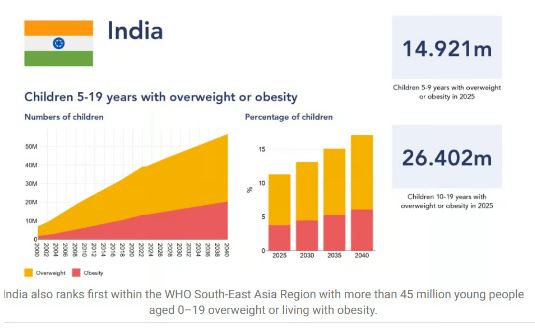
- 07 Mar 2026
In News:
- Childhood obesity has emerged as a significant public health challenge globally, with developing countries increasingly witnessing a rapid rise in overweight children due to changing lifestyles, dietary patterns, and urbanisation.
- The World Obesity Atlas 2026, released by the World Obesity Federation on World Obesity Day (4 March), highlights the alarming scale of the problem. The report reveals that India ranks second globally in the number of children living with overweight and obesity, underscoring the urgent need for policy interventions and preventive strategies.
Global Scenario
Globally, childhood obesity has increased sharply in the past decade. The report estimates that more than one in five children (20.7%) aged 5–19 years are overweight or obese, compared to 14.6% in 2010. If current trends continue, around 507 million children worldwide could be overweight or obese by 2040.
A large proportion of children with high Body Mass Index (BMI) is concentrated in a few countries. China, India and the United States together account for over 10 million children each living with obesity, making them the major contributors to the global burden.
Childhood obesity also significantly increases the risk of early onset of non-communicable diseases (NCDs). By 2040, it is projected that:
- 57 million children could show early signs of cardiovascular disease, particularly elevated triglycerides.
- 43 million children may develop hypertension.
These projections highlight the long-term health implications of obesity during childhood.
India’s Obesity Scenario
India faces a dual burden of undernutrition and rising obesity, especially among children and adolescents. According to the World Obesity Atlas 2026, India ranks second after China in the number of children with high BMI.
Key estimates for 2025 include:
- 41 million children with high BMI
- 14 million children living with obesity
The health consequences are expected to worsen between 2025 and 2040:
- Hypertension cases: 2.99 million → 4.21 million
- Hyperglycaemia: 1.39 million → 1.91 million
- High triglycerides: 4.39 million → 6.07 million
- Metabolic dysfunction-associated steatotic liver disease (MASLD) (earlier known as NAFLD): 8.39 million → 11.88 million
Lifestyle and nutrition patterns further aggravate the issue:
- 74% of adolescents (11–17 years) fail to meet recommended physical activity levels.
- Only 35.5% of school-age children receive school meals regularly.
- 32.6% of infants (1–5 months) experience sub-optimal breastfeeding practices.
Key Challenges
1. Rising Burden of Non-Communicable Diseases (NCDs): Obesity significantly increases the risk of chronic illnesses such as diabetes, hypertension, and cardiovascular diseases. NCDs already account for over 43 million deaths globally each year.
2. Economic and Productivity Loss: Obesity also imposes a large economic burden. In 2019, the cost of overweight and obesity in India was estimated at $28.95 billion, equivalent to 1.02% of GDP (around ?1,800 per capita). Without adequate interventions, this burden may rise to ?4,700 per capita by 2030, or 1.57% of GDP.
3. Urbanisation and Lifestyle Changes: Urban exposure increases obesity risk significantly:
- 1.91 times higher for those living in urban areas up to 5 years
- 2.05 times higher for 6–10 years
- 2.40 times higher for more than 10 years
Sedentary lifestyles, increased consumption of processed foods, and reduced physical activity are major contributing factors.
Government Initiatives
The Government of India has introduced several initiatives to tackle malnutrition and promote healthier lifestyles:
- POSHAN Abhiyaan (National Nutrition Mission): Focuses on improving nutritional outcomes among children, adolescents, and women through convergence of nutrition programmes.
- Fit India Movement: Encourages citizens to adopt active lifestyles and regular physical activity.
- Eat Right India: Led by the Food Safety and Standards Authority of India, it promotes healthy diets, food safety, and reduction of unhealthy food consumption.
- School Health and Wellness Programme: Aims to promote health awareness, physical fitness, and behavioural change among school students.
Kosi River
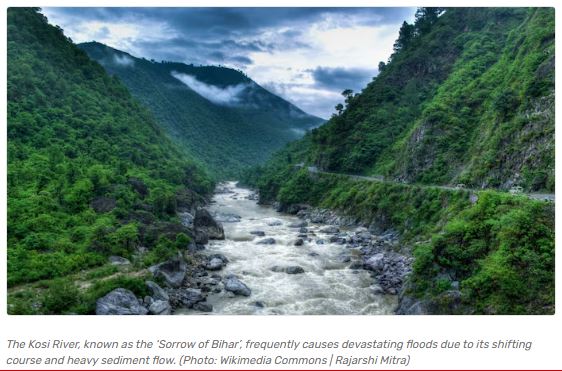
- 06 Mar 2026
In News:
The Kosi River is a major transboundary river of the Ganga River system, flowing through China (Tibet), Nepal, and India. It is widely known as the “Sorrow of Bihar” because of its frequent and devastating floods that affect large parts of northern Bihar.
Recent observations indicate that the river has shifted its course westward by more than 100 km over the past two centuries, highlighting its highly dynamic and unstable nature.
Geographical Features and Course
- The Kosi River originates in the Himalayan region of Nepal and Tibet and flows through Nepal before entering the plains of India.
- Formation: The river is formed by the confluence of three major Himalayan streams: Sun Kosi, Arun Kosi, Tamur Kosi. These rivers originate in the Himalayan mountains and join in eastern Nepal to form the main Kosi River.
Course of the River
- The river flows through mountainous terrain in Nepal and receives several tributaries.
- About 48 km north of the India–Nepal border, it passes through the Chatra Gorge in the Siwalik Hills.
- After emerging from the hills, it enters the alluvial plains of Bihar in northern India.
- Finally, it joins the Ganges River south of Purnea after travelling approximately 724 km.
Drainage Basin
- The Kosi basin covers an area of about 74,500 sq km, of which only around 11,070 sq km lies within India. Most of the catchment area lies in Nepal and the Himalayan region, which strongly influences the river’s hydrology.
- The basin’s sandy and fertile soils support agriculture, particularly the cultivation of maize (corn).
Major Tributaries
- The Kosi river system consists of seven major tributaries, which are collectively known as the Sapta Kosi (Seven Kosis): Sun Kosi, Tama Kosi (Tamba Kosi), Dudh Kosi, Indravati, Likhu, Arun, Tamur (Tamor)
- These tributaries drain large parts of the Himalayan watershed, contributing significant water and sediment to the river.
Why is the Kosi Called the “Sorrow of Bihar”?
Frequent Flooding: The Kosi River is notorious for severe floods in northern Bihar, causing large-scale damage to: agriculture, infrastructure, and settlements.
Heavy Sediment Load: The river carries large amounts of silt and sediment from the young and fragile Himalayan mountains. During the monsoon season, this sediment deposition raises the riverbed, increasing the likelihood of flooding.
Shifting Course: One of the most striking features of the river is its frequent change in course.
- Over the last 200–250 years, the river has shifted more than 100 km from east to west across the plains of Bihar.
- This phenomenon creates new floodplains while abandoning older channels.
Challenges Associated with the Kosi River
The dynamic nature of the Kosi poses several challenges:
- Recurring floods and displacement of populations
- Damage to agriculture and infrastructure
- Riverbank erosion and channel migration
- Transboundary water management issues between India and Nepal
Efforts such as embankment construction and flood-control projects have been implemented, but managing the river remains difficult due to its high sediment load and unstable course.
Debrigarh Wildlife Sanctuary
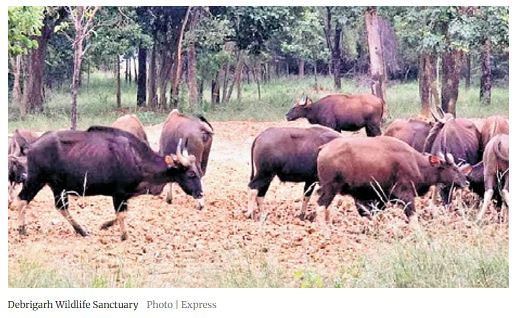
- 06 Mar 2026
In News:
The Debrigarh Wildlife Sanctuary in Odisha is set to host the second edition of the “Indian Bison Fest”, a conservation and eco-tourism initiative aimed at highlighting the sanctuary’s biodiversity and raising awareness about the protection of the Indian bison (Gaur). The event also seeks to promote community participation and sustainable tourism in the region.
Debrigarh Wildlife Sanctuary
Location and Geographical Features
- Debrigarh Wildlife Sanctuary is located in Bargarh district of Odisha, near the famous Hirakud Dam on the Mahanadi River. Hirakud Dam is notable for being the longest earthen dam in the world and one of the longest dams in India.
- The sanctuary forms part of the Hirakud reservoir ecosystem, which supports diverse flora and fauna as well as seasonal migratory birds.
Historical Significance
- The sanctuary holds historical importance due to its association with Veer Surendra Sai, a prominent freedom fighter from Odisha who led resistance against British rule. During the rebellion, his operational base at Barapathara was located within the present sanctuary area.
Ecological Characteristics
- Vegetation: The sanctuary is dominated by mixed and dry deciduous forests. Major plant species include: Sal, Asana, Bija, Amla, Dhaura. These forests provide suitable habitats for several large mammals and birds.
- Faunal Diversity: Debrigarh Wildlife Sanctuary hosts a rich variety of wildlife, including: Indian leopard, Sloth bear, Chousingha (four-horned antelope), Sambar deer, Gaur (Indian bison), Wild boar, Dhole (Indian wild dog). The sanctuary is also an important wintering ground for migratory birds. Common bird species include: Crested serpent eagle, Flowerpeckers, Red-vented bulbul, Tree pie, Drongo, Oriental white-eye
Indian Bison (Gaur)
General Characteristics
Gaur, commonly known as the Indian bison, is the largest species among wild cattle belonging to the Bovidae family. It is characterized by:
- a massive and muscular body,
- a prominent grey ridge on the forehead between the horns,
- large horns that curve upward from the sides of the head.
Distribution: Gaurs are indigenous to South and Southeast Asia, with significant populations found in India’s forested regions.
Habitat
They typically inhabit:
- evergreen and semi-evergreen forests
- moist deciduous forests
- forest landscapes with open grasslands and abundant water sources
Gaurs generally prefer hilly terrains below 1,500–1,800 metres altitude with large undisturbed forest tracts.
Conservation Status
According to the International Union for Conservation of Nature (IUCN):
- Status: Vulnerable
Major threats include habitat fragmentation, disease transmission from livestock, and human-wildlife conflict.
Centre designates Legacy Thrust Territories
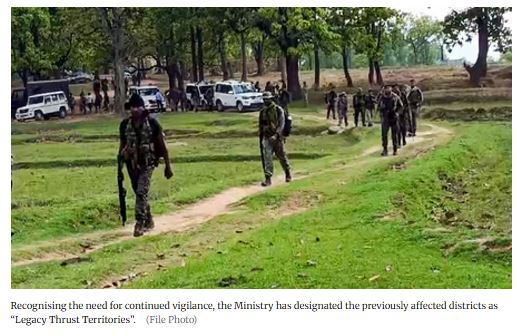
- 06 Mar 2026
In News:
In order to sustain the significant progress made in combating Left Wing Extremism (LWE), the Ministry of Home Affairs (MHA) has introduced the concept of Legacy Thrust Territories (LTTs). This initiative aims to ensure that areas once affected by Naxal violence continue to receive focused security attention and developmental support, thereby preventing the resurgence of extremist activities.
The framework reflects a shift from purely security-centric counter-insurgency operations to governance-led stabilization and development in previously affected regions.
Background: Decline of Left Wing Extremism
Over the past two decades, India has witnessed a sharp decline in LWE-related activities due to coordinated security operations and development initiatives.
Key trends include:
- Around 200 districts were affected by LWE in the early 2000s.
- By 2025, the number of affected districts declined to 38.
- Currently, only seven districts remain under the core LWE list, including:
- Five districts in Chhattisgarh
- One district in Jharkhand
- One district in Odisha
Despite these gains, concerns remain that insurgent groups may attempt to regroup if security and governance efforts weaken.
What are Legacy Thrust Territories?
Legacy Thrust Territories refer to previously Naxal-affected districts that continue to receive focused security monitoring and developmental intervention even after insurgent activities decline.
The approach recognizes that post-conflict regions remain vulnerable to extremist revival if governance gaps persist. Therefore, the initiative seeks to maintain stability while gradually transitioning toward normal governance structures.
Objectives of the Initiative
The Legacy Thrust Territories framework aims to:
- Prevent resurgence of Naxalism after operational successes.
- Ensure a smooth transition from security-led operations to development-led governance.
- Strengthen administrative presence and state legitimacy in former conflict zones.
- Promote socio-economic integration and infrastructure development in historically marginalized regions.
Key Features of the Legacy Thrust Territories Strategy
1. Sustained Security Deployment: Even after a decline in insurgent activity, central armed police forces will continue to maintain a presence in sensitive regions. This prevents security vacuums that insurgent groups could exploit.
2. Development-Oriented Approach: The initiative prioritizes infrastructure and welfare development, including:
- road connectivity
- telecommunications expansion
- improved delivery of public services
- strengthening of local governance institutions.
3. Phased Redeployment of Security Forces: Instead of abrupt withdrawal, security forces will undergo gradual redeployment, ensuring stability while administrative systems take stronger control.
4. Centre–State Coordination: The strategy emphasizes close coordination between the Union Government and State Governments, while allowing operational flexibility for security agencies.
5. Administrative Strengthening: The government aims to enhance bureaucratic responsiveness and governance capacity in previously conflict-affected districts to address long-standing developmental deficits.
6. Monitoring Extremist Propaganda: Security agencies will strengthen intelligence gathering and monitoring of extremist networks, including activities in digital and online spaces.
7. Rehabilitation and Surrender Policy: The initiative will also focus on encouraging surrender and rehabilitation of remaining cadres, combined with targeted operations against residual insurgent elements.
PSB Reforms under EASE 9.0

- 06 Mar 2026
In News:
The Government of India has launched the EASE 9.0 reforms agenda to modernize and strengthen Public Sector Banks (PSBs) by integrating advanced technologies, improving productivity, and adopting new operating models. Initiated by the Department of Financial Services in February 2026, the reform programme seeks to transform PSBs into globally competitive institutions aligned with the vision of Viksit Bharat @2047.
EASE 9.0 emphasizes technology-led modernization, institutional resilience, and enhanced governance through a structured reform framework.
Key Reforms under the EASE 9.0 Agenda
1. Global Capability Centre (GCC) Strategy
PSBs will develop a Global Capability Centre (GCC) strategy during FY 2026–27 along with a capacity-building roadmap.
- The State Bank of India (SBI) has established the first GCC among PSBs in Karnataka, setting a model for other banks.
- GCCs are offshore units that perform high-value strategic functions such as IT services, research and development, data analytics, and business support.
- These centres help institutions improve efficiency, innovation, and global integration.
2. Strengthening Technology Infrastructure
Under EASE 9.0, banks will modernize digital infrastructure to ensure operational resilience and scalability.
Key initiatives include:
- Adoption of active-active data centre models to ensure uninterrupted banking services.
- Development of core artificial intelligence (AI) stacks, including:
- licensing of Large Language Models (LLMs)
- GPU infrastructure strategies
- deployment of private cloud-based AI models.
- Creation of enterprise-wide consent management frameworks.
- Implementation of data tokenisation and anonymisation systems to allow secure and continuous use of data for business and analytics purposes.
3. Collaborative and Digital Banking Solutions
PSBs are encouraged to collaborate in building shared technological solutions to improve efficiency and reduce costs.
Such collaborative initiatives may include:
- Blockchain-based banking systems
- advanced fraud detection models
- AI-driven risk assessment tools
- integrated digital platforms offering comprehensive banking services.
These measures aim to create scalable and secure financial ecosystems.
Banking, Financial Services and Insurance (BFSI) Global Capability Centres
Concept and Role: A BFSI Global Capability Centre (GCC) is a wholly owned offshore subsidiary of a global financial institution that centralizes strategic operations in locations with strong talent pools such as India.
Unlike general GCCs, BFSI GCCs specifically support banking and financial institutions in areas including:
- risk management
- regulatory compliance
- cybersecurity
- fintech development
- advanced data analytics.
Evolution of GCCs
Initially established to achieve cost advantages (often 50–60% savings compared to home markets), GCCs have evolved into innovation hubs performing high-end functions such as:
- Artificial Intelligence (AI) and Machine Learning (ML)
- cybersecurity solutions
- regulatory technology (RegTech)
- financial platform development
- advanced analytics and automation.
India’s Position in the Global BFSI GCC Ecosystem
India has emerged as a major global hub for BFSI GCCs.
Key statistics include:
- Around 185–190 BFSI GCCs currently operate in India.
- They employ approximately 540,000 professionals, accounting for nearly 25% of total GCC employees in the country.
- The sector is projected to grow from USD 40–41 billion in 2023 to about USD 125 billion by 2032.
Major GCC hubs in India include:
- Bengaluru – analytics and engineering
- Hyderabad – fintech innovation
- Mumbai – financial services core operations
- Pune, Chennai and Gurugram/NCR – technology and support services.
Global financial institutions operating GCCs in India include: JPMorgan Chase, HSBC, Wells Fargo, Citigroup, Standard Chartered, Deutsche Bank, Barclays, Bank of America, Goldman Sachs, Morgan Stanley.
Core Framework of EASE 9.0: The R.I.S.E. Pillars
The reform programme is structured around four foundational pillars:
1. Risk and Resilience
- Strengthening financial and credit risk management.
- Enhancing operational resilience and enterprise-wide risk oversight mechanisms.
2. Innovation: Deep integration of advanced technologies including AI, Generative AI (GenAI), machine learning, cloud architectures, and microservices.
3. Socio-economic Impact
- Expanding inclusive banking services.
- Enhancing access to financial services for underserved populations, including gig and platform workers.
4. Excellence
- Improving governance standards and operational efficiency.
- Creating customer-centric banking processes and cost-effective next-generation operating models.
Significance of EASE 9.0 Reforms
The reforms are expected to:
- strengthen the technological competitiveness of PSBs
- enhance digital banking infrastructure and cybersecurity
- enable innovation-driven financial services
- support financial inclusion and economic growth
- position Indian PSBs as globally competitive institutions.
India’s New GDP Series with Base Year 2022-23
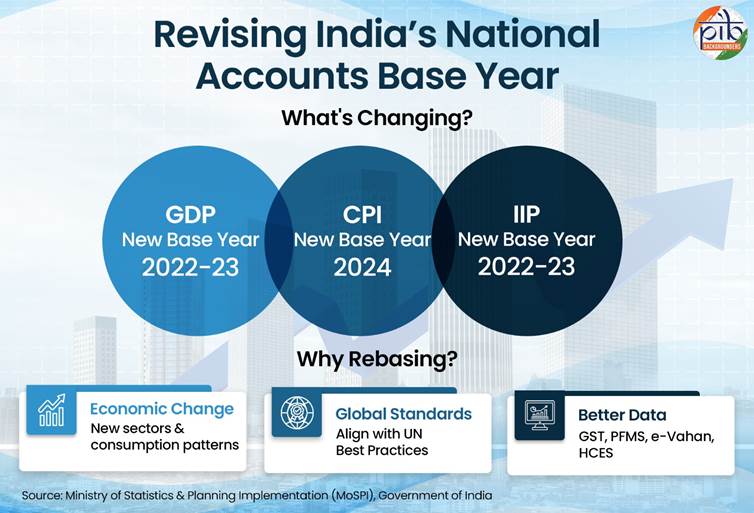
- 06 Mar 2026
In News:
The Ministry of Statistics and Programme Implementation (MoSPI) has introduced a new series of Annual and Quarterly National Accounts Estimates with base year 2022–23, replacing the earlier 2011–12 base year. This revision represents a major statistical update in the measurement of India’s Gross Domestic Product (GDP).
The new series integrates improved data sources, updated sectoral coverage, and refined estimation techniques such as the Supply and Use Tables (SUT) framework and double deflation, ensuring a more accurate representation of the evolving structure of the Indian economy.
Key Highlights of the New GDP Series
Growth Performance
- Real GDP growth is estimated at 7.6% in FY 2025–26, revised upward compared with estimates based on the previous series.
- Growth remained robust at 7.2% in FY 2023–24 and 7.1% in FY 2024–25.
- Nominal GDP growth is estimated at 8.6% in FY 2025–26, after 11.0% (FY 2023–24) and 9.7% (FY 2024–25).
Quarterly Economic Drivers
- The strong performance in FY 2025–26 was driven mainly by:
- Second quarter growth: 8.4%
- Third quarter growth: 7.8%
Sectoral Contributions
- Manufacturing emerged as a key growth driver with double-digit growth in FY 2023–24 and FY 2025–26.
- Secondary and tertiary sectors recorded over 9% growth in FY 2025–26.
- The services segment “Trade, Repair, Hotels, Transport, Communication and Broadcasting-related services” grew by 10.1% at constant prices.
Demand-Side Trends
- Private Final Consumption Expenditure (PFCE) and Gross Fixed Capital Formation (GFCF) both grew above 7% in FY 2025–26, indicating strong consumption and investment demand.
Rationale for Revising the Base Year
1. Reflecting a Normal Post-Pandemic Year: The base year 2022–23 was selected as it represents a stable economic year after the disruptions caused by COVID-19. Earlier years such as 2019–20 and 2020–21 were distorted by lockdowns, supply chain disruptions and abnormal consumption patterns.
2. Capturing Structural Changes in the Economy: India’s economy has evolved significantly over the past decade with the expansion of:
- Digital and platform-based services
- Renewable energy
- Gig economy and platform work
- Changes in consumption and investment patterns
Rebasing ensures GDP estimates better reflect these structural shifts.
3. Improved Data Sources: The new series incorporates richer and more frequent datasets, including:
- Annual Survey of Unincorporated Sector Enterprises (ASUSE)
- Periodic Labour Force Survey (PLFS)
- GST data for manufacturing and services
- e-Vahan portal data for transport-related consumption
- Public Financial Management System (PFMS) for government accounts
- Updated sectoral studies in agriculture, fisheries, dairy and transport
These additions improve granularity, reliability and timeliness of GDP estimates.
Methodological Improvements
1. Double Deflation: Separate deflation of output and input prices is now used in manufacturing and agriculture, replacing the earlier single-deflation approach.
2. Supply and Use Tables (SUT) Framework: Following the **United Nations Statistical Division guidelines under the System of National Accounts 2008, the new series systematically applies the SUT framework, ensuring consistency between production, income and expenditure estimates.
3. Better Corporate Activity Classification: Value added by multi-activity corporations is now distributed across different sectors using detailed corporate filings.
4. Improved Estimation of Consumption
PFCE estimation now combines:
- household survey data,
- administrative records,
- commodity flow methods, and
- the COICOP 2018 classification.
5. Improved State-Level Estimation: The National Statistical Office (NSO) will guide states toward direct estimation of Gross State Domestic Product (GSDP) using better state-level datasets, improving comparability across states.
Implications of the New GDP Series
Lower Nominal GDP: The revised methodology has reduced nominal GDP by about 3–4% for FY 2025–26 and previous years.
Fiscal Deficit Pressures: Because fiscal deficit is measured as a percentage of GDP:
- The FY 2025–26 deficit rises from 4.4% to about 4.5% under the new series.
- Achieving the FY 2026–27 target of 4.3% may require nominal GDP growth of 13–14%, higher than earlier projections.
Higher Debt-to-GDP Ratio: The Centre’s debt ratio increases from 56.2% to 58.1% for FY 2025–26, making fiscal consolidation more challenging.
Impact on the USD 4 Trillion Economy Target: India’s GDP is estimated at about USD 3.8 trillion in FY 2025–26.
Crossing the USD 4-trillion mark in FY 2026–27 will require:
- strong nominal growth, and
- stable exchange rates, since rupee depreciation could delay the milestone.
Sectoral Realignment: Improved data suggests the agricultural sector is about 5% larger, partly due to better measurement of high-value crops and lower input costs such as solar-powered irrigation under schemes like PM KUSUM.
Way Forward: Strengthening India’s Economic Measurement System
- Introduction of Producer Price Index (PPI): Recommended by the Working Group on Producer Price Index chaired by B. N. Goldar, PPI would better capture producer price movements.
- Revision of Wholesale Price Index (WPI) Base Year: Updating WPI is necessary to ensure accurate deflators for GDP calculations.
- Preparation for SNA 2025 Adoption: India must build data infrastructure for the upcoming SNA 2025 framework, which will incorporate digital economy, crypto assets and environmental accounting.
- Better Measurement of MSMEs: Heavy reliance on corporate filings may bias estimates toward large firms; improved mechanisms are required to capture MSME value addition.
ALMA Telescope

- 03 Mar 2026
In News:
Recent astronomical observations have produced the largest and most detailed image of the central region of the Milky Way, revealing a complex network of filaments of cosmic gas and previously hidden chemical structures. The discovery was made using the Atacama Large Millimeter/submillimeter Array (ALMA), one of the world’s most advanced radio telescope facilities. These observations provide new insights into the chemical composition, gas dynamics, and star-formation processes occurring near the centre of our galaxy.
Atacama Large Millimeter/submillimeter Array (ALMA)
- ALMA is a state-of-the-art radio telescope array designed to study the universe in millimetre and submillimetre wavelengths, which are particularly useful for observing cold gas, dust, and molecular clouds that are often invisible to optical telescopes.
Location and Development
- ALMA is located in the Atacama Desert of northern Chile, one of the driest places on Earth, offering ideal conditions for radio astronomy due to minimal atmospheric moisture.
- The observatory became fully operational in 2013.
- It is a major international collaboration involving:
- National Radio Astronomy Observatory (NRAO), USA
- National Astronomical Observatory of Japan (NAOJ)
- European Southern Observatory (ESO).
Key Features
- 66 high-precision antennas arranged across distances of up to 16 km on the Chajnantor Plateau.
- The antennas can be repositioned, allowing astronomers to adjust resolution similar to a camera’s zoom lens.
- ALMA possesses extremely high sensitivity, enabling detection of very faint radio emissions from distant cosmic objects.
- It functions as an interferometer, combining signals from multiple antennas to produce extremely detailed astronomical images.
Recent Discovery: Mapping the Milky Way’s Central Region
Using ALMA, astronomers recently produced the largest high-resolution image of the Milky Way’s galactic centre at millimetre wavelengths. This region, located about 26,000 light-years from Earth, is dense with gas clouds, dust, and extreme astrophysical activity.
Key Findings
- Network of Gas Filaments
- The observations revealed a vast network of thin filaments of molecular gas distributed across the central region.
- These filaments likely play a crucial role in transporting matter and energy across the galaxy’s core.
- Hidden Chemical Structures
- Scientists identified previously undetected molecules and complex chemical interactions within dense gas clouds.
- These findings help researchers understand the chemical evolution of galaxies and the origins of complex organic molecules in space.
- Star Formation and Galactic Activity
- The galactic centre hosts intense star formation and energetic processes, influenced by strong gravitational forces and radiation.
- Mapping these structures provides clues about how stars form in extreme environments.
- Improved Understanding of Galactic Dynamics
- Detailed imaging allows astronomers to track gas movements, turbulence, and interactions near the Milky Way’s centre.
- This may help explain how matter accumulates around the supermassive black hole Sagittarius A* at the core of the galaxy.
Major Contributions of ALMA to Astronomy
Since becoming operational, ALMA has produced several landmark discoveries:
- Early Starburst Galaxies: ALMA detected starburst galaxies that existed earlier in the universe than previously believed, altering our understanding of galaxy formation.
- Protoplanetary Disc Around HL Tauri: It captured high-resolution images of the protoplanetary disc around HL Tauri, a young star about 450 light-years from Earth, revealing rings where planets are likely forming.
- Observation of Einstein Rings: ALMA has helped scientists study Einstein rings, a phenomenon predicted by Einstein’s theory of general relativity where light from a distant galaxy bends around a massive object, forming a ring-like structure due to gravitational lensing.
Scientific Significance
The recent mapping of the Milky Way’s centre highlights the importance of millimetre and submillimetre astronomy in uncovering cosmic phenomena hidden behind dust clouds. Observations from ALMA help scientists:
- Understand the chemical composition of interstellar space.
- Study the processes of star and planet formation.
- Investigate the dynamics of galactic centres and supermassive black holes.
- Explore the evolution of galaxies across cosmic time.
Missile Defence in the US-Israel-Iran Conflict

- 03 Mar 2026
In News:
Recent tensions in West Asia, particularly involving the United States, Israel, and Iran, have highlighted the growing importance of missile defence systems in contemporary warfare. The increasing use of ballistic missiles, cruise missiles, and armed drones has compelled countries to develop multi-layered air defence architectures capable of detecting, tracking, and intercepting hostile projectiles before they reach their targets. These systems play a crucial role not only in protecting civilian infrastructure and military installations but also in strengthening deterrence and strategic stability.
What is a Missile Defence System?
A missile defence system is an integrated military architecture designed to detect, track, and destroy incoming missiles or aerial threats before impact. Such systems combine advanced sensors, command networks, and interceptor missiles to neutralise threats during different phases of flight.
Key Components
- Sensors and Detection Systems:
- Satellites and ground-based radar stations continuously monitor the sky.
- They detect launches and track the speed, altitude, and trajectory of incoming threats.
- Command and Control Centres:
- Advanced computing systems process sensor data.
- Military operators assess whether the object is a threat and determine the appropriate defensive response.
- Interceptor Missiles: These are defensive missiles launched to destroy the incoming projectile mid-air.
Strategic Importance
Missile defence systems serve multiple purposes:
- Protection of lives and infrastructure by neutralising aerial threats.
- Deterrence, as adversaries may hesitate to launch attacks if interception is likely.
- Decision-making time, allowing governments and military authorities to evaluate response options during crises.
How Missile Interceptors Work
The functioning of missile interceptors involves several coordinated stages:
- Detection and Tracking: Ground-based radar scans the sky by emitting radio beams. When these signals bounce off an object, computers analyse the reflection to determine its speed, altitude, and trajectory.
- Target Locking: If the object is identified as a threat, the radar focuses on it, continuously updating its location.
- Launch of Interceptor: A command centre calculates the interception trajectory and instructs the launcher system to fire the interceptor missile.
- Mid-course Guidance: Radar tracks both the incoming missile and the interceptor, transmitting guidance signals to ensure the interceptor moves toward the target.
- Terminal Phase Destruction: In the final stage, the interceptor uses onboard sensors (seekers) to precisely locate the target and destroy it using either:
- Proximity fuse: detonates a warhead near the target to destroy it with shrapnel.
- Hit-to-kill technology: directly collides with the target using kinetic energy, a method used in many modern systems.
Major Missile Defence Systems in the US–Israel–Iran Theatre
United States
The United States deploys multiple interceptor systems forming a layered defence network:
- THAAD (Terminal High Altitude Area Defense): Intercepts short- and intermediate-range ballistic missiles during the terminal phase at high altitudes using hit-to-kill technology.
- Patriot Missile System: Provides point defence against ballistic missiles, cruise missiles, and aircraft, widely used to protect military bases and critical infrastructure.
- SM-3 and SM-6 (US Navy): Sea-based interceptors launched from naval vessels.
- SM-3: Targets ballistic missiles during the mid-course phase outside the atmosphere.
- SM-6: Engages aircraft, missiles, and drones in the terminal phase.
- Indirect Fire Protection Capability (IFPC): Uses AIM-9X interceptors to counter rockets, artillery shells, and drones while conserving expensive missile defence systems like Patriot.
Israel
Israel maintains one of the world’s most sophisticated multi-layered air defence systems:
- Arrow-3: Intercepts long-range ballistic missiles outside the atmosphere.
- Arrow-2: Engages ballistic missiles within the atmosphere.
- David’s Sling: Designed to intercept medium- and long-range rockets, cruise missiles, and tactical ballistic missiles.
- Iron Dome: Highly effective short-range defence system used to intercept rockets, artillery shells, and drones.
- Iron Beam: A laser-based directed energy system aimed at destroying drones and small projectiles at relatively low cost.
Iran
Iran has developed indigenous and imported air defence systems to counter aerial threats:
- Bavar-373: Long-range air defence system capable of intercepting aircraft and ballistic missiles.
- Sevom-e-Khordad: Mobile system targeting aircraft and cruise missiles, improving survivability through mobility.
- Tor-M1: Short-range defence system used to intercept drones and precision-guided munitions.
- Majid and Azarakhsh: Systems designed primarily to counter drones and low-flying aerial threats.
United Arab Emirates
- Cheongung II: A South Korean medium-range air defence system featuring 360-degree radar coverage and vertical launch capability, designed to intercept cruise missiles and tactical ballistic threats.
Rare Disease Day

- 03 Mar 2026
In News:
- Rare Disease Day is observed globally on 28 February (or 29 February in leap years, symbolically the rarest day) to highlight the medical, social, and economic challenges faced by persons living with rare diseases.
- Established in 2008 and coordinated by EURORDIS (European Organisation for Rare Diseases) in partnership with over 70 national patient alliances, the day seeks to promote equity in diagnosis, healthcare access, research, and treatment availability.
Understanding Rare Diseases
Definition
There is no single universal definition of a rare disease. Globally, an emerging consensus defines it as a condition affecting ≤ 1 in 2,000 persons in a WHO-defined region. The classification is prevalence-based in many countries, though approaches vary.
Key Characteristics
- 6,000–10,000 identified rare diseases globally
- Affect an estimated 300–450 million people worldwide
- 50–75% manifest in childhood or at birth
- Nearly 80% are of genetic origin (e.g., lysosomal storage disorders)
- Others include rare cancers, autoimmune and infectious diseases
A major concern is the treatment gap—approximately 95% of rare diseases lack approved curative therapies, making them a serious global public health challenge.
Rare Diseases in India
India does not adopt a strict prevalence-based definition due to limited epidemiological data. Instead, the National Policy for Rare Diseases 2021 (NPRD 2021) categorises diseases based on:
- Group 1: Disorders requiring one-time curative treatment
- Group 2: Diseases requiring long-term or lifelong treatment
- Group 3: Conditions where treatment is available but costly and requires sustained therapy
Estimates suggest 72–96 million people in India may be living with rare diseases, indicating a significant though under-documented burden.
Policy and Financial Support Mechanisms
1. Financial Assistance
Under NPRD 2021:
- Financial support of up to ?50 lakh per patient
- Applicable for any of the 63 identified rare diseases
- Treatment provided at designated Centres of Excellence (CoEs)
However, implementation challenges such as delayed fund disbursal, limited diagnostic infrastructure, and uneven geographical distribution of CoEs have affected access to treatment.
2. Budgetary and Fiscal Measures (Union Budget 2026–27)
- Seven additional rare diseases included for exemption from import duties on personal imports of drugs, medicines, and food for special medical purposes.
- Rare diseases identified as a focus area under the Production Linked Incentive (PLI) Scheme for Pharmaceuticals, encouraging domestic manufacturing of orphan drugs.
These measures aim to reduce dependency on expensive imports and improve affordability.
Salar de Pajonales
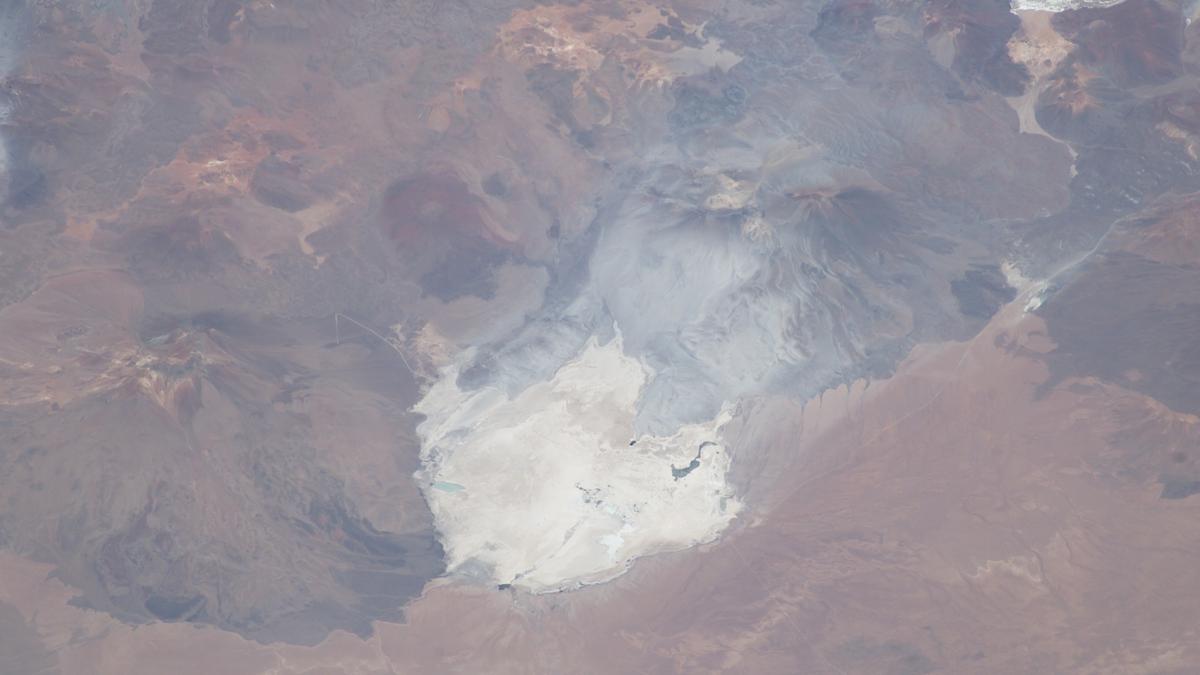
- 03 Mar 2026
In News:
Recent scientific research in Chile’s Salar de Pajonales has revealed that gypsum deposits can act as microscopic shields, protecting living microbes and preserving ancient fossils. The findings hold major implications for astrobiology and the ongoing search for life on Mars, as similar mineral formations exist on the Martian surface.
Geographical and Environmental Profile
Salar de Pajonales is a large playa (salt flat) located in northern Chile on the western margin of the Altiplano-Puna plateau, at an elevation of approximately 3,500 metres above sea level. It is the third-largest salar in the Atacama Region, after Salar de Atacama and Salar de Punta Negra.
The region lies within the hyper-arid core of the Atacama Desert, one of the driest places on Earth.
Polyextreme Conditions
The site experiences polyextreme environmental conditions, including:
- Extreme aridity
- High altitude and low atmospheric pressure
- Intense solar and ultraviolet radiation
- Large diurnal temperature variations
- Sulfate-rich mineral composition
These characteristics closely resemble surface conditions on Mars, making the region a significant Martian analogue site.
Hydrological and Geological Features
Salar de Pajonales is an endorheic basin (a closed drainage system with no outflow), sustained primarily by groundwater inputs.
The surface is dominated by evaporitic deposits, particularly:
- Gypsum (calcium sulfate dihydrate) crusts
- Layered microbial structures known as stromatolites
These mineral and biological structures provide a natural laboratory to study life under extreme conditions.
Gypsum as a Microbial Shield
Recent studies have demonstrated that gypsum acts as a microscopic protective barrier.
Key Findings
- Active extremophile communities: Halophilic bacteria and archaea survive within protected microhabitats inside gypsum crystals.
- Preserved fossilized microbes
- Ancient microbial remains and molecular biosignatures are trapped within gypsum layers.
- Some biosignatures date back thousands of years.
- Radiation and Desiccation Protection
- Gypsum shields biological material from ultraviolet radiation.
- It prevents rapid dehydration in hyper-arid conditions.
Thus, gypsum serves as a natural repository of biosignatures, preserving evidence of life even in extreme environments.
Astrobiological Significance
The environmental conditions in Salar de Pajonales mirror those believed to have existed on early Mars. Importantly, gypsum has also been detected on Mars by orbital and rover missions.
The study suggests that:
- Future Mars missions should prioritize gypsum-rich terrains.
- Orbiters and rovers can target sulfate deposits as prime candidates for detecting ancient life.
- Mineralogical mapping can guide astrobiological exploration strategies.
This research strengthens the hypothesis that if microbial life ever existed on Mars, its traces may be preserved within evaporitic minerals like gypsum.
Coconut Promotion Scheme
- 03 Mar 2026
In News:
The Union Budget 2026–27 announced a Coconut Promotion Scheme, signalling renewed policy focus on India’s coconut economy. The scheme aims at rejuvenating old, senile, and low-yielding gardens with high-yielding varieties and promoting new plantations, particularly along coastal belts. This aligns with India’s broader objective of strengthening plantation crops for rural livelihoods, export potential, and climate resilience.
Coconut: Botanical and Agro-Climatic Profile
Coconut is a perennial plantation crop and a monocotyledonous palm belonging to the family Arecaceae. It is native to the Indo-Pacific region, with origins commonly traced to Southeast Asia.
Climatic Requirements:
- Warm and humid tropical climate
- Optimum temperature: 25°C–30°C
- High and well-distributed rainfall
- Sensitivity to prolonged drought and extreme weather
Soil Requirements:
- Well-drained sandy loam
- Alluvial soils
- Laterite soils
- Coastal sandy soils
Production and Distribution in India
- India is the world’s largest producer and consumer of coconuts, reflecting both domestic demand and agro-ecological suitability. The crop is predominantly cultivated in: Kerala, Tamil Nadu, Karnataka, Andhra Pradesh, Odisha, Goa, and West Bengal
- In recent years, cultivation has expanded into non-traditional regions such as parts of Gujarat, Assam, and other non-peninsular areas, supported by diversification initiatives of the Coconut Development Board (CDB).
- The coconut sector supports the livelihoods of nearly 30 million people, including around 10 million farmers, highlighting its socio-economic significance.
Institutional Framework: Role of the Coconut Development Board
The Coconut Development Board (CDB) has been implementing schemes for:
- Rejuvenation of senile plantations
- Expansion into new agro-climatic zones
- Quality planting material distribution
- Technology dissemination
- Value addition and market support
The proposed Coconut Promotion Scheme builds on these efforts, aiming to enhance productivity and area expansion.
Emerging Challenge: Productivity vs Sustainability
While productivity enhancement has historically been the policy focus, contemporary challenges necessitate a shift toward sustainable coconut cultivation. Key concerns include:
- Climate Change:
- Increased frequency of droughts, cyclones, and erratic rainfall
- Coastal salinity intrusion
- Temperature stress affecting yield
- Monocropping and Soil Degradation:
- Declining soil fertility
- Reduced biodiversity
- Greater vulnerability to pests and diseases
- Water Stress: Coconut cultivation is water-intensive; inefficient irrigation practices exacerbate groundwater depletion.
- Economic Viability: Price fluctuations and rising input costs affect farmer incomes.
Path Towards Sustainable Coconut Economy
A sustainability-oriented strategy should include:
- Climate-resilient varieties and drought-tolerant hybrids
- Integrated farming systems (intercropping with spices, cocoa, banana)
- Water-use efficiency through drip irrigation and rainwater harvesting
- Organic and natural farming practices
- Value addition (virgin coconut oil, coconut sugar, coir products, activated carbon)
- Strengthened farmer producer organizations (FPOs)
Sustainability enhances long-term productivity while protecting ecological balance and farmer incomes.
India–EU ‘Most Favoured Nation’ (MFN) Status
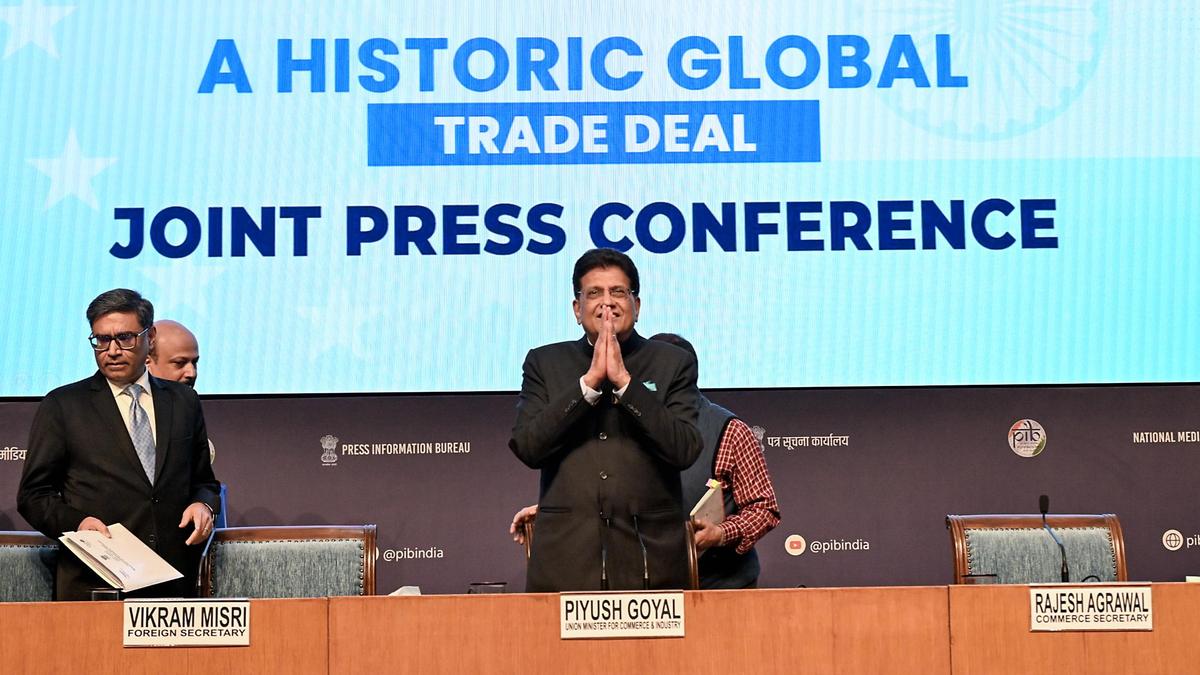
- 02 Mar 2026
In News:
- India and the European Union (EU) are set to grant each other ‘Most Favoured Nation’ (MFN) status for a period of five years from the date the proposed Free Trade Agreement (FTA) comes into force.
- This move is part of broader efforts to deepen trade and investment ties between India and the EU, which is one of India’s largest trading partners.
What is ‘Most Favoured Nation’ (MFN) Status?
The Most Favoured Nation (MFN) principle is a foundational concept under the World Trade Organization (WTO) framework.
Core Principle
Under MFN:
- A country must treat all its trading partners equally.
- If it grants a special trade concession (such as lower tariffs or market access) to one country, it must extend the same benefit to all other WTO members.
- Discrimination between trading partners is generally prohibited.
Thus, despite the term “most favoured,” it actually means non-discriminatory treatment among WTO members.
Legal Basis in WTO Agreements
The MFN principle is embedded in major WTO agreements:
- GATT (Goods Trade): Enshrined in Article I of the General Agreement on Tariffs and Trade (GATT), 1994.
- GATS (Services Trade): Incorporated under Article II of the General Agreement on Trade in Services (GATS).
- TRIPS (Intellectual Property Rights): Reflected in Article 4 of the TRIPS Agreement.
Together, these provisions make MFN a central pillar of the multilateral trading system.
Objectives of the MFN Principle
MFN promotes:
- Equality in trade relations
- Predictability in tariff structures
- Transparency in trade rules
- Stability in global commerce
It reduces arbitrary discrimination and supports a rules-based trading order.
MFN and Free Trade Agreements (FTAs)
While MFN requires equal treatment, WTO rules permit exceptions, including:
- Free Trade Agreements (FTAs)
- Customs Unions
- Special preferences for developing countries under schemes like the Generalized System of Preferences (GSP)
FTAs allow member countries to provide preferential treatment among themselves without extending the same to all WTO members.
In the case of the India–EU FTA:
- MFN status within the agreement framework strengthens mutual trade commitments.
- It ensures reciprocal and predictable treatment in goods, services, and investment domains for the agreed period.
Significance of India–EU MFN Arrangement
1. Strengthening Bilateral Trade
The EU is one of India’s largest trading partners in goods and services. MFN status under the FTA framework:
- Enhances market access
- Improves tariff predictability
- Encourages long-term investment
2. Strategic and Economic Relevance
- Supports diversification of India’s trade partners amid global supply chain realignments.
- Aligns with India’s strategy of negotiating comprehensive trade agreements (e.g., UAE, Australia, UK under negotiation).
3. Boost to Rules-Based Trade
- Reinforces commitment to WTO principles.
- Signals support for a non-discriminatory multilateral trade order at a time of rising protectionism globally.
Yadava Dynasty
- 02 Mar 2026
In News:
- Recently, remains of a 12th-century Mandir-style stone pillar associated with the Seuna (Yadava) dynasty were discovered along the Vena River in Hinganghat, Wardha district, Maharashtra.
- The find highlights the architectural and cultural legacy of the Yadavas in the Deccan region and provides material evidence of medieval temple construction traditions in central India.
About the Yadava (Seuna) Dynasty
The Yadava Dynasty, also known as the Seuna Dynasty, ruled a powerful Hindu kingdom in the Deccan between the 12th and 14th centuries CE.
Territorial Extent
At its peak, the Yadava kingdom extended:
- From the River Tungabhadra in the south
- To the River Narmada in the north
- Covering present-day Maharashtra, northern Karnataka, and parts of Madhya Pradesh
Political Evolution
Early Phase
- Initially feudatories of the Western Chalukyas of Kalyani.
- Rose to prominence under Bhillama V (c. 1187–1191 CE).
- Founded Devagiri (later Daulatabad) as the capital.
Zenith under Singhana (c. 1210–1247 CE)
- Grandson of Bhillama.
- Declared independence.
- Conducted military campaigns against:
- Hoysalas (South)
- Kakatiyas (East)
- Paramaras and Chalukyas (North)
This period marked the territorial and political high point of the dynasty.
Decline and Annexation
- During the reign of Ramachandra (1271–c. 1309 CE):
- In 1294, Alauddin Khalji invaded Devagiri.
- The Yadava kingdom was reduced to tributary status under the Delhi Sultanate.
- A later attempt to assert independence failed.
- In 1317, the kingdom was fully annexed by the Khalji Empire.
This marked the beginning of stronger Delhi Sultanate penetration into the Deccan.
Cultural and Architectural Contributions
1. Foundations of Marathi Culture
- The Yadavas played a crucial role in shaping early Marathi language and literature.
- Social and cultural institutions of Maharashtra evolved significantly during their rule.
2. Hemadpanti Architecture: The dynasty is closely associated with the Hemadpanti style, attributed to minister Hemadri (Hemadpant).
Key Features:
- Construction using large blocks of black stone
- Dry masonry technique (without mortar)
- Massive, durable structures
- Temple-oriented architectural designs
Numerous temples in Maharashtra are built in this style.
Gitchak nakana
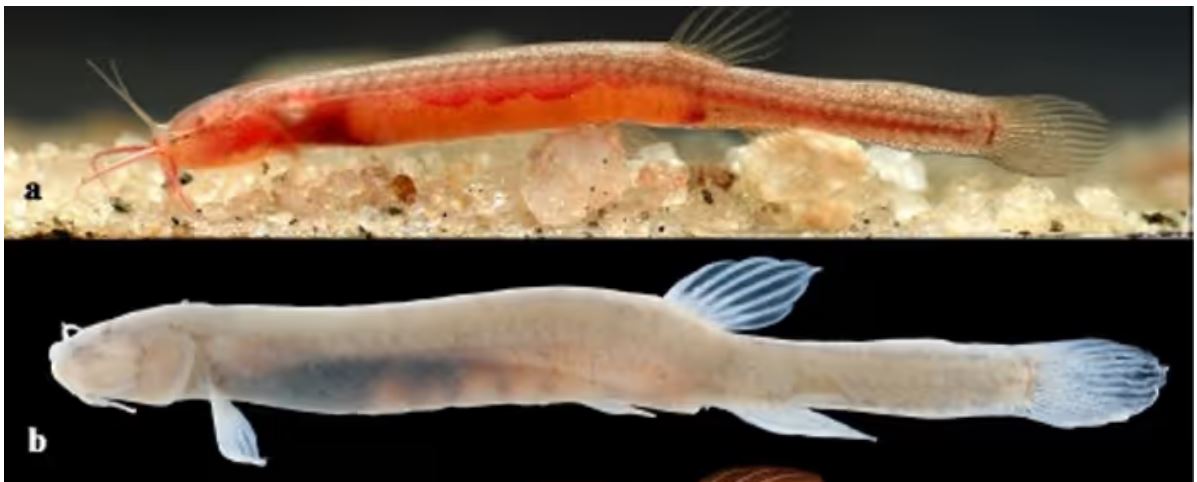
- 02 Mar 2026
In News:
A new species of groundwater-dwelling fish, Gitchak nakana, has recently been discovered in Assam. The species was found in a dug-out well and represents the first aquifer-dwelling (phreatobitic) fish recorded from Northeast India. This discovery adds to India’s growing record of endemic and subterranean biodiversity.
About Gitchak nakana
- Type: Groundwater (aquifer-dwelling) fish
- Family: Cobitidae (Loaches)
- Genus: Newly described genus
- Size: Approximately 2 cm in length
- Habitat: Subterranean aquifers
- Location of Discovery: Assam
The species was discovered in a dug-out well, indicating its existence in underground water systems rather than surface water bodies such as rivers or ponds.
Etymology
The name reflects local linguistic heritage:
- “Gitchak” (Garo language) – means red, referring to its striking blood-red colour when alive.
- “Na-tok” / “kana” – refer to a blind fish.
The nomenclature highlights both the species’ morphology and its cultural-geographical context.
Unique Morphological Features
Gitchak nakana displays classic troglomorphic adaptations — traits evolved for life in complete darkness:
- Absence of externally visible eyes (blindness)
- Translucent, pigmentless body
- Extreme miniaturization (only 2 cm long)
- Complete absence of skull roof — the brain is covered dorsally only by skin
The lack of a skull roof is particularly unusual and makes it one of the most anatomically distinctive loach species recorded.
What are Phreatobitic Species?
- Phreatobitic organisms live in groundwater aquifers rather than surface water or caves.
- Aquifers are underground water-bearing geological formations.
- Such habitats are difficult to access and poorly studied, which explains why discoveries are rare.
Globally:
- More than 300 fish species are known from subterranean habitats.
- However, the vast majority inhabit caves.
- Less than 10% are known from groundwater aquifers, making this discovery scientifically significant.
Thus, Gitchak nakana represents a rare addition to the small global group of true aquifer-dwelling fishes.
Forest Owlet
- 02 Mar 2026
In News:
Recently, the Forest Owlet was sighted in Kuno National Park, Madhya Pradesh, marking its reappearance in the region 113 years after it was last recorded there. The species had not been seen in Kuno since the early 20th century, making this rediscovery ecologically significant. The development strengthens Kuno’s biodiversity profile, which has already gained prominence due to the cheetah reintroduction programme.
About the Forest Owlet
- Scientific Name: Athene (Heteroglaux) blewitti
- Family: Strigidae (typical owl family)
- First Described: 1873
- Presumed Extinct: After 1884 due to lack of sightings
- Rediscovered: 1997 in central India
The Forest Owlet was long considered extinct because it was not recorded for over a century after the late 19th century. Its rediscovery in 1997 was a landmark event in Indian ornithology, underscoring the importance of systematic biodiversity surveys.
Habitat and Ecology
Habitat
The species primarily inhabits:
- Tropical and subtropical moist lowland forests
- Dense deciduous woodlands
- Open dry deciduous teak forests
- Tropical and subtropical dry forests
It shows preference for dry deciduous forest ecosystems, especially those dominated by teak.
Distribution
The Forest Owlet is endemic to central India, meaning it is found nowhere else in the world.
Recorded populations exist in:
- Madhya Pradesh
- Maharashtra (notably Melghat Tiger Reserve)
- Odisha
- Chhattisgarh
- Gujarat
The recent sighting in Kuno National Park strengthens evidence of its fragmented but surviving populations across central Indian landscapes.
Physical Characteristics
The Forest Owlet has distinctive morphological features:
- Relatively unspotted crown
- Prominent white throat collar
- Thickly feathered legs
- Heavily banded wings and tail
Unlike many owls that are nocturnal, the Forest Owlet is diurnal (active during the day), which makes it relatively easier to observe compared to other owl species.
Diet and Behaviour
- Primarily feeds on rodents
- Also consumes lizards, skinks, and insects
- Hunts during daylight hours
- Typically seen perched on exposed branches while scanning for prey
Its diurnal nature and specific habitat requirements make it vulnerable to habitat degradation.
Conservation Status
- IUCN Red List: Endangered
- CITES: Appendix I (highest level of international trade protection)
The species faces threats from:
- Habitat loss due to deforestation
- Fragmentation of dry deciduous forests
- Agricultural expansion
- Developmental activities in central India
Given its limited distribution and small population size, conservation of intact forest patches in central India is critical for its survival.