
Immigration, Visa, Foreigners Registration & Tracking (lVFRT) Scheme
- 28 Mar 2026
In News:
The Union Cabinet has approved the continuation of the Immigration, Visa, Foreigners Registration & Tracking (IVFRT) Scheme for the period 2026–2031, in line with evolving immigration needs and the recently enacted Immigration and Foreigners Act, 2025.
About IVFRT Scheme
The IVFRT Scheme is a technology-driven platform aimed at integrating and streamlining:
- Immigration processes
- Visa issuance
- Registration and tracking of foreigners in India
It was initially approved in 2010 and has undergone multiple phases of expansion to enhance efficiency and security.
Current Phase
- Duration: 1 April 2026 – 31 March 2031
- Budget Outlay: ?1800 crore
Objectives
- Create a secure, integrated immigration ecosystem
- Facilitate legitimate international travel
- Strengthen national security and foreigner tracking mechanisms
- Improve ease of doing business and tourism flows
Key Features
1. Emerging Technology Integration
- Adoption of mobile-based immigration services
- Deployment of self-service kiosks and e-gates
- Use of advanced digital platforms for seamless passenger movement
2. Transformation of Core Infrastructure
- Upgradation of:
- Immigration Check Posts (ICPs)
- Foreigners Regional Registration Offices (FRROs)
- Data centres and backend systems
- Development of a resilient and scalable nationwide system
3. Technology & Service Optimization
- Introduction of unified digital platforms
- Revamping of core application architecture
- Strengthening of network systems for faster and efficient service delivery
Achievements of IVFRT System
- 100% faceless and contactless visa processing system
- Around 91% of e-Visas processed within 72 hours
- Reduction in immigration clearance time:
o From5–6 minutes to 2.5–3 minutes
- Introduction of Fast Track Immigration–Trusted TravellerProgramme (FTI-TTP):
o Clearance time reduced to ~30 seconds at e-gates
- Coverage:
o 117 Immigration Posts
o 15 FRROs
o 850 Foreigners Registration Offices (FROs)
Fast Track Immigration-Trusted TravellerProgramme
- 13 Sep 2025
In News:
- The Union Home Minister recently launched the Fast Track Immigration – Trusted TravellerProgramme (FTI-TTP) at five additional airports — Lucknow, Thiruvananthapuram, Tiruchirappalli, Kozhikode, and Amritsar — further expanding its coverage across the country.
- The initiative aims to provide seamless, secure, and faster immigration clearance for Indian citizens and Overseas Citizen of India (OCI) cardholders.
Background and Coverage
- Launch: First introduced at Delhi’s Indira Gandhi International (IGI) Airport in 2024.
- Latest Expansion: Now operational at 13 airports nationwide.
- Nodal Agency: Implemented by the Bureau of Immigration (BoI) under the Ministry of Home Affairs (MHA).
Objectives
- To reduce waiting time at immigration counters.
- To enhance international mobility of Indian citizens and OCI cardholders.
- To ensure convenient yet secure border management using digital technology.
Enrollment and Process
- Online Registration: Applicants must apply via the official portal https://ftittp.mha.gov.in, providing personal details and uploading documents.
- Biometric Capture: Collected either at Foreigners Regional Registration Offices (FRROs) or at the airport.
- Immigration Process at e-Gates:
- Boarding pass scan to fetch flight details.
- Passport scan for identity verification.
- Biometric authentication (fingerprint/face scan).
- Automated clearance — the e-gate opens within 30 seconds, eliminating the need for manual checks.
- Validity: Enrollment remains valid until the passport expires or for five years, whichever is earlier, with provision for renewal.
Significance
- Cuts down long queues at airports, reducing clearance time to under 30 seconds.
- Aligns with India’s vision of Digital Governance and Smart Borders.
- Enhances traveller experience, particularly for frequent international flyers.
- Strengthens security protocols through biometric and digital verification.
Fast Track Immigration FTI-TTP
- 17 Jan 2025
In News:
The Government of India is launching the Fast Track Immigration Trusted Traveller Program (FTI-TTP) to streamline immigration at seven major airports.
Key Highlights:
- The initiative, inaugurated by Union Home Minister Amit Shah, aims to enhance the travel experience for Indian nationals and Overseas Citizen of India (OCI) cardholders.
- This comes seven months after the programme was first introduced at Indira Gandhi International (IGI) Airport, New Delhi. The airports included in this initial phase are: Mumbai, Chennai, Kolkata, Bengaluru, Hyderabad, Cochin and Ahmedabad
Objectives of FTI-TTP
- Provide seamless and secure immigration services.
- Reduce human intervention using automated e-gates.
- Align with the Viksit Bharat@2047 vision for modern infrastructure.
How the Programme Works
The FTI-TTP simplifies immigration with automated e-gates. Travellers must complete a one-time online registration to enroll. The process involves:
- Online Registration: Submit personal details and upload necessary documents via the official portal (https://ftittp.mha.gov.in).
- Biometric Submission: Fingerprints and facial images must be submitted at an airport or Foreigners Regional Registration Office (FRRO).
- Immigration Clearance via E-Gates:
- Passengers scan their boarding passes and passports at e-gates.
- Biometrics are automatically verified.
- Upon authentication, the e-gate opens, granting clearance.
Validity: Registration is valid for five years or until the registered passport expires, whichever comes first.
Who is Eligible?
The first phase of the FTI-TTP is open to:
- Indian nationals.
- OCI cardholders aged between 12 and 70 years.
- Children aged 12-18 can register using their parents’ email/phone number.
- ECR (Emigration Check Required) passport holders are not eligible.
Documents Required for Registration
- Passport-sized photograph (as per Indian passport specifications).
- Scanned copy of passport (front and back pages).
- Proof of current address.
- OCI card details (if applicable).
Key Points to Note
- Registration may take up to a month due to verification by field agencies.
- Applications with incorrect or outdated information may be rejected.
- In case of passport loss or expiry, travellers must reapply and submit fresh biometrics.
- Passports must have at least six months’ validity at the time of applying.
- For support, travellers can reach out via email at india.ftittp-boi@mha.gov.in.
Implementation Phases
The FTI-TTP will be implemented in two phases:
- Phase 1: Covers Indian citizens and OCI cardholders.
- Phase 2: Will extend to foreign travellers.
- The programme will be expanded to 21 major airports across the country.
Comparison with Similar Global Programmes
Several countries have implemented similar fast-track immigration systems:
United States: Global Entry
- Introduced in 2008.
- Offers self-service kiosks for pre-approved travellers.
- Requires background checks and in-person interviews.
United Kingdom: Registered Traveller Service
- Launched in 2015.
- Allows frequent visitors from select countries, including India, to use e-gates.
- Requires visa eligibility or multiple prior visits.
European Union: Smart Borders Initiative
- Implemented in 2016, with full deployment expected by 2024.
- Pre-registers biometric data for faster processing at Schengen Area borders.
Australia: SmartGate
- Started in 2007 for Australian and New Zealand passport holders.
- Uses automated kiosks for identity verification via passport scans and photos.
Saudi Arabia: Smart Travel System
- Launched in 2019.
- Uses automated e-gates for faster immigration clearance.
- Expanding as part of Vision 2030 to improve travel experience, particularly for Hajj pilgrims.
‘Dunki’ and immigration: How the first modern passports came to be (Indian Express)
- 23 Dec 2023
Why is it in the News?
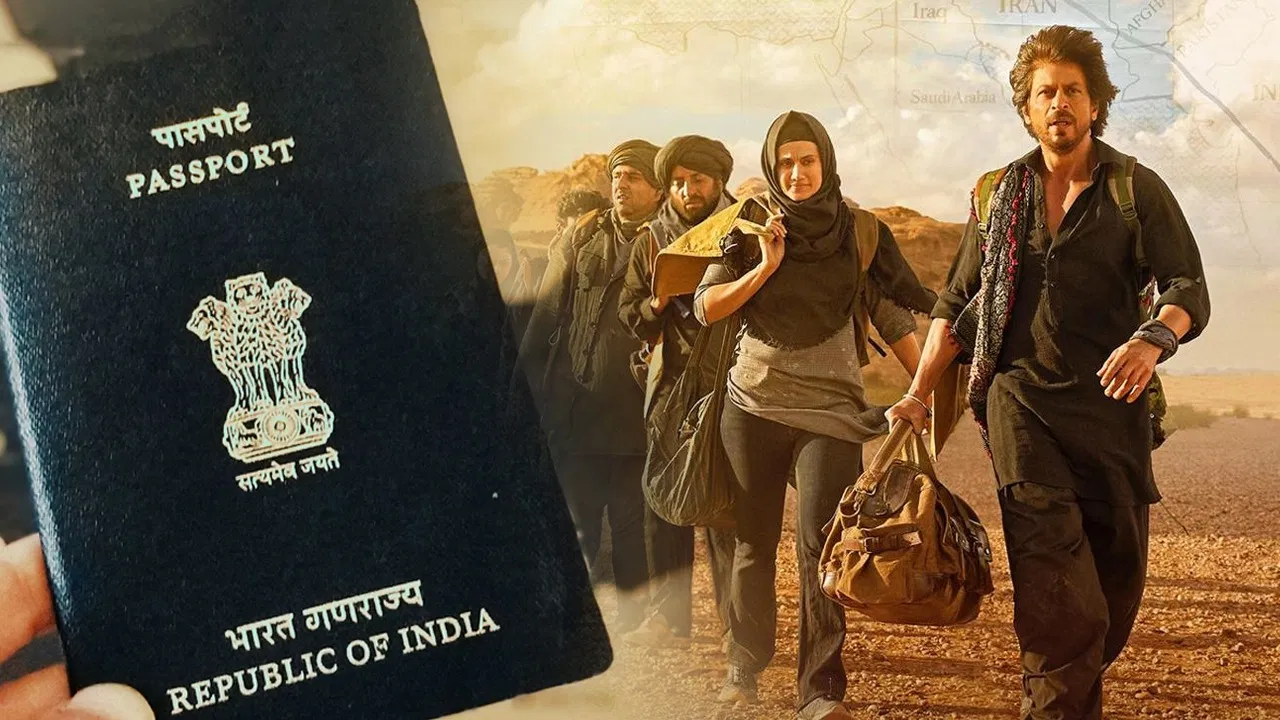
The recently released Shah Rukh Khan’s movie ‘Dunki’ is said to be based on the ‘donkey route’ or ‘donkey flight’ that lakhs of Indians take to reach countries like the US, the UK or some other European countries.
What is a Donkey Journey?
- Dunki is the Punjabi idiom that means to "hop from place to place", according to the Migration Policy Institute (MPI).
- It is a colloquial term for "donkey flights" or the "donkey flights method", which is a dangerous illegal immigration technique involving crossing a country's borders through a backdoor route via multiple stops in other countries.
How does the donkey flight method or dunki work?
- The desire for a higher quality of life has given rise to an industry driven by "agents" who charge exorbitant fees to help smuggle people to the country of their choice.
- Some agents may even run legitimate businesses while offering this dangerous option.
- The agents can offer various services, from fake papers to help through otherwise legal migration processes to smuggling people through ship containers.
Which countries are most targeted using the Dunki method?
- While donkey flight can be used to enter any country, the US, Canada, and the UK are some of the most popular destinations undertaken by Indian immigrants.
- According to a report, between February 2019 and March 2023, as many as 149,000 Indians were detained for attempting to enter the US illegally.
- Of this, most of those detained were from Gujarat and Punjab.
Risks involved in the dunki method:
- Dunki comes with tremendous risks, including the risk of capture, imprisonment, and deportation.
- When facilitated by an agent, the system is highly exploitative.
- Many sell off their assets, including ancestral land, to pay these agents.
- Agents may also withhold people's passports or other important documents to extort more money and assets.
- Moreover, smuggled migrants are also more vulnerable to becoming victims of other crimes during the smuggling process.
- The terrains of the places through which immigrants may have to travel pose a range of risks, including harsh weather conditions, rugged terrains, and access to basic resources like food and water.
- It must be noted that migrant smuggling is not the same as human trafficking.
- However, these crimes may sometimes interlink, adding another layer of risk for those engaging in illegal immigration.
About Passports:
- Rooted in history, passports trace back to mentions in the Hebrew Bible and structured systems in nations like France and the UK.
- The evolution into modern passports was catalyzed by the British Nationality and Status of Aliens Act in 1914, introducing features such as photographs and distinctive characteristics.
- The League of Nations' 1920 conference sought to standardize passport regulations, contributing to the establishment of a common British system.
- During the 1920s, the United States linked immigration laws to passports, imposing limitations on inflows.
- Despite initial reservations, passports have persisted as an integral element of contemporary citizenship.
- Indian Passports: The initiation of issuing Indian passports dates back to the First World War (1914-1918) through the Defence of India Act, as mandated by the British government for travel.
Data | Sharp rise in Indians illegally crossing U.S. northern border from Canada (The Hindu)

- 15 Dec 2023
Why is it in the News?
In the last ten years, the number of unauthorized Indian migrants entering the U.S. has surged significantly, climbing from a mere 1,500 a decade ago to an astonishing 96,917 in 2023, as reported by the U.S. Customs and Border Protection.
What are the Implications for India Amidst the Surge in Illegal Migrants?
- Bilateral Relations: The surge in illegal migration poses potential challenges to bilateral relations between India and the USA, impacting areas such as trade negotiations, security cooperation, and strategic partnerships.
- Economic Factors: India faces the risk of a brain drain, as skilled individuals seek illegal entry, potentially affecting sectors with a demand for skilled labour and impacting the country's economy.
- The outflow of skilled and educated individuals through illegal migration can have adverse effects on India's economy, leading to a depletion of talent and expertise.
- Labour Market Challenges: The departure of skilled or semi-skilled workers may create labour shortages in specific sectors, affecting India's workforce and economic productivity.
- Policy Repercussions: India may need to institute stringent policies to address the root causes of illegal migration, potentially diverting resources and attention from other developmental priorities.
What are the Causes Behind the Surge in Illegal Indian Migrants to the USA?
- Pull Factors: The USA's reputation for offering improved employment prospects, higher wages, and career advancement acts as a significant attraction for migrants.
- The allure of quality education and prestigious academic institutions in the USA attracts students and families in search of educational opportunities.
- The desire to reunite with family members or relatives already settled in the USA motivates some migrants to seek illegal entry for proximity to loved ones.
- Push Factors: Numerous push factors, including limited job opportunities and economic prospects in India, drive individuals to seek better employment opportunities abroad.
- Social conflicts or a lack of confidence in India's governance structure may prompt some individuals to search for a more stable environment elsewhere.
- Visa Backlogs and Alternative Routes: Smugglers adapt their methods, providing sophisticated services to facilitate illegal entry into America.
- Prolonged visa backlogs prompt individuals to explore alternative, albeit illegal, pathways to enter the USA due to extended waiting times and limited legal entry options.
- Global Migration Trends: The overall increase in global migration post-pandemic contributes to this surge as individuals seek improved opportunities and security in different countries.
- Misinformation: Social media and deceptive travel agencies disseminate misinformation, misleading desperate migrants and encouraging them to embark on perilous journeys guided by multiple facilitators across continents.
- Desperate migrants may undertake complex, multi-leg journeys through various continents and countries, facing numerous risks and challenges along the way.
What can be Done?
Prioritizing economic stability, job creation, and social welfare programs to alleviate distress and offer improved opportunities within India. Initiating diplomatic dialogues to comprehend and address concerns that contribute to migration, fostering collaboration with other nations to safeguard the rights of migrants.