
PACE Satellite
- 12 Apr 2026
In News:
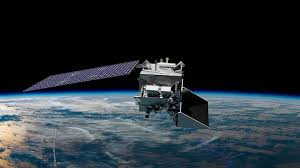
In a significant breakthrough for atmospheric sciences, researchers have confirmed that NASA’s Plankton, Aerosol, Cloud, and ocean Ecosystem (PACE) satellite, launched in early 2024, possesses the high-resolution capability to pinpoint air pollution at an unprecedented scale. The satellite can now isolate nitrogen dioxide (NO2) emissions from individual point sources, such as specific factories and narrow highway corridors, marking a new era in environmental monitoring and policy enforcement.
The PACE Mission:
- Technical Specifications: Launched in February 2024 into a Sun-synchronous orbit, PACE is designed to provide a holistic view of the Earth’s "living" systems.
- It offers hyperspectral coverage of the entire globe every1 to 2 days, a frequency and detail level previously unavailable to the scientific community.
Key Scientific Instruments
PACE’s ability to "see" the Earth in high definition is driven by three primary instruments:
- Ocean Color Instrument (OCI): A state-of-the-art optical spectrometer that measures the ocean’s color across a continuous spectrum from ultraviolet to shortwave infrared. By breaking down light into finer wavelength resolutions, OCI identifies the specific "signatures" of different substances in the water and air.
- SPEXone and HARP2 (Polarimeters): The Spectro-polarimeter for Planetary Exploration (SPEXone) and the Hyper Angular Research Polarimeter (HARP2) measure the polarization of sunlight. As light passes through clouds, aerosols, and water, its oscillation plane changes. These instruments analyze these changes to determine the size, shape, and composition of particles in the atmosphere.
Breakthrough in Pollution Tracking: Nitrogen Dioxide (NO2)
While PACE was primarily envisioned for oceanography, its hyperspectral capabilities have proven revolutionary for atmospheric chemistry.
- Precision: Traditional satellites could detect regional pollution clouds; PACE can isolate emissions at the scale of individual industrial facilities.
- The Nitrogen Dioxide Factor: NO2 is a major byproduct of fossil fuel combustion (vehicles and power plants) and a key contributor to smog and respiratory issues. PACE’s ability to track this gas at a "fine scale" allows for more accurate attribution of pollution to specific sources.
Scientific and Socio-Economic Significance
The data harvested by PACE has far-reaching implications for climate science and public health:
- Marine Ecosystem Health: It monitors microscopic life, such as phytoplankton, which forms the base of the marine food web. This aids in managing fisheries and predicting Harmful Algal Blooms (HABs).
- Aerosols and Air Quality: By tracking wildfire smoke and industrial aerosols, PACE provides better data for air quality indexes, helping vulnerable populations mitigate health risks.
- Climate Change Research: The satellite investigates the complex ocean-atmosphere interface, revealing how the exchange of carbon dioxide and heat between the sea and sky is evolving under global warming.