
Hectocotylus in Octopus Reproduction
- 08 Apr 2026
In News:
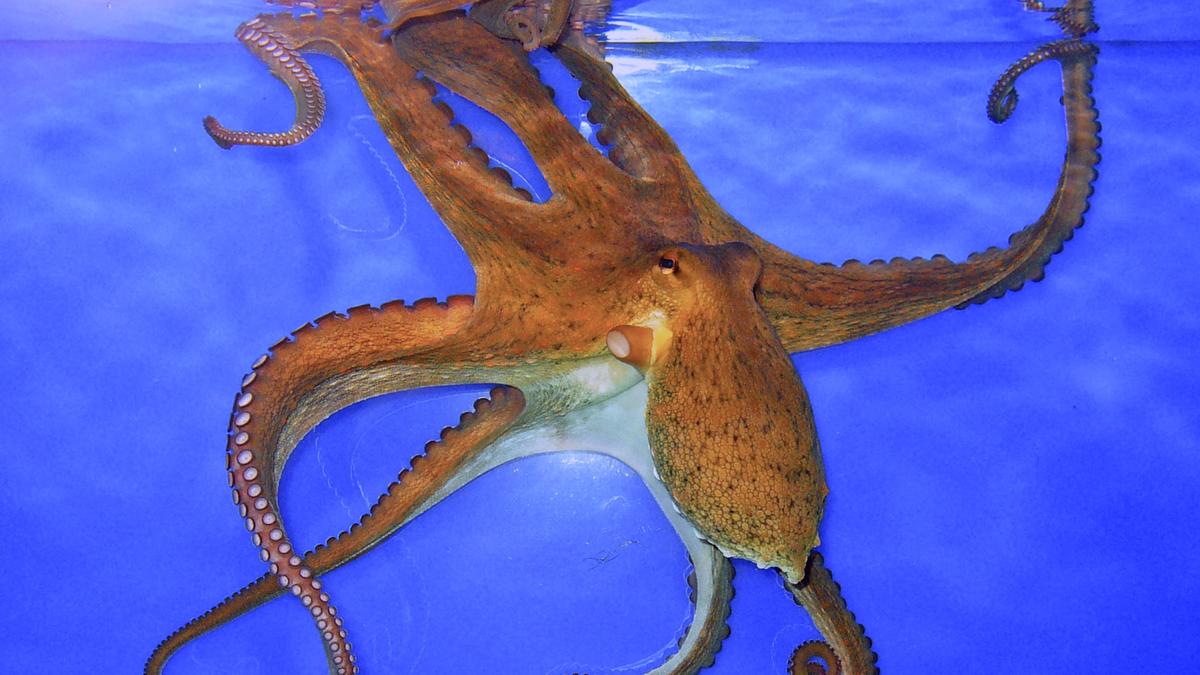
Recent biological research has unveiled groundbreaking insights into the reproductive and sensory mechanisms of octopuses. Scientists have discovered that the hectocotylus, a specialized arm in male cephalopods—serves a dual purpose: it acts as both a conduit for genetic material and a sophisticated sensory organ capable of "tasting" mates. This discovery provides a window into how molecular evolution drives complex behaviors in solitary marine species.
Understanding the Hectocotylus
In the class Cephalopoda (mollusks including octopuses, squids, and cuttlefish), the hectocotylus is a modified arm used by males to transfer sperm packets, known as spermatophores, into the female’s mantle cavity.
Key Biological Findings:
- Chemosensory "Tasting": Beyond physical transfer, the arm functions as a sensory probe. It can detect chemical signals through touch, effectively "tasting" the female.
- Detection of Progesterone: The arm is equipped to sense progesterone present on the female’s skin and within her reproductive tract.
- The Role of CRT1 Receptor: The process is mediated by a specific receptor called CRT1. Interestingly, this receptor evolved from ancient neurotransmitter receptors. It has now adapted to perform a "dual-use" function:
- Prey Detection: Identifying food sources in the marine environment.
- Mate Recognition: Distinguishing potential mates and locating the oviduct for successful insemination.
Evolutionary Significance and Survival Strategy
The evolution of the hectocotylus into a sensory powerhouse is a direct response to the ecological challenges faced by cephalopods.
- Overcoming Solitude: Octopuses are primarily solitary creatures. In the vastness of the ocean, encounters between males and females are rare. The ability to instantly identify a female through chemical "taste" ensures that mating opportunities are not wasted.
- Navigation in Darkness: Many cephalopods inhabit deep-sea or nocturnal environments. The sensory receptors on the hectocotylus allow males to locate the female’s oviduct with precision, even in complete darkness.
- Molecular Adaptation: This discovery highlights how subtle changes in protein structures (like the CRT1 receptor) can lead to the development of highly complex reproductive behaviors, ultimately contributing to the vast biodiversity of our oceans.
General Characteristics of Cephalopods
Cephalopods are among the most intelligent invertebrates, characterized by:
- Physiology: Soft bodies, prominent heads, and highly developed, large eyes.
- Appendages: A ring of arms or tentacles used for locomotion, grasping prey, andas now confirmedsophisticated sensing.
- Neurology: They possess complex nervous systems, with a significant portion of their neurons located within their arms, allowing for semi-autonomous movement and sensing.