
Direct-to-Device (D2D) Technology
- 10 Apr 2026
In News:
The Department of Telecommunications (DoT), via the Telecommunication Engineering Centre (TEC), recently convened a high-level technical workshop titled “The D2D Frontier: Technology, Global Precedence and Indian Context.” This initiative aligns with the Government of India’s vision of “Connectivity for All,” focusing on Direct-to-Device (D2D) technology as a cornerstone for inclusive digital access.
What is Direct-to-Device (D2D) Technology?
Direct-to-Device (D2D) is an emerging satellite communication (SatCom) innovation that allows standard, off-the-shelf smartphones to connect directly to satellites. Unlike traditional satellite communication, it requires no specialized hardware, satellite phones, or intermediate ground equipment (like VSAT terminals).
How D2D Works:
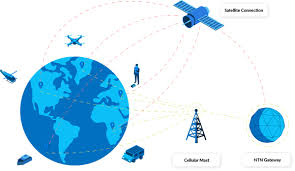
- Space-Based Cell Towers: A network of Low Earth Orbit (LEO) satellites acts as "cell towers in space," equipped with powerful antennas to pick up signals from standard mobile devices.
- Spectrum Integration: These satellites utilize existing terrestrial LTE or 5G frequency bands, ensuring compatibility with current mobile networks.
- Non-Terrestrial Network (NTN): The satellite serves as a relay, transmitting signals to a ground gateway, which then links to the service provider's core network.
- Seamless Handover: When a user exits the range of a terrestrial tower, the device automatically switches to a passing satellite without user intervention.
Key Technical Features and Standards
- Standard Device Compatibility: Works with existing 4G and 5G smartphones, avoiding the need for bulky, expensive satellite handsets.
- Low Latency: By utilizing LEO satellites (altitudes of 500–2,000 km), D2D significantly reduces the signal delay common in traditional geostationary satellites.
- Global Standardization: Integration into 3GPP Release 17 and 18 ensures that D2D becomes a globally recognized and interoperable telecom standard.
- Evolving Capabilities: Initial deployments focus on low-bandwidth services (Emergency SOS and messaging), with a roadmap toward full voice and high-speed data.