
ALH Mk-III Helicopter
- 12 Apr 2026
In News:
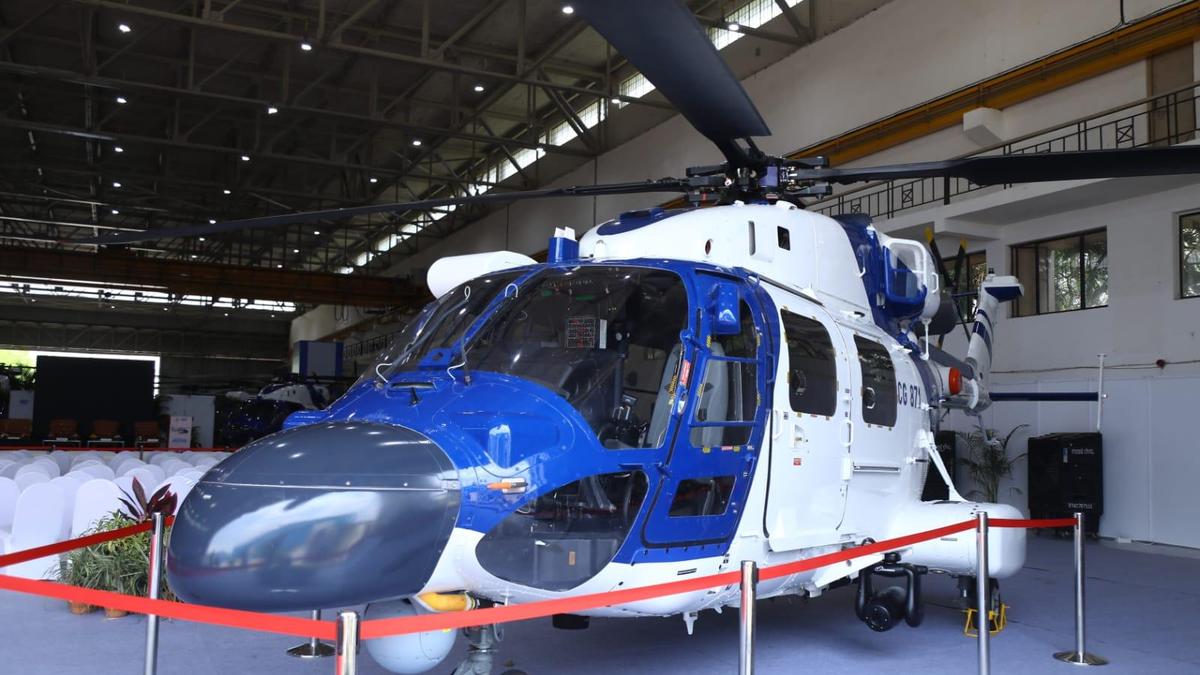
In a significant boost to India’s indigenization efforts in defense (Aatmanirbhar Bharat), Hindustan Aeronautics Limited (HAL) recently delivered four Advanced Light Helicopter (ALH) Mk-III Maritime Role (MR) units to the Indian Coast Guard (ICG). This development marks a pivotal step in enhancing the nation’s coastal surveillance and search-and-rescue capabilities.
The ALH Mk-III (Maritime Role): An Overview
The ALH Mk-III is the specialized maritime variant of the indigenous Dhruv helicopter platform. Engineered specifically for the rigorous demands of the marine environment, these helicopters represent a leap in domestic aerospace engineering.
Technical Features and Specifications
- Engine & Design: It is a multi-role, twin-engine helicopter designed for high performance in humid and saline maritime conditions.
- Avionics & Cockpit: The Mk-III variant features a state-of-the-art glass cockpit and advanced integrated avionics.
- Night Capabilities: It is equipped with advanced sensors and night-vision technology, allowing for 24/7 seamless operations, which is critical for midnight interceptor missions.
- Indigenous Manufacturing: Developed and produced by Hindustan Aeronautics Limited (HAL), it underscores India's growing self-reliance in high-end defense technology.
Operational Versatility
The ALH Mk-III is designed to handle a diverse array of responsibilities, including:
- Surveillance & Security: Monitoring Coastal Regulation Zones (CRZ) and the Exclusive Economic Zone (EEZ).
- Humanitarian Aid: Conducting Search and Rescue (SAR) missions and casualty evacuations (CASEVAC).
- Law Enforcement: Anti-piracy operations and preventing maritime smuggling.
- Logistics: Troop transport, VIP movement, and supplies delivery to remote islands or offshore installations.
The Indian Coast Guard (ICG): The Sentinel of the Seas
The induction of these helicopters is vital for the ICG, which serves as the primary agency for non-military maritime security.
Organizational Framework
- Establishment: While raised in 1977, it was formally constituted as an independent armed force under the Coast Guard Act, 1978.
- Jurisdiction: It operates under the Ministry of Defence, distinguishing it from the Indian Navy, which focuses on external aggression and naval warfare.
- Motto:“VayamRakshamah” (We Protect).
- Command Structure: Headquartered in New Delhi, it is led by the Director General of the Indian Coast Guard (DGICG).
Mandate and Functions
The ICG is tasked with safeguarding India's vast maritime interests, which include:
- Protection of artificial islands and offshore terminals.
- Protection and assistance to fishermen at sea.
- Preservation and protection of the marine environment, including pollution control.
- Assisting the Customs department in anti-smuggling operations.