
National Science Day 2026
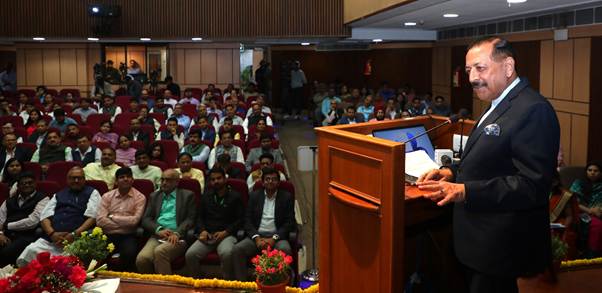
- 01 Mar 2026
In News:
National Science Day is observed every year on 28th February to commemorate the discovery of the Raman Effect by eminent Indian physicist Sir Chandrasekhara Venkata Raman in 1928. The day serves as a reminder of India’s scientific legacy and the importance of fostering innovation and research in nation-building.
The year 2026 theme - “Women in Science: Catalyzing Viksit Bharat” - emphasizes the role of women scientists in advancing India’s journey towards becoming a developed nation.
Historical Background
- Sir C.V. Raman discovered the Raman Effect on 28 February 1928.
- For this groundbreaking work, he was awarded the Nobel Prize in Physics in 1930, becoming the first Asian to receive a Nobel Prize in the sciences.
- The first National Science Day was celebrated on 28 February 1987, institutionalizing the observance as an annual tradition to promote scientific awareness.
The primary objective of National Science Day is to spread awareness about the importance of science and its applications in everyday life and national development.
The Raman Effect
The Raman Effect refers to a phenomenon in which:
- When a beam of light passes through a transparent medium (such as a liquid or gas),
- A small portion of the scattered light undergoes a change in wavelength.
This shift in wavelength occurs due to the interaction between light and the vibrational and rotational energy levels of molecules in the medium.
The discovery laid the foundation for Raman Spectroscopy, a powerful analytical tool widely used in physics, chemistry, material science, and medical diagnostics.
Contributions of Sir C.V. Raman
Sir C.V. Raman made significant contributions to scientific research and institution-building in India:
- Founded the Indian Journal of Physics in 1926 to promote indigenous scientific research.
- Became the first Indian Director of the Indian Institute of Science (IISc), Bengaluru, in 1933, strengthening India’s research ecosystem.
- Established the Raman Research Institute (RRI) in 1948, which continues to be a leading centre for fundamental research.
- Awarded the Bharat Ratna in 1954, India’s highest civilian honour.
His life exemplified scientific excellence combined with institution-building for long-term national progress.
Theme 2026: Women in Science and Viksit Bharat
The 2026 theme highlights:
- The need to enhance women’s participation in STEM (Science, Technology, Engineering, and Mathematics) fields.
- Recognition of women scientists as key drivers of innovation, research, and technological advancement.
- Alignment with the broader vision of “Viksit Bharat” (Developed India) by 2047.
Encouraging gender equity in science contributes to inclusive growth, diverse perspectives in research, and sustainable development outcomes.
Significance
National Science Day promotes:
- Development of scientific temper, as envisaged under Article 51A(h) of the Constitution (Fundamental Duties).
- Awareness about research and innovation ecosystems in India.
- Engagement of students, researchers, and institutions in scientific pursuits.
- Public understanding of science as a tool for socio-economic transformation.