
Gitchak nakana
- 02 Mar 2026
In News:
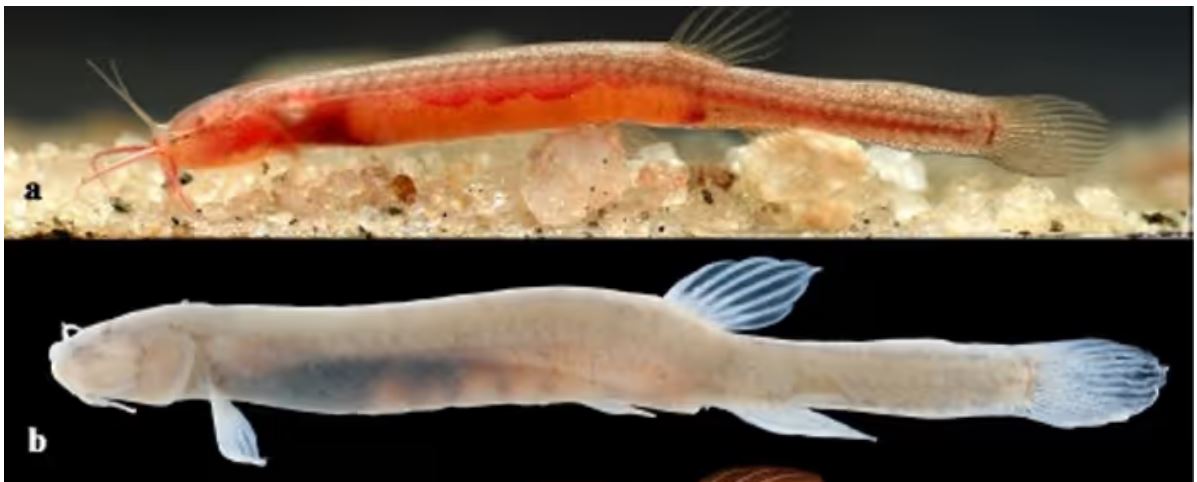
A new species of groundwater-dwelling fish, Gitchak nakana, has recently been discovered in Assam. The species was found in a dug-out well and represents the first aquifer-dwelling (phreatobitic) fish recorded from Northeast India. This discovery adds to India’s growing record of endemic and subterranean biodiversity.
About Gitchak nakana
- Type: Groundwater (aquifer-dwelling) fish
- Family: Cobitidae (Loaches)
- Genus: Newly described genus
- Size: Approximately 2 cm in length
- Habitat: Subterranean aquifers
- Location of Discovery: Assam
The species was discovered in a dug-out well, indicating its existence in underground water systems rather than surface water bodies such as rivers or ponds.
Etymology
The name reflects local linguistic heritage:
- “Gitchak” (Garo language) – means red, referring to its striking blood-red colour when alive.
- “Na-tok” / “kana” – refer to a blind fish.
The nomenclature highlights both the species’ morphology and its cultural-geographical context.
Unique Morphological Features
Gitchak nakana displays classic troglomorphic adaptations — traits evolved for life in complete darkness:
- Absence of externally visible eyes (blindness)
- Translucent, pigmentless body
- Extreme miniaturization (only 2 cm long)
- Complete absence of skull roof — the brain is covered dorsally only by skin
The lack of a skull roof is particularly unusual and makes it one of the most anatomically distinctive loach species recorded.
What are Phreatobitic Species?
- Phreatobitic organisms live in groundwater aquifers rather than surface water or caves.
- Aquifers are underground water-bearing geological formations.
- Such habitats are difficult to access and poorly studied, which explains why discoveries are rare.
Globally:
- More than 300 fish species are known from subterranean habitats.
- However, the vast majority inhabit caves.
- Less than 10% are known from groundwater aquifers, making this discovery scientifically significant.
Thus, Gitchak nakana represents a rare addition to the small global group of true aquifer-dwelling fishes.