
Forest Owlet
- 02 Mar 2026
In News:
Recently, the Forest Owlet was sighted in Kuno National Park, Madhya Pradesh, marking its reappearance in the region 113 years after it was last recorded there. The species had not been seen in Kuno since the early 20th century, making this rediscovery ecologically significant. The development strengthens Kuno’s biodiversity profile, which has already gained prominence due to the cheetah reintroduction programme.
About the Forest Owlet
- Scientific Name: Athene (Heteroglaux) blewitti
- Family: Strigidae (typical owl family)
- First Described: 1873
- Presumed Extinct: After 1884 due to lack of sightings
- Rediscovered: 1997 in central India
The Forest Owlet was long considered extinct because it was not recorded for over a century after the late 19th century. Its rediscovery in 1997 was a landmark event in Indian ornithology, underscoring the importance of systematic biodiversity surveys.
Habitat and Ecology
Habitat
The species primarily inhabits:
- Tropical and subtropical moist lowland forests
- Dense deciduous woodlands
- Open dry deciduous teak forests
- Tropical and subtropical dry forests
It shows preference for dry deciduous forest ecosystems, especially those dominated by teak.
Distribution
The Forest Owlet is endemic to central India, meaning it is found nowhere else in the world.
Recorded populations exist in:
- Madhya Pradesh
- Maharashtra (notably Melghat Tiger Reserve)
- Odisha
- Chhattisgarh
- Gujarat
The recent sighting in Kuno National Park strengthens evidence of its fragmented but surviving populations across central Indian landscapes.
Physical Characteristics
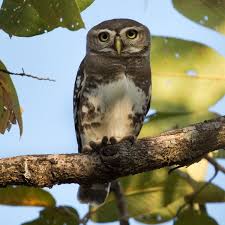
The Forest Owlet has distinctive morphological features:
- Relatively unspotted crown
- Prominent white throat collar
- Thickly feathered legs
- Heavily banded wings and tail
Unlike many owls that are nocturnal, the Forest Owlet is diurnal (active during the day), which makes it relatively easier to observe compared to other owl species.
Diet and Behaviour
- Primarily feeds on rodents
- Also consumes lizards, skinks, and insects
- Hunts during daylight hours
- Typically seen perched on exposed branches while scanning for prey
Its diurnal nature and specific habitat requirements make it vulnerable to habitat degradation.
Conservation Status
- IUCN Red List: Endangered
- CITES: Appendix I (highest level of international trade protection)
The species faces threats from:
- Habitat loss due to deforestation
- Fragmentation of dry deciduous forests
- Agricultural expansion
- Developmental activities in central India
Given its limited distribution and small population size, conservation of intact forest patches in central India is critical for its survival.