
Namo Bharat Rapid Rail and Meerut Metro
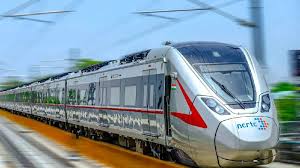
- 24 Feb 2026
In News:
- The Prime Minister inaugurated both the Namo Bharat Rapid Rail and the Meerut Metro from a single platform, marking the first instance in India where a rapid rail (regional system) and a metro (intra-city system) were launched together on the same day.
- The Meerut Metro operates on the same infrastructure as the Namo Bharat corridor in a first-of-its-kind integrated model.
About Namo Bharat
- India’s first Regional Rapid Transit System (RRTS).
- Dedicated semi-high-speed commuter rail network.
- Designed to transform connectivity across the National Capital Region (NCR).
- Speed Specifications
- Design Speed: 180 km/h
- Operational Speed: Up to 160 km/h
- Average Speed: ~100 km/h
- Primary Objective
- Reduce congestion on roads and conventional rail networks.
- Provide high-frequency, fast connectivity for commuters traveling 100–200 km distances.
- Promote sustainable and transit-oriented regional development.
Flagship Corridor
Delhi–Ghaziabad–Meerut RRTS
- Length: ~82 km
- Full operations inaugurated in February 2026.
- Connects Delhi with key urban centres in western Uttar Pradesh.
Distinction from Other Rail Systems
1. RRTS vs Metro
|
Feature |
RRTS (Namo Bharat) |
Metro |
|
Coverage |
Regional (Inter-city within NCR) |
Intra-city |
|
Stops |
Fewer |
Frequent |
|
Speed |
Higher (up to 160 km/h) |
Lower comparatively |
|
Distance |
100–200 km |
Short urban distances |
2. RRTS vs Vande Bharat Express
|
Feature |
RRTS |
Vande Bharat |
|
Route Type |
Regional commuter |
Long-distance inter-city |
|
Frequency |
High |
Moderate |
|
Target Users |
Daily regional commuters |
Inter-city travelers |
|
Distance |
Short-medium regional |
Long-distance routes |
Meerut Metro
Key Features
- Connects Meerut South – Modipuram.
- India’s fastest metro with speeds up to 120 km/h.
- Operates on shared infrastructure with Namo Bharat in certain sections—first such model in India.
Significance
- Integrated Urban–Regional Mobility Model: First example of metro and rapid rail operating together on common infrastructure.
- Decongestion of NCR: Encourages modal shift from private vehicles to mass transit.
- Economic Growth: Boosts real estate, employment, and regional economic integration.
- Sustainable Transport: Energy-efficient, high-capacity public transport reduces carbon footprint.