
India assumes chairmanship of Indian Ocean Naval Symposium (IONS)
- 22 Feb 2026
In News:
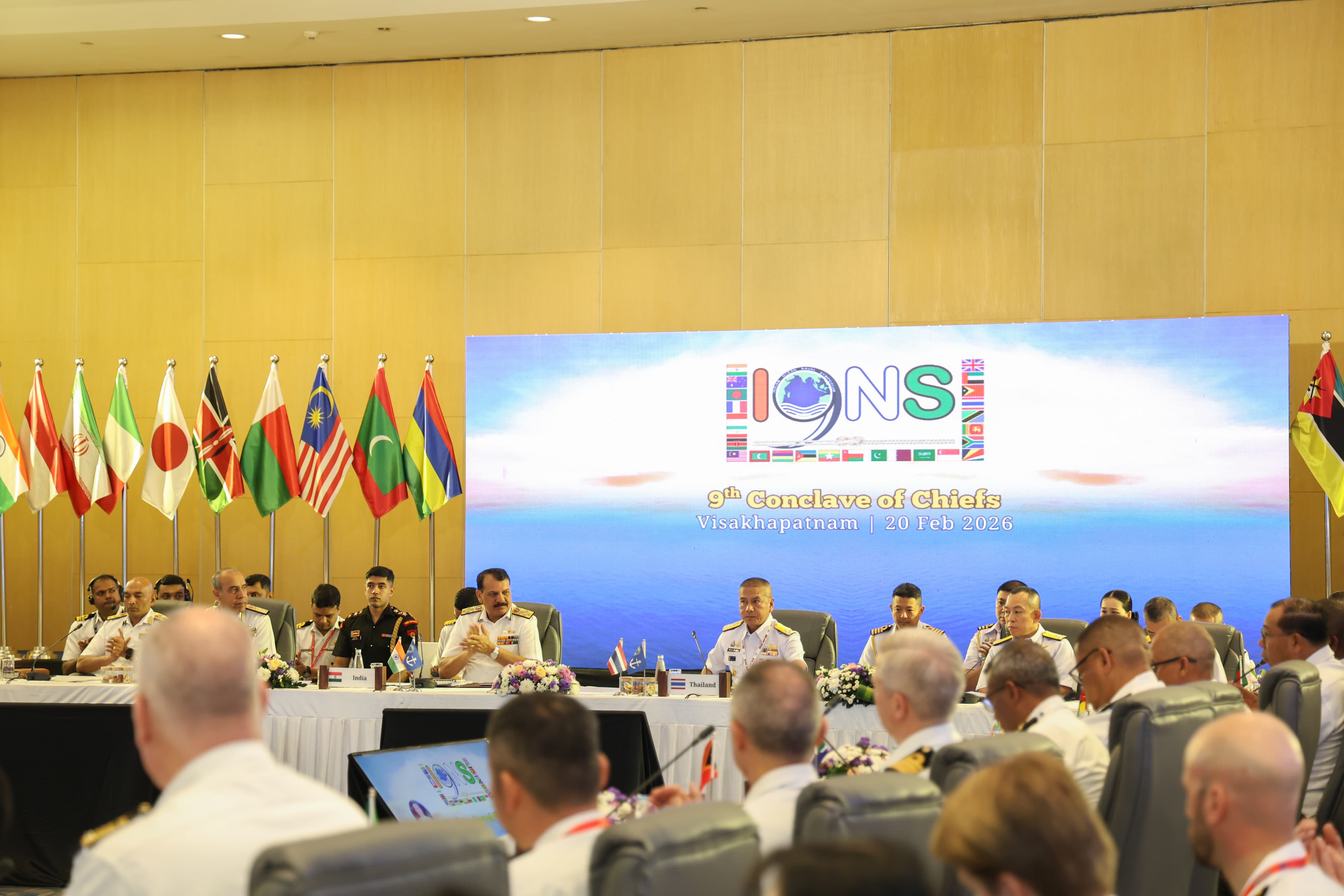
- India assumed the Chairmanship of the Indian Ocean Naval Symposium (IONS) from Royal Thai Navy.
- The 9th Conclave of Chiefs was held at Visakhapatnam.
- Participation included Chiefs of Navies and Heads of Maritime Security Agencies from 33 countries (Members, Observers, and Indian Ocean littoral states).
- India had earlier held the inaugural Chairmanship (2008–2010).
About Indian Ocean Naval Symposium (IONS)
- Launched in 2008 by the Indian Navy.
- A voluntary naval forum aimed at enhancing maritime cooperation among Indian Ocean littoral states.
- No permanent headquarters.
- Features a rotating chairmanship.
Membership Structure
- 25 Member States, divided into four sub-regions:
- South Asian
- West Asian
- Southeast Asian & Australian
- East African
- 9 Observer countries.
- In 2026:
- The Philippines was inducted as an Observer.
- Oman joined the Working Group on HADR.
Core Objectives of IONS
IONS promotes:
- Maritime security cooperation (including anti-piracy efforts).
- Humanitarian Assistance and Disaster Relief (HADR).
- Maritime information sharing.
- Capacity building among navies.
- Professional exchange through exercises, workshops, and biennial conclaves.
Key Focus Areas (Working Groups)
Under India’s Chairmanship, emphasis will be placed on strengthening:
- Maritime Security
- Humanitarian Assistance and Disaster Relief (HADR)
- Information Sharing and Interoperability
Initiatives Announced During India’s Tenure
- Conduct of IONS Maritime Exercise (IMEX).
- Continued deployment of IOS SAGAR missions to IONS member countries with multinational participation.
- Structured Maritime Information Sharing Workshops.
- Upgrade of the IONS website to enhance:
- Institutional continuity
- Secure engagement
- Usability among member navies
Strategic Significance for India
- Reinforces India’s role as a net security provider in the Indian Ocean Region.
- Strengthens maritime diplomacy and defence cooperation.
- Enhances collective response capability against: Piracy, Maritime terrorism, and Natural disasters
- Promotes interoperability among like-minded navies.
- Reflects India’s vision of SAGAR (Security and Growth for All in the Region).