
India–GCC Free Trade Agreement (FTA)
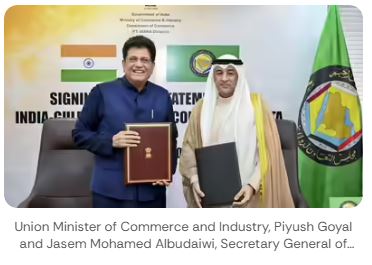
- 26 Feb 2026
In News:
India and the Gulf Cooperation Council (GCC) have signed a Joint Statement formally launching negotiations for the proposed India–GCC Free Trade Agreement (FTA), following the previously agreed Terms of Reference. This marks a significant milestone in strengthening India–GCC economic and strategic relations.
About the India–GCC Free Trade Agreement (FTA)
Nature of the Agreement
The India–GCC FTA is a proposed comprehensive trade agreement between India and the six GCC member states:
- Saudi Arabia
- United Arab Emirates (UAE)
- Qatar
- Kuwait
- Oman
- Bahrain
It seeks to establish a structured framework for enhancing:
- Trade in goods
- Trade in services
- Investment flows
- Regulatory cooperation
- Market access
The agreement aims to reduce tariff and non-tariff barriers and facilitate smoother business operations between the two sides.
Economic Significance of India–GCC Trade
1. Major Trading Partner
- The GCC is India’s largest trading partner bloc.
- Accounts for 15.42% of India’s global trade.
- Bilateral trade in FY 2024–25:
- Total Trade: USD 178.56 billion
- Exports: USD 56.87 billion
- Imports: USD 121.68 billion
- Trade has grown at an average annual rate of 15.3% over the past five years.
2. Sectoral Complementarity
Key Indian Exports to GCC:
- Engineering goods
- Rice
- Textiles
- Machinery
- Gems and jewellery
Key Indian Imports from GCC:
- Crude oil
- Liquefied Natural Gas (LNG)
- Petrochemicals
- Precious metals (especially gold)
The trade relationship reflects strong energy–manufacturing complementarity, with the GCC playing a critical role in India’s energy security.
3. Investment Linkages
- GCC countries have invested over USD 31.14 billion (cumulative FDI as of September 2025) in India.
- The FTA is expected to further:
- Facilitate investment flows
- Promote joint ventures
- Enhance financial cooperation
4. Diaspora Dimension
- The GCC region hosts nearly 10 million Indians.
- The diaspora acts as a “living bridge”, strengthening:
- Remittance flows
- Cultural linkages
- Business networks
- Soft power presence
About the Gulf Cooperation Council (GCC)
- Established in 1981
- A regional political and economic alliance
- Members: Bahrain, Kuwait, Oman, Qatar, Saudi Arabia, UAE
- Headquarters: Riyadh, Saudi Arabia
Background
The GCC was formed in response to regional instability, including:
- The Iranian Revolution (1979)
- The Iran–Iraq War (1980–1988)
Objectives
- Economic cooperation
- Security coordination
- Cultural and social integration
Organisational Structure
- Supreme Council (highest authority)
- Composed of heads of member states
- Presidency rotates among members