
Exercise Dharma Guardian
- 26 Feb 2026
In News:
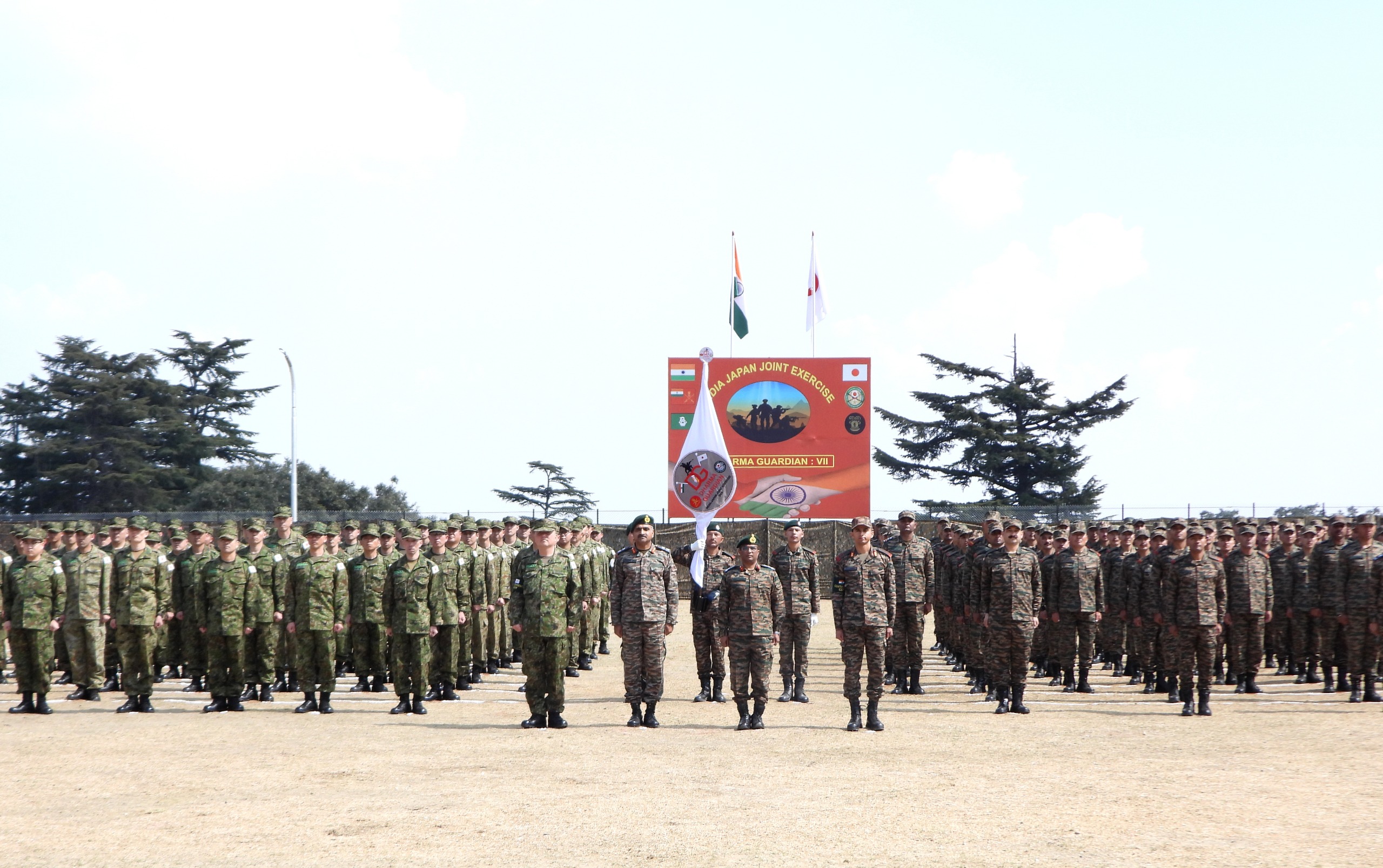
The 7th edition of the India–Japan Joint Military Exercise ‘DHARMA GUARDIAN’ commenced at the Foreign Training Node, Chaubattia (Uttarakhand) from 24 February to 9 March 2026. The exercise represents a significant pillar of growing defence cooperation between India and Japan.
About Exercise DHARMA GUARDIAN
- Type: Annual Joint Military Exercise
- Participants:
- Indian Army
- Japan Ground Self-Defense Force (JGSDF)
- Venue: Conducted alternately in India and Japan
- Participating Contingents (2026)
- 120 personnel from each side
- JGSDF represented by the 32nd Infantry Regiment
- Indian contingent drawn from the Ladakh Scouts
Aim and Objectives
The primary objective of Exercise DHARMA GUARDIAN is to:
- Strengthen military collaboration
- Enhance interoperability
- Improve combined capability to conduct joint operations in semi-urban environments
- Synchronise tactical drills and joint planning processes
- Integrate modern technologies into operational frameworks
The exercise focuses on contemporary operational challenges and coordinated response mechanisms in hostile conditions.
Key Tactical Activities
The exercise includes intensive operational drills such as:
- Establishment of a Temporary Operating Base (TOB)
- Development of an Intelligence, Surveillance and Reconnaissance (ISR) grid
- Setting up Mobile Vehicle Check Posts
- Conducting Cordon and Search Operations in hostile environments
- Executing Heliborne Operations
- Undertaking House Intervention Drills
These activities simulate counter-terror and semi-urban combat scenarios, enhancing readiness and operational synergy between the two forces.
Strategic Significance
1. Strengthening India–Japan Defence Partnership
- Reinforces the Special Strategic and Global Partnership
- Enhances operational trust and coordination
- Deepens land warfare cooperation
2. Indo-Pacific Security Architecture: India and Japan are key stakeholders in ensuring a free, open and rules-based Indo-Pacific. The exercise strengthens defence preparedness in a strategically sensitive region.
3. Interoperability and Modern Warfare Preparedness:
- Promotes joint planning and technology integration
- Enhances capability in hybrid and semi-urban warfare
- Supports coordinated responses to emerging security threats
Other India–Japan Military Exercises
India and Japan conduct multiple bilateral and multilateral exercises across services:
- Malabar Exercise (Naval)
- Participants: India, Japan, USA, Australia
- Focus: Maritime security and Indo-Pacific stability
- JIMEX (Japan-India Maritime Exercise)
- SHINYUU Maitri (Air Force Exercise)
Together, these exercises indicate expanding tri-service defence engagement.
Exercise Dharma Guardian 2025
- 20 Feb 2025
In News:
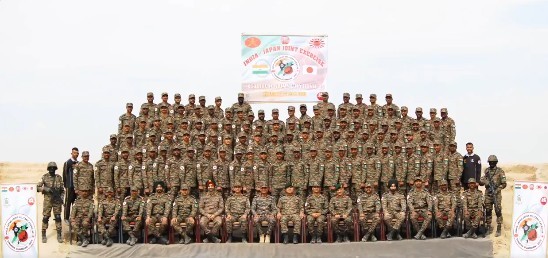
The 6th edition of Exercise Dharma Guardian, a joint annual military exercisealternately hosted in India and Japan since 2018is scheduled from February 25 to March 9, 2025, at Mount Fuji, Japan.
Key Highlights:
Objectives:
- Strengthen Bilateral Defence Relations: Enhances military diplomacy under the India–Japan Special Strategic and Global Partnership.
- Promote Interoperability: Develops joint operational capabilities and tactical synergy in line with UN peacekeeping mandates (Chapter VII).
- Urban and Semi-Desert Warfare: Trains troops in counter-terrorism operations and urban combat scenarios.
- Regional Stability: Supports the Indo-Pacific security architecture and complements Quad defence objectives (India, Japan, US, Australia).
Key Features of Dharma Guardian 2025
- Advanced Tactical Training: Close-quarter battle drills, live-fire exercises, battlefield medical evacuation.
- Joint Counter-Terror Operations: Conducted under UN charter guidelines for multinational cooperation.
- 48-hour Validation Exercise: Simulated real-time combat for assessing operational readiness and coordination.
- ISR and Tactical Mobility Drills: Involves establishing temporary operating bases, ISR (Intelligence, Surveillance, Reconnaissance) grids, mobile vehicle checkpoints, and heliborne insertions.
- House Intervention & Search Operations: Practical training for securing urban areas against militant threats.
- Weapons & Equipment Display: Demonstrates India’s growing defence manufacturing under the Atmanirbhar Bharat initiative.
Mount Fuji – Host Site
- Geographical Significance: Japan’s highest peak at 3,776.24 meters, located 100 km southwest of Tokyo.
- Cultural Importance: Recognized as a UNESCO World Heritage Site (2013) and revered as one of Japan’s “Three Holy Mountains.”
- Training Terrain: Its stratovolcanic landscape provides a realistic backdrop for high-altitude and rugged terrain operations.
Related India-Japan Military Exercises
India and Japan conduct a wide spectrum of bilateral and multilateral defense exercises across all services:
Exercise Name Service Branch Focus Area
Dharma Guardian Army Land-based counter-terror and urban warfare
JIMEX Navy Naval interoperability and maritime security
Malabar (Quad) Navy (Multilateral) Naval drills with US and Australia
Veer Guardian Air Force Air combat tactics and coordination
ShinyuuMaitri Air Force Air mobility and humanitarian operations