
Anjadip Vessel
- 25 Feb 2026
In News:
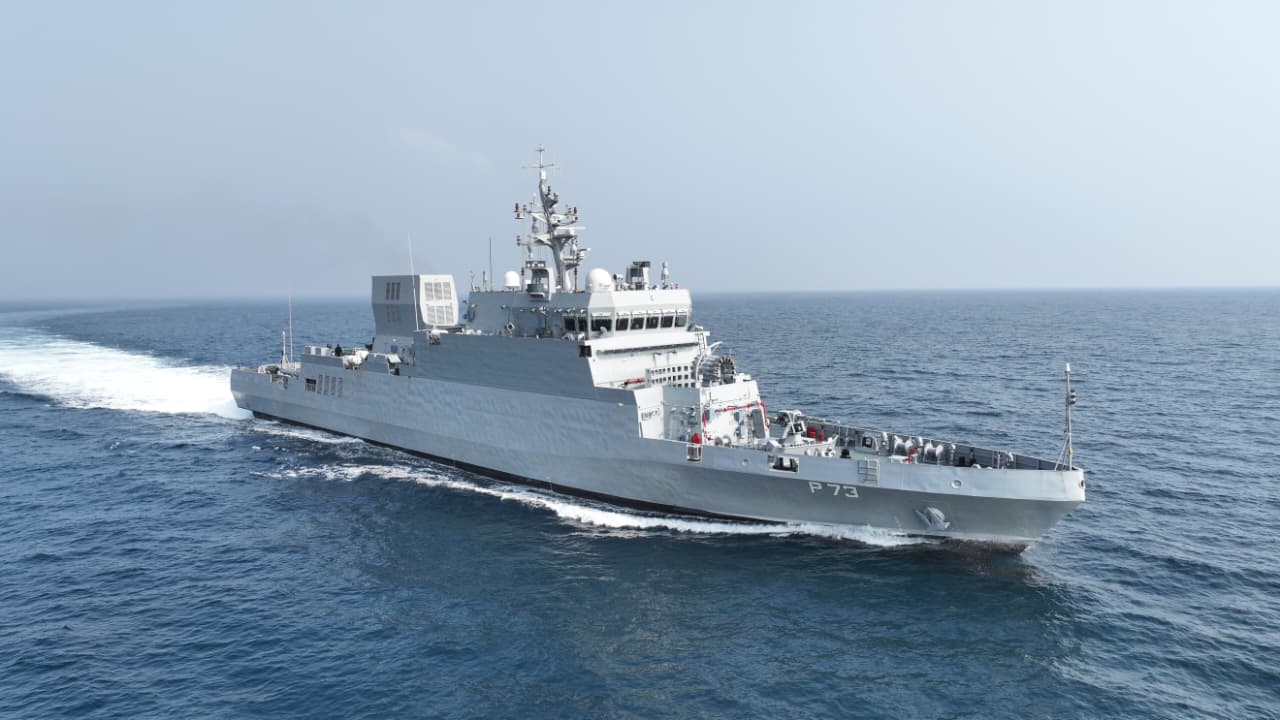
The Indian Navy is set to commission INS Anjadip, an indigenous Anti-Submarine Warfare Shallow Water Craft (ASW-SWC), at the Eastern Naval Command in Chennai. The induction marks a significant milestone in India’s maritime security architecture, particularly in strengthening underwater domain awareness in littoral waters.
Key Details:
- INS Anjadip is the third vessel in the eight-ship ASW-SWC project and has been constructed by Garden Reach Shipbuilders & Engineers (GRSE), Kolkata.
- The project reflects India’s growing defence industrial base and aligns with the broader vision of Aatmanirbhar Bharat in defence production.
- It also symbolizes the transformation of the Indian Navy into a “Builder’s Navy,” emphasizing indigenous warship design and construction.
Strategic Rationale
- India’s maritime geography—bordered by the Arabian Sea, Bay of Bengal, and the wider Indian Ocean Region (IOR) faces increasing underwater security challenges, including the expansion of submarine fleets in the region. Coastal and shallow waters are particularly vulnerable due to their complex acoustic environment, which makes submarine detection difficult.
- ASW-SWC vessels such as INS Anjadip are specifically designed for shallow-water operations, complementing larger destroyers and frigates that operate in deeper seas. Their deployment enhances layered maritime defence, especially near critical ports, sea lanes, and offshore assets.
Role and Capabilities
Often described as a “Dolphin Hunter,” INS Anjadip is engineered to detect, track, and neutralize enemy submarines in coastal waters. Its capabilities include:
- Hull Mounted Sonar ‘Abhay’ – an indigenous sonar system for underwater detection.
- Lightweight Torpedoes – for engaging hostile submarines.
- Anti-Submarine Warfare (ASW) Rockets – for close-range underwater threats.
- High-speed Water-Jet Propulsion System – enabling speeds up to 25 knots for rapid response.
Beyond its core ASW role, the vessel is also capable of:
- Coastal Surveillance
- Low-Intensity Maritime Operations (LIMO)
- Search and Rescue (SAR) missions
Its high manoeuvrability makes it particularly effective in confined and shallow operational environments.
Project Significance
The ASW-SWC project demonstrates India’s progress in indigenous naval shipbuilding. By involving domestic shipyards and indigenous weapon-sensor integration, the programme reduces import dependency and strengthens strategic autonomy.
The commissioning also contributes to:
- Capacity-building in anti-submarine warfare.
- Protection of sea lines of communication (SLOCs).
- Safeguarding strategic coastal infrastructure.
- Enhancing deterrence posture in the Indian Ocean Region.
Historical and Geostrategic Context
The vessel is named after Anjadip Island, located off the coast of Goa in the Arabian Sea. The island holds historical importance as Vasco da Gama claimed it for the Portuguese Crown on 24 September 1498 during his first voyage to India. The naming reflects India’s maritime heritage while reinforcing contemporary strategic priorities in the Arabian Sea region.