
Transitioning from LPG to PNG
- 05 Apr 2026
In News:
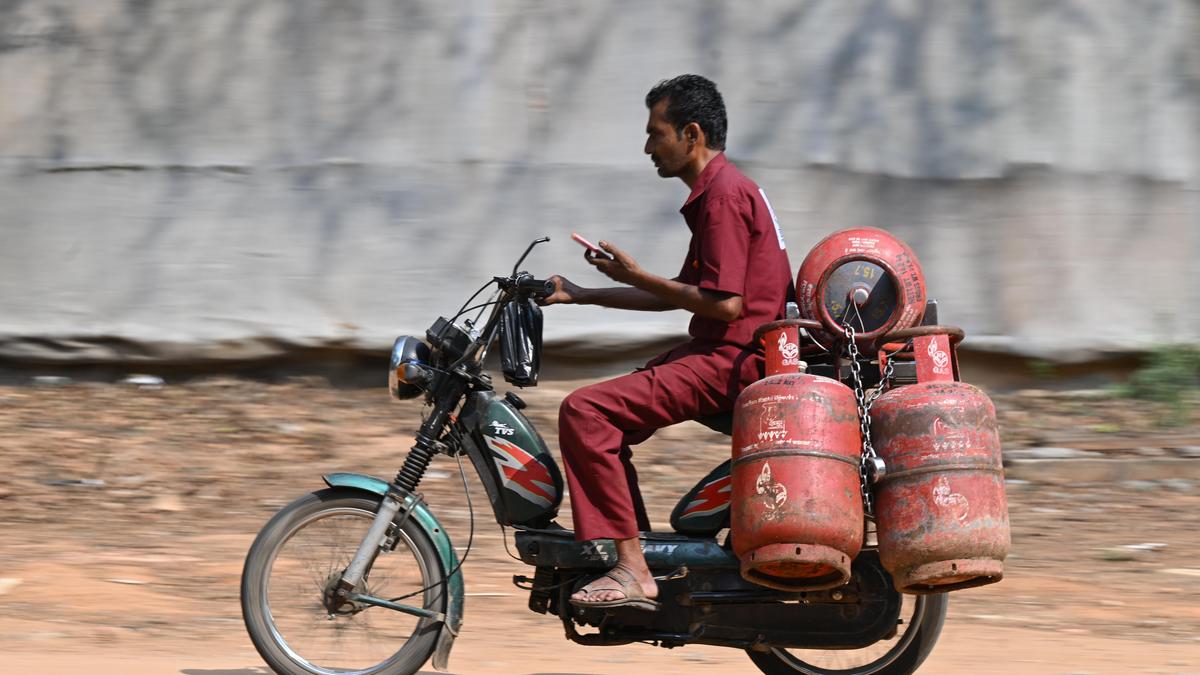
India is currently witnessing a significant strategic shift in its domestic energy landscape, moving from the traditional Liquefied Petroleum Gas (LPG) cylinders to a Piped Natural Gas (PNG) network. While LPG has been the backbone of Indian kitchens for decades, recent geopolitical vulnerabilitiesmost notably the potential blockade of the Strait of Hormuzhave exposed the fragility of India's LPG supply chain, prompting the government to accelerate the "Piped Gas" mission.
Comparative Analysis: LPG vs. PNG
|
Feature |
Liquefied Petroleum Gas (LPG) |
Piped Natural Gas (PNG) |
|
Composition |
Primarily Propane and Butane. |
Primarily Methane. |
|
Physical State |
Liquefied under moderate pressure; heavier than air (settles on the floor during leaks). |
Gaseous at low pressure; lighter than air (disperses quickly if leaked). |
|
Logistics |
Distributed via pressurized cylinders; involves bottling plants and manual delivery. |
Distributed via a reticulated pipeline network (City Gas Distribution). |
|
Supply |
Requires periodic booking and physical delivery. |
Uninterrupted 24/7 supply, similar to water or electricity. |
|
Energy Value |
Higher calorific value (heats faster). |
More efficient for continuous flow; requires nozzle retrofitting for LPG stoves. |
Evolution of Domestic Cooking Fuel in India
- The LPG Journey: Introduced in 1955 in Mumbai by Burmah Shell, organized distribution began in 1965 with Indian Oil's Indane. The Pradhan Mantri Ujjwala Yojana (PMUY), launched in 2016 from Ballia, was a major milestone that scaled LPG access to nearly 33 crore connections, focusing on women’s health and rural empowerment.
- The PNG Pioneer:Vadodara became the first Indian city to implement a city-wide PNG network in the 1970s. Despite this early start, PNG penetration currently stands at only 1.5 crore connections.
- Future Targets: The government aims to expand PNG reach to 12 crore connections by 2034, potentially replacing a massive portion of the LPG market.
The Strategic Imperative: Import Dependence and Geopolitics
The push for PNG is largely driven by the need for Strategic Autonomy in energy:
- Supply Chain Vulnerability: India imports approximately 60% of its LPG. Crucially, 90% of these imports pass through the Strait of Hormuz. Recent regional instabilities have made this maritime chokepoint a major risk factor for India’s energy security.
- Domestic Production: Unlike LPG, where India remains heavily import-dependent, the country has significant domestic natural gas potential. Major contributors include the Krishna-Godavari (KG) Basin (the largest contributor), alongside fields in Assam and Tripura.
- Efficiency and Cost: While domestic LPG production has increased by 25% due to government measures, PNG offers a more cost-effective long-term solution by eliminating the heavy logistics costs (transportation and bottling) associated with cylinders.
Forms of Natural Gas: A Logistical Spectrum
Natural gas is utilized in various forms to suit different transportation and industrial needs:
- CNG (Compressed Natural Gas): Methane compressed to less than 1% of its volume. It is primarily used as a green fuel for the transportation sector (cars, buses).
- LNG (Liquefied Natural Gas): Natural gas cooled to -162°C, turning it into a liquid. This form is essential for long-distance trans-oceanic transport via specialized tankers before being regasified at terminals for pipeline distribution.
- PNG (Piped Natural Gas): The gaseous form delivered directly to the end-consumer (domestic or industrial) via pipelines.