
Samrat Samprati
- 04 Apr 2026
In News:
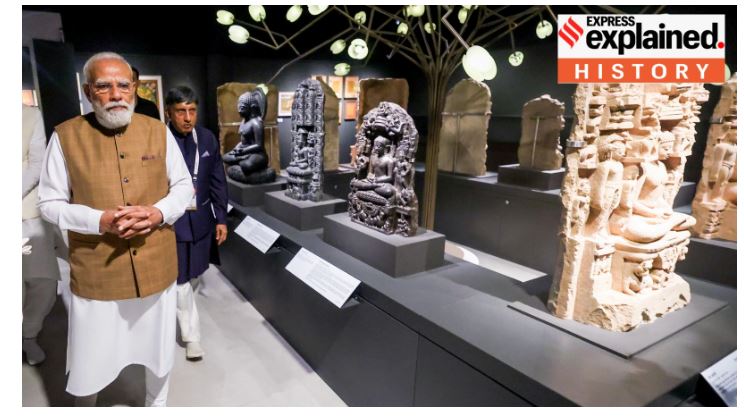
Recently, the Prime Minister of India inaugurated the Samrat Samprati Museum in Gujarat. This developmental milestone, alongside the launch of high-tech semiconductor facilities, highlights a dual focus on India’s "Vikas" (Development) and "Virasat" (Heritage). The museum serves to institutionalize the legacy of a Mauryan ruler often overshadowed by his grandfather, Samrat Ashoka, yet pivotal to the religious geography of ancient India.
Samrat Samprati: The 'Jain Ashoka' (224–215 BC)
Samrat Samprati was the grandson of the Mauryan Emperor Ashoka. While Ashoka is synonymous with the global spread of Buddhism, Samprati is revered for his unparalleled contribution to the expansion of Jainism.
- Historical Identity: In various historical and literary records, he is referred to by names such as Indrapalit, Sangat, and Vigatashok.
- Literary Sources: Detailed accounts of his life and administration are found in prominent Jain ures, including the ‘Sampratikatha’, Hemachandra’s ‘Parishistaparva’, and the ‘Prabhavakcharita’.
- Cultural Expansion: Samprati’s influence was not limited to the Indian subcontinent. Historical traditions suggest he established centers of Jain culture as far west as Iran and Arab countries, marking an early instance of Indian cultural diplomacy.
- Architectural Legacy: Much like Ashoka’s pillars and stupas, Samprati is credited with building thousands of Jain temples across Western and Southern India, earning him the title of the "Jain Ashoka."
Foundational Tenets of Jainism (Sramana Tradition)
To understand Samprati’s patronage, it is essential to analyze the Sramanic roots of Jainism—a tradition that emphasizes asceticism and individual effort over ritualistic orthodoxy.
- The Tirthankara Lineage: Jainism is guided by twenty-four Tirthankaras (Ford-makers), who are believed to have established a path across the ocean of rebirth. While Vardhamana Mahavira was the 24th and most prominent teacher, the religion views its wisdom as eternal and handed down through this lineage.
- The Goal of Liberation: The central objective of Jainism is the attainment of Moksha (Nirvana)—liberation from the cycle of birth and death.
The Triple Gems and Ethical Vows
Jainism prescribes a rigorous ethical code categorized into principles for spiritual progress and rules for daily conduct.
The Triratna (Three Jewels): According to Jainism, liberation is achieved through the harmony of:
- Samyakdarshana (Right Faith): Conviction in the truth of the teachings.
- Samyakjnana (Right Knowledge): Clear and precise understanding of reality.
- Samyakcharita (Right Action): Implementing truth through ethical conduct.
The Panchamahavratas (Five Great Vows): These are the strict ethical guidelines followed by Jain monks (and in a modified form by laypeople):
- Ahimsa: Non-violence (the cornerstone of Samprati’s administration).
- Satya: Truthfulness.
- Asteya: Non-stealing.
- Aparigraha: Non-attachment/Non-hoarding.
- Brahmacharya: Celibacy/Chastity.