
Humpback Whale
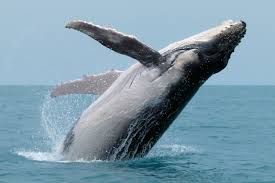
- 03 Apr 2026
In News:
In March and April 2026, a 12.35-meter humpback whale drew global attention after becoming repeatedly stranded in the shallow waters of the Baltic Sea (specifically near Poel Island and the Bay of Wismar, Germany). While the whale successfully freed itself three times, its presence in this region underscores a growing ecological anomaly: the Baltic Sea is not a natural habitat for this species due to its low salinity, shallow depth, and lack of adequate food sources.
Species Profile: Megaptera novaeangliae
The Humpback whale is a quintessential "rorqual" (baleen whale) known for its complex vocalizations and acrobatic breaches.
- Scientific Name:Megaptera novaeangliae (derived from Greek for "big-winged," referring to its massive pectoral fins).
- Distinctive Features:
- Bubble-Net Feeding: A sophisticated cooperative behavior where whales create "nets" of air bubbles to trap schooling fish.
- Sexual Dimorphism: Unlike many mammals, females are larger than males to support the energy demands of gestation and nursing.
- Migration: They hold the record for some of the longest mammal migrations, traveling from polar feeding grounds to tropical breeding waters.
The Baltic Stranding: Causes and Concerns
Strandings, particularly in non-native waters like the Baltic, are often "sentinel events" indicating broader environmental issues.
- Disorientation & Acoustic Pollution: Intense underwater noise from shipping, military sonar, or seismic surveys can interfere with a whale's echolocation, leading to "atypical stranding events."
- Climate Change: Warming ocean temperatures and shifting prey (like capelin and krill) can lure whales into treacherous, shallow coastal corridors.
- Physical Threats: During the 2026 Baltic incident, rescuers found and removed fishing nets wrapped around the whale’s body, highlighting the persistent threat of "ghost gear" and entanglement.
Conservation and Legal Framework
The Humpback whale’s status reflects both the success and the ongoing challenges of international maritime law.
|
Parameter |
Status/Details |
|
IUCN Red List |
Least Concern (following a significant recovery since the 1966 commercial whaling ban). |
|
CITES |
Appendix I (prohibits international commercial trade). |
|
CMS |
Included under the Convention on Migratory Species, requiring trans-boundary protection. |