
E20 Petrol
- 05 Apr 2026
In News:
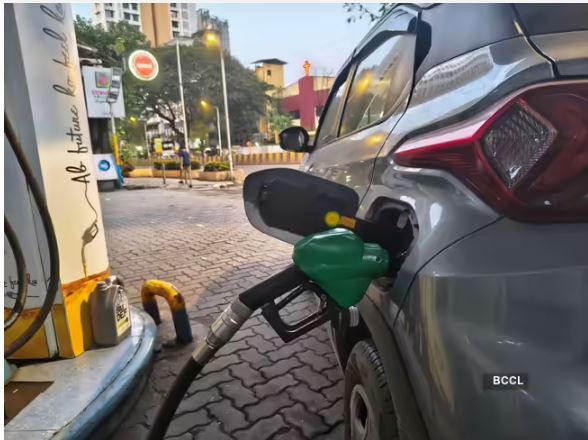
India achieved a landmark in its energy transition by mandating the nationwide rollout of E20 petrol (20% ethanol blended with 80% petrol). Originally set for 2030, this target was advanced by five years through the National Biofuel Policy (revised 2022), underscoring India's urgency in tackling climate change and energy vulnerability.
As of April 2026, E20 has become the standard fuel available at gas stations across all states and Union Territories, marking the successful completion of one of the fastest fuel transitions in global history.
The Science and Composition of E20
E20 fuel is a sophisticated blend designed to optimize engine performance while utilizing renewable resources.
- Feedstock and Production: Ethanol is a 1G (first-generation) biofuel derived primarily from sugarcane, maize, and agricultural residues like damaged food grains and surplus rice. It is produced through fermentation and distillation processes.
- Octane Rating: One of the most significant technical upgrades is the shift in Research Octane Number (RON). While regular petrol typically ranges between 91–92 RON, E20 petrol carries a minimum rating of 95 RON.
- Performance: Higher octane levels prevent "engine knocking" (pre-ignition), leading to smoother combustion and better performance in high-compression modern engines.
Significance for India’s Strategic Interests
The E20 mandate serves three core pillars of national development:
1. Energy Security and Forex Savings
India currently imports over 85% of its crude oil requirements. By substituting 20% of petrol with domestically produced ethanol, India has saved more than ?1.36 lakh crore in foreign exchange (as of 2025). This reduces vulnerability to global supply shocks, such as those caused by ongoing geopolitical tensions in West Asia.
2. Strengthening the Agrarian Economy
The Ethanol Blended Petrol (EBP) Programme creates a "Waste-to-Wealth" circular economy:
- Direct Income: Between 2020 and 2025, the policy injected approximately ?45,000 crore into rural incomes, benefiting over 5 million sugarcane farmers and maize growers.
- Stabilizing Sugar Industry: By diverting surplus sugar to ethanol, mills can clear arrears to farmers more efficiently, preventing price crashes during bumper harvests.
3. Climate Commitments (NDCs)
Aligned with the Paris Agreement, the E20 shift has avoided approximately 700 lakh tonnes of $CO_2$ emissions. Ethanol carries more oxygen in its molecular structure, resulting in a cleaner burn that reduces carbon monoxide (CO) by nearly 30-50% and particulate matter by 15% compared to unblended petrol.
Vehicle Compatibility and Consumer Concerns
With the rollout, a key concern for the public is the compatibility of existing vehicle fleets.
- Post-2023 Vehicles: Most vehicles manufactured after April 2023 are designed to be E20-compliant (materially compatible with ethanol’s corrosive nature).
- Older Vehicles: Vehicles manufactured before 2023 can run on E20 but may experience a slight drop in fuel efficiency (estimated at 3-7%) because ethanol has a lower energy density than petrol.
- Corrosion Risks: Ethanol is hygroscopic (absorbs moisture), which can lead to rust in older steel tanks and the degradation of rubber hoses or plastic seals in non-compliant engines.
Institutional Framework and Policy Support
The transition is governed by a robust inter-ministerial mechanism:
- Nodal Agencies: Jointly implemented by the Ministry of Petroleum and Natural Gas (MoPNG) and the Bureau of Indian Standards (BIS) to ensure fuel quality.
- Incentives: The government reduced the GST on ethanol from 18% to 5% and introduced Interest Subvention Schemes to help set up distilleries.
- LTOAs: Oil Marketing Companies (OMCs) signed Long-Term Offtake Agreements to provide market certainty for ethanol producers.