
Immigration, Visa, Foreigners Registration & Tracking (lVFRT) Scheme

- 28 Mar 2026
In News:
The Union Cabinet has approved the continuation of the Immigration, Visa, Foreigners Registration & Tracking (IVFRT) Scheme for the period 2026–2031, in line with evolving immigration needs and the recently enacted Immigration and Foreigners Act, 2025.
About IVFRT Scheme
The IVFRT Scheme is a technology-driven platform aimed at integrating and streamlining:
- Immigration processes
- Visa issuance
- Registration and tracking of foreigners in India
It was initially approved in 2010 and has undergone multiple phases of expansion to enhance efficiency and security.
Current Phase
- Duration: 1 April 2026 – 31 March 2031
- Budget Outlay: ?1800 crore
Objectives
- Create a secure, integrated immigration ecosystem
- Facilitate legitimate international travel
- Strengthen national security and foreigner tracking mechanisms
- Improve ease of doing business and tourism flows
Key Features
1. Emerging Technology Integration
- Adoption of mobile-based immigration services
- Deployment of self-service kiosks and e-gates
- Use of advanced digital platforms for seamless passenger movement
2. Transformation of Core Infrastructure
- Upgradation of:
- Immigration Check Posts (ICPs)
- Foreigners Regional Registration Offices (FRROs)
- Data centres and backend systems
- Development of a resilient and scalable nationwide system
3. Technology & Service Optimization
- Introduction of unified digital platforms
- Revamping of core application architecture
- Strengthening of network systems for faster and efficient service delivery
Achievements of IVFRT System
- 100% faceless and contactless visa processing system
- Around 91% of e-Visas processed within 72 hours
- Reduction in immigration clearance time:
o From5–6 minutes to 2.5–3 minutes
- Introduction of Fast Track Immigration–Trusted TravellerProgramme (FTI-TTP):
o Clearance time reduced to ~30 seconds at e-gates
- Coverage:
o 117 Immigration Posts
o 15 FRROs
o 850 Foreigners Registration Offices (FROs)
L-1 Visa
- 30 Sep 2025
In News:
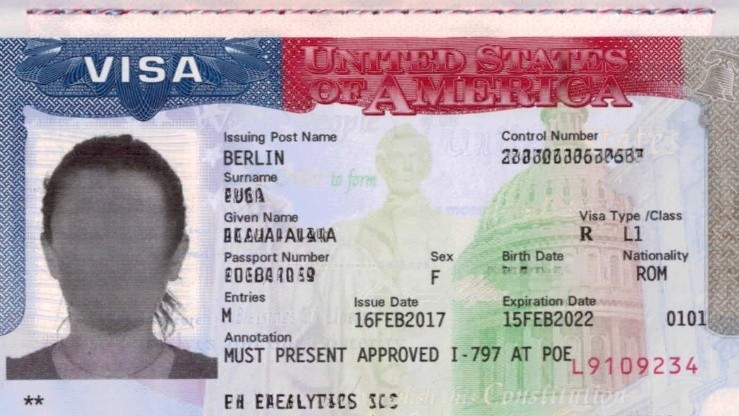
The U.S. administration’s decision to impose a steep $100,000 fee on new H-1B visa applications has reignited debate over whether the L-1 visa could serve as a practical alternative for Indian professionals. While both facilitate skilled migration, they serve distinct purposes and cater to different categories of workers.
About the L-1 Visa
- Nature and Purpose:
- The L-1 visa is a non-immigrant work visa designed for intra-company transfers within multinational corporations.
- It enables global firms to relocate executives, managers, and employees with specialized knowledge from their overseas branches to U.S. offices.
- Introduced under the Immigration and Nationality Act (1965), it aims to promote international business operations and internal talent mobility without depending on the external labour market.
- Categories:
- L-1A: For executives and managers; maximum stay of 7 years.
- L-1B: For employees with specialized knowledge; maximum stay of 5 years.
Applicants must have worked at least one continuous year abroad for the same company within the preceding three years.
Key Features and Advantages
- No Cap or Lottery: Unlike the H-1B, the L-1 has no annual quota or lottery system, allowing year-round applications.
- Blanket Petitions: Large multinationals can file blanket petitions for quicker processing.
- Dual Intent: L-1 holders can apply for a green card without jeopardizing their visa status.
- Dependent Work Rights: Spouses on L-2 visas can work freely in the U.S., offering significant flexibility for families.
- Corporate Convenience: Firms can manage global mobility efficiently, especially for leadership or niche technical roles.
Limitations and Challenges
- Narrow Eligibility: Only employees of the same multinational company are eligible. The visa cannot be used to switch to another employer in the U.S.
- High Scrutiny: U.S. consulates, especially in India, closely scrutinize “specialized knowledge” claims, leading to higher rejection rates than H-1B visas.
- Time-Bound Stay: L-1 visas have strict duration limits and cannot be extended while awaiting permanent residency.
- No Portability: The visa binds the employee to the sponsoring company, unlike H-1B holders who can change employers under certain conditions.
L-1 vs H-1B: The Key Differences
|
Aspect |
L-1 Visa |
H-1B Visa |
|
Purpose |
Intra-company transfer |
Employment in speciality occupation |
|
Eligibility |
Must have worked abroad for the same company |
Bachelor’s degree in speciality field |
|
Annual Cap |
No cap |
85,000 new visas per year |
|
Employer Flexibility |
Cannot switch companies |
Can change employers (with transfer approval) |
|
Wage Requirement |
No prevailing wage rule |
Must meet U.S. Department of Labor’s wage standards |
|
Processing System |
No lottery |
Lottery-based selection |
|
Dependent Work Rights |
L-2 spouse can work freely |
H-4 spouse requires separate authorization |
|
Maximum Stay |
5–7 years (non-extendable beyond limits) |
6 years (extendable in green card process) |
Trump Imposes $100,000 Fee On H-1B Visas

- 23 Sep 2025
In News:
- In a significant policy shift, U.S. President Donald Trump signed a proclamation in October 2025 introducing a $100,000 (≈ ?88 lakh) sponsorship fee for H-1B visas, dramatically raising the cost for U.S. companies hiring foreign skilled workers.
- The move, presented as a measure to “protect American jobs,” marks one of the most stringent immigration-related economic policies in recent years and has wide-ranging implications for India’s IT sector, which remains the largest user of H-1B visas.
About the Policy
- New Regulation: U.S. employers sponsoring an H-1B worker must now pay a non-refundable fee of $100,000 per application, a steep increase from the earlier few-thousand-dollar processing cost.
- Official Objective: To ensure that only “highly skilled, non-substitutable” professionals are brought into the U.S., while deterring misuse of the program by firms replacing American workers with cheaper foreign labour.
- Rationale: According to the U.S. administration, the H-1B system is one of the most abused visa categories, often exploited by outsourcing companies to fill mid-level tech roles at lower wages.
Understanding the H-1B Visa
The H-1B is a non-immigrant U.S. work visa that allows companies to hire foreign professionals in specialty occupations requiring technical or theoretical expertise—mainly in STEM, finance, healthcare, and IT sectors.
- Introduced: Under the Immigration Act of 1990
- Eligibility: Bachelor’s degree or equivalent in a relevant field
- Tenure: Valid for 3 years, extendable up to 6 years (and beyond if Green Card process is ongoing)
- Quota: 65,000 general visas + 20,000 reserved for advanced U.S. degree holders
- Equal Pay Mandate: Employers must offer wages comparable to those of American workers to prevent labour exploitation
Applications are processed through the USCIS lottery system, which randomly selects qualified candidates.
Impact on India
1. Economic & Corporate Impact
- Cost Escalation: Indian IT majors like TCS, Infosys, and Wipro, which collectively sponsor thousands of H-1B employees annually, will face a steep rise in operational expenses.
- Reduced Hiring Abroad: Companies may shift high-skill operations back to India or relocate nearshore to countries such as Canada or Mexico to avoid the inflated cost.
- Automation Drive: Higher labour costs may accelerate automation and AI adoption within U.S. operations, reducing dependence on human capital from abroad.
2. Workforce & Migration Implications
- Major Beneficiaries Affected: Indians account for nearly 71% of all H-1B approvals, followed by China (≈12%).
- Extended Burden: Since most Indian professionals renew their H-1B multiple times due to the 10–15 year Green Card backlog, the cumulative cost will be enormous.
- Talent Diversion: The measure could divert Indian talent toward Canada, the EU, or Australia, which have relatively liberal skilled-migration policies.
‘Gold Card’ Visa Scheme
Alongside the H-1B fee hike, Trump announced a ‘Gold Card Visa Program’:
- Entry Fee: $1 million for individuals and $2 million for businesses.
- Objective: To attract “extraordinary individuals” capable of creating jobs and investments in the U.S. economy.
- Economic Rationale: The administration projects billions in revenue from the program to help reduce public debt and taxes.
- Selective Entry Policy: The move signals a shift from a skill-based to a wealth-based migration system, prioritizing elite entrepreneurs and investors over mid-level professionals.
Broader Policy Context
- The Trump administration has revived tougher citizenship tests, reinstating a 128-question civics and history exam (scrapped by the Biden government earlier), reflecting a wider push for restrictive immigration vetting.
- This marks a continuation of “America First” politics, emphasizing domestic employment protection and economic nationalism.
Implications for India–U.S. Relations
- Technology and Trade Impact: India’s $150+ billion IT export industry—largely dependent on U.S. markets—could face reduced competitiveness and project delays.
- Diplomatic Challenge: New Delhi must engage with Washington to safeguard the interests of Indian professionals and ensure that the visa restrictions do not spill over into bilateral technology and trade cooperation.
- Shift in Talent Dynamics: The policy could push India to strengthen domestic R&D ecosystems and negotiate reciprocal work mobility frameworks under trade agreements.
Global and Strategic Outlook
- Protectionism Resurgence: The policy aligns with a global trend of tightening skilled-migration channels amid economic uncertainty.
- Business Adaptation: U.S. tech firms like Amazon, Microsoft, Meta, and Google, which collectively secured over 25,000 H-1B approvals in early 2025, may now restructure hiring models or expand offshore R&D hubs in India.
- Brain Drain Reversal: Rising visa barriers could retain skilled manpower in India, strengthening domestic innovation capacity under initiatives like “Skill India 4.0” and “Startup India.”
Schengen Visa Cascade Regime
- 02 Aug 2025
In News:
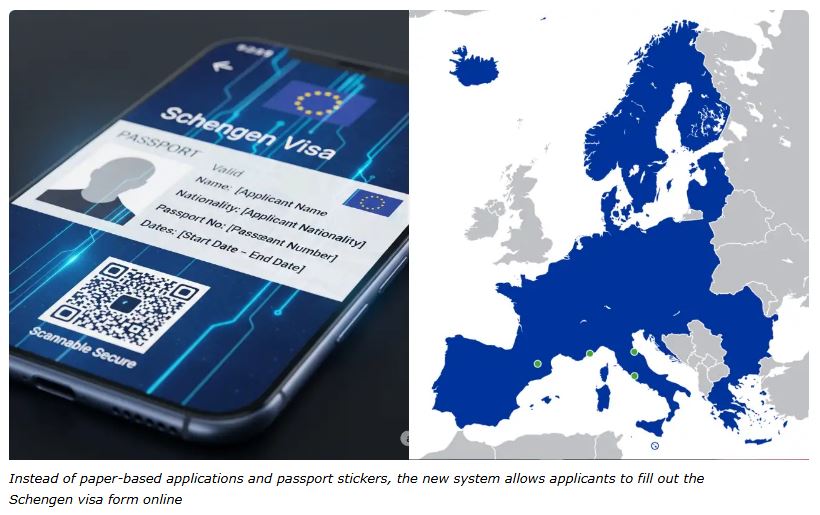
Since 18 April 2024, the European Commission implemented a preferential “cascade” regime under the revised Schengen Visa Code (2020 reform), offering long-term, multiple-entry Schengen visas to Indian nationals with a clean travel history. Originally effective for India, Turkey, and Indonesia, this regime could expand to other countries based on diplomatic and readmission cooperation.
What Is the Schengen Area & Visa Basics
- The Schengen Area comprises 29 countries, including most EU members and four EFTA nations—allowing passport-free movement.
- A Schengen (short-stay) visa permits up to 90 days within any 180-day period. It is purpose-flexible (tourism, business, visiting family, etc.) but does not confer work rights.
The Cascade Regime – A Tiered System
Tier-Based Progression
The regime introduces a pyramid-like progression based on prior visa use:
|
Tier |
Requirement |
Visa Validity |
|
Entry-level |
First-time or minimal travel history |
Short-term, single-entry (probationary) |
|
Tier 1 |
Used three Schengen visas in the past 2 years |
1-year multiple-entry |
|
Tier 2 |
Held and lawfully used a 1-year multiple-entry visa in the past 2 years |
2-year multiple-entry |
|
Tier 3* |
Used a 2-year multiple-entry visa in the past 3 years |
5-year multiple-entry |
*Availability of the 5-year visa depends on passport validity.
Underlying Rule
Mexico’s 90/180 rule still applies: holders can stay only up to 90 days within any rolling 180-day period.
What's Special for Indian Nationals
- The cascade regime for Indians is more favorable than the general rule (which typically demands three prior visas within 2 years for progression). Indians now qualify for a 2-year visa with just two prior visas within 3 years, thanks to a special provision under Article 24(2c) of Regulation (EC) No 810/2009.
- The visa must not exceed passport validity—if the passport expires earlier, the visa has to be correspondingly shorter.
- The policy is discretionary—granting long-term visas (especially 5-year ones) depends on the visa officer’s judgement, even if eligibility criteria are technically met.
Strategic and Policy Significance
- People-to-people diplomacy: The cascade visa fosters cultural, business, and academic exchange, aligning with the EU's emphasis on soft power and deepening ties with India.
- Bilateral alignment: Reflects the EU-India Common Agenda on Migration and Mobility, and dovetails with negotiations around the India–EU Free Trade Agreement (FTA).
- Administrative efficiency: Long-term visas reduce repeat applications—beneficial for both visa applicants and consular resources.
- Reciprocity and expansion: Initially for India, Turkey, and Indonesia; the regime may expand to more countries based on cooperation levels.
UAE Golden Visa Scheme

- 10 Jul 2025
In News:
The United Arab Emirates (UAE) has introduced a nomination-based pilot Golden Visa programme targeting skilled individuals from India and Bangladesh. However, recent rumours around a ?23 lakh “lifetime visa” triggered misinformation, later debunked by UAE authorities.
What is a Golden Visa?
- A long-term residency visa allowing foreign nationals to live, work, or study in the UAE without a local sponsor.
- Designed to attract investors, entrepreneurs, scientists, and skilled professionals.
- Offers 5 to 10 years of renewable residency, and in some cases, lifetime validity under specific frameworks.
Key Features of the UAE Golden Visa Scheme
|
Feature |
Details |
|
Residency |
Long-term (5–10 years); in some cases lifetime under nomination |
|
Sponsorship |
Not required (self-sponsored) |
|
Eligibility Categories |
Investors, entrepreneurs, scientists, doctors, artists, athletes, PhD holders, exceptional students |
|
Benefits |
Sponsor family and domestic staff; multiple entry; no need to stay in UAE continuously |
|
New Nomination-Based Model |
Pilot phase launched for India and Bangladesh — selection based on professional merit and contributions |
|
Application Process |
Managed through UAE’s official channels; some remote application facilities (e.g., OneVASCO centres) available |
|
No Minimum Investment Requirement (in new model) |
Unlike earlier versions requiring AED 2 million+ in assets or business |
Controversy: ?23 Lakh ‘Lifetime Golden Visa’ Rumour
- A viral rumour claimed that Indians could buy a lifetime UAE Golden Visa for ?23.3 lakh (AED 1,00,000).
- Debunked by UAE Government within 48 hours as false and misleading.
- Originated from a press release by Rayad Group, later withdrawn and discredited.
- UAE authorities clarified: No consultancy is authorised to process Golden Visas outside official channels.
- Golden Visas are not available for simple purchase; eligibility is merit-based, not transactional.
Eligibility vs. Misconception
- Golden Visas are for High Net-Worth Individuals (HNWIs) and exceptional talent — not for general migration or middle-class aspirations.
- Traditional routes still require investments of AED 2 million (~?4.67 crore) or equivalent in real estate or business.
Comparison with Other Countries’ Golden Visa Models
|
Country |
Investment Requirement |
|
Portugal |
€500,000 real estate / job creation / capital transfer |
|
Greece |
€250,000 property (rising in urban areas) |
|
Italy |
Startups, bonds, or public projects |
|
Singapore |
SGD 2.5 million under Global Investor Programme |
|
Grenada |
$235,000 donation or $270,000 property for citizenship |
|
UAE (Traditional) |
AED 2 million in real estate or business assets |
Significance for India-UAE Relations
- Enhances people-to-people links under the India–UAE Comprehensive Economic Partnership Agreement (CEPA).
- Offers Indian professionals access to UAE’s innovation, business, and academic ecosystem.
- Promotes economic diversification of UAE beyond oil — with India as a strategic partner.
The U.S. "Gold Card" Visa
- 28 Feb 2025
In News:
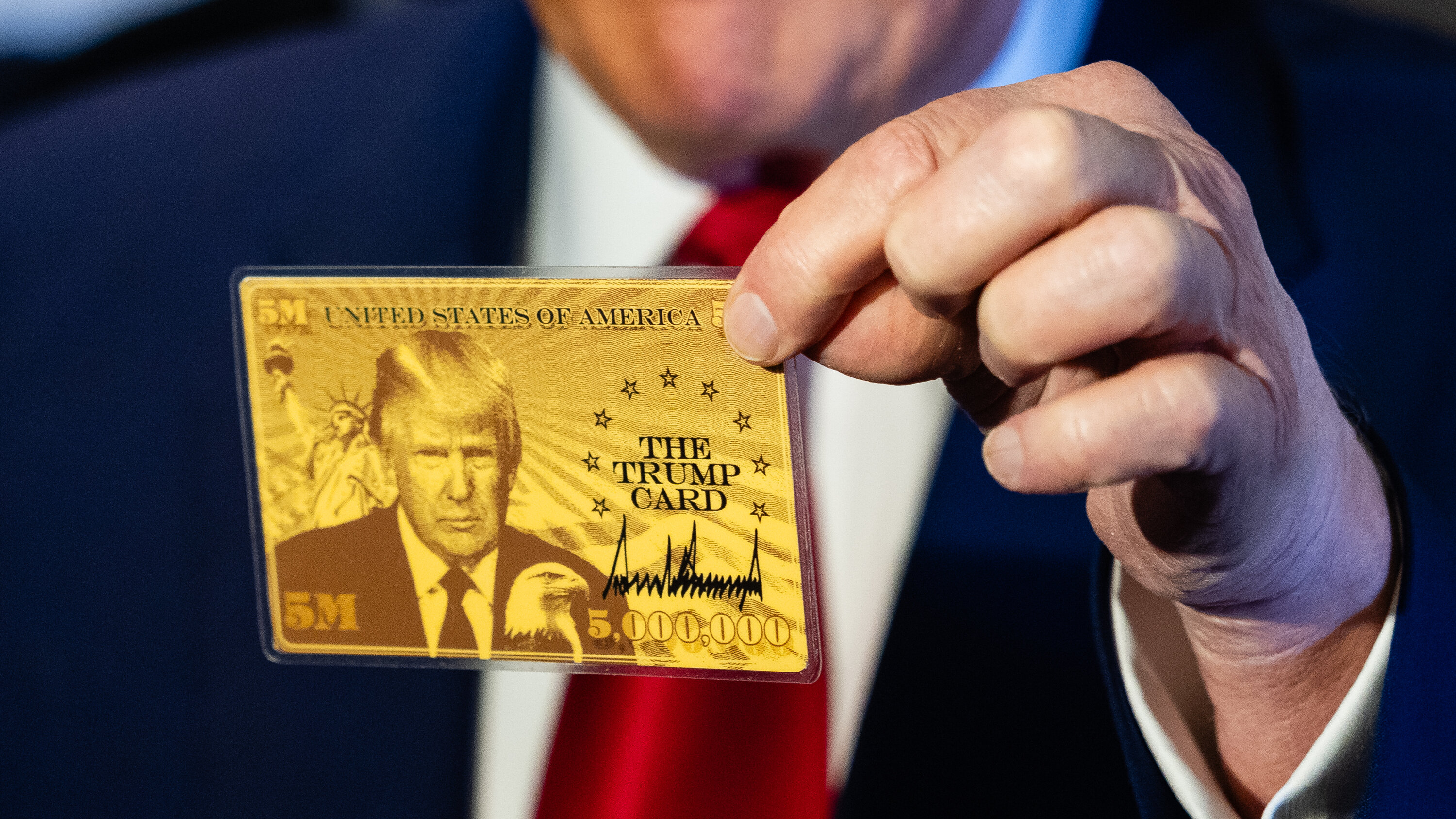
In a significant shift from traditional immigration programs, U.S. President Donald Trump proposed a new immigration initiative—the “Gold Card”—intended to replace the existing EB-5 investor visa program. The Gold Card, requiring a hefty $5 million investment, offers wealthy foreign nationals a direct route to U.S. permanent residency and eventual citizenship, positioning it as a premium alternative to the existing Green Card and EB-5 programs.
Key Differences Between the Gold Card and Green Card
The Green Card remains the standard route to permanent U.S. residency, typically obtained through employment, family sponsorship, or asylum, and involves a detailed, multi-step application process. The EB-5 Investor Visa, introduced in 1990, allows foreign investors to gain U.S. residency by investing a minimum of $1.05 million (or $800,000 in economically distressed areas) in U.S. businesses, provided they create or preserve at least 10 American jobs. The EB-5 program, however, has faced criticism for fraud, misuse, and its association with high-profile real estate projects, including some linked to the Trump family.
The Gold Card, in contrast, offers a simplified and expedited process for wealthy investors to gain permanent residency, bypassing the job creation requirement of the EB-5. For a $5 million investment, foreign nationals can directly purchase their way into U.S. citizenship, bypassing many of the traditional barriers associated with U.S. immigration.
Benefits of the Gold Card Program
- Streamlined Immigration: Investors can gain U.S. residency without the need for job creation or business involvement, unlike the EB-5 program.
- Attracting Wealthy Investors: The program appeals to high-net-worth individuals who can contribute to the U.S. economy through luxury markets, real estate, and business investments.
- Faster Processing: With potentially fewer regulatory hurdles, the Gold Card is designed to have a quicker processing time compared to traditional immigration routes.
- Reduced Fraud Risks: The fixed high-cost nature of the Gold Card may reduce the misuse and fraud that plagued the EB-5 program, offering a more straightforward investment approach.
Potential Concerns and Criticisms
- Ethical and Political Issues: The Gold Card raises questions about "selling" U.S. citizenship, prioritizing wealth over merit, and potentially disadvantaging skilled professionals or individuals seeking to contribute to the U.S. economy.
- Risk of Financial Misuse: Investment-based immigration programs have been criticized for facilitating money laundering, foreign influence, and the movement of illicit capital.
- No Economic Contribution Requirement: Unlike the EB-5, which mandates job creation, the Gold Card does not require any direct investment in U.S. businesses or job creation, limiting its economic impact.
- Legislative and Legal Challenges: Immigration policies in the U.S. are subject to Congressional approval. The Gold Card proposal is likely to face opposition from both Democrats and some Republicans who may object to its perceived elitism or to the legal challenges it might face.
Comparison with Other Investment Visa Programs
The U.S. Gold Card is part of a broader global trend of "Golden Visa" programs, where countries offer residency or citizenship to foreign investors in exchange for significant financial contributions. For instance:
- Portugal: Offers residency for a €500,000 investment in economic development funds, with a pathway to citizenship after five years.
- UAE: Requires an AED 2 million investment for a 10-year residency.
- New Zealand: Offers relaxed requirements for wealthy investors to attract capital following the recession.
These programs, while controversial, aim to attract high-net-worth individuals who can contribute to local economies through investments in real estate, business ventures, or government funds.
H-1B Visa
- 02 Jan 2025
In News:
In the weeks leading up to his return as US President, Donald Trump’s supporters are embroiled in a public dispute over skilled immigration and H-1B visas.
What is the H-1B Visa Program?
- Purpose and Overview:
- The H-1B visa is a non-immigrant visa allowing U.S. companies to employ foreign workers in specialized occupations like STEM (Science, Technology, Engineering, Mathematics) and IT, which require at least a bachelor’s degree.
- Introduced in 1990 to help U.S. employers fill positions when there’s a shortage of qualified domestic workers.
- It allows workers to stay in the U.S. for a maximum of six years, with the option to apply for permanent residence (Green Card) or leave for 12 months before reapplying.
- Annual Cap and Exemptions:
- 65,000 new visas are issued annually, with an additional 20,000 for those with a master’s degree or higher from a U.S. university.
- Certain petitions, such as for continuing employment or positions in higher education or nonprofit research, are exempt from the cap.
- Dominance of Indian Beneficiaries:
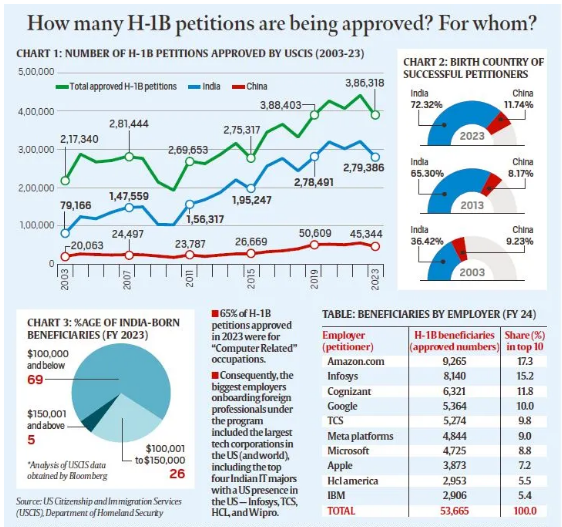
- Indians are the largest beneficiaries, accounting for over 70% of H-1B visa approvals annually since 2015, with China coming second at around 12-13%.
The Current Controversy
- Trigger for Debate:
- The controversy was sparked by Sriram Krishnan, a Chennai-born tech entrepreneur appointed as Donald Trump’s top AI adviser. His post on X (formerly Twitter) in November 2024, advocating for unlocking skilled immigration, led to backlash within Trump’s anti-immigration base.
- The Political Divide:
- Trump’s supporters, particularly from the MAGA (Make America Great Again) faction, voiced opposition to the H-1B visa program, arguing it undermines American workers and wages.
- This prompted pushback from pro-H-1B advocates like Elon Musk and Vivek Ramaswamy, who argue that the program is crucial for addressing the U.S.'s STEM talent shortages.
- Economic and Political Context:
- Immigration is a polarizing issue in the U.S., with a focus on low-skilled labor migration and its alleged effects on wages and job opportunities for American workers.
- Trump’s stance against low-skilled immigration echoes similar critiques about H-1B workers being employed at lower salaries in tech companies, which some claim depresses wages and reduces job opportunities for U.S. workers.
Criticisms of the H-1B Program
- Abuse of the System:
- Critics argue that companies exploit the H-1B program by hiring foreign workers, especially from India, at lower wages than American employees, particularly in tech industries.
- Elon Musk suggests that the program is “broken” and needs reform, proposing raising the minimum salary for H-1B workers to make it more expensive to hire overseas talent.
- Salary Disparities:
- Data from USCIS (U.S. Citizenship and Immigration Services) shows that 70% of H-1B petitions for Indian professionals in 2023 were for salaries below $100,000, while the median salary for U.S. IT professionals was $104,420.
- Impact on American Jobs:
- Critics argue that companies prefer to hire foreign workers at lower wages to save costs, despite the availability of qualified U.S. talent, thus taking away opportunities for American workers.
Support for the H-1B Program
- Filling the STEM Gap:
- Proponents, including Musk and Ramaswamy, argue that the H-1B visa is essential for filling the STEM skills gap in the U.S., given the global dominance of India and China in STEM fields.
- India and China lead the world in STEM graduates, with 2.55 million and 3.57 million, respectively, compared to the U.S. with 820,000.
- Proponents, including Musk and Ramaswamy, argue that the H-1B visa is essential for filling the STEM skills gap in the U.S., given the global dominance of India and China in STEM fields.
- Economic Benefits:
- The H-1B program helps U.S. companies access top global talent, boosting innovation and economic growth, especially in high-tech industries.
- Tech companies argue that without access to skilled foreign workers, they would struggle to fill critical positions in the technology sector.
Ayush Visa

- 11 Dec 2024
In News:
- Recently, the government introduced a separate category of Ayush Visa for foreigners seeking treatment under the Ayush systems of medicine (Ayurveda, Yoga, Unani, Siddha, and Homeopathy).
- The Ayush Visa is available in four sub-categories:
- Ayush Visa: For foreigners visiting India for therapeutic care and wellness treatment in accredited hospitals/wellness centers.
- Ayush Attendant Visa: For attendants accompanying patients seeking Ayush treatment.
- e-Ayush Visa: An electronic version of the Ayush Visa for convenience.
- e-Ayush Attendant Visa: For attendants accompanying patients on an e-Ayush Visa.
- Visa Statistics (as of December 4, 2024):
- 123 regular Ayush visas have been issued.
- 221 e-Ayush visas issued.
- 17 e-Ayush attendant visas issued.
- Advantage Healthcare India Portal:
- The Ministry of Health and Family Welfare launched the Advantage Healthcare India portal, an official platform for Medical Value Travel (MVT).
- The portal facilitates information for international patients seeking medical treatment and wellness services in India.
- The website for accessing the portal is www.healinindia.gov.in.
- Government's Objectives: The government aims to sensitize stakeholders involved in MVT, including Ayush facility providers, to ensure smooth services for international patients.
Diplomatic Passport

- 03 May 2024
Why is it in the News?
After allegations of sexual abuse by Janata Dal (Secular) MP Prajwal Revanna came to light, the politician fled to Germany on a diplomatic passport.
What is a Diplomatic Passport?
- Diplomatic passports are issued to people holding diplomatic status or deputed by the Government of India for official duty abroad.
- Unlike normal passports, which are valid for 10 years and have a dark blue cover, diplomatic passports are valid for five years or less and have maroon covers.
- Diplomatic passports, also known as 'Type D' passports.
- A diplomatic passport has 28 pages.
- Holders of such passports are entitled to certain privileges and immunities as per international law, including immunity from arrest, detention, and certain legal proceedings in the host country.
Issuing Authority:
- The Ministry of External Affairs’s (MEA) Consular, Passport & Visa Division issues diplomatic passports (‘Type D’ passports) to people falling in broadly five categories:
- Those with diplomatic status;
- Government-appointed individuals travelling abroad for official business;
- Officers working under the branches A and B of the Indian Foreign Service (IFS), normally at the rank of Joint Secretary and above; and
- Relatives and immediate family of officers employed in IFS and MEA.
- Select individuals who are authorised to undertake official travel on behalf of the government”.
- The MEA issues visa notes to government officials going abroad for an official assignment or visit.
What are the Benefits of Having a Diplomatic Passport?
- Official identification: The diplomatic passport serves as an official identification document for individuals representing the Indian government on diplomatic missions.
- It helps in establishing their identity and official status.
- Diplomatic immunity: Diplomatic passport holders are typically entitled to certain privileges and immunities as per international law.
- This includes immunity from arrest, detention, and certain legal proceedings in the host country, safeguarding their ability to perform official duties without hindrance.
- Visa facilitation: Diplomatic passports often enjoy certain privileges when it comes to visa facilitation.
- Many countries offer expedited visa processing or waive visa requirements altogether for diplomatic passport holders, simplifying travel arrangements for official purposes.
- Access to diplomatic channels: The diplomatic passport grants access to diplomatic channels and services provided by Indian embassies, consulates, and other diplomatic missions worldwide.
- This includes assistance with consular services, protection, and support while abroad.
- Priority services: Diplomatic passport holders may receive priority services at airports and during immigration procedures.
- This can include dedicated immigration counters or expedited security and customs clearance, saving time during travel.
- Official representation: The diplomatic passport signifies the official representation of the Indian government and confers a sense of authority and credibility while dealing with international counterparts, foreign officials, and diplomatic communities.
Can Diplomatic Passports be Revoked?
- According to The Passports Act, 1967, the passport authority may cancel a passport or travel document, with the previous approval of the Central government.
- The passport authority can impound or revoke a passport if the authority believes that:
- The passport holder or travel document is in wrongful possession
- If the passport was obtained by the suppression of material information or based on wrong information provided by the individual
- If it is brought to the notice of the passport authority that the individual has been issued a court order prohibiting his departure from India or has been summoned by the court.
- A diplomatic passport can be revoked upon orders from a court during proceedings with respect to an offence allegedly carried out by the passport holder before a criminal court.
Himalayan Black Bear (The Hindu)

- 28 Nov 2023
Why is it in the News?
An animal keeper died after being attacked by a Himalayan black bear in the animal’s enclosure of Indira Gandhi Zoological Park (IGZP) here recently.
About Himalayan Black Bear:
- The Himalayan black bear (Scientific Name: Ursus thibetanus laniger) is a subspecies of the Asian black bear found in the Himalayas of India, Bhutan, Nepal, China, and Pakistan.
- In India, habitat covers the entire Himalayan range from Jammu & Kashmir to Arunachal Pradesh, extending to hilly areas in other northeastern states.
- Habitat: Thrives in heavily forested regions with broadleaved and coniferous forests.
- It utilizes orchards, agricultural fields, and human habitats to navigate between forest patches.
- Physical Features: Possesses soft and shiny fur, featuring a distinctive white V patch on the chest.
- Average length ranges from 1.4 to 1.7 meters, weighing between 90 to 200 kg (higher weight typically before hibernation).
- Life Span: In the wild, their life expectancy is approximately 25 to 30 years.
- Diet: Omnivorous nature, consuming acorns, nuts, fruit, honey, roots, and various insects like termites and beetle larvae.
- Behavior: Primarily diurnal by nature but often shifts to a nocturnal lifestyle to avoid human contact.
- Conservation Status: IUCN Red List classification: Vulnerable
- Due to encroachment of human population, forest fires and the timber industries; these have all reduced the bear's habitat.
- There is also a high mortality rate among the newborn.
Card-on-File Tokenisation (CoFT) (Business Standard)
- 18 Nov 2023
Why in the News?
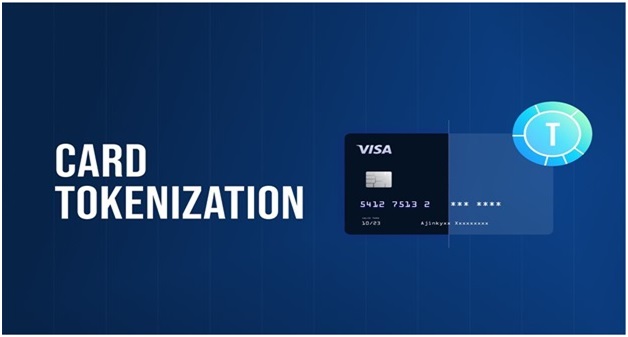
Recently, Visa has highlighted that the primary advantage of tokenization is a decreased risk of data breaches.
What is Card-on-File Tokenisation?
- Tokenisation is a process where the cardholder’s original card number, one which is written on the card and is extensively used for transactions and card identification, is replaced with a surrogate term called ‘token.’
- This process allows enhanced card protection by converting the customers’ card numbers into tokens.
- The exchange of tokens happens between the token requestor and the network, which empowers customers to receive a secure and reliable online payment experience.
- All relationship evidence of such exchange between token and crucial card information is securely saved in a vault that is only accessible to the card networks.
- Resultantly, the customers’ card details will be highly protected from online fraud and hackers.
How Does Card-on-File Tokenisation Work?
- When a customer makes a transaction by using their card at a tokenisation-based-authentication server:
- A credit/debit card is used for transactions at a POS device or an e-commerce website
- The tokenisation system receives and interprets the credit card number
- The tokenisation system goes on to replace the original credit card number with a 16-digit random character token for security
- The tokenisation system then provides the converted 16-digit random token number to the e-commerce marketplace and replaces the user’s credit card number with the same in their system
- For instance, card number (example): 4018 2255 6984 7854 will be replaced with token number: 4325 5214 8574 6658.
- The tokenisation system is an important tool for separating crucial data in ecosystems and databases while also offering enhanced card protection to cardholders.
Exercise ‘CORPAT’ And ‘Bongosagar’ (NewsOnAir)

- 13 Nov 2023
Why in the News?
Recently, Exercise CORPAT and BONGOSAGAR between the Indian Navy and Bangladesh Navy were conducted in the Northern Bay of Bengal from 07 - 09 Nov 2023.
About Exercise CORPAT and Bongosagar:
- The 4th edition of the Bilateral Exercise between the Indian Navy and Bangladesh Navy, BONGOSAGAR-23, and the 5th edition of Coordinated Patrol (CORPAT) by the two navies were held at Visakhapatnam.
- Ships and aircraft from both navies undertook joint patrolling along the International Maritime Boundary Line and maritime exercises to enhance interoperability.
- Indian Navy Ships Kuthar, Kiltan, and Maritime Patrol Aircraft (MPA) Dornier participated in the exercise.
- The ships undertook communication drills, surface gun-shoots, tactical maneuvers, and other exercises.
- INS Kuthar is an indigenously built guided-missile Corvette, whereas INS Kiltan is an indigenously built anti-submarine Corvette.
- Both ships are part of the Indian Navy's Eastern Fleet based at Visakhapatnam, which functions under the operational command of the FOCINC ENC.
- CORPAT-23 also included the maiden Humanitarian Assistance and Disaster Relief drills held between the two navies.
- The bilateral exercises and coordinated patrols have strengthened mutual understanding and cooperation between the two navies.