
WTO MC14 Conference
- 02 Apr 2026
In News:
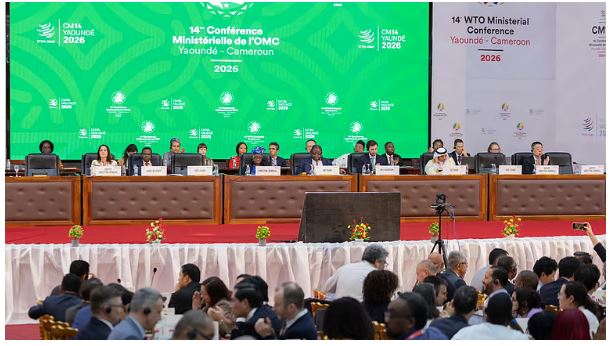
The 14th Ministerial Conference (MC14) of the World Trade Organization (WTO) concluded in Yaoundé, Cameroon (March 2026). As the highest decision-making body of the WTO, the conference aimed to modernize global trade rules, reform the dispute settlement mechanism, and address the digital economy. While it introduced a more "nimble" working methoddubbed the Yaoundé Way, the meeting ended without a final consensus on critical issues like e-commerce duties and agricultural reforms.
The "Yaoundé Package" and Key Outcomes
Although no final legally binding agreement was reached, the Yaoundé Package was developed as a draft ministerial declaration to serve as a roadmap for finalization at the General Council in Geneva.
A. Fisheries Subsidies
Ministers reached a crucial agreement to continue negotiations aimed at implementing comprehensive disciplines on harmful subsidies. The objective is to present final recommendations at MC15 to eliminate subsidies that contribute to overcapacity and overfishing, as outlined in the Agreement on Fisheries Subsidies.
B. Trade and Climate Agenda
Significant progress was noted through the Integrated Forum on Climate Change and Trade (IFCCT), which will launch a three-year work programme in June 2026.
- Fossil Fuel Subsidy Reform: Member nations reaffirmed their commitment to reform subsidies that distort trade and harm the environment.
- Voluntary Climate Actions: A communiqué was adopted, outlining a menu of voluntary actions to better align trade policies with global climate goals.
C. Small Economies and Least Developed Countries (LDCs)
- LDC Package: Dedicated support measures for the world's poorest nations were advanced, serving as a core component for finalization in Geneva.
- Inclusivity: Decisions were adopted to enhance the integration of small economies into the multilateral trading system, specifically targeting Sanitary and Phytosanitary (SPS) and Technical Barriers to Trade (TBT) agreements to aid developing nations.
Major Stalestales and Failures
A. The E-commerce Deadlock
A major disappointment was the failure to extend the E-commerce Moratorium on customs duties for digital transmissions (software, e-books, and digital music).
- The Conflict: The United States pushed for a permanent extension of the moratorium to ensure a free digital market, while Brazil opposed it, seeking the right to levy duties.
- Implication: This poses a significant risk of disrupting global digital trade if the moratorium expires before the Geneva General Council meeting.
B. TRIPS and Intellectual Property
No agreement was reached on the TRIPS Non-Violation Complaint Moratorium, which is scheduled to expire at the end of March 2026. This lapse could lead to increased litigation over intellectual property rights between member states.
C. Agriculture and Dispute Settlement
- Agriculture Impasse: Negotiations between the US and Brazil remained deadlocked over domestic support and market access, mirroring long-standing disputes that have stalled WTO progress for decades.
- Dispute Settlement Reform: Despite discussions, there was no convergence on restoring the WTO’s Appellate Body, which has been non-functional since 2019.
D. Investment Facilitation: The Role of India and South Africa
India and South Africa successfully blocked the inclusion of the Investment Facilitation for Development (IFD) agreement into the formal WTO legal framework. They argued that such agreements fall outside the WTO’s trade-centric mandate and should not be negotiated as plurilateral agreements under the WTO umbrella.