
20 Cities Towards Zero Waste Initiative
- 02 Apr 2026
In News:
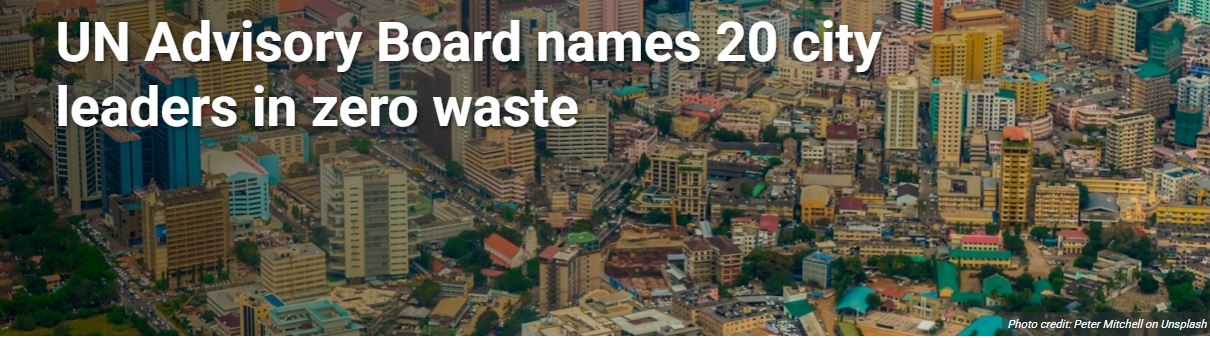
The coastal town of Varkala in Kerala, India, has achieved a significant international milestone by being named in the inaugural "20 Cities Towards Zero Waste" list. This recognition underscores the town’s innovative community-led waste management models and its transition toward a circular economy.
The "20 Cities Towards Zero Waste" Initiative
This global initiative is led by the UN Secretary-General’s Advisory Board on Zero Waste, with technical and strategic support from UN-Habitat and the UN Environment Programme (UNEP).
- Objective: To showcase cities that demonstrate ambitious, inclusive, and resilient approaches to waste reduction.
- Key Goals:
- Recognition: Highlighting urban leadership in sustainable waste management.
- Knowledge Exchange: Promoting the global sharing of best practices and "lessons learned."
- Inspiration: Encouraging other municipalities to accelerate their transition to a zero-waste future.
- Local Implementation: Supporting the practical application of circular economy principles at the grassroots level.
Significance of Varkala’s Inclusion
Varkala’s selection is a testament to the success of decentralized waste management. For a town heavily dependent on tourism, managing waste effectively is critical for ecological preservation. Key highlights of such models often include:
- Source Segregation: Mandatory separation of biodegradable and non-biodegradable waste.
- Decentralized Processing: Using aerobic bins and composting units to manage organic waste locally.
- Inclusivity: Engaging "Haritha Karma Sena" (Green Action Force) members, promoting gender-inclusive livelihoods in the waste sector.
UN Environment Programme (UNEP)
The UNEP plays a foundational role in guiding global waste management and environmental standards.
- Background: Founded in 1972 following the UN General Assembly’s resolution at the Stockholm Conference.
- Headquarters: Nairobi, Kenya.
- Core Mandate: To monitor the global environment and coordinate international responses to environmental crises (the "triple planetary crisis" of climate change, biodiversity loss, and pollution).
Primary Functions of UNEP:
- Treaty Management: Develops and supports landmark treaties like the Convention on Biological Diversity (CBD), CITES, and the Minamata Convention on Mercury.
- Secretariat Support: Hosts the secretariats for major environmental conventions and facilitates negotiations for new agreements (e.g., the Global Plastics Treaty).
- Authoritative Research: Publishes critical reports that shape global policy, such as the Emissions Gap Report and the Global Environment Outlook.
- Capacity Building: Provides technical and financial assistance to developing nations to meet environmental goals.