
1st Inter-State Initiative for Great Indian Bustard (GIB)
- 01 Apr 2026
In News:
The Great Indian Bustard (Ardeotis nigriceps), a flagship species of the Indian grasslands and the state bird of Rajasthan, is currently at the center of one of India’s most complex conservation battles. Recent breakthroughs in "jumpstart" technology and legal interventions have provided a renewed glimmer of hope for a species that was once on the verge of extinction.
The "Jumpstart" Breakthrough: A Milestone in Kutch
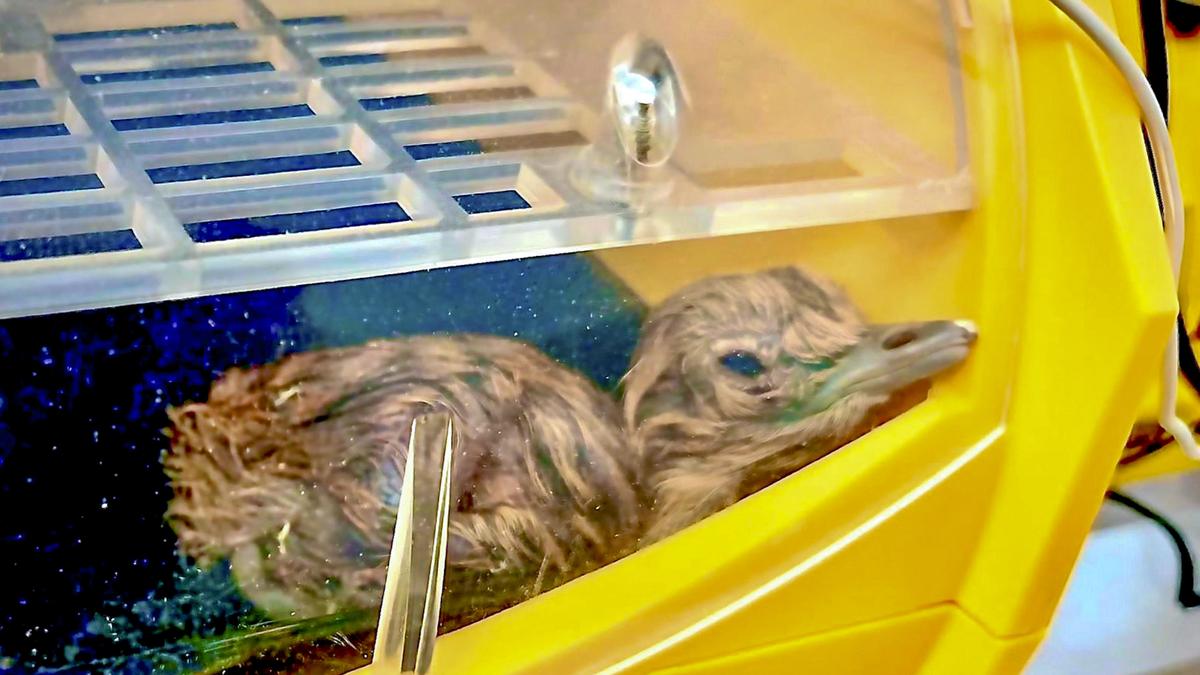
In March 2026, a Great Indian Bustard chick was hatched in Gujarat’s Kutch region for the first time in over a decade. This was achieved through the “Jumpstart” Approach, a sophisticated conservation method coordinated by the Ministry of Environment, Forest and Climate Change (MoEFCC), the Wildlife Institute of India (WII), and the Forest Departments of Rajasthan and Gujarat.
- The Mechanism: The process involved identifying a wild female in Gujarat that had laid an infertile egg (due to the absence of wild males in the region). A fertile, captive-bred egg from Rajasthan’s breeding center was transported 770 km over a 19-hour road journey in a portable incubator.
- The Outcome: The fertile egg was placed in the wild nest. The female GIB accepted the egg, completed the incubation, and is currently rearing the chick in the wild.
- Significance: This is the first inter-state trans-location of its kind, ensuring the chick grows up with natural survival instincts under a foster mother, rather than being reared in a lab.
Species Profile and Ecological Role
The GIB is an indicator species for the health of grassland ecosystems. Its presence ensures that the "barren" looking grasslands are actually vibrant, functional biomes.
- Physical Traits: One of the heaviest flying birds in the world; lacks a preen gland and has poor frontal vision (making it prone to collisions).
- Diet: Omnivorous (insects, rodents, seeds).
- Current Range: Primarily the Thar Desert (Rajasthan). Small, fragmented populations exist in Gujarat (Kutch), Maharashtra, Karnataka, and Andhra Pradesh.
Conservation Status and Legal Framework
The GIB enjoys the highest level of legal protection both nationally and internationally:
- IUCN Red List: Critically Endangered.
- Wildlife (Protection) Act, 1972: Schedule I.
- CITES & CMS: Appendix I.
- Project GIB (2016): Launched to create breeding enclosures and mitigate human pressure.