
Zojila Pass
- 31 Mar 2026
In News:
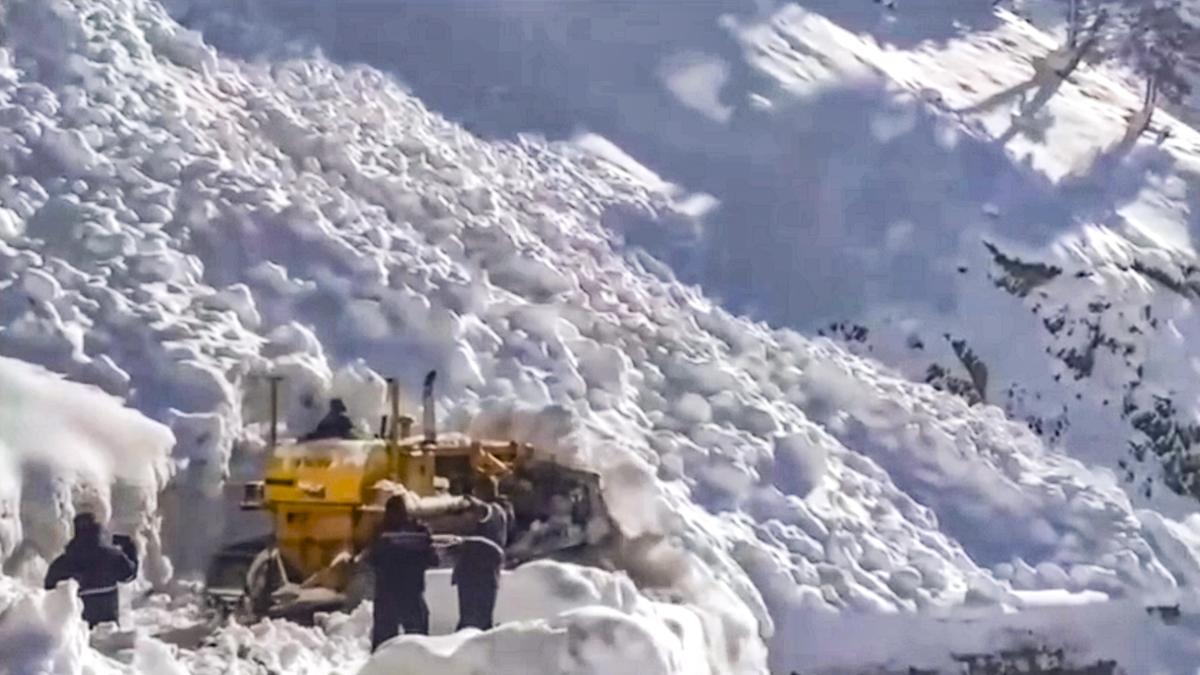
Recently, a massive snow avalanche struck the Zojila Pass in Ladakh, resulting in the tragic death of seven individuals and injuries to several others. The incident occurred between Zero Point and Minimarg, once again highlighting the extreme vulnerability of this high-altitude transit corridor and the urgent need for all-weather infrastructure.
Geographical Profile: "The Mountain Pass of Blizzards"
Zojila Pass is one of the most treacherous yet vital mountain passes in the Indian Himalayas.
- Location: Situated in the Kargil district of Ladakh, it serves as the natural gateway between the Kashmir Valley and the Ladakh region.
- Altitude: Approximately 11,650 feet (3,528 meters) above sea level.
- Mountain Range: It lies within the Greater Himalayan Range (specifically the Zanskar range).
- Connectivity: It is a critical link on National Highway 1 (NH-1), connecting Srinagar, Kargil, and Leh.
- Seasonal Closure: Due to heavy snowfall and sub-zero temperatures (dropping below -400C), the pass traditionally remains closed for nearly six months a year, isolating Ladakh from the rest of the country.
Historical and Strategic Significance
The pass is not merely a transport route; it is a pillar of India’s national security.
- Operation Bison (1948): During the Indo-Pakistan War of 1947–48, Pakistani-backed militias seized the pass to capture Ladakh. On November 1, 1948, the Indian Army executed Operation Bison, a daring assault that utilized M5 Stuart light tanks. This remains a historic military feat as the highest altitude at which armor had ever operated in combat at that time.
- Military Logistics: It is the primary artery for the movement of troops and heavy equipment to the Line of Actual Control (LAC) with China and the Siachen Glacier region.
- Economic Lifeline: It ensures the supply of essential commodities (fuel, food, and medicine) to the civilian population of Ladakh.
Understanding the Hazard: Avalanches
- Definition: An avalanche is a rapid flow of snow down a slope, triggered when the weight of the snowpack exceeds the friction holding it in place.
- Contributing Factors:
- Steep Slopes: Slopes without trees or large rocks lack the "anchors" needed to hold snow.
- Weak Layers: Fresh snowfall over an icy or unstable "crust" creates a sliding plane.
- Weather Fluctuations: Rapid temperature changes or heavy blizzards add weight and reduce cohesion.
- Impact: Avalanches can travel at speeds of 80–300 km/h, burying vehicles and infrastructure instantly.