
Waste Foundry Sand
- 29 Mar 2026
In News:
The Institute of Indian Foundrymen (IIF) and CSIR-Central Road Research Institute have collaborated to develop solutions for the use of Waste Foundry Sand (WFS) in road construction, highlighting a push towards sustainable infrastructure.
What is Waste Foundry Sand?
Waste Foundry Sand (WFS) is a byproduct generated during metal casting processes in both ferrous and non-ferrous industries. It primarily consists of high-quality silica sand, which is repeatedly used in molds and cores before being discarded. Its physical and chemical properties vary depending on the casting process and type of metal industry, but it generally retains good strength and uniformity.
Types of Foundry Sand
Foundry sand is classified based on the binder system used:
- Clay-bonded (Green Sand):
- Contains about 85–95% silica sand and 4–10% bentonite clay
- Made from natural materials and widely used in conventional casting
- Chemically Bonded Sand:
- Uses synthetic binders
- Preferred for core making and high-strength molds that must withstand molten metal
Environmental Concerns and Need for Reuse
Large-scale generation of WFS creates disposal and environmental challenges, including landfill pressure and potential contamination risks. Since it is produced in bulk, its scientific reuse becomes crucial.
Use in Road Construction
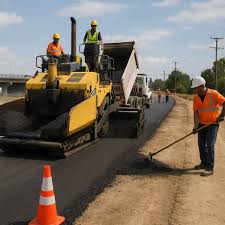
WFS can be effectively utilised in road subgrades, embankments, and pavement layers as a partial substitute for natural sand. This not only reduces construction costs but also decreases dependence on natural resources.
Significance
The reuse of WFS aligns with:
- Circular economy principles
- Resource efficiency and waste minimisation
- Sustainable and eco-friendly infrastructure development
It represents an important step in integrating industrial waste into mainstream construction practices.