
SWOT Satellite and Ocean Mapping
- 29 Mar 2026
In News:
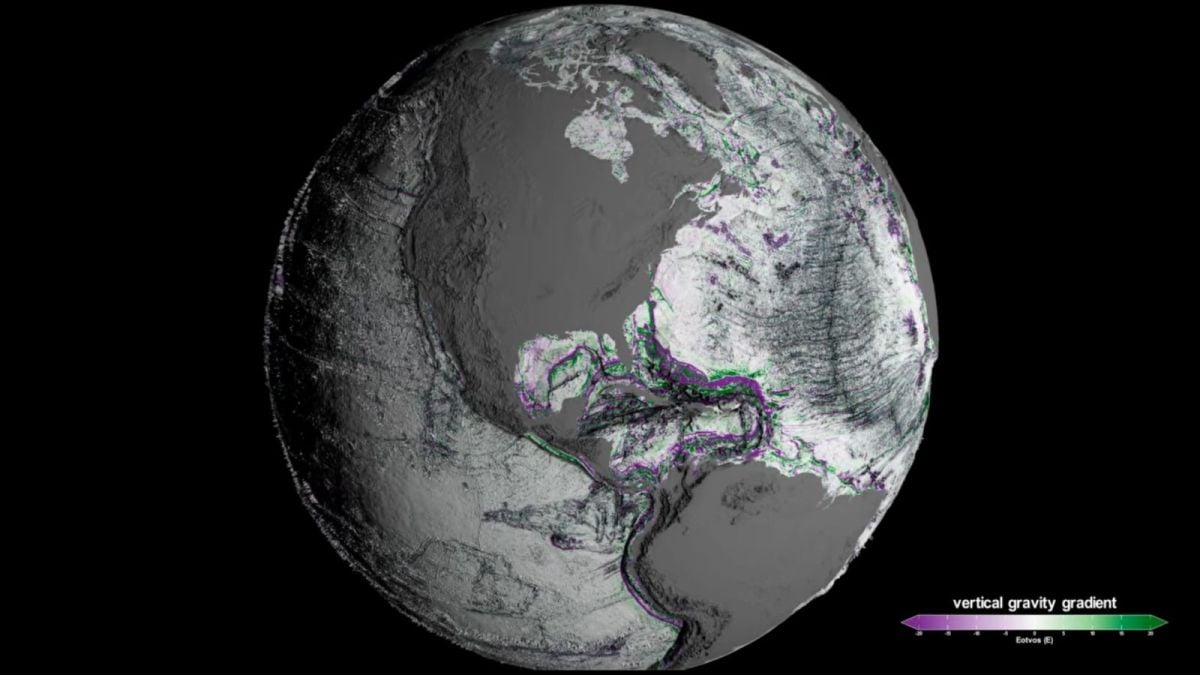
Recently, NASA used data from the Surface Water and Ocean Topography Satellite to develop a new high-resolution map of the ocean floor, improving understanding of underwater features and ocean dynamics.
About SWOT Satellite
· The Surface Water and Ocean Topography (SWOT) satellite, launched in 2022, is a joint mission of NASA and CNES.
· Its primary objective is to measure and monitor changes in Earth’s water bodies, including oceans, rivers, lakes, and reservoirs.
· Unlike traditional satellites, SWOT provides high-resolution, two-dimensional measurements of water surfaces, enabling scientists to track even subtle changes in water levels and flow patterns over time.
Key Features and Technology
At the core of SWOT’s capability is the Ka-band Radar Interferometer (KaRIn), which uses microwave signals to measure the height, width, and surface elevation of water bodies with high precision.
· It scans nearly 90% of the Earth every 21 days, ensuring regular global coverage
· Can observe:
o Rivers wider than 330 feet
o Over 1 million lakes and reservoirs larger than 5 acres
· Captures over 55% of global flood events during their lifecycle
· Detects small-scale ocean features such as currents and eddies, crucial for climate processes
Ocean Floor Mapping Significance
SWOT does not directly “see” the ocean floor but maps it indirectly by measuring variations in sea surface height, which reflect gravitational differences caused by underwater features like mountains and trenches.
This has enabled:
· Creation of more accurate seabed maps
· Better understanding of plate tectonics and ocean circulation
· Insights into how oceans absorb heat and carbon, especially through small eddies
Importance
The SWOT mission represents a major advancement in hydrology and oceanography:
· Enhances flood monitoring and disaster management
· Improves water resource planning
· Supports climate change studies, especially ocean heat uptake
· Strengthens global efforts in sustainable water management