
Red-crowned Roofed
- 31 Mar 2026
In News:
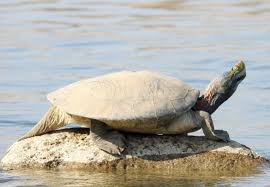
The Red-Crowned Roofed Turtle (Batagurkachuga), once a widespread inhabitant of the Ganga and Brahmaputra river systems, is now facing an existential crisis. As a "jewel of the Ganga," its dwindling numbers reflect the deteriorating health of South Asia’s freshwater ecosystems.
Species Profile and Distinctive Features
The Red-Crowned Roofed Turtle is one of the three large freshwater species in the genus Batagur found in India. It is characterized by significant sexual dimorphism and vibrant coloration.
- Physical Appearance:
- Males: Notably smaller than females, reaching only about half their length. They exhibit a striking reddish-orange head with a distinct black crown.
- Shell: The carapace (upper shell) is greenish-brown with yellowish patterns, while the plastron (lower shell) is yellow with black markings.
- Diet: As an omnivorous species, it maintains a balanced diet consisting of various aquatic plants and small animals.
- Ecological Role:
- Bio-indicator: Its presence or absence serves as a critical measure of river health.
- Nutrient Cycling: It plays a vital role in the aquatic food web by facilitating the cycling of nutrients, which is essential for maintaining the productivity of the river ecosystem.
Geographical Distribution: A Shrinking Sanctuary
Historically, the species was a common sight across the Indo-Gangetic plain.
- Native Range: India, Bangladesh, and Nepal.
- Current Strongholds: While once widespread in the Ganga and Brahmaputra basins, its distribution is now severely restricted. Today, the National Chambal Sanctuary (straddling Rajasthan, Madhya Pradesh, and Uttar Pradesh) remains the only significant protected area with a viable breeding population.
Conservation Status and Legal Protection
Due to its rapid population decline, the Red-Crowned Roofed Turtle is afforded the highest levels of legal protection.
|
Organization/Law |
Status |
|
IUCN Red List |
Critically Endangered |
|
Wildlife (Protection) Act, 1972 |
Schedule I (Highest protection in India) |
|
CITES |
Appendix II |
Major Threats to Survival
The decline of Batagurkachuga is a direct consequence of anthropogenic pressure on riverine habitats:
- Habitat Fragmentation: Construction of dams and barrages has altered river flow and destroyed sandbanks essential for nesting.
- Illegal Trade: Despite legal bans, they are targeted for the pet trade and international meat markets.
- Sand Mining: Extensive illegal sand mining on riverbanks destroys the nesting sites required for egg-laying.
- Pollution and Bycatch: Agricultural runoff, industrial waste, and accidental drowning in fishing nets (bycatch) continue to deplete adult populations.
Red-Crowned Roofed Turtle
- 02 May 2025
In News:
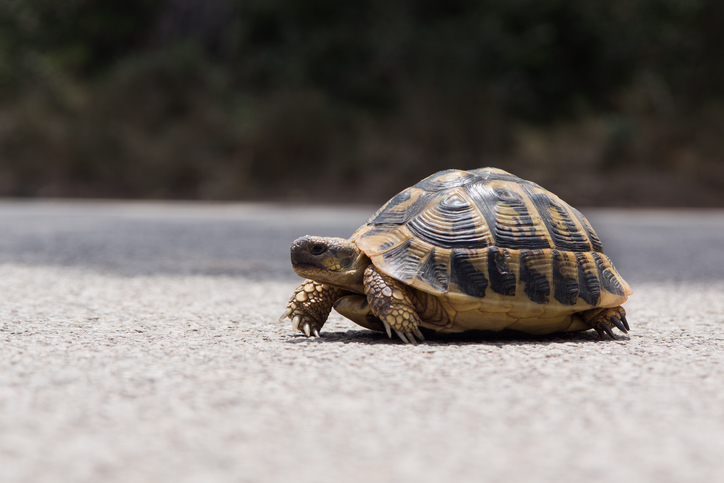
After nearly 30 years of absence, the Red-Crowned Roofed Turtle (Batagurkachuga) has been rediscovered in the Ganga River — a significant success for conservation efforts aimed at reviving endangered freshwater species.
Overview
- Commonly known as the Bengal Roof Turtle, it is a rare species of freshwater turtle found only in South Asia.
- Scientific Name: Batagurkachuga
Geographical Distribution
- Native Range: India, Nepal, and Bangladesh.
- Historical Presence: Widely distributed across the Ganga River system in India and Bangladesh, with additional presence in the Brahmaputra River basin.
- Current Habitat in India: The most viable population is now confined to the National Chambal Sanctuary, a protected riverine stretch for species like gharials and turtles.
Distinctive Features
- Size: Medium-sized species, females can grow up to 56 cm in length and weigh up to 25 kg, while males are significantly smaller.
- Coloration: Notable for their reddish-orange head marked with a black crown, and a greenish-brown carapace patterned with yellow streaks.
- Plastron (under-shell): Yellow with distinctive black markings.
- Adaptations: Possess a broad head, strong jaws, and webbed feet, suited for an aquatic lifestyle.
- Diet: Omnivorous — consumes both plant material and small aquatic organisms.
Conservation Status
- IUCN Red List: Critically Endangered
- Wildlife (Protection) Act, 1972: Listed under Schedule I – providing the highest level of legal protection in India.
- CITES: Included in Appendix II, regulating international trade.