
Artemis II
- 31 Mar 2026
In News:
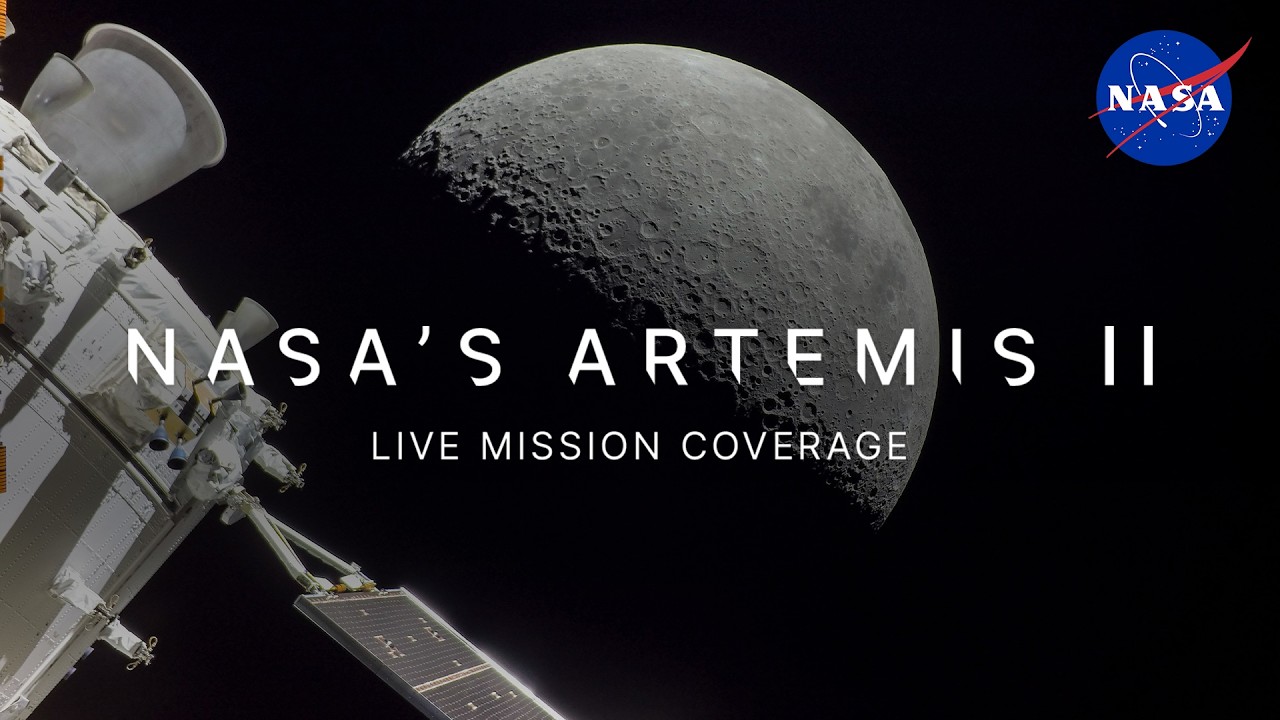
NASA is going to launch the Artemis II mission.
Mission Overview: Artemis II
Artemis II is a 10-day lunar flyby mission designed to test the integrated capabilities of NASA’s deep-space exploration systems. Unlike the later landing missions, Artemis II will follow a "free-return trajectory."
- Spacecraft: Orion Spacecraft.
- Launch Vehicle:Space Launch System (SLS), the most powerful rocket ever built, producing 8.8 million pounds of thrust (15% more than the Apollo-era Saturn V).
- Trajectory: The crew will travel approximately 7,400 km beyond the far side of the Moon. They will utilize a "gravity assist" (slingshot) maneuver, using lunar gravity to return to Earth without requiring a main engine burn to reverse course.
A Crew of "Firsts"
The four-person crew represents a significant departure from previous lunar missions, emphasizing diversity and international cooperation:
- Reid Wiseman (Commander): NASA veteran.
- Victor Glover (Pilot): First person of color to travel beyond Low-Earth Orbit (LEO).
- Christina Koch (Mission Specialist): First woman to reach the Moon’s vicinity.
- Jeremy Hansen (Mission Specialist): Representing the Canadian Space Agency (CSA), he is the first non-American to leave Earth's orbit.
Technological and Scientific Frontiers
Artemis II serves as a high-stakes laboratory for several cutting-edge technologies:
- Laser Communications (O2O): Testing infrared lasers to transmit data at 260 Mbps, enabling 4K video streaming from deep space.
- AVATAR Experiment: Using "organ-on-a-chip" technology to study the real-time effects of radiation and microgravity on human cells.
- Global CubeSats: Deployment of small satellites from Germany, Argentina, South Korea, and Saudi Arabia to study space weather and lunar shielding.
Evolution of Lunar Missions: Apollo vs. Artemis
While the Apollo missions were a Cold War-era demonstration of technological supremacy, the Artemis program is built for endurance and deep-space logistics.
|
Feature |
Apollo Programme (1969–1972) |
Artemis Programme (2024–Present) |
|
Primary Goal |
Short-duration visits; "Boots on the Moon." |
Long-term human presence; "Moon to Mars." |
|
Crew Capacity |
2 astronauts on the surface at a time. |
4 astronauts; emphasis on diversity/internationalism. |
|
Sustainability |
Disposable architecture; short stays. |
Reusable infrastructure; Gateway station; Base camp. |
|
Target Area |
Lunar Equator. |
Lunar South Pole (due to water-ice potential). |
The Global Lunar Landscape: Past to Future
The Moon has become a focal point for global geopolitics and "New Space" commercial ventures.
A. Historical Context (The Cold War Era)
- Luna 9 (USSR, 1966): First soft landing.
- Apollo 11 (USA, 1969): First humans on the Moon.
- Luna 24 (USSR, 1976): Last mission of the 20th century to return soil samples.
B. The Modern Era (The "New Race")
- Chang’e 4 (China, 2019): First landing on the Far Side of the Moon.
- Chandrayaan-3 (India, 2023): First nation to land near the Lunar South Pole, confirming the presence of sulfur.
- SLIM (Japan, 2024): Demonstrated "pinpoint" landing technology (within 100 meters).
- IM-1 Odysseus (USA/Private, 2024): First successful commercial landing.
C. Future Roadmap (2026–2028)
The focus is shifting toward In-Situ Resource Utilization (ISRU)—mining lunar ice for fuel and oxygen.
- Griffin-1/VIPER (2026): US mission to scout for water ice at the South Pole.
- Chang’e 7 (2026): China’s search for water in shadowed craters using a "flying" detector.
- Artemis IV (2028): Expected first crewed landing of the Artemis program to establish a permanent base.