
Maharishi Sushruta
- 27 Jun 2026
In News:
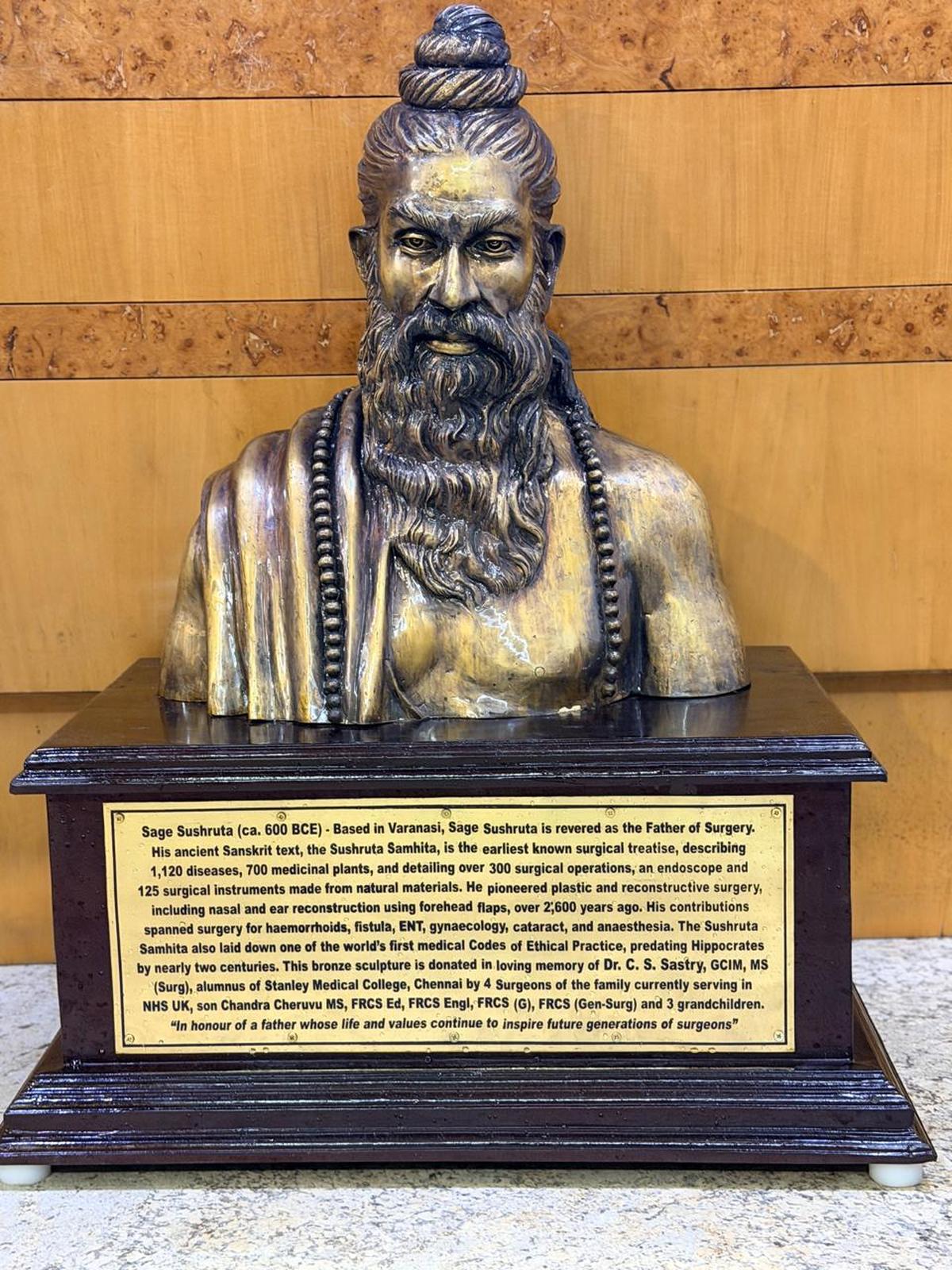
A bronze statue of Maharishi Sushruta, widely revered as the Father of Surgery, was recently unveiled at the Royal College of Surgeons of Edinburgh, United Kingdom, recognising his pioneering contributions to the development of surgery and medical science.
About Maharishi Sushruta
Maharishi Sushruta is regarded as one of the greatest physicians and surgeons of ancient India. Revered as the "Father of Surgery" and often referred to as the "Father of Indian Medicine," he made pioneering contributions to the fields of surgery, anatomy, and Ayurveda. His systematic approach to surgical practice laid the foundation for many principles that continue to influence modern medicine.
Although scholars differ regarding the exact period in which he lived, Sushruta is generally believed to have practised between 600 BCE and 1000 BCE. According to Ayurvedic tradition, he was a disciple of Lord Dhanvantari, the divine physician and the deity associated with Ayurveda. He is believed to have taught and practised medicine in Varanasi (Kashi), an important centre of learning in ancient India.
Sushruta Samhita
Sushruta's most celebrated contribution is the Sushruta Samhita, one of the foundational texts of Ayurveda and among the earliest comprehensive treatises on surgery in the world.
Composed over 2,500 years ago, the text contains 184 chapters covering various branches of medicine and surgery. It describes:
- More than 300 surgical procedures.
- Over 120 surgical instruments.
- Different types of wounds, fractures, dislocations, and their treatment.
- Detailed knowledge of toxicology, paediatrics, pharmacology, and general medicine.
- More than 100 medicinal plants, including their therapeutic properties and medicinal uses.
The text remains one of the most significant contributions to the history of medicine and Ayurveda.
Contributions to Surgery
Sushruta introduced a scientific and systematic approach to Shalya Tantra (Surgical Science), considering surgery an integral part of medical treatment.
His major contributions include:
- Development of rhinoplasty (nasal reconstruction), regarded as one of the earliest forms of plastic surgery.
- Surgical removal of bladder stones (lithotomy).
- Procedures for the removal of a dead foetus.
- Advanced methods for treating fractures, wounds, and dislocations.
- Design and use of specialised surgical instruments.
- Emphasis on cadaver dissection for understanding human anatomy.
- Use of herbal anaesthetics and systematic post-operative care.
His insistence on practical training, observation, and meticulous documentation established principles that continue to underpin surgical education.
Legacy
The influence of Maharishi Sushruta extended well beyond ancient India. His surgical techniques and medical knowledge were transmitted to other regions through translations and scholarly exchanges, contributing to the development of plastic surgery, orthopaedics, ophthalmology, and reconstructive surgery across the world.
His emphasis on scientific observation, ethical medical practice, and evidence-based treatment makes him one of the earliest pioneers of modern surgical science.
BHARATI Programme
- 27 Jun 2026
In News:
The Agricultural and Processed Food Products Export Development Authority (APEDA) has successfully concluded the first cohort of the BHARATI Programme, a flagship initiative aimed at promoting innovation and strengthening India's agri-food exports.
About BHARATI Programme
BHARATI (Bharat's Hub for Agritech, Resilience, Advancement and Incubation for Export Innovation) is a flagship startup acceleration programme launched by the Agricultural and Processed Food Products Export Development Authority (APEDA). The programme seeks to promote innovation-driven growth in India's agri-food export ecosystem by supporting technology-based startups working across the agriculture, food processing, and export value chains.
Designed as an export-focused incubation initiative, BHARATI aims to nurture 100 agri-food startups and contribute towards achieving USD 50 billion worth of exports in APEDA-scheduled products by 2030. Rather than replacing existing incubation programmes, it complements government and industry-led initiatives by helping startups become export-ready and globally competitive.
The programme is aligned with flagship national initiatives such as Atmanirbhar Bharat, Vocal for Local, Digital India, and Start-Up India.
Key Features
The BHARATI Programme focuses on promoting innovation in high-value export segments, including:
- GI-tagged agricultural products
- Organic foods
- Superfoods
- Novel processed Indian agri-food products
- Livestock products
- AYUSH products
A major emphasis is placed on the adoption of advanced technologies such as Artificial Intelligence (AI) for quality control, blockchain for product traceability, Internet of Things (IoT)-enabled cold chain management, and agri-fintech solutions. The programme also encourages innovations in sustainable packaging, logistics, and compliance with international sanitary and phytosanitary standards.
Addressing Export Challenges
BHARATI seeks to develop practical solutions to several bottlenecks affecting India's agri-food exports, including:
- Product development and value addition.
- Quality assurance and certification.
- Post-harvest losses and perishability.
- Supply chain and logistics inefficiencies.
- Export compliance and market access.
To achieve this, the programme creates a collaborative ecosystem connecting agri-food startups, technology providers, exporters, research institutions, and startups specialising in Sanitary and Phytosanitary (SPS) and Technical Barriers to Trade (TBT) standards.
Programme Structure
Selected startups undergo a three-month acceleration programme, during which they receive mentorship and support in areas such as:
- Product development.
- Export readiness.
- Regulatory compliance.
- International market access.
- Business scaling and investor engagement.
The programme equips startups with the knowledge and capabilities required to develop globally competitive export-oriented products.
Hemis Festival

- 27 Jun 2026
In News:
The Hemis Festival 2026 commenced with great religious fervour at the historic Hemis Monastery in the Leh district of Ladakh, drawing devotees, monks, and tourists from across India and abroad.
About Hemis Festival
- The Hemis Festival, also known as Hemis Tsechu, is one of the most important Buddhist festivals of Ladakh.
- It is celebrated annually at the Hemis Monastery on the 10th day of the Tse-Chu month according to the Tibetan lunar calendar.
- The festival commemorates the birth anniversary of Guru Padmasambhava (Guru Rinpoche), who is revered in Tibetan Buddhism as the Second Buddha for spreading Vajrayana Buddhism across the Himalayan region and subduing evil forces.
- According to local tradition, Guru Padmasambhava visited Ladakh in the 8th century and is believed to have protected the region from negative forces, making the festival an important occasion of spiritual renewal and thanksgiving.
Religious and Cultural Significance
- The Hemis Festival is a vibrant expression of Tibetan Buddhist traditions, symbolising the victory of good over evil, spiritual purification, and compassion. Besides its religious importance, the festival plays a vital role in preserving Ladakh's rich cultural heritage and monastic traditions.
Major Attractions
- The celebrations are centred around the Hemis Monastery, one of the largest and wealthiest monasteries of the Drukpa Kagyu school of Tibetan Buddhism. The monastery is adorned with colourful decorations, prayer flags, and religious ornaments during the festival.
- The principal attraction is the Cham Dance, a sacred masked dance performed by monks and lamas in elaborate costumes. Accompanied by drums, cymbals, and long horns, the dance symbolises the triumph of virtue over evil and narrates important episodes from Buddhist teachings.
Important Rituals
A distinctive ritual of the festival is the ceremonial destruction of a dough sculpture representing evil forces. At the conclusion of the ritual, the sculpture is broken into pieces and scattered in the four cardinal directions, symbolising the elimination of negativity and the purification of the soul.
As part of the local tradition, Chhang, a traditional fermented barley beverage of Ladakh, is served during the festivities.
Thangka Display
One of the most significant features of the Hemis Festival is the display of a giant Thangka (sacred Buddhist scroll painting) depicting Guru Padmasambhava.
This rare display takes place once every 12 years, during the Tibetan Year of the Monkey. The Thangka is richly decorated with semi-precious stones, pearls, and intricate embroidery, attracting thousands of pilgrims and tourists.
Intelligence Bureau (IB)
- 27 Jun 2026
In News:
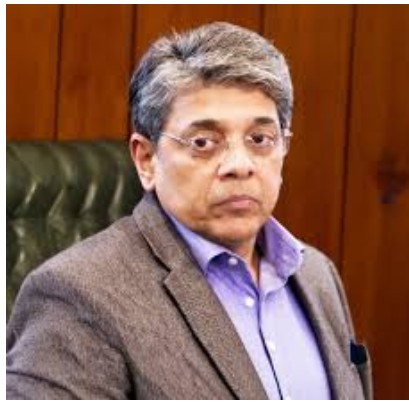
The Union Government has appointed Mahesh Dixit, a 1993-batch Indian Police Service (IPS) officer of the Andhra Pradesh cadre, as the new Director of the Intelligence Bureau (IB) for a tenure of two years. He succeeds Tapan Kumar Deka, who headed the agency for four years.
About the Intelligence Bureau (IB)
The Intelligence Bureau (IB) is India's premier domestic intelligence and internal security agency, functioning under the Ministry of Home Affairs (MHA). It is responsible for collecting, analysing, and disseminating intelligence relating to threats affecting the country's internal security and public order.
The Bureau works in close coordination with central and state intelligence agencies, law enforcement organisations, and security forces to safeguard national security.
Historical Background
The Intelligence Bureau is one of the oldest intelligence organisations in the world. Its origins are generally traced to the establishment of the Central Special Branch in 1887 during British rule. Some historical accounts also associate its beginnings with the intelligence unit established by Major General Sir Charles Metcalfe MacGregor in 1885.
Following Independence, the Intelligence Bureau became India's principal agency for internal intelligence, while the Research and Analysis Wing (R&AW) was created in 1968 to exclusively handle external intelligence.
Mandate and Functions
The Intelligence Bureau is entrusted with safeguarding India's internal security through intelligence gathering, analysis, and coordination.
Its major responsibilities include:
- Collection and dissemination of domestic intelligence.
- Counter-terrorism and counter-intelligence operations.
- Monitoring activities relating to extremism, insurgency, and secessionism.
- Assisting law enforcement agencies in preventing threats to national security.
- Protecting critical infrastructure, particularly civil aviation and other strategic installations.
- Conducting background verification for security clearances of diplomats, judges, senior government officials, and other sensitive appointments.
Composition
The Intelligence Bureau functions as a multidisciplinary organisation comprising officers drawn primarily from:
- Indian Police Service (IPS)
- Indian Revenue Service (IRS)
- Armed Forces
- Other Central and State Police Organisations
Personnel are generally inducted on deputation as well as through direct recruitment in specialised cadres.
Institutional Position
The Director of the Intelligence Bureau (DIB) is one of the country's highest-ranking intelligence officials.
The Director:
- Functions under the Ministry of Home Affairs.
- Reports directly to the Prime Minister on matters relating to national security.
- Is a member of the Strategic Policy Group (SPG).
- Serves on the Joint Intelligence Committee (JIC) under the National Security Council (NSC) framework.
Citizenship in India and Proof of Citizenship
- 27 Jun 2026
In News:
The Ministry of External Affairs (MEA) recently clarified that an Indian passport is primarily a travel document and not conclusive proof of citizenship. The clarification has gained significance in the backdrop of the ongoing Special Intensive Revision (SIR) of electoral rolls and the broader debate on citizenship verification.
Citizenship under Indian Law
- Citizenship in India is governed by the Citizenship Act, 1955, which prescribes the legal framework for acquiring, determining, and terminating citizenship.
- Unlike several countries, India does not possess a single universal document that conclusively establishes citizenship. Instead, citizenship is determined through the provisions of the Citizenship Act and established using relevant documentary evidence relating to birth, parentage, descent, registration, or naturalisation.
- The Supreme Court, in Sarbananda Sonowal v. Union of India (2005), held that the burden of proving Indian citizenship lies on the individual claiming it.
Is a Passport Proof of Citizenship?
- The Passport Manual describes an Indian passport as strong evidence of nationality, a view also recognised by the Supreme Court in Maneka Gandhi v. Union of India (1978). However, it is not conclusive proof of citizenship in the event of a legal dispute.
- Further, Section 20 of the Passports Act, 1967 empowers the Central Government to issue passports to non-citizens in public interest under exceptional circumstances. This was reflected in the 2023 Madras High Court decision permitting a stateless Sri Lankan refugee to apply for an Indian passport.
Thus, while a passport generally indicates nationality for international travel, it does not by itself conclusively determine citizenship under Indian law.
Electoral Rolls and Citizenship
- The Supreme Court, in Lal Babu Hussein v. Electoral Registration Officer (1995), held that inclusion of a person's name in the electoral roll creates a presumption of citizenship, which can be displaced only through due legal process.
- More recently, in Association for Democratic Reforms & Others v. Election Commission of India (2026), the Supreme Court upheld the constitutional validity of the Special Intensive Revision (SIR) of electoral rolls conducted by the Election Commission of India (ECI) under Article 324 of the Constitution and Section 21(3) of the Representation of the People Act, 1950.
- The Court clarified that the ECI is empowered to undertake limited citizenship inquiries only for determining electoral eligibility. Importantly, deletion of a person's name from the electoral roll does not amount to loss of citizenship, as the authority to determine citizenship rests under the Citizenship Act, 1955, and not with the Election Commission. Suspected citizenship cases must be referred to the Ministry of Home Affairs (MHA) for adjudication before elections.
Modes of Acquiring Indian Citizenship
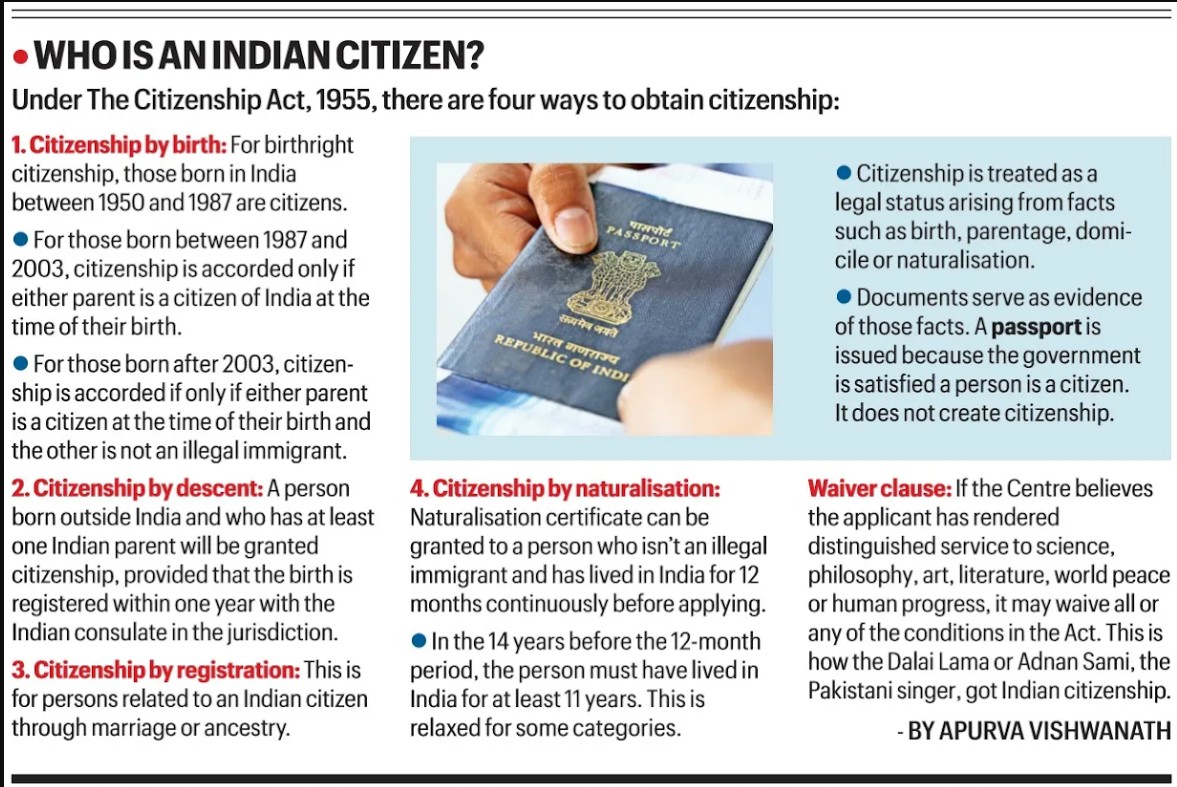
The Citizenship Act, 1955 provides five modes of acquiring citizenship:
- By Birth
- By Descent
- By Registration
- By Naturalisation
- By Incorporation of Territory
India initially followed the principle of Jus Soli (right by birth) but gradually shifted towards Jus Sanguinis (right by blood/descent) through successive amendments.
The conditions for citizenship by birth are:
- 26 January 1950 – 1 July 1987: Every person born in India became a citizen irrespective of parents' nationality.
- 1 July 1987 – 3 December 2004: At least one parent must be an Indian citizen.
- On or after 3 December 2004: One parent must be an Indian citizen and the other must not be an illegal migrant.
Citizenship by descent applies to persons born outside India to Indian parent(s), subject to mandatory consular registration for births after 3 December 2004.
Citizenship by registration and naturalisation is available to eligible Persons of Indian Origin (PIOs), spouses of Indian citizens, and foreign nationals fulfilling prescribed residency conditions, generally 12 years. India does not permit dual citizenship.
Important Amendments
- The Citizenship (Amendment) Act, 2003 introduced stricter provisions by denying citizenship by birth where one parent is an illegal migrant and strengthened provisions relating to illegal migration.
- The Citizenship (Amendment) Act (CAA), 2019 reduced the residency requirement for acquiring citizenship by naturalisation from 11 years to 5 years for Hindu, Sikh, Buddhist, Jain, Parsi, and Christian migrants from Pakistan, Bangladesh, and Afghanistan who entered India on or before 31 December 2014 after facing religious persecution.
Index of Services Production (ISP)
- 26 Jun 2026
In News:
The Ministry of Statistics and Programme Implementation (MoSPI) is set to launch the Index of Services Production (ISP) in July 2026. The new index is expected to become India's first high-frequency indicator for measuring the performance of the services sector, similar to the Index of Industrial Production (IIP) for industry.
About the Index of Services Production (ISP)
The Index of Services Production (ISP) is a short-term economic indicator that measures changes in the real output of service-producing industries over time relative to a specified base year. It is being developed with 2024–25 as the proposed base year and will primarily use Goods and Services Tax (GST) data to capture economic activity in the formal services sector.
The objective of the ISP is to provide timely information on the growth and performance of India's services sector, which contributes the largest share to the country's Gross Value Added (GVA). The index is expected to improve short-term economic assessment and strengthen evidence-based policymaking.
Data Sources
The ISP will draw information from multiple administrative and statistical databases to ensure comprehensive coverage of service-sector activities.
Its principal data sources include:
- Administrative data for sectors such as air transport, railways, banking, and insurance.
- GST data for wholesale and retail trade, hospitality, road and water transport, warehousing, telecommunications, real estate, information technology services, professional services, and entertainment.
- Annual Survey of Incorporated Services Sector Enterprises (ASISSE) data for health and education services, which will be incorporated in subsequent phases.
Since the index is largely based on GST-registered enterprises, it will primarily reflect the performance of the formal services sector.
Key Features
- Base Year: 2024–25.
- Developed by the Ministry of Statistics and Programme Implementation (MoSPI).
- Measures changes in the volume of output rather than price changes.
- Sectoral weights are assigned based on each sector's contribution to Gross Value Added (GVA) as reported in the National Accounts Statistics (NAS).
- Designed to complement existing indicators such as the Index of Industrial Production (IIP) and national income estimates.
Doctrine of Constructive Res Judicata

- 26 Jun 2026
In News:
The Supreme Court has recently reiterated that the doctrine of constructive res judicata, embodied in Explanation IV to Section 11 of the Code of Civil Procedure (CPC), 1908, is intended to prevent parties from litigating disputes in a piecemeal manner and to ensure finality in judicial proceedings.
What is Res Judicata?
The doctrine of Res Judicata is a well-established legal principle that originated in the English Common Law system. The Latin term res judicata literally means "a matter already judged." It is also referred to as the doctrine of claim preclusion.
The principle provides that once a competent court has finally decided a dispute between the same parties, the same matter cannot be litigated again before the same or another court. This prevents repeated lawsuits on identical issues and ensures certainty and finality in the administration of justice.
In India, the doctrine is codified under Section 11 of the Code of Civil Procedure (CPC), 1908, and is applicable to both civil and criminal proceedings, though its operation differs according to the nature of the proceedings.
What is Constructive Res Judicata?
- Constructive Res Judicata is an extension of the doctrine of res judicata. It bars not only issues that were actually decided in an earlier suit but also issues that could and ought to have been raised during the earlier proceedings but were deliberately or negligently omitted.
- Thus, a party cannot file a fresh suit based on the same cause of action by raising new grounds that were available at the time of the earlier litigation. The law treats such omitted issues as if they had already been adjudicated.
- The doctrine derives its statutory basis from Order II Rule 2 read with Section 11 of the CPC, particularly Explanation IV to Section 11.
Explanation IV of Section 11
Explanation IV states:
"Any matter which might or ought to have been made a ground of defence or attack in a former suit shall be deemed to have been a matter directly and substantially in issue in such suit."
This legal fiction ensures that parties present their entire case in one proceeding rather than splitting their claims across multiple suits.
Essential Conditions
The doctrine of constructive res judicata applies when the following conditions are satisfied:
- The parties in both proceedings are the same or claim under the same parties.
- The subject matter of both proceedings is substantially identical.
- The issue raised in the subsequent suit could and ought to have been raised in the earlier proceeding.
- The earlier case was decided by a court of competent jurisdiction.
- The earlier decision attained finality and was decided on its merits.
Objectives
The doctrine seeks to:
- Prevent multiplicity of litigation.
- Ensure finality of judicial decisions.
- Avoid abuse of the judicial process.
- Promote judicial economy and efficient use of court resources.
- Protect parties from repeated litigation over the same dispute.
Pradhan Mantri Rashtriya Bal Puraskar (PMRBP)
- 26 Jun 2026
In News:
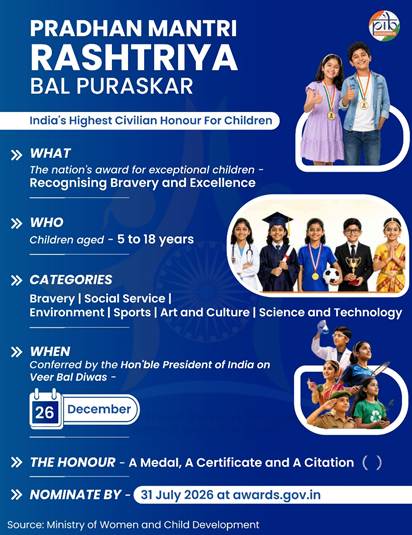
The Ministry of Women and Child Development has invited nominations for the Pradhan Mantri Rashtriya Bal Puraskar (PMRBP), India's highest civilian honour for children, recognising exceptional achievements in various fields.
About Pradhan Mantri Rashtriya Bal Puraskar (PMRBP)
- The Pradhan Mantri Rashtriya Bal Puraskar (PMRBP) is India's premier national award instituted to honourchildren between the ages of 5 and 18 years who have demonstrated exceptional courage, innovation, talent, resilience, leadership, or outstanding service to society.
- Introduced in 2019, the award seeks to recognise young achievers who have made remarkable contributions in diverse fields and inspire other children to pursue excellence and nation-building.
- The award is presented annually by the President of India in New Delhi on 26 December, observed as Veer Bal Diwas.
Veer Bal Diwas
Veer Bal Diwas is observed every year on 26 December to commemorate the supreme sacrifice of Sahibzada Zorawar Singh and Sahibzada Fateh Singh, the younger sons of the tenth Sikh Guru, Guru Gobind Singh, who displayed extraordinary courage and steadfastness in the face of persecution.
Award Categories
The PMRBP recognises outstanding achievements in six categories:
- Bravery
- Social Service
- Environment
- Sports
- Art and Culture
- Science and Technology
Eligibility and Selection
The award is open to children aged between 5 and 18 years who have demonstrated exceptional achievements or acts of courage with a lasting social impact.
Children may be nominated in more than one category, although each achievement is evaluated separately. While the award is generally not conferred posthumously, exceptional cases may be considered.
An Expert Committee evaluates the nominations based on the significance, originality, impact, and excellence of the achievements.
Award Components
The award comprises:
- A Medal
- A Certificate
- A Citation
Approximately 25 children are selected every year for their outstanding accomplishments.
Nodal Ministry
- Ministry of Women and Child Development (MoWCD)
The Ministry administers the award and oversees the nomination and selection process in consultation with the Expert Committee.
Objectives
The Pradhan Mantri Rashtriya Bal Puraskar aims to:
- Recognise exceptional achievements of children across diverse fields.
- Encourage innovation, creativity, courage, and leadership among young citizens.
- Inspire children to contribute positively to society and nation-building.
- Promote a culture of excellence, social responsibility, and public service.
16th-Century Vijayanagara Inions Unearthed in Seshachalam Forest

- 26 Jun 2026
In News:
The Archaeological Survey of India (ASI) has discovered three 16th-century inions belonging to Vijayanagara king Sadasivaraya in the Seshachalam Forest of Tirupati district, Andhra Pradesh.
About the Discovery
- The newly discovered inions have been precisely dated to 31 July 1554 CE and are engraved in Telugu, Tamil, and Kannada, reflecting the linguistic diversity and administrative inclusiveness of the Vijayanagara Empire.
- The inions primarily record the religious activities of King Sadasivaraya, who visited Papavinasa on a pilgrimage and commissioned the construction of a Shiva temple and a monastery (Mutt) during his visit.
Key Findings
The inions throw light on several aspects of Vijayanagara administration and religious patronage:
- They record the construction of a Shiva temple and Mutt at Papavinasa under the patronage of King Sadasivaraya.
- They mention the assignment of tax revenues (Kaanika) and land grants from two villages to finance daily worship, food offerings (Naivedya), and temple maintenance at the GudimallamParasurameswara Temple.
- The inions also refer to SadasivaBasavanna Odeya, a disciple of LingannaVodaya of Bendekeri, and Peddayya, son of Chembhaperiya, who served as the composer and temple accountant.
These records provide valuable insights into the financial management and institutional support extended to temples during the Vijayanagara period.
Historical Significance of Gudimallam Temple
The inions reaffirm the importance of the GudimallamParasurameswara Temple, widely regarded as India's oldest surviving Shiva temple, dating back to the 2nd century BCE.
The discovery establishes that the shrine continued to receive direct royal patronage, land grants, and financial support under the Vijayanagara rulers despite the growing prominence of nearby pilgrimage centres such as Tirumala. It highlights the continuity of Shaivite worship and the preservation of ancient sacred sites during the medieval period.
Vijayanagara Empire (1336–1646 CE)
The Vijayanagara Empire was one of the greatest empires of medieval South India. It was founded in 1336 CE by Harihara I and Bukka Raya I of the Sangama Dynasty on the banks of the Tungabhadra River. The empire served as a major political, cultural, and economic power for over three centuries.
The empire was ruled successively by four dynasties:
- Sangama
- Saluva
- Tuluva
- Aravidu
Its golden age was witnessed during the reign of Krishnadevaraya (Tuluva Dynasty), who is remembered for his military successes, efficient administration, literary contributions, and patronage of the Ashtadiggajas, the celebrated group of eight Telugu scholars. He also authored the famous Telugu work Amuktamalyada.
Administration
The Vijayanagara administration was characterised by the Nayankara (Amara-Nayaka) System, under which military chiefs were granted Amaram (land assignments) in return for maintaining troops, collecting revenue, and rendering military service to the king. This decentralised system played a crucial role in maintaining the empire's vast territorial control.
Art and Architecture
The empire marked the culmination of the Dravidian style of temple architecture. Important architectural features included:
- Massive Raya Gopurams
- Ornate monolithic pillars
- Spacious Kalyana Mandapas
- Intricately carved temple complexes
Prominent examples include the Vittalaswamy Temple and the Hazara Rama Temple at Hampi, a UNESCO World Heritage Site.
Foreign Accounts
The prosperity and cosmopolitan nature of the empire have been documented by several foreign travellers and envoys, including:
- Ibn Battuta (Morocco)
- Nicolo de Conti (Italy)
- Abdur Razzak (Persia)
- Domingo Paes (Portugal)
Their accounts describe the empire's flourishing trade, urban planning, military strength, and immense wealth.
Decline
The empire suffered a decisive setback after the Battle of Talikota (Rakshasi-Tangadi) in 1565, where the combined forces of the Deccan Sultanates defeated the Vijayanagara army. Although the empire continued under the Aravidu Dynasty, it gradually declined, bringing an end to one of the most remarkable phases of South Indian history.
Seismic Doublet (Doublet Earthquake)
- 26 Jun 2026
In News:
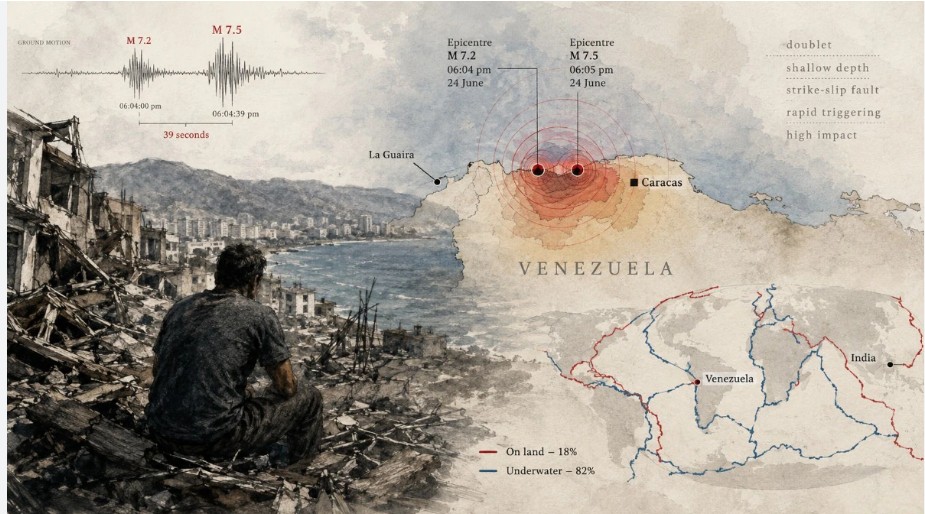
The Government of Venezuela has declared a nationwide State of Emergency after two powerful earthquakes of magnitude 7.2 and 7.5 struck off its north-central coast within a short interval. The rare seismic doublet caused extensive damage to infrastructure and significant loss of life.
What is a Seismic Doublet?
A Seismic Doublet (or Doublet Earthquake) refers to the occurrence of two earthquakes of nearly equal magnitude that strike close together in both time and location.
Unlike a typical mainshock-aftershock sequence, where the aftershocks are significantly weaker than the main earthquake, a seismic doublet involves two major earthquakes of comparable intensity. The second earthquake is not merely an aftershock but an independent large event triggered by stress transferred from the first rupture.
Mechanism
When the first earthquake occurs, it does not completely release the accumulated tectonic stress along a fault. Instead, part of this stress is rapidly transferred to a neighbouringfault segment or an asperity (a strongly locked patch of rock along a fault).
If the adjacent fault is already close to failure, the additional stress may trigger another major rupture within a short period, resulting in a seismic doublet.
Why is Venezuela Highly Earthquake-Prone?
Venezuela is situated along the active boundary between the Caribbean Plate and the South American Plate, making its northern region highly susceptible to earthquakes.
- The Caribbean Plate moves eastward relative to the South American Plate at a rate of approximately 20 mm per year.
- The movement is accommodated through a network of east-west trending strike-slip faults across northern Venezuela.
- These faults periodically accumulate stress due to friction and release it through powerful earthquakes.
Many earthquakes in Venezuela are shallow-focus earthquakes, meaning they originate close to the Earth's surface. As a result, seismic waves lose little energy before reaching the surface, leading to greater destruction.
What is a Strike-Slip Fault?
A strike-slip fault is a type of fault in which blocks of rock move horizontally past one another due to shear stress.
- The movement is predominantly lateral rather than vertical.
- It commonly occurs along transform plate boundaries.
- Sudden movement along these faults generates shallow and often destructive earthquakes.
Relevance to India
India is among the world's most earthquake-prone countries due to the ongoing convergence of the Indian Plate with the Eurasian Plate.
The collision has created the Himalayan mountain system, where enormous tectonic stress continues to accumulate, making the region vulnerable to major earthquakes.
Areas falling under Seismic Zone V (Very High Risk Zone) include:
- Himalayan States
- North-Eastern India
- Parts of Gujarat
- Andaman & Nicobar Islands
Given the presence of highly stressed fault systems, earthquake doublets cannot be ruled out in tectonically active regions, highlighting the importance of continuous seismic monitoring, earthquake-resistant infrastructure, and disaster preparedness.
In News:
The Government of Venezuela has declared a nationwide State of Emergency after two powerful earthquakes of magnitude 7.2 and 7.5 struck off its north-central coast within a short interval. The rare seismic doublet caused extensive damage to infrastructure and significant loss of life.
What is a Seismic Doublet?
A Seismic Doublet (or Doublet Earthquake) refers to the occurrence of two earthquakes of nearly equal magnitude that strike close together in both time and location.
Unlike a typical mainshock-aftershock sequence, where the aftershocks are significantly weaker than the main earthquake, a seismic doublet involves two major earthquakes of comparable intensity. The second earthquake is not merely an aftershock but an independent large event triggered by stress transferred from the first rupture.
Mechanism
When the first earthquake occurs, it does not completely release the accumulated tectonic stress along a fault. Instead, part of this stress is rapidly transferred to a neighbouringfault segment or an asperity (a strongly locked patch of rock along a fault).
If the adjacent fault is already close to failure, the additional stress may trigger another major rupture within a short period, resulting in a seismic doublet.
Why is Venezuela Highly Earthquake-Prone?
Venezuela is situated along the active boundary between the Caribbean Plate and the South American Plate, making its northern region highly susceptible to earthquakes.
- The Caribbean Plate moves eastward relative to the South American Plate at a rate of approximately 20 mm per year.
- The movement is accommodated through a network of east-west trending strike-slip faults across northern Venezuela.
- These faults periodically accumulate stress due to friction and release it through powerful earthquakes.
Many earthquakes in Venezuela are shallow-focus earthquakes, meaning they originate close to the Earth's surface. As a result, seismic waves lose little energy before reaching the surface, leading to greater destruction.
What is a Strike-Slip Fault?
A strike-slip fault is a type of fault in which blocks of rock move horizontally past one another due to shear stress.
- The movement is predominantly lateral rather than vertical.
- It commonly occurs along transform plate boundaries.
- Sudden movement along these faults generates shallow and often destructive earthquakes.
Relevance to India
India is among the world's most earthquake-prone countries due to the ongoing convergence of the Indian Plate with the Eurasian Plate.
The collision has created the Himalayan mountain system, where enormous tectonic stress continues to accumulate, making the region vulnerable to major earthquakes.
Areas falling under Seismic Zone V (Very High Risk Zone) include:
- Himalayan States
- North-Eastern India
- Parts of Gujarat
- Andaman & Nicobar Islands
Given the presence of highly stressed fault systems, earthquake doublets cannot be ruled out in tectonically active regions, highlighting the importance of continuous seismic monitoring, earthquake-resistant infrastructure, and disaster preparedness.
Anthropological Survey of India (AnSI)
- 25 Jun 2026
In News:
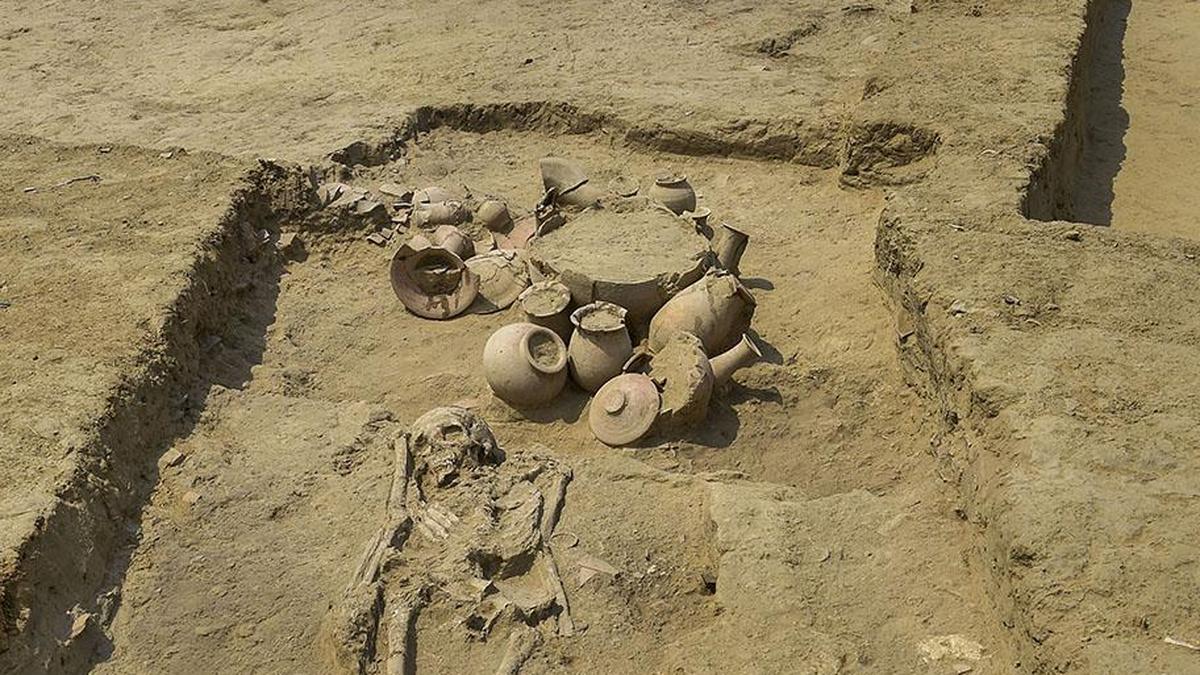
The Archaeological Survey of India (ASI) has recently handed over human skeletal remains excavated from the Harappan site of Rakhigarhi in Haryana to the Anthropological Survey of India (AnSI) for detailed anthropological, bio-archaeological, and scientific research. The study is expected to provide valuable insights into the ancestry, health, lifestyle, and population history of the Indus Valley Civilization.
About the Anthropological Survey of India (AnSI)
The Anthropological Survey of India (AnSI) is the premier government-funded institution dedicated to anthropological research in India. It is the only Central Government research organisation exclusively engaged in anthropological studies under the Ministry of Culture.
Established in 1945 under the leadership of Dr. S.C. Roy, a pioneering Indian anthropologist, AnSI was initially tasked with documenting and studying India's tribal and caste communities. Over the decades, its mandate has expanded considerably to encompass the biological, cultural, linguistic, and social diversity of the entire Indian population.
Headquarters: Kolkata, West Bengal.
Objectives
AnSI works towards understanding India's diverse human populations through scientific research and documentation. Its major objectives include:
- Conducting biological and cultural anthropological research on India's tribes and other communities.
- Examining, preserving, and analysing ancient and modern human skeletal remains.
- Documenting and conserving India's tribal arts, crafts, and cultural heritage.
- Providing training in anthropology and publishing research findings for academic and policy use.
Major Areas of Research
Over the years, AnSI has evolved into a multidisciplinary research institution. While its early work focused mainly on the ethnographic study of tribal societies—their social organisation, kinship systems, religious beliefs, and economic life—it now undertakes research across a much wider spectrum.
Its areas of study include biological anthropology, cultural anthropology, social anthropology, medical anthropology, linguistic anthropology, human genetics, archaeology, tribal studies, and bio-archaeology. It also studies rural and urban populations, marginalised communities, and the Indian diaspora to understand the country's evolving social landscape.
Organisational Structure
To facilitate region-specific research, AnSI operates through its headquarters in Kolkata and several regional centres located across the country, including Delhi, Lucknow, Shillong, and Pune.
The organisation brings together experts from multiple disciplines such as anthropology, archaeology, sociology, linguistics, and human biology, enabling comprehensive research on India's cultural and biological diversity.
Publications
AnSI disseminates its research through several scholarly publications, including:
- Journal of the Anthropological Survey of India
- Occasional Papers
- Monographs and technical research reports
Ambubachi Mela
- 25 Jun 2026
In News:
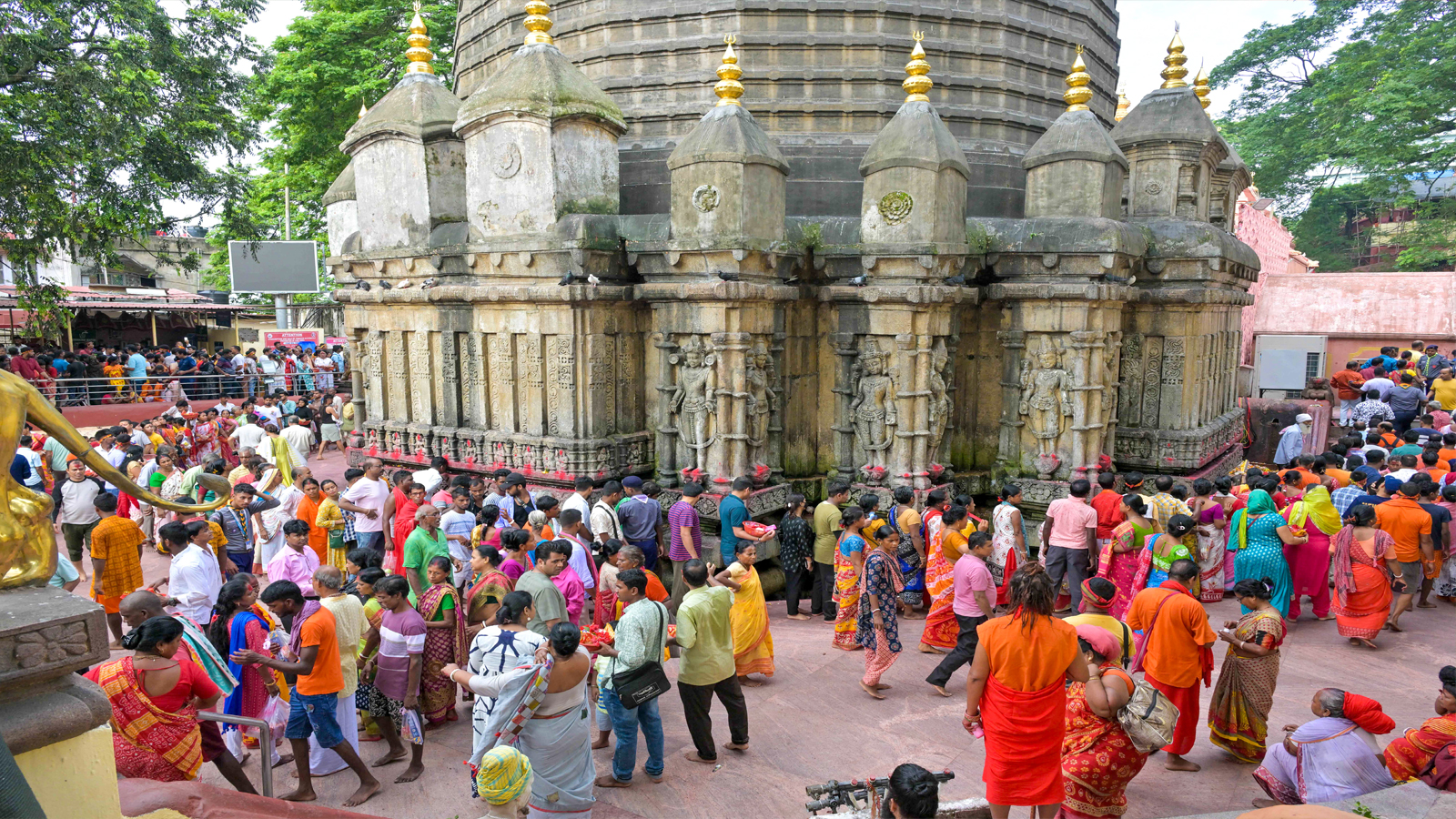
The annual Ambubachi Mela, one of the largest and most significant religious gatherings in eastern India, commenced at the revered Kamakhya Temple in Guwahati, Assam, attracting lakhs of devotees, ascetics, and Tantric practitioners from across India and abroad.
About Ambubachi Mela
Ambubachi Mela is an annual Hindu festival celebrated during the monsoon season, usually in June, at the Kamakhya Temple. The festival marks the annual menstruation of Goddess Kamakhya, symbolising the creative and regenerative powers of nature.
During this period, the temple remains closed for three days, as it is believed that the Goddess undergoes her annual menstrual cycle. The temple reopens on the fourth day after elaborate purification rituals, drawing large numbers of pilgrims seeking blessings.
The festival is deeply associated with fertility, womanhood, agricultural prosperity, and the onset of the monsoon. The word 'Ambubachi' literally means "water flowing,"symbolising both the rains and the fertility of the Earth.
Religious Significance
- Celebrates the divine feminine and the fertility of Mother Earth.
- Closely associated with the arrival of the southwest monsoon and the beginning of the agricultural season.
- Considered one of the most important festivals of Tantric Shaktism.
- Attracts Tantric practitioners, Aghori sadhus, ascetics, and devotees from across the country.
- Devotees receive the sacred Angodak (holy water) and Angabastra (cloth believed to have been sanctified during the Goddess's menstruation) as blessings after the temple reopens.
Kamakhya Temple
The Kamakhya Temple is one of the most revered shrines dedicated to Goddess Shakti and is regarded as one of the oldest and most sacred centres of Tantric worship in India.
It is believed to be one of the 51 Shakti Peethas, where the yoni (womb and generative organ) of Goddess Sati is said to have fallen according to Hindu mythology.
Location
- Situated atop Nilachal Hill in Guwahati, Assam.
- Overlooks the southern bank of the Brahmaputra River.
Key Features
- One of the foremost centres of Tantric Shaktism.
- Unlike many Hindu temples, the sanctum does not contain an idol; instead, worship is offered to a natural rock fissuresymbolising the divine feminine, continuously fed by an underground spring.
- Holds immense religious significance for both Shakta and Tantric traditions.
Temple Architecture
The Kamakhya Temple exhibits a distinctive architectural style known as the Nilachala Style, which blends:
- Traditional Nagara architecture.
- Saracenic (Mughal) architectural influences.
This unique fusion makes it one of the most distinctive temple structures in India.
Architectural Features
- The only temple in Assam with a fully developed ground plan.
- Comprises five principal chambers:
- Garbhagriha (sanctum sanctorum)
- Antarala (vestibule)
- Jagamohan (assembly hall)
- Bhogmandir (offering hall)
- Natmandir (dance and music hall)
- Each chamber possesses a distinct superstructure:
- The main shrine is crowned with a modified Saracenic dome.
- The Antarala features a two-tiered roof.
- The Bhogmandir has five domes resembling the main temple.
- The Natmandir has a shell-shaped roof with an apsidal end, resembling traditional Assamese Namghars (prayer halls).
Nirbhay Chetna Initiative
- 25 Jun 2026
In News:
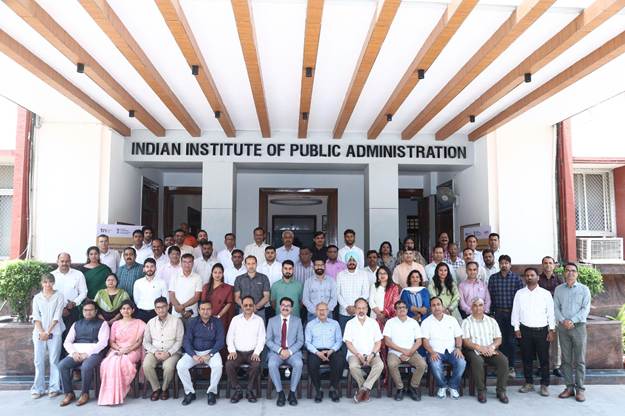
The Union Government has launched Nirbhay Chetna to sensitise over 17.5 lakh elected male representatives of Panchayati Raj Institutions (PRIs) on gender equality, women's safety, and gender-responsive governance across rural India.
About Nirbhay Chetna Initiative
- Nirbhay Chetna is a flagship gender-sensitisationprogramme launched under the broader Nirbhay Raho initiative. It is the first-of-its-kind national initiative implemented through the Nirbhaya Fund to engage elected male representatives in promoting women's safety and gender equality at the grassroots level.
- The initiative recognises that achieving gender-responsive governance requires the active participation of both women and men in local self-government institutions.
- Nodal Ministry: Ministry of Panchayati Raj
- Objectives: The initiative aims to:
- Promote gender-sensitive governance in Panchayati Raj Institutions.
- Sensitise elected male representatives on women's rights, dignity, and safety.
- Foster accountability and community leadership for preventing gender-based violence.
- Encourage inclusive decision-making and equal participation of women in local governance.
- Strengthen grassroots efforts towards creating safer and more equitable rural communities.
- Key Features
- Implemented under the Nirbhaya Fund, dedicated to initiatives for women's safety and security.
- Targets over 17.5 lakh elected male representatives across Panchayati Raj Institutions.
- Focuses on behavioural change through awareness, dialogue, and leadership development.
- Promotes collaboration among Panchayats, government agencies, and local communities to address gender issues.
- Seeks to institutionalise gender-responsive practices in rural governance.
Capacity-Building Mechanism
A nationwide network of 28,500 Master Trainers is being developed at:
- State level
- District level
- Block level
These trainers will conduct structured awareness and training programmes to sensitise male elected representatives across the country.
Components of the Nirbhay Raho Initiative
1. Nirbhay Chetna
- Sensitises elected male representatives on:
- Gender equality
- Women's safety and security
- Prevention of gender-based violence
- Gender-responsive governance
2. Nirbhay Netri
Focuses on empowering elected women representatives through:
- Capacity building
- Leadership development
- Legal literacy and awareness
- Strengthening participation in Panchayati Raj Institutions
3. Nirbhay Drishti
Aims to enhance rural safety infrastructure by:
- Installing CCTV cameras at strategic public locations in Panchayats.
- Promoting technology-enabled surveillance to improve women's safety.
- Supporting safer public spaces in rural areas.
Expected Outcomes
The initiative seeks to:
- Build gender-sensitive leadership within Panchayati Raj Institutions.
- Improve the implementation of women-centric government schemes.
- Strengthen community ownership of women's safety initiatives.
- Encourage greater participation of women in local governance.
- Foster safer, inclusive, and equitable rural communities through behavioural and institutional change.
Project Nimbus

- 25 Jun 2026
In News:
Growing global protests against Project Nimbus have reignited debates over the ethical use of Artificial Intelligence (AI), cloud computing, and the role of Big Tech companies in military and government operations. Student groups, technology employees, and human rights activists have questioned whether advanced AI tools supplied under the project are being used in the ongoing Israel–Gaza conflict.
About Project Nimbus
- Project Nimbus is a USD 1.2 billion cloud-computing agreement, announced in 2021, between the Israeli government and two global technology companies—Google Cloud Platform (GCP) and Amazon Web Services (AWS).
- Its primary objective is to modernize and digitize Israel's public-sector digital infrastructure by migrating government databases, applications, and computing systems to secure domestic cloud platforms.
- The project is designed to improve the efficiency, security, and scalability of government digital services while ensuring that sensitive government data remains within Israel.
Key Features
- Signed in 2021 with an estimated value of USD 1.2 billion.
- Jointly implemented by Google Cloud and Amazon Web Services (AWS).
- Provides cloud infrastructure for Israeli government ministries, public agencies, and defence-related institutions.
- Establishes localized cloud data centres within Israel to ensure data sovereignty.
- Includes long-term cloud storage, computing power, cybersecurity support, and AI-based analytical services.
Technological Capabilities
Project Nimbus provides a wide range of advanced cloud and Artificial Intelligence services, including:
- High-performance cloud computing.
- Large-scale data storage and management.
- Machine learning and AI model development.
- Facial detection and image recognition.
- Automated image categorization.
- Object detection and tracking.
- Speech recognition and language processing.
- Sentiment analysis and predictive analytics.
These technologies are generally classified as dual-use technologies, meaning they can serve both civilian and military purposes.
Sovereign Non-Restriction Clause
Leaked contract documents indicate that Project Nimbus contains a Sovereign Non-Restriction Clause, under which:
- Google and Amazon cannot suspend or deny cloud services to Israeli government entities due to external political pressure or internal corporate policy changes.
- Critical government operations remain insulated from service disruptions.
- Data processing, storage, and server administration are maintained within Israel to strengthen national control over government data.
Concerns and Controversies
Project Nimbus has attracted significant international criticism due to several concerns:
- Potential military use: Critics allege that AI-powered surveillance and image-analysis tools could support military operations and targeting in conflict zones.
- Human rights concerns: Activists argue that advanced surveillance capabilities may be used to monitor Palestinians in occupied territories.
- Lack of transparency: The exact deployment and end-use of AI services under the project remain largely undisclosed.
- Corporate ethics: Employees and civil society groups have accused Big Tech companies of indirectly facilitating geopolitical conflicts by providing foundational digital infrastructure.
- Dual-use dilemma: Technologies intended for civilian governance can also be adapted for intelligence gathering and military applications.
Google and Amazon's Position
Google and Amazon have consistently stated that:
- Project Nimbus is intended to provide commercial cloud services to government agencies.
- The contract is not designed for classified weapons systems or intelligence operations.
- Their services comply with contractual obligations and applicable laws.
North-East India as "Ashtalakshmi"
- 25 Jun 2026
In News:
The Government of India has highlighted the remarkable transformation of the North-Eastern Region (NER) over the last twelve years (2014–2026). Through sustained investments in infrastructure, connectivity, social development, clean energy, and governance, the region has witnessed a paradigm shift from being a geographically isolated frontier to becoming a strategic growth hub. Recognised as "Ashtalakshmi", the North-East is now central to India's Act East Policy and the vision of Viksit Bharat, serving as India's gateway to Southeast Asia.
Why is the North-East Called "Ashtalakshmi"?
The term Ashtalakshmi originates from Hindu tradition, where Goddess Lakshmi manifests in eight forms representing prosperity, abundance, and well-being. Similarly, India's North-East comprises eight states—Arunachal Pradesh, Assam, Manipur, Meghalaya, Mizoram, Nagaland, Sikkim, and Tripura—each endowed with unique cultural, ecological, agricultural, and strategic strengths.
The Government uses this symbolism to project the region as a collective source of national prosperity. The terminology also reflects a strategic shift in policy—from viewing the North-East merely as a border region constrained by the "tyranny of distance" to recognising it as India's Gateway to ASEAN and an important pillar of regional integration.
Strategic Importance of the North-East
The North-East occupies a unique geopolitical position and plays a critical role in India's security, economy, and diplomacy.
Its importance stems from:
- Sharing international borders with Bangladesh, Bhutan, China, Myanmar, and Nepal, making it strategically significant for border management.
- Acting as India's land bridge to Southeast Asia under the Act East Policy.
- Possessing rich natural resources including hydropower, forests, biodiversity, bamboo, tea, spices, horticultural crops, and organic farming potential.
- Serving as a crucial region for India's Indo-Pacific strategy, regional connectivity, and cross-border trade.
Major Drivers of Transformation
1. Connectivity Revolution: Bridging the Geographic Divide
For decades, poor connectivity remained the biggest obstacle to the region's development. The past decade has witnessed unprecedented investments aimed at overcoming geographical isolation through integrated transport and digital infrastructure.
Road Connectivity
- Road infrastructure has expanded significantly, with the National Highway network increasing from 10,905 km in 2014 to over 16,200 km in 2026.
- Flagship programmes such as BharatmalaPariyojana and Pradhan Mantri Gram Sadak Yojana (PMGSY) have enhanced rural connectivity, improved market access, strengthened border infrastructure, and facilitated tourism and disaster response.
Railway Modernisation
- Rail connectivity has expanded through broad-gauge conversion, new railway lines, and extensive electrification.
- Arunachal Pradesh, Meghalaya, Mizoram, Nagaland, and Tripura have achieved 100% railway electrification, while Assam is close to full electrification. This transition has reduced dependence on diesel traction, improved operational efficiency, and promoted environmentally sustainable transportation.
Landmark Infrastructure Projects
Several iconic engineering projects have transformed connectivity across the region.
- Bogibeel Bridge (Assam): India's longest rail-cum-road bridge, significantly improving connectivity between Assam and Arunachal Pradesh while strengthening defence logistics.
- Noney Bridge (Manipur): The world's tallest railway pier bridge, forming part of the Jiribam–Imphal railway project.
- Sela Tunnel (Arunachal Pradesh): Provides all-weather access to Tawang and enhances military preparedness along the India-China border.
Air Connectivity
- The UDAN Scheme has substantially improved regional air connectivity. Operational airports increased from 9 in 2014 to 17 in 2026, making air travel more affordable and accessible while promoting tourism, trade, healthcare access, and emergency services.
Inland Waterways
- The number of National Waterways in the region has increased from one in 2014 to twenty in 2024, reviving the Brahmaputra and Barak river systems for cargo transportation, river tourism, and multimodal logistics.
Digital Connectivity
- Digital inclusion has expanded rapidly with over 6,350 Gram Panchayats becoming service-ready for high-speed broadband, facilitating e-governance, telemedicine, online education, digital banking, and entrepreneurship.
2. Strategic Integration through the Act East Policy
The Act East Policy has fundamentally altered the strategic significance of the North-East by positioning it as India's gateway to Southeast Asia.
- Major cross-border connectivity projects such as the India–Myanmar–Thailand Trilateral Highway and the Kaladan Multi-Modal Transit Transport Project are expected to deepen India's economic integration with ASEAN by creating faster and more efficient land and maritime trade routes.
- The development of Integrated Check Posts (ICPs), particularly at Moreh (Manipur), has streamlined customs, immigration, and border trade. Simultaneously, Border Haats such as Kamalasagar and Bholaganj have revived traditional cross-border commerce while strengthening local livelihoods and people-to-people ties.
Together, these initiatives are transforming the North-East from India's peripheral frontier into an important regional trade and logistics corridor.
3. Policy Support and Institutional Framework
The transformation of the North-East has been supported by targeted policy interventions and dedicated institutional mechanisms.
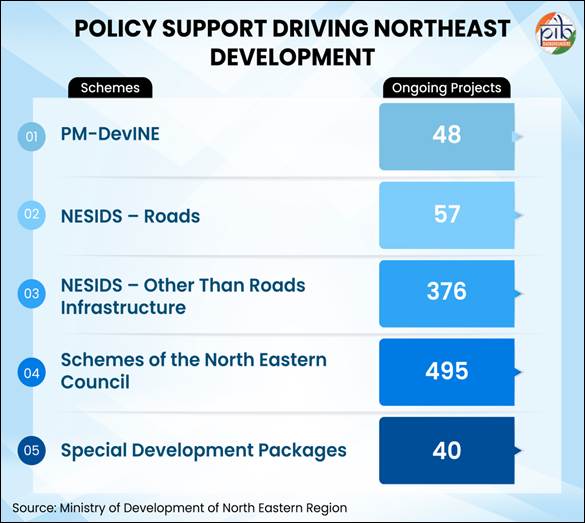
PM-DevINE
The Prime Minister's Development Initiative for North East Region (PM-DevINE) is a 100% Centrally Funded Scheme aimed at financing high-impact infrastructure, social development, livelihood generation, and tourism projects.
North East Special Infrastructure Development Scheme (NESIDS)
Launched in 2017–18 and extended until March 2026, NESIDS supports infrastructure development through two components:
- NESIDS-Roads, focusing on connectivity and strategic road infrastructure.
- NESIDS-Other Than Roads Infrastructure (OTRI), supporting projects related to healthcare, education, power, drinking water, bridges, and public infrastructure.
North Eastern Council (NEC)
The North Eastern Council continues to function as the region's apex planning body by promoting bamboo-based industries, tourism, entrepreneurship, livelihood generation, and regional planning.
Dedicated Budgetary Support
Recognising the strategic importance of the region, all non-exempted Central Ministries are mandated to allocate at least 10% of their annual budget for the development of the North-East under the guiding principle of "Act East, Act Fast, Act First."
4. Energy Security and Green Growth
The North-East is central to India's renewable energy ambitions due to its vast hydropower and natural gas resources.
- Major projects include the 2,880 MW Dibang Multipurpose Project in Arunachal Pradesh, which will become India's tallest dam, and the 2,000 MW Subansiri Lower Hydroelectric Project located on the Assam–Arunachal Pradesh border. These projects are expected to improve energy security, flood moderation, irrigation, and regional development.
- Complementing hydropower development is the 1,656 km North East Gas Grid, which connects all eight states with the national gas network. The project includes Asia's longest underwater hydrocarbon pipeline beneath the Brahmaputra River, enabling cleaner energy access while promoting industrial growth.
5. Human Development and Social Infrastructure
Alongside infrastructure, significant investments have been made in improving quality of life and human development.
- Under the Jal Jeevan Mission, Arunachal Pradesh and Mizoram have achieved 100% Functional Household Tap Water Connections, while all eight states have attained Open Defecation Free (ODF) status.
- Housing infrastructure has expanded through Pradhan Mantri Awas Yojana (PMAY), under which over 31 lakh houses have been constructed with integrated access to electricity, LPG, sanitation, and drinking water.
- Healthcare infrastructure has improved considerably through the operationalisation of AIIMS Guwahati, approval of 12 new medical colleges, and expansion of tertiary healthcare facilities.
- Educational opportunities have also expanded with the establishment of IITs, NITs, and Eklavya Model Residential Schools (EMRS), improving access to quality education in remote areas.
6. Agricultural Diversification and Rural Prosperity
The North-East is gradually transitioning from subsistence agriculture to a high-value, market-oriented economy.
Fisheries and Livestock
Inland fish production has increased by 68% over the last decade, with Assam contributing nearly 70% of regional production. This growth has been supported by the Pradhan Mantri Matsya Sampada Yojana, distribution of 3,823 Kisan Credit Cards, and establishment of 501 Fish Farmer Producer Organisations (FFPOs).
Milk and egg production have also witnessed steady growth, supported by the establishment of the region's first Cattle IVF Laboratory in Guwahati for genetic improvement.
Organic Farming and GI Products
The Mission Organic Value Chain Development for North Eastern Region (MOVCDNER) has integrated over 2.36 lakh hectares under certified organic farming. The region also possesses 89 Geographical Indication (GI)-tagged products, including Lakadong Turmeric, Naga King Chilli, Muga Silk, Chak-Hao Black Rice, Queen Pineapple, and Sikkim Large Cardamom, enhancing export potential and farmers' incomes.
Agarwood Economy
The North-East hosts nearly 90% of India's 150 million agarwood trees, with Tripura alone possessing an estimated market potential of ?2,000 crore, making agarwood a promising export commodity.
Brand North East
The Ministry of Development of North Eastern Region (MDoNER) has launched the Brand North East initiative to develop state-specific value chains through flagship missions such as the Kiwi Mission (Arunachal Pradesh), Coffee Mission (Nagaland), Ginger Mission (Mizoram), Queen Pineapple Mission (Tripura), Muga Silk Mission (Assam), Organic Food Mission (Sikkim), and Lakadong Turmeric Mission (Meghalaya). The initiative aims to transform the region into a globally competitive, export-oriented economy.
Ammonia (NH?)
- 24 Jun 2026
In News:
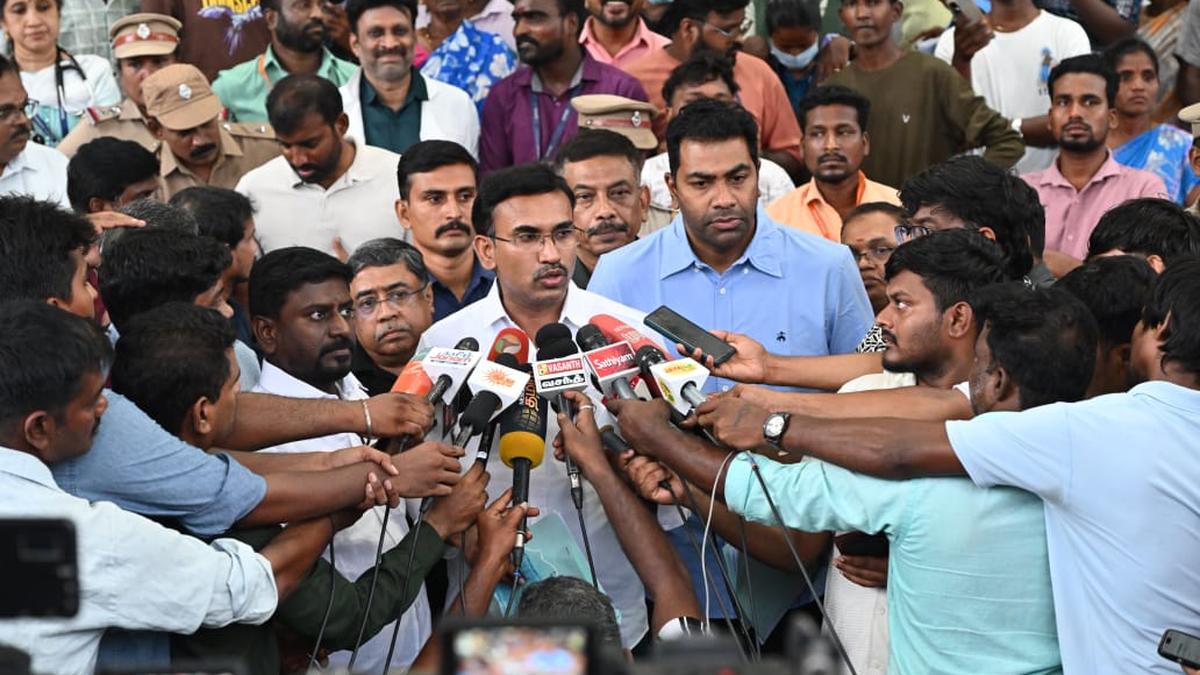
An ammonia gas leak at a seafood processing and export unit in Tiruvallur district, Tamil Nadu, affected several people, highlighting concerns regarding industrial safety and hazardous chemical handling.
About Ammonia
Ammonia (NH?) is a colourless, pungent-smelling gas composed of one nitrogen atom and three hydrogen atoms. It is an important industrial chemical and a naturally occurring compound in the environment.
Ammonia is highly soluble in water, forming aqueous (liquid) ammonia. When exposed to air, liquid ammonia rapidly vaporizes back into a gas.
Occurrence
Ammonia occurs naturally in:
- The nitrogen cycle, where it is produced by soil microorganisms.
- The decomposition of plants, animals, and organic matter.
- Small quantities within the human body as a product of normal metabolic processes.
Industrial Production
Commercial ammonia is primarily manufactured through the Haber–Bosch Process, in which nitrogen (N?) from air reacts with hydrogen (H?) under high temperature and pressure in the presence of an iron catalyst.
Uses
Ammonia has diverse industrial applications:
- Agriculture: Primary raw material for nitrogenous fertilizers such as ammonium nitrate and urea.
- Refrigeration: Widely used as an industrial refrigerant, especially in cold storage and food processing industries.
- Water Treatment: Used as a purifier and pH regulator.
- Chemical Industry: Manufacture of plastics, explosives, synthetic fibres, dyes, pharmaceuticals, and cleaning agents.
- Food Industry: Used in refrigeration systems for seafood and food storage facilities.
Health Effects
Exposure to high concentrations of ammonia can cause:
- Irritation of the eyes, skin, nose, and throat.
- Coughing, breathing difficulty, and lung irritation.
- Chemical burns upon prolonged exposure.
- Severe exposure may lead to respiratory distress and pulmonary damage.
Biochar

- 24 Jun 2026
In News:
Recent studies have shown that Biochar can increase crop productivity by 10–30% and improve soil water-holding capacity by 10–25%, particularly in nutrient-deficient and semi-arid soils, highlighting its potential for sustainable agriculture and carbon sequestration.
What is Biochar?
Biochar is a carbon-rich, porous material produced by heating biomass or agricultural residues under low-oxygen (oxygen-limited) conditions, a process known as pyrolysis.
It is generally prepared by heating crop residues at 400°C–600°C in a kiln or similar structure in the absence of oxygen, converting agricultural waste into a stable form of carbon while minimizing emissions.
Key Characteristics
- Produced through pyrolysis (low or no oxygen).
- Derived from agricultural residues, forestry waste, and other biomass.
- Highly porous with a large surface area.
- Rich in stable carbon, making it resistant to decomposition.
- Can retain carbon in soil for 100–1,000 years, making it an effective long-term carbon sink.
Applications of Biochar
1. Agriculture: Biochar improves soil fertility, enhances water retention, increases nutrient availability, promotes beneficial microbial activity, and improves soil structure. It is particularly effective in rainfed, semi-arid, and nutrient-poor soils, leading to higher crop productivity.
2. Climate Change Mitigation: By storing stable carbon in soils for centuries, biochar serves as a carbon sequestration technology, reducing atmospheric carbon dioxide and supporting climate change mitigation.
3. Industrial Applications: Modified biochar can adsorb carbon dioxide (CO?) from industrial exhaust gases and is being explored for carbon capture applications, although its efficiency is currently lower than conventional carbon capture technologies.
4. Construction Sector: Biochar can be incorporated into construction materials such as concrete and bricks, reducing their carbon footprint while acting as a stable carbon sink.
5. Wastewater Treatment: Due to its high porosity and adsorption capacity, biochar can remove pollutants, heavy metals, dyes, and organic contaminants from wastewater, providing a low-cost treatment option.
Advantages
- Converts agricultural waste into a value-added product.
- Reduces crop residue burning and associated air pollution.
- Improves crop yield by 10–30%.
- Enhances soil water-holding capacity by 10–25%.
- Supports soil biodiversity and microbial activity.
- Sequesters carbon for 100–1,000 years.
- Promotes sustainable and climate-resilient agriculture.
Sarvam AI & India's Sovereign AI Ecosystem
- 24 Jun 2026
In News:
Bengaluru-based Sarvam AI became India's first dedicated full-stack Artificial Intelligence (AI) startup to achieve unicorn status (valuation exceeding USD 1 billion), marking a major milestone for India's deep-tech ecosystem and indigenous AI capabilities.
What is a Unicorn?
- A Unicorn is a privately held startup valued at more than USD 1 billion.
- As of June 2026, India has 131 unicorns, making it the third-largest unicorn ecosystem globally after the United States and China.
- Recent unicorns such as Sarvam AI, Neysa, Skyroot, KreditBee, and Porter reflect India's growing strength in deep-tech sectors, particularly Artificial Intelligence and Space Technology.
About Sarvam AI
Sarvam AI is an Indian AI startup focused on building a sovereign AI ecosystem, aiming to reduce India's dependence on foreign AI platforms and develop indigenous AI technologies suited to Indian languages and use cases.
Key Initiatives
1. India's Indigenous Large Language Model (LLM)
Under the IndiaAI Mission, Sarvam AI has been selected to develop India's first indigenous Large Language Model (LLM).
The company is developing three models:
- Sarvam-Large – Advanced reasoning and complex AI tasks.
- Sarvam-Small – Optimized for real-time applications.
- Sarvam-Edge – Designed for on-device AI applications.
These models are expected to scale up to 70 billion parameters.
2. Frontier AI Models
At the IndiaAI Impact Summit 2026, Sarvam AI introduced:
- Sarvam-30B
- 30-billion parameter model.
- Optimized for conversational AI.
- 32,000-token context window.
- Sarvam-105B
- 105-billion parameter model.
- Designed for advanced reasoning and multi-step problem-solving.
- 128,000-token context window.
3. Enterprise AI Platforms
- Sarvam Samvaad
- Enterprise conversational AI platform.
- Integrates with organizational data and business tools to generate insights and automate workflows.
- Sarvam Dub
- AI-powered multilingual dubbing platform.
- Supports zero-shot voice cloning and cross-lingual speech generation.
4. Population-Scale AI Applications
Sarvam AI developed "Vikram", a multilingual AI chatbot named after Vikram Sarabhai.
Its AI voice agents have been deployed by the Ministry of Agriculture & Farmers Welfare to collect high-quality agricultural data from approximately 17 million farmers, demonstrating AI applications at population scale.
Sickle Cell Disease (SCD) & National Sickle Cell Anaemia Elimination Mission (NSCEM)
- 24 Jun 2026
In News:
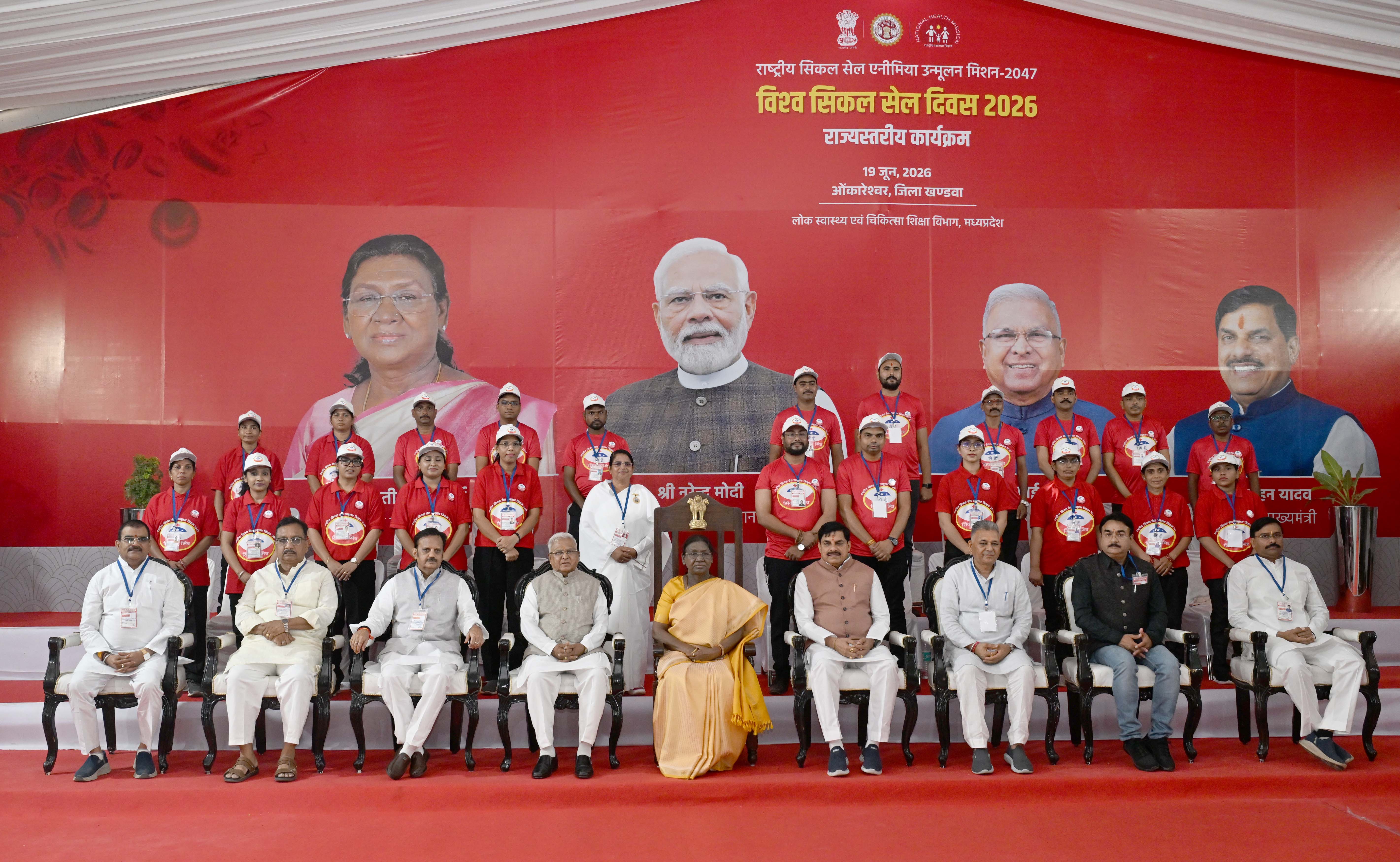
On International Sickle Cell Day (19 June) 2026, the President of India reaffirmed the country's commitment to eliminate Sickle Cell Disease (SCD) by 2047 under the National Sickle Cell Anaemia Elimination Mission (NSCEM).
International Sickle Cell Day
- International Sickle Cell Day is observed annually on 19 June to raise awareness about Sickle Cell Disease (SCD) and promote early diagnosis, treatment, prevention, and equitable healthcare access.
- The United Nations General Assembly (UNGA) designated 19 June as International Sickle Cell Day through a resolution adopted on 22 December 2008, recognizing SCD as a major global public health challenge and one of the world's most significant inherited genetic disorders.
- Theme (2026):"Closing the Survival Gap: Equity in Sickle Cell Disease."
What is Sickle Cell Disease (SCD)?
Sickle Cell Disease (SCD) is a hereditary genetic blood disorder caused by a mutation in the HBB (beta-globin) gene, resulting in the production of abnormal haemoglobin (Haemoglobin S). Instead of their normal biconcave shape, red blood cells become rigid, sticky, and sickle (crescent)-shaped, impairing blood flow and oxygen delivery.
The disease follows an autosomal recessive inheritance pattern, meaning an individual develops SCD only after inheriting two defective genes (one from each parent). Individuals carrying only one mutated gene possess the Sickle Cell Trait and are generally asymptomatic but can transmit the gene to their offspring.
Health Impact
Abnormally shaped red blood cells obstruct small blood vessels, leading to vaso-occlusive crises, severe pain episodes, chronic anaemia, organ damage, recurrent infections due to splenic dysfunction, and reduced life expectancy. Symptoms generally begin at 5–6 months of age as fetal haemoglobin declines.
Treatment
Management focuses on reducing complications through:
- Hydroxyurea therapy (increases fetal haemoglobin production).
- Pain management and adequate hydration.
- Blood transfusions for severe complications.
- Vaccination and antibiotics to prevent infections.
National Sickle Cell Anaemia Elimination Mission (NSCEM)
Launched in 2023, the National Sickle Cell Anaemia Elimination Mission aims to eliminate Sickle Cell Disease as a public health problem in India by 2047, with a special focus on tribal populations, where disease prevalence is highest.
The Mission is implemented jointly by the Ministry of Health & Family Welfare and the Ministry of Tribal Affairs under the National Health Mission (NHM) across 17 high-focus States.
Key Features
- Mission period: 2023–2026 (screening phase).
- Screening target: Approximately 7 crore individuals aged 0–40 years.
- Focus areas include:
- Universal screening and early diagnosis.
- Genetic counselling.
- Timely treatment and follow-up.
- Public awareness and prevention.
- Strengthening healthcare infrastructure.
Green Hydrogen Certification Portal (GHCI)
- 24 Jun 2026
In News:
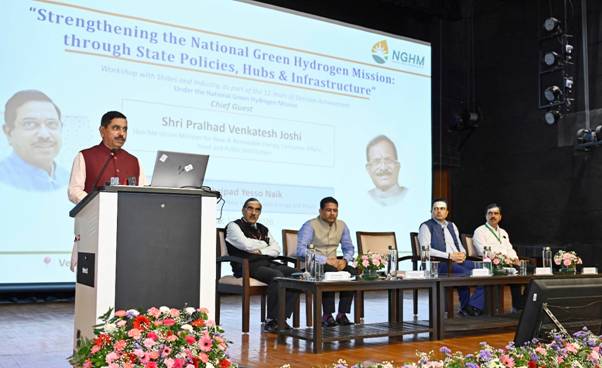
The Union Ministry of New and Renewable Energy (MNRE) launched the Green Hydrogen Certification Portal of India (GHCI) during a national workshop on the National Green Hydrogen Mission (NGHM). The portal will facilitate transparent certification and regulatory compliance under the Green Hydrogen Certification Scheme of India (GHCI Scheme).
Green Hydrogen Certification Portal (GHCI)
The Green Hydrogen Certification Portal is a digital platform developed by the Ministry of New and Renewable Energy (MNRE) to implement the Green Hydrogen Certification Scheme of India.
The portal aims to:
- Ensure transparent certification of Green Hydrogen.
- Facilitate regulatory compliance for producers.
- Standardize certification to build domestic and international market confidence.
- Promote traceability and credibility of India's green hydrogen ecosystem.
National Green Hydrogen Mission (NGHM)
Launched in January 2023, the National Green Hydrogen Mission seeks to establish India as a global hub for the production, utilization, and export of Green Hydrogen and its derivatives. The mission aims to reduce dependence on fossil fuels, strengthen energy security, promote indigenous manufacturing, and accelerate India's transition towards a low-carbon economy.
Three Pillars of the Mission
The mission is built around three strategic pillars:
- Demand Creation: Development of domestic and export markets for green hydrogen.
- Supply-side Incentives: Incentives for green hydrogen production and electrolyser manufacturing.
- Enabling Ecosystem: Development of infrastructure, R&D, standards, certification, and supportive policy frameworks.
Targets by 2030
|
Target |
Details |
|
Green Hydrogen Production |
5 Million Metric Tonnes (MMT) annually |
|
Renewable Energy Capacity |
125 GW |
|
Investment Mobilisation |
?8 lakh crore |
|
CO? Emission Reduction |
50 MMT annually |
|
Objective |
Enhance energy security and reduce fossil fuel imports |
Major Components
Key initiatives under the mission include:
- Strategic Interventions for Green Hydrogen Transition (SIGHT) Programme
- Incentives for electrolyser manufacturing and hydrogen production
- Green Hydrogen Certification Framework
- Research & Development (R&D) Roadmap
- Development of standards, testing and certification infrastructure
- Creation of hydrogen hubs and supporting infrastructure
State-Level Progress
To support implementation:
- 6 States have notified dedicated Green Hydrogen Policies.
- 7 States have incorporated hydrogen into existing energy/industrial policies.
- 4 States are in the process of formulating dedicated policies.
Kudankulam Nuclear Power Project (KKNPP)
- 23 Jun 2026
In News:
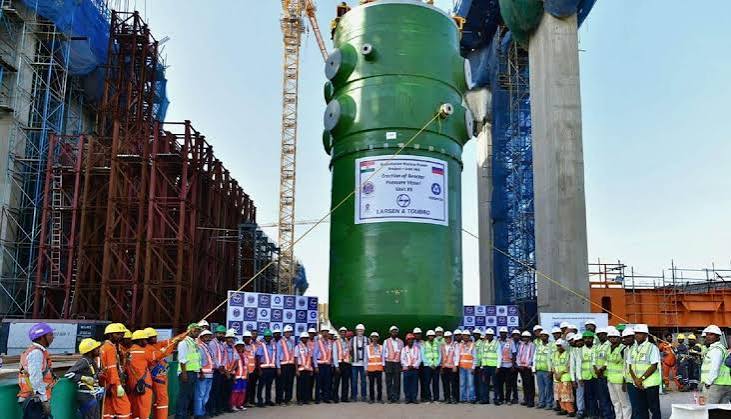
The Nuclear Power Corporation of India Limited (NPCIL) successfully installed the Reactor Pressure Vessel (RPV) at Unit-5 of the Kudankulam Nuclear Power Project (KKNPP) in Tamil Nadu, marking a major milestone in India's nuclear energy expansion. The installation followed clearance from the Atomic Energy Regulatory Board (AERB) and was carried out with technical support from Russia's Rosatom.
About Kudankulam Nuclear Power Project (KKNPP)
- The Kudankulam Nuclear Power Project (KKNPP) is India's largest nuclear power project, located in Tirunelveli district, Tamil Nadu.
- It is being developed by the Nuclear Power Corporation of India Limited (NPCIL) under a long-standing India–Russia Intergovernmental Agreement signed in 1988.
- The project is being constructed in phases with six units, each employing Russian-designed VVER-1000 (Water-Water Energetic Reactor) technology—a type of Pressurized Water Reactor (PWR) that uses light water as both coolant and neutron moderator.
Recent Development
- NPCIL completed the installation of the Reactor Pressure Vessel (RPV) at Unit-5, one of the most critical milestones in reactor construction.
- The installation was executed using the 'open-top' installation method, where heavy reactor equipment is lowered into the reactor building before the containment dome is installed.
- The activity was undertaken with technical assistance from Rosatom and its engineering arm Atomstroyexport (ASE) after obtaining the necessary approvals from the Atomic Energy Regulatory Board (AERB).
Reactor Pressure Vessel (RPV)
- The Reactor Pressure Vessel (RPV) is the core component of a nuclear reactor, often referred to as its "heart." It is a massive steel vessel weighing around 320 tonnes and houses the reactor core, where controlled nuclear fission takes place to generate heat for electricity production.
Significance
The operational Units 1 and 2 of Kudankulam have already generated over 127 billion kWh of electricity, avoiding more than 112 million tonnes of CO? emissions while reducing dependence on coal-based power generation.
Once all six units become operational, the project will achieve a total installed capacity of 6,000 MWe, making Kudankulam one of India's largest nuclear power hubs. The project will play a crucial role in enhancing energy security, expanding the share of clean baseload power, and supporting India's target of achieving 100 GW of nuclear power capacity by 2047 under the Nuclear Energy Mission for Viksit Bharat.
The project also exemplifies the strategic depth of India–Russia cooperation in the field of civilian nuclear energy.
REWARD Programme
- 23 Jun 2026
In News:
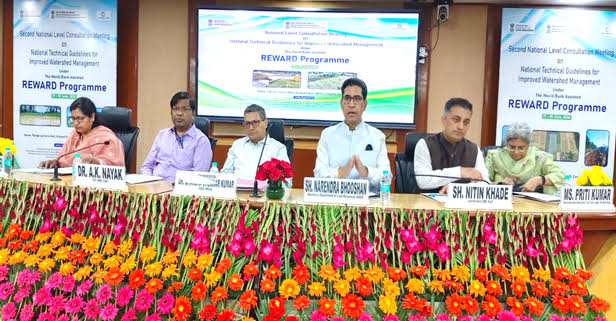
The National Rainfed Area Authority (NRAA) convened a meeting to deliberate on the Draft National Technical Guidelines (NTG) for Improved Watershed Management under the REWARD Programme, aimed at promoting climate-resilient and science-based watershed development.
What is the REWARD Programme?
The REWARD (Rejuvenating Watersheds for Agricultural Resilience through Innovative Development) Programme is a World Bank-assisted watershed development programme implemented by the Department of Land Resources (DoLR), Ministry of Rural Development, in collaboration with the States of Karnataka and Odisha.
Implemented during 2021–2026, the programme seeks to modernize watershed management by integrating scientific approaches, strengthening institutional capacity, and enhancing climate resilience in rainfed agricultural areas.
Objectives
The programme aims to:
- Strengthen the capacity of national and state institutions for improved watershed management.
- Enhance the resilience of farmers to climate change.
- Promote sustainable agricultural practices and support value-chain development in selected watersheds.
- Introduce modern, science-based watershed management techniques.
Implementation Mechanism
The REWARD Programme is financed through the World Bank's Program-for-Results (PforR) financing instrument. Under this model, financial assistance is released based on the achievement of Disbursement Linked Indicators (DLIs), ensuring that funding is directly linked to measurable outcomes and institutional performance.
Key Result Areas
The programme focuses on two major result areas:
- Strengthening institutions and policy frameworks for watershed development.
- Science-based watershed management to improve climate resilience, natural resource conservation, and sustainable livelihoods.
Mombasa Declaration
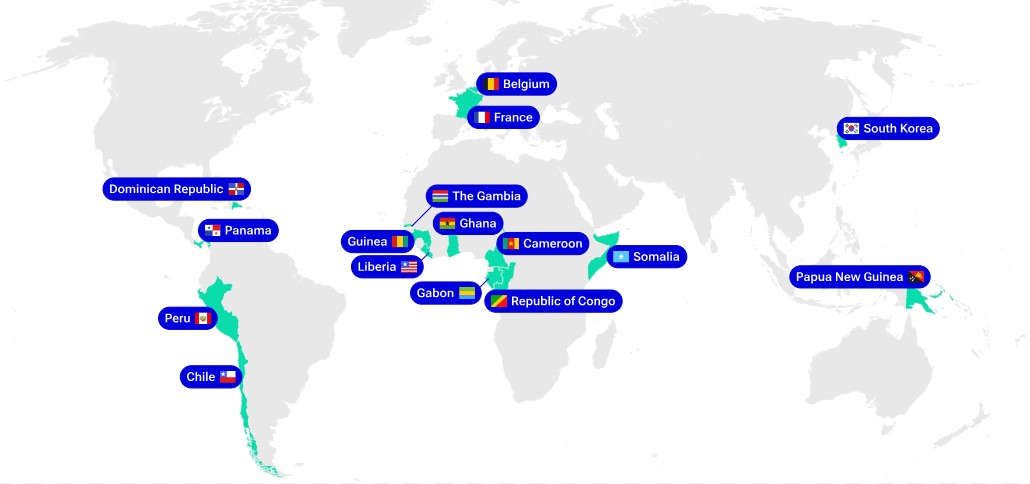
- 23 Jun 2026
In News:
Fifteen countries from Africa, Asia, Europe, the Caribbean, and the Pacific adopted the Mombasa Declaration during the 11th Our Ocean Conference (OOC) 2026 in Mombasa, Kenya, to strengthen global efforts against Illegal, Unreported and Unregulated (IUU) Fishing.
What is the Mombasa Declaration?
The Mombasa Declaration is a multilateral commitment adopted by 15 countries to enhance transparency, strengthen international cooperation, and improve governance in the fisheries sector to combat Illegal, Unreported and Unregulated (IUU) fishing.
Named after the host city of Mombasa (Kenya), the declaration seeks to improve monitoring of fishing activities by promoting greater access to information on fishing vessels, ownership, licensing, and cross-border data sharing.
Objectives
The declaration aims to:
- Combat Illegal, Unreported and Unregulated (IUU) fishing.
- Improve transparency in fisheries governance.
- Strengthen international cooperation and information sharing.
- Enhance monitoring, compliance, and enforcement mechanisms.
- Protect marine ecosystems and ensure sustainable fisheries.
Key Features
The declaration calls upon participating governments to:
- Improve access to information on fishing vessels, ownership, and licensing.
- Strengthen data sharing among countries for better monitoring of fishing activities.
- Modernize vessel registries and publish fishing authorizations.
- Support the Global Charter for Fisheries Transparency, which contains 10 policy principles for improving fisheries governance through low-cost institutional reforms.
The declaration was signed by Belgium, Cameroon, Chile, the Dominican Republic, France, Gambia, Ghana, Guinea, Liberia, Panama, Papua New Guinea, Peru, Republic of the Congo, Somalia, and South Korea.
Why is IUU Fishing a Concern?
Illegal, Unreported and Unregulated (IUU) fishing undermines sustainable fisheries management by depleting fish stocks, damaging marine biodiversity, distorting markets, and threatening the livelihoods and food security of millions of people dependent on fisheries. It also causes significant economic losses and weakens maritime governance.
Our Ocean Conference (OOC)
The Our Ocean Conference (OOC) is a global platform launched in 2014 by the U.S. Department of State under the leadership of former U.S. Secretary of State John Kerry. It brings together governments, international organizations, businesses, civil society, and academia to mobilize commitments for ocean conservation and sustainable use of marine resources.
The conference focuses on six priority areas:
- Marine Protected Areas (MPAs)
- Sustainable Blue Economy
- Climate Change
- Maritime Security
- Sustainable Fisheries
- Marine Pollution
Since its inception, the conference has generated over 2,600 commitments worth more than USD 160 billion.
The 11th Our Ocean Conference (2026) was held in Mombasa, Kenya, marking the first time the conference was hosted on the African continent, under the theme "Our Ocean, Our Heritage, Our Future."
Exercise Pitch Black 2026
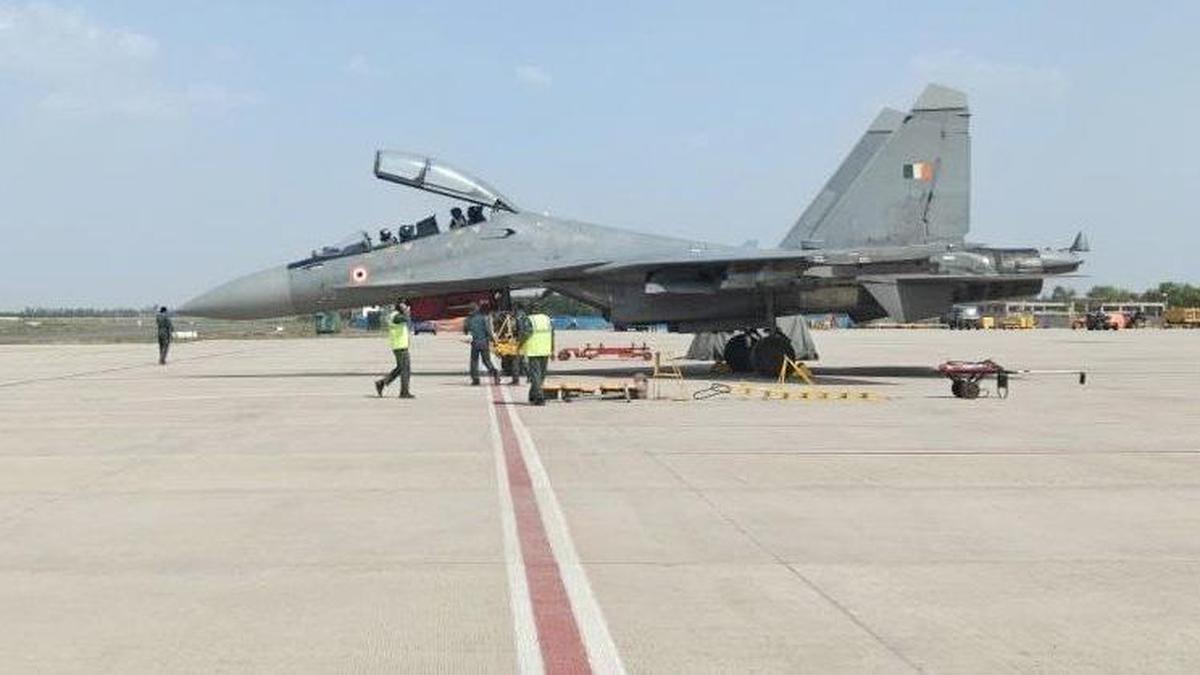
- 23 Jun 2026
In News:
The Indian Air Force (IAF) will participate in Exercise Pitch Black 2026, a major multinational air combat exercise hosted by the Royal Australian Air Force (RAAF) in Australia's Northern Territory.
About Exercise Pitch Black
Exercise Pitch Black is the largest multinational air combat exercise conducted by the Royal Australian Air Force (RAAF). Held biennially, it brings together air forces from across the Indo-Pacific and other partner nations to undertake realistic, high-intensity air warfare training in a complex operational environment.
The 2026 edition is scheduled from 20 July to 7 August 2026 in Australia's Northern Territory.
Objectives
The exercise aims to:
- Enhance operational interoperability among participating air forces.
- Strengthen military cooperation and coordination.
- Improve capabilities in high-intensity air combat operations.
- Promote the exchange of best practices, tactics, techniques, and procedures (TTPs).
Key Features
Exercise Pitch Black 2026 will involve:
- More than 100 aircraft and thousands of military personnel.
- Advanced air combat tactics, mission planning, and integrated operational training.
- Realistic scenarios involving offensive and defensive air operations, multinational coordination, and complex mission execution.
The exercise will witness participation from over 19 countries, including India, Australia, the United States, the United Kingdom, Japan, France, Indonesia, Singapore, South Korea, Canada, and several other Indo-Pacific partners.
India–Australia Defence Exercises
|
Exercise |
Service |
|
Pitch Black |
Air Force |
|
AUSTRA HIND |
Army |
|
AUSINDEX |
Navy |
|
MALABAR |
Multilateral Naval Exercise (India, USA, Japan & Australia) |
Kanchan Devi Committee
- 23 Jun 2026
In News:
The Supreme Court-appointed Kanchan Devi Committee has come under scrutiny after environmental experts and former officials sought its restructuring, citing concerns over its composition and its ability to independently review the protection framework for the Aravalli Range.
What is the Kanchan Devi Committee?
The Kanchan Devi Committee is an expert committee constituted by the Supreme Court on 25 May 2026 to review its earlier judgment concerning the protection and classification of the Aravalli Range. The committee has been tasked with examining the existing legal and administrative framework governing the Aravallis and recommending measures for effective environmental conservation, forest demarcation, and sustainable land-use management.
Objectives
The committee aims to:
- Review the existing framework for Aravalli conservation.
- Recommend measures for forest identification and demarcation.
- Suggest strategies for sustainable land-use planning.
- Balance environmental protection with developmental requirements.
Concerns Raised
Environmental experts and former officials have questioned the present composition of the committee.
Major concerns include:
- Absence of independent experts in ecology, hydrology, wildlife conservation, GIS, and public health.
- Potential conflict of interest, as the committee largely functions within the same administrative framework that earlier determined Aravalli boundaries.
- Overrepresentation of bureaucrats, with limited participation from multidisciplinary scientific experts.
- Insufficient representation of experts familiar with mining and ecological challenges in Haryana and Rajasthan.
- Concern that any reassessment of Aravalli protection should be undertaken only after completing forest identification under the Godavarman framework.
Significance
The committee's recommendations will have significant implications for the future management of the Aravalli Range, one of the world's oldest fold mountain systems. Its findings could shape policies relating to forest conservation, groundwater recharge, biodiversity protection, desertification control, and regulation of mining, quarrying, and urban expansion.
The debate surrounding the committee also highlights the importance of scientific expertise, transparency, and institutional independence in environmental governance and judicially supervised conservation efforts.
New Development Bank (NDB)
- 22 Jun 2026
In News:
Uzbekistan has officially joined the New Development Bank (NDB) as its 10th member, becoming the first Central Asian country to join the BRICS-led multilateral development bank.
What is the New Development Bank (NDB)?
The New Development Bank (NDB) is a multilateral development bank established by the BRICS countries—Brazil, Russia, India, China, and South Africa—to mobilize resources for infrastructure and sustainable development projects in BRICS nations and other Emerging Market and Developing Economies (EMDEs).
The decision to establish the bank was taken during the 6th BRICS Summit held in Fortaleza, Brazil (2014), and the bank became operational in 2015. Its headquarters are located in Shanghai, China.
Capital Structure
The NDB has an authorized capital of USD 100 billion, with an initial subscribed capital of USD 50 billion, contributed equally by the five founding BRICS members. The equal contribution reflects the bank's commitment to balanced ownership and governance.
Governance Structure
Unlike traditional multilateral financial institutions such as the World Bank, the NDB follows a more equitable governance model.
- Every member country has one vote, ensuring equal representation.
- No member enjoys veto power, promoting collective decision-making.
- Voting rights are not directly linked to capital contribution.
- However, the combined voting share of the five founding BRICS members must remain above 55%, preserving the institution's original character.
Membership
Membership of the NDB is open to all member states of the United Nations, subject to the provisions of its Articles of Agreement.
Current Members
- Founding Members: Brazil, Russia, India, China, South Africa
- Bangladesh (2021)
- United Arab Emirates (2021)
- Egypt (2023)
- Algeria (2025)
- Uzbekistan (2026)
Additionally, Uruguay, Colombia, and Ethiopia have been approved for membership and will become full members after completing the accession process.
Varya AI Model
- 22 Jun 2026
In News:
The Ministry of Electronics and Information Technology (MeitY) has unveiled "Varya", India's first indigenous distilled video story-generating Artificial Intelligence (AI) model, aimed at making advanced generative AI affordable, efficient, and culturally relevant.
What is Varya?
Varya is an indigenous foundation AI model designed to generate high-quality videos from text prompts (text-to-video) and images (image-to-video). Developed by Avataar, an AI-native transformation company, the model uses AI model distillation to deliver faster and cost-effective video generation while preserving high-quality outputs.
The platform enables users to transform simple ideas, written prompts, or uploaded images into engaging digital stories, thereby democratizing access to advanced generative AI technologies.
Objective
Varya aims to make high-end generative AI accessible across India by significantly reducing computational costs, hardware requirements, and language barriers. It seeks to promote inclusive AI adoption among educators, students, entrepreneurs, MSMEs, and content creators.
Key Features
A major innovation of Varya is its use of AI model distillation, a technique that compresses a large AI model into a smaller and more efficient version without substantial loss of performance. As a result, the model generates high-quality videos in only four inference steps, compared to nearly fifty steps required by conventional models.
The platform offers:
- Text-to-video and image-to-video generation.
- Low-cost video creation at approximately ?0.48 per second.
- Ability to extend short videos into long-form narratives through an "Idea → Video → Story" workflow.
- Strong Indian cultural contextualization, accurately depicting regional festivals, attire, food habits, languages, and everyday life.
AI Model Distillation
Model Distillation is a machine learning technique in which a large, complex AI model (teacher model) transfers its knowledge to a smaller, lightweight model (student model). The distilled model retains much of the original model's performance while requiring significantly lower computational resources, making deployment faster, cheaper, and more energy-efficient.
Abhigyan App
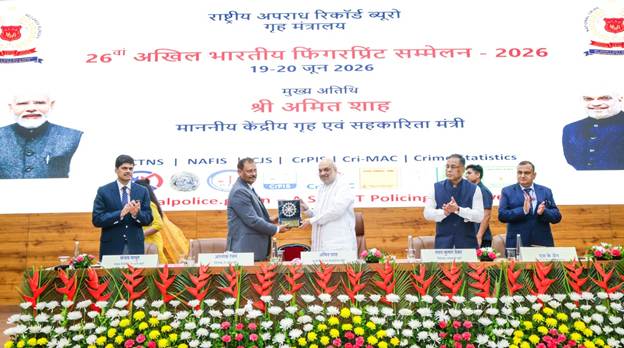
- 22 Jun 2026
In News:
The Union Home Minister launched the Abhigyan App in New Delhi to strengthen technology-driven policing and improve real-time access to criminal records for law enforcement agencies across the country.
What is the Abhigyan App?
The Abhigyan App is a centralized mobile platform developed by the National Crime Records Bureau (NCRB) to enable police personnel to access and utilize crime-related data efficiently in the field. It aims to enhance investigation, identification of criminals, and evidence-based policing by providing instant access to a nationwide database of criminal records.
The application forms part of the Government's broader initiative to modernize policing through digital technologies and integrated criminal information systems.
Key Features
The app enables field-level police personnel to securely access a vast repository of criminal records directly through their smartphones, reducing dependence on manual verification.
Its major features include:
- Real-time fingerprint identification linked to a centralized national database.
- Two-step authentication to ensure secure access.
- Fast identification of suspects with high portability and ease of use.
- Access to millions of criminal records from a single platform.
During the demonstration, fingerprints were successfully matched with the national database in approximately 35 seconds, enabling quicker identification during investigations.
Link with NAFIS
The Abhigyan App is integrated with the National Automated Fingerprint Identification System (NAFIS), India's centralized fingerprint database.
NAFIS stores the fingerprint records of accused persons, convicts, and prison inmates on a unified digital platform, enabling rapid identification and seamless sharing of fingerprint data among law enforcement agencies across the country.
National Crime Records Bureau (NCRB)
The National Crime Records Bureau (NCRB) was established in 1986 as the national repository of crime and criminal-related information. It functions under the Ministry of Home Affairs (MHA) and is headquartered in New Delhi.
The Bureau was established based on the recommendations of:
- Tandon Committee
- National Police Commission (1977–1981)
- Task Force of the Ministry of Home Affairs
NCRB is responsible for maintaining national crime databases, supporting criminal justice administration, and developing technology-driven policing solutions such as NAFIS and the Crime and Criminal Tracking Network & Systems (CCTNS).
BGP Hijacking
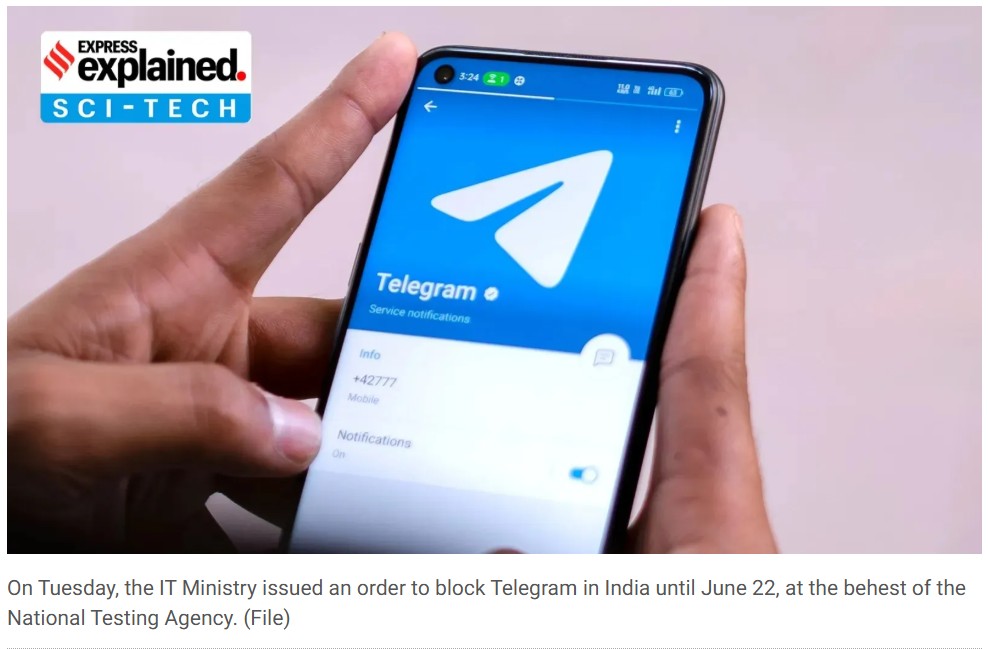
- 22 Jun 2026
In News:
Following the temporary blocking of Telegram in India, the platform's founder Pavel Durov alleged that its global accessibility was being affected through Border Gateway Protocol (BGP) hijacking, bringing renewed attention to one of the Internet's most significant routing vulnerabilities.
What is BGP Hijacking?
Border Gateway Protocol (BGP) Hijacking is a cyber incident in which Internet traffic is maliciously or accidentally redirected by falsely advertising ownership of IP address ranges. It exploits weaknesses in the Border Gateway Protocol (BGP), the protocol responsible for routing data between large networks across the Internet.
The Internet consists of thousands of independent networks called Autonomous Systems (AS), operated by Internet Service Providers (ISPs), telecom companies, cloud providers, and large organizations. These Autonomous Systems exchange routing information through BGP, allowing data to travel efficiently across the global Internet.
How Does BGP Hijacking Work?
BGP operates largely on a system of mutual trust, where Autonomous Systems accept routing announcements made by other networks.
During a BGP hijack, a rogue or misconfigured Autonomous System falsely announces that it has the best route to a particular IP address range. Since BGP generally prefers more specific IP prefixes or shorter routing paths, other networks may begin forwarding traffic through the rogue network instead of the legitimate destination.
As a result, Internet traffic intended for a genuine service is diverted, leading to disruption or unauthorized interception.
Key Features
BGP hijacking exploits several characteristics of Internet routing:
- Route Preference: BGP prioritizes more specific prefixes and shorter paths, making false advertisements highly effective.
- Traffic Blackholing: Diverted traffic may simply be discarded, resulting in denial of service and making websites or applications inaccessible.
- Man-in-the-Middle (MitM) Attacks: Instead of dropping traffic, attackers may intercept, monitor, or manipulate data before forwarding it to its intended destination.
- Rapid Global Propagation: Since Autonomous Systems continuously exchange routing information, a false routing announcement can spread globally within minutes, affecting users across multiple countries.
Implications
BGP hijacking poses a significant threat to the stability and security of the global Internet. It can cause widespread service disruptions, interrupt access to major websites and digital platforms, and create opportunities for cyber espionage and data theft. If intercepted traffic is not encrypted, attackers may obtain sensitive information such as login credentials and confidential communications. Such incidents also have implications for national cybersecurity, critical infrastructure protection, financial systems, and digital sovereignty.
Reciprocal Exchange of Logistics Agreement (RELOS)
- 22 Jun 2026
In News:
The India–Russia Reciprocal Exchange of Logistics Agreement (RELOS), also known as the Logistics Support Agreement (LSA), became operational in January 2026, strengthening defence cooperation by enabling reciprocal logistical support during agreed military activities.
What is RELOS?
The Reciprocal Exchange of Logistics Agreement (RELOS) is a bilateral logistics support agreement between India and Russia that establishes a standardized framework for the reciprocal use of each other's military bases, ports, and airfields for logistical support. It is a non-offensive administrative and technical arrangement intended to facilitate refuelling, replenishment, maintenance, and other logistical services during mutually agreed military engagements.
The agreement was signed on 18 February 2025 in Moscow and entered into force in January 2026.
Objectives
The primary objective of RELOS is to simplify logistical cooperation between the armed forces of both countries by replacing time-consuming case-by-case approvals with a standardized mechanism. This enhances operational efficiency, reduces administrative delays, and extends the operational reach of Indian and Russian naval and air assets.
Key Features
The agreement can be activated only during mutually agreed activities, including:
- Joint military exercises.
- Military training.
- Humanitarian Assistance and Disaster Relief (HADR) operations.
- Official port visits and naval deployments.
Under the agreement, both countries can access a wide range of logistical services such as:
- Fuel, petroleum, oils and lubricants (POL).
- Food, fresh water and accommodation.
- Transport and storage facilities.
- Medical assistance.
- Maintenance, repair, calibration and spare parts support.
A notable provision is the administrative ceiling of 3,000 military personnel, which merely facilitates logistical planning for large temporary deployments during exercises. It does not permit permanent deployment or stationing of troops.
Importantly, the agreement contains a strict non-basing clause, explicitly prohibiting the establishment of permanent military bases or long-term deployment of troops or military assets on each other's territory.
The agreement has an initial validity of five years, after which it may be reviewed or modified by mutual consent.
RBI Surplus Transfer to the Government & Economic Capital Framework (ECF)
- 21 Jun 2026
In News:
The Reserve Bank of India (RBI) approved a record surplus transfer of ?2.87 lakh crore to the Union Government for FY 2025–26, the highest ever, surpassing the previous record of ?2.11 lakh crore. The transfer has renewed debate on the RBI's expanding fiscal role, central bank independence, and fiscal federalism.
What is RBI Surplus Transfer?
- The Reserve Bank of India earns income from interest on government securities, foreign exchange reserves, liquidity management operations, and returns on its investments.
- After meeting its operational expenses and maintaining the prescribed risk buffers under the Economic Capital Framework (ECF), the remaining surplus is transferred to the Government of India as non-tax revenue.
- Traditionally, annual transfers ranged between ?30,000 crore and ?65,000 crore. However, following the adoption of the revised Economic Capital Framework in 2019, surplus transfers have increased substantially, reaching ?2.11 lakh crore in FY24 and ?2.87 lakh crore in FY26.
Economic Capital Framework (ECF)
- The Economic Capital Framework (ECF) was recommended by the Bimal Jalan Committee and adopted by the RBI in 2019. It provides a transparent and rule-based mechanism for determining the level of capital and risk buffers the RBI should maintain before transferring surplus to the government.
- The framework seeks to balance financial stability with the government's fiscal requirements by ensuring that the RBI retains adequate resources to absorb potential financial, monetary, and exchange rate risks.
Major Components of the ECF
|
Component |
Provision |
|
Contingent Risk Buffer (CRB) |
4.5%–7.5% of the RBI balance sheet to absorb monetary and financial stability risks. |
|
Contingency Fund (CF) |
5.5%–6.5% of the balance sheet to meet unforeseen losses; surplus beyond this can be transferred. |
|
Economic Capital (including CGRA) |
20.8%–25.4% of the balance sheet, covering capital, reserves, and revaluation balances. |
|
Review Cycle |
Every five years; first review undertaken in 2025. |
Why has the Surplus Increased?
The sharp increase reflects the rapid expansion of the RBI's balance sheet, which grew by 20.6% to ?91.97 lakh crore by March 2026. Higher income from foreign exchange reserve management, government securities, and gold and foreign asset rebalancing significantly boosted the central bank's earnings, enabling a larger surplus transfer while remaining within the ECF-prescribed risk buffer limits.
Significance
The record dividend strengthens the Union Government's fiscal position by providing substantial non-tax revenue, thereby supporting fiscal consolidation and reducing dependence on market borrowings. Lower government borrowing helps moderate Government Security (G-Sec) yields, easing financing costs across the economy. It also creates fiscal space to sustain capital expenditure on infrastructure while adhering to Fiscal Responsibility and Budget Management (FRBM) targets.
Energy Transition Index (ETI) 2026

- 21 Jun 2026
In News:
India improved its position by two places to rank 70th in the Energy Transition Index (ETI) 2026, released by the World Economic Forum (WEF), reflecting progress in balancing energy security, sustainability, and affordability while advancing towards a cleaner energy system.
What is the Energy Transition Index (ETI)?
The Energy Transition Index (ETI) is an annual global assessment published by the World Economic Forum (WEF) to evaluate how effectively countries are progressing towards secure, sustainable, equitable, and resilient energy systems. Besides measuring the current performance of a country's energy system, the index also assesses the readiness of its policy, financial, institutional, and infrastructure ecosystem to support the energy transition.
The ETI score is calculated on a 0–100 scale, where 100 represents the highest level of performance.
Methodology
The index is based on two broad sub-indices:
- System Performance (60%), which assesses the current energy system across three equally weighted dimensions:
- Energy Security
- Environmental Sustainability
- Energy Equity (Affordability and Access)
- Transition Readiness (40%), which evaluates a country's preparedness to accelerate the energy transition through:
- Core Enablers: Regulation, political commitment, finance and investment.
- Enabling Factors: Innovation, infrastructure, education, and human capital.
Key Findings of ETI 2026
The Nordic countries continued to dominate the rankings, with Sweden, Finland, and Denmark retaining the top three positions globally owing to their advanced clean energy systems and supportive policy frameworks.
Among major economies, Singapore registered one of the largest improvements by climbing 10 places to 42nd, driven by stronger regulatory reforms and political commitment towards clean energy.
Six G20 economies featured among the global top twenty:
- Germany – 9th
- France – 10th
- United Kingdom – 11th
- China – 14th
- Brazil – 17th
- United States – 19th
India improved its ranking from 72nd to 70th, reflecting gradual progress in expanding renewable energy, improving energy access, and strengthening the policy framework supporting the clean energy transition.
Drunix Platform
- 21 Jun 2026
In News:
The National Payments Corporation of India (NPCI) has launched Drunix, an enterprise-grade Distributed Ledger Technology (DLT) platform to support large-scale deployment of blockchain-based applications, digital assets, and tokenization ecosystems.
What is Drunix?
Drunix is an enterprise-grade private blockchain framework developed by NPCI to enable organizations to build, deploy, and scale tokenization platforms, digital asset ecosystems, and multi-organization blockchain networks.
Built as a high-performance enhanced fork of Hyperledger Fabric, Drunix is designed to deliver high scalability, low latency, and optimized performance, making it suitable for enterprise applications as well as public digital infrastructure. The platform aims to facilitate secure, interoperable, and large-scale blockchain adoption across sectors.
Key Features
Drunix has been developed with a focus on enterprise deployment and offers:
- High scalability for large-volume transactions and enterprise networks.
- Support for tokenization of digital and real-world assets.
- Creation of multi-organization blockchain ecosystems with secure data sharing.
- Optimized performance for public infrastructure and financial applications.
- Enterprise-grade security and interoperability.
- Built on an enhanced version of Hyperledger Fabric, an open-source blockchain framework developed under the Linux Foundation.
What is Blockchain Technology?
Blockchain, also known as Distributed Ledger Technology (DLT), is a decentralized digital ledger that records transactions across multiple computers, ensuring transparency, security, and tamper resistance without relying on a central authority.
Instead of maintaining a single centralized database, every participating node maintains a synchronized copy of the ledger, making records highly secure and verifiable.
Key Features of Blockchain
- Distributed Ledger: Data is stored simultaneously across multiple nodes in a peer-to-peer network.
- Immutability: Once recorded, data cannot be altered easily due to cryptographic hashing.
- Security: Transactions are protected using cryptography, hashing, and digital signatures.
- Consensus Mechanism: Transactions are validated only after agreement among participating nodes.
- Decentralization: No single entity exercises complete control over the network.
The Dancing Girl of Mohenjo-daro

- 21 Jun 2026
In News:
The National Council of Educational Research and Training (NCERT) announced that it will replace a retouched image of the iconic 'Dancing Girl' of Mohenjo-daro in its new Class 9 Art textbook, following criticism from historians and archaeologists regarding the alteration of a significant cultural artifact.
About the Dancing Girl of Mohenjo-daro
The Dancing Girl is one of the finest surviving examples of Indus Valley (Harappan) art and among the most celebrated archaeological discoveries from the Bronze Age. The bronze statuette, measuring about 10.5 cm (4 inches) in height, depicts a slender young female figure and is regarded as an enduring symbol of the artistic excellence and metallurgical skills of the Harappan Civilization.
The figurine was discovered in 1926 during excavations at Mohenjo-daro (present-day Sindh, Pakistan) by John Marshall, who named it the "Dancing Girl" because its posture resembled that of contemporary nautch dancers. It is generally dated to around 2500 BCE (approximately 2700–2100 BCE).
Today, the original artifact is preserved in the National Museum, New Delhi.
Key Features
The sculpture is notable for its remarkable realism and artistic sophistication.
Its distinctive features include:
- A natural contrapposto posture, with body weight resting mainly on one leg, giving the figure a dynamic and lifelike appearance.
- The right hand is placed on the hip, while the left arm hangs freely by the side.
- The left arm carries about 24 bangles, whereas the right arm bears only four bangles and a bracelet, reflecting asymmetrical ornamentation.
- A cowry-shell necklace adorns the neck.
- Hair is arranged in a coiled bun at the back of the head.
- The upward-tilted face conveys confidence and individuality.
Artistic and Historical Significance
The statuette is an outstanding example of the lost-wax (cire perdue) casting technique, demonstrating the advanced metallurgical knowledge of the Harappans. Crafted from a copper-tin bronze alloy, it reflects sophisticated understanding of alloy preparation and bronze casting.
Unlike the majority of Harappan human figurines, which were made of terracotta, the Dancing Girl is a free-standing bronze sculpture, making it unique within the corpus of Indus Valley art.
Although traditionally identified as a dancer, scholars have also interpreted the figure as representing a warrior, a young woman, or an individual of particular social or ethnic identity, indicating that its precise cultural significance remains open to interpretation.
Bharat Climate Observation Network
- 21 Jun 2026
In News:
The Indian Institute of Tropical Meteorology (IITM), Pune and the Aryabhatta Research Institute of Observational Sciences (ARIES), Nainital have signed a long-term Memorandum of Understanding (MoU) to establish a climate observation station in the Himalayan region under the Bharat Climate Observation Network (BCON).
What is the Bharat Climate Observation Network (BCON)?
The Bharat Climate Observation Network (BCON) is a national climate observation initiativeconceptualised and implemented by the Indian Institute of Tropical Meteorology (IITM) under the Ministry of Earth Sciences (MoES). It aims to establish a high-precision, long-term climate monitoring network across India to generate reliable observational data for climate research, modelling, and policymaking.
The proposed Himalayan observation station will strengthen climate monitoring in one of the world's most climate-sensitive regions and improve understanding of mountain ecosystems and regional climate variability.
Key Functions
BCON is designed to create a comprehensive observational framework by monitoring multiple components of the Earth's climate system. It will:
- Monitor meteorological parameters such as temperature, rainfall, humidity, wind, and pressure.
- Measure climate-active trace gases, including greenhouse gases (GHGs) and Short-Lived Climate Forcers (SLCFs).
- Observe atmospheric chemistry and soil moisture, enabling a better understanding of climate processes.
- Develop a national climate database for detecting long-term climate trends and supporting evidence-based policymaking.
Significance
The high-quality datasets generated through BCON will serve as an important scientific resource for climate change research, enabling more accurate assessment of India's changing climate.
The network will also provide critical observational data for the validation and benchmarking of Earth System Models (ESMs), including India's first indigenous Earth System Model (IITM-ESM). Improved model validation will enhance simulations of the Indian climate, strengthen future climate projections, and support disaster risk reduction, climate adaptation, and sustainable development planning.
The establishment of observation stations in ecologically sensitive regions such as the Himalayas is particularly significant, as these regions are highly vulnerable to climate change and influence India's monsoon, river systems, and water security.
Order of the White Double Cross, 1st Class

- 20 Jun 2026
In News:
The Prime Minister of India was conferred The Order of the White Double Cross, First Class, the highest civilian state honour of the Slovak Republic, in recognition of his exceptional contribution to strengthening India–Slovakia bilateral relations and promoting mutual cooperation.
About the Order of the White Double Cross
The Order of the White Double Cross (Rad Bielehodvojkríža) is the highest state decoration of the Slovak Republic, awarded primarily to foreign nationals who have rendered outstanding services in strengthening relations between Slovakia and their home country, or who have significantly enhanced the international standing and interests of Slovakia.
The award was instituted on 1 March 1994, shortly after the peaceful dissolution of Czechoslovakia (popularly known as the Velvet Divorce) in 1993, which resulted in the creation of the independent Slovak Republic.
Key Features
- The Order is divided into civil and military divisions and comprises three classes, with the First Class being the highest and most prestigious distinction.
- The decoration is conferred exclusively by the President of the Slovak Republic, generally during state visits or on the recommendation of the Slovak government.
- Its insignia prominently features the White Double Cross, the central symbol of Slovakia's national coat of arms, placed on a red enamel background and encircled by a golden laurel wreath, symbolisinghonour and achievement.
Significance
The conferment of Slovakia's highest state honour reflects the growing strategic partnership between India and Slovakia. It recognizes India's expanding engagement with Central Europe and underscores cooperation in areas such as trade, defence, technology, innovation, and multilateral diplomacy. The award also highlights the importance Slovakia attaches to strengthening bilateral ties with India.
Major State Honours Conferred on the Prime Minister of India (2026)
|
Country |
Highest State Honour |
|
Slovak Republic |
The Order of the White Double Cross, First Class |
|
Dominica |
Dominica Award of Honour |
|
Guyana |
The Order of Excellence |
|
Barbados |
Honorary Freedom of Barbados |
Planetary Climate Vital Signs Report 2026
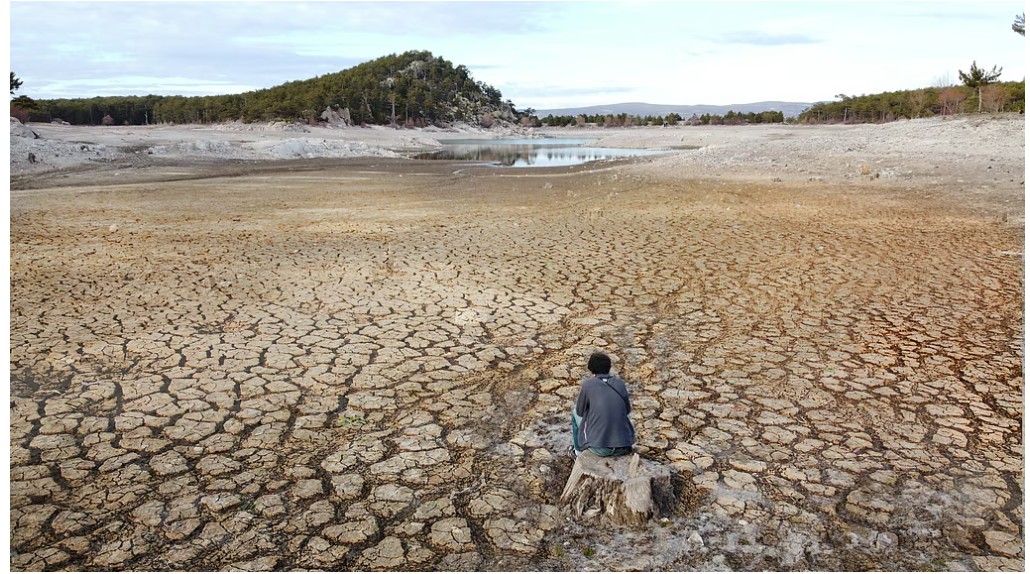
- 20 Jun 2026
In News:
The Planetary Climate Vital Signs Report 2026, released during the Bonn Climate Change Conference (SB64), warns that all major planetary climate indicators have deteriorated since the IPCC Sixth Assessment Report (AR6), indicating an accelerating global climate crisis.
What is the Planetary Climate Vital Signs Report 2026?
- The Planetary Climate Vital Signs Report 2026 is a global scientific assessment published in the journal Earth System Science Data by nearly 70 scientists from 17 countries.
- It provides updated measurements of key climate indicators between successive IPCC assessment cycles, enabling policymakers to monitor real-time changes in global warming, greenhouse gas emissions, ocean warming, and climate extremes.
- Unlike the periodic IPCC assessments, the report serves as an interim scientific update, tracking the changing state of the Earth's climate system.
Key Findings
The report concludes that all 11 major climate indicators assessed have worsened since the IPCC AR6, confirming that climate change is accelerating.
Among the most significant findings:
- Marine heatwaves recorded the fastest deterioration, increasing by 1%, making them the most rapidly worsening climate indicator.
- Earth's Energy Imbalance (EEI) increased by 8%, indicating greater accumulation of heat within the Earth's climate system.
- Human-induced global warming reached 1.37°C above pre-industrial levels in 2025, while maximum daily temperatures continued to rise.
- Global greenhouse gas emissions reached a record 58.8 billion tonnes of CO?-equivalent, driven primarily by fossil fuel combustion.
- At the present rate of warming, the world could breach the Paris Agreement's 1.5°C threshold within approximately four years.
- During 2016–2025, average land temperatures increased by 1.81°C, while ocean temperatures rose by 1.03°C, reflecting the growing influence of anthropogenic climate change.
- The Indian Ocean is projected to experience 220–250 marine heatwave days annually by 2100, compared to about 20 days historically, indicating a profound shift in oceanic conditions.
Implications
The report warns that rising temperatures will intensify heatwaves, droughts, floods, wildfires, and extreme weather events, increasing socio-economic and ecological vulnerabilities worldwide.
Agriculture and food security are expected to face growing challenges due to declining crop productivity, altered rainfall patterns, and increased climate variability. Persistent marine heatwaves threaten coral reefs, fisheries, marine biodiversity, and coastal livelihoods, while the warming Indian Ocean could disrupt the South Asian monsoon, intensify tropical cyclones, reduce water security, and increase heat stress across the Indian subcontinent.
Turquoise Nexus Initiative
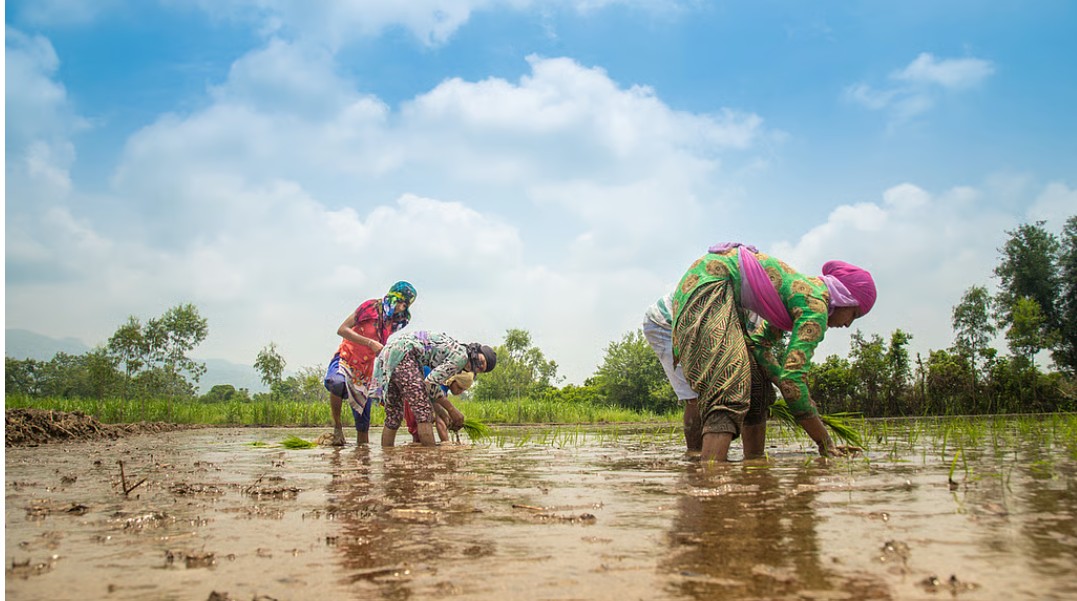
- 20 Jun 2026
In News:
Turkey's COP31 Presidency (2026) and the Food and Agriculture Organization (FAO) have launched the Turquoise Nexus Initiative (TNI) to integrate food security, water management, and climate adaptation into national climate action plans and strengthen climate resilience in the agriculture sector.
What is the Turquoise Nexus Initiative (TNI)?
The Turquoise Nexus Initiative (TNI) is a global initiative aimed at promoting an integrated food–water–climate nexus approach by incorporating food security, sustainable water management, and climate adaptation into countries' Nationally Determined Contributions (NDCs) under the Paris Agreement.
Jointly unveiled by Turkey's COP31 Presidency and the Food and Agriculture Organization (FAO), the initiative seeks to support developing countries in designing farmer-centric climate strategies, mobilizing climate finance, and building resilient agrifood systems.
The initiative has been proposed under the Food and Agriculture for Sustainable Transformation (FAST) Partnership, making it part of the broader global effort to strengthen the role of agriculture in climate action.
Objectives
The initiative seeks to:
- Integrate food security, water resources, and climate adaptation into national climate policies.
- Align Nationally Determined Contributions (NDCs) with sustainable agricultural development.
- Promote farmer-inclusive climate action.
- Improve access to climate finance for agriculture and water resilience.
- Strengthen the resilience of agrifood systems against climate change.
FAST Partnership
The Food and Agriculture for Sustainable Transformation (FAST) Partnership is a multi-stakeholder global initiative launched by the COP27 Presidency in 2022 at Sharm el-Sheikh, Egypt.
It aims to accelerate the transformation of agriculture and food systems by 2030 while contributing to climate mitigation, adaptation, food security, and sustainable development. FAST has emerged as one of the most consistent COP-to-COP mechanisms focusing exclusively on agrifood systems within the UN climate process.
Its work is built around three pillars:
- Access to Finance: Enhancing countries' capacity to mobilize climate finance and investment for agriculture.
- Knowledge and Capacity: Developing analytical tools, voluntary guidelines, and strengthening institutional capacities.
- Policy Support and Dialogue: Mainstreaming agriculture and food systems into national and international climate policies.
Significance
The Turquoise Nexus Initiative recognizes that food security, water security, and climate resilience are deeply interconnected. By integrating these sectors into national climate planning, it seeks to improve policy coherence, enhance adaptation efforts, strengthen farmer livelihoods, and facilitate greater climate finance for developing countries. The initiative also complements global efforts under the Paris Agreement, Sustainable Development Goals (SDGs), and the UNFCCC to build climate-resilient and sustainable agrifood systems.
Commissioning of INS Dunagiri, INS Sanshodhak& INS Agray

- 20 Jun 2026
In News:
The Indian Navy is set to commission three indigenously built frontline platforms—INS Dunagiri, INS Sanshodhak, and INS Agray—at Kolkata, reinforcing India's indigenous defence manufacturing capabilities and strengthening maritime security under the vision of Aatmanirbhar Bharat.
Overview
The commissioning of these three warships marks another milestone in India's indigenous shipbuilding programme. Each platform has been designed for a specialised role, ranging from multi-role combat operations and anti-submarine warfare to hydrographic surveys, thereby enhancing the Navy's operational readiness across the Indian Ocean Region (IOR).
INS Dunagiri
INS Dunagiri is the fifth Project 17A stealth frigate, designed by the Warship Design Bureau (WDB) of the Indian Navy and built by Garden Reach Shipbuilders & Engineers Ltd. (GRSE), Kolkata.
As an advanced multi-role stealth warship, it is equipped with BrahMos supersonic surface-to-surface missiles, the Medium Range Surface-to-Air Missile (MRSAM) system, and modern sensors capable of undertaking anti-air, anti-surface, and anti-submarine warfare. The frigate significantly enhances the Navy's blue-water combat capability and fleet defence.
INS Sanshodhak
INS Sanshodhak is the fourth Survey Vessel (Large) inducted into the Indian Navy. It is designed to conduct coastal and deep-sea hydrographic surveys, besides collecting oceanographic and geophysical data for both defence and civilian purposes.
The vessel is equipped with advanced survey technologies, including Autonomous Underwater Vehicles (AUVs) and Remotely Operated Vehicles (ROVs), enabling accurate seabed mapping, navigation support, and maritime infrastructure planning.
INS Agray
INS Agray is the fourth Arnala-class Anti-Submarine Warfare Shallow Water Craft (ASW-SWC), specifically designed for operations in shallow coastal and littoral waters.
The vessel is equipped with lightweight torpedoes, indigenous anti-submarine rocket launchers, and shallow-water sonar systems to detect and neutralize underwater threats. It will play an important role in coastal defence, maritime surveillance, and anti-submarine operations.
Etalin Hydroelectric Project
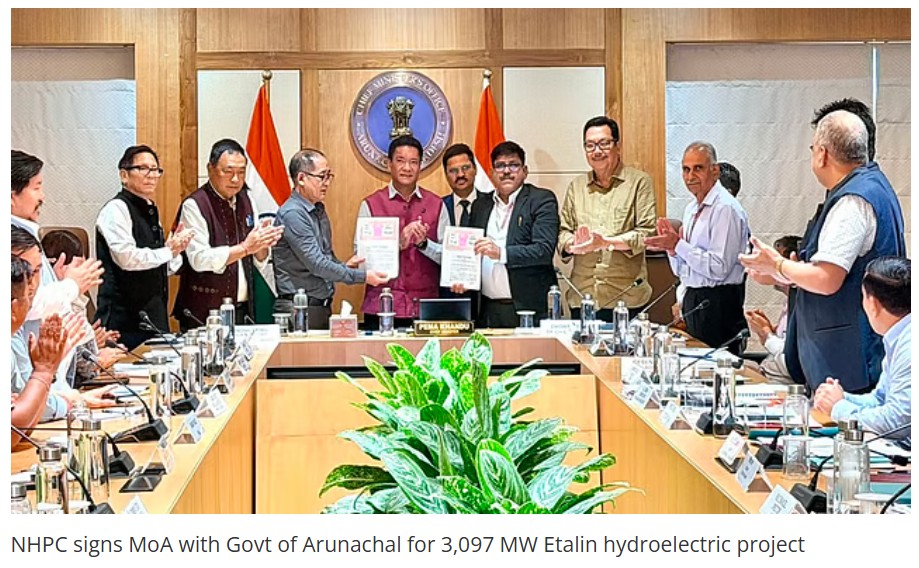
- 20 Jun 2026
In News:
NHPC Limited has signed a Memorandum of Agreement (MoA) with the Government of Arunachal Pradesh for the development of the 3,097 MW Etalin Hydroelectric Project, one of India's largest proposed hydropower projects.
About the Etalin Hydroelectric Project
The Etalin Hydroelectric Project is a 3,097 MW hydropower project proposed in the Dibang Valley district of Arunachal Pradesh. It will be constructed on the Dri and Talo rivers, both tributaries of the Dibang River, and is among the largest hydropower projects in India in terms of installed capacity.
The project will be developed as two run-of-the-river (RoR) hydroelectric schemes, involving the construction of concrete gravity dams on the Dri and Talo rivers. Water from both reservoirs will be diverted to an underground powerhouse located near the confluence of the two rivers, close to Etalin village.
The project is expected to generate approximately 12,752 GWh (12.75 BU) of electricity annually, contributing significantly to India's renewable energy capacity and energy security.
Implementation Framework
The project is being implemented by NHPC Limited (formerly National Hydroelectric Power Corporation) under the Build, Own, Operate and Transfer (BOOT) model.
Under the agreement:
- NHPC will develop, own, and operate the project.
- The lease period will be 40 years from the Commercial Operation Date (COD).
- After completion of the lease period, the project will be transferred to the Government of Arunachal Pradesh.
Environmental and Social Significance
The project is located within the Dibang Valley, one of the richest biogeographical regions of the Himalayan biodiversity zone and part of a globally recognisedmega-biodiversity hotspot. The region supports rich flora and fauna and is ecologically sensitive.
The area is predominantly inhabited by the Idu Mishmi, a Particularly Vulnerable Tribal Group (PVTG) of Arunachal Pradesh, whose traditional livelihoods and cultural practices are closely linked to the surrounding forests and river ecosystems.
Given its ecological sensitivity, the project has attracted attention regarding biodiversity conservation, forest diversion, and sustainable development, highlighting the need to balance renewable energy generation with environmental protection and tribal rights.
Exercise Khaan Quest 2026
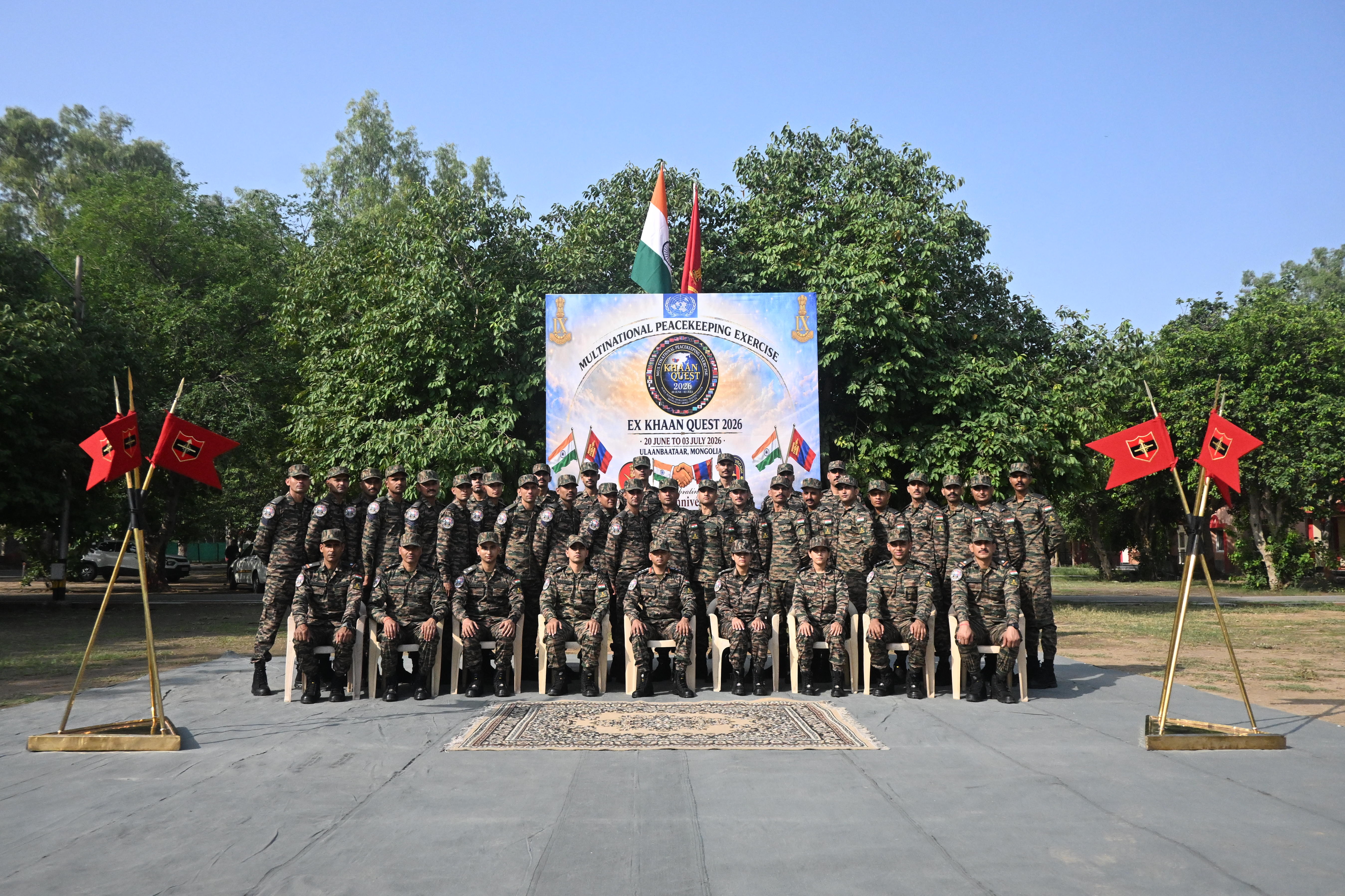
- 19 Jun 2026
In News:
An Indian Army contingent is participating in Exercise Khaan Quest 2026, a multinational peacekeeping exercise being held in Mongolia from 20 June to 3 July 2026.
About Exercise Khaan Quest
Exercise Khaan Quest is an annual multinational joint military exercise hosted by the Mongolian Armed Forces and co-sponsored by the U.S. Indo-Pacific Command (formerly U.S. Pacific Command). The exercise aims to enhance interoperability, coordination, and cooperation among participating armed forces during United Nations peacekeeping operations.
It is conducted in accordance with Chapter VII of the United Nations Charter, which deals with collective measures to maintain or restore international peace and security.
Background
- The exercise was launched in 2003 as a bilateral exercise between the United States and Mongolia.
- From 2006 onwards, it evolved into a multinational peacekeeping exercise.
- The 2026 edition is the 23rd iteration of the exercise.
Exercise Khaan Quest 2026
- Venue: Five Hills Training Area, Ulaanbaatar, Mongolia.
- Duration: 20 June – 3 July 2026.
- Indian Contingent:40 personnel, including troops from a battalion of the JAT Regiment along with personnel from other Arms and Services.
Major Areas of Training
The exercise focuses on United Nations peace support operations through:
- Joint operational planning.
- Static and mobile checkpoint operations.
- Cordon and search operations.
- Area domination patrols.
- Evacuation of civilians from hostile areas.
- Counter-Improvised Explosive Device (Counter-IED) drills.
- Combat first aid.
- Casualty evacuation (CASEVAC).
The participating countries also exchange best practices, tactics, techniques, and procedures (TTPs) for multinational peacekeeping operations.
Korea District's '5% Model' for Groundwater Conservation
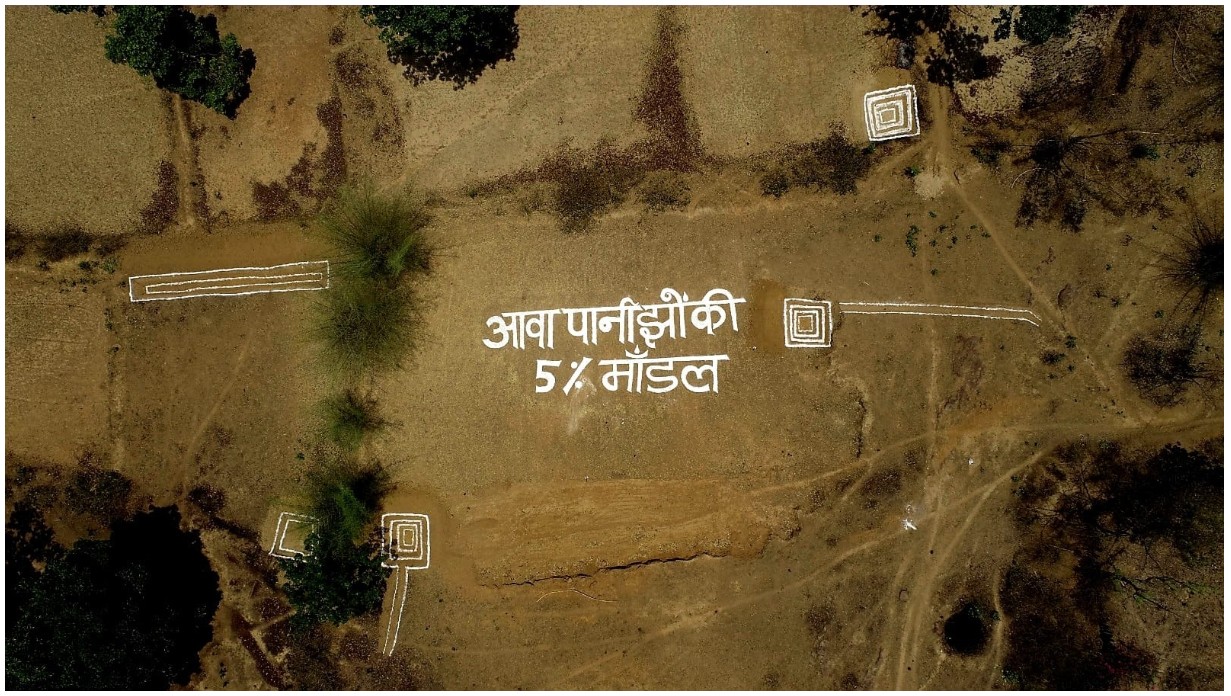
- 19 Jun 2026
In News:
The Korea district of Chhattisgarh has emerged as a model for community-led groundwater conservation through its innovative '5% Model', implemented under the Jal Sanchay Jan Bhagidari initiative. The model has significantly improved groundwater levels while strengthening climate resilience and water security.
What is the '5% Model'?
The '5% Model' is a participatory water conservation initiative that encourages farmers to reserve 5% of their agricultural land for constructing soak pits. These structures facilitate rainwater infiltration, thereby:
- Recharging groundwater aquifers.
- Improving soil moisture.
- Reducing surface runoff.
- Enhancing water availability during dry periods.
The initiative demonstrates how community participation can transform decentralized rainwater harvesting into a large-scale water conservation movement.
Key Features
- Community Participation: The number of soak pits increased from 2,000 to nearly 30,000 within one year across farms, kitchen gardens, and residential backyards.
- '30–40 Model': Construction of 30 ft × 40 ft contour trenches on barren land to capture and retain rainwater runoff.
- Funding: Implemented largely through the Mahatma Gandhi National Rural Employment Guarantee Scheme (MGNREGS), locally branded as the Viksit Bharat–Guarantee for Rozgar and Ajeevika Mission (Gramin).
- Community Mobilisation:
- Neer Nayikas (women volunteers) promote household-level awareness on water conservation.
- Jal Doots (youth volunteers) undertake watershed mapping, desilting activities, and awareness campaigns through street plays.
- Local Campaign: Popularly known as "Aawa Paani Jhonki", meaning "Let's Catch the Rain" in the local Sargujia dialect.
Impact
The initiative has produced measurable improvements in groundwater availability.
According to the Central Ground Water Board (CGWB):
- Post-monsoon groundwater level improved from 6.6 metres Below Ground Level (BGL) in 2024 to 3.89 metres BGL in 2025, indicating substantial groundwater recharge.
The improved groundwater availability has also supported the implementation of the Jal Jeevan Mission, particularly in villages where drinking water supply had earlier been constrained due to depleted aquifers.
Significance
The Korea model highlights the importance of community participation, rainwater harvesting, and watershed management in addressing water scarcity. It demonstrates an effective convergence of MGNREGS, groundwater conservation, and climate adaptation while contributing to sustainable agriculture, water security, and rural livelihoods. The model offers a scalable framework for other drought-prone regions seeking to enhance groundwater recharge through low-cost, decentralized interventions.
Amoebic Meningoencephalitis
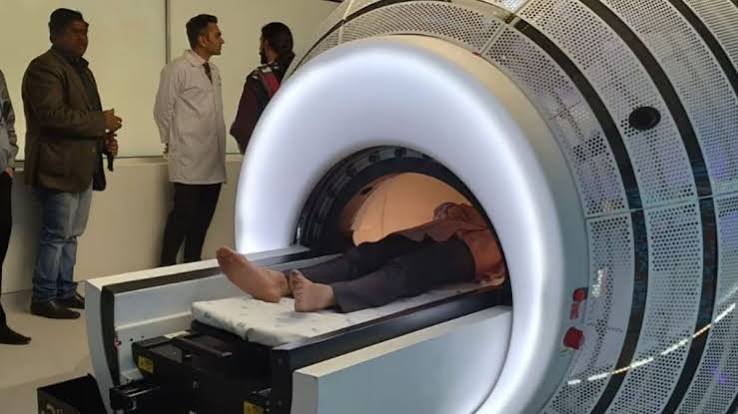
- 19 Jun 2026
In News:
Kerala has reported a sharp rise in Amoebic Meningoencephalitis (AM), a rare but often fatal brain infection caused by free-living amoebae present in contaminated water. While India had reported only around two dozen cases of Primary Amoebic Meningoencephalitis (PAM) between 1971 and 2023, multiple cases and deaths in 2026 have raised concerns regarding water quality, climate change, and public health preparedness.
What is Amoebic Meningoencephalitis?
Amoebic Meningoencephalitis is a severe infection of the brain and central nervous system caused by free-living amoebae naturally found in warm freshwater, soil, and dust. The disease occurs when contaminated water enters the nose, allowing the amoebae to migrate to the brain through the olfactory nerve. It is not transmitted through drinking contaminated water or from person to person.
Types
There are two major forms:
- Primary Amoebic Meningoencephalitis (PAM):
- Caused by Naegleria fowleri, popularly known as the "brain-eating amoeba."
- Characterized by rapid progression and very high fatality.
- Granulomatous Amoebic Encephalitis (GAE):
- Caused mainly by Acanthamoeba species.
- Develops more gradually and predominantly affects elderly and immunocompromised individuals.
Recent cases in Kerala indicate a shift from PAM to GAE, with Acanthamoeba emerging as the dominant pathogen.
Risk Factors
Several environmental and socio-economic factors contribute to the increasing incidence:
- Warm tropical climate favouring amoeba growth.
- Poor water quality and contamination of freshwater bodies.
- High coliform bacterial contamination, providing food for Acanthamoeba.
- Stagnant and vegetated water bodies.
- Contamination of wells due to the proximity of toilet pits in densely populated areas.
Transmission and Symptoms
Transmission occurs when contaminated water enters the nose during activities such as swimming, diving, or bathing in freshwater bodies.
Symptoms include:
- Fever
- Severe headache
- Nausea and vomiting
- Neck stiffness
- Seizures
- Hallucinations
- Coma
Without prompt treatment, the infection may rapidly become fatal.
Kerala's Response
In 2024, Kerala became the first Indian State to formulate a dedicated Standard Operating Procedure (SOP) and treatment protocol for Amoebic Meningoencephalitis. The protocol focuses on:
- Early diagnosis.
- Rapid initiation of treatment.
- Standardized clinical management.
- Improved survival outcomes through coordinated public health response.
Smart Seed Coating Technology
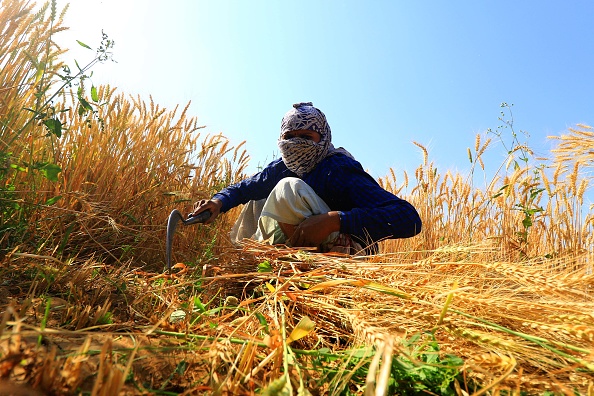
- 19 Jun 2026
In News:
The ICAR–Indian Institute of Oilseeds Research (ICAR-IIOR), Hyderabad has developed an innovative Smart Seed Coating Technology to improve seed germination, enhance crop productivity, and strengthen climate resilience, particularly in rainfed agriculture.
What is Smart Seed Coating Technology?
Smart Seed Coating Technology is a biopolymer-based seed enhancement technology that forms a biodegradable multifunctional coating around seeds. Developed by ICAR-IIOR, it acts as a carrier for essential biological and nutritional inputs, ensuring their targeted delivery at the seed-soil interface during the initial stages of crop growth.
The technology is designed to improve seed germination, seedling vigour, nutrient-use efficiency, and stress tolerance, thereby enhancing overall crop establishment and productivity.
Key Features
- Utilisesbiodegradable biopolymers to create a protective multifunctional coating around seeds.
- Acts as a delivery platform for:
- Beneficial microorganisms
- Nutrients and micronutrients
- Crop protection agents
- Creates a favourablemicroenvironment around the seed, promoting:
- Faster germination
- Better root development
- Stronger seedling growth
- Enhanced tolerance to biotic and abiotic stresses
- Can be customized for a wide range of crops, including:
- Cereals
- Millets
- Pulses
- Vegetables
- Horticultural crops
- Particularly suitable for rainfed farming systems.
52nd G7 Summit Outreach Session (2026)
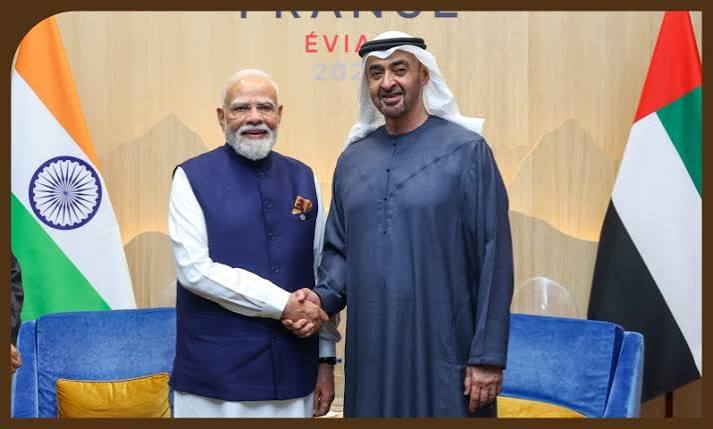
- 19 Jun 2026
In News:
The Prime Minister of India participated in the 52nd G7 Summit Outreach Session held at Évian, France, under the theme "Forging New Partnerships and Rebuilding International Solidarity." India used the platform to advocate the interests of the Global South, address the global trust deficit, and strengthen bilateral ties with Canada, the United Kingdom, and the United Arab Emirates (UAE).
India's Key Message at the G7 Outreach Session
- India emphasized that the world today faces a deficit of trust rather than a deficit of resources and called for rebuilding international cooperation based on mutual trust, equality, and shared responsibility.
- Highlighting the aspirations of the Global South, India argued that developing countries seek equitable participation in global governance rather than a traditional donor-recipient relationship.
- India also showcased its development partnership with Africa, underlining the principles of South-South Cooperation and demand-driven development assistance.
Major Bilateral Outcomes
India–Canada
- Both countries agreed to expedite negotiations on the Comprehensive Economic Partnership Agreement (CEPA) with the objective of concluding it by 2026.
- Negotiations will begin on a General Security of Information Agreement (GSOIA) to strengthen defence and intelligence cooperation.
- India supported Canada's candidature as a Dialogue Partner of the Indian Ocean Rim Association (IORA).
- The two sides advanced cooperation in civil nuclear energy, including a CAD 2.6 billion uranium supply agreement between Cameco and India's Department of Atomic Energy for the period 2027–2035.
- Announcement of "Raisina Americas", a Track-1.5 geopolitical dialogue platform.
India–United Kingdom
- Leaders reviewed progress under the India–UK Vision 2035 roadmap.
- Reaffirmed commitment to early implementation of the Comprehensive Economic and Trade Agreement (CETA), with emphasis on technology, defence, education and economic cooperation.
India–United Arab Emirates (UAE)
- Both countries emphasized ensuring free and uninterrupted navigation through the Strait of Hormuz, given the evolving security situation in West Asia.
- India invited the UAE President to participate in the 18th BRICS Summit, to be hosted by India later in 2026.
About the G7
- The Group of Seven (G7) is an informal grouping of the world's major advanced economies.
- Originally established as the G6 in 1975 following the 1973 oil crisis, it comprised France, Germany, Italy, Japan, the United Kingdom, and the United States. Canada joined in 1976, creating the G7. Russia joined in 1998, forming the G8, but its membership was suspended in 2014 following the annexation of Crimea.
- The European Union (EU) participates as a non-enumerated member, represented by the Presidents of the European Council and the European Commission.
- Unlike organizations such as the United Nations or NATO, the G7 is an informal forum with no treaty, permanent secretariat, or headquarters. The presidency rotates annually among member countries, which host the summit and determine the agenda.
- Although G7 countries account for only about 10% of the global population, they contribute approximately 43% of the world's nominal GDP, making the grouping highly influential in global economic governance. To broaden representation, G7 presidencies invite countries such as India, Brazil, and South Africa to participate in Outreach Sessions.
Joint Crediting Mechanism

- 18 Jun 2026
In News:
India and Japan have adopted the Rules of Implementation for the Joint Crediting Mechanism (JCM) under Article 6.2 of the Paris Agreement, operationalising bilateral cooperation on carbon markets and low-carbon technologies.
What is the Joint Crediting Mechanism (JCM)?
- The Joint Crediting Mechanism (JCM) is a bilateral carbon credit mechanism proposed by the Government of Japan and officially launched in 2013.
- It promotes the deployment of advanced decarbonisation technologies, products, systems, and infrastructure in partner countries through Japanese investment, while contributing to sustainable development and greenhouse gas (GHG) emission reductions.
- Implemented in accordance with Article 6 of the Paris Agreement, the mechanism enables participating countries to generate and share carbon credits from verified emission reduction projects, thereby supporting the achievement of their respective Nationally Determined Contributions (NDCs).
- India is among the 31 partner countries participating in the JCM.
How does the JCM Work?
Under the mechanism:
- Japan provides financial support and advanced low-carbon technologies to partner countries.
- Emission reduction projects are jointly implemented and monitored.
- Verified reductions in greenhouse gas emissions generate carbon credits.
- The credits are shared between Japan and the partner country based on agreed rules, helping both countries achieve their NDC commitments under the Paris Agreement.
The JCM functions within the framework of the United Nations Framework Convention on Climate Change (UNFCCC) and complements existing international carbon market mechanisms such as the Clean Development Mechanism (CDM) and Joint Implementation (JI).
Priority Sectors
The India–Japan JCM focuses on sectors with significant decarbonisation potential, including:
- Renewable energy with energy storage
- Sustainable Aviation Fuel (SAF)
- Compressed Biogas (CBG)
- Green Hydrogen
- Green Ammonia
- Hard-to-abate industrial sectors
Wind Turbine Supply Chain Management Portal
- 18 Jun 2026
In News:
The Ministry of New and Renewable Energy (MNRE) has launched India's first Wind Turbine Supply Chain Management Portal to strengthen the domestic wind energy manufacturing ecosystem, improve supply chain transparency, and support India's clean energy transition.
About the Wind Turbine Supply Chain Management Portal
The Wind Turbine Supply Chain Management Portal is India's first dedicated digital platform developed to streamline the wind energy supply chain by connecting manufacturers, suppliers, and other stakeholders on a common platform. It has been developed under the aegis of the Ministry of New and Renewable Energy (MNRE) with the support of the Indian Wind Turbine Manufacturers Association (IWTMA).
The portal aims to improve supply chain efficiency, enhance domestic manufacturing capabilities, reduce import dependence, and strengthen India's position as a global hub for wind energy equipment.
Key Features
- Supply Chain Visibility: Provides end-to-end visibility across the wind energy manufacturing ecosystem.
- ALMM Integration: Facilitates compliance with the Approved List of Models and Manufacturers (ALMM) framework, promoting domestic sourcing.
- Supplier Discovery: Enables identification and qualification of component suppliers.
- Stakeholder Collaboration: Improves coordination among manufacturers, suppliers, developers, and policymakers.
- Export Readiness: Enhances the competitiveness of Indian manufacturers in global markets by strengthening supply chain resilience.
What is Wind Energy?
Wind energy is a renewable source of energy that converts the kinetic energy of moving air into electricity using wind turbines. The rotating blades of a wind turbine drive a generator, which produces electrical energy without emitting greenhouse gases during operation.
Wind Energy Potential in India
India possesses significant wind energy potential, particularly along its western and southern coasts.
Major wind energy-producing and high-potential States include:
- Gujarat (highest estimated potential)
- Tamil Nadu
- Karnataka
- Rajasthan
- Maharashtra
- Telangana
- Madhya Pradesh
Artemis III Mission

- 18 Jun 2026
In News:
NASA has announced the four-member crew and revised mission profile for Artemis III, which is now scheduled for 2027 as a Low Earth Orbit (LEO) mission to validate critical technologies required for future human lunar landings. The first crewed lunar landing under the Artemis programme is now planned under Artemis IV (2028).
What is Artemis III?
Artemis III is part of NASA's Artemis Programme, which aims to establish a sustained human presence on the Moon and serve as a stepping stone for future human missions to Mars.
Originally conceived as the mission to return astronauts to the lunar surface, Artemis III has been redesigned into a two-week Low Earth Orbit technology demonstration mission. The mission will test key systems such as rendezvous, docking, life-support systems, software, and spacecraft interoperability, thereby reducing risks before undertaking crewed lunar landings.
Mission Profile
The mission will be launched aboard NASA's Space Launch System (SLS) rocket carrying the Orion spacecraft.
During the mission, Orion will dock with two commercial Human Landing Systems (HLS):
- Blue Moon lander developed by Blue Origin.
- Starship Human Landing System developed by SpaceX.
The mission will validate docking procedures and operational compatibility between these spacecraft before they are deployed for lunar missions.
Crew of Artemis III
The mission will comprise an international crew of four astronauts:
- Commander: Randy Bresnik (NASA)
- Pilot: Luca Parmitano (European Space Agency) – first ESA astronaut assigned to an Artemis mission
- Mission Specialists: Frank Rubio (NASA) and Andre Douglas (NASA)
What is Low Earth Orbit (LEO)?
Low Earth Orbit (LEO) refers to orbits located approximately 500–2,000 km above Earth's surface. Satellites in LEO have shorter orbital periods, lower communication latency, and are widely used for Earth observation, scientific research, navigation, and human spaceflight, including the International Space Station (ISS).
Significance of Artemis III
The revised mission prioritizes the validation of technologies essential for deep-space exploration before attempting a lunar landing. Successful demonstration of spacecraft docking, life-support systems, and commercial lunar landers will enhance mission safety and reduce operational risks.
Strategically, the Artemis Programme reinforces international collaboration through participation by agencies such as the European Space Agency (ESA) while strengthening the role of commercial space companies. It also supports the broader objective of maintaining leadership in human space exploration amid increasing global competition and advancing preparations for future missions to the Moon and eventually Mars.
World Day to Combat Desertification and Drought 2026
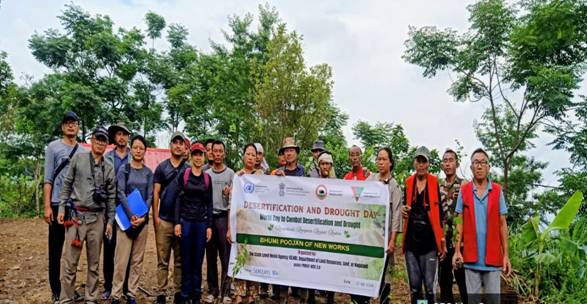
- 18 Jun 2026
In News:
The World Day to Combat Desertification and Drought (17 June)was observed across the project areas of the Watershed Development Component of Pradhan Mantri Krishi Sinchayee Yojana (WDC-PMKSY 2.0) to promote sustainable land management, watershed conservation, and restoration of degraded landscapes.
World Day to Combat Desertification and Drought
- The United Nations General Assembly (UNGA) declared 17 June as the World Day to Combat Desertification and Drought in 1994 to commemorate the adoption of the United Nations Convention to Combat Desertification (UNCCD)—the only legally binding international agreement linking environment, sustainable land management, and development.
- The day seeks to raise awareness about land degradation, promote Land Degradation Neutrality (LDN), and encourage sustainable management of land resources. It emphasizes that desertification, driven by human activities and climate change, is preventable and reversible.
- Theme 2026:"Rangelands: Recognize. Respect. Restore."—aligned with the International Year of Rangelands and Pastoralists (IYRP) 2026, led by the FAO and UNCCD.
What are Rangelands?
Rangelands are extensive natural landscapes comprising grasslands, shrublands, deserts, and tundras, primarily used for livestock grazing.
- Cover 54% of the Earth's land surface.
- Contribute nearly 16% of global food production.
- Support the livelihoods of around 2 billion people, especially pastoralists and indigenous communities.
- In India, they cover about 1.21 million sq. km, with nearly 40% of the country's land used for grazing.
- India's grassland area declined from 18 million hectares (2005) to 12 million hectares (2015), while less than 5% of grasslands are under protected areas.
Besides supporting livestock, rangelands function as carbon sinks, conserve biodiversity, regulate water cycles, and prevent soil erosion.
Watershed Development Component of PMKSY 2.0 (WDC-PMKSY 2.0)
Originally launched as the Integrated Watershed Management Programme (IWMP) in 2009–10, it was integrated with Pradhan Mantri Krishi Sinchayee Yojana (PMKSY) in 2015–16. The present phase, WDC-PMKSY 2.0, covers the period 2021–2026.
Implemented by the Department of Land Resources (DoLR), Ministry of Rural Development, the scheme aims to restore 49.50 lakh hectares of degraded and rainfed land.
Its objectives include:
- Restoration of degraded landscapes and ecological balance.
- Enhancement of groundwater recharge and agricultural productivity.
- Promotion of diversified farming systems and livelihood opportunities.
- Springshed rejuvenation, especially in Himalayan regions.
- Use of GIS and Remote Sensing for scientific watershed planning.
Desertification in India
Desertification refers to land degradation in arid, semi-arid and dry sub-humid regions due to climatic variations and human activities; it does not imply the expansion of existing deserts.
According to the Desertification and Land Degradation Atlas of India (Space Applications Centre, ISRO), about 29.7% of India's Total Geographical Area (TGA) is undergoing land degradation.
Major causes include:
- Water erosion (largest contributor)
- Vegetation degradation
- Wind erosion
- Salinity and alkalinity caused by improper irrigation practices
Major Initiatives
Global: UNCCD, Bonn Challenge, Great Green Wall Initiative, G20 Global Land Initiative, and SDG Target 15.3 (Land Degradation Neutrality by 2030).
India: Commitment to restore 26 million hectares of degraded land by 2030 (UNCCD COP14), Aravalli Green Wall Project, Desert Development Programme (DDP), National Mission for a Green India (GIM), and WDC-PMKSY 2.0.
GRAPES-3 Telescope
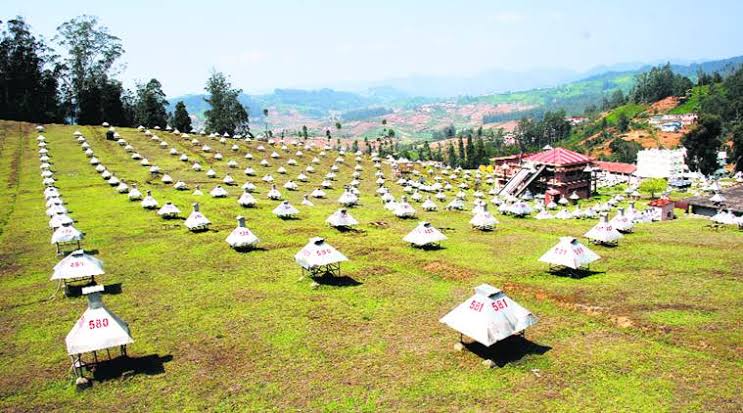
- 18 Jun 2026
In News:
Researchers from Mumbai, Kochi, and Japan have used the GRAPES-3 Telescope to study how Earth's upper atmospheric temperature and the Sun's magnetic field influence cosmic ray muons—high-energy subatomic particles produced when cosmic rays interact with Earth's atmosphere. The findings improve understanding of space weather, atmospheric processes, and cosmic ray propagation.
What is GRAPES-3?
Gamma Ray Astronomy PeVEnergieS phase-3 (GRAPES-3) is a high-energy cosmic ray observatory designed to investigate the origin, acceleration, and propagation of cosmic rays by detecting Extensive Air Showers (EAS) produced when high-energy cosmic rays or gamma rays enter Earth's atmosphere.
Besides cosmic ray studies, the facility also investigates solar activity, space weather, and thunderstorm-related phenomena through the observation of cosmic ray muons.
Key Features of GRAPES-3
- Location: Ooty, Tamil Nadu.
- Operated by: Tata Institute of Fundamental Research (TIFR).
- Detects primary cosmic rays and gamma rays in the tera-electronvolt (TeV) to peta-electronvolt (PeV) energy range.
- Uses an array of plastic scintillator detectors and a large-area muon detector based on proportional counters.
- Measures Extensive Air Showers produced by high-energy particles entering Earth's atmosphere.
What are Cosmic Rays?
- Cosmic rays are high-energy charged particles originating from outer space that continuously bombard the Earth from all directions. They are among the most energetic particles in the Universe and were discovered over a century ago.
- When these primary cosmic rays collide with atmospheric molecules, they generate Extensive Air Showers, producing secondary particles such as:Muons, Electrons, Photons, Protons, and Neutrons
- These secondary particles travel towards Earth's surface at nearly the speed of light.
What are Muons?
Muons are unstable, charged elementary particles belonging to the lepton family, similar to electrons but approximately 200 times heavier. They are produced in large numbers during cosmic ray interactions with the atmosphere and can penetrate deep into matter, making them useful for studying atmospheric changes, solar activity, geological structures, and space weather.
Significance of the Study
The study demonstrates that variations in the Sun's magnetic field and the temperature of the upper atmosphere influence the number of muons reaching Earth. Continuous monitoring of these variations through GRAPES-3 enhances understanding of:
- Space weather and solar storms.
- Solar-terrestrial interactions.
- Atmospheric dynamics.
- Behaviour of high-energy cosmic particles.
- Potential impacts on satellite communication, navigation systems, and power infrastructure.
India–Estonia Relations
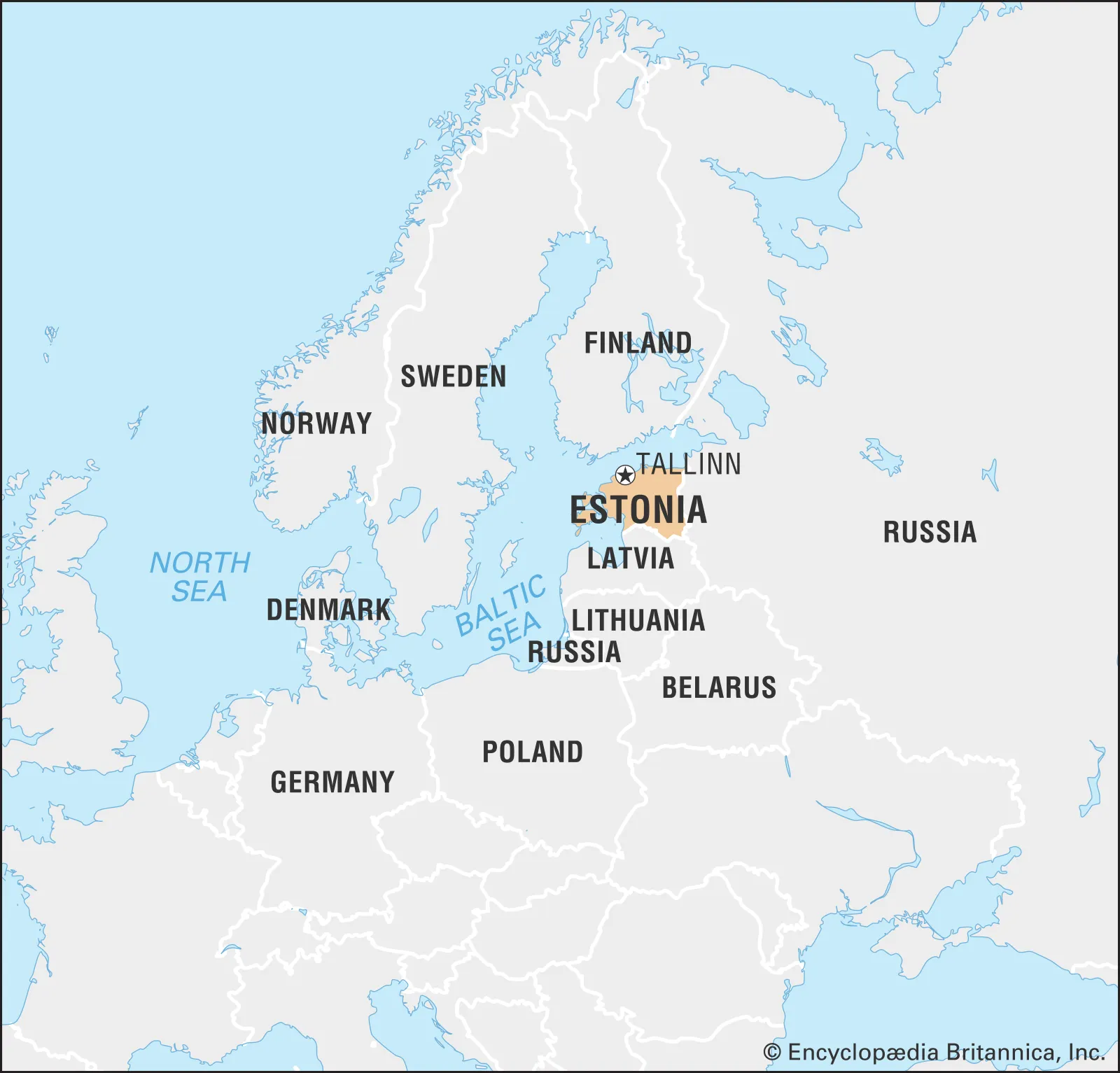
- 17 Jun 2026
In News:
The Estonian Government and leading technology companies have expressed interest in expanding cooperation with India in key areas such as cybersecurity, defence, artificial intelligence (AI), digital governance, and trade, reflecting the growing strategic convergence between the two countries.
India–Estonia Relations
India first recognisedEstonia in 1921, following its admission to the League of Nations. After Estonia regained independence following the dissolution of the Soviet Union, India re-established diplomatic relations in September 1991.
The bilateral relationship has increasingly focused on digital transformation, cybersecurity, innovation, trade, and emerging technologies. In 2024, the two countries held the first India–Estonia Cyber Dialogue, recognising Estonia's global leadership in e-governance and digital public services and India's success in building Digital Public Infrastructure (DPI).
Areas of Cooperation
- Cybersecurity & Digital Governance: Collaboration in cyber resilience, e-governance, digital identity, and digital public infrastructure.
- Artificial Intelligence (AI): Joint research, AI applications, innovation, and startup partnerships.
- Defence& Security: Cooperation in defence technologies, cyber defence, and strategic security.
- Trade & Investment: Expanding bilateral trade, technology partnerships, and investment opportunities.
- Innovation & Start-ups: Strengthening collaboration between India's digital ecosystem and Estonia's globally recognised startup ecosystem.
Economic Relations
- Bilateral merchandise trade (2025): €139.3 million
- Services trade (2025): €66.4 million
- Indian FDI in Estonia (December 2025): €13.6 million
- Estonian FDI in India (2000–2025): €4.15 million
About Estonia
Estonia is the northernmost of the three Baltic States, located in Northeastern Europe.
- Borders: Russia (East) and Latvia (South).
- Water Bodies: Gulf of Finland (North), Baltic Sea (West), and Lake Peipus (East).
- Maritime Neighbours: Finland and Sweden.
- Capital:Tallinn.
- Government: Parliamentary Republic.
- Highest Point:SuurMunamägi (318 m).
- Major Rivers:Narva, Pärnu, Pedja, and Kasari.
- Islands: Around 1,500 islands and islets, with Saaremaa and Hiiumaa being the largest.
Historical Background
Estonia declared independence in 1918 after centuries of rule by Denmark, Sweden, and the Russian Empire. It was incorporated into the USSR in 1940 and regained independence in 1991 following the collapse of the Soviet Union.
Since independence, Estonia has transformed into a technologically advanced democracy and is a member of:
- European Union (EU)
- Eurozone
- North Atlantic Treaty Organization (NATO)
- Nordic-Baltic Eight (NB8)
Significance for India
Estonia's expertise in digital governance, cybersecurity, AI, and e-governance complements India's strengths in Digital Public Infrastructure, fintech, and digital inclusion. Enhanced cooperation can deepen India's engagement with the Baltic region, diversify technology partnerships, and strengthen collaboration in emerging technologies and cyber resilience.
Draft Andaman and Nicobar Islands Tribal Councils Election Rules 2026
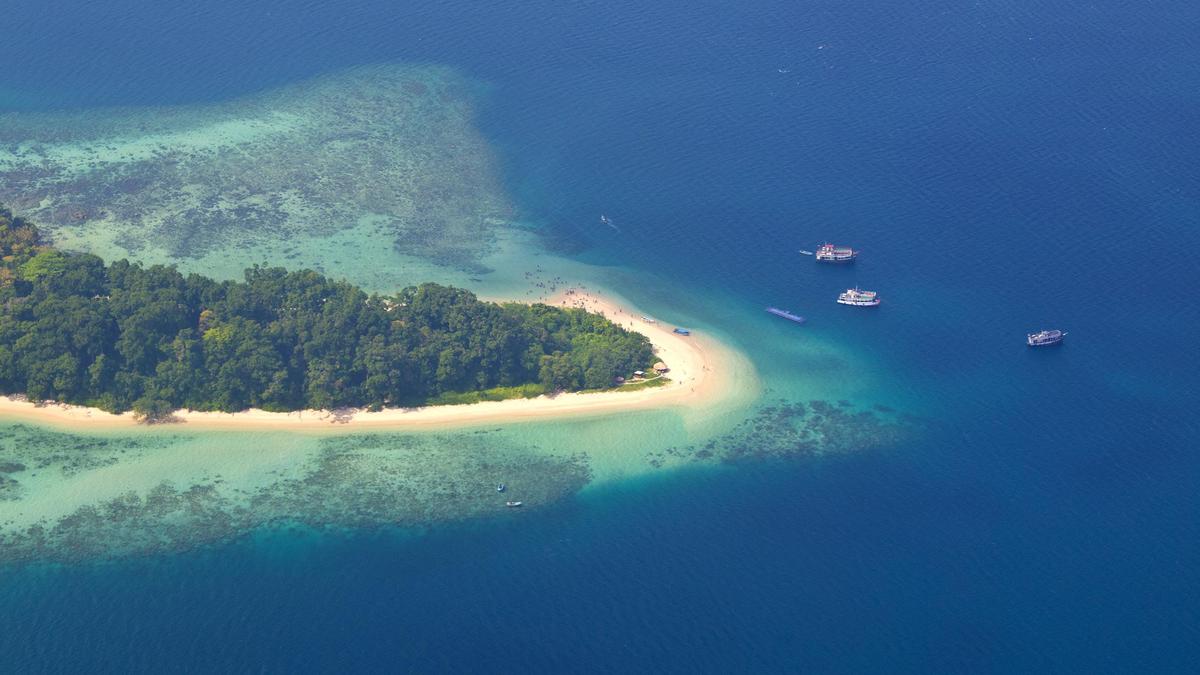
- 17 Jun 2026
In News:
The Andaman and Nicobar Islands Administration has released the Draft Andaman and Nicobar Islands Tribal Councils (Preparation of Electoral Rolls and Conduct of Elections) Rules, 2026, proposing a formal electoral framework for the Nicobarese Tribal Councils. The proposal has generated opposition among the Nicobarese community, which fears that it could undermine their customary system of self-governance.
Who are the Nicobarese?
The Nicobarese are a Scheduled Tribe (ST) inhabiting the Nicobar group of islands, with a population of around 30,000. They are represented through seven Tribal Councils, including those of Car Nicobar, Nancowry, Kamorta, Teressa, Little Nicobar, and Great Nicobar. Their traditional governance is rooted in the Tuhet (extended kinship group) system and community consensus.
Key Provisions of the Draft Rules
The draft seeks to institutionalise a formal electoral system for Tribal Councils by:
- Prescribing a fixed five-year tenure for Village and Island Tribal Councils.
- Introducing electoral constituencies, electoral rolls, and formal procedures for nomination, scrutiny and withdrawal of candidates.
- Providing for the election of 5–9 Village Captains, direct election of the Chief Captain, while First Captains elect the Vice-Chief Captain.
- Reserving seats and leadership positions for women in Village and Island Tribal Councils.
- Retaining the administrative veto under the Nicobar Islands Tribal Council Regulation, 2009, enabling the Deputy Commissioner/Assistant Commissioner to invalidate council decisions considered prejudicial to public order or peace.
Traditional Nicobarese Governance
The Nicobarese follow a consensus-based governance model rather than periodic electoral competition.
- Every village is governed by a Village Council headed by a First Captain, assisted by a Second and Third Captain, generally chosen through community consensus or secret ballot whenever required.
- The Island Tribal Council comprises the First Captains of constituent villages, who elect the Chief Captain and Vice-Chief Captain.
- Leadership is based on community acceptance, merit, education, administrative ability, and trust rather than fixed electoral cycles.
- The captaincy system dates back to the 16th century and was later formalised by the British in the late nineteenth century.
- Tribal Councils received statutory recognition through the Andaman and Nicobar Islands (Protection of Aboriginal Tribes) Regulation, 1956 and the Nicobar Islands Tribal Council Regulation, 2009.
Concerns
The Nicobarese Tribal Councils argue that the proposed reforms may:
- Weaken the traditional Tuhet-based consensus system.
- Increase bureaucratic control over indigenous self-governance.
- Dilute the authority of customary institutions through formal electoral procedures.
- Strengthen administrative oversight because of the existing veto powers under the 2009 Regulation.
- Be linked to the proposed Great Nicobar Development Project, potentially reducing institutional resistance to large-scale development projects.
- Create legal concerns since the Andaman and Nicobar Islands, being a Union Territory, lie outside the Fifth Schedule, limiting constitutional safeguards available to tribal self-governance.
Way Forward
Electoral reforms should balance constitutional values of transparency, accountability and gender inclusion with the preservation of indigenous governance traditions. Institutional changes should be undertaken through Free, Prior and Informed Consent (FPIC) and extensive consultation with Tribal Councils. A hybrid governance model, drawing inspiration from the Panchayats (Extension to Scheduled Areas) Act, 1996 (PESA), could strengthen democratic accountability while preserving the Tuhet-based customary governance system and ensuring that governance reforms remain independent of developmental or strategic projects.
Transformation of India's Agriculture Sector (2014–2026)
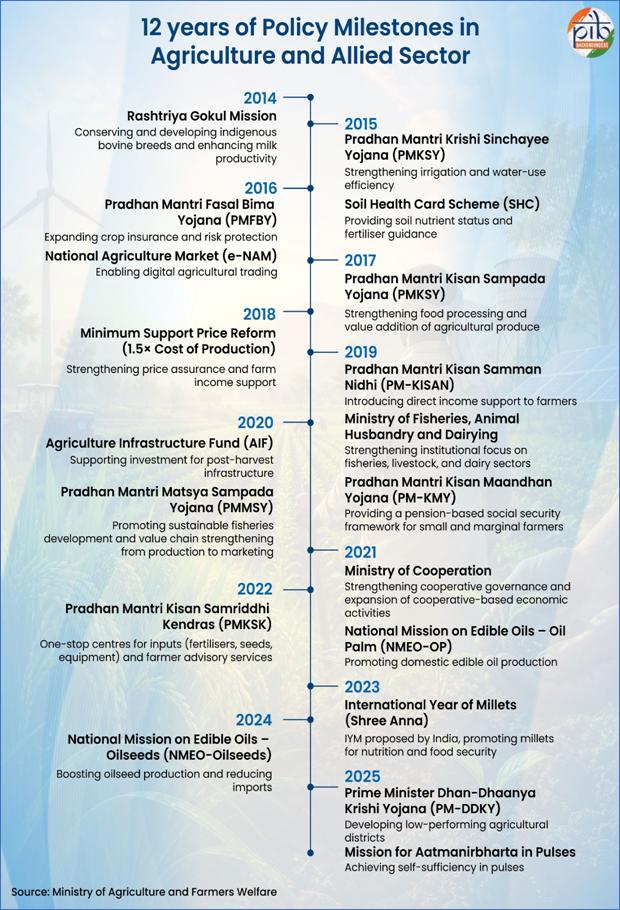
- 17 Jun 2026
In News:
The Press Information Bureau (PIB) has released a report highlighting the transformation of India's agricultural sector over the past twelve years. The report emphasizes the shift from welfare-oriented interventions to a comprehensive strategy focusing on productivity, farmer income, market access, digital agriculture, climate resilience, and value addition.
Current Status of Indian Agriculture
- Agriculture and allied sectors continue to be a cornerstone of the Indian economy, contributing around 18% of Gross Value Added (GVA).
- Sectoral GVA increased from ?20.9 lakh crore (2014–15) to ?48.7 lakh crore (2023–24), while budgetary allocation rose from ?27,663 crore (2013–14) to ?1.41 lakh crore (2026–27), reflecting sustained public investment.
Major Achievements
Food Security & Crop Production
- Foodgrain production increased from 265.05 MT (2013–14) to 357.73 MT (2024–25).
- India became the world's largest rice producer, with production increasing by 42.38% since 2014–15.
- Wheat production reached a record 117.94 MT (2024–25).
- Oilseed production rose to 42.99 MT, reducing edible oil import dependence from 63.2% (2015–16) to 56.25% (2023–24).
- Horticulture now contributes nearly 37% of crop sector Gross Value Output.
Farmer Welfare
- PM-KISAN provides ?6,000 annually through Direct Benefit Transfer (DBT) to over 9.44 crore farmers.
- PM Fasal Bima Yojana (PMFBY) insures over 4 crore farmers annually, covering the entire crop cycle.
- PM-Kisan Maandhan Yojana provides a ?3,000 monthly pension after the age of 60; 24.95 lakh farmers enrolled.
- Minimum Support Price (MSP) is announced for 22 mandated crops, and since 2018–19, MSP has been fixed at at least 50% above the cost of production.
Agricultural Infrastructure & Market Reforms
- e-NAM has integrated 1,656 mandis, with 1.8 crore farmers and 4,724 FPOs registered.
- Agriculture Infrastructure Fund (AIF) has sanctioned ?84,202 crore for 1.68 lakh projects, mobilising investments of ?1.33 lakh crore.
- 41 Mega Food Parks are operational, strengthening post-harvest management and value addition.
- Ground Level Credit increased from ?7.30 lakh crore (2013–14) to ?28.67 lakh crore (2024–25).
Technology & Sustainable Agriculture
- Under the Digital Agriculture Mission, 7.63 crore Farmer IDs and 23.5 crore digitised crop plots have been created.
- PM-KUSUM has facilitated installation of 10 lakh standalone solar pumps and solarisation of 13 lakh grid-connected pumps.
- 26 crore Soil Health Cards issued.
- 2,996 climate-resilient crop varieties released and 448 climate-resilient villages developed.
- Namo Drone Didi Scheme promotes precision agriculture and women-led agri-entrepreneurship.
Allied Sectors
- India remains the world's largest milk producer, with production increasing to 247.87 MT.
- Fisheries production doubled to 19.78 MT under PM Matsya Sampada Yojana (PMMSY).
- Honey production increased from 0.081 MT to 0.152 MT, while ethanol procurement reached 904 crore litres, achieving 20% blending.
Challenges
Major concerns include price volatility, limited MSP coverage beyond cereals, climate change, water stress, fragmented landholdings, regional disparities in institutional credit, and degradation of soil health. Small and marginal farmers (about 86% of operational holdings) remain particularly vulnerable to market and climatic shocks.
Way Forward
Priority should be given to expanding PM-KISAN and PMFBY, strengthening e-NAM, FPOs, and post-harvest infrastructure through AIF, promoting climate-resilient agriculture, digital advisory services, precision farming, and sustainable practices under PMKSY, PM-KUSUM, PKVY, and the National Mission on Natural Farming (NMNF) to improve farmer incomes and agricultural resilience.
India's Progress Towards Universal Health Coverage (UHC)
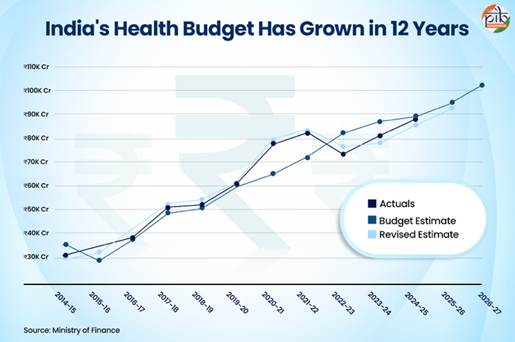
- 17 Jun 2026
In News:
India's progress towards Universal Health Coverage (UHC) has come into focus following the National Statistical Office (NSO) 2025 Survey, which reported increased utilisation of public healthcare facilities, lower out-of-pocket expenditure (OOPE), and improved access to affordable healthcare, driven by initiatives such as Ayushman Bharat and the National Health Mission (NHM).
What is Universal Health Coverage (UHC)?
According to the World Health Organization (WHO), Universal Health Coverage ensures that all individuals receive quality health services they need without suffering financial hardship. It encompasses promotive, preventive, curative, rehabilitative, and palliative healthcare.
India's Achievements towards UHC
India has significantly strengthened its healthcare ecosystem through expanded insurance coverage, digital health, public health infrastructure, and disease control programmes.
Universal Health Coverage & Insurance
- Ayushman Bharat-Pradhan Mantri Jan Arogya Yojana (AB-PMJAY) provides health insurance cover of ?5 lakh per family per year to 12 crore vulnerable families.
- 44.14 crore Ayushman Cards issued and 12.03 crore hospitalisations funded.
- Ayushman Bharat Vay Vandana (2024) extends coverage to all citizens aged 70 years and above; by June 2026, 1.20 crore senior citizens had enrolled.
Primary Healthcare
- Over 1.86 lakh Ayushman Arogya Mandirs (AAMs) provide 12 comprehensive healthcare services.
- AAMs have recorded 540 crore cumulative footfalls, strengthening preventive and primary healthcare.
Health Infrastructure
- Under PM-Ayushman Bharat Health Infrastructure Mission (PM-ABHIM):
- 744 Integrated Public Health Laboratories
- 631 Critical Care Hospital Blocks approved in districts with populations above 5 lakh.
- During COVID-19, India administered over 220 crore vaccine doses and expanded ICU beds from 2,168 to 1.45 lakh.
Disease Control & Public Health
- Mission Indradhanush vaccinated 5.46 crore previously unvaccinated children; the zero-dose child population declined to 0.06% (April 2026).
- PM TB Mukt Bharat Abhiyaan screened 20 crore people.
- Malaria mortality declined by 78%, while mother-to-child HIV transmission fell by 74.5% since 2010.
Digital Health
- 20.49 crore ABHA IDs created under the Ayushman Bharat Digital Mission (ABDM).
- eSanjeevani has delivered 47 crore teleconsultations.
- U-WIN digitally tracks immunisation of 11.87 crore children and 3.96 crore pregnant women.
- AI-based initiatives such as MadhuNetrAI and Cough Against TB are improving early disease detection.
Affordable Healthcare
- Over 18,000 Jan Aushadhi Kendras provide medicines at 50–90% lower prices.
- 255 AMRIT Pharmacies have helped patients save ?8,400 crore.
- PM National Dialysis Programme has delivered 4 crore free haemodialysis sessions.
Major Challenges
Despite notable progress, several structural challenges remain:
- Public health expenditure remains below the National Health Policy (2017) target of 2.5% of GDP.
- Non-Communicable Diseases (NCDs) account for 60% of all deaths.
- Persistent regional disparities, governance gaps, and shortages of healthcare professionals.
- 65% of PM-JAY beneficiaries reportedly incurred out-of-pocket expenditure in private hospitals, indicating implementation gaps.
- India still lacks a comprehensive Right to Health legislation.
Way Forward
India should increase public health expenditure to 2.5–3% of GDP, strengthen primary healthcare through Ayushman Arogya Mandirs, expand AI-enabled diagnostics and drone-based healthcare delivery, deepen digital integration through ABHA and U-WIN, improve regulation of empanelled hospitals under PM-JAY, and enact a Right to Health framework to ensure equitable, affordable, and accountable healthcare delivery.
Giant’s Causeway

- 17 Jun 2026
In News:
A recent geochronological study has revealed that the Giant's Causeway in Northern Ireland was formed over about 5.5 million years, nearly 8 million years shorter than previous estimates. The findings improve scientific understanding of one of the world's most iconic volcanic landscapes.
About Giant's Causeway
- The Giant's Causeway is a spectacular volcanic landform located along the Antrim Plateau on the northeastern coast of Northern Ireland. It comprises nearly 40,000 interlocking basalt columns extending over about 6 km of coastline. Most of the columns are hexagonal, though some have four, five, seven or eight sides. Their stair-like appearance gave rise to the name "Giant's Causeway."
- Recognised for its exceptional geological significance, it was designated a UNESCO World Heritage Site in 1986.
Formation of the Giant's Causeway
The basalt columns were formed during the Paleogene Period, around 50–60 million years ago, when intense volcanic activity affected the region.
The formation process involved:
- Extensive volcanic eruptions that produced large volumes of basaltic lava.
- The molten basalt rose through chalk beds, creating a vast volcanic plateau.
- As the lava cooled, it contracted, producing fractures known as columnar joints.
- Continued cooling caused the lava to shrink further, resulting in the development of tall, closely packed polygonal basalt columns.
- Rapid cooling led to greater contraction, producing the characteristic well-defined hexagonal columns visible today.
The latest research suggests that the volcanic processes responsible for this landscape occurred over approximately 5.5 million years, rather than the previously estimated 13.5 million years, indicating a much shorter but geologically significant volcanic episode.
Geological Significance
The Giant's Causeway is one of the world's finest examples of columnar jointing, demonstrating how cooling and contraction of basaltic lava produce regular polygonal rock columns. It provides valuable evidence for understanding igneous processes, volcanic evolution, and the geological history of the North Atlantic Igneous Province
Netra Airborne Early Warning and Control (AEW&C) System

- 28 Jun 2026
In News:
India's indigenous Netra Airborne Early Warning and Control (AEW&C) system has received Final Operational Clearance (FOC), making it fully operational for deployment by the Indian Air Force (IAF).
About Netra AEW&C
Netra is India's first indigenously developed Airborne Early Warning and Control (AEW&C) system, designed by the Centre for Airborne Systems (CABS) under the Defence Research and Development Organisation (DRDO). It serves as an airborne surveillance, command-and-control and battle-management platform, providing the Indian Air Force with real-time situational awareness during military operations.
With the development of Netra, India became the fifth country, after the United States, Russia, Israel and China, to possess an indigenous AEW&C capability.
How It Works
The system is mounted on the Embraer EMB-145I aircraft and functions as an "eye in the sky." Its Active Electronically Scanned Array (AESA) radar continuously scans the surrounding airspace to detect, identify and track hostile aircraft, missiles and selected maritime targets over long distances. The information is processed onboard and transmitted securely to fighter aircraft, air-defence systems and ground command centres, enabling rapid operational decision-making.
Key Features
Netra is equipped with an AESA radar, Identification Friend or Foe (IFF) system, Electronic Support Measures (ESM), Communication Support Measures (CSM), mission computers, secure communication links and self-protection systems. Together, these systems enable long-range surveillance, target tracking, electronic intelligence and airborne command-and-control during combat operations.
Operational Importance
Netra acts as a force multiplier by providing early warning of aerial threats, enhancing situational awareness and supporting network-centric warfare. It coordinates fighter aircraft, guides interception missions, strengthens air-defence operations and significantly improves India's ability to monitor its airspace without depending solely on ground-based radars.
Background
India's airborne surveillance programme began in the 1980s under Project Guardian, which used a modified HS-748 Avro aircraft. The programme suffered a setback following the 1999 Arakkonam crash, but was revived in 2004, eventually leading to the successful development of the Netra AEW&C system.
Significance
Netra has already demonstrated its operational effectiveness during the 2019 Balakot air strikes and Operation Sindoor (2025) by enhancing surveillance, battlefield awareness and command-and-control capabilities. Since the system is developed indigenously, India retains complete control over its software, source codes and future upgrades, reducing dependence on foreign manufacturers and strengthening defence self-reliance under the Atmanirbhar Bharat initiative.
The Cabinet Committee on Security (CCS) has approved six upgraded Netra Mk-1A systems, while the upcoming Netra Mk-2, to be mounted on the Airbus A321 platform, is expected to significantly expand India's airborne surveillance capability.
e-Sushrut@Clinic
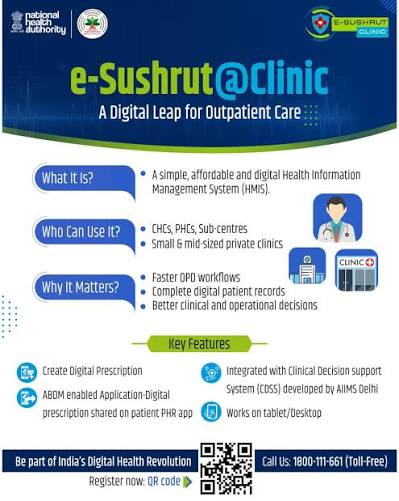
- 28 Jun 2026
In News:
The Union Ministry of Health is set to launch e-Sushrut@Clinic, a cloud-based Hospital Management Information System (HMIS) aimed at enabling small and medium healthcare facilities to adopt affordable digital healthcare solutions and strengthen the Ayushman Bharat Digital Mission (ABDM) ecosystem.
About e-Sushrut@Clinic
- e-Sushrut@Clinic is a lightweight, cloud-based HMIS developed by the Centre for Development of Advanced Computing (C-DAC).
- It is specifically designed for outpatient clinics, primary health centres (PHCs), Health and Wellness Centres (HWCs), sub-centres, private clinics, and medium-sized healthcare facilities.
- The platform caters to a wide range of healthcare professionals, including general practitioners, specialists, pharmacists, nurses, laboratory technicians, allied health workers, and clinic administrators.
- It is a simplified version of the flagship e-Sushrut HMIS, which is already operational in 17 AIIMS and over 4,000 healthcare facilities across India.
- The initiative seeks to reduce dependence on manual record-keeping and eliminate the need for costly IT infrastructure, making healthcare digitisation accessible to smaller establishments.
Key Features
- Comprehensive Digital Clinic Management: Supports patient registration, outpatient management, electronic preions, billing, pharmacy, nursing services, MIS reporting, and digital health records.
- Cloud-Based Architecture: Can be accessed through laptops or mobile devices without requiring dedicated servers or advanced technical expertise.
- ABDM Integration: Seamlessly integrates with the Ayushman Bharat Digital Mission, including the Health Facility Registry (HFR), Health Professional Registry (HPR), and ABHA-enabled digital health ecosystem.
- Easy Onboarding: Healthcare providers can register through HFR/HPR or complete registration directly on the platform.
- Clinical Decision Support: Incorporates AIIMS-developed Clinical Decision Support Systems (CDSS) for hypertension and diabetes to assist doctors in diagnosis and treatment.
- Speech-to-Text Functionality: Enables faster and more efficient clinical documentation.
- Online and Offline Operations: Ensures uninterrupted clinic management even in areas with limited internet connectivity.
- Affordable Pricing: Available at ?499 per month for up to five users. Under the partnership between the National Health Authority (NHA) and C-DAC, eligible users receive a ?200 monthly subsidy, reducing the effective subion cost to ?299 per month. Additional users can be added at ?50 per month, while the first three months are offered free of cost.
Implementation and Future Roadmap
- More than 800 healthcare facilities have already adopted the platform, generating over 680 digital health records during the initial rollout.
- Under the collaboration between NHA and C-DAC:
- NHA will provide cloud hosting, SMS services, customer support, and ecosystem integration.
- C-DAC will be responsible for software maintenance, upgrades, and nationwide expansion.
- The initiative is expected to accelerate the digitisation of primary healthcare institutions and deepen the reach of India's digital health ecosystem under the Ayushman Bharat Digital Mission (ABDM).
Bharat Taxi
- 28 Jun 2026
In News:
The Union Home Minister recently launched Bharat Taxi, India's first cooperative-led, driver-owned ride-hailing platform, in Gujarat.
About Bharat Taxi
- Bharat Taxi is India's first cooperative-model ride-hailing platform registered under the Multi-State Cooperative Societies Act, 2002.
- It is a government-supported initiative developed under the Ministry of Cooperation with technical support from the National e-Governance Division (NeGD).
- Unlike conventional cab aggregators, Bharat Taxi follows a cooperative ownership model in which drivers, referred to as "Sarathis", are shareholders and members of the cooperative rather than merely service providers.
- The platform has been developed by Sahkar Taxi Cooperative Limited with support from eight major cooperative institutions—NCDC, GCMMF (Amul), NDDB, NAFED, IFFCO, KRIBHCO, NABARD and NCEL.
Key Features
- Bharat Taxi operates on a driver-owned cooperative model, enabling drivers to purchase shares and participate in the management of the platform.
- The platform follows a zero-commission policy, ensuring that the entire fare collected from passengers is transferred directly to the driver.
- It also adopts transparent pricing, eliminating surge pricing during periods of high demand.
- The platform is integrated with India's digital public infrastructure, including DigiLocker, UMANG and API Setu, to facilitate seamless digital verification and service delivery.
- It complies with the Government of India's data protection and cybersecurity standards and provides drivers with access to loans, insurance and business expansion opportunities through the cooperative ecosystem.
Significance
Bharat Taxi seeks to strengthen the cooperative movement by extending it to the digital platform economy. The initiative aims to improve drivers' incomes by eliminating intermediary commissions, promote transparent pricing for consumers, and provide greater social security and financial inclusion to drivers. It also supports the vision of "Sahkar Se Samriddhi" by demonstrating how cooperative institutions can participate in the digital economy.
World's First Nuclear Heat-Based Hydrogen Production Facility
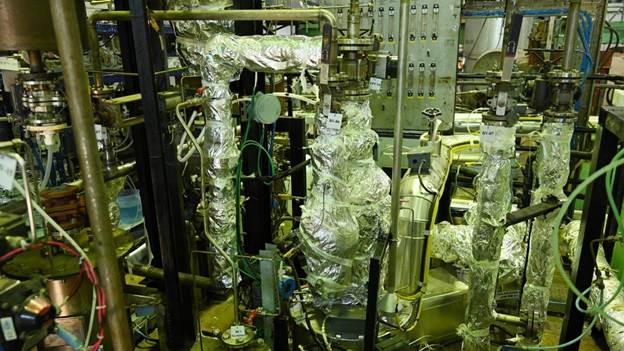
- 28 Jun 2026
In News:
The Department of Atomic Energy (DAE) has inaugurated the world's first hydrogen production facility based on the Copper–Chlorine (Cu–Cl) thermochemical cycle, utilizing nuclear process heat from the Fast Breeder Test Reactor (FBTR) at IGCAR, Kalpakkam (Tamil Nadu).
About the Facility
The facility is a technology demonstrator that produces carbon-free hydrogen using nuclear heat instead of relying primarily on electricity for conventional water electrolysis. It has been jointly established by the Bhabha Atomic Research Centre (BARC) and the Indira Gandhi Centre for Atomic Research (IGCAR). The Cu–Cl thermochemical process has been developed indigenously by BARC, while IGCAR integrated the technology with the Fast Breeder Test Reactor.
The project marks the first successful integration of nuclear process heat with hydrogen production, demonstrating the potential of advanced nuclear reactors for clean hydrogen generation.
Objectives
The facility aims to expand the role of India's three-stage nuclear power programme beyond electricity generation by enabling industrial-scale hydrogen production. It also seeks to strengthen India's clean energy transition, energy security and low-carbon development through indigenous technology.
How the Cu–Cl Thermochemical Cycle Works
The process uses a series of chemical reactions involving copper and chlorine compounds to split water into hydrogen and oxygen. High-temperature process heat from the Fast Breeder Test Reactor (FBTR) drives the reactions, while only a small amount of low-voltage electrolysis is required to regenerate the reactants, making the process more energy-efficient than conventional electrolysis.
Key Features
The facility is powered by FBTR, India's only operational sodium-cooled Fast Breeder Test Reactor. The Cu–Cl cycle operates at a maximum temperature of about 530°C, considerably lower than the Sulfur–Iodine thermochemical cycle, which requires temperatures above 850°C. The electrolysis stage requires only 0.5–1.0 volts, reducing electricity consumption. Unlike renewable-based hydrogen production, the nuclear-powered system can operate continuously, ensuring round-the-clock hydrogen generation.
Significance
The project demonstrates India's leadership in advanced nuclear technology and clean hydrogen production. It provides a pathway for decarbonizing industries such as steel, refineries and chemicals, supports the production of green ammonia for fertilizers, and promotes hydrogen use in transport and energy storage. It also reinforces the objectives of Atmanirbhar Bharat, strengthens India's three-stage nuclear programme and showcases the successful commercialization of indigenous nuclear technologies.
GPS Aided GEO Augmented Navigation (GAGAN)
- 28 Jun 2026
In News:
Recently, under the supervision of the Directorate General of Civil Aviation (DGCA), a private jet landed using GPS Aided GEO Augmented Navigation (GAGAN) for the first time in India, marking an important milestone in the adoption of satellite-based navigation for civil aviation.
About GAGAN
GPS Aided GEO Augmented Navigation (GAGAN) is India's Satellite-Based Augmentation System (SBAS), jointly developed by the Airports Authority of India (AAI) and ISRO. It enhances the accuracy, integrity and reliability of GPS signals, enabling aircraft to navigate and land with greater precision, particularly where conventional ground-based navigation systems are limited.
Objectives
GAGAN aims to provide highly accurate satellite-based navigation services for civil aviation, improve air traffic management across Indian airspace, and ensure seamless navigation by remaining interoperable with other international SBAS networks.
How GAGAN Works
GAGAN functions through an integrated ground segment and space segment. A network of 15 Indian Reference Stations (INRES) continuously monitors GPS signals and detects errors caused by ionospheric disturbances, satellite orbit deviations and clock inaccuracies. These observations are processed at the Indian Master Control Centre (INMCC), which generates correction and integrity messages. The corrections are then transmitted through the Indian Land Uplink Station (INLUS) to geostationary satellites, which broadcast the corrected navigation signals to aircraft equipped with compatible receivers.
The space segment comprises the geostationary satellites GSAT-8 (2011), GSAT-10 (2012) and GSAT-15 (2015), each carrying GAGAN payloads to relay these correction messages over the Indian region.
Significance
GAGAN significantly improves the accuracy and safety of aircraft navigation and precision landings, particularly during poor weather conditions. It enhances air traffic management, reduces dependence on costly ground-based navigation aids, optimizes flight paths to save fuel, and aligns India's aviation infrastructure with global satellite-based navigation standards.
US Attacks on Ships with Indian Crew

- 16 Jun 2026
In News:
India has strongly condemned a series of military strikes by the US Central Command (CENTCOM) on commercial oil tankers carrying Indian seafarers in the Gulf of Oman and the Strait of Hormuz. Following the death of three Indian nationals in one of the attacks, India summoned the US Chargé d'Affaires to lodge a strong diplomatic protest and called for an immediate cessation of attacks on commercial shipping.
What Happened?
The attacks are linked to the US enforcement of a maritime blockade targeting vessels allegedly transporting Iranian oil in violation of US sanctions.
Three merchant vessels with Indian crew were attacked:
|
Vessel |
Details |
Outcome |
|
MT Marivex |
Oil tanker with 24 Indian seafarers targeted south of the Strait of Hormuz. |
Vessel caught fire; all crew members were rescued. |
|
MT Settebello |
Palau-flagged tanker allegedly carrying Iranian oil. |
Attack resulted in the death of three Indian seafarers and evacuation of the remaining crew. |
|
M/T Jalveer |
Guinea-Bissau-flagged tanker transporting oil through the Gulf of Oman. |
CENTCOM admitted firing two Hellfire missiles into the engine room after alleging non-compliance with its directions. All 20 Indian crew members were reported safe. |
International Maritime Law
The incidents have renewed debate over the legality of using force against commercial shipping.
- Freedom of Navigation (UNCLOS): The United Nations Convention on the Law of the Sea (UNCLOS) guarantees freedom of navigation and the right of innocent passage for commercial vessels through international waters and strategic straits such as the Strait of Hormuz, subject to international law.
- Sanctions vs. Use of Force: While countries may enforce sanctions through inspections, interception or other lawful measures, the use of lethal military force against neutral civilian merchant vessels raises complex issues under international maritime and humanitarian law.
- Diplomatic Demarche: Summoning a foreign diplomat is a formal diplomatic mechanism used to register strong protest while maintaining diplomatic engagement.
Implications for India
The incidents underscore India's growing vulnerability to geopolitical tensions in West Asia, where thousands of Indian seafarers serve aboard international merchant vessels.
- Creates diplomatic challenges in balancing the India–US strategic partnership with the protection of Indian nationals overseas.
- Heightens security risks for Indian seafarers operating in the Gulf of Oman and Strait of Hormuz.
- May discourage recruitment of seafarers, leading to workforce shortages and higher operating costs.
- Escalates war-risk insurance premiums, freight charges and global energy transportation costs, affecting India's energy security and import bill.
- Reinforces the need for secure Sea Lines of Communication (SLOCs) and freedom of navigation in the Indo-Pacific.
Way Forward
India is likely to continue pursuing diplomatic engagement, strengthening maritime safety mechanisms, and coordinating with regional partners to safeguard its seafarers and commercial interests. At the international level, ensuring respect for UNCLOS, protecting civilian shipping, and promoting dialogue remain essential for preserving stability in one of the world's most critical maritime corridors.
Supreme Court Invokes Article 142 to Quash POCSO Conviction
- 16 Jun 2026
In News:
The Supreme Court invoked its extraordinary powers under Article 142 of the Constitution to set aside the conviction of a man under the Protection of Children from Sexual Offences (POCSO) Act, 2012, noting that the victim had subsequently attained majority, married him, and the continuation of the conviction would not serve the ends of justice.
The Court clarified that the decision was based on the peculiar facts of the case and should not be treated as a precedent for similar cases.
Article 142 of the Constitution
- Article 142 empowers the Supreme Court to pass any decree or order necessary for doing "complete justice" in any matter pending before it. Such orders are binding throughout India and are enforceable in the same manner as decrees of a civil court.
- While Article 142 grants wide discretionary powers, the Court has consistently held that these powers cannot ordinarily override substantive statutory provisions and must be exercised sparingly and in exceptional circumstances to ensure justice.
Protection of Children from Sexual Offences (POCSO) Act, 2012
The POCSO Act, 2012 is a comprehensive legislation enacted to protect children below 18 years from sexual assault, sexual harassment, and pornography, while ensuring child-friendly procedures for reporting, investigation, and trial. The Act was enacted following India's obligations under the UN Convention on the Rights of the Child (UNCRC), ratified in 1992.
Key Features of the POCSO Act
- Gender-neutral legislation: Protects both boys and girls from sexual offences.
- Child-friendly justice system: Provides special procedures for recording statements, investigation, evidence, and trial to minimise trauma.
- POCSO Rules, 2020: Strengthen implementation through institutional safeguards, reporting mechanisms, and victim support services.
- Confidentiality of identity:Section 23 prohibits disclosure of any information that may reveal the identity of the child victim, including by the media.
- Mandatory reporting:Sections 19–22 make it mandatory for any person having knowledge or reasonable suspicion of an offence to report it to the authorities.
- Stringent punishments: Prescribes graded penalties depending on the gravity of the offence. The Protection of Children from Sexual Offences (Amendment) Act, 2019 introduced harsher punishments, including the death penalty for certain aggravated penetrative sexual assaults.
Significance of the Judgment
The judgment highlights the Supreme Court's constitutional responsibility to balance strict statutory mandates with the broader objective of doing complete justice in exceptional cases. At the same time, the Court reaffirmed that POCSO is a welfare legislation enacted to protect children and that the exercise of powers under Article 142 cannot dilute the legislative intent or undermine child protection. By emphasizing that the ruling is confined to the unique facts of the case, the Court sought to preserve the deterrent purpose and integrity of the POCSO framework.
Delimitation of Parliamentary Constituencies

- 16 Jun 2026
In News:
The Economic Advisory Council to the Prime Minister (EAC-PM) has released a working paper proposing a targeted approach to the next delimitation exercise. Instead of relying solely on population, it recommends using multiple demographic and electoral indicators while broadly retaining the existing proportion of Lok Sabha seats among large States.
What are the Recommendations?
The EAC-PM paper suggests that the upcoming delimitation should move beyond a uniform population-based formula and adopt a multi-factor methodology to improve representational equity.
The study analysedLok Sabha election data (2009–2024) and found that constituency size alone does not adequately explain representation. It recommends that the Delimitation Commission consider five additional compositional features while deciding whether a constituency should be split:
- Urban population share
- Scheduled Caste (SC) population share
- Scheduled Tribe (ST) population share
- Linguistic polarisation
- Linguistic diversity
According to the paper, delimitation should be undertaken only after:
- A fresh booth rationalisation exercise,
- Publication of 2027 Census data, and
- Availability of gender-disaggregated electoral statistics to improve accuracy.
The proposed model also indicates that all major States could witness nearly a 50% increase in Lok Sabha seats while broadly preserving the existing inter-state proportion of representation.
What is Delimitation?
Delimitation is the process of redrawing the boundaries of Lok Sabha and State Legislative Assembly constituencies to ensure that each constituency represents a nearly equal population, thereby upholding the democratic principle of "one person, one vote, one value." It also involves the allocation of seats among States based on constitutional provisions.
Constitutional and Legal Framework
|
Provision |
Details |
|
Article 82 |
Parliament shall enact a Delimitation Act after every Census for readjustment of Lok Sabha seats. |
|
Article 170 |
Provides for readjustment of seats and constituencies in State Legislative Assemblies. |
|
Delimitation Commission |
Independent statutory body appointed by the Central Government. |
|
Composition |
Chairperson (Serving/Retired Supreme Court Judge), Chief Election Commissioner (or nominee), and State Election Commissioners of the concerned States. |
|
Nature of Orders |
Have the force of law, cannot be challenged in any court, and cannot be modified by Parliament or State Legislatures. |
History of Delimitation
- India has constituted the Delimitation Commission four times—1952, 1963, 1973, and 2002.
- The 42nd Constitutional Amendment Act, 1976 froze the allocation of Lok Sabha seats among States based on the 1971 Census to ensure that States successfully implementing population control measures were not disadvantaged through reduced parliamentary representation.
- The 84th Constitutional Amendment Act, 2001 extended this freeze until the first Census conducted after 2026. Consequently, while the 2002 Delimitation Commission redrew constituency boundaries using the 2001 Census, the inter-state allocation of Lok Sabha seats continues to be based on the 1971 Census.
Great Nicobar Island Project
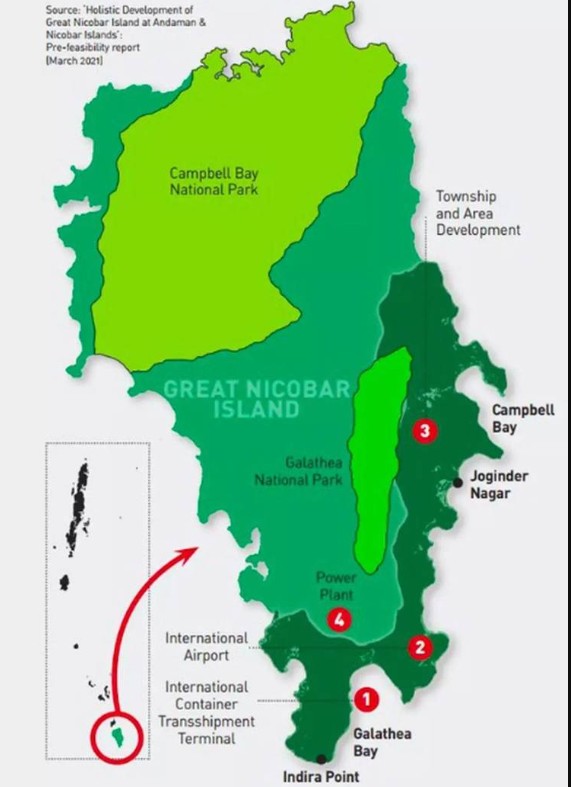
- 16 Jun 2026
In News:
The Andaman and Nicobar Islands Administration has notified the Rehabilitation and Resettlement (R&R) Census for families likely to be affected by the trunk infrastructure component of the Great Nicobar Island Project, marking the commencement of the project's implementation phase.
About the Great Nicobar Island Project
The Great Nicobar Island Project is a flagship infrastructure initiative aimed at transforming Great Nicobar Island into a strategic economic and maritime hub in the Bay of Bengal. Estimated at ?92,000 crore, the project has a long-term implementation timeline extending up to 2050. It seeks to combine economic development with enhanced maritime security and regional connectivity in the Indo-Pacific.
The trunk infrastructure, comprising the main road network and associated public utilities, constitutes the first phase of the project. The ongoing R&R Census aims to identify and verify families affected by this component to facilitate rehabilitation and resettlement in accordance with applicable laws.
Major Components
- International Container Transhipment Port
- Greenfield International Airport
- Power Generation Infrastructure
- Greenfield Township with tourism and urban infrastructure
- Defence and strategic infrastructure
Strategic Significance
The project is envisioned as a model of frontier infrastructure development in ecologically sensitive and strategically important regions. Located near the Malacca Strait, one of the world's busiest Sea Lines of Communication (SLOCs), Great Nicobar occupies a critical position in the Indo-Pacific. The project is expected to:
- Strengthen India's maritime security and naval logistics.
- Enhance India's role in regional transhipment and global supply chains.
- Boost connectivity under the SAGAR (Security and Growth for All in the Region) vision.
- Promote economic development and employment through tourism and port-led growth.
Concerns
Despite its strategic benefits, the project has generated significant environmental and social concerns:
- Potential displacement and livelihood impacts on the Nicobarese and the Shompen, particularly the vulnerable Shompen Tribal Reserve.
- Ecological risks to one of India's richest biodiversity hotspots, including tropical rainforests, mangroves, coral reefs and endemic species.
- Concerns regarding deforestation, habitat fragmentation and increased human intervention in a fragile island ecosystem.
- In 2024, the Public Investment Board (PIB) observed that the proposed transhipment port lacked clearly defined strategic objectives; however, the Ministry of Defence subsequently reaffirmed the project's strategic importance for national security and regional development.
Way Forward
The project's long-term success will depend on balancing strategic infrastructure development with ecological conservation and the constitutional rights of indigenous communities. Transparent rehabilitation, rigorous environmental safeguards, continuous stakeholder consultation, and sustainable development practices will be essential to ensure that national security objectives are achieved without compromising the island's unique ecological and cultural heritage.
Credit Guarantee Scheme for Micro Finance Institutions 2.0
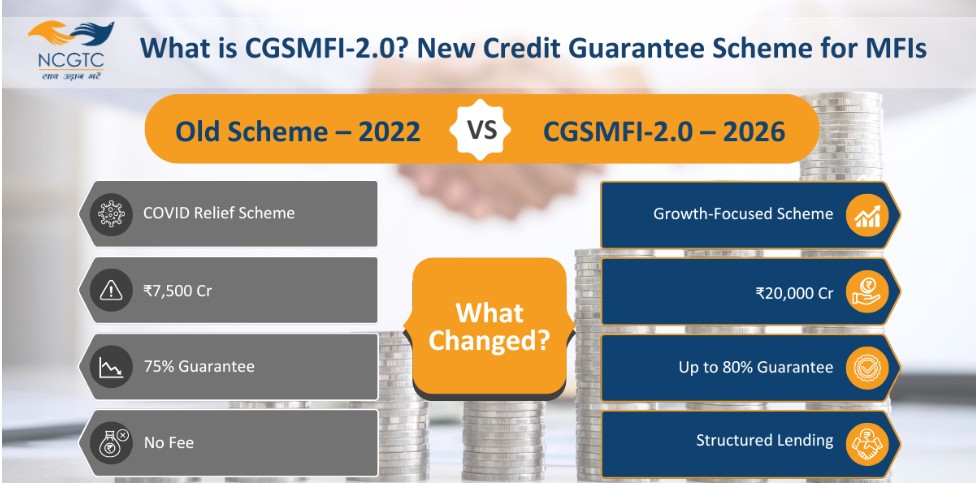
- 16 Jun 2026
In News:
The Government of India has extended the Credit Guarantee Scheme for Micro Finance Institutions (CGSMFI-2.0) till 31 August 2026 or until guarantees worth ?20,000 crore are issued, whichever is earlier. It has also increased the maximum loan limit for large NBFC-MFIs/MFIs from ?300 crore to ?1,000 crore (subject to 20% of AUM). As of now, ?770 crore of loans have been sanctioned under the scheme.
About CGSMFI-2.0
Launched in March 2026, CGSMFI-2.0 is a government-backed credit guarantee scheme that provides guarantee coverage to Member Lending Institutions (MLIs) for loans extended to NBFC-MFIs and other eligible MFIs. These institutions, in turn, provide microcredit to eligible borrowers as per the RBI's microfinance norms. The scheme is implemented through the National Credit Guarantee Trustee Company Ltd. (NCGTC) using an automatic approval mechanism, reducing the credit risk for lenders and encouraging greater flow of institutional finance to the microfinance sector.
Key Features
- Extended till 31 August 2026 or guarantee issuance of ?20,000 crore, whichever is earlier.
- Funds can be used only for incremental lending to eligible microfinance borrowers.
- Loans must be disbursed within three months and have a maximum tenure of three years, including a one-year moratorium.
- To ensure balanced credit distribution, MLIs must allocate at least 5% of total loans to small MFIs and 10% to medium MFIs.
Differential Guarantee Coverage
|
Category |
AUM |
Guarantee Coverage |
|
Small MFI |
Less than ?500 crore |
80% |
|
Medium MFI |
?500 crore to < ?2,000 crore |
75% |
|
Large MFI |
?2,000 crore and above |
70% |
The earlier scheme provided a uniform 75% guarantee, whereas CGSMFI-2.0 offers higher protection to smaller institutions to improve credit access in underserved areas.
Loan Limits
|
Category |
Maximum Loan Limit |
|
Small MFI |
?100 crore |
|
Medium MFI |
?200 crore |
|
Large MFI |
?1,000 crore (revised from ?300 crore), subject to 20% of AUM |
Microfinance Institutions (MFIs)
MFIs are financial intermediaries that provide small, collateral-free loans and financial services to low-income households, particularly in rural and semi-urban areas, thereby promoting financial inclusion, livelihood generation, and women’s empowerment. They function primarily as NBFC-MFIs or cooperative/NGO-led institutions.
Key features include:
- Target beneficiaries: Low-income households, women, small entrepreneurs, and informal workers.
- Loan size: Generally ?5,000–?1,00,000.
- Delivery models: Joint Liability Groups (JLGs) and Self-Help Groups (SHGs).
- Regulation:RBI regulates NBFC-MFIs, while NABARD supports and refinances the SHG-Bank Linkage Programme.
GI-Tagged Tezpur Litchi
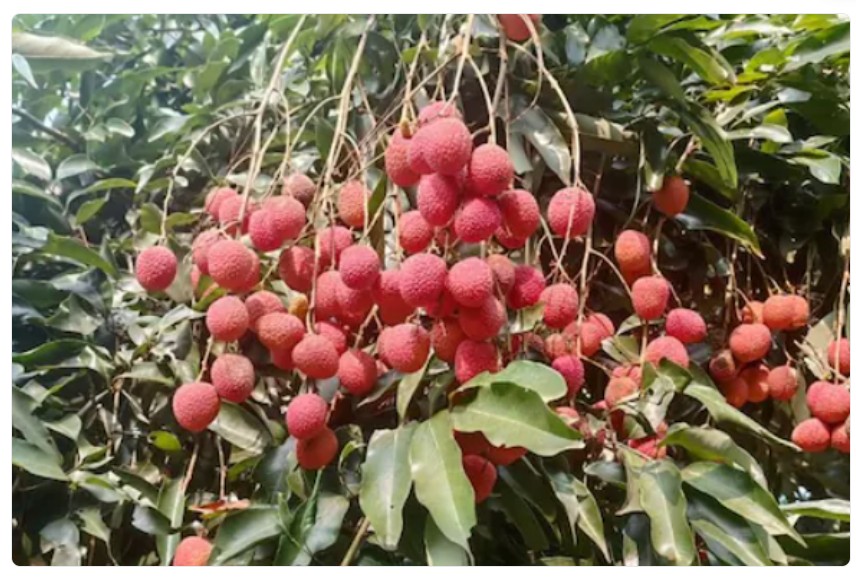
- 15 Jun 2026
In News:
The Agricultural and Processed Food Products Export Development Authority (APEDA) facilitated the first international export consignment of GI-tagged Tezpur Litchi from Assam to Dubai, marking a significant step in promoting agricultural exports from Northeast India.
About Tezpur Litchi
- Tezpur Litchi is a premium variety of Litchi chinensis that received the Geographical Indication (GI) tag for its unique quality and geographical origin.
- It is primarily cultivated in Tezpur and adjoining areas of Sonitpur district, Assam.
- The fruit is known for its bright red rind, translucent juicy pulp, pleasant aroma, high pulp-to-seed ratio, and exceptional sweetness. Major local varieties include Bombaya, Bilati, Elaichi, Piyaji, and Sahi.
Cultivation Conditions
- Tezpur Litchi thrives in the humid subtropical climate of Assam and grows best in deep, well-drained alluvial or loamy soils enriched by the Brahmaputra basin. Frost-free winters and warm, humid summers are ideal for flowering and fruit development.
Significance
The successful export to Dubai opens new international market opportunities for farmers and highlights the export potential of GI-tagged products from Northeast India. It is expected to enhance farmers' incomes through better price realization, encourage quality production, and strengthen India's agricultural exports under the government's 'Vocal for Local' and 'One District One Product (ODOP)' initiatives.
Made in India Airbus C-295
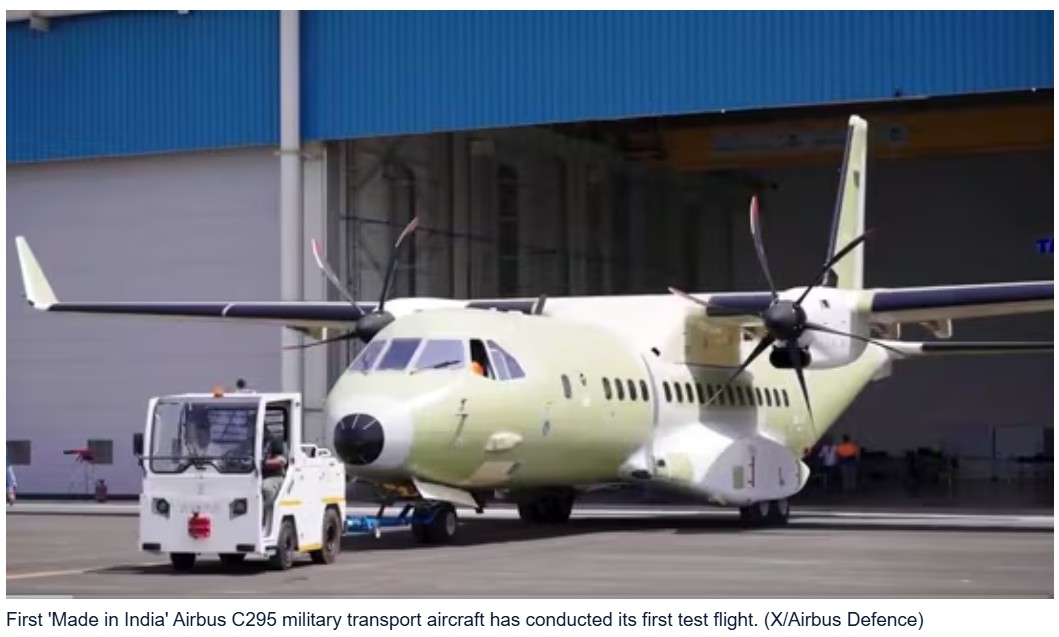
- 15 Jun 2026
In News:
The first Made in India Airbus C-295 military transport aircraft successfully completed its maiden test flight from the Final Assembly Line (FAL) in Vadodara, Gujarat, marking a major milestone in India's defence manufacturing capabilities.
About C-295
The Airbus C-295 is a twin-turboprop tactical military transport aircraft designed to replace the Indian Air Force's ageing Avro HS-748 fleet. It is capable of operating in high-altitude, harsh terrains, and Short Take-Off and Landing (STOL) conditions, making it suitable for border operations and humanitarian missions.
Manufacturing Programme
The aircraft is being procured under a ?21,935 crore contract for 56 aircraft.
- 16 aircraft are being delivered in fly-away condition from Airbus, Spain.
- The remaining 40 aircraft are being manufactured in India through a partnership between Airbus Defence and Space and Tata Advanced Systems Limited (TASL) at Vadodara.
The project is India's first large-scale military aircraft manufacturing programme led by the private sector, supporting the objectives of 'Make in India' and Aatmanirbhar Bharat.
Key Features
- Twin-turboprop tactical transport aircraft with STOL (Short Take-Off and Landing) capability.
- Can operate from short, semi-prepared and unpaved airstrips.
- Suitable for troop transport, cargo movement, medical evacuation (Medevac), disaster relief, paratrooper operations and maritime surveillance.
- Over 85% of the structural components of the 40 Indian-built aircraft will be manufactured domestically, including more than 13,000 parts.
SAPLING Dialogue 2026

- 15 Jun 2026
In News:
The Ministry of Food Processing Industries (MoFPI), in collaboration with the World Bank Group, organised the SAPLING Dialogue 2026 in Ahmedabad, Gujarat, to strengthen food processing and value addition across South Asia.
About SAPLING
- South Asian Policy Leadership for Improved Nutrition and Growth (SAPLING) is a World Bank-led multi-stakeholder platform that promotes policy reforms, investment mobilisation and Agri-Tech adoption to build resilient food systems. It complements the AgriConnect Initiative, which aims to benefit 300 million farmers by 2030 through improved infrastructure and policy support.
- Theme: "Unlocking Value: Advancing Food Processing for Employment Generation and Sustainable Growth in South Asia."
Key Highlights
- The dialogue underscored the need to shift the focus from agricultural production to value addition, recognising food processing, logistics and integrated supply chains as the next engines of agricultural growth.
- A major concern highlighted was post-harvest losses exceeding 30% in South Asia, which can be addressed through Farm-to-Factory integration, expansion of cold-chain infrastructure, improved storage and smart packaging.
- During the event, the report "Assessment of the Level of Food Processing in India" was released.
- It noted that the share of food processing in India increased from 10% in 2016 to nearly 17% in 2023.
- The report also identified substantial untapped potential in processing fruits, vegetables and dairy products, which can enhance farmers' incomes, reduce wastage and boost agricultural exports.
Foreign Currency Non-Resident (Bank)

- 15 Jun 2026
In News:
The RBI has introduced a special FCNR(B) deposit window with a concessional forex swap facility to encourage foreign currency inflows, strengthen foreign exchange reserves, and support rupee stability.
About FCNR(B) Deposits
- FCNR(B) is a fixed-term foreign currency deposit account maintained with Indian banks by:
- Non-Resident Indians (NRIs)
- Overseas Citizens of India (OCIs)
- Persons of Indian Origin (PIOs)
- Deposits are maintained in designated foreign currencies, protecting depositors from exchange rate risk.
- Permitted currencies include:
- US Dollar (USD)
- Pound Sterling (GBP)
- Euro (EUR)
- Japanese Yen (JPY)
- Australian Dollar (AUD)
- Canadian Dollar (CAD)
Objective
- Mobilise stable foreign currency resources for Indian banks.
- Strengthen India's capital account and foreign exchange reserves.
- Offer overseas Indians a tax-efficient investment avenue without rupee depreciation risk.
RBI's Special Forex Swap Facility
- Available for fresh FCNR(B) deposits of 3–5 years.
- Banks sell the foreign currency mobilised through FCNR(B) deposits to the RBI at the prevailing FBIL Reference Rate.
- Simultaneously, the RBI agrees to sell back the same amount of foreign currency to banks at maturity.
- Since the swap is conducted at par, the RBI bears the forward premium, significantly reducing banks' hedging costs.
Key Features
- Tenure: 3–5 years.
- Exchange Rate Risk: Nil for depositors, as deposits are held in foreign currency.
- Tax Benefit: Interest earned is exempt from income tax in India for eligible non-residents.
- CRR & SLR Exemption: Fresh deposits under the special window are exempt from Cash Reserve Ratio (CRR) and Statutory Liquidity Ratio (SLR) requirements, improving banks' lending capacity.
- Interest Rates: Linked to international benchmark rates and generally lower than domestic rupee fixed deposits. Banks may offer higher rates to remain competitive with overseas investment options.
FCNR(B) vs NRE vs NRO Accounts
|
Feature |
FCNR(B) |
NRE |
NRO |
|
Currency |
Foreign Currency |
Indian Rupee |
Indian Rupee |
|
Exchange Rate Risk |
No |
Yes |
Yes |
|
Source of Funds |
Overseas Income |
Overseas Income |
Indian Income & Overseas Income |
|
Repatriability |
Fully Repatriable |
Fully Repatriable |
Limited (subject to RBI rules) |
|
Tax on Interest |
Exempt |
Exempt |
Taxable |
RBI Holds Repo Rate and Lowers GDP Growth Forecast

- 15 Jun 2026
In News:
The RBI's Monetary Policy Committee (MPC) kept the policy repo rate unchanged at 5.25%, retained a Neutral policy stance, revised the FY27 growth and inflation outlook, and announced measures to boost foreign capital inflows and support the rupee.
Key Highlights
- Policy Rates (Unchanged):
- Repo Rate: 5.25%
- Standing Deposit Facility (SDF): 5.00%
- Marginal Standing Facility (MSF): 5.50%
- Bank Rate: 5.50%
- GDP Growth (FY27): Revised down to 6.6% (from 6.9%).
- Inflation (FY27):
- Headline CPI: 5.1% (up by 50 bps).
- Core Inflation: 4.7%.
- Policy Stance: Continued Neutral, enabling a data-driven approach to future rate decisions.
Key Risks Identified
- Global Uncertainty: Geopolitical tensions and crude oil averaging USD 110/barrel (Apr–May 2026) have raised input costs.
- Climate Risks: Forecast of a sub-normal Southwest Monsoon and emerging El Niño pose risks to agriculture and food inflation.
- Second-Round Inflation: RBI cautioned against food and fuel price shocks feeding into wages and inflation expectations.
Measures to Attract Foreign Capital & Stabilise the Rupee
- Tax Relief: Waiver of 12.5% LTCG tax and interest income tax on FPIs investing in Government Securities (effective 1 April 2026).
- Expanded Fully Accessible Route (FAR): Included 15-, 30-, and 40-year G-Secs and Sovereign Green Bonds, allowing unrestricted FPI investment.
- FPI Liberalisation: Removed short-term, concentration, and security-wise limits under the General Route, while retaining overall ceilings (6% for Central G-Secs; 2% for State G-Secs).
- NRI/OCI Reforms: Increased investment limits in listed equities; similar treatment extended to eligible Persons Resident Outside India (PROIs).
- Forex Support: Concessional forex swap facility and FCNR(B) hedging support extended till 30 September 2026.
- Export Realisation: Timeline reduced from 15 months to 9 months to improve forex liquidity.
- Forex Policy: RBI reiterated that it does not target a fixed exchange rate and will use its foreign exchange reserves to curb excessive rupee volatility.
Electrolyte Engineering for Advanced Aqueous Zinc-Ion Batteries (AZIBs)
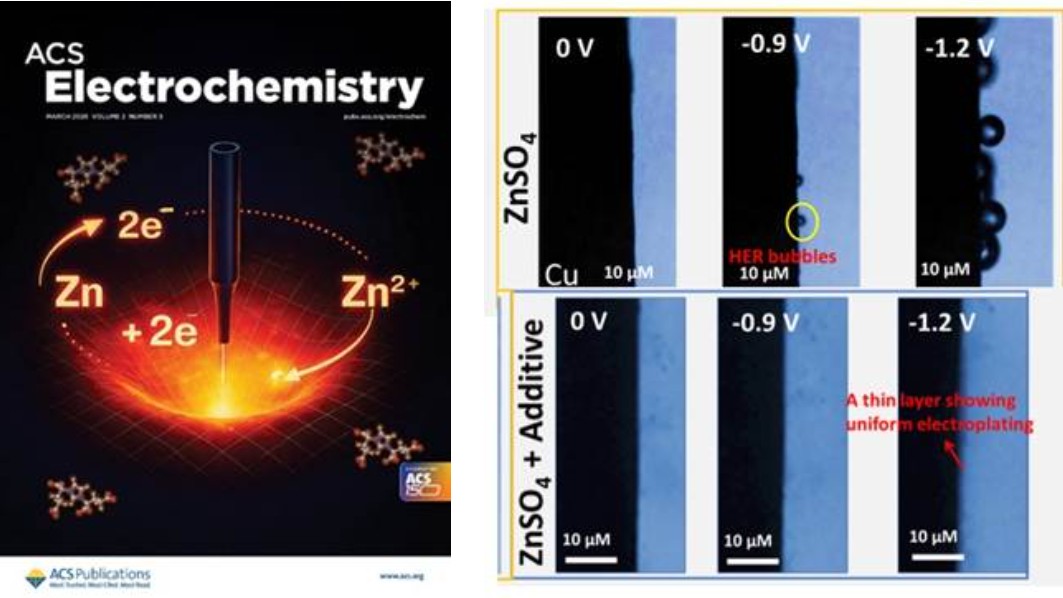
- 29 Jun 2026
In News:
Scientists at the Institute of Nano Science and Technology (INST), Mohali, an autonomous institute under the Department of Science & Technology (DST), have developed a novel electrolyte additive (BDIM) that significantly improves the performance, safety and lifespan of Aqueous Zinc-Ion Batteries (AZIBs), offering a promising alternative to lithium-ion batteries.
About the Research
Researchers have developed a new electrolyte additive called 1,3-bis (1,3-dicarboxypropyl)-1H-imidazole-3-ium chloride (BDIM), which improves the stability of the zinc anode by regulating the Inner Helmholtz Plane (IHP)—the interfacial region where electrochemical reactions occur.
Unlike expensive battery redesigns, the innovation focuses on electrolyte interface engineering, making it a cost-effective and scalable solution for next-generation rechargeable batteries.
Why are Aqueous Zinc-Ion Batteries (AZIBs) Important?
AZIBs are emerging as a promising alternative to lithium-ion batteries because they are:
- Safer due to non-flammable water-based electrolytes.
- Low-cost owing to the abundance of zinc.
- Environment-friendly and sustainable.
- Suitable for grid-scale and renewable energy storage.
However, their commercialization has been limited due to:
- Zinc dendrite formation.
- Hydrogen Evolution Reaction (HER).
- Corrosion of the zinc anode.
- Poor cycling stability.
How Does BDIM Work?
The BDIM additive selectively adsorbs on the zinc surface and occupies the Inner Helmholtz Plane (IHP).
This prevents water molecules from directly interacting with the zinc surface, thereby:
- Suppressing Hydrogen Evolution Reaction (HER).
- Reducing corrosion.
- Preventing zinc dendrite formation.
- Improving battery stability and lifespan.
The researchers also employed Ultramicroelectrode (UME) and Fast-Scan Cyclic Voltammetry (FSCV) techniques to better understand zinc deposition and interfacial charge-transfer mechanisms.
Applications
The technology has significant potential in:
- Grid-scale energy storage.
- Renewable energy integration.
- Backup power systems.
- Long-duration stationary energy storage.
- Safer and affordable rechargeable batteries.
By increasing battery life and reducing degradation, it can lower maintenance costs and improve the reliability of clean energy infrastructure.
Project BRAHMANK of Border Roads Organisation (BRO)
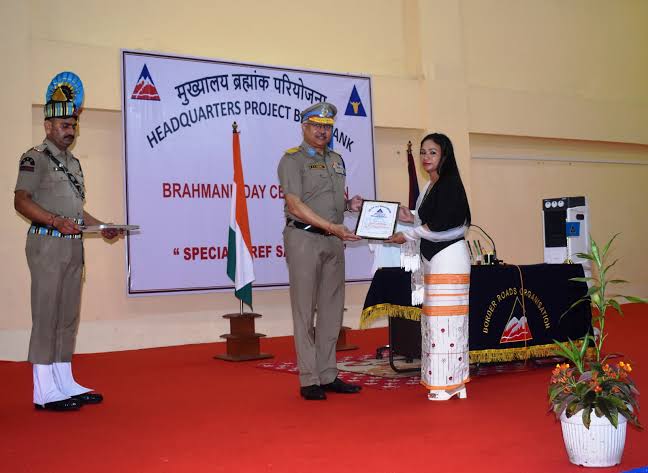
- 29 Jun 2026
In News:
Project BRAHMANK of the Border Roads Organisation (BRO) celebrated its 16th Raising Day on 29 June 2026 at Ranaghat, Arunachal Pradesh, marking sixteen years of developing strategic road infrastructure and improving connectivity in India's northeastern border areas.
About Project BRAHMANK
- Project BRAHMANK is one of the strategic infrastructure projects of the Border Roads Organisation (BRO).
- It was raised on 29 June 2011 at Ranaghat (East Siang district), Arunachal Pradesh, and became fully operational on 3 December 2011.
- The project is responsible for the construction, upgradation and maintenance of strategic road infrastructure in Siang, East Siang, West Siang, Upper Siang and Shi-Yomi districts of Arunachal Pradesh, besides parts of Dhemaji district in Assam.
- It plays a crucial role in enhancing military mobility while improving connectivity for remote border communities.
Key Achievements
Project BRAHMANK currently maintains:
- 811 km of strategic roads.
- Around 86 bridges, ranging from culverts to major steel and arch bridges.
Some notable engineering achievements include:
- 100-metre Steel Arch Bridge over Siyom Nallah.
- 165-metre Prestressed Concrete (PSC) Bridge over Simang Nallah on the Along–Yingkiong Road.
During FY 2025–26, the project achieved significant milestones:
- Construction of 13 new bridges with a cumulative span of 390 metres.
- Blacktopping of 61 km of roads to National Highways Double Lane (NHDL) specifications.
- Development of helipads to strengthen strategic connectivity in remote areas.
About the Border Roads Organisation (BRO)
- Established: 7 May 1960
- Parent Ministry: Ministry of Defence
- Headquarters: New Delhi
- Motto: "Shramena Sarvam Sadhyam" (Everything is Achievable Through Hard Work)
Functions
- Construction and maintenance of strategic roads, bridges, tunnels and airfields.
- Development of border infrastructure in difficult terrain.
- Supporting military logistics and border management.
- Assisting in disaster relief and national development projects.
Rural Internal Audit Portal
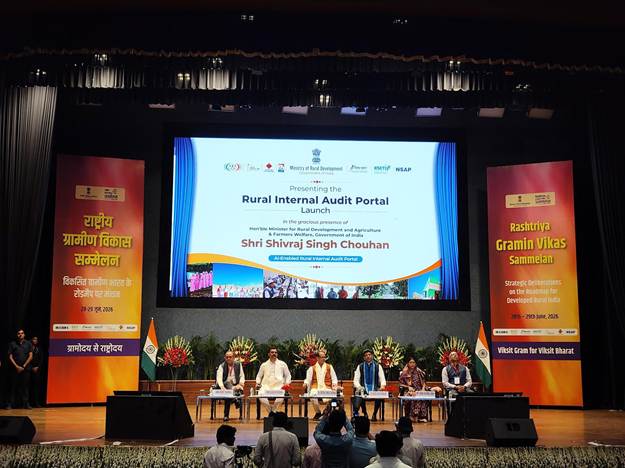
- 29 Jun 2026
In News:
The Union Minister for Rural Development launched the Rural Internal Audit Portal during the Rashtriya Gramin Vikas Sammelan at Pusa Campus, New Delhi, to strengthen transparency, accountability and efficiency in the implementation of rural development programmes.
About the Rural Internal Audit Portal
- The Rural Internal Audit Portal is a unified digital platform for end-to-end management of risk-based and compliance audits under the Ministry of Rural Development.
- It has been conceived by the Office of the Chief Controller of Accounts (CCA), Ministry of Rural Development, and developed in collaboration with the National Informatics Centre (NIC).
- The portal digitizes the entire internal audit lifecycle, from audit planning to monitoring compliance and Action Taken Reports (ATRs).
Objectives
The portal aims to strengthen internal audit systems by:
- Digitizing and simplifying the audit process.
- Creating a centralized repository of audit records and Action Taken Reports (ATRs).
- Enabling risk-based audit planning for better prioritization.
- Automating audit reports and standardizing documentation.
- Facilitating real-time monitoring of audit progress and compliance.
- Leveraging data analytics and emerging technologies to identify implementation gaps and systemic risks.
Key Features
The platform offers a comprehensive digital audit ecosystem with features such as:
- End-to-End Digital Audit Management covering audit planning, execution and reporting.
- Centralized Audit Repository for audit observations, reports and compliance records.
- Role-Based Access Control for auditors, auditees, State Governments, programme divisions and approving authorities.
- Real-Time Dashboards to monitor audit coverage, pending observations and compliance status.
- Geospatial (Map View) Monitoring for visualizing audit activities across India.
- Multilingual and User-Friendly Interface for wider accessibility.
- AI and Advanced Analytics Integration for future risk assessment, audit prioritization and decision support.
Technology Architecture
The portal is built using modern digital infrastructure to ensure security and reliability.
It incorporates:
- Git-based version control systems.
- Continuous Integration/Continuous Deployment (CI/CD) workflows.
- Secure API-based integration.
- Role-based access control.
- Centralized monitoring systems.
- Automated exception handling.
- Disaster recovery protocols.
Kisan Sarathi Platform
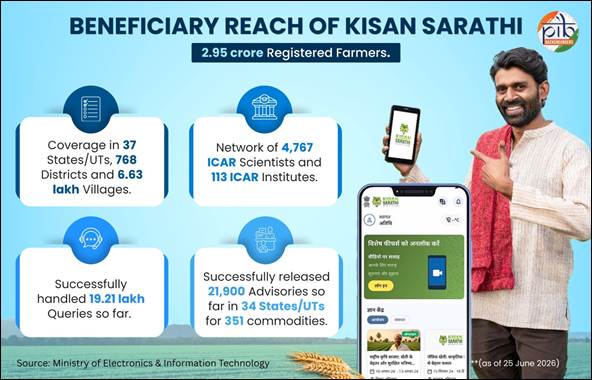
- 29 Jun 2026
In News:
The Kisan Sarathi Platform has expanded its digital agricultural services by providing farmers with access to 610 Central and State Government schemes, along with real-time agro-advisories, weather information, market intelligence and expert consultations, strengthening India's digital agricultural extension system.
About Kisan Sarathi
- Launched in July 2021, Kisan Sarathi is India's largest integrated digital agro-advisory platform.
- It is a joint initiative of the Ministry of Electronics & Information Technology (MeitY) and the Ministry of Agriculture & Farmers' Welfare, implemented by the Indian Agricultural Statistics Research Institute (IASRI) and the Digital India Corporation (DIC).
- The platform is powered by the Interactive Information Dissemination System (IIDS), enabling two-way communication between farmers and experts and facilitating the transfer of scientific knowledge from lab to land.
Key Features
Kisan Sarathi acts as a one-stop platform by integrating:
- 730 Krishi Vigyan Kendras (KVKs)
- 100 ICAR Institutes
- 65 Agricultural Universities
It offers:
- Personalized crop advisories.
- Expert consultation in 13 regional languages.
- Weather forecasts and mandi prices.
- Information on 610 government schemes (including 102 Central schemes).
- Advisories covering crops, livestock, fisheries and allied sectors.
- Video consultations, farmer training and push alerts.
The platform is integrated with Kisan Call Centre, Common Service Centres (CSCs), IMD, MyScheme Portal and BHASHINI, making agricultural services available through mobile app, web portal, WhatsApp and call centres.
Interactive Information Dissemination System (IIDS)
The IIDS is the technological backbone of Kisan Sarathi. It enables seamless communication between farmers and agricultural experts through voice calls, video calls, text messages, images and video sharing.
Key Functions
- Two-way interaction between farmers and experts.
- Personalized advisories based on farmer requirements.
- Subion-based advisory services.
- Storage of farmer interaction history.
- Expert access to farmer profiles and previous consultations.
Unique Features
The system follows the Know Your Farmer (KYF) approach, wherein farmers' queries are routed to the most relevant domain experts. It also maintains a knowledge database and stores query history, enabling more accurate, personalized and context-specific advisories.
Coverage (As of 25 June 2026)
- Available in 37 States/UTs
- Covers 768 districts and 6.63 lakh villages
- 2.95 crore registered farmers, including 56.16 lakh women
- Network of 4,767 ICAR scientists and 113 ICAR institutes
- 19.21 lakh farmer queries addressed
- 21,900 advisories issued covering 351 commodities
Exercise RIMPAC 2026

- 29 Jun 2026
In News:
The United States has launched Exercise Rim of the Pacific (RIMPAC) 2026, the world's largest multinational maritime exercise, being conducted from 24 June to 31 July 2026 around the Hawaiian Islands.
About Exercise RIMPAC
- The Rim of the Pacific (RIMPAC) is the world's largest international maritime exercise, hosted by the U.S. Navy's Pacific Fleet and conducted biennially (every two years) in and around the Hawaiian Islands.
- Since its inception in 1971, the exercise has served as a premier platform for strengthening military cooperation, improving interoperability among participating armed forces, and promoting stability across the Indo-Pacific region.
- It enables participating countries to train together in complex maritime operations while fostering trust, defence diplomacy and collective preparedness.
RIMPAC 2026: Key Highlights
The 30th edition of RIMPAC is being conducted under the theme "Partners: Integrated and Prepared." The exercise witnesses participation from 31 countries, involving over 25,000 military personnel, around 40 surface ships, 5 submarines, and nearly 140 aircraft, making it one of the largest multinational military exercises in the world.
The exercise includes a broad spectrum of operations such as:
- Anti-submarine warfare
- Air defence operations
- Missile and gunnery exercises
- Amphibious assault operations
- Mine countermeasure operations
- Maritime interdiction
- Humanitarian Assistance and Disaster Relief (HADR)
- Search and Rescue (SAR)
- Explosive Ordnance Disposal (EOD)
These activities are designed to enhance operational readiness and interoperability among participating navies and armed forces.
India's Participation
- India has been participating in RIMPAC since 2014, reflecting its growing role in the Indo-Pacific maritime architecture.
- The participation of the Indian Navy demonstrates India's commitment to enhancing naval cooperation, improving interoperability with partner countries, and contributing towards a free, open, inclusive and rules-based Indo-Pacific.
- The exercise also complements India's maritime initiatives such as SAGAR (Security and Growth for All in the Region) and the Indo-Pacific Oceans Initiative (IPOI).
Significance of RIMPAC
RIMPAC has evolved beyond a naval exercise into an important platform for strategic cooperation and maritime governance.
- Enhancing Collective Maritime Security: The exercise strengthens the ability of participating nations to respond jointly to conventional and non-conventional maritime threats, including piracy, maritime terrorism, illegal fishing and other security challenges.
- Improving Interoperability: Joint training enables armed forces from different countries to operate together using common operational procedures, communication systems and tactical doctrines, thereby improving effectiveness during multinational operations.
- Promoting a Rules-Based Indo-Pacific: RIMPAC supports the vision of a free, open and rules-based Indo-Pacific, encouraging adherence to international law, freedom of navigation and peaceful resolution of maritime disputes.
- Strengthening Defence Diplomacy: The exercise builds confidence among participating nations through military-to-military engagement, fostering long-term strategic partnerships and regional stability.
- Enhancing Disaster Response Capabilities: Regular Humanitarian Assistance and Disaster Relief (HADR) drills improve coordination among participating countries during natural disasters and humanitarian emergencies, which are common across the Indo-Pacific region.
Night Vision Devices (NVDs)

- 14 Jun 2026
In News:
India is rapidly enhancing its night-combat preparedness through the induction of advanced Night Vision Devices (NVDs) and expansion of indigenous electro-optics manufacturing. Recent initiatives include a ?659.47 crore contract for Netro NW 3000 Gen-III night sights and the inauguration of a dedicated electro-optics production facility by Bharat Electronics Limited in Andhra Pradesh.
What are Night Vision Devices?
Night Vision Devices (NVDs) are advanced optoelectronic systems that enable soldiers to detect, observe and engage targets in low-light or no-light conditions. They are deployed as:
- Weapon-mounted sights
- Helmet-mounted goggles
- Handheld devices
- Sensors on armoured vehicles and aircraft
NVDs provide a critical operational advantage in modern warfare, especially during night operations and adverse weather conditions.
Working Principles
Image Intensification
This technology amplifies available ambient light from sources such as:
- Moonlight
- Starlight
- Infrared illuminators
The incoming photons are converted into electrons within an Image Intensifier Tube (IIT), multiplied several thousand times, and then converted back into a visible image, usually green or white.
Thermal Imaging
Thermal systems do not depend on ambient light. Instead, they detect infrared heat signatures emitted by:
- Human bodies
- Vehicle engines
- Weapons
This allows target detection through darkness, smoke, dust, fog and vegetation cover.
Key Features of Modern NVDs
Advanced Generational Technology
Modern Generation III and Generation IV systems offer:
- Higher sensitivity
- Better signal-to-noise ratio
- Improved target recognition
- Automatic gating against bright flashes
Fused Sensor Technology
Advanced military systems combine:
- Thermal imaging
- Image intensification
to provide a composite battlefield picture, enhancing situational awareness.
Augmented Reality Integration
Modern combat goggles can display:
- Digital maps
- Friendly force locations
- Target information
- Navigation data
directly within the soldier's field of view.
India's Expanding Indigenous Capability
Netro NW 3000 Night Sights
The Ministry of Defence has contracted Indian firms MKU Limited and Medbit Technologies for the supply of nearly 29,762 Netro NW 3000 Gen-III night sights for SIG-716 assault rifles, significantly improving infantry night-fighting capability.
Armoured and Aviation Platforms
Indigenous thermal sights are being integrated into:
- BMP-2M Infantry Combat Vehicles
- HAL Prachand
- HAL Light Utility Helicopter
The Indian Air Force has also inducted Netro NB-3100 Gen-III aviation night vision goggles for helicopter operations.
BEL's Electro-Optics Facility
A new ?362 crore electro-optics manufacturing facility established by Bharat Electronics Limited at Nimmaluru, Andhra Pradesh will produce:
- Night Vision Devices
- Infrared missile seekers
- Electro-optical sensors
- Anti-drone systems
The facility is expected to reduce import dependence and strengthen defence self-reliance.
National SC-ST Hub Scheme
- 14 Jun 2026
In News:
The National SC-ST Hub (NSSH) Scheme is a flagship initiative of the Ministry of MSME aimed at promoting entrepreneurship and enhancing the participation of Scheduled Caste (SC) and Scheduled Tribe (ST) entrepreneurs in India's economic growth process. The scheme is playing a significant role in fostering inclusive development, self-reliance, and equitable access to business opportunities.
About the Scheme
Launched in October 2016, the scheme seeks to build the entrepreneurial capacity of SC/ST communities and facilitate their integration into the mainstream MSME ecosystem.
The scheme is implemented by the National Small Industries Corporation Limited (NSIC) under the Ministry of Micro, Small and Medium Enterprises.
Objectives
The scheme aims to:
- Promote an entrepreneurial culture among SC/ST communities.
- Enhance the competitiveness and capacity of SC/ST-owned MSMEs.
- Facilitate greater participation of SC/ST enterprises in public procurement.
- Improve access to credit, markets, technology, and skill development.
Key Support Provided
Under NSSH, SC/ST entrepreneurs receive support for:
- Purchase of plant and machinery.
- Capacity building and entrepreneurship training.
- Market linkages and vendor development.
- Participation in domestic and international exhibitions.
- Credit facilitation and financial assistance.
- Udyam Registration support.
- Onboarding on the Government e-Marketplace (GeM) platform.
Major Functions
A key objective of the scheme is to facilitate SC/ST-owned enterprises in securing a share of the 4% procurement target earmarked for them in purchases made by Central Ministries, State Governments, CPSEs and other government agencies.
The scheme also:
- Works with industry associations to promote participation in public procurement.
- Facilitates vendor development programmes with CPSEs.
- Provides mentoring and handholding support.
- Organizes entrepreneurship and skill-development programmes.
- Shares SC/ST MSME databases with procuring agencies to increase procurement opportunities.
- Conducts outreach and awareness campaigns across the country.
Dark Patterns

- 14 Jun 2026
In News:
A recent report estimates that Indian consumers lose between ?25,000 crore and ?28,000 crore annually due to deceptive online practices known as dark patterns. As digital commerce expands rapidly, concerns are growing over the use of manipulative interface designs that undermine informed consumer choice and fair market practices.
What are Dark Patterns?
- Dark patterns, also known as deceptive patterns, are user-interface designs deliberately created to manipulate or mislead users into making decisions that primarily benefit the service provider rather than the consumer.
- The term was coined by Harry Brignull in 2010.
- These design tactics exploit human psychology and cognitive biases, nudging users towards actions such as unintended purchases, subions, data sharing, or acceptance of unfavorable terms and conditions.
- Dark patterns can appear across:E-commerce websites, Mobile applications, Online forms ,Subion services, Digital advertisements, Email campaigns
How Do Dark Patterns Work?
Dark patterns leverage behavioral tendencies such as:
- Fear of missing out (FOMO)
- Inertia and default bias
- Social pressure
- Confusion through complex wording
- Information asymmetry
Their objective is to influence user behavior without explicit coercion, often reducing transparency and informed consent.
Regulatory Framework in India
- To address such practices, the Central Consumer Protection Authority (CCPA) notified the Guidelines for Prevention and Regulation of Dark Patterns, 2023.
- The guidelines identify 13 specific dark patterns, including:False Urgency, Basket Sneaking, Confirm Shaming, Forced Action, Subion Trap, Interface Interference, Bait and Switch, Drip Pricing, Disguised Advertisements, Nagging, Trick Wording, SaaS Billing, Rogue Malware
- These practices are recognized as unfair trade practices under India's consumer protection framework.
Common Types of Dark Patterns
False Urgency
Users are pressured into making quick decisions through artificial scarcity claims such as:
- "Only 1 item left!"
- "Offer ends in 5 minutes!"
These tactics exploit fear of missing out and discourage careful decision-making.
Basket Sneaking: Additional products, warranties, insurance
DNA Testing, Right to Privacy and Paternity Disputes
- 14 Jun 2026
In News:
Recently, the Supreme Court upheld a trial court's order directing a DNA test in a paternity dispute, revisiting the delicate balance between a child's right to know their biological parentage and an individual's fundamental Right to Privacy. The case highlights the evolving judicial approach towards scientific evidence, personal autonomy, and family law.
Constitutional and Legal Context
Following the landmark Justice K.S. Puttaswamy v. Union of India, the Right to Privacy was recognized as a fundamental right under Article 21 of the Constitution. Consequently, compulsory DNA testing is now viewed not merely as an evidentiary tool but also as an intrusion into bodily autonomy and informational privacy.
At the same time, courts have recognized that a child may have a legitimate interest in establishing biological identity, inheritance rights, emotional closure, and legal status.
Presumption of Legitimacy
Traditionally, Indian law protects children born during a valid marriage through a strong legal presumption of legitimacy.
- Section 112 of the Indian Evidence Act, 1872 (now Section 116 of the Bharatiya Sakshya Adhiniyam, 2023) presumes that a child born during a valid marriage is legitimate.
- This presumption can be rebutted only if the husband proves "non-access" during the period of conception.
The provision aims to protect children from social stigma and preserve family stability.
Evolution of Supreme Court Jurisprudence
- Goutam Kundu v. State of West Bengal (1993): The Supreme Court held that DNA and blood tests cannot be ordered routinely. A party disputing paternity must first establish a strong prima facie case of non-access before such tests are considered.
- Banarsi Dass v. Teeku Dutta (2005): The Court reiterated that DNA testing should remain an exceptional remedy and not become a routine judicial practice.
- Nandlal WasudeoBadwaik v. Lata Nandlal Badwaik (2014): The Court adopted a more scientific approach, holding that where a conflict arises between legal presumptions and conclusive scientific evidence, scientific truth should prevail.
- Rohit Shekhar v. Narayan Dutt Tiwari (2014): The Supreme Court prioritized the child's right to establish biological parentage and directed DNA testing despite objections based on privacy, recognizing the importance of identity and legitimacy.
- Ivan Rathinam v. Milan Joseph (2025): The Court clarified that neither an unrestricted right to demand DNA testing nor an absolute privacy shield can be accepted. Instead, courts must determine whether there is an "eminent need" for the test and balance competing rights on a case-by-case basis.
Present Judicial Position
The current approach seeks to balance:
- Child's right to identity and parentage.
- Right to dignity and psychological closure.
- Right to inheritance and legal recognition.
Versus
- Right to privacy under Article 21.
- Bodily autonomy.
- Protection from unnecessary intrusion.
Thus, DNA testing is neither automatically granted nor automatically denied. Courts apply the principle of proportionality and assess whether the interests of justice justify the intrusion into privacy.
Significance
The issue reflects the growing intersection of:
- Constitutional rights.
- Family law.
- Scientific evidence.
- Privacy jurisprudence.
It also demonstrates how courts are increasingly moving from rigid legal presumptions towards a balanced framework that accommodates both technological advances and fundamental rights.
Pradhan Mantri SurakshitMatritva Abhiyaan (PMSMA)
- 14 Jun 2026
In News:
The Government of India recently marked 10 years of the Pradhan Mantri SurakshitMatritva Abhiyaan (PMSMA) under the theme “10 Years of PMSMA – A Decade of Care.” Launched on 9 June 2016, PMSMA is a flagship maternal healthcare initiative aimed at ensuring safe pregnancy, reducing maternal and neonatal mortality, and improving access to quality antenatal care.
About PMSMA
PMSMA provides free, comprehensive and specialist-led antenatal care (ANC) services to pregnant women, particularly during the second and third trimesters, at designated government health facilities on the 9th day of every month.
The programme focuses on:
- Early identification of high-risk pregnancies.
- Timely referral and intervention.
- Improved maternal and newborn health outcomes.
- Universal access to quality antenatal services.
Extended PMSMA
To strengthen maternal healthcare further, the government launched Extended PMSMA (E-PMSMA) in January 2022.
Under this initiative:
- High-Risk Pregnancies (HRPs) are identified and line-listed.
- Pregnant women are individually tracked up to 45 days after delivery.
- SMS-based monitoring and follow-up mechanisms are used.
- ASHA workers provide additional support and counselling.
Major Achievements
Over the last decade, PMSMA has emerged as one of the world's largest targeted antenatal care programmes:
- More than 7.5 crore antenatal check-ups conducted.
- Nearly 1.2 crore high-risk pregnancies identified.
- Improved early risk detection and referral systems.
Maternal and Child Health Outcomes
India has witnessed substantial improvements in maternal and child health indicators:
Maternal Mortality
- Maternal Mortality Ratio (MMR) declined from 130 per lakh live births (2014–16) to 87 per lakh live births (2022–24).
- India has achieved an 86% decline in maternal mortality since 1990, significantly higher than the global average decline of 48%.
Child Health
- Under-Five Mortality Rate declined by 79% since 1990.
- Neonatal mortality declined by 70% during the same period.
NFHS Indicators
According to recent National Family Health Survey (NFHS) data:
- Institutional deliveries: 90.6%
- Antenatal care coverage: 95.9%
- Women receiving at least four ANC visits: 65.2%
- First-trimester ANC registration: 76.2%
These improvements reflect stronger maternal healthcare systems and greater utilization of institutional health services.
BHAVYA Portal for Bharat Audyogik Vikas Yojana
- 13 Jun 2026
In News:
Recently, the Union Minister of Commerce and Industry launched the BHAVYA Portal to facilitate the implementation of the Bharat Audyogik Vikas Yojana (BHAVYA), a flagship programme aimed at creating world-class industrial infrastructure across India.
What is BHAVYA?
The Bharat Audyogik Vikas Yojana (BHAVYA) is a major industrial infrastructure initiative designed to develop 100 investment-ready, plug-and-play industrial parks across the country over a period of six years.
With a total outlay of ?33,660 crore, the scheme seeks to strengthen India's manufacturing ecosystem, attract investments, generate employment, and enhance global competitiveness.
BHAVYA Portal
The newly launched BHAVYA Portal will function as a single digital platform for:
- Submission of Detailed Project Reports (DPRs).
- Project appraisal and evaluation.
- Monitoring and implementation.
- Real-time progress tracking.
It aims to improve transparency, efficiency, and coordination between the Centre, States, and implementing agencies.
Key Features of the Scheme
Implementing Agency
The National Industrial Corridor Development Corporation (NICDC) has been designated as the Project Management Agency for implementation and monitoring.
Competitive Selection Model
States and Union Territories will compete by submitting proposals based on:
- Industrial strengths.
- Availability of land.
- Investor demand.
- Infrastructure readiness.
- Sectoral potential.
Centre–State Partnership
Land will be provided by State Governments, while infrastructure development will be supported through a 51:49 partnership model involving the Government of India and States.
Flexible Park Size
Industrial parks may vary from:
- 25 acres in hilly regions, North-Eastern States and smaller Union Territories.
- Up to 1,000 acres near major urban and industrial centres.
Plug-and-Play Infrastructure
The parks will offer ready-to-use industrial facilities, including:
- Assured water and power supply.
- Road and rail connectivity.
- Clear land titles.
- Digital single-window clearances.
- Air connectivity wherever feasible.
To improve product quality and export competitiveness, testing and certification facilities will be developed in collaboration with:
- Bureau of Indian Standards (BIS)
- Export Inspection Agency (EIA)
- Food Safety and Standards Authority of India (FSSAI)
Significance
BHAVYA is expected to:
- Boost manufacturing and industrialization.
- Attract domestic and foreign investments.
- Generate large-scale employment.
- Improve ease of doing business.
- Strengthen India's position in global value chains.
- Support the vision of Viksit Bharat 2047.
The scheme complements initiatives such as industrial corridors, Make in India, PM Gati Shakti, and logistics modernization by creating integrated industrial ecosystems.
NZP Saathi App
- 13 Jun 2026
In News:
The National Zoological Park has launched the NZP Saathi App along with self-ticketing kiosks as part of its digital transformation initiative aimed at enhancing visitor experience, accessibility, and awareness of wildlife conservation.
What is NZP Saathi?
NZP Saathi is an interactive mobile-based digital zoo guide that acts as a virtual companion for visitors. Developed by the National Zoological Park, New Delhi, the application integrates navigation, visitor services, and educational content into a single platform.
Key Features
The app is available on both Android and iOS platforms and offers:
- Real-time GPS-enabled navigation within the zoo.
- Interactive digital maps showing:
- Animal enclosures
- Drinking water facilities
- Washrooms
- Medical rooms
- Battery-operated buggy stops
- Emergency exits
To cater to different visitor preferences, the app provides four thematic tours:
- Express Tour – Covers major attractions in limited time.
- Family Tour – Child-friendly and relaxed route.
- Grand Zoo Tour – Comprehensive route covering all exhibits.
- My Tour – Personalized itinerary based on visitor preferences.
Integration with Self-Ticketing Kiosks
The app complements newly introduced self-ticketing kiosks that enable:
- Digital ticket booking.
- UPI-based cashless payments.
- Quick entry through automated ticket generation.
- Access through free on-site Wi-Fi connectivity.
Gallantry Awards
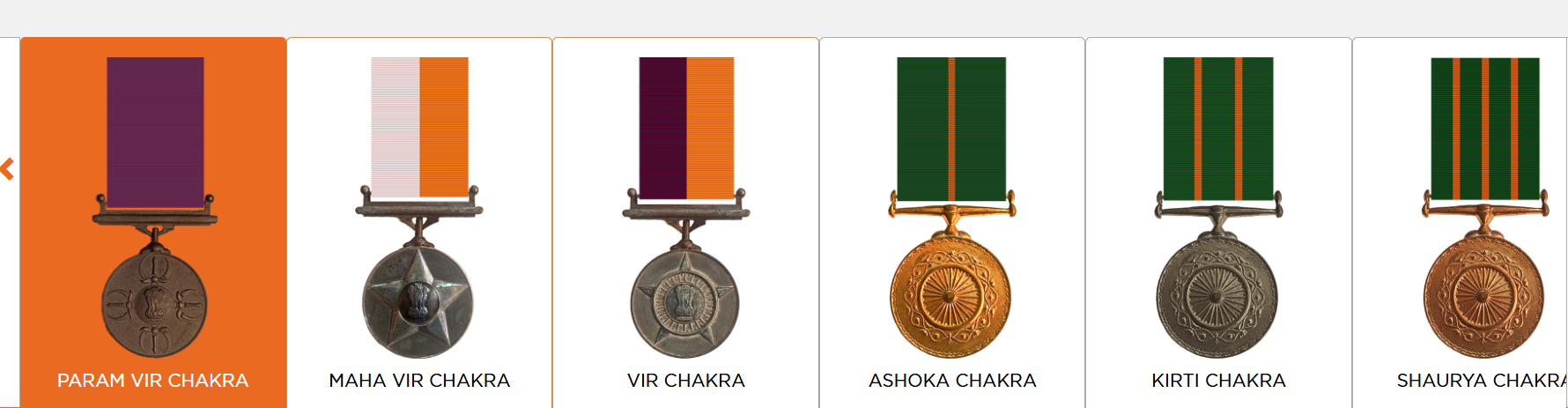
- 13 Jun 2026
In News:
Recently, President Droupadi Murmu conferred 51 Gallantry Awards during Phase-I of the Defence Investiture Ceremony 2026 at Rashtrapati Bhavan. Among the recipients of the Kirti Chakra was Prasanth Balakrishnan Nair, an Indian Air Force officer and one of the four astronaut-designates selected for the Gaganyaan mission.
About Gallantry Awards
Gallantry Awards are India's highest civilian military decorations awarded to personnel of the Armed Forces, Central Armed Police Forces (CAPFs), and State/UT Police Forces for exceptional courage, bravery, and sacrifice in the line of duty.
These awards are announced twice annually:
- Republic Day
- Independence Day
Categories of Gallantry Awards
India's gallantry awards are broadly divided into wartime and peacetime categories.
Wartime Gallantry Awards (Instituted in 1950)
- Param Vir Chakra – Highest wartime gallantry award.
- Maha Vir Chakra – Second-highest wartime gallantry award.
- Vir Chakra – Third-highest wartime gallantry award.
These were instituted on 26 January 1950 with retrospective effect from 15 August 1947.
Peacetime Gallantry Awards
Originally instituted in 1952 as Ashoka Chakra Class I, II and III, they were renamed in 1967 as:
- Ashoka Chakra – Highest peacetime gallantry award.
- Kirti Chakra – Second-highest peacetime gallantry award.
- Shaurya Chakra – Third-highest peacetime gallantry award.
Defence Investiture Ceremony 2026 (Phase-I)
A total of 51 Gallantry Awards were presented:
- Kirti Chakra: 7 awards (including 2 posthumous)
- Vir Chakra: 15 awards (including 3 posthumous)
- Shaurya Chakra: 29 awards (including 1 posthumous)
Significance
Gallantry Awards recognize extraordinary courage in combat and non-combat situations and serve as a symbol of national gratitude towards personnel who display exceptional devotion to duty and sacrifice.
The inclusion of a Gaganyaan astronaut-designate among the awardees also highlights the growing integration of India's defence, aviation, and space sectors in advancing national capabilities.
Bonn Climate Conference 2026

- 13 Jun 2026
In News:
The Bonn Climate Conference 2026, officially known as the 64th Sessions of the Subsidiary Bodies (SB64) under the United Nations Framework Convention on Climate Change, is being held in Bonn. As the principal mid-year climate negotiation platform, it serves as a technical and preparatory meeting ahead of the annual COP summit, helping translate political commitments into actionable frameworks.
Key Focus Areas
A major issue at SB64 has been the demand by health advocacy groups, led by the Global Climate and Health Alliance, to increase public adaptation finance from the COP26 goal of $40 billion annually to $120 billion annually by 2035. The demand reflects growing concerns over climate-induced health risks, extreme weather events, and the vulnerability of developing countries.
The conference also witnessed renewed calls for developed countries to publish clear national roadmaps for transitioning away from fossil fuels in line with the 1.5°C temperature goal under the Paris Agreement.
Major Discussions
- Adaptation and Climate Resilience: Negotiations focused on strengthening adaptation efforts, particularly in vulnerable regions facing increasing climate-related disasters, food insecurity, and public health challenges.
- Belém Adaptation Indicators: Technical discussions began on operationalizing the 59 Belém Adaptation Indicators adopted at COP30. These indicators aim to establish measurable benchmarks for assessing global adaptation progress.
- Agriculture and Food Security: Deliberations continued under the Sharm el-Sheikh Joint Work on Agriculture and Food Security, focusing on enhancing climate resilience in agricultural systems and safeguarding food security.
Just Transition
Countries discussed the implementation of the Just Transition Mechanism agreed upon at COP30. The mechanism seeks to facilitate capacity-building, technology transfer, and support for workers and communities affected by the transition to low-carbon economies.
Death Anniversary of Birsa Munda
- 13 Jun 2026
In News:
The Prime Minister paid tribute to Birsa Munda on his Martyr's Day (9 June), commemorating one of the most influential tribal leaders of India's anti-colonial struggle.
Early Life
Birsa Munda was born on 15 November 1875 in the Chotanagpur region (present-day Jharkhand) and belonged to the Munda Tribe. He emerged as a tribal freedom fighter, socio-religious reformer and symbol of indigenous resistance against colonial exploitation.
Resistance Against Colonial Rule
Birsa mobilized tribal communities against:
- British colonial administration
- Exploitative landlords and moneylenders
- Forced labour (Beth Begari)
- Missionary influence
- Alienation of tribal lands
His movement drew inspiration from the earlier Sardari Larai (Sardar Movement), which opposed the erosion of tribal land rights in Chotanagpur.
Defence of Tribal Land Rights
A central objective of Birsa's movement was the protection of the traditional Khuntkatti system, a customary tribal land tenure arrangement that recognized collective ownership and hereditary rights of tribal communities over land.
He strongly opposed the transfer of tribal land to outsiders, known as Dikus, and demanded restoration of traditional self-governance.
Ulgulan Movement
Birsa led the famous Ulgulan (Great Tumult) Movement during 1899–1900. The movement sought to:
- End British rule.
- Restore tribal self-rule.
- Protect tribal land rights.
- Resist exploitation by Dikus.
His slogan:
"Abua Raj Ete Jana, Maharani Raj Tundu Jana"(Let our rule be established and the Queen's rule end)
became a powerful expression of tribal assertion and anti-colonial resistance.
Religious and Social Reform
Birsa advocated social reform, moral discipline and cultural revival among tribal communities. His teachings led to the emergence of the Birsait faith community, which emphasized tribal identity, social cohesion and resistance to social evils.
Death and Legacy
Birsa Munda was arrested by the British and died in Ranchi Jail on 9 June 1900 at the age of 25. The official cause of death was recorded as cholera.
His struggle significantly influenced later tribal protection laws, particularly the Chotanagpur Tenancy Act, 1908, which restricted the transfer of tribal land to non-tribals.
Contemporary Recognition
To honour his contributions and the role of tribal communities in India's history, the Government of India observes 15 November as Janjatiya Gaurav Divas.
U.S. Proposed Additional Tariffs on India under Section 301
- 12 Jun 2026
In News:
The United States Trade Representative (USTR) has proposed an additional 12.5% tariff on imports from India and 53 other economies following an investigation under Section 301 of the U.S. Trade Act of 1974. The proposal is linked to concerns regarding the alleged import of goods produced through forced labour in global supply chains. The tariffs are currently at the proposal stage and have not yet been finalized.
What is Section 301 of the U.S. Trade Act, 1974?
Section 301 is a trade enforcement mechanism that empowers the United States to investigate and respond to foreign trade practices considered unjustifiable, unreasonable, or discriminatory and that burden U.S. commerce.
Under this provision, the U.S. President and the Office of the United States Trade Representative (USTR) can impose tariffs, trade restrictions, or other retaliatory measures against trading partners. The provision is often viewed as controversial because it allows unilateral action outside the multilateral dispute settlement framework of the World Trade Organization.
India's Position
India has rejected any suggestion that forced labour is prevalent within its domestic regulatory framework. The country prohibits forced labour through:
- Article 23 of the Constitution of India (Right against Exploitation).
- Bonded Labour System (Abolition) Act, 1976.
India has maintained that concerns raised by the U.S. largely relate to complex international supply chains rather than domestic labour practices. New Delhi remains engaged in discussions with Washington on the issue.
Potential Impact on India
If implemented, the additional tariff could affect India's export competitiveness in the U.S. market.
Labour-Intensive Sectors at Risk
Industries that may face significant pressure include:
- Textiles and garments
- Carpets
- Leather products
- Brassware and handicrafts
Impact on Manufacturing Exports
Higher tariff burdens could also affect:
- Automobiles
- Electronics
- Engineering goods
Supply Chain Adjustments
The measure may encourage Indian firms to reduce dependence on imported inputs originating from countries facing forced-labour scrutiny, particularly within global manufacturing networks. Such adjustments could increase production costs in the short term.
India’s 7th Regional Meteorological Centre at Jammu
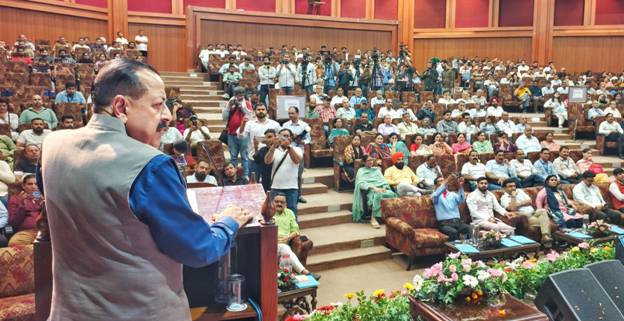
- 12 Jun 2026
In News:
The India Meteorological Department (IMD) has inaugurated its 7th Regional Meteorological Centre (RMC) at Jammu, marking a significant step towards strengthening weather forecasting and disaster preparedness in the Himalayan region. The government has also announced the establishment of another RMC at Lucknow.
Background
Prior to this expansion, IMD operated through six Regional Meteorological Centres located at:Mumbai, Chennai, New Delhi, Kolkata, Nagpur, and Guwahati
These centres serve as regional hubs for weather forecasting, climate services, and disaster early-warning systems.
Coverage and Functions
- The newly established RMC Jammu will cater to Jammu & Kashmir, Ladakh, and Himachal Pradesh, while the proposed Lucknow RMC will serve Uttar Pradesh and Uttarakhand.
- The centre will strengthen monitoring and forecasting of weather-related hazards such as:Flash floods, Cloudbursts, Landslides, Avalanches, Heavy snowfall, and Thunderstorms
- It will provide specialized forecasts at regional, district, city, tourist destination, and mountain levels, along with advisories for pilgrims, farmers, transport operators, and disaster management agencies.
Significance
The establishment of RMC Jammu is particularly important given the vulnerability of the Himalayan region to extreme weather events and climate-related disasters. It will enhance:
- Early warning and disaster preparedness.
- Himalayan weather and climate services.
- Agricultural and tourism advisories.
- Support for infrastructure planning and transportation.
- Scientific understanding of mountain meteorology.
The initiative also strengthens India's meteorological infrastructure and contributes to more localized and impact-based weather forecasting.
About India Meteorological Department (IMD)
The India Meteorological Department (IMD) is the national meteorological service of India.
- Established: 1875
- Ministry: Ministry of Earth Sciences
- Headquarters: New Delhi
- Functions: Weather forecasting, climate monitoring, seismology, cyclone warnings, and meteorological services.
4 years of Jan Samarth Portal
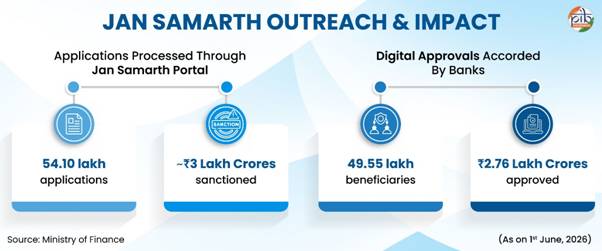
- 12 Jun 2026
In News:
Launched in June 2022, the Jan Samarth Portal has emerged as a comprehensive single-window digital platform for accessing government-sponsored credit-linked schemes. Designed to simplify the loan delivery process, the portal connects beneficiaries, lending institutions, and government schemes through a technology-driven ecosystem, thereby expanding access to institutional credit across the country.
Objective
The portal was created to streamline access to credit-linked government schemes, reduce procedural complexities, and improve financial inclusion through a transparent and digital application process. It aims to ensure that eligible beneficiaries can easily identify suitable schemes and obtain loans without navigating multiple agencies.
Key Features
Jan Samarth serves as a unified gateway for 16 credit-linked Central Government schemes covering sectors such as:
- Agriculture and Agri-Infrastructure
- MSMEs and Business Activities
- Livelihood Promotion
- Housing
- Renewable Energy
The platform caters particularly to entrepreneurs, women-led enterprises, agri-entrepreneurs, start-ups, and small businesses, especially in rural areas and Tier-2 and Tier-3 towns.
To improve accessibility, the portal is available in eight languages—English, Hindi, Gujarati, Telugu, Tamil, Marathi, Bengali, and Kannada.
Digital Integration
A major strength of Jan Samarth is its integration with key national databases, including:
- UDYAM
- UIDAI
- AgriStack
- DPIIT Startup Portal
- CBDT
- GST Network
- CGTMSE
These integrations facilitate faster verification, reduce paperwork, and improve loan processing efficiency.
Lending Ecosystem
The platform has onboarded 269 Member Lending Institutions, including:
- Public Sector Banks
- Private Sector Banks
- NBFCs
- Regional Rural Banks
- Small Finance Banks
- Cooperative Banks
- All-India Financial Institutions
This broad institutional network enhances credit accessibility across regions and sectors.
Maulana Barkatullah Bhopali
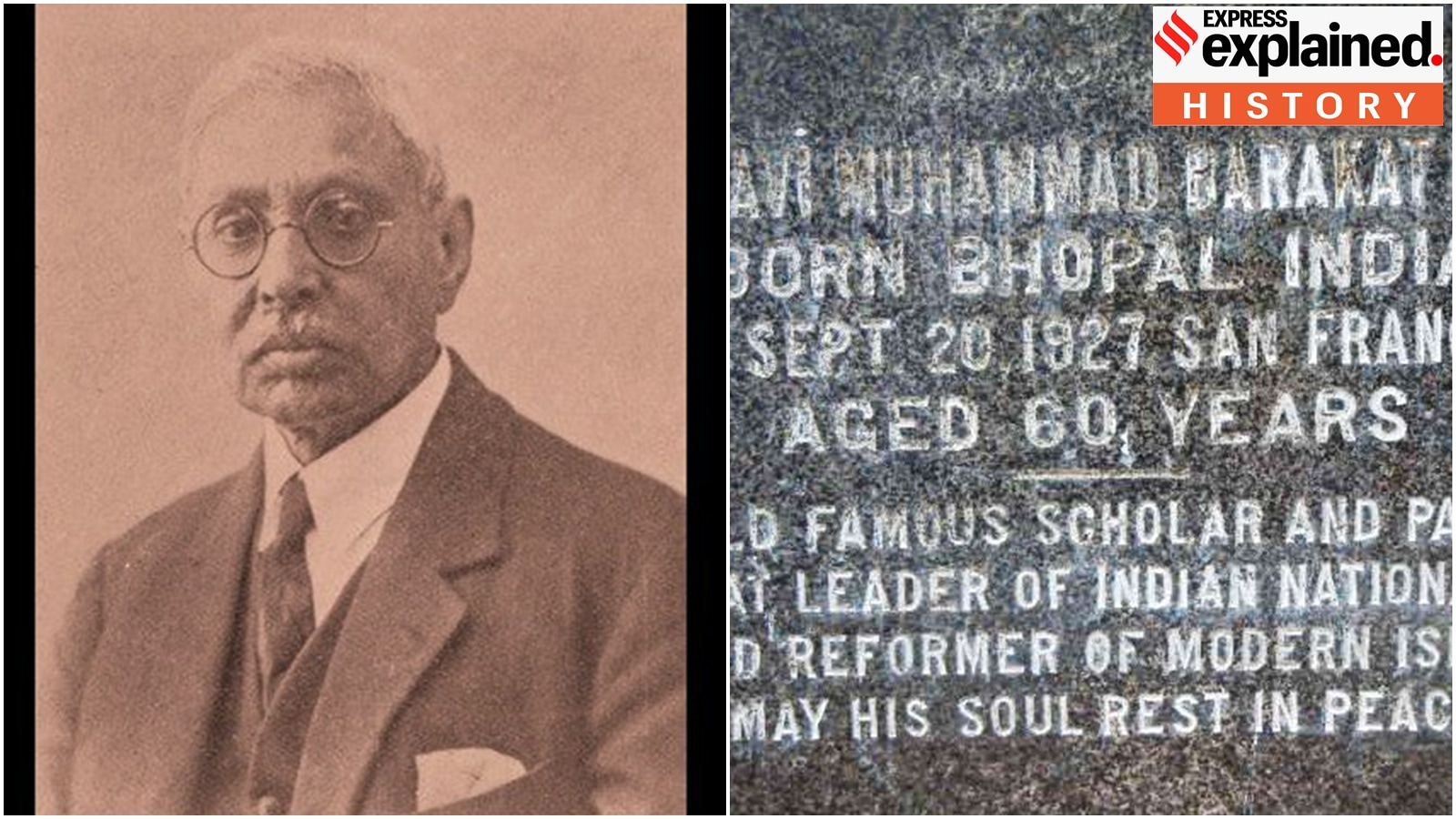
- 12 Jun 2026
In News:
Recently, the Executive Council of Barkatullah University approved a proposal to rename the institution, bringing renewed attention to the legacy of Maulana Barkatullah Bhopali, one of the most significant yet lesser-known figures of India's freedom struggle.
Early Life and Ideological Foundations
- Born on 7 July 1854 in Bhopal, Maulana Barkatullah was a scholar, journalist and revolutionary who dedicated his life to securing India's independence from British rule.
- Educated in Bhopal, Bombay and later England, he became deeply involved in anti-colonial activism while teaching Arabic and Persian in Liverpool.
- A firm believer in Hindu-Muslim unity, Barkatullah argued that British colonial exploitation affected all Indians irrespective of religion and that national liberation required a united struggle against colonial rule.
Globalizing India’s Freedom Struggle
Unlike many nationalist leaders who operated within India, Barkatullah spent most of his life abroad building international support for Indian independence. His activities extended across Asia, Europe and North America, making him one of the earliest architects of a global anti-colonial network.
His revolutionary work sought to transform India's freedom movement from a domestic political struggle into an international campaign against British imperialism.
Provisional Government of India in Kabul (1915)
A landmark contribution came on 1 December 1915, when Barkatullah helped establish the Provisional Government of India in Kabul, often regarded as India's first Government-in-Exile.
Its leadership included:
- Raja Mahendra Pratap – President
- Maulana Barkatullah Bhopali – Prime Minister
- Maulana Ubaidullah Sindhi – Home Minister
The government aimed to secure international support for India's liberation and challenge British authority during the First World War.
Association with the Ghadar Movement
- Barkatullah was a prominent leader of the Ghadar Party, established in 1913. The party advocated armed revolution against British rule and sought to inspire uprisings within the British Indian Army.
- During the First World War, he collaborated with Germany and attempted to mobilize Indian prisoners of war and expatriates to support the anti-colonial struggle.
International Outreach
- In 1919, Barkatullah met Vladimir Lenin in Moscow to seek international support for India's independence movement. His diplomatic efforts reflected the global dimension of India's anti-colonial struggle long before independence became a mass movement.
Legacy and Significance
Maulana Barkatullah's contributions were significant in three respects:
- He served as the Prime Minister of India's first Government-in-Exile.
- He internationalized the Indian freedom movement through global advocacy and diplomacy.
- His revolutionary efforts influenced later movements, including those associated with Subhas Chandra Bose and the Indian National Army.
Despite constant surveillance and exile, he remained committed to India's freedom until his death in San Francisco in 1927, where he was attending a Ghadar Party gathering.
e-Jagriti Platform
- 12 Jun 2026
In News:
The e-Jagriti platform, an AI-enabled initiative of the Department of Consumer Affairs, was awarded the Silver Award at the National Awards for e-Governance 2026, recognizing its contribution to digital transformation in consumer dispute redressal. The platform represents a major step towards creating a transparent, paperless, and technology-driven consumer justice ecosystem in India.
What is e-Jagriti?
Launched on 1 January 2025, e-Jagriti is an integrated digital platform designed to modernize the consumer dispute resolution framework across the country. It seeks to replace physical paperwork and fragmented processes with a unified virtual system, enabling consumers to file, track, and resolve complaints online.
Developed by the Department of Consumer Affairs under the Ministry of Consumer Affairs, Food and Public Distribution, the platform aims to reduce pendency, improve efficiency, and democratize access to consumer justice for citizens, including Non-Resident Indians (NRIs).
Key Features
A major strength of e-Jagriti is the integration of four legacy consumer grievance systems—OCMS, e-Daakhil, NCDRC CMS, and CONFONET—into a single cloud-based platform.
The system incorporates advanced technologies such as:
- AI-powered chatbot assistance.
- Voice-to-text complaint filing.
- Real-time case tracking dashboards.
- Automated data analytics for judicial and administrative monitoring.
The platform also offers a fully digital payment ecosystem integrated with Bharat Kosh, PayGov, and SBI ePay, ensuring seamless online filing and fee payment.
Virtual Consumer Courts
e-Jagriti promotes virtual hearings through integrated video-conferencing facilities and digital document exchange mechanisms. It supports proceedings across the National Consumer Disputes Redressal Commission (NCDRC) and all State Consumer Commissions, reducing costs and improving accessibility.
The platform has also enabled NRIs from countries such as the USA, UK, UAE and Canada to file and pursue consumer complaints remotely, without visiting India.
UN Military Gender Advocate of the Year Award 2025
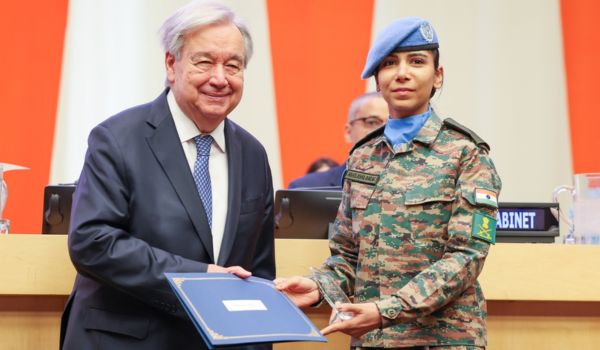
- 11 Jun 2026
In News:
Recently, Major Abhilasha Barak of the Indian Army was conferred the prestigious United Nations Military Gender Advocate of the Year Award, becoming the third Indian peacekeeper to receive this global recognition.
About the Award
The UN Military Gender Advocate of the Year Award is an annual international honour instituted in 2016 by the United Nations Department of Peace Operations (DPO) through its Office of Military Affairs.
The award recognizes military peacekeepers who have made outstanding contributions to advancing the principles of United Nations Security Council Resolution 1325 (UNSCR 1325) on Women, Peace and Security.
It aims to promote the integration of gender perspectives into peacekeeping operations and ensure that the security, protection, and humanitarian needs of women and girls are adequately addressed in conflict zones.
Key Features
- Awarded annually to an individual military peacekeeper serving in UN missions.
- Candidates are nominated by Force Commanders and Heads of UN Peacekeeping Missions.
- Recognizes innovations such as:
- Gender-responsive peacekeeping.
- Mixed-gender patrols.
- Community engagement initiatives.
- Capacity-building and awareness programmes.
- Provides a global platform for sharing best practices in gender-sensitive peacekeeping.
Major Abhilasha Barak
Major Abhilasha Barak is an officer of the Indian Army currently serving with the United Nations Interim Force in Lebanon (UNIFIL).
She serves as:
- Engagement Team Commander, leading interactions with local communities.
- Gender Focal Point, acting as a bridge between UN military leadership and local women's groups.
Her contributions include:
- Addressing gender-specific security concerns.
- Improving outreach to women and vulnerable communities.
- Promoting inclusive community safety mechanisms.
- Strengthening humanitarian coordination and resource distribution.
Her work has helped enhance trust between local communities and UN peacekeepers in a sensitive conflict-affected region along the Blue Line between Lebanon and Israel.
Indian Recipients of the Award
India has emerged as a significant contributor to gender-responsive peacekeeping:
|
Year |
Awardee |
Mission |
|
2019 |
Major Suman Gawani |
UN Mission in South Sudan (UNMISS) |
|
2023 |
Major Radhika Sen |
UN Stabilization Mission in DR Congo (MONUSCO) |
|
2025 |
Major Abhilasha Barak |
UN Interim Force in Lebanon (UNIFIL) |
Ease of Doing Business
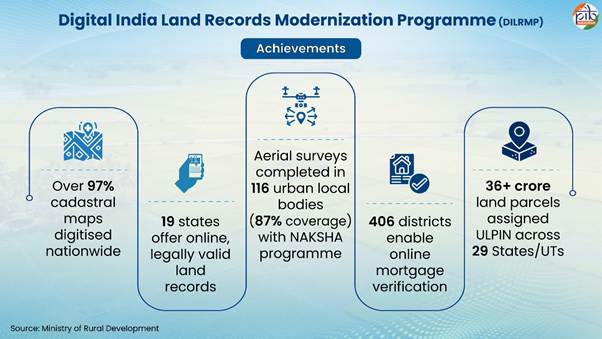
- 11 Jun 2026
In News:
India has undertaken a comprehensive transformation of its business and regulatory framework over the last decade, shifting from a compliance-heavy administrative system to a digital, trust-based and facilitation-oriented governance model.
Led by the Department for Promotion of Industry and Internal Trade (DPIIT) and supported by multiple ministries, these reforms aim to reduce compliance burdens, improve investor confidence, encourage entrepreneurship and enhance India's global competitiveness.
The reforms form a critical component of India's broader vision of building a Viksit Bharat by 2047 through digital governance, streamlined regulations, transparent administration and efficient service delivery.
India's Progress in Global Competitiveness
The impact of these reforms is reflected in India's improved performance across various global governance and competitiveness indicators.
- India's rank in the World Bank's Ease of Doing Business Index improved dramatically from 142nd in 2014 to 63rd in 2019, one of the fastest improvements globally. Similarly, India's ranking in the IMD World Competitiveness Ranking improved from 43rd in 2021 to 41st in 2025.
- The country has also been placed in the top-tier Group A category of the World Bank's GovTech Maturity Index in 2020, 2022 and 2025, reflecting significant progress in digital governance. Furthermore, the UN E-Government Survey has recognized India's strong performance in online public services, telecommunications infrastructure and human capital.
Simplifying Business Entry and Formalisation
A major focus of reforms has been reducing barriers to starting and operating businesses.
Startup India
- The Startup India initiative has significantly expanded India's startup ecosystem. The number of recognized startups increased from 502 in 2016 to more than 2.23 lakh in 2026, generating over 23.3 lakh jobs.
- Notably, nearly 48% of recognized startups have at least one woman director or partner, highlighting increasing inclusivity.
SPICe and MCA21
- The SPICe (Simplified Proforma for Incorporating Company Electronically Plus) system integrated ten separate incorporation procedures into a single online application, significantly reducing the time and cost involved in starting a business.
- The MCA21 Version 3.0 platform processed 3.84 crore filings between 2021 and 2025, with most approvals granted through Straight Through Processing (STP), reducing human intervention and delays.
Udyam Registration Portal
- Launched in 2020, the Udyam Portal provides a free, paperless, self-declaration-based registration system for MSMEs.
- Monthly registrations increased from about 10,000 in 2020 to over 8.58 lakh in 2026, promoting formalisation and improving access to government support.
Land and Property Reforms
- Land administration has traditionally been one of the most challenging aspects of doing business in India. Significant reforms have therefore focused on digitisation and transparency.
Digital India Land Records Modernization Programme (DILRMP)
- The Digital India Land Records Modernization Programme (DILRMP) has digitized 97.37% of cadastral maps and assigned Unique Land Parcel Identification Numbers (ULPINs) to more than 36 crore land parcels.
- ULPIN is often referred to as the "Aadhaar for Land" because it provides a unique identity to each land parcel, reducing disputes and improving transparency.
National Generic Document Registration System (NGDRS)
- The NGDRS seeks to standardize and digitize property registration processes across states. However, implementation remains uneven and is currently limited to a relatively small number of States and Union Territories.
Single-Window Clearances and Regulatory Simplification
National Single Window System (NSWS)
The National Single Window System (NSWS) acts as a unified digital platform for investors by integrating approvals from:
- 32 Central Ministries and Departments
- 34 States and Union Territories
The system has facilitated more than 8.29 lakh approvals and clearances, significantly reducing procedural complexity.
PARIVESH 2.0
The PARIVESH platform has transformed environmental clearances through digital processing and monitoring. Clearance timelines have reportedly been reduced to approximately 64 days, improving project execution while maintaining environmental safeguards.
Strengthening Market Access and Logistics
Government e-Marketplace (GeM)
The Government e-Marketplace (GeM) has revolutionized public procurement by creating a transparent digital marketplace for government purchases.
Key achievements include:
- Cumulative procurement exceeding ?18.4 lakh crore
- Procurement worth nearly ?5 lakh crore in FY 2025–26
- Around 68% of orders sourced from Micro and Small Enterprises (MSEs)
PM Gati Shakti
- The PM Gati Shakti National Master Plan integrates planning across 58 ministries and all States and Union Territories through over 3,199 GIS layers.
- The platform has evaluated 352 infrastructure projects worth approximately ?16.1 lakh crore, promoting integrated infrastructure development and reducing logistics costs.
Logistics Performance
- India's rank in the World Bank Logistics Performance Index improved from 54th in 2014 to 38th in 2023.
- The Logistics Data Bank (LDB) 2.0 now tracks nearly 100% of EXIM containers, covering around 95 million container movements, thereby improving supply chain visibility and efficiency.
Expanding Credit Access and Digital Financial Infrastructure
Credit Support to MSMEs
- The Credit Guarantee Fund Trust for Micro and Small Enterprises (CGTMSE) has extended guarantees worth approximately ?9.34 lakh crore, supporting easier access to credit for MSMEs.
- Under the Pradhan Mantri Mudra Yojana (PMMY), more than 57 crore loans amounting to ?40.07 lakh crore have been sanctioned since 2015.
- Importantly, women account for nearly 60% of Mudra loan beneficiaries, highlighting the scheme's role in promoting financial inclusion.
UPI Revolution
- India's digital payments ecosystem has witnessed unprecedented growth through Unified Payments Interface (UPI).
- Transactions increased from around 2 crore in FY 2016–17 to over 24,162 crore transactions in FY 2025–26, with a transaction value exceeding ?314 lakh crore, making UPI the world's largest real-time payment system.
GST Reforms
The implementation of Goods and Services Tax (GST) has simplified indirect taxation by creating a unified national market.
Key indicators include:
- GST taxpayer base increasing from about 60 lakh to 1.64 crore
- Processing of ?107.64 lakh crore in tax payments
- Generation of 188.27 crore e-Way Bills in FY 2025–26
Emerging Reforms and Open Digital Commerce
India has also focused on reducing compliance burdens through trust-based governance.
Labour Reforms
The Labour Codes introduced:
- Risk-based inspections
- Randomized web-based allocation of inspections
- Transformation of inspectors into Inspector-cum-Facilitators
These measures seek to reduce discretionary powers and improve compliance support.
Consent to Operate Reforms
Revisions to industrial consent guidelines have made the Consent to Operate (CTO) valid until cancelled in many cases, eliminating the burden of repeated renewals.
Open Network for Digital Commerce (ONDC)
The Open Network for Digital Commerce (ONDC) is democratizing e-commerce by reducing platform monopolies.
The network has onboarded:
- Over 7.64 lakh sellers
- Across more than 616 cities
This has improved market access for small retailers and MSMEs.
Challenges Ahead
Despite substantial progress, several challenges remain:
- Uneven implementation of reforms across States and districts.
- Delays in insolvency resolution due to tribunal bottlenecks.
- Legacy land record discrepancies affecting property transactions.
- Digital literacy and language barriers for rural enterprises.
- Variations in local-level administrative capacity.
These issues continue to affect the uniform implementation of reforms across the country.
Way Forward
Further improvements can be achieved through:
- Faster disposal of insolvency cases under the Insolvency and Bankruptcy framework.
- Expansion of the District Business Reform Action Plan (D-BRAP).
- Wider adoption of Trade Receivables Discounting System (TReDS) to improve MSME liquidity.
- Continued decriminalization of minor business offences under the Jan Vishwas Act framework.
- Strengthening export promotion initiatives and integration into global value chains.
Project 18 (P-18)

- 11 Jun 2026
In News:
India's Project 18 (P-18) is the Indian Navy's proposed Next-Generation Destroyer (NGD)programme, envisioned as the successor to the Visakhapatnam-class destroyer. The project aims to develop some of the most powerful and technologically advanced surface combatants ever built in India, significantly enhancing the Navy's blue-water capabilities.
About the Programme
The programme is being overseen by the Indian Navy's Warship Design Bureau (WDB) in collaboration with Mazagon Dock Shipbuilders Limited (MDL) and Garden Reach Shipbuilders & Engineers (GRSE).
The P-18 class is envisaged as a fleet of multi-role stealth destroyers capable of undertaking air defence, anti-surface, anti-submarine, and land-attack missions.
Key Features
With an estimated displacement of over 13,000 tonnes, Project 18 ships will be among the largest warships ever operated by India. Since warships exceeding 10,000 tonnes are generally classified as cruisers, Project 18 could effectively mark India's entry into the cruiser-class category.
The vessels are expected to feature:
- Advanced Integrated Electric Propulsion (IEP) powered by gas turbines and diesel generators.
- Extensive automation, reducing crew requirements by 25–30% compared to existing destroyers.
- Advanced stealth features and network-centric warfare capabilities.
Advanced Weapon Systems
Each vessel is expected to be equipped with 114 Vertical Launch System (VLS) cells, capable of deploying a diverse range of indigenous missile systems, including:
- BrahMos and BrahMos Next Generation
- Long-Range Land Attack Cruise Missiles (LR-LACM)
- Precision-Guided Long-Range Surface-to-Air Missiles (PGLRSAM)
- Short-Range Surface-to-Air Missiles (SRSAM)
- SMART anti-submarine weapon system
Future Warfare Capabilities
Project 18 is being designed with emerging warfare requirements in mind. The ships are expected to operate:
- Unmanned Underwater Vehicles (UUVs)
- Kamikaze/loitering drones
- Advanced anti-submarine systems
- Mine-detection and surveillance platforms
The destroyers are also expected to be equipped with next-generation radar systems capable of 360-degree surveillance and detection of threats up to 500 km away.
India Showcases Carbon Credit Trading Scheme (CCTS) at WTO Trade and Environment Week 2026
- 11 Jun 2026
In News:
On World Environment Day 2026, India showcased its Carbon Credit Trading Scheme (CCTS) and renewable energy standardization efforts at the WTO Trade and Environment Week in Geneva. The event highlighted India's progress towards a low-carbon economy, clean energy transition, and achievement of its Nationally Determined Contributions (NDCs) under the Paris Agreement.
India's Climate Achievements
India emphasized that its climate strategy is guided by the principles of Equity and Common but Differentiated Responsibilities and Respective Capabilities (CBDR-RC) under the UNFCCC framework.
Notably, India has achieved key climate targets ahead of schedule:
- Non-fossil fuel-based installed power capacity reached 53.21% in March 2026, surpassing the NDC target of 50% by 2030.
- Emissions intensity of GDP declined by 37.38% between 2005 and 2022, exceeding the target of 33–35% reduction by 2030.
Carbon Credit Trading Scheme (CCTS)
- The Carbon Credit Trading Scheme (CCTS) forms the foundation of India's Indian Carbon Market (ICM). It was notified by the Ministry of Power in 2023 under the Energy Conservation Act, 2001.
- The scheme seeks to establish a national electronic carbon credit trading platform and promote market-based mechanisms for reducing greenhouse gas emissions.
Key Features
- Operates on a Cap-and-Trade Model.
- Entities exceeding prescribed emission reduction targets earn Carbon Credit Certificates (CCCs).
- 1 Carbon Credit Certificate = 1 tonne of CO? equivalent emissions reduced or avoided.
- Includes both compliance and offset mechanisms.
Institutional Framework
- Administrator: Bureau of Energy Efficiency (BEE)
- Market Regulator: Central Electricity Regulatory Commission (CERC)
- Registry: Grid Controller of India Limited (GRID-INDIA)
Green Hydrogen Standardisation
India also showcased progress under the National Green Hydrogen Mission, highlighting the notified emission thresholds and technical criteria for classifying hydrogen as "Green Hydrogen."
These standards aim to:
- Ensure transparency and credibility.
- Provide certainty for investors and producers.
- Support the development of a robust green hydrogen ecosystem.
Land Port Management System

- 11 Jun 2026
In News:
The Union Home Minister launched the Land Port Management System (LPMS) on 9 June 2026 as a major step towards technology-enabled smart border management, trade facilitation, and secure cross-border movement of goods and passengers.
What is LPMS?
LPMS is a state-of-the-art digital platform developed to integrate operations across India's land ports into a unified system. It enables secure and real-time exchange of logistics, regulatory, and operational information, bringing land ports on par with the digital systems used at airports and seaports.
Key Features
- Provides end-to-end digital processing of cargo and passenger movement.
- Enables:
- Slot booking
- Online payments
- Cargo tracking
- Single-window clearances
- Facilitates seamless coordination among government agencies and private stakeholders.
- Reduces delays, improves transparency, and enhances operational efficiency.
- Integrated with major national digital platforms such as:
- ICEGATE (Indian Customs Electronic Gateway)
- ULIP (Unified Logistics Interface Platform)
- Motor Vehicle Ecosystem
Significance
LPMS is expected to:
- Strengthen border security and surveillance.
- Improve ease of cross-border trade.
- Enhance transparency and efficiency in border operations.
- Support regional connectivity and economic integration.
- Contribute to the vision of Viksit Bharat 2047 through smart infrastructure and digital governance.
Land Ports Authority of India (LPAI)
The Land Ports Authority of India (LPAI) is a statutory body under the Department of Border Management, Ministry of Home Affairs.
Functions
- Develops and manages Integrated Check Posts (Land Ports).
- Facilitates trade, passenger movement, connectivity, and regional cooperation across India's international borders.
Present Coverage
LPAI currently operates 15 land ports along India's borders with:
- Pakistan
- Nepal
- Bhutan
- Bangladesh
- Myanmar
Digital India BHASHINI Division (DIBD)
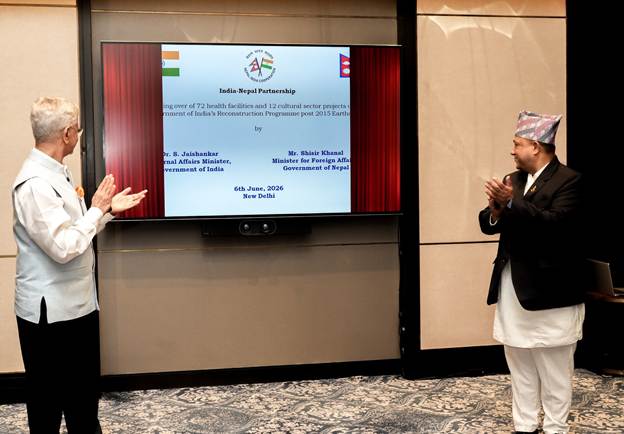
- 10 Jun 2026
In News:
Recently, the Digital India BHASHINI Division (DIBD) signed a Memorandum of Understanding (MoU) with Kathmandu University Centre for Digital Public Infrastructure and Artificial Intelligence to strengthen cooperation in multilingual AI, Digital Public Infrastructure (DPI), and language technologies. The partnership reflects India's growing role in promoting digital public goods and AI-driven governance beyond its borders.
What is the Digital India BHASHINI Division?
- The Digital India BHASHINI Division (DIBD) functions under the Digital India Corporation, which operates under the Ministry of Electronics and Information Technology (MeitY).
- It serves as India's flagship initiative for AI-driven multilingual digital inclusion and language technology development.
- At its core is the BHASHINI platform (BHASHaINterface for India), which seeks to bridge India's linguistic diversity by making digital services accessible in multiple Indian languages through Artificial Intelligence and Natural Language Processing (NLP).
Key Features
- Through the National Hub for Language Technology (NHLT), BHASHINI provides scalable speech and text-based AI solutions for governance, public service delivery, education, and digital platforms.
- The initiative promotes open-source innovation, multilingual AI research, dataset creation, startup support, and academic collaboration.
- The platform has emerged as a critical component of India's Digital Public Infrastructure ecosystem by enabling seamless communication across languages and improving digital accessibility.
Scale and Reach
BHASHINI has witnessed significant adoption across government platforms and digital services:
- Powers more than 800 government websites.
- Processes over 15 million AI inferences daily.
- Supports 36 Indian text languages.
- Supports 23 Indian voice languages.
- Provides capabilities in 35 international languages.
The platform also makes AI and NLP resources available in the public domain for MSMEs, startups, researchers, and innovators, fostering the development of indigenous language technologies.
Economic Advisory Council to the Prime Minister (EAC-PM)
- 10 Jun 2026
In News:
Recently, the Prime Minister chaired a meeting of the Economic Advisory Council to the Prime Minister (EAC-PM), highlighting the body's role in providing expert economic inputs to the highest levels of policymaking.
What is the EAC-PM?
- The EAC-PM is an independent advisory body constituted to provide advice on economic and related issues directly to the Prime Minister.
- It serves as a platform through which eminent economists and experts offer informed perspectives on key economic challenges and policy priorities facing the country.
- The Council's recommendations are advisory in nature and not binding on the Government, allowing it to function as an independent source of expert opinion.
Functions and Mandate
- The Terms of Reference of the EAC-PM include analysing economic and other issues referred to it by the Prime Minister and providing recommendations thereon.
- It examines matters of macroeconomic importance, identifies emerging challenges and opportunities, and presents its views to the Prime Minister.
- The Council may undertake studies either suo motu or on issues referred by the Prime Minister or other stakeholders. It can also perform any additional tasks assigned by the Prime Minister from time to time.
- Beyond policy advice, the EAC-PM contributes to fostering greater public understanding of economic issues through research papers, reports and analytical studies.
Composition
- The EAC-PM is headed by a Chairperson and comprises eminent economists and experts as members. It is supported by a team of officials and administrative staff.
- There is no fixed statutory strength for the Council, and its composition may vary over time based on requirements.
- For administrative, logistical and budgetary support, NITI Aayog acts as the nodal agency for the Council.
Panchayat Advancement Index (PAI) Wins Gold Award at National Awards for e-Governance 2026
- 10 Jun 2026
In News:
The Panchayat Advancement Index (PAI), a flagship initiative of the Ministry of Panchayati Raj, has been awarded the Gold Award at the National Awards for e-Governance (NAeG) 2026 under the category “Digital Transformation through the Use of Data Analytics in Digital Platforms.”
The recognition reflects India's growing emphasis on data-driven governance and evidence-based policymaking at the grassroots level.
What is the Panchayat Advancement Index?
- The Panchayat Advancement Index (PAI) is India's first comprehensive, analytics-based framework for evaluating the performance of Gram Panchayats across the country.
- Developed by the Ministry of Panchayati Raj, it serves as a standardized report card for rural local bodies, enabling objective assessment of development outcomes and governance performance.
- Under its latest PAI 2.0 version, the platform assesses more than 6 lakh Gram Panchayats using over 150 indicators and 230 data points.
- The index is aligned with the Localisation of Sustainable Development Goals (LSDGs) and evaluates Panchayats across nine themes, including poverty reduction, health, child welfare, water security, environmental sustainability, infrastructure, social protection, good governance, and women-centric development.
- By generating composite scores and performance rankings, the index helps identify developmental gaps, promote accountability, and facilitate better targeting of government resources and interventions.
About the National Awards for e-Governance
- The National Awards for e-Governance, instituted in 2003, are India's premier awards recognizing excellence in digital governance and public service delivery.
- Presented annually by the Department of Administrative Reforms and Public Grievances (DARPG) in coordination with the Ministry of Electronics and Information Technology (MeitY), the awards encourage innovative technology-driven solutions that improve governance outcomes.
- The 2026 edition was organized around the theme “Viksit Bharat 2047: AI-Enabled, Data-Driven and Secure Digital Governance.” Along with a trophy and citation, the Gold Award carries a ?10 lakh incentive to support further technological enhancement of the platform.
E85 Fuel
- 10 Jun 2026
In News:
On World Environment Day 2026, the Union Minister for Petroleum and Natural Gas launched E85 fuel at an IndianOil retail outlet in New Delhi, marking a significant step in India's transition towards a structured flex-fuel ecosystem. The rollout has begun across 48 retail outlets of Public Sector Oil Marketing Companies (OMCs) and is targeted to expand to 500 outlets by December 2026 and 5,000 outlets by December 2027.
What is E85 Fuel?
E85 is a high-ethanol blended fuel containing:
- 80–85% Ethanol
- 14–19% Petrol
It is specifically designed for Flex-Fuel Vehicles (FFVs), which can operate on multiple ethanol-petrol blends ranging from E20 to E100. Unlike conventional petrol vehicles, E85 can only be used in specially designed flex-fuel engines.
Why is E85 Important?
The introduction of E85 represents the next phase of India's ethanol blending programme. Having already achieved the 20% ethanol blending target (E20) five years ahead of schedule, India is now seeking to deepen ethanol penetration in the transport sector.
The initiative seeks to:
- Enhance energy security by reducing crude oil imports.
- Promote cleaner transportation fuels.
- Increase farmer incomes through greater demand for ethanol feedstocks.
- Support India's climate commitments through lower carbon emissions.
The government estimates that wider adoption of E85 and FFVs could raise India's aggregate ethanol blending level to nearly 26% by 2030-31.
Key Benefits of E85 Fuel
Economic Benefits
E85 is priced nearly ?20 per litre lower than conventional petrol, allowing consumers to directly benefit from the lower cost of domestically produced ethanol.
The broader ethanol programme has already delivered significant gains:
- Ethanol blending increased from 1.53% in 2014 to 20% in 2026.
- Foreign exchange savings exceeding ?1.84 lakh crore.
- Substitution of nearly 302 lakh metric tonnes of crude oil imports.
Environmental Benefits
E85 offers substantial environmental advantages:
- Around 61% reduction in lifecycle greenhouse gas emissions compared to petrol.
- Potential annual reduction of 66.4 lakh metric tonnes of CO? emissions through large-scale adoption.
- Near-zero particulate matter emissions due to cleaner combustion.
- Improved urban air quality and reduced pollution levels.
Technical Advantages
Ethanol possesses a Research Octane Number (RON) of about 108, considerably higher than conventional petrol.
This results in:
- Superior knock resistance.
- Higher engine compression ratios.
- Optimized ignition timing.
- Improved engine efficiency and performance.
Flex-Fuel Vehicles (FFVs): The Backbone of E85 Adoption
Flex-Fuel Vehicles are capable of operating on varying ethanol blends from E20 to E100 without requiring major modifications.
Their advantages include:
- Fuel flexibility.
- Lower running costs.
- Utilization of existing fuel distribution infrastructure.
- Lower acquisition cost compared to many electric vehicles.
Unlike electric vehicles that rely heavily on imported batteries and critical minerals, FFVs run on ethanol produced domestically from agricultural feedstocks such as sugarcane and food grains.
Benefits for Farmers and the Rural Economy
The E85 initiative strengthens the government's vision of transforming farmers from "Annadatas" (food providers) into "Urjadatas" (energy providers).
Government estimates suggest that if 50% of new two-wheelers and four-wheelers adopt flex-fuel technology:
- Ethanol demand could exceed 312 crore litres annually.
- Nearly ?12,403 crore could flow directly to farmers.
- Foreign exchange savings could reach ?15,151 crore annually.
Thus, E85 has the potential to create a strong linkage between agriculture, energy security and rural prosperity.
Lessons from the Brazil Model
India's flex-fuel strategy draws inspiration from Brazil, which has successfully adopted ethanol-based mobility over several decades.
Key features of Brazil's experience include:
- Extensive use of high-ethanol blended fuels.
- More than 80% of the country's light vehicle fleet operating on flex-fuel technology.
- Demonstrated long-term viability of ethanol as a transport fuel.
Brazil's experience highlights the potential of ethanol to reduce dependence on fossil fuel imports while supporting domestic agricultural production.
Addressing Common Misconceptions
The government has clarified several concerns regarding ethanol-blended fuels:
- E85 is intended only for flex-fuel vehicles, not ordinary petrol vehicles.
- Since the nationwide adoption of E20 fuel, no engine failures attributable to ethanol blending have been reported.
- E20-compatible vehicles often demonstrate improved acceleration and driving performance.
- Usage of ethanol-blended fuel does not affect vehicle insurance validity.
NASA’s MAVEN Mission Ends
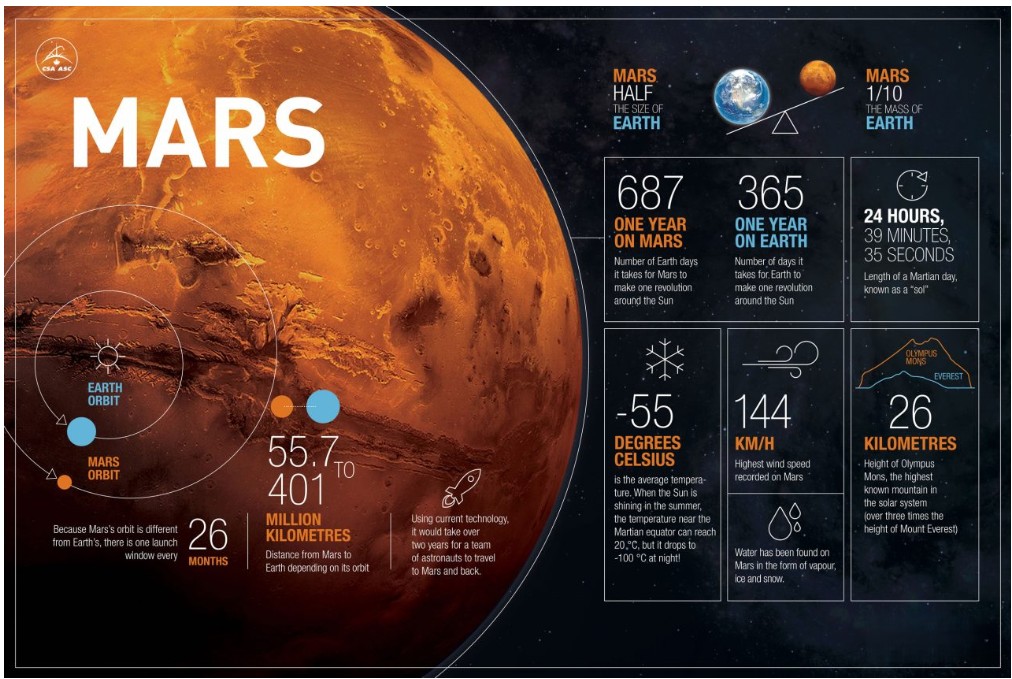
- 10 Jun 2026
In News:
NASA’s Mars Atmosphere and Volatile Evolution (MAVEN) mission, the first spacecraft dedicated exclusively to studying the Martian atmosphere, has officially concluded after more than 11 years in orbit around Mars. Launched in 2013 and entering Martian orbit in 2014, MAVEN far exceeded its planned one-year mission life and became one of the most successful Mars exploration missions.
Why was MAVEN important?
MAVEN was designed to investigate how Mars lost much of its atmosphere and water over billions of years, helping scientists understand how the planet transformed from a potentially habitable world into the cold, dry planet.
Key Contributions
Understanding Atmospheric Loss
- Demonstrated that solar wind and solar storms continuously strip atmospheric particles from Mars.
- Established a direct link between solar activity and atmospheric escape.
- Provided crucial evidence explaining the long-term thinning of the Martian atmosphere.
Discovery of New Auroras
- Detected previously unknown types of Martian auroras, including proton auroras.
- Improved understanding of interactions between the Sun and planetary atmospheres.
Evidence of Atmospheric Sputtering
- Measured the escape of atmospheric gases such as argon.
- Confirmed atmospheric sputtering as a major mechanism responsible for atmospheric erosion.
Dust Storm and Water Loss Studies
During the global dust storm of 2018, MAVEN observed that dust-driven heating lifted water vapour to higher altitudes, where it was broken down by solar radiation and lost to space. This explained periodic spikes in water loss from Mars.
Additional Scientific Contributions
- Studied Mars’ ionosphere and magnetosphere.
- Observed the interstellar comet 3I/ATLAS using ultraviolet and multi-wavelength instruments.
- Served as an important communication relay for Mars rover missions.
End of the Mission
NASA lost contact with MAVEN in December 2025 after the spacecraft experienced an anomaly and entered an unrecoverable state. The mission was officially declared concluded in 2026.
Software Technology Parks of India (STPI)
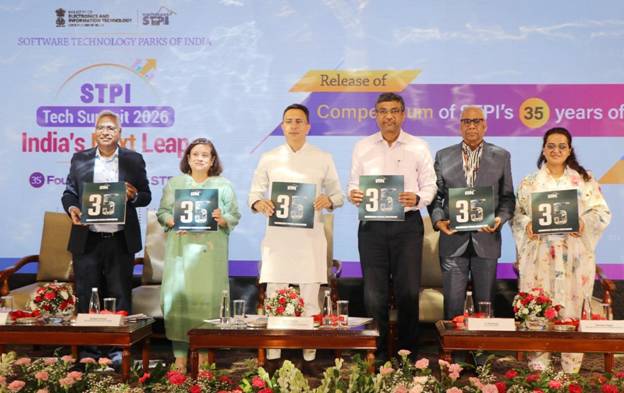
- 09 Jun 2026
In News:
Recently, the Software Technology Parks of India (STPI) celebrated its 35th Foundation Day and organized the STPI Tech Summit 2026: India's Next Leap in New Delhi. The event highlighted STPI's contribution to India's transformation into a global information technology and innovation hub.
About STPI
- Software Technology Parks of India is a premier Science and Technology organization established in 1991 under the Ministry of Electronics and Information Technology (MeitY).
- It was created primarily to promote software exports and support the growth of India's IT and IT-enabled Services (IT/ITES) sector.
- Since its inception, STPI has played a crucial role in positioning India as a leading global destination for software development, IT services, and digital innovation.
- It implements the Software Technology Park (STP) Scheme and the Electronics Hardware Technology Park (EHTP) Scheme, which provide an enabling environment for technology enterprises engaged in exports.
Objectives and Functions
- The core objective of STPI is to facilitate and promote software and IT-enabled service exports from India.
- It acts as a single-window support system for technology companies by providing infrastructure, regulatory facilitation, and export-related services.
- STPI assists firms in software development and export activities while ensuring compliance with customs regulations, foreign exchange requirements, and other statutory obligations. Through these services, it has significantly contributed to the growth of India's IT export ecosystem.
Key Services Provided by STPI
- Infrastructure Support: STPI provides ready-to-use plug-and-play office spaces equipped with advanced IT infrastructure, enabling startups and export-oriented units to establish operations with minimal initial investment.
- Customs and Regulatory Facilitation: It facilitates duty-free import of capital goods, equipment, consumables, and other inputs required for software export activities. STPI also assists enterprises in complying with customs and export-related regulations.
- Statutory Compliance Support: The organization helps companies meet various export obligations and regulatory requirements related to foreign exchange management and international trade.
- Advisory and Consultation: STPI provides guidance on export procedures, tax incentives, regulatory compliance, and business expansion strategies for technology companies.
Role in India's Startup Ecosystem
In recent years, STPI has expanded its mandate beyond software exports and emerged as an important pillar of India's innovation ecosystem.
It promotes entrepreneurship through initiatives such as:
- Centres of Entrepreneurship (CoEs)
- Next Generation Incubation Scheme (NGIS)
These programmes support startups working in emerging technologies by providing incubation facilities, mentorship, industry linkages, funding support, and market access opportunities. Through a network of innovation centres across the country, STPI is helping nurture technology-driven startups beyond major metropolitan cities.
Jai Prakash Narayan Bird Sanctuary
- 09 Jun 2026
In News:
India recently achieved a significant milestone in wetland conservation with the designation of Jai Prakash Narayan Bird Sanctuary, popularly known as Surha Tal, as the country's 100th Ramsar Site. The recognition highlights India's growing commitment to wetland conservation and biodiversity protection under the Ramsar Convention.
About Jai Prakash Narayan Bird Sanctuary (Surha Tal)
- Located in Uttar Pradesh, Surha Tal is a natural perennial oxbow lake situated in the middle stretch of the Ganga River Basin.
- The lake was originally formed from a meander of the Ganga River and receives freshwater inflow through three channels.
- The wetland comprises a mosaic of floodplains, marshes, seasonally inundated areas, and rice paddies, creating a highly productive ecosystem that supports rich biodiversity. Owing to its ecological importance, it serves as a crucial wintering and stopover habitat for migratory birds travelling along the Central Asian Flyway.
- The sanctuary is renowned for its avifaunal diversity and attracts a large number of resident and migratory bird species every year.
Biodiversity Significance
- Beyond birdlife, the wetland supports a diverse range of flora and fauna: 221 plant species , 66 fish species, 7 reptile species, 3 amphibian species.
- Among the notable aquatic species are Wallago attu and Bagariusbagarius, both classified as Vulnerable.
The rich biodiversity and ecological productivity of the wetland make it an important freshwater ecosystem within the Ganga basin.
Ramsar Convention on Wetlands
The Ramsar Convention on Wetlands is an international treaty dedicated to the conservation and sustainable use of wetlands.
It was:
- Adopted in 1971 in Ramsar
- Came into force in 1975
- The first intergovernmental treaty focused exclusively on a specific ecosystem—wetlands.
Three Pillars of the Convention
The Convention is based on three core principles:
- Conservation of wetlands of international importance.
- Promotion of the wise use of all wetlands.
- International cooperation on shared wetlands, river basins, and migratory species.
Currently, the Convention has 172 Contracting Parties (signatory countries).
India and the Ramsar Convention
- India became a party to the Ramsar Convention in 1982. The country's first Ramsar Sites were: Chilika Lake and Keoladeo National Park
- With the inclusion of Surha Tal, India now has 100 Ramsar Sites, reflecting the increasing emphasis on wetland conservation as part of environmental sustainability, biodiversity protection, and climate resilience strategies.
Significance of the Designation
The designation of Surha Tal as India's 100th Ramsar Site is significant because it:
- Strengthens conservation efforts in the Ganga basin.
- Enhances protection of migratory bird habitats along the Central Asian Flyway.
- Promotes sustainable management of freshwater ecosystems.
- Contributes to biodiversity conservation and climate resilience.
- Reinforces India's international commitments under the Ramsar Convention.
Jan Samarth Portal
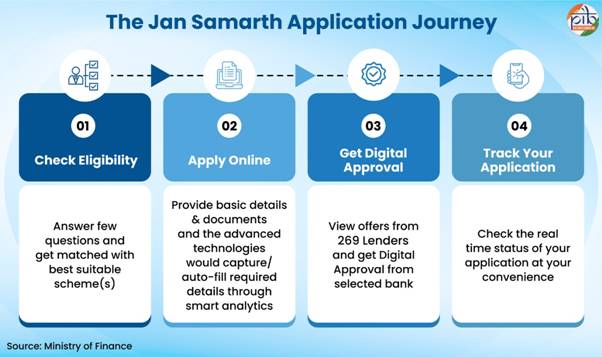
- 09 Jun 2026
In News:
Recently, the Jan Samarth Portal completed four years of its journey as a flagship digital platform aimed at improving access to credit-linked government schemes. Launched in 2022, the portal represents a significant step towards digital governance, financial inclusion, and seamless credit delivery by integrating beneficiaries, lending institutions, and government agencies onto a single platform.
About Jan Samarth Portal
- Jan Samarth is a unique digital platform for credit-linked government schemes, conceptualized with the twin objectives of expanding the reach of government-sponsored schemes and streamlining the credit delivery process.
- It serves as a one-stop platform connecting beneficiaries, financial institutions, Central and State Government agencies, and nodal agencies.
- By bringing multiple stakeholders of the financial ecosystem together, the portal seeks to promote inclusive development, improve access to institutional finance, and enhance the ease of doing business.
Key Features
- The portal functions as a digital marketplace with a user-friendly interface integrated with multiple centralized databases, enabling end-to-end digital processing of loan applications.
- Applicants can access the portal on a 24×7 basis, check their eligibility, submit applications online, and choose from a wide network of lending institutions.
- The system includes an inbuilt rule-based engine that automatically assesses eligibility and facilitates quicker processing of applications.
- A major feature of the platform is its single-window access to 15 credit-linked Central Government schemes and 254 Member Lending Institutions (MLIs), including all Public Sector Banks. Once an applicant submits an application, the portal checks eligibility, provides an in-principle sanction, and forwards the application to the selected bank branch.
- The portal also keeps applicants informed at every stage of the loan journey, reducing the need for repeated physical visits to bank branches.
- To ensure accessibility, it is available in eight Indian languages, making it particularly useful for rural and underserved populations.
- Additionally, Jan Samarth provides a dedicated grievance redressal mechanism for both beneficiaries and participating banks.
Significance
Jan Samarth represents an important innovation in India's digital public infrastructure for finance. By simplifying access to government-backed credit schemes, it reduces information asymmetry, enhances transparency, and improves credit penetration among individuals, entrepreneurs, students, farmers, and other eligible beneficiaries.
The portal contributes to broader national objectives such as financial inclusion, Digital India, ease of living, and inclusive economic growth. It also supports efficient delivery of welfare and development schemes by leveraging technology to connect citizens directly with institutional credit.
United Nations Security Council (UNSC)

- 09 Jun 2026
In News:
The United Nations General Assembly (UNGA) recently elected five countries as non-permanent members of the United Nations Security Council (UNSC) for a two-year term beginning on 1 January 2027. The newly elected members are Austria, Portugal, Trinidad and Tobago, Zimbabwe, and Kyrgyzstan.
- The election is particularly significant for Kyrgyzstan, which will serve on the Security Council for the first time since becoming a member of the United Nations in 1992. These countries will join Bahrain, Colombia, the Democratic Republic of Congo, Latvia, and Liberia, which were elected earlier and will continue serving through 2027.
United Nations Security Council (UNSC)
- The United Nations Security Council was established in 1945 under the United Nations Charter and is one of the six principal organs of the United Nations.
- It bears the primary responsibility for maintaining international peace and security.
- Unlike other UN organs, the Security Council possesses unique authority because its decisions are legally binding on all UN member states under the UN Charter.
Composition of the UNSC
The Security Council consists of 15 members:
- Permanent Members (P5): The five permanent members possess the power of veto: China, France, Russia, United Kingdom, and United States
- Non-Permanent Members: The remaining 10 seats are filled through elections conducted by the UN General Assembly for two-year terms.Regional distribution of non-permanent seats is as follows:
- 5 seats: African and Asia-Pacific States
- 1 seat: Eastern European States
- 2 seats: Latin American and Caribbean States
- 2 seats: Western European and Other States
Election Process
Non-permanent members are elected annually by the UN General Assembly through a secret ballot.
Key features include:
- Candidates require a two-thirds majority of members present and voting.
- The requirement applies even when a candidate is unopposed.
- Five non-permanent seats are renewed every year, ensuring continuity in the Council's functioning.
Importance of the Security Council
The UNSC performs several critical functions:
- Maintenance of international peace and security.
- Investigation of disputes and conflicts.
- Imposition of sanctions.
- Authorization of peacekeeping operations.
- Approval of military action when necessary.
- Recommendation of the UN Secretary-General to the General Assembly.
Its resolutions are binding on all member states, making it the most powerful organ within the UN system.
Immigration and Foreigners (Amendment) Rules, 2026
- 09 Jun 2026
In News:
The Ministry of Home Affairs (MHA) has notified the Immigration and Foreigners (Amendment) Rules, 2026, amending provisions of the Immigration and Foreigners Rules, 2025. The amendments aim to strengthen immigration monitoring, improve compliance by foreign nationals, and streamline administrative procedures through digital mechanisms.
Key Changes
- A major change is the removal of the earlier 14-day grace period available after the expiry of the 180-day stay limit.
- Foreign nationals seeking to stay beyond 180 days must now apply for registration or extension before the expiry of their permitted stay.
- The amendment also introduces a digital appeals mechanism, allowing foreigners to challenge immigration-related orders before the Bureau of Immigration.
- Appeals must be filed within 30 days, and authorities are required to dispose of them within 60 days, ensuring a time-bound and transparent process.
- In addition, the rules provide relief for certain mixed-nationality families by relaxing birth-reporting requirements where one parent is an Indian citizen and the child retains Indian nationality. Reporting procedures for hospitals and institutions accommodating foreign nationals have also been updated.
Significance
The amended rules seek to strengthen India's immigration management system by ensuring better tracking of foreign nationals, reducing the risk of overstays, and enhancing border security. The introduction of an online appeals system improves transparency and efficiency in immigration administration while balancing regulatory oversight with procedural safeguards.
Navachar Mantra Initiative
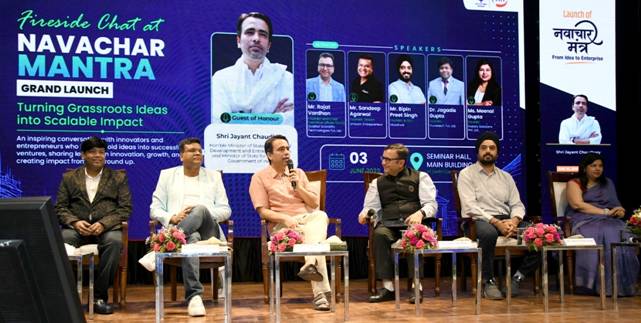
- 08 Jun 2026
In News:
The Navachar Mantra initiative was recently launched by the Ministry of Skill Development and Entrepreneurship (MSDE) to strengthen grassroots entrepreneurship and promote innovation-led growth across India.
- It aims to identify, nurture, and scale promising innovators and early-stage entrepreneurs, particularly from Tier-2 and Tier-3 cities, aspirational districts, and underserved regions.
- The programme is being implemented by the National Institute for Entrepreneurship and Small Business Development (NIESBUD), with the Foundation for Innovation and Technology Transfer (FITT), IIT Delhi serving as the technical knowledge partner.
Key Features
- Navachar Mantra seeks to create a structured support ecosystem for innovators working in sectors such as Agritech, HealthTech, EdTech and Skilling, Climate and Sustainability, Rural Commerce, and MSME Enablement.
- Selected innovators will gain access to policymakers, industry leaders, investors, and domain experts, enabling them to strengthen business models and scale their ventures.
- The initiative includes a year-long engagement programme comprising mentorship, innovation showcases, investor interactions, and capacity-building sessions.
- Participants will also receive support in areas such as market access, intellectual property rights, regulatory compliance, fundraising, and scaling strategies.
- A major focus of the programme is inclusivity, ensuring that innovators from smaller towns and rural areas receive mentorship, visibility, and growth opportunities.
- It also aims to provide national recognition through innovation showcases, digital campaigns, and ecosystem events.
Significance
Navachar Mantra represents an important step towards strengthening India's innovation ecosystem by connecting grassroots innovators with government, academia, industry, and investment networks. By encouraging local solutions to local challenges, it seeks to contribute to the vision of an innovation-driven and entrepreneurial Viksit Bharat.
Tylosaurus rex

- 08 Jun 2026
In News:
Paleontologists have identified a new species of giant marine reptile, Tylosaurus rex, after re-examining previously misidentified fossils. Dubbed the “T. rex of the sea,” it was one of the most formidable marine predators of the Late Cretaceous Period, living around 80 million years ago.
About Tylosaurus rex
Tylosaurus rex is a species of mosasaur, a group of giant carnivorous marine reptiles that dominated the oceans during the age of dinosaurs. Although it shares the title "rex" with Tyrannosaurus rex, it lived millions of years before the land-based dinosaur evolved.
Habitat and Distribution
- Inhabited the Western Interior Seaway, a vast inland sea that divided North America during the Cretaceous Period.
- Fossils have mainly been found in Texas and Kansas.
Key Features
- Largest known specimen ("Bunker") measured 13.2 metres in length.
- Skull length reached 1.7 metres.
- Possessed fine serrated teeth adapted for slicing flesh.
- Had powerful jaws, strong neck muscles, paddle-like flippers, and a muscular tail.
- Closest living relatives are monitor lizards, including the Komodo dragon.
Evolutionary Significance
Mosasaurs evolved from small terrestrial lizards that adapted to marine life, becoming dominant ocean predators during the final 30 million years of the dinosaur age.
Importance of the Discovery
The identification of Tylosaurus rex demonstrates how re-examination of old fossil collections using modern techniques can reveal previously unknown species. As an apex predator, it provides valuable insights into the food webs, biodiversity, and ecology of prehistoric marine ecosystems.
Isobutanol
- 08 Jun 2026
In News:
Following the success of E20 petrol (20% ethanol blending), the Government of India is likely to introduce a mandate for blending isobutanol with diesel by the end of 2026. Since diesel consumption in India is nearly twice that of petrol, the move is expected to significantly enhance energy security, reduce crude oil imports, lower the import bill, and support transport-sector decarbonisation.
What is Isobutanol?
Isobutanol (Isobutyl Alcohol) is an alcohol with the chemical formula C?H??O and one of the four isomers of butanol.
Key Properties
- Colourless, flammable liquid with a characteristic odour.
- Moderately soluble in water.
- Can be produced from biomass through fermentation.
- Less corrosive and less hygroscopic than ethanol.
- Compatible with existing fuel transport and storage infrastructure.
- Suitable as a biofuel for internal combustion engines.
Uses
- Solvent in flavour, fragrance, pharmaceutical, and pesticide industries.
- Used in paints, lacquers, primers, and chemical manufacturing.
- Approved food additive.
- Renewable biofuel derived from plant sources.
Significance of Diesel–Isobutanol Blending
- Reduces dependence on imported crude oil.
- Strengthens India's energy security.
- Supports decarbonisation of the transport sector.
- Promotes biofuel production and rural economic opportunities.
- Expected to have a greater impact than petrol blending due to higher diesel consumption.
Link with Ethanol Blending Programme
India’s ethanol blending programme has expanded from about 1% a decade ago to nearly 20% (E20) today.
Key developments:
- Helped reduce crude oil imports significantly.
- Government has proposed standards for E85 (85% ethanol) and E100 (near-pure ethanol) vehicles.
- Vehicle emission norms are being amended to facilitate higher ethanol blends and alternative fuels.
Related Transport Sector Reforms
The government is simultaneously promoting:
- Electric heavy-duty vehicles through truck-trailer interchangeability and battery-swapping ecosystems.
- Hydrogen mobility, including hydrogen bus services on Delhi–Noida and Delhi–Faridabad routes.
- Multi-Lane Free Flow (MLFF) barrier-free tolling systems.
- Advanced traffic management systems to improve highway efficiency.
Yellow-Throated Marten

- 08 Jun 2026
In News:
The recent first sighting of the Yellow-Throated Marten (Martes flavigula) in Kaziranga National Park highlights the ecological richness of the protected area and reflects the success of Assam's conservation efforts. The discovery expands the known mammalian diversity of the park and indicates the presence of healthy forest ecosystems capable of supporting a wide range of wildlife.
About Yellow-Throated Marten
The Yellow-Throated Marten, also known as Kharza, is the largest of the Old World martens and belongs to the Mustelidae family, which includes otters, badgers, ferrets, and wolverines.
Distribution and Habitat
- Found across the Himalayas, Northeast India, China, Russia, the Korean Peninsula, Southeast Asia, and Indonesia.
- Occupies diverse habitats including coniferous forests, broad-leaved forests, montane forests, tropical forests, shrublands, swamps, and high-altitude regions.
Key Features
- Scientific Name: Martes flavigula
- Body length: 50–72 cm (adult males).
- Distinctive bright yellow or golden throat and chest.
- Dark brown to black head and tail.
- Agile, fearless, and primarily diurnal.
- Omnivorous, feeding on small mammals, birds, insects, fruits, and honey.
Conservation Status
- IUCN Red List: Least Concern (LC)
India’s First Flex-Fuel Passenger Vehicle

- 08 Jun 2026
In News:
India recently marked a significant milestone in its clean mobility journey with the launch of its first flex-fuel passenger vehicle, developed by Maruti Suzuki. The initiative supports India's broader objectives of enhancing energy security, reducing crude oil imports, promoting ethanol use, and advancing sustainable transportation.
What is a Flex-Fuel Vehicle (FFV)?
A Flex-Fuel Vehicle (FFV) is equipped with an internal combustion engine capable of operating on varying blends of petrol and ethanol. Unlike conventional vehicles, FFVs can seamlessly run on fuels ranging from E20 (20% ethanol) to E100 (100% ethanol).
The vehicle uses a fuel composition sensor that continuously detects the ethanol-petrol ratio and sends this information to the Engine Control Unit (ECU). The ECU automatically adjusts fuel injection and ignition timing to ensure efficient combustion and optimal engine performance regardless of the fuel blend.
Key Features
- Compatible with ethanol-petrol blends from E20 to E100.
- E85 has been identified by NITI Aayog and Bureau of Indian Standards as the standard mono-fuel specification for FFVs.
- Ethanol-based FFVs are viewed as a cleaner alternative to conventional fossil-fuel vehicles due to lower lifecycle emissions.
- Ethanol can be produced domestically from feedstocks such as broken grains, agricultural residues, bamboo, and seaweed, reducing dependence on imported crude oil.
Supporting Ecosystem
To promote adoption, the government plans a phased rollout of FFV-compatible fuel infrastructure, beginning with key corridors such as Delhi-NCR and Mumbai–Pune–Nagpur. The network is expected to expand significantly over the next few years through dedicated ethanol dispensing facilities and supportive policy measures.
Significance
The launch of India's first flex-fuel passenger vehicle represents an important step in the country's energy transition strategy. It complements the Ethanol Blending Programme, supports rural income generation through biofuel production, reduces greenhouse gas emissions, and contributes to the vision of an Atmanirbhar Bharat by promoting domestically produced alternative fuels.
Prime Minister Research Chair (PMRC) Scheme 2026

- 07 Jun 2026
In News:
The Department of Higher Education, Ministry of Education, Government of India, opened applications for the Prime Minister Research Chair (PMRC) Scheme 2026 from June 1, 2026, on the PMRC Portal (pmrc.education.gov.in). The scheme is a flagship national initiative to attract accomplished Indian-origin researchers back to India.
About the PMRC Scheme
- The PMRC Scheme is a prestigious talent-repatriation and research architecture that creates a direct pathway for top-tier researchers of Indian origin — working in globally renowned foreign universities, private laboratories, and tech industries — to take up high-level research positions in premier Indian institutions.
- Eligible applicants include Indian Nationals working abroad, OCI cardholders, and Persons of Indian Origin with outstanding achievements in research, innovation, and technology.
- The scheme aims to reverse the outflow of high-skilled talent, integrate global expertise into India's scientific pipeline, accelerate domestic breakthroughs in critical technology sectors, and position India as an advanced global research hub in alignment with the Viksit Bharat vision.
- Estimated funding is approximately ?200 crore, covering multi-year research grants, relocation allowances, competitive fellowships, and laboratory infrastructure.
Three-Tier Fellowship Structure
- The scheme provides engagement under three categories: Young Research Fellows for early-career researchers; Senior Research Fellows for experienced researchers and industry experts; and Research Chairs for globally accomplished research leaders and technology pioneers.
13 Priority Thematic Areas
Research proposals must align with 13 national priority sectors: Advanced Computing (AI, Quantum Computing & Supercomputing), Semiconductors, Energy, Sustainability & Climate Change, Cybersecurity, Healthcare & MedTech, Biotechnology, Advanced Materials & Critical Minerals, Space &Defence, Next-Generation Communications, Manufacturing & Industry 4.0, Agri & Food Technologies, Blue Economy, and Atomic Energy.
Institutional Architecture
- Seven Lead Institutions have been designated for thematic implementation: IIT Delhi, IIT Bombay, IIT Madras, IIT Kanpur, IIT Hyderabad, IIT (ISM) Dhanbad, and IISc Bengaluru.
- Host Institutions must be government HEIs ranked in the Top 100 of NIRF Overall or Engineering categories, or Top 50 in the NIRF Research category, along with national laboratories under DST, DBT, ICMR, and CSIR.
Governance
- Selection of fellows and proposals is overseen by an Empowered Committee chaired by the Principal Scientific Advisor (PSA) to the Government of India, ensuring rigorous, independent, and mission-aligned evaluation.
Khet Bachao Abhiyan
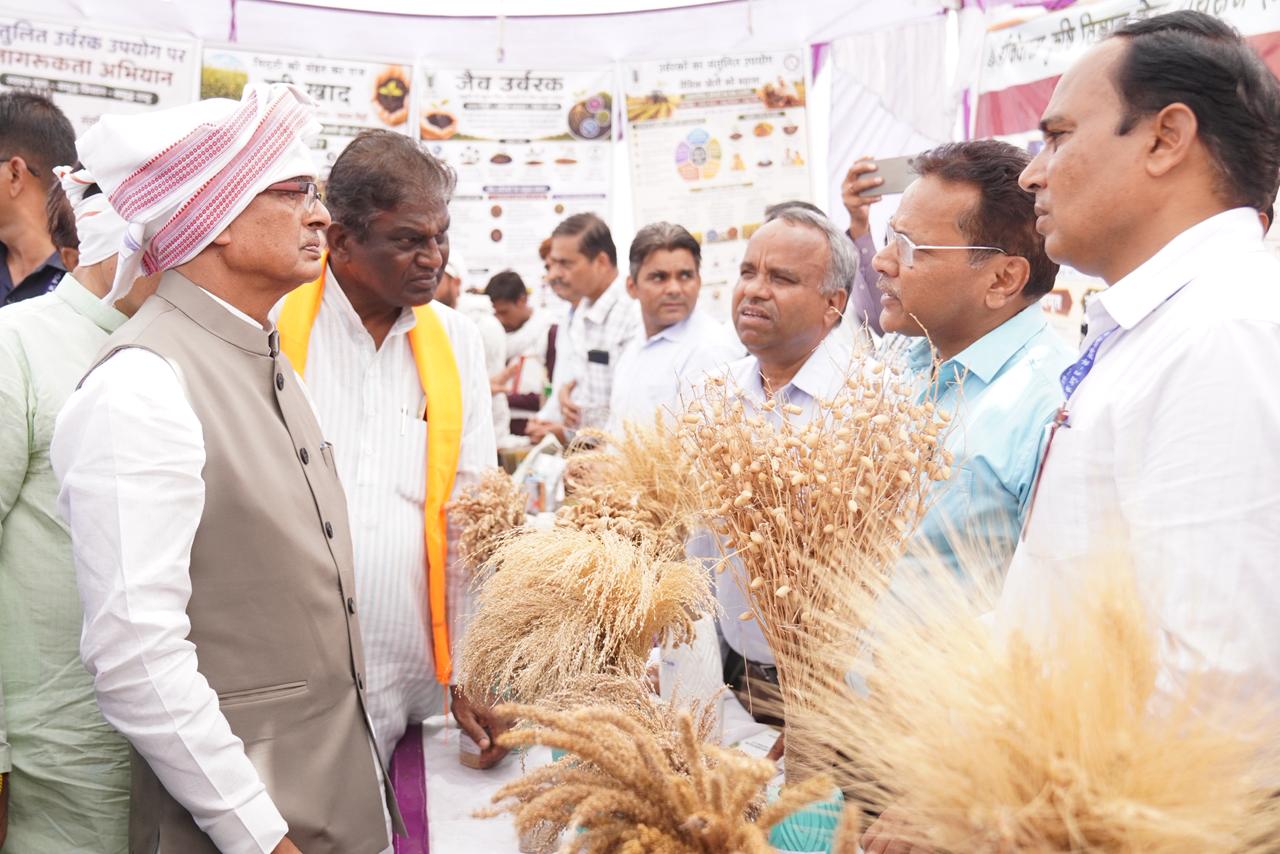
- 07 Jun 2026
In News:
Union Minister for Agriculture & Farmers Welfare and Rural Development launched the nationwide 'Khet Bachao Abhiyan' on June 1, 2026, from Ramasiya village in Raisen district of Madhya Pradesh. The campaign will run across the country from June 1 to June 30, 2026.
Core Message
- The campaign is built on the principle: "Save the Soil, Save Farming, Save Farmers." The campaignemphasised that excessive use of chemical fertilisers reduces soil fertility and destroys beneficial microorganisms in the soil, directly affecting agricultural productivity and increasing cultivation costs. Also, noted that the government provides fertilisers at subsidised rates, but this must not encourage overuse — sustainable agriculture depends on judicious, balanced application.
Key Activities and Focus Areas
- Soil Health and Balanced Nutrition: The campaign promotes soil testing and Soil Health Cards so that fertiliser application is based on the actual nutrient requirements of the land. Every farmer must have a Soil Health Card, which will reduce cultivation costs, enhance productivity, and help maintain long-term soil fertility.
- Scientific Farming Demonstrations: Special field demonstrations will be organised for soybean, paddy, and pulse crops. Farmers will be trained in the use of improved seeds, scientific sowing methods, modern technologies such as laser levellers, and water-efficient farming practices.
- Natural Farming and Water Conservation: The campaign actively promotes natural farming, green manure use, water conservation, seed treatment, improved seeds, and modern sowing techniques aligned with local agro-climatic conditions.
- Anti-Counterfeit Awareness: The campaign will create awareness against counterfeit fertilisers, pesticides, and seeds, which are a significant menace to farmers' investment and crop yields.
- Government Scheme Access: Farmers will be helped to access PM-Kisan Samman Nidhi, the Crop Insurance Scheme, Kisan Credit Card, and farm mechanisationprogrammes through the outreach activities.
- Village-Level Outreach Mechanism Agricultural scientists, experts from agricultural universities, Krishi Vigyan Kendra officials, agriculture department teams, and public representatives will visit villages across the country to educate farmers and provide technical support. Regular training programmes will be conducted with Krishi Vigyan Kendras and expert institutions. The campaign also connects women through Self-Help Groups to income-generation and self-employment opportunities, embedding women's empowerment within the agricultural transformation agenda.
India's First Blue Bond

- 07 Jun 2026
In News:
Recently, Sagarmala Finance Corporationannounced plans to issue India's first-ever blue bond to diversify funding sources and support maritime and coastal infrastructure development.
Key Details of the Issuance
- The issue is structured as a ?500 crore base with a greenshoe option of ?500 crore, totalling up to ?1,000 crore.
- The bond will carry a 10-year tenor and is aimed at ESG-focused investors seeking exposure to India's maritime infrastructure.
- No fixed launch date has been set — issuance will proceed "when the market is conducive and yields stabilise." Sagarmala carries an AA credit rating from CARE and India Ratings, on par with top-rated PSU bonds.
About Blue Bonds
- A blue bond is a debt instrument used to raise funds specifically for projects linked to oceans, seas, coasts, rivers, and water-based ecosystems, targeting investors with an environmental mandate.
- Unlike green bonds — which fund broader climate and environmental projects such as solar and wind energy — blue bonds are exclusively tied to ocean, coastal, and maritime activities.
- Globally, just over $15 billion in blue bonds had been issued by mid-2025, according to World Bank data. In 2020, the Bank of China issued Asia's first blue bond.
- The world's first sovereign blue bond was issued by Seychelles in 2018 with World Bank support. Belize used a debt-for-ocean swap in 2021 for marine conservation.
About Sagarmala Finance Corporation
- Established in 2016 under the Ministry of Ports, Shipping and Waterways, Sagarmala Finance Corporation received its NBFC licence in June 2025.
- It also administers the government's ?25,000 crore Maritime Development Fund, which includes a ?5,000 crore Interest Incentivisation Fund for providing interest subsidies to borrowers.
- Sagarmala plans to raise as much as ?10,000 crore in FY2027 to finance greenfield and brownfield ports, last-mile port connectivity, shipbuilding, inland waterways, and coastal road networks. It is also seeking a ?2,000 crore equity infusion from the government to maintain a healthy debt-to-equity ratio.
India's Blue Economy Context
India's blue economy — encompassing fisheries, shipping, offshore energy, and coastal tourism — contributes approximately 4% to GDP and supports around 4 million livelihoods. India's long coastline, large fishing communities, and climate-vulnerable coastal regions make blue bonds particularly relevant. The bond proceeds will fund ports, port connectivity, shipbuilding, inland waterways, and coastal road networks — sectors central to India's maritime ambitions under the SagarmalaProgramme.
RudraM-II Missile

- 07 Jun 2026
In News:
Recently, DRDO and the Indian Air Force (IAF) successfully conducted flight-tests of the RudraM-II Air-to-Surface Missile from an airborne platform. The tests were conducted under extreme release conditions, with critical trajectory data establishing the capability of all subsystems. The missiles were guided to a predefined target with pin-point accuracy, with all test objectives confirmed through flight data captured by the Integrated Test Range (ITR), Chandipur.
About RudraM-II
- RudraM-II is an indigenously developed solid-propelled, air-launched anti-radiation missile designed for the Air-to-Surface role, intended to detect, track, and neutralise enemy radar installations, communication assets, and other radio frequency-emitting components of adversary air defence systems.
- It has been developed by Research Centre Imarat (RCI), Hyderabad, as the nodal DRDO laboratory, in collaboration with sister labs including the Defence Research and Development Laboratory, High Energy Materials Research Laboratory, Armament Research & Development Establishment, and ITR.
- Development cum Production Partners include Hindustan Aeronautics Limited (HAL), Regional Centre for Military Airworthiness, and Missile System Quality Assurance Agency.
Key Technical Specifications
- RudraM-II reaches a peak speed of Mach 5.5, classifying it as a hypersonic-class weapon.
- It can strike targets at a range of approximately 300 km and carries a warhead of up to 200 kg.
- It can be deployed from Sukhoi fighter aircraft operating at altitudes between 3 and 15 km.
- The missile employs a hybrid navigation system combining an inertial navigation system (INS), GPS, and a sophisticated passive homing head that detects and classifies radio frequency emissions across a wide frequency band — enabling it to autonomously home in on active radar and communication targets.
What is an Anti-Radiation Missile?
Anti-radiation missiles (ARMs) are a specialised class of precision-guided munitions designed to home in on electromagnetic emissions — primarily radar and communication signals — used by enemy air defence networks. By targeting these emission sources, ARMs can blind or degrade an adversary's air defence umbrella before or during an air campaign, significantly enhancing the survivability of friendly aircraft. RudraM-II is intended to eventually replace the older Russian-origin Kh-31 anti-radiation missiles currently in IAF service.
Mission "Senehjori"
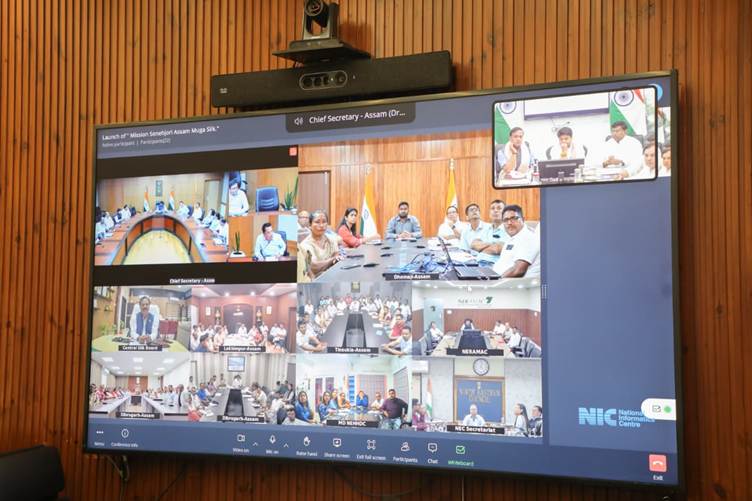
- 07 Jun 2026
In News:
Recently, Union Minister for Development of North Eastern Region (MDoNER), along with the Chief Minister of Assam, launched Mission "Senehjori" — Assam Muga Silk USP — a comprehensive cluster-based initiative aimed at transforming Assam's unique Muga silk sector into a globally competitive, high-value luxury textile ecosystem.
About Muga Silk
Muga silk is the world's only naturally golden silk and India's first Geographical Indication (GI)-tagged silk. Assam accounts for 90% of the world's Muga silk production, and the sector supports nearly 2.6 lakh rearer and weaver families across the state. Despite its rarity, global recognition, and exceptional durability, the sector remains significantly under-monetised — producers currently earn only ?18,000–21,000 per year from Muga silk. Mission Senehjori is designed to bridge this value gap.
About Mission Senehjori
Anchored by MDoNER in convergence with the Government of Assam, Central Silk Board, Ministry of Textiles, and other Central Ministries, the Mission adopts a "whole-of-government" approach. It has an estimated investment of ?396–411 crore over three years, including ?136–151 crore from MDoNER.
The Mission seeks to strengthen the entire Muga silk value chain — from host-plant cultivation and silkworm seed production to reeling, weaving, branding, export promotion, digital traceability, and tourism — under the unified brand identity "Senehjori."
Cluster-Based Approach
The Mission covers major Muga silk producing districts: Jorhat, Sivasagar, Lakhimpur, Dhemaji, Dibrugarh, Tinsukia, Majuli, and Sualkuchi. It envisages strengthening host plant ecology, establishing modern reeling infrastructure, promoting Farmer Producer Organisations (FPOs) and Common Facility Centres (CFCs), enforcing GI authentication, and building global market access.
Key Targets by 2028
The Mission aims to establish five modernised Muga reeling units and a Muga Spun Mill; create 30 FPOs and over 1,180 Farmer Interest Groups; regenerate 5,000 hectares of Som and Soalu host plants; authenticate over 80% of traded Muga silk through GI-linked systems; create digital traceability mechanisms for more than 8,000 households; and expand Muga silk exports to over 2,000 kg annually.
Cultural Economy
Mission Senehjori also promotes Assam's cultural economy through development of a Muga Silk Trail, establishment of a Silk Tourism Park, and organisation of annual Muga Utsav festivals — positioning Assam as a premier destination for silk heritage tourism.
Giant Malabar Squirrel

- 04 Jun 2026
In News:
The recent sighting of a Giant Malabar Squirrel in the Devpur forest areaof Chhattisgarh's Barnawapara forest has drawn attention to one of India's most striking and largest arboreal mammals.
About the Giant Malabar Squirrel
- The Giant Malabar Squirrel, also known as the Indian Giant Squirrel, is a large, multicoloured tree squirrel endemic to India. Its scientific name is Ratufa indica, and it is considered one of the largest squirrel species in the world.
- The species is predominantly distributed across the Western Ghats, Eastern Ghats, and the Satpura Range, inhabiting tropical deciduous, semi-deciduous, and evergreen forests at elevations ranging from 180 to 2,300 metres.
- It is also the State Animal of Maharashtra, where it is popularly known as Shekru.
Habitat and Behaviour
- The Giant Malabar Squirrel is a highly arboreal species, spending most of its life in the forest canopy. It moves with remarkable agility, often leaping between trees over distances of up to six metres. Instead of descending to the ground frequently, it relies on interconnected tree canopies for movement and survival.
- The species generally takes shelter in tree hollows and constructs nests high above the ground. Unlike many other squirrels, it is usually solitary, coming together mainly during the breeding season.
- An interesting defensive behaviour displayed by the species is that when threatened, it often remains motionless or flattens itself against a tree trunk rather than attempting to flee immediately. This camouflage strategy helps it avoid predators.
Physical Characteristics
- The Giant Malabar Squirrel is renowned for its striking appearance and vibrant colouration. Its body length ranges from 254 to 457 mm, while the tail is usually longer than the body itself.
- The species exhibits multiple colour patterns, typically featuring combinations of:Black, Brown, Deep red or maroon, Cream or dirty white patches.
- Other notable features include:pink lips and nose, Bright brown eyes, Short rounded ears, Large powerful claws, expanded inner paws adapted for gripping tree bark and branches.
- Its long, bushy tail is generally light brown with a creamy-white tip, aiding balance while navigating the forest canopy.
Ecological Importance
- As a canopy-dwelling herbivore and frugivore, the Giant Malabar Squirrel plays an important role in forest ecosystem functioning. By feeding on fruits, seeds, flowers, bark and nuts, it contributes to seed dispersal and supports forest regeneration.
- Its presence is also considered an indicator of healthy forest ecosystems with well-connected tree canopies and adequate habitat quality.
Conservation Status
The Giant Malabar Squirrel is currently classified as "Least Concern" on the IUCN Red List, indicating that its population remains relatively stable across its range. However, localized threats such as:Habitat fragmentation, Deforestation, Forest fires, Infrastructure development, can affect populations in specific regions.
The recent sighting in Chhattisgarh highlights the importance of conserving forest corridors and monitoring wildlife populations beyond their traditionally recognized habitats.
Delhi HC recognises Right to Be Forgotten

- 04 Jun 2026
In News:
In a landmark judgment, the Delhi High Court has recognized the Right to be Forgotten (RTBF) as an intrinsic part of the Right to Privacy under Article 21 of the Constitution. The ruling marks a significant development in India's evolving privacy jurisprudence by affirming that individuals have the right to seek the removal or masking of personal information from the digital domain when its continued availability no longer serves a legitimate public interest.
What is the Right to be Forgotten?
- The Right to be Forgotten (RTBF) enables individuals to request the removal, de-indexing, or restriction of access to personal information available online when such information becomes outdated, irrelevant, excessive, misleading, or disproportionately affects their privacy and dignity.
- The concept gained international recognition through the landmark Google Spain v. AEPD and Mario Costeja González (2014) judgment of the Court of Justice of the European Union (CJEU). The court held that search engines can be required to remove links to personal information that is no longer relevant or necessary, thereby establishing the foundation of the RTBF in the digital age.
Constitutional Basis in India
- The Delhi High Court held that the RTBF flows from the broader Right to Privacy, which was recognized as a fundamental right by the Supreme Court in Justice K.S. Puttaswamy v. Union of India (2017). Since privacy is an integral part of Article 21 (Right to Life and Personal Liberty), individuals possess a constitutional right to control the dissemination of their personal information.
- Importantly, the Court observed that even in the absence of a specific statutory framework governing RTBF, constitutional courts possess the authority to recognize and enforce the right to protect individual dignity, autonomy and informational privacy.
Key Directions Issued by the Court
- The judgment directs authorities, search engines, and legal databases to take active steps to protect privacy rights. The Court ordered the masking of personal identifiers and directed search engine operators such as Google to disable name-based search functionality in specified cases.
- A significant feature of the ruling is that these de-indexing directions are intended to operate globally, ensuring that protected information does not remain accessible through alternative search domains.
- The Court also clarified that individuals who have been:Acquitted, Discharged, Granted relief through quashing of proceedings, or Involved in matters that have been settled, have a legitimate claim to ensure that such outcomes are accurately reflected online and that outdated adverse information does not continue to define their digital identity.
Balancing Privacy and Open Justice
A key issue before the Court was balancing the principle of open justice with the individual's right to privacy.
The Court emphasized that open justice promotes transparency and public accountability in judicial proceedings. However, transparency does not require that a citizen's name remain permanently searchable through commercial search engines.
Accordingly:
- Personal identifiers may be masked in publicly accessible judgments.
- Legal reasoning, judicial findings, and conclusions must remain available.
- Unredacted records can be preserved for legitimate legal, academic, and judicial purposes.
Thus, the Court attempted to strike a balance between public access to judicial records and an individual's right to move beyond past legal proceedings.
Limitations and Exceptions
The Court made it clear that the RTBF is not an absolute right. Relief may be denied where larger public interest outweighs privacy concerns.
The Court indicated that protection may not be available in cases involving:
- Convictions for offences against women and children,
- Serious criminal offences,
- Cases involving corruption,
- Breach of public trust by public servants,
- Elected representatives,
- Persons holding fiduciary positions.
In such situations, public interest, accountability, and transparency may take precedence over privacy claims.
Prison Statistics India Report 2024
- 04 Jun 2026
In News:
The latest Prison Statistics India 2024 report released by the National Crime Records Bureau (NCRB) reveals that while India's prison occupancy rate declined to a decade-low of 112.7%, overcrowding continues to remain a major structural challenge. The crisis is driven primarily by a disproportionately large population of undertrial prisoners, inadequate prison infrastructure, staff shortages, and delays in the criminal justice system.
Key Findings of Prison Statistics India 2024
India had 1,333 prisons with a sanctioned capacity of about 4.53 lakh inmates at the end of 2024. However, the actual prison population exceeded 5.11 lakh, resulting in continued overcrowding. More than half of the States and Union Territories reported occupancy rates above 100%.
Among major States/UTs:
- Delhi recorded the highest occupancy rate at 194.6%.
- Meghalaya (163.5%), Jammu & Kashmir (148.3%) and Madhya Pradesh (147.1%) also witnessed severe overcrowding.
- Jammu & Kashmir's occupancy rate increased from 78% in 2015 to over 148% in 2023-24.
- States such as Chhattisgarh and Uttar Pradesh have shown improvement, with Chhattisgarh reducing occupancy from 234% in 2015 to 127.6% in 2024.
Although prison capacity increased by 24% between 2015 and 2024, driven by renovations in 2,268 prisons and construction of 120 new prisons, capacity expansion has not kept pace with the growth in inmate population.
Undertrials: The Core Reason for Overcrowding
The most significant contributor to prison overcrowding is the high share of undertrial prisoners, who constituted nearly 73% of all inmates in 2024. Although lower than the pandemic peak of 77% in 2021, it remains substantially higher than pre-COVID levels. In contrast, the share of convicts declined from 32% in 2016 to 26.6% in 2024.
The problem is particularly acute in:
- Delhi and Bihar, where over 87% of prisoners are undertrials.
- Around 14 States/UTs have undertrial shares higher than the national average.
A worrying aspect is prolonged detention. While nearly 70% of undertrials were incarcerated for less than one year, over 9,000 undertrials (2.4%) have spent more than five years in prison without conviction.
Concerns Associated with Prison Overcrowding
Prison overcrowding raises serious constitutional, legal and humanitarian concerns.
- Violation of Article 21: The Supreme Court in Hussainara Khatoon v. State of Bihar (1979) held that the right to speedy trial is an integral part of Article 21. Excessive detention of undertrials effectively converts pre-trial custody into punishment, violating the principle of "innocent until proven guilty".
- Erosion of Human Dignity: In Sunil Batra v. Delhi Administration (1980), the Supreme Court affirmed that prisoners retain fundamental rights. Overcrowded prisons often lead to inadequate sanitation, healthcare, privacy and living conditions, undermining human dignity.
- Failure of Bail Jurisprudence: The principle that "Bail is the rule, Jail is the exception" is often not reflected in practice. Poor prisoners frequently remain incarcerated because they cannot furnish sureties or pay bail amounts. The 268th Law Commission Report (2017) identified poverty as a major barrier to obtaining bail.
- Administrative and Health Challenges: Overcrowding increases the spread of diseases such as tuberculosis and HIV. The situation is aggravated by a 46.4% vacancy rate in sanctioned medical staff posts. Simultaneously, prison administrations face severe personnel shortages, with nearly half of sanctioned posts vacant in several States. Delhi and Jammu & Kashmir have vacancy levels exceeding 60%.
- Socio-Economic Impact: Around 86.3% of prisoners belong to the economically productive age group (18–50 years). Prolonged detention often removes breadwinners from households, deepening poverty among already marginalized communities, particularly SCs, STs and OBCs.
Government Initiatives and Reforms
Bharatiya Nagarik Suraksha Sanhita (BNSS), 2023
- Section 479 mandates release on bond for first-time offenders who have completed one-third of the maximum prescribed sentence.
- Prison authorities are required to proactively seek release of eligible undertrials.
Model Prisons and Correctional Services Act, 2023
- Replaces the colonial-era Prisons Act, 1894.
- Focuses on correction, rehabilitation and reintegration rather than mere punishment.
Other Measures
- Model Prison Manual, 2016
- Prisons Development Fund (2018)
- E-Prisons Project under the Inter-operable Criminal Justice System (ICJS)
- Support to Poor Prisoners Scheme for financially disadvantaged undertrials.
Beaufort Castle
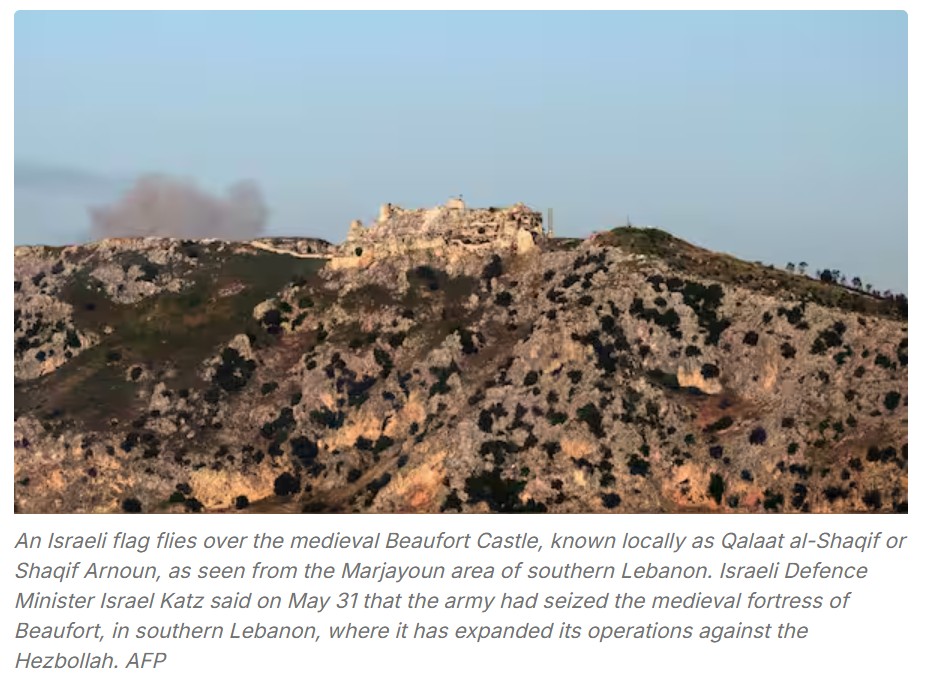
- 04 Jun 2026
In News:
Amid the ongoing tensions in West Asia, Israel's recent capture of Beaufort Castle and the surrounding strategic ridge in southern Lebanon has once again brought attention to one of the region's most historically and militarily significant fortresses. Perched atop a rocky hill overlooking southern Lebanon, Beaufort Castle has for centuries served as a symbol of military power, territorial control, and strategic dominance.
About Beaufort Castle
- Beaufort Castle, known locally as Qalaat al-Shaqif ("Castle of the High Rock"), is a medieval fortress located near the city of Nabatieh in southern Lebanon.
- Situated only about 14.5 km from the Israeli border, the castle occupies a commanding hilltop position that offers extensive views of the surrounding landscape.
- Constructed by the Crusaders during the 12th century, the fortress subsequently passed through the hands of various rulers, including Muslim dynasties, the Mamluks, and the Ottomans. Today, it remains one of the best-preserved examples of medieval military architecture in the Near East.
- Architecturally, the castle consists of a high castle and a low castle, reflecting its defensive role during the medieval era. Its massive stone fortifications, elevated position, and commanding visibility made it an ideal military stronghold capable of monitoring troop movements and protecting surrounding territories.
Strategic Importance
The strategic value of Beaufort Castle stems primarily from its geography. The fortress overlooks:
- Large parts of southern Lebanon,
- The fertile Litani River Valley,
- Key transportation routes in the region,
- Parts of northern Israel.
This commanding vantage point allows military forces to monitor movement across a wide area, making the site highly valuable for surveillance, defence, and military operations. Control over the castle provides tactical advantages in any conflict involving southern Lebanon and northern Israel.
Its location near the Israeli border also places it at the centre of the long-standing security dynamics between Israel, Lebanon, and armed groups operating in the region.
Indopottia Himalayensis
- 04 Jun 2026
In News:
Scientists from the Botanical Survey of India (BSI) have discovered a new moss species, Indopottia himalayensis, in the high-altitude forests of Uttarakhand's Western Himalayas. The discovery is significant as it is only the third known species of the genus Indopottia worldwide, with the other two species found in the Western Ghats of India and Thailand.
About Indopottia himalayensis
- It is an entirely terrestrial moss that grows on soil-covered rocks.
- It reaches about 13 mm in height and is characterized by a rounded stem and a single upright cylindrical spore capsule.
- The capsule has a distinctive lid that bends sideways when dry, while its leaves lack the transparent bulging cells found in closely related species. These unique features helped scientists identify it as a new species.
- The discovery is significant from a biogeographical and evolutionary perspective. The presence of species belonging to the same genus in the Himalayas, Western Ghats, and Thailand suggests ancient ecological linkages and dispersal pathways across South and Southeast Asia.
- It also highlights the Himalayas as a repository of still-undiscovered biodiversity and reinforces the need for continued scientific exploration and conservation.
Mosses (Bryophytes): An Overview
- Mosses are small, non-vascular, spore-bearing plants belonging to the division Bryophyta. They are among the earliest plants to colonize land and are found across the world except in salt-water environments. Despite their simple structure, mosses have successfully adapted to diverse habitats ranging from damp forests and mountain slopes to deserts, volcanic regions, and even Antarctica.
- The major types of mosses include:Peat Moss (Sphagnum), Granite Moss, True Mosses
- Ecologically, mosses play a vital role in soil formation, moisture retention, nutrient cycling, and carbon sequestration. They also act as sensitive indicators of environmental change and ecosystem health.
The discovery of Indopottia himalayensis therefore goes beyond the addition of a new species to science. It underscores the ecological importance of bryophytes, enriches India's biodiversity records, and highlights the need to conserve fragile Himalayan ecosystems that continue to reveal new forms of life.
Nausena Shaurya Vatika
- 03 Jun 2026
In News:
Union Defence Minister, along with the Uttar Pradesh Chief Minister, recently inaugurated Nausena Shaurya Vatika in Lucknow. The museum has been established to showcase the legacy, operational achievements, and maritime capabilities of the Indian Navy while fostering maritime awareness among citizens.
About Nausena Shaurya Vatika
Nausena Shaurya Vatika is an open-air naval museum and interpretation centre developed jointly by the Indian Navy and the Government of Uttar Pradesh.
- Location: Lucknow
- Cost: ?19 crore
- Area: More than 2 acres
- Developed as: Phase-II of the Nausena Shaurya Sangrahalaya (Naval Memorial Museum)
The museum seeks to educate the public about India's maritime history, naval warfare capabilities, and the strategic importance of sea power in national security.
Major Attractions
INS Gomati Exhibit
The museum prominently displays artefacts and weapon systems from INS Gomati, which was decommissioned on 29 May 2022 after 34 years of distinguished service.
Key exhibits include:AK-726 Naval Gun, ZIF-101 Surface-to-Air Missile Launcher ,Surface-to-Surface Anti-Ship Missiles, Surface-to-Air Missiles, Shipborne Radar Systems, Torpedo Launchers, Anchors and Ship Masts, Other operational naval equipment.
TU-142M Walkthrough Museum
Another major attraction is the walkthrough exhibit of the TU-142M, a retired long-range maritime reconnaissance aircraft that played a crucial role in surveillance, anti-submarine warfare, and maritime security.
Strategic Significance
The museum serves as a platform to enhance public understanding of:
- India's maritime heritage.
- The role of the Indian Navy in safeguarding national interests.
- Naval modernization and maritime security.
- India's growing strategic role in the Indian Ocean Region (IOR).
During the inauguration, the Defence Minister highlighted the Navy's operational effectiveness, noting that during Operation Sindoor, the Indian Navy effectively confined the Pakistani Navy to its ports, underscoring India's maritime strength and deterrence capabilities.
Samadhan Didi

- 03 Jun 2026
In News:
- In a major step towards strengthening digital governance, ease of access to public services, and citizen-centric administration, the Government of India has launched Samadhan Didi, an Artificial Intelligence (AI)-enabled chatbot designed to simplify the process of lodging grievances against government departments.
- Developed by the Department of Administrative Reforms and Public Grievances (DARPG) in collaboration with Bhashini, the initiative seeks to make grievance redressal more accessible, inclusive, and efficient, particularly for citizens who face language, literacy, or procedural barriers.
What is Samadhan Didi?
- Samadhan Didi is a voice-based, multilingual grievance registration assistant powered by Artificial Intelligence. Unlike conventional grievance portals that require citizens to identify the correct ministry, department, category, or sub-category before filing a complaint, Samadhan Didi enables users to simply describe their issue in everyday language.
- The chatbot analyses the grievance, seeks clarifications when necessary, automatically categorises the complaint, identifies the appropriate authority, and forwards it to the concerned department. This significantly reduces procedural complexity and ensures that complaints reach the correct government agency without requiring citizens to understand bureaucratic structures.
- A notable feature of the platform is its ability to accept voice-based complaints in all 22 Scheduled Languages of India, with efforts underway to expand support to additional regional and local languages. The platform has been developed within secure government infrastructure, ensuring data privacy and protection.
Integration with CPGRAMS
- Samadhan Didi has been integrated with the Centralized Public Grievance Redress and Monitoring System (CPGRAMS), India's flagship online grievance redressal platform.
About CPGRAMS
- CPGRAMS is a 24×7 online platform that enables citizens to lodge complaints relating to public service delivery and governance issues. It is developed and monitored by DARPG under the Ministry of Personnel, Public Grievances and Pensions.
- Key features include:
- A single-window grievance portal connected to all Union Ministries, Departments, and State Governments.
- Role-based access for government officials to process and resolve grievances.
- Availability through a dedicated mobile application and integration with the UMANG platform.
- Facility to track complaints using a unique registration number.
- Mandatory resolution of grievances within a maximum period of 21 days.
- Provision for citizens to file an appeal if dissatisfied with the response of the Grievance Officer.
Zero Coupon Zero Principal Instrument
- 03 Jun 2026
In News:
In a significant move to deepen social finance and strengthen the social sector ecosystem, the Ministry of Corporate Affairs (MCA) has permitted eligible companies to channel a portion of their Corporate Social Responsibility (CSR) expenditure through Zero Coupon Zero Principal (ZCZP) Instruments. The decision creates a new market-based mechanism for directing CSR funds towards social development projects while enhancing transparency and accountability in philanthropic financing.
What are Zero Coupon Zero Principal (ZCZP) Instruments?
A Zero Coupon Zero Principal (ZCZP) Instrument is a unique financial instrument issued by a Not-for-Profit Organisation (NPO) that carries:
- No interest payments (zero coupon)
- No repayment of principal (zero principal)
Unlike conventional bonds or debentures, investors or subscribers do not receive any financial return. Instead, the instrument functions as a structured philanthropic contribution routed through a regulated market framework.
ZCZP instruments are listed on the Social Stock Exchange (SSE) and enable NPOs to mobilise resources for specific social projects and developmental activities.
Key Features of ZCZP Instruments
- Issued exclusively by eligible Not-for-Profit Organisations (NPOs).
- Listed on the Social Stock Exchange (SSE) to facilitate transparent fundraising.
- Funds are raised for clearly defined projects or activities.
- Projects must be completed within the timeframe specified in the fundraising documents.
- Issued only in dematerialised (electronic) form.
- Non-transferable and cannot be traded by the original subscriber during the tenure of the instrument.
- Designed as a philanthropic rather than investment-oriented financial product.
The instrument thus combines the transparency and governance standards of capital markets with the objectives of social development and charitable funding.
Link with Corporate Social Responsibility (CSR)
- The MCA's recent decision allows companies to deploy part of their mandatory CSR obligations through ZCZP instruments, creating a new avenue for corporate participation in social development.
What is Corporate Social Responsibility (CSR)?
Corporate Social Responsibility refers to a business approach through which companies voluntarily or mandatorily contributes towards social welfare, environmental sustainability, and community development.
CSR seeks to ensure that businesses operate in ways that generate positive societal outcomes while maintaining ethical and sustainable practices.
Legal Framework
- CSR is governed under Section 135 of the Companies Act, 2013.
- Eligible companies are required to spend: 0RAt least 2% of the average net profits of the preceding three financial years on CSR activities.
- The permissible CSR activities are specified under Schedule VII of the Companies Act, 2013, covering areas such as: education, healthcare, rural development, environmental sustainability, skill development, gender equality, disaster management, social welfare initiatives.
5G Network Slicing

- 03 Jun 2026
In News:
Bharti Airtel launched "Priority Postpaid" — India's first commercial deployment of a consumer-facing 5G network slicing service — sparking a regulatory debate on net neutrality and prompting scrutiny from TRAI, the Department of Telecommunications (DoT), and Parliament.
What is 5G Network Slicing?
- 5G network slicing is an architecture that divides a single physical standalone 5G network into multiple isolated virtual networks ("slices"), each delivering customised Quality of Service (QoS) including guaranteed speeds, latency, and processing power — to specific user groups.
- It uses Software-Defined Networking (SDN) and Network Functions Virtualization (NFV) to achieve this without building separate physical infrastructure. Crucially, slices are content-agnostic — they do not prioritise specific apps or websites; they prioritise the overall connection quality of designated users. Network slicing is already deployed in markets such as Singapore, the US, the UK, and Malaysia.
Airtel's Priority Postpaid: How It Works
- At congested locations like concerts, railway stations, and busy urban areas, a Priority Postpaid subscriber gets a reserved bandwidth slice while all other users compete for what remains.
- Airtel argues the service is content-neutral — involving no blocking, throttling, content-specific prioritisation, zero-rating, or preferential treatment of any application.
- On current network load, 5G utilisation during busy hours sits at approximately 38%, with postpaid traffic at 4% — expected to rise only to 6% after Priority Postpaid is introduced.
Significance and Policy Implications
Network slicing enables telecom operators to generate premium revenue from postpaid subscribers while potentially improving overall network efficiency. However, the risk of a two-tier internet — where high-paying users enjoy consistent speeds while prepaid users (the majority of India's telecom subscribers) face degraded experience during congestion — raises fundamental equity concerns. India's net neutrality framework may require formal updating to explicitly address service-level differentiation enabled by 5G architecture.
Sakura Science Programme 2026
- 03 Jun 2026
In News:
The Department of School Education & Literacy (DoSEL), Ministry of Education, recently flagged off a contingent of 56 Indian school students for a week-long visit to Japan under the Sakura Science Programme 2026. The initiative seeks to expose talented young students to Japan’s advanced scientific ecosystem, promote international academic exchange, and strengthen educational and cultural ties between India and Japan.
About the Sakura Science Programme
- The Sakura Science Programme is an international youth exchange initiative funded and implemented by the Japan Science and Technology Agency. Originally launched as the Japan-Asia Youth Exchange Program in Science, it invites promising young students from different countries to Japan for short-term educational visits focused on science, technology, innovation, and cultural understanding.
- Participating Countries (May 2026 Batch)
- The 2026 programme includes students from:India, Ghana, Nigeria, and South Africawith Japan serving as the host nation.
Objectives of the Programme
The programme aims to:
- Broaden the intellectual horizons of young learners.
- Encourage scientific curiosity and innovation.
- Provide exposure to cutting-edge science and technology.
- Promote international cooperation and people-to-people connections.
- Strengthen bilateral relations between participating countries and Japan.
- Foster appreciation of Japan’s cultural heritage and social systems.
Key Features
Experiential Scientific Learning
- Students spend approximately one week in Japan, where they gain hands-on exposure to:Advanced laboratories, Research institutions, Universities, Technology and innovation hubs
- The programme emphasizes experiential learning rather than classroom-based instruction, allowing students to directly interact with scientific infrastructure and researchers.
Merit-Based Selection
- In India, participants are selected from government schools and are primarily meritorious students who have qualified under the National Means-cum-Merit Scholarship Scheme (NMMS).
- The programme thus provides international opportunities to talented students from relatively under-resourced backgrounds.
India’s Participation
Since India joined the programme in 2016, it has developed into an important avenue of educational cooperation between India and Japan.
Supreme Court Upholds GST on Online Gaming

- 02 Jun 2026
In News:
In a significant judgment with implications for India's rapidly growing digital gaming industry, the Supreme Court has upheld the constitutional validity of levying Goods and Services Tax (GST) on organised online gaming involving money stakes. The Court rejected challenges against the GST levy on actionable claims arising from online gaming and fantasy sports, affirming that such activities fall within the category of betting and gambling for taxation purposes.
The ruling provides legal clarity to the GST framework governing online gaming and reinforces the powers of both the Union and State governments to regulate gaming activities involving monetary stakes.
Background of the Case
Several online gaming and fantasy sports platforms had challenged the imposition of GST on online money gaming, arguing that games involving substantial skill should not be treated on par with gambling activities. The petitioners contended that fantasy sports and skill-based games differ fundamentally from games of chance and therefore should not attract the same tax treatment.
However, the Supreme Court rejected these arguments and upheld the legislative framework introduced through amendments to the GST law.
Actionable Claims and GST
A key issue before the Court concerned the taxation of actionable claims.
An actionable claim refers to a legally enforceable claim to:
- An unsecured debt, or
- A beneficial interest in movable property not in the claimant’s possession.
Under the GST framework, actionable claims relating to:
- Lottery,
- Betting,
- Gambling,
- Casinos,
- Horse racing, and
- Online money gaming
can be brought within the taxation regime.
The Court held that online gaming transactions involving monetary stakes generate actionable claims that can legitimately be subjected to GST.
Online Gaming as Betting and Gambling
The Court observed that online gaming activities involving staking money on uncertain outcomes constitute betting and gambling for the purpose of taxation.
Accordingly, it upheld the levy of 28% GST on online gaming bets, affirming the government's authority to tax such transactions under the GST regime.
Skill vs Chance: Court’s Clarification
One of the most important aspects of the judgment is the distinction drawn between the nature of the game and the act of wagering.
The Court clarified that:
- Even if a game involves substantial skill,
- The act of staking money on an uncertain outcome can still bring the activity within the ambit of betting and gambling.
Thus, the presence of skill does not automatically exempt an activity from taxation or regulation when monetary stakes are involved.
Rummy and Poker
The Court also upheld statutory restrictions on online games such as:
- Rummy
- Poker
when played for a wager, bet, money, or other stakes.
It rejected the argument that games traditionally recognised as skill-based should automatically remain outside the scope of betting and gambling laws when played for money.
States’ Regulatory Powers
The judgment reaffirmed the constitutional authority of States to regulate or prohibit online gaming involving betting and wagering.
The Court emphasized that States have a legitimate responsibility to safeguard:
- Public order,
- Public health,
- Social well-being, and
- Consumer protection.
The Court acknowledged growing concerns regarding online gaming addiction, financial distress, and social harms associated with wagering-based digital platforms.
Significance of the Judgment
The ruling establishes a clear legal distinction between playing a game and betting on a game, strengthening the GST framework governing online gaming. It provides certainty for tax administration, reinforces regulatory oversight over money gaming platforms, and underscores the State's role in balancing technological innovation with public welfare concerns.
UN Adds Israel and Russia to Sexual Violence Blacklist
- 02 Jun 2026
In News:
The United Nations (UN) has added Israel and Russia to its annual blacklist of parties responsible for conflict-related sexual violence (CRSV). The move comes through the UN Secretary-General’s annual report on conflict-related sexual violence, which documents patterns of sexual violence linked to armed conflicts across the world. The development is significant because Hamas had already been included in the list following the October 2023 attacks that triggered the Gaza conflict.
What is Conflict-Related Sexual Violence (CRSV)?
Conflict-related sexual violence refers to acts such as:
- Rape
- Sexual slavery
- Forced prostitution
- Forced pregnancy
- Enforced sterilisation
- Other forms of sexual violence directly or indirectly linked to armed conflict
The United Nations recognises CRSV as a grave violation of International Humanitarian Law (IHL), International Human Rights Law, and, in certain circumstances, a war crime, crime against humanity, or an act constituting genocide.
UN Conflict-Related Sexual Violence Blacklist
The blacklist forms part of the annual report prepared by the United Nations Secretary-General on conflict-related sexual violence. It identifies parties for whom credible information exists indicating patterns of sexual violence during armed conflicts.
Being included on the list does not automatically trigger sanctions, but it carries significant diplomatic and reputational consequences. Repeated offenders may face restrictions affecting participation in UN peacekeeping activities and increased international scrutiny.
Why Were Israel and Russia Listed?
Israel
The UN report verified 31 cases involving Palestinian men, women and children from Gaza and the occupied West Bank between 2023 and 2025. These cases included allegations of sexual violence occurring during detention, interrogation and military operations. Based on verified patterns, Israel was included in the blacklist.
Russia
Russia was listed for conflict-related sexual violence committed in the context of the ongoing conflict in Ukraine. The report documented incidents attributed to Russian armed and security forces involving sexual violence against civilians and detainees.
Global Scale of the Problem
The latest UN report highlights the continuing prevalence of conflict-related sexual violence across multiple conflict zones.
Key Data and Facts
- The report recorded nearly 10,000 verified cases of conflict-related sexual violence worldwide during the last year.
- The annex to the report lists 77 parties responsible for patterns of conflict-related sexual violence.
- Of these, 62 are non-state actors, demonstrating the growing role of armed groups in perpetrating such violations.
- The blacklist includes state forces, militias, insurgent groups, terrorist organisations and other armed actors operating in conflict zones.
Birth Anniversary of Lokmata Ahilyabai Holkar
- 02 Jun 2026
In News:
Prime Minister Narendra Modi recently paid tribute to Ahilyabai Holkar on her birth anniversary, remembering her wisdom, compassion, administrative excellence, and unwavering commitment to public welfare. Revered as “Lokmata” (Mother of the People), Ahilyabai Holkar remains one of India's most celebrated women rulers and a timeless symbol of inclusive governance, social reform, and cultural renaissance.
Early Life and Rise to Power
- Ahilyabai Holkar was born on 31 May 1725 in Chondi, in present-day Maharashtra. In 1733, she married Khanderao Holkar, the son of Malhar Rao Holkar, ruler of Malwa and founder of the Holkar dynasty.
- Her life took a dramatic turn when Khanderao Holkar died during the Siege of Kumher Fort in 1745. Although she intended to commit sati, Malhar Rao Holkar prevented her from doing so and instead trained her in military affairs, administration, and statecraft. Following the death of Malhar Rao Holkar in 1766 and her son Male Rao Holkar in 1767, Ahilyabai assumed the reins of the Malwa kingdom and became the ruler of Indore in 1767.
- She appointed Tukoji Rao Holkar as commander of her army and shifted the capital of the Holkar state to Maheshwar, which emerged as a major centre of administration, trade, and culture.
Contributions to Governance and Society
Ahilyabai Holkar's reign is widely regarded as a golden period of peace, prosperity, and welfare-oriented governance. She emphasized justice, efficient administration, and public welfare, earning immense respect from her subjects.
A pioneering social reformer, she promoted:
- Women's education
- Widow remarriage
- Opposition to harmful social practices such as sati
- Welfare and upliftment of marginalized communities, including the Bhil and Gond tribes and lower castes
Her governance reflected a rare combination of social sensitivity and administrative efficiency, making her one of the earliest champions of inclusive development in India.
Cultural and Religious Legacy
Ahilyabai Holkar played a transformative role in preserving India's civilizational heritage. During the 18th century, she undertook the reconstruction and restoration of several important Hindu pilgrimage sites.
Her most notable achievements include:
- Reconstruction of the Kashi Vishwanath Temple
- Restoration of the Somnath Temple
Both temples are among the most revered Jyotirlingas of Lord Shiva. She also sponsored the construction and renovation of numerous temples, ghats, wells, and dharamshalas across the Indian subcontinent.
A great patron of arts and literature, she supported scholars and poets such as:
- Khushali Ram
- Moropant
- Anantaphandi
Economic Contributions
Ahilyabai transformed Maheshwar and Indore into thriving centres of commerce and trade. She actively promoted the Maheshwari weaving industry, leading to the emergence of the famous Maheshwari Sarees, which today enjoys Geographical Indication (GI) tag recognition.
6 Years of PM SVANidhi Scheme
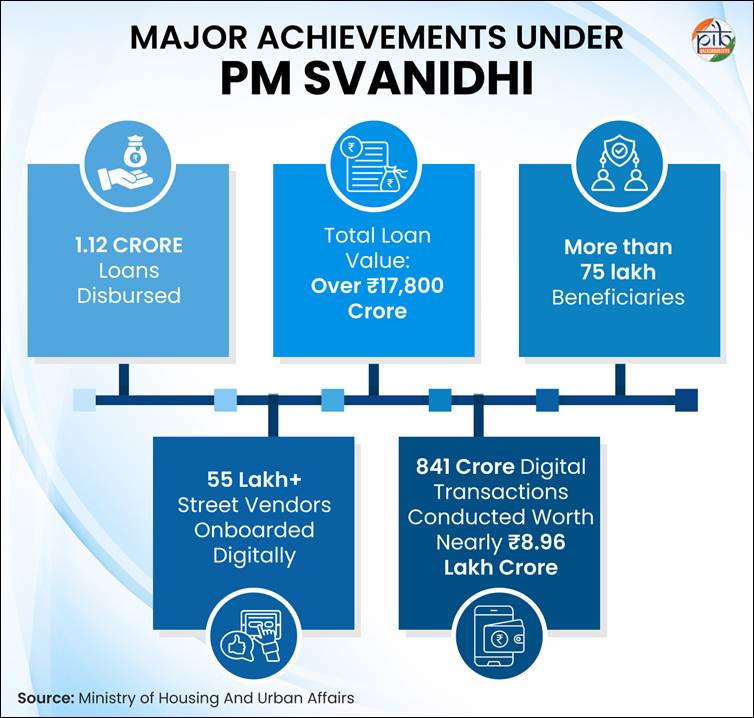
- 02 Jun 2026
In News:
The Prime Minister Street Vendor’s AtmaNirbhar Nidhi (PM SVANidhi) scheme completed six years on 1 June 2026, marking a significant milestone in India's efforts to promote financial inclusion, urban livelihoods, and social security for street vendors.
Launched in June 2020 by the Ministry of Housing and Urban Affairs (MoHUA) in collaboration with the Department of Financial Services (DFS), the scheme was introduced during the Covid-19 pandemic to provide much-needed working capital support to street vendors whose livelihoods had been severely disrupted.
About PM SVANidhi
PM SVANidhi is a Central Sector Scheme and India's first dedicated micro-credit programme for street vendors. It provides collateral-free working capital loans through the formal banking system, reducing dependence on informal moneylenders while promoting entrepreneurship and financial inclusion.
Key Features
|
Component |
Details |
|
Working Capital Loans |
Progressive collateral-free loans of ?15,000, ?25,000 and ?50,000 |
|
Interest Subsidy |
7% annual interest subsidy for timely or early repayment |
|
Digital Incentives |
Cashback rewards for digital transactions |
|
Credit Expansion |
UPI-linked RuPay Credit Cards up to ?30,000 for eligible beneficiaries |
|
Capacity Building |
Training in financial literacy, digital literacy, and food safety & hygiene (with FSSAI) |
|
Extended Timeline |
Scheme extended till March 2030, targeting 1.15 crore vendors, including 50 lakh new beneficiaries |
The Small Industries Development Bank of India (SIDBI) serves as the technical and implementation partner and manages the Credit Guarantee Trust Fund.
‘SVANidhi se Samriddhi’: Beyond Credit to Comprehensive Welfare
To convert financial inclusion into holistic socio-economic empowerment, MoHUA launched the SVANidhi se Samriddhi initiative.
The programme maps the socio-economic profile of vendor households and links them with major welfare schemes, including:
- Pradhan Mantri Jeevan Jyoti Bima Yojana (PMJJBY)
- Pradhan Mantri Suraksha Bima Yojana (PMSBY)
- PM Jan Dhan Yojana
- Building and Other Construction Workers (BoCW) Registration
- PM Shram Yogi Maandhan Yojana
- One Nation One Ration Card (ONORC)
- Janani Suraksha Yojana (JSY)
- PM Matru Vandana Yojana (PMMVY)
Six Years of Impact: Key Achievements
The scheme has emerged as one of India's most successful urban livelihood interventions:
- More than 1.12 crore loans sanctioned to over 75.5 lakh street vendors.
- Nearly 95% beneficiaries accessed formal institutional credit for the first time.
- Around 30% beneficiaries secured additional formal credit, reflecting improved creditworthiness.
- Beneficiary incomes increased by an average of 20% annually.
- 46% of beneficiaries are women, promoting women's economic empowerment.
- Nearly 70% belong to marginalized communities, enhancing social inclusion.
- More than 55 lakh vendors digitally onboarded.
- Vendors have collectively undertaken over 841 crore digital transactions.
- Under SVANidhi se Samriddhi, over 50 lakh vendor families have been socio-economically profiled and linked to more than 1.52 crore welfare benefits across eight flagship schemes.
Significance
PM SVANidhi has evolved from a pandemic relief initiative into a powerful instrument for financial inclusion, digital empowerment, entrepreneurship development, and social security expansion. By integrating credit access with welfare convergence, the scheme exemplifies the government's approach to inclusive urban development and grassroots economic empowerment.
Shangri-La Dialogue
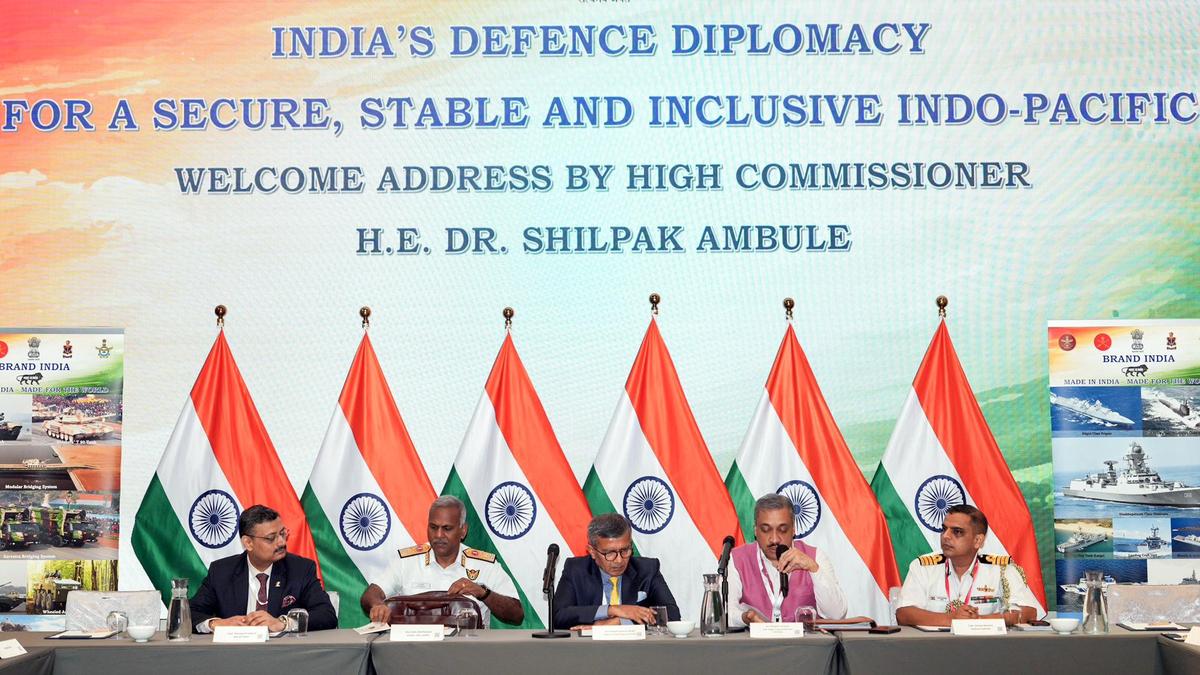
- 02 Jun 2026
In News:
The Shangri-La Dialogue 2026, held in Singapore, served as a major platform for advancing defence diplomacy and addressing emerging security challenges in the Indo-Pacific. On the sidelines of the summit, India’s Defence Secretary held a series of high-level bilateral engagements with defence leaders from various countries, focusing on strengthening defence partnerships, enhancing maritime security cooperation, promoting defence industrial collaboration, and ensuring a free, open, and rules-based Indo-Pacific.
About the Shangri-La Dialogue
Also known as the Asia Security Summit, the Shangri-La Dialogue is Asia’s premier defence and security forum. Since its inception in 2002, it has evolved into the most influential multilateral security dialogue in the Asia-Pacific region.
The summit is held annually at the Shangri-La Hotel, Singapore, and is organized by the International Institute for Strategic Studies (IISS), London, in collaboration with the Ministry of Defence of Singapore.
The dialogue brings together:
- Defence Ministers
- Military Chiefs
- Policymakers
- Strategic Experts
- Security Practitioners
from across the world to deliberate on regional and global security issues.
Agenda and Significance
- The agenda reflects the evolving security environment of the Indo-Pacific and covers both traditional and non-traditional security concerns.
Traditional Security Issues
- Maritime disputes
- Military modernization
- Defence partnerships
- Regional power balance
- Strategic competition
Non-Traditional Security Issues
- Terrorism
- Cybersecurity
- Climate change
- Disaster response
- Emerging technologies
India’s Participation and Engagements
India has been a regular and prominent participant in the Shangri-La Dialogue, represented by the Defence Minister, Chief of Defence Staff, Service Chiefs, or senior defence officials.
At the 2026 Dialogue, the Defence Secretary utilized bilateral meetings to deepen cooperation with key partners in the Indo-Pacific. Discussions focused on:
- Strengthening bilateral defence relations.
- Expanding maritime security cooperation.
- Enhancing military-to-military exchanges.
- Promoting defence technology and industrial collaboration.
- Supporting regional stability and freedom of navigation.
- Addressing common security challenges in the Indo-Pacific.
These engagements align with India’s vision of a free, open, inclusive and rules-based Indo-Pacific, consistent with its broader strategic initiatives such as SAGAR (Security and Growth for All in the Region) and the Indo-Pacific Oceans Initiative.
Importance for India
The Shangri-La Dialogue provides India with an important platform to:
- Advance defence diplomacy.
- Build strategic partnerships.
- Shape regional security discourse.
- Promote maritime cooperation.
- Enhance defence industrial partnerships.
- Reinforce its role as a net security provider in the Indian Ocean Region.
The forum also complements India's growing engagement with regional groupings such as the Association of Southeast Asian Nations and the Quadrilateral Security Dialogue.
India's First SkyCast System
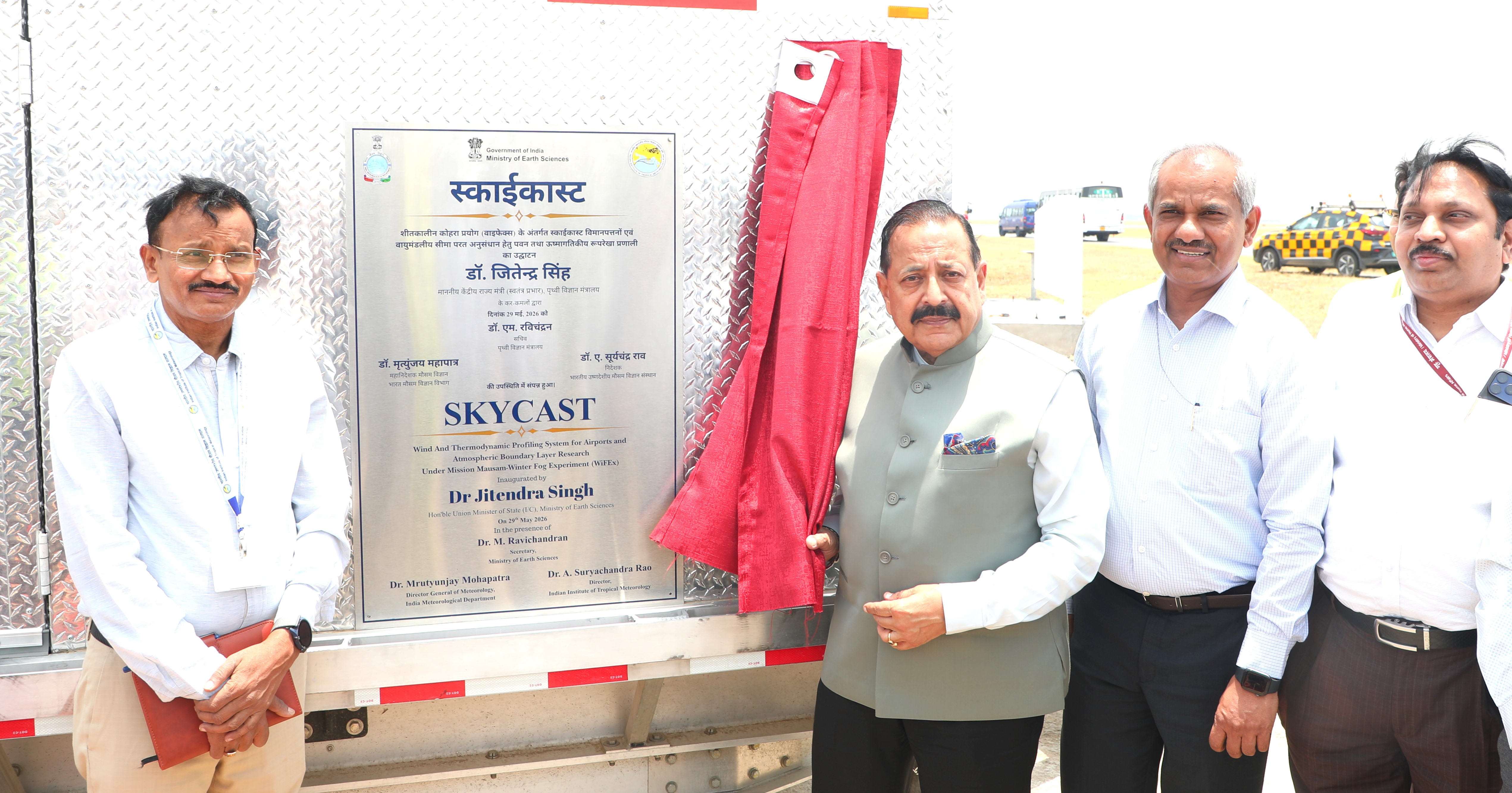
- 01 Jun 2026
In News:
- In a major boost to aviation safety and weather forecasting, Union Minister Dr. Jitendra Singh inaugurated India’s first SkyCast System at Indira Gandhi International (IGI) Airport, New Delhi.
- Developed under the Ministry of Earth Sciences’ (MoES) Mission Mausam, SkyCast is a next-generation integrated atmospheric remote sensing system designed to provide real-time weather intelligence for aviation operations.
- Its deployment marks India's entry into an era of “fog-free, weather-smart aviation” and makes India the 19th country in the world to possess such advanced aviation weather monitoring infrastructure.
What is SkyCast?
- SkyCast is a comprehensive aviation weather intelligence framework that integrates real-time observations of fog, aerosols, turbulence, moisture, visibility, wind and atmospheric conditions into a single operational platform.
- Its primary objective is to reduce flight delays, cancellations and diversions caused by adverse weather while enhancing safety during critical take-off and landing operations.
- The system emerged from the Winter Fog Experiment (WiFEX), jointly launched by the Indian Institute of Tropical Meteorology (IITM) and the India Meteorological Department (IMD) at IGI Airport in 2015, which generated valuable insights into fog formation, aerosol-cloud interactions and visibility reduction.
Key Technological Components
SkyCast integrates multiple state-of-the-art atmospheric observation systems:
- Radar Wind Profiler (RWP): Measures wind speed, wind direction, turbulence, vertical velocity and boundary-layer dynamics.
- SODAR (Sonic Detection and Ranging): Monitors lower atmospheric wind structures.
- Microwave Radiometer: Provides temperature and humidity profiles.
- Ground-based Fog Aerosol Spectrometer (GFAS): Analyses fog droplets, aerosols and aerosol-fog interactions, particularly relevant for Delhi’s pollution-driven fog conditions.
- CL61 Lidar-based Ceilometer: Continuously tracks the vertical structure, density and evolution of fog.
Key Features
- Continuous monitoring of atmospheric conditions up to nearly 3 km altitude above the airport.
- Real-time assessment of fog, turbulence, visibility and moisture conditions.
- Nowcasting and early-warning capability within a 3-hour forecasting window.
- Supports pilots, airlines, airport operators and air traffic management agencies with precise weather intelligence.
- Generates high-quality atmospheric data for improved weather prediction models and AI-enabled forecasting systems.
Significance
- Aviation Safety and Efficiency: SkyCast enables pilots to make informed landing and take-off decisions, reducing operational disruptions and enhancing passenger safety. It is expected to significantly reduce weather-induced delays and diversions, particularly during Delhi’s winter fog season.
- Strengthening Mission Mausam: SkyCast is a major component of Mission Mausam, the Government of India’s ?2,000 crore initiative launched to make India a “Weather-Ready and Climate-Smart Nation.” The mission focuses on improving weather observations, forecasting accuracy, AI-enabled prediction systems and disaster resilience.
Wider Applications
Beyond aviation, SkyCast data will support:
- AI-enabled weather forecasting,
- Urban weather prediction,
- Pollution management,
- Transport advisories,
- Disaster preparedness and response.
Future Expansion
Following IGI Airport, the next SkyCast facility will be established at Jewar Airport, with plans for expansion across major airports in India.
NITI Aayog’s “Future of India’s Semiconductor Industry” Roadmap
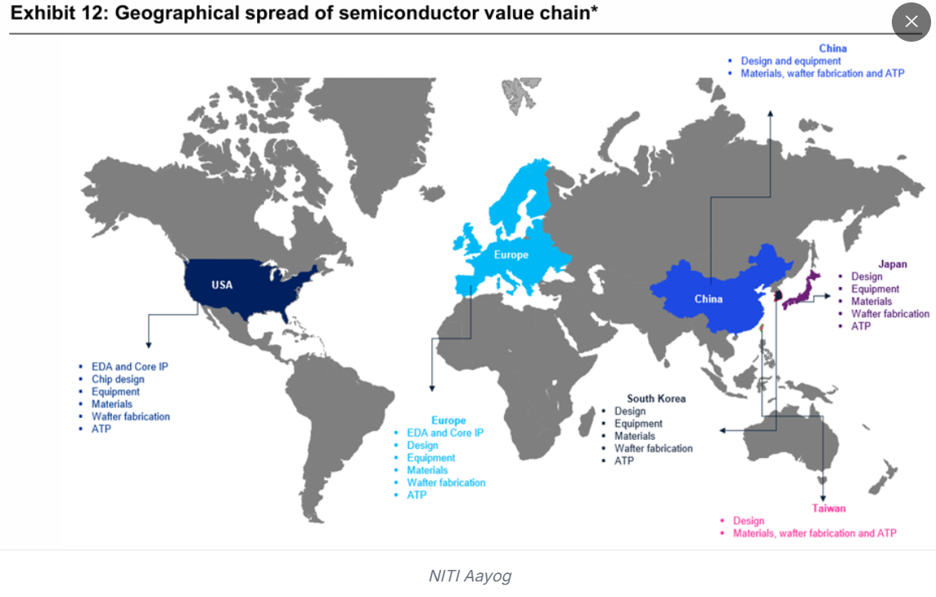
- 01 Jun 2026
In News:
Recognising semiconductors as the foundation of national security, digital sovereignty, economic resilience, AI infrastructure, defence systems, telecommunications, healthcare technologies, automobiles, and advanced manufacturing, NITI Aayog’s Frontier Tech Hub has released India’s first comprehensive 10-year roadmap titled “Future of India’s Semiconductor Industry.” The roadmap envisions building a USD 120–150 billion domestic semiconductor value chain by 2035, transforming India from a major chip consumer into an indispensable global semiconductor player.
Why the Roadmap is Important
India currently faces extreme strategic vulnerability, with 90–95% of its semiconductor demand met through imports. Between FY17 and FY25, semiconductor imports cost the country nearly USD 150 billion, and if current trends continue, the annual import bill could rise to USD 240 billion by 2035. At the same time, India’s domestic semiconductor market is projected to reach USD 200 billion by 2035, driven by rapid growth in electronics manufacturing, electric vehicles (EVs), AI systems, data centres, telecom equipment and digital infrastructure.
India’s Strategic Approach: Beyond the Wafer Race
Instead of competing directly in the highly capital-intensive cutting-edge wafer fabrication race, the roadmap advocates a “More-than-Moore” strategy, focusing on areas where India can build sustainable competitive advantages:
- Advanced Packaging and OSAT (Outsourced Semiconductor Assembly and Test)
- Compound Semiconductors
- Wide-Bandgap Materials (SiC and GaN)
- Advanced Semiconductor Design and Design IP
- AI-Native Chip Design
The roadmap aims to position India among the top global destinations for advanced packaging and OSAT, emerge as a major supplier of wide-bandgap semiconductors, and create more than 100 advanced semiconductor design IPs by 2035.
Key Strengths and Opportunities
India possesses several structural advantages:
- Houses 20% of the global semiconductor design workforce.
- Benefits from the China 1 strategy and global supply-chain diversification.
- Can leverage growing partnerships with the US, Japan and the European Union.
- Rising EV adoption creates demand for SiC and GaN power devices.
- Backed by India Semiconductor Mission (ISM) 2.0, which shifts focus from ecosystem creation to ecosystem deepening.
Major Challenges
Despite the opportunity, significant barriers remain:
- USD 135–180 billion investment requirement over the next decade.
- A modern semiconductor fab requires over USD 5 billion, while leading-edge facilities can exceed USD 15 billion.
- Long gestation periods of 4–5 years before production begins.
- Shortage of specialized fabrication, materials and cleanroom talent.
- High requirements of ultra-pure water and uninterrupted electricity.
- Strong market dominance of established East Asian semiconductor ecosystems.
Five Pillars of the Roadmap
The strategy is built around five mutually reinforcing pillars:
- Pioneering Frontier R&D and Design IP
- Policy and Investment Mobilisation
- Production through Advanced Packaging and Compound Semiconductors
- People and Talent Development
- Partnerships with Trusted Nations and Global Industry
The roadmap marks India's transition from ecosystem creation to ecosystem deepening, focusing on design leadership, advanced packaging, compound semiconductors, talent development, R&D and trusted global partnerships. By leveraging its design strengths and targeting high-value segments rather than the traditional wafer race, India seeks to capture 10–13% of the global semiconductor market by 2035 while strengthening its technological sovereignty and advancing the vision of Viksit Bharat 2047.
National Family Health Survey–6 (NFHS-6)
- 01 Jun 2026
In News:
The Ministry of Health and Family Welfare (MoHFW) has released the National Family Health Survey–6 (NFHS-6) (2023–24), conducted by the International Institute for Population Sciences (IIPS), Mumbai across 715 districts covering nearly 6.79 lakh households. As India’s most comprehensive health and demographic survey, NFHS-6 provides district-level evidence for policy formulation, monitoring of welfare schemes, and tracking progress towards the Sustainable Development Goals (SDGs).
Major Gains Recorded
Maternal and Child Health
India has made significant progress towards safe motherhood and improved healthcare access:
- Institutional deliveries increased from 88.6% to 90.6%.
- Antenatal Care (ANC) coverage rose from 92.6% to 95.9%.
- Women receiving ANC in the first trimester increased from 70% to 76.2%.
- Mothers receiving at least four ANC visits increased from 58.5% to 65.2%.
- Skilled birth attendance improved from 89.4% to 91.3%.
- Postnatal care within two days of delivery rose from 79.1% to 85.3%.
Child Nutrition and Immunisation
The survey reflects encouraging improvements in child health outcomes:
- Stunting declined from 35.5% to 29.3% (17% reduction).
- Severe wasting reduced from 7.7% to 5.2% (32% reduction).
- Children aged 6–8 months receiving complementary feeding increased from 45.9% to 59.5%.
- Full immunisation among children aged 12–23 months increased from 83.8% to 87.1%.
- Rotavirus vaccine coverage more than doubled from 36.4% to 85.4%.
- Coverage of the second dose of measles vaccine rose from 58.6% to 71.8%.
- 95.6% of vaccinations were administered through public health facilities, demonstrating strong public trust.
Family Planning and Financial Protection
- India’s Total Fertility Rate (TFR) remains stable at 2.0, below the replacement level of 2.1.
- Contraceptive Prevalence Rate (CPR) increased from 66.7% to 69.1%.
- Household health insurance coverage rose sharply from 41.0% to 60.2%, driven largely by Ayushman Bharat–PMJAY and related initiatives.
Women’s Empowerment
- Women who have ever used the internet increased from 33.3% to 64.3%.
- Women operating their own bank accounts increased from 78.6% to 89.0%.
- Women owning and using a mobile phone rose from 53.9% to 63.6%.
Key Challenges
Despite the progress, NFHS-6 highlights several emerging concerns:
- 12.9% of children aged 12–23 months are still not fully immunised.
- Only 37.8% of pregnant women consumed Iron-Folic Acid supplements for the recommended 180 days.
- Rising burden of Non-Communicable Diseases (NCDs) and lifestyle-related disorders.
- Growing dual burden of malnutrition, with persistent undernutrition coexisting alongside rising overweight and obesity among adults.
- Caesarean section deliveries increased sharply from 21.5% to 27.2%, requiring closer monitoring.
Government Initiatives Driving Progress
Key schemes contributing to these gains include Janani Suraksha Yojana (JSY), Janani Shishu Suraksha Karyakram (JSSK), Pradhan Mantri SurakshitMatritva Abhiyan (PMSMA), SUMAN, POSHAN Abhiyaan, Saksham Anganwadi and POSHAN 2.0, Universal ImmunisationProgramme, U-WIN, Mission Parivar Vikas, and Ayushman Bharat–PMJAY.
NFHS-6 presents a picture of accelerated improvements in maternal health, child nutrition, immunisation, women’s empowerment and financial protection, reaffirming India's progress towards SDGs and Universal Health Coverage. However, rising NCDs, obesity, incomplete immunisation, and nutritional challenges indicate that future health policy must move beyond access and focus on preventive healthcare, behavioural change, nutrition security, and quality health outcomes.
Chandrayaan-2 Detects Possible Subsurface Ice Near the Moon’s South Pole
- 01 Jun 2026
In News:
India’s Chandrayaan-2 mission has provided fresh evidence suggesting the presence of subsurface water ice beneath the lunar south polar region, a discovery with significant implications for future lunar exploration and long-term human presence on the Moon. The findings, published by scientists from the Physical Research Laboratory (PRL), Ahmedabad, are based on observations made by the Dual Frequency Synthetic Aperture Radar (DFSAR) onboard the Chandrayaan-2 orbiter.
Launched by ISRO in July 2019, Chandrayaan-2 was India’s second lunar mission. While the Vikram lander lost communication during its landing attempt, the orbiter has continued to function successfully, generating valuable scientific data about the Moon.
DFSAR: A Unique Lunar Radar Instrument
The DFSAR is the first fully polarimetric synthetic aperture radar designed specifically for lunar studies. Operating in both L-band and S-band microwave frequencies, it can penetrate beneath the lunar surface and detect variations in subsurface composition, making it particularly useful for identifying water ice deposits hidden beneath layers of regolith.
Study and Methodology
The research focused on doubly shadowed craters situated within the Moon’s Permanently Shadowed Regions (PSRs) near the south pole. These regions never receive direct sunlight and maintain extremely low temperatures of about 25 Kelvin (-248°C), creating ideal conditions for the long-term preservation of water ice.
Scientists analysed radar data using two important parameters:
- Circular Polarization Ratio (CPR) > 1
- Degree of Polarization (DOP) < 0.13
Such radar signatures are considered potential indicators of volumetric scattering, a phenomenon commonly associated with subsurface ice deposits.
Key Findings
The study identified radar evidence suggesting possible subsurface ice beneath four doubly shadowed craters. The strongest indication came from a 1.1-km-wide crater located within the larger Faustini crater.
An additional clue emerged from the crater’s lobate-rim morphology, a geological feature that may indicate that the impact event penetrated an ice-rich subsurface layer. This strengthens the hypothesis that water ice could exist beneath the lunar surface rather than merely as surface frost.
Significance of the Discovery
The presence of water ice on the Moon has immense scientific and strategic importance:
- Supports future human missions by providing a potential source of drinking water.
- Can be split into hydrogen and oxygen for rocket fuel and life-support systems.
- Helps identify suitable sites for future lunar landers and bases.
- Advances understanding of the Moon’s geological and climatic history.
- Strengthens India's contribution to global lunar science and exploration.
Insolvency and Bankruptcy Code (IBC) completes 10 years
- 01 Jun 2026
In News:
The Insolvency and Bankruptcy Code (IBC), 2016 has completed a decade since its enactment, emerging as one of India's most significant economic and institutional reforms. Enacted on the recommendations of the Bankruptcy Law Reforms Committee (2015) chaired by T.K. Viswanathan, the Code consolidated multiple fragmented insolvency laws into a unified, creditor-driven and time-bound framework. It fundamentally shifted India from a “debtor-in-possession” model to a “creditor-in-control” regime, thereby strengthening credit discipline, improving recovery mechanisms and enhancing investor confidence.
Key Achievements of IBC
Over the last ten years, IBC has significantly transformed India's financial landscape:
- ?4.32 lakh crorerealised for creditors through resolution processes till March 2026.
- Recovery value reached 167% of liquidation value and 95% of fair value.
- Gross NPA ratio of Scheduled Commercial Banks declined sharply from 11.8% (2017) to 2.1% (September 2025), a 12-year low.
- More than 30,000 cases involving nearly ?14 lakh crore were resolved at the pre-admission stage, demonstrating the Code’s strong deterrent effect.
- 58% of closed cases resulted in successful rescue of firms rather than liquidation.
- Resolution timelines reduced from 6–8 years (pre-IBC) to around 2 years.
- S&P Global Ratings upgraded India’s insolvency framework from Group C to Group B.
- According to RBI, IBC accounted for ?0.54 lakh crore (52.4%) of total recoveries made by banks through various recovery channels in 2024–25.
Institutional Framework and Process
The IBC ecosystem is anchored by:
- Insolvency and Bankruptcy Board of India (IBBI) – regulator.
- National Company Law Tribunal (NCLT) and Debt Recovery Tribunal (DRT) – adjudicating authorities.
- Insolvency Professionals (IPs) – manage resolution proceedings.
- Information Utilities (IUs) – maintain authenticated financial information.
The Corporate Insolvency Resolution Process (CIRP) begins upon default, followed by a moratorium, constitution of the Committee of Creditors (CoC), and approval of a resolution plan by 66% voting share. The Code prescribes a maximum timeline of 330 days for resolution.
Recent Reforms
The IBC (Amendment) Act, 2026 introduced:
- Creditor-Initiated Insolvency Resolution Process (CIIRP) requiring approval of 51% financial creditors.
- Strengthening of the Clean Slate Principle.
- Greater powers for the CoC during liquidation.
- Clarification that government dues are not secured debt.
- Penalties for frivolous filings and fraudulent transactions.
Persistent Challenges
Despite its success, several concerns remain:
- Average resolution time has increased to 744 days, far exceeding the statutory limit of 330 days.
- Recovery against admitted claims declined to 23% in FY26 from 46% in FY25, leading to large creditor haircuts.
- Shortage of NCLT members and infrastructure bottlenecks.
- Complex insolvency cases in the real-estate sector, involving thousands of homebuyers.
- Delays in post-resolution approvals and credit access for resolved firms.
Way Forward
Strengthening NCLT capacity, institutionalising mediation, adopting the UNCITRAL Model Law on Cross-Border Insolvency, improving accountability of insolvency professionals, and focusing on enterprise value maximisation are critical for enhancing the effectiveness of the Code.
ESIC Launches Centralised Digital Patient Feedback System
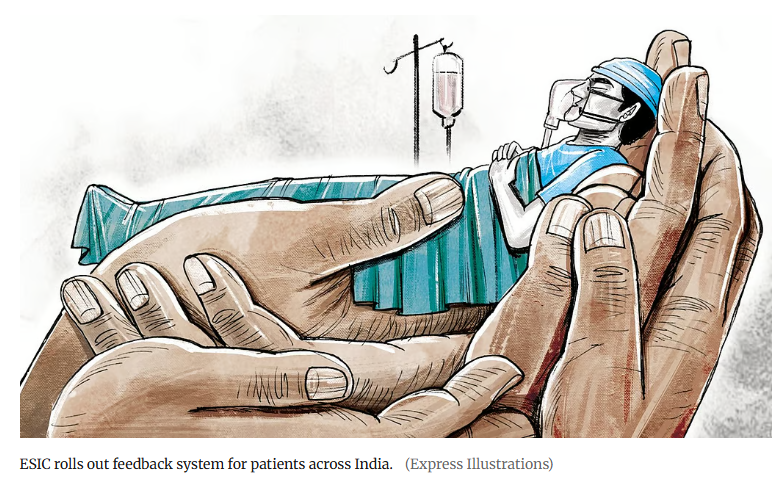
- 06 Jun 2026
In News:
The Employees' State Insurance Corporation (ESIC), under the Ministry of Labour and Employment, has rolled out a nationwide Centralised Online Patient Feedback System across all its hospitals and dispensaries, aimed at improving healthcare quality, transparency, and institutional accountability.
About ESIC
- Established in 1948 under the ESI Act, ESIC is an autonomous body under the Ministry of Labour and Employment.
- It provides comprehensive social security and healthcare coverage to workers in the organised sector and their dependents. Its healthcare network spans hospitals, dispensaries, and outpatient facilities across India, serving crores of insured persons (IPs) and their families.
About the System
- The new platform is an omnichannel digital public grievance and quality-assurance tool that enables ESIC beneficiaries to instantly rate their healthcare experience.
- It helps hospital administration track service benchmarks and address operational deficiencies in real time.
- It empowers insured persons to share healthcare experiences, raise specific concerns, and provide actionable suggestions for institutional improvement across three core parameters: cleanliness of facilities, behaviour of medical staff, and availability of prescribed medicines.
How it Works
The system operates through three feedback channels. First, automated SMS links are sent directly to the insured person's registered mobile number immediately after they avail services through the ESIC Health Information System (Dhanwantri Module). Second, on-site QR codes are displayed on customised multilingual posters at all OPDs and hospital locations, which patients can scan with their mobile devices. Third, feedback can be submitted directly through the official ESIC website.
To ensure data authenticity and prevent duplicate or fraudulent entries, patients enter their IP Number, which triggers an OTP verification process before feedback submission — a process that can be completed within seconds.
Key Features
The system incorporates role-based digital dashboards operating at three administrative tiers: headquarters level, regional offices level, and local ESI health facilities level. This enables continuous, real-time performance monitoring across the entire ESIC network. The platform features full multilingual support to eliminate language barriers and encourage participation among India's diverse working-class beneficiary pool.
A critical automated escalation mechanism ensures that any service rating falling below 3 out of 5 is automatically flagged and routed to local administrative dashboards for immediate corrective action. Additionally, the platform supports performance ranking of all ESIC healthcare facilities, fostering healthy institutional competition and continuous improvement.
Significance
This initiative represents a significant shift from passive grievance redressal to proactive, data-driven quality management in public sector healthcare delivery. By converting patient feedback into instant digital alerts, the system enables swift gap identification and correction. The continuous generation of patient satisfaction data will help rank ESI hospitals, promoting accountability and service improvement. The multilingual, mobile-first design ensures inclusivity for a widely dispersed, multi-lingual workforce.
The launch aligns with the broader Digital India initiative and the government's push to leverage technology for improving public service delivery — particularly for the organised sector workforce that forms the backbone of India's industrial economy.
Blue Micromoon

- 06 Jun 2026
In News:
Recently, skywatchers witnessed a rare Blue Micromoon, a simultaneous occurrence of a Blue Moon and a Micromoon. NASA described it as the farthest, smallest, and dimmest full Moon of 2026, with the next Blue Micromoon not expected until 2053.
What Is a Blue Micromoon?
A Blue Micromoon is the rare coincidence of two distinct lunar phenomena:
- A Blue Moon refers to the second full moon occurring within a single calendar month. Because the interval between two full moons averages about 29.5 days — slightly shorter than most calendar months — every two to three years a calendar year includes 13 full moons, producing this "extra" full moon.
- A Micromoon occurs when a full moon coincides with apogee — the farthest point in the Moon's elliptical orbit around Earth. The opposite of a micromoon is a supermoon, which occurs when a full moon reaches perigee, or its closest point to Earth.
Why Doesn't It Look Blue?
Despite the name, the moon does not appear blue. The name has nothing to do with the moon's colour — it appears as a warm orange near the horizon due to atmospheric scattering. A genuinely bluish tint can only appear when rare atmospheric conditions — such as volcanic ash or dense smoke — scatter red wavelengths of light.
Key Orbital Mechanics
The Moon's orbit around Earth is elliptical, completing one cycle every 27.3 days. Because the orbit is not a perfect circle, the Moon's distance from Earth varies continuously. When the fully illuminated phase coincides with the orbital extreme of apogee, the angular diameter of the lunar disk appears compressed — about 7% smaller than an average full moon. The coincidence of this orbital position with the calendar anomaly of a Blue Moon is what makes the Blue Micromoon so rare.
Rarity
The next Blue Micromoon will not be seen until at least July 2053, making this a phenomenon with a gap of approximately 27 years. A standard Blue Moon recurs every 2–3 years; a Micromoon is more common on its own; but their simultaneous alignment is exceedingly infrequent.
Operation Mule Hunt 1.0
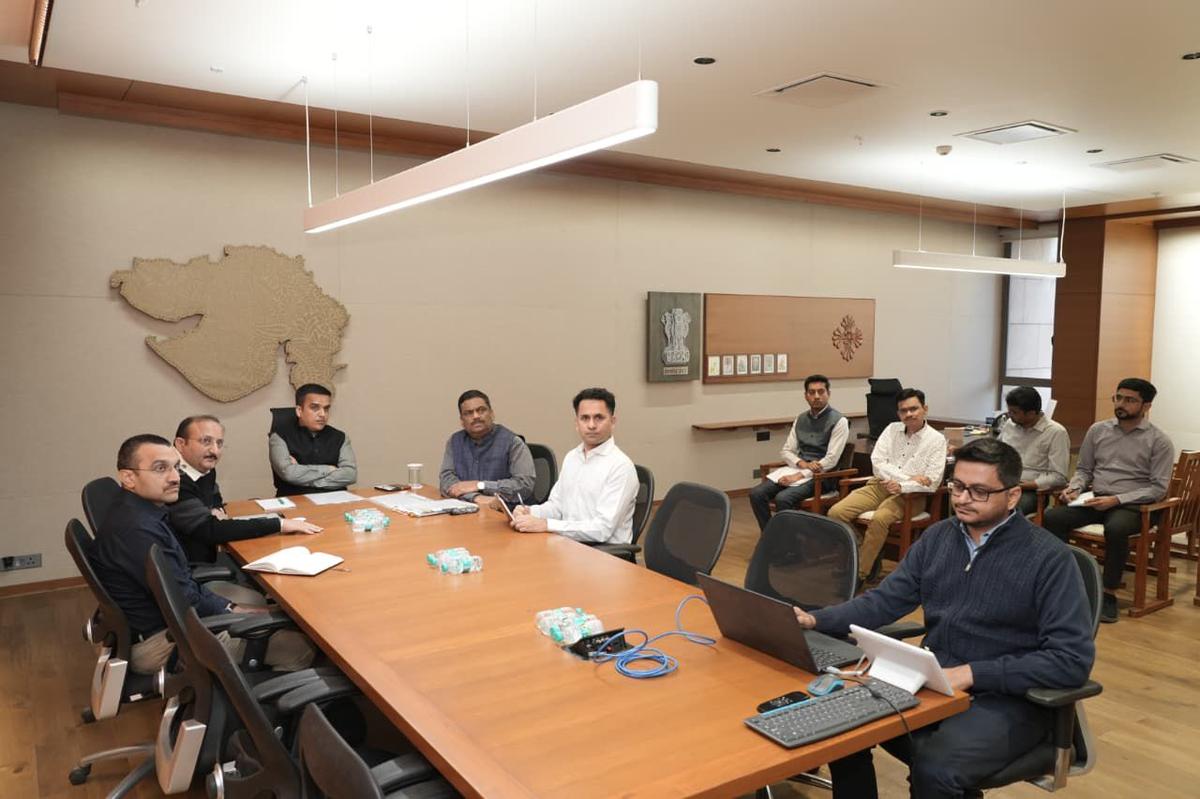
- 06 Jun 2026
In News:
Gujarat Police recently concluded Operation Mule Hunt 1.0, a statewide crackdown on cyber fraud that uncovered cyber fraud transactions worth approximately ?2,289 crore, led to 565 FIRs, 638 arrests, and action against 913 mule accounts linked to 4,052 cybercrime cases across India, including 491 cases within Gujarat. Building on this success, Gujarat launched Operation Mule Hunt 2.0 from June 2, 2026, for a more aggressive second phase targeting mule-account networks.
What are Mule Accounts?
A mule account is a bank account used to receive, transfer, and conceal proceeds of cybercrime. The person operating such an account is a "money mule." Transnational cybercriminals exploit accounts of shell companies and individuals as mule accounts, taking advantage of bulk payout facilities provided by banks. Account holders sometimes knowingly rent or sell access to their accounts in exchange for commissions, while others are unwitting participants.
Operation Mule Hunt 1.0: Execution
- The operation was led by Gujarat Police's Cyber Centre of Excellence (CCE), with support from police commissionerates, range offices, Local Crime Branch units, and cyber police stations across the state.
- Intelligence inputs were compiled from the Indian Cyber Crime Coordination Centre (I4C), the National Cyber Crime Reporting Portal (NCRP), the Samanvay coordination portal, and the national cybercrime helpline 1930. District-level nodal officers coordinated field response teams, while banks were brought into a structured framework for real-time sharing of transaction-related alerts.
Impact on Criminal Networks
The operation produced measurable disruption to cybercrime syndicates' financial exit routes. Monthly cheque withdrawals linked to suspicious transactions fell from ?126 crore to ?25 crore — an 80% decline. First-layer mule accounts, where fraudulent funds are initially deposited, fell by 30% between August and December 2025, and ATM-based cash withdrawals saw a 66% reduction. These figures indicate that targeting mule accounts directly weakens the operational infrastructure of cybercrime networks.
Institutional and Technological Response
To build systemic resilience against mule accounts, the Indian Digital Payment Intelligence Corporation (IDPIC) — under RBI guidelines — is implementing an AI-based risk-scoring system through a platform called mulehunter.ai. Under this framework, each banking transaction will be classified as low, medium, or high risk, enabling banks to proactively identify and act on suspicious accounts. IDPIC serves as the nodal agency for sharing intelligence on suspicious accounts across the banking system.
Broader Context
Cyber fraud through mule accounts represents a major threat to India's digital financial ecosystem. The I4C under the Ministry of Home Affairs coordinates national-level cybercrime response, while the 1930 helpline and NCRP serve as citizen-facing reporting mechanisms. The PMLA, 2002 and IT Act, 2000 provide the primary legal framework for prosecution in such cases.
Right to Be Forgotten
- 06 Jun 2026
In News:
Recently, Justice Sachin Datta of the Delhi High Court delivered a landmark 144-page judgment in Laksh Vir Singh Yadav v. Union of India & Connected Matters,recognising the Right to Be Forgotten (RTBF) as an integral facet of the fundamental right to privacy under Article 21 of the Constitution.
Constitutional Basis
The right to privacy was recognised as a fundamental right under Article 21 by the Supreme Court in Justice K.S. Puttaswamy v. Union of India (2017). Building on this, the Delhi HC held that RTBF protects individuals from "perpetual exposure" to past events that no longer serve a legitimate public purpose. Significantly, the court held that this right must be actively protected even in the absence of specific legislation — the Digital Personal Data Protection Act, 2023 touches on related concepts but does not fully codify RTBF.
Global Precedent
The RTBF was first recognised internationally by the Court of Justice of the European Union (CJEU) in the 2014 Google Spain case, which held that search engines must remove information that is no longer relevant upon request. India's Delhi HC has now established a comparable framework through constitutional interpretation.
Key Directions Issued
- The court directed Google LLC and other search engine operators to de-index relevant content, judgments, orders, and associated reportage from name-based search results within two weeks in cases where relief was granted.
- Indian Kanoon was directed to restrict name-based search functionality while continuing to permit access through case numbers, citations, court details, and dates.
- MeitY was directed to ensure compliance by intermediary platforms and file a compliance affidavit before the court.
- On territorial scope, the court held that de-indexing directions shall operate globally across all versions and domains of the search engine concerned, to protect informational privacy rights under Article 21.
Masking vs. De-indexing
- The court recognised masking as a remedy distinct from de-indexing. Personal identifiers may be masked in publicly accessible digital versions of judicial records, but legal reasoning, findings, and conclusions must remain intact, with unredacted records preserved for legitimate legal purposes.
Balancing Open Justice and Dignity
- The court observed that while judicial transparency remains important, the continued association of an individual's name with judicial records online can disproportionately affect privacy, dignity, and reputation once proceedings have concluded. Open justice ensures transparency — not the perpetual commercial amplification of personal legal struggles.
Exemptions and Limits
The right is not absolute. Relief may be denied in cases involving convictions for offences against women or children, breach of public trust by public servants or elected representatives, and matters of continuing public interest. The court also rejected a plea by a public figure seeking removal of content on past misconduct, holding that RTBF cannot be used as a tool for "selective erasure" of a public figure's conduct.
MAHA Water Mission
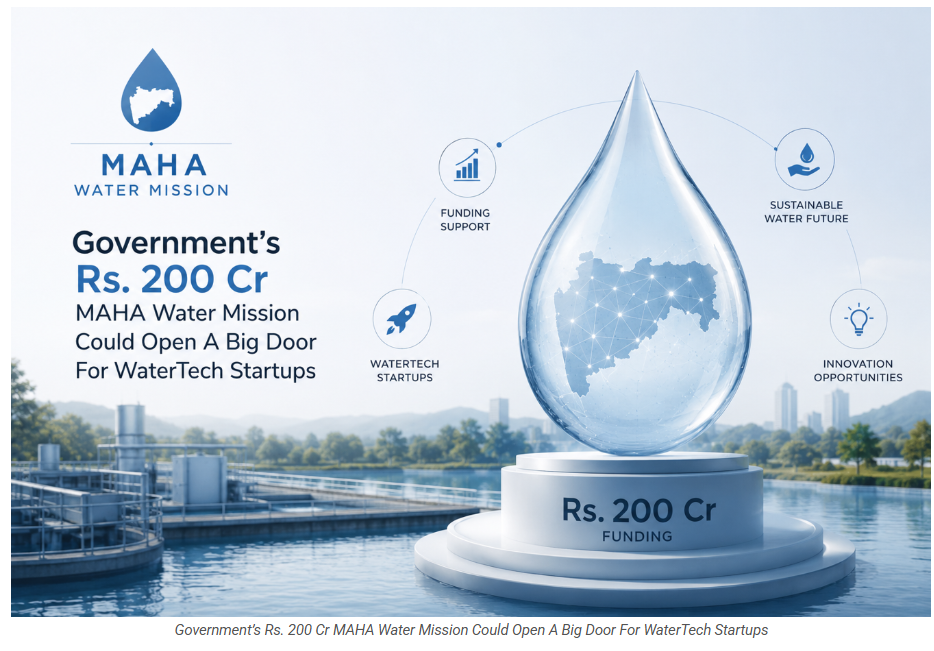
- 06 Jun 2026
In News:
The Union Minister of Science & Technology recently launched the MAHA Water Mission, a national platform designed to bridge the gap between scientific research and on-ground water solutions across India.
About MAHA Water Mission
- The Mission has been conceived as a national innovation platform to accelerate technology development in the water sector by connecting science, entrepreneurship, industry, academia, and grassroots action.
- Its core objective is to support innovations from laboratory research through to field deployment, generating both scalable and localised solutions to strengthen India's long-term water security.
- The mission will support technology development, field validation, and deployment to address India's most critical water challenges across five priority themes: water resource assessment and sustainable management; drinking water access and quality; water quality and ecological health; water use efficiency and circular economy; and climate resilience and adaptation.
Institutional and Financial Structure
- The mission carries a projected outlay of ?200 crore over five years, jointly contributed by the Anusandhan National Research Foundation (ANRF) and the Ministry of Jal Shakti.
- This joint funding structure is significant as it brings together India's apex research funding body with the nodal ministry for water governance, ensuring both scientific rigour and policy relevance.
- The programme will support multidisciplinary consortia comprising universities, national laboratories, research organisations, startups, MSMEs, and industry partners.
- Selected consortia will be eligible for up to ?20 crore in support to undertake end-to-end activities — from technology development and field assessment to validation and deployment of high-impact water solutions.
Why This Matters
- India faces an acute and compounding water crisis. It is home to 18% of the world's population but holds only 4% of its freshwater resources.
- Groundwater depletion, erratic monsoons due to climate change, industrial and agricultural pollution, and inadequate urban water infrastructure collectively threaten both drinking water access and food security.
- Despite significant policy attention — through schemes like Jal Jeevan Mission and Atal Bhujal Yojana — a dedicated innovation pipeline translating research into field-ready solutions has been largely absent. The MAHA Water Mission addresses this critical gap.
- By bringing together startups and MSMEs alongside established research institutions, the mission also aims to build a domestic water-technology industry, reducing dependence on imported solutions and creating employment in a high-priority sector.
- The circular economy focus within its priority themes signals a shift toward water recycling and reuse — essential for a water-scarce country with a growing urban population.
Alignment with Broader Policy Framework
The mission complements existing government programmes: Jal Jeevan Mission (rural drinking water), AMRUT (urban water infrastructure), Atal Bhujal Yojana (groundwater management), and the National Water Policy. The involvement of ANRF — established under the ANRF Act, 2023 — reflects the government's intent to use its new apex research funding architecture to address strategic national challenges.
Design Linked Incentive (DLI) Scheme

- 05 Jun 2026
In News:
Union Minister for Electronics and IT Ashwini Vaishnaw stated, that India's Design Linked Incentive (DLI) scheme is delivering encouraging results, citing the development of India's first Edge AI System-on-Chip (SoC) — NETRA A2000 — by Thiruvananthapuram-based fabless semiconductor startup Netrasemi as a key milestone.
The NETRA A2000 Achievement
- Netrasemi designed India's first flagship AI System-on-Chip, the NETRA A2000, at the advanced 12nm technology node. The chip has completed successful silicon bring-up — a critical stage that validates chip functionality after fabrication — and is now moving toward commercial production.
- It is designed to support smart vision devices and real-time AI applications across sectors such as surveillance, automotive, robotics, and drones. The SoC integrates Netrasemi's proprietary Neural Processing Unit (NPU), Vision Processing Unit (VPU), Image Signal Processor (ISP), crypto engines, and specialised hardware acceleration IP cores, and was fabricated at TSMC using its 12nm process technology.
- Netrasemi was one of the first four startups selected for ?15 crore DLI support in 2023 by MeitY, and has raised ?125 crore in total funding to date.
About the DLI Scheme
- The Design Linked Incentive (DLI) Scheme is implemented by the Ministry of Electronics and Information Technology (MeitY) under the broader Semicon India Programme.
- It is a key instrument in advancing India's ambition to develop a strong fabless semiconductor capability — i.e., companies that design chips without owning fabrication facilities.
- The nodal agency for implementation is C-DAC (Centre for Development of Advanced Computing).
- The scheme aims to reduce India's import dependence in semiconductors, strengthen supply chain resilience, and enhance domestic value addition across the full chip lifecycle — from design and development to deployment — covering Integrated Circuits (ICs), Chipsets, Systems-on-Chip (SoCs), Systems, and IP Cores.
Eligibility and Financial Incentives
- Startups and MSMEs are eligible for both financial incentives and design infrastructure support. Other domestic companies are eligible for financial incentives for deploying semiconductor designs.
- The scheme operates through two incentive tracks. Under the Product Design Linked Incentive, eligible entities receive reimbursement of up to 50% of eligible expenditure, capped at ?15 crore per application.
- Under the Deployment Linked Incentive, incentives of 4–6% of net sales turnover are provided for five years, capped at ?30 crore per application, with a minimum cumulative net sales requirement of ?1 crore for startups/MSMEs and ?5 crore for other domestic companies over the first five years.
Project UDAYAK
- 05 Jun 2026
In News:
The Border Roads Organisation (BRO) celebrated the 37th Raising Day of Project UDAYAK, at Doomdooma, Assam, marking over three decades of strategic infrastructure development in India's northeastern frontier.
About Project UDAYAK
Established in 1989, Project UDAYAK is a specialised territorial wing of the BRO, which functions under the Ministry of Defence. It is tasked with the development and maintenance of strategic road infrastructure across some of the most remote and geographically challenging terrains in India. The project currently manages over 1,457 km of strategic roads.
Area of Responsibility
The project operates in the easternmost regions of Arunachal Pradesh and parts of Assam, covering the districts of Anjaw, Lohit, Dibang Valley, Longding, Tirap, and Changlang. It manages road infrastructure along two highly sensitive international boundaries — the Line of Actual Control (LAC) with China and the Indo-Myanmar border — making it central to India's border security architecture in the northeast.
37th Raising Day Highlights
The Raising Day was marked by a Swachhata Abhiyan, road safety awareness campaigns, a run and walkathon, and medical and dental camps for nearby communities. Internal activities including SainikSammelan and troop interactions were conducted to strengthen camaraderie among personnel, reflecting the project's dual commitment to operational excellence and community welfare.
Strategic Significance
Project UDAYAK occupies a critical position in India's national security calculus for several reasons.
- First, connectivity along the LAC is essential for the Indian Army's logistics, rapid troop mobilisation, and supply chains — an area where China has historically held an advantage due to its superior infrastructure on the Tibetan plateau.
- Second, the Indo-Myanmar border region is prone to insurgency and illegal trafficking; road and fencing infrastructure directly aids security forces in surveillance and response.
- Third, beyond security, the roads and bridges built by the project connect isolated tribal communities to markets, healthcare, and education, accelerating socio-economic integration of border populations with the national mainstream.
About BRO
The Border Roads Organisation was established in 1960 and operates under the Ministry of Defence. It is responsible for the construction and maintenance of road infrastructure in border areas and strategically sensitive regions across India and friendly neighbouring countries. BRO's work is considered integral to both national security and the development of remote areas.
India-Oman Comprehensive Economic Partnership Agreement (CEPA)
- 05 Jun 2026
In News:
The India-Oman Comprehensive Economic Partnership Agreement (CEPA), signed in December 2025, has come into force at a critical juncture, as disruptions in the Strait of Hormuz due to continuing regional conflict have raised serious concerns over global trade, energy supplies, and freight costs across West Asia.
India-Oman Bilateral Relations: Overview
- India and Oman share one of the oldest maritime and commercial partnerships in the Indian Ocean region. Oman is India's oldest strategic partner in the Gulf, and their relationship has evolved into a comprehensive engagement covering trade, energy, defence, connectivity, and people-to-people ties.
- Nearly 700,000 Indians reside in Oman, making the Indian diaspora the Sultanate's largest expatriate community and a vital bridge between the two nations. Bilateral trade stood at USD 11.18 billion in FY 2025-26.
- India imports crude oil, LNG, fertilisers, methanol, and ammonia from Oman, while exporting machinery, petroleum products, iron and steel, rice, ceramics, and engineering goods. Strategically, the two countries cooperate in maritime security and counter-piracy operations, and Oman provides India logistical access to the Duqm Port, enhancing India's presence in the western Indian Ocean.
Why Oman Matters More Now: The Hormuz Factor
- The Strait of Hormuz is one of the world's most critical maritime chokepoints, through which a substantial portion of global oil and gas trade passes. Ongoing regional conflict has driven up freight costs and disrupted trade flows across West Asia. India-UAE trade, which had crossed $100 billion in the previous financial year, reportedly declined by approximately 35% in April 2026 due to port disruptions.
- Oman offers a strategic advantage in this scenario: unlike many Gulf states whose ports depend on Hormuz access, a significant portion of Oman's coastline lies along the Gulf of Oman and the Arabian Sea — outside the strait. Key ports such as Salalah and Duqm therefore remain accessible even during Hormuz disruptions, making Oman an indispensable partner for India's trade and energy continuity.
Key Provisions of the CEPA
The CEPA is a comprehensive free trade agreement aimed at deepening economic integration. Its major features include: Oman has granted zero-duty access on 98% of tariff lines, covering approximately 99% of India's exports. Prior to the agreement, some Indian goods attracted duties of up to 100% in Oman. The deal aims to diversify trade beyond traditional energy cooperation, enhance investment flows, and strengthen supply chain integration.
- Energy Security: India's energy imports from Oman — crude oil, LNG, fertilisers, methanol, and ammonia — were valued at over $7.2 billion in FY 2025-26. Stable access to Omani supplies significantly reduces India's vulnerability to geopolitical disruptions in the region.
- Export Opportunities: Sectors likely to benefit include machinery and engineering goods, petroleum products, steel and iron, rice and agricultural products, electronics, and consumer goods. Notably, Oman's electronics imports are estimated at around $3 billion annually while India's exports in this segment remain modest, indicating significant untapped potential.
Index of Industrial Production and Revision of Base Year
- 05 Jun 2026
In News:
Recently, the government released India's revised Index of Industrial Production (IIP) series with 2022-23 as the new base year (replacing 2011-12), alongside April 2026 industrial output data showing a slowdown in growth.
April 2026 Performance
IIP growth slowed to 4.9% in April 2026, down from 5.8% in April 2025. Of the four sectoral indices, three grew at a slower pace and one contracted. Mining and quarrying recorded a sharp decline of over 5% year-on-year. Manufacturing sector output grew at 6.2%, marginally slower than 6.3% in the corresponding month of 2025.
Within manufacturing — which constitutes approximately 75% of the IIP basket — six industries contracted. Notable contractions include: coke and refined petroleum products (–0.4%), wearing apparel (–7%), and wood products other than furniture (–12.5%, the steepest decline). On the positive side, electrical equipment output surged 19.2%.
Use-Based Classification (April 2026)
Under use-based classification, IIP tracks six categories: primary goods, capital goods, intermediate goods, infrastructure/construction goods, consumer durables, and consumer non-durables. Growth slowed in three categories — primary goods (0.8%), consumer durables (4.3%), and consumer non-durables (2.8%) — compared to April 2025. However, capital goods output growth accelerated sharply to 16% and infrastructure/construction goods to 7.1%, signalling continued momentum in investment activity. Intermediate goods grew at 7.7%, slightly faster than the previous year.
Revised IIP Series: Key Changes
The base year revision to 2022-23 is the latest in a broader statistical overhaul of major macroeconomic indicators in 2026, following the GDP revision. The index value for the base year is set to 100, against which subsequent growth is measured.
Key changes in the new series:
- Expanded product basket: The revised IIP now covers 1,042 products mapped to 463 item groups, up from 839 items and 407 item groups in the old series, improving representativeness.
- Broadened sectoral coverage: Beyond the traditional categories of mining and quarrying, manufacturing, and electricity, the new series incorporates gas supply, water supply, sewerage, and waste management activities.
- Improved granularity: The mining sector index now separately classifies fuel minerals, metallic minerals (including rare earth minerals), and non-metallic minerals (including minor minerals). Electricity generation is now disaggregated into renewable and non-renewable sources, enabling sharper tracking of India's green energy transition.
- Revised weights: Sector and industry weights have been realigned with the updated Gross Value Added (GVA) 2022-23 series, ensuring the index better reflects the current structure of India's economy.
- Linkage formula: A bridging formula has been provided to maintain comparability between the old and new series.
About IIP
IIP is a monthly macroeconomic indicator published by the National Statistical Office (NSO) under MoSPI. It measures short-term changes in the volume of industrial production and serves as a high-frequency barometer of industrial health — critical because GDP data is released only quarterly. It informs RBI monetary policy, government fiscal decisions, and analyst forecasts of economic momentum.
Doctrine of Promissory Estoppel
- 05 Jun 2026
In News:
Recently, a Supreme Court bench of Justice J.B. Pardiwala and Justice K.V. Viswanathan, in State of Himachal Pradesh v. M/s Kundlas Loh Udyog, ruled that the doctrine of promissory estoppel cannot be invoked to claim a benefit under a government policy that was never intended for a specific class of industrial unit.
Background of the Case:
The respondent company, an existing industrial unit established in 2005–06 engaged in metal processing and stamping, undertook substantial expansion in 2020, increasing plant and machinery by 88.69% and generating additional employment. It claimed concessional electricity tariff benefits under Himachal Pradesh's Industrial Policy, 2019, arguing that the term "eligible enterprises" in Clause 16(a) covered existing industries undergoing expansion. The Himachal Pradesh High Court ruled in the company's favour. The State appealed to the Supreme Court.
The Supreme Court set aside the High Court's order, holding that the policy was exclusively intended for new industrial enterprises, not existing ones. Extending the benefit would also create double benefit, since the respondent had already availed a 15% rebate on energy charges under Clause 16(b) of the same policy.
What is the Doctrine of Promissory Estoppel?
Promissory estoppel is an equitable legal doctrine that prevents a promisor from reneging on a promise when the promisee has reasonably relied on it and suffered a detriment as a result. It operates not within the strict law of contract or evidence but on broader principles of fairness, justice, and good conscience. Under Indian law, it can function not merely as a defence but also as an independent cause of action.
Key requirements for invoking the doctrine: (i) a clear, unequivocal, and unambiguous promise; (ii) the promisee must have acted in reliance on the promise; and (iii) the promisee must have altered their position — through investments, liabilities, or rearrangement of affairs — on the faith of the representation. Actual detriment need not be proven; alteration of position suffices.
Landmark Precedent:
- In ChhaganlalKeshavalal Mehta v. Patel Narandas Haribhai (1981), the Supreme Court had first laid down a checklist: a clear promise, reasonable reliance by the plaintiff, and resultant loss.
Key Principles Laid Down (2026 Judgment):
Drawing from IFGL Refractories Ltd. v. Orissa State Financial Corporation (2026), the Court consolidated the following principles:
- The doctrine applies with full force against the State, its departments, statutory bodies, and instrumentalities under Article 12.
- Where the State frames industrial incentive schemes to attract investment, representations therein become enforceable once entrepreneurs act upon them and satisfy eligibility conditions.
- The State may ordinarily modify or revoke an exemption under the same power it granted it, but promissory estoppel may preclude such withdrawal, subject to equity and public interest.
- The doctrine cannot be used to claim benefits never intended for that class of industry — the promise must correspond to what was actually offered.
- The ultimate object of the doctrine is to prevent manifest injustice and ensure governmental consistency and fairness.
Significance for Governance:
This ruling underscores that while the State cannot arbitrarily retreat from representations it has made to investors, citizens cannot stretch the scope of a policy beyond its intended beneficiaries using equitable doctrines. It balances investor protection with fiscal discipline and sound public policy.